The word partner comes from around 1300 in Middle English as partiner, meaning a sharer or partaker. That’s the very essence of the word — a relationship built on equal distribution. Sadly, when it comes to heterosexual relationships, most men (not all men) do not understand this simple idea.
That’s why a recent TikTok instantly went viral when a woman explained a simple reason her relationship fell apart — the mental load. She revealed how tracking groceries, schedules, and daily chores made her feel more like a caretaker than a fiancée.
The video sparked over a thousand comments, becoming a battleground between genders. Women flooded the thread to share their own experiences, while men jumped in to argue.
To understand how much truth lies behind these TikTok claims, Bored Panda spoke to Dr. Helen Kowalewska, Assistant Professor in Social & Policy Sciences at the University of Bath.
Woman went on TikTok to explain why her relationship fell apart

One of the biggest factors was the mental load she was carrying by herself

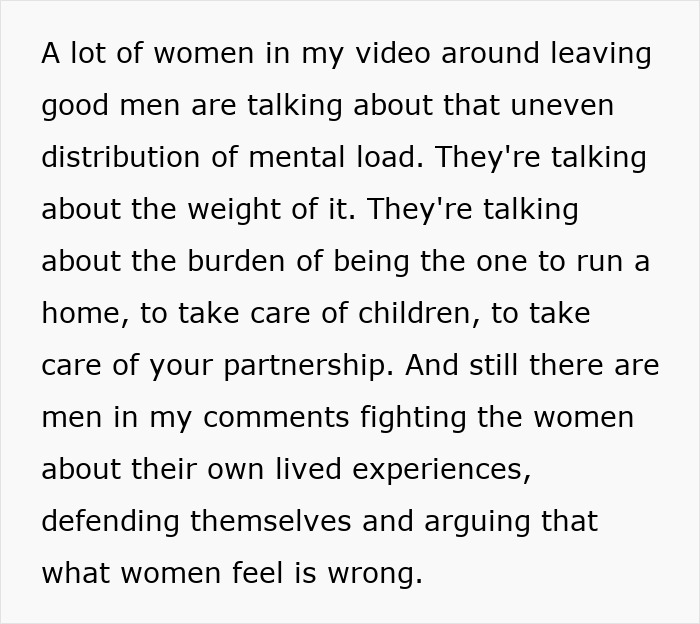
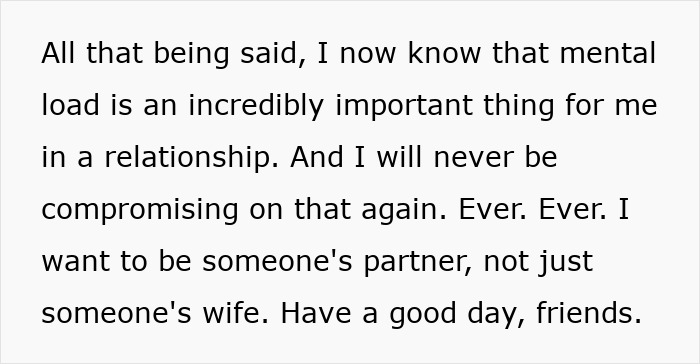
Here’s the full video that quickly went viral on TikTok
@opallauryn Breakfast thoughts on mental load 💭 #breakup #separation #relationships #mentalload #healingjourney ♬ original sound – Leo
Equal pay, it seems, still doesn’t buy an equal partner
Before diving into the mental side, the data on visible housework tells a clear story. Despite major cultural shifts, women still handle the vast majority of cooking, cleaning, and childcare — leaving men with significantly more free time every day.
Recent data reveals this gap isn’t shrinking, even as financial roles shift. By 2022, nearly 29% of US marriages were “egalitarian,” with husbands and wives bringing home roughly equal paychecks — nearly triple the rate from 1972.
Yet, even in these equal-earning homes, the division of domestic labor remains wildly uneven. Wives log more than double the weekly housework of their husbands, putting in 4.6 hours compared to a paltry 1.9 hours for men. On top of that, women spend nearly two extra hours every week on family care.
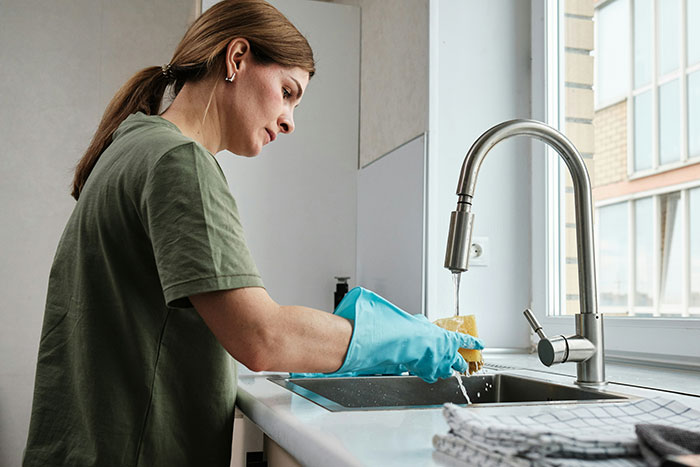
As if physical labor inequality wasn’t enough, new research shows that even invisible labor is heavily skewed. This includes making a grocery list, checking pantry stock, planning five dinners, and keeping track of doctor appointments, among other things.
A study from the University of Bath and the University of Melbourne, published in the Journal of Marriage & Family, revealed that this “cognitive household labor,” or “mental load,” of managing a household on a daily basis also falls disproportionately on women.
Dr. Kowalewska, one of the researchers, explains that physical housework and physical childcare are the visible, concrete tasks done with our bodies. For example, folding laundry, cooking food, brushing children’s teeth, or mowing the lawn.
The mental load is the often-unseen work that makes this physical work happen: all the remembering, anticipating, researching, planning, deciding, and delegating behind the scenes.
“Food can only be cooked if someone anticipates what meals the family might eat that week based on preferences or needs, remembers what is already in the cupboards, plans what needs buying, and makes sure the ingredients are there when they’re needed,” she tells us in an interview.
Studies in cognitive neuroscience show that the prefrontal cortex — the brain’s command center for executive functioning — takes a heavy hit during prolonged cognitive strain.
When this area operates without adequate rest, it leads to cognitive fatigue. This, in turn, impairs decision-making and self-control.
Continuous exposure to this kind of unmanaged mental pressure triggers chronic stress pathways. Experts believe this makes emotional regulation significantly harder over time.
Sociologist Leah Ruppanner at the University of Melbourne in Australia developed a mental load burnout scale where she actually asked women if they find it difficult to access energy to respond to life’s emergencies. She also asked them if their mental load “spending” makes them tired at the end of the day.
“One of the things that came through was that fathers had capacity and weren’t running a deficit but almost every single mother I talked to was. They were holding enough energy in their ‘mental load account’ to respond to an emergency if something went wrong but when I asked: ‘do you have enough energy to respond to an opportunity in your life’ they said no,” she said.
Are women naturally wired to care more about meal planning and clean floors?
Science says no. Research does not show that men are biologically less capable of multitasking, executive functioning, or managing domestic responsibilities.
Studies find few consistent gender differences in executive control. However, research on mental load points instead to differences in how household responsibilities are divided.
The divide isn’t genetic — it is heavily socialized.
From a young age, most girls are conditioned to anticipate others’ emotional and physical needs, while boys are largely raised to perform tasks only when explicitly asked.
This gap is reinforced by harsh, unequal societal judgment.
Research shows that society still measures a woman’s competence by the orderliness of her home and the management of her family.
If a child forgets their homework or wears dirty clothes, public blame almost always falls on the mother, not the father. This societal double standard keeps women on their toes, and forces them into the role of household manager.
From the outside, an argument over dirty dishes between a couple might seem like a minor spat. But from the inside, it can slowly destroy the foundation of the relationship.
The constant weight of managing a home might breed resentment, fuel physical burnout, and destroy intimacy, according to experts.
However, a more balanced household load can result in a tighter bond.
“Because the mental load is often unseen, it can help to first identify what components of it your household undertakes and who is doing it. This can provide a basis for open conversations about how to distribute it more fairly,” says Dr. Kowalewska.
Rather than having one person act as the household manager delegating tasks, she suggests a cleaner approach: split full ownership of specific areas. That means each partner takes complete responsibility for their assigned domain — including all the invisible planning, tracking, and mental load that comes with it.
“For example, if one person takes responsibility for after-school activities, that means not only taking children there and picking them up, but researching the options, booking clubs, and remembering what needs to be taken each week — not simply carrying out the visible tasks after being told what to do.”
She also believes that there should be more policies that enable men to take on caring work. “Well-paid individual parental leave for fathers, are also important for helping to shift the mental load by exposing fathers to solo parenting from the beginning of children’s lives.”
The research, expert insights, and viral discourse all lead to the same undeniable truth. While women have rapidly climbed the ranks of higher education and the workforce, men’s involvement at home — especially in carrying the mental load — has failed to keep up.
At the end of the day, if a man has the brain to track complex spreadsheets, manage tight deadlines, and navigate high-stakes projects at work, he is more than capable of noticing the dirty laundry at home.
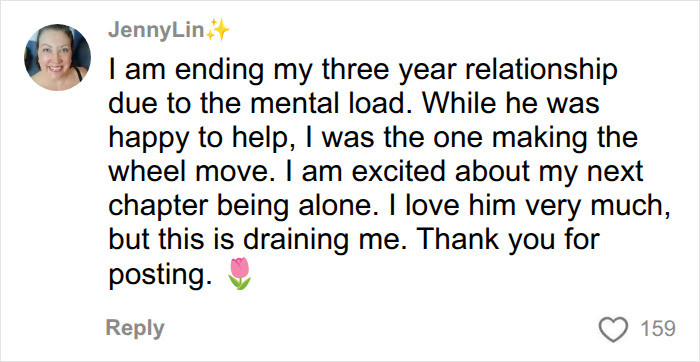
Women found it painfully relatable and shared their own experiences



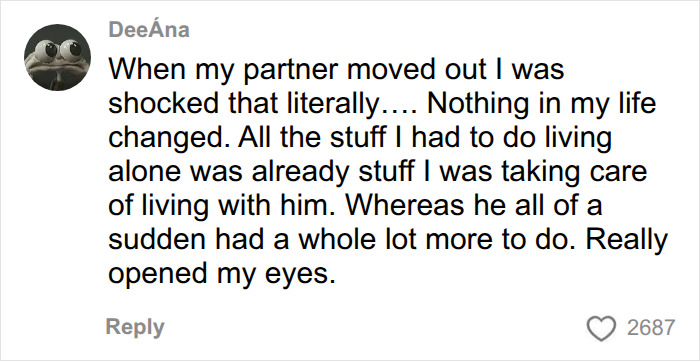




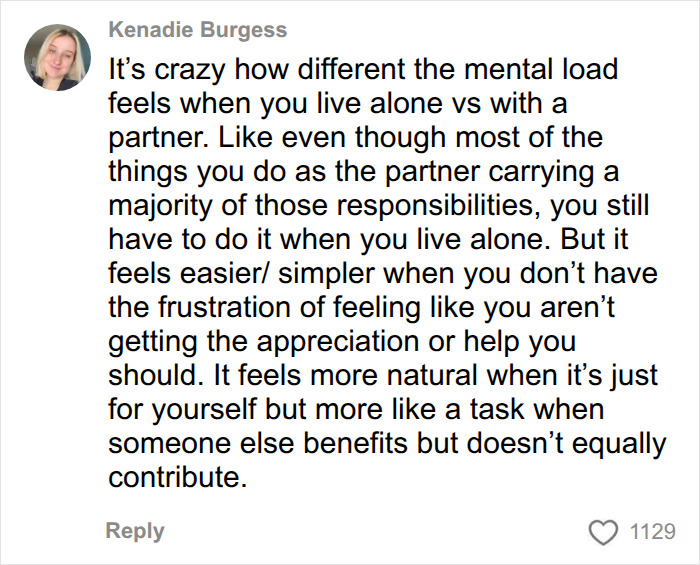

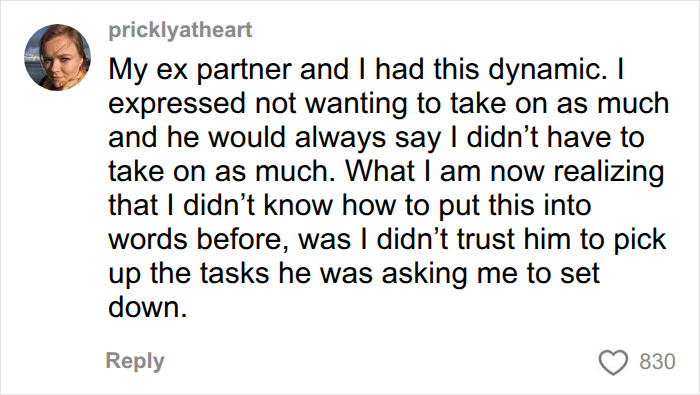





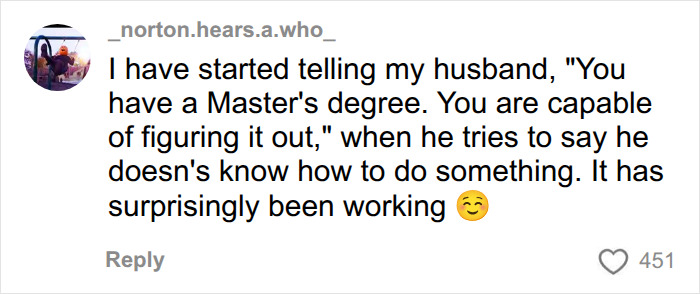

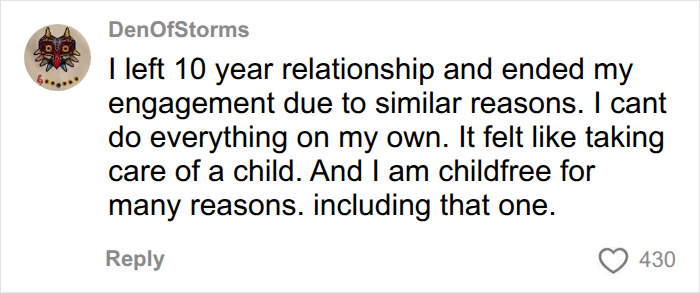



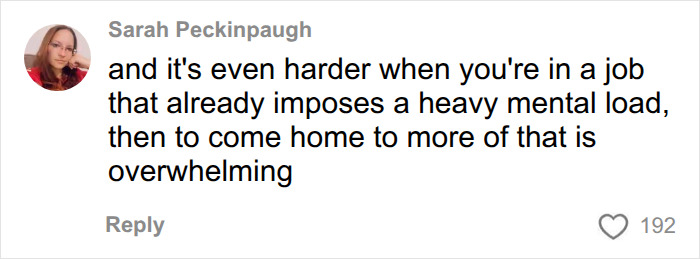



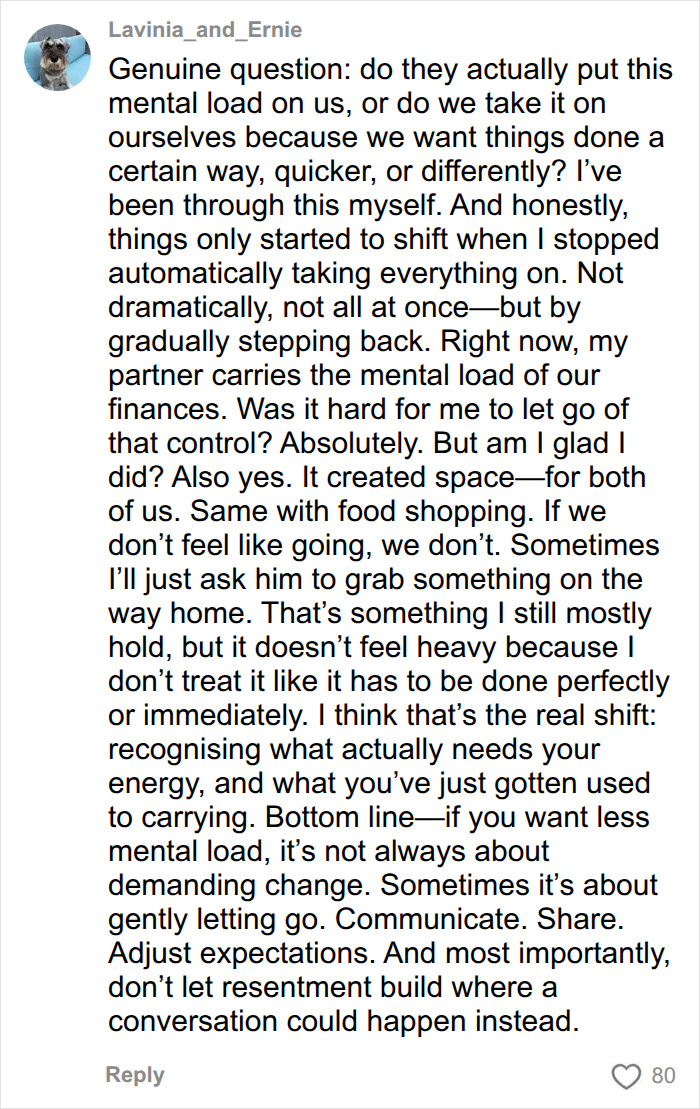
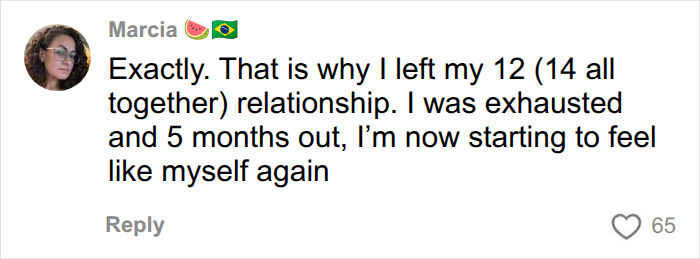








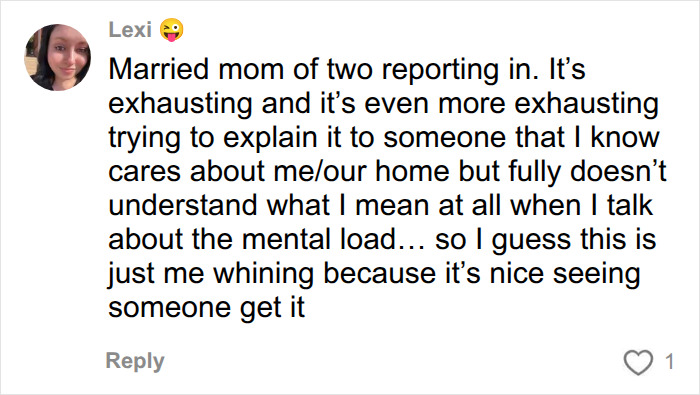
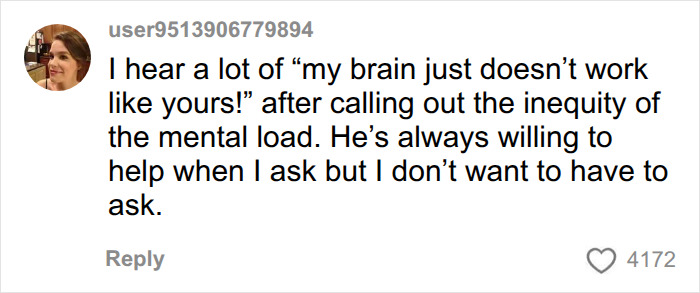
They revealed the pushback they get from partners whenever they try to bring up the topic


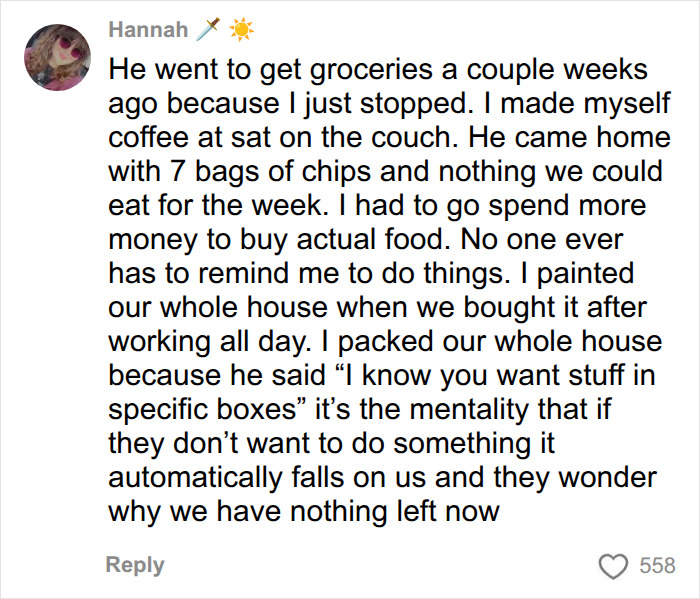




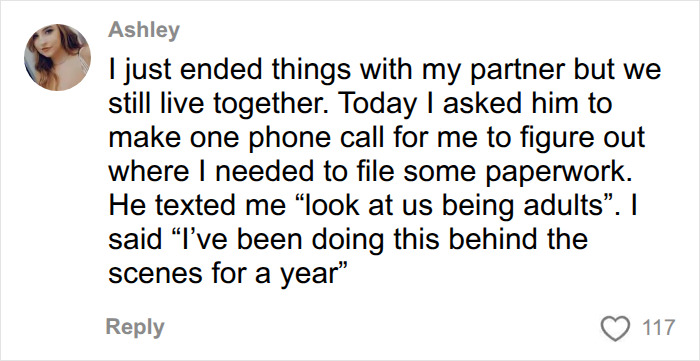
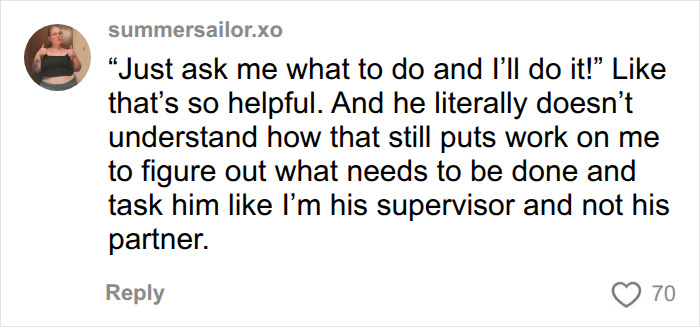


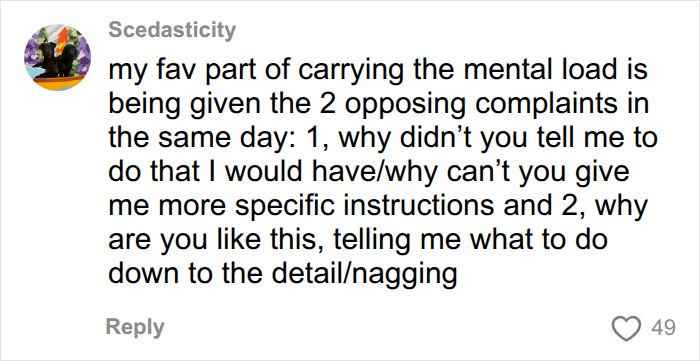



The TikToker responded to men who still don’t get it — “Stop defaulting to women”

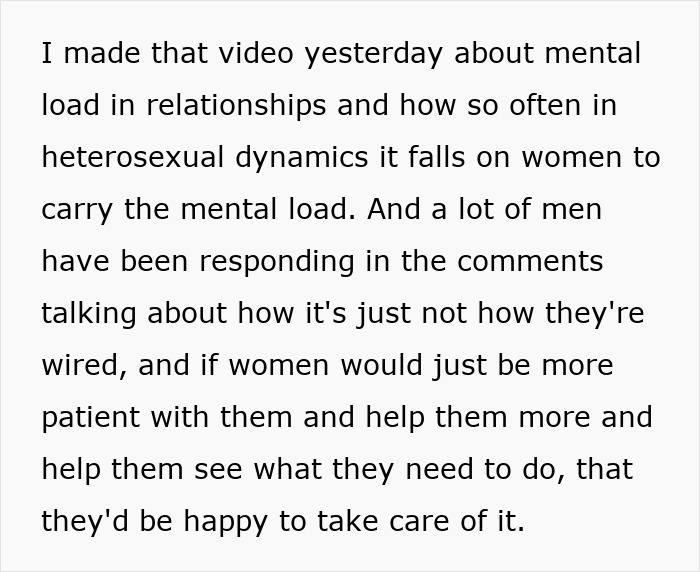
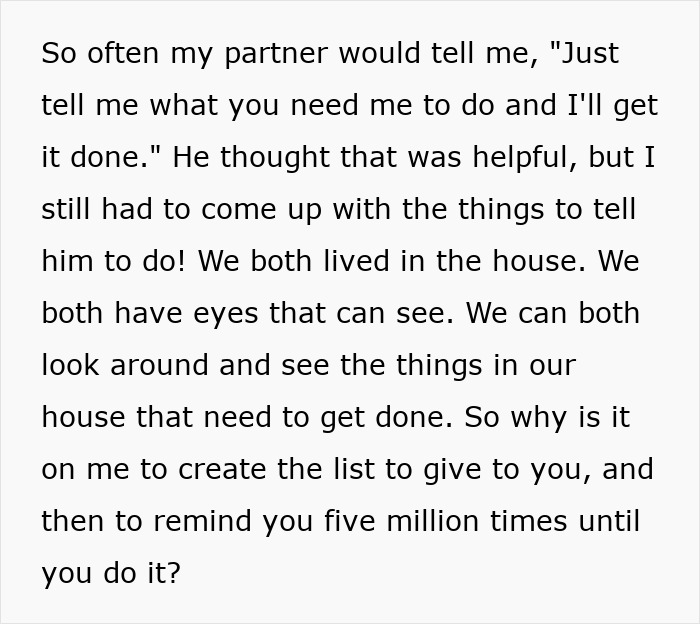
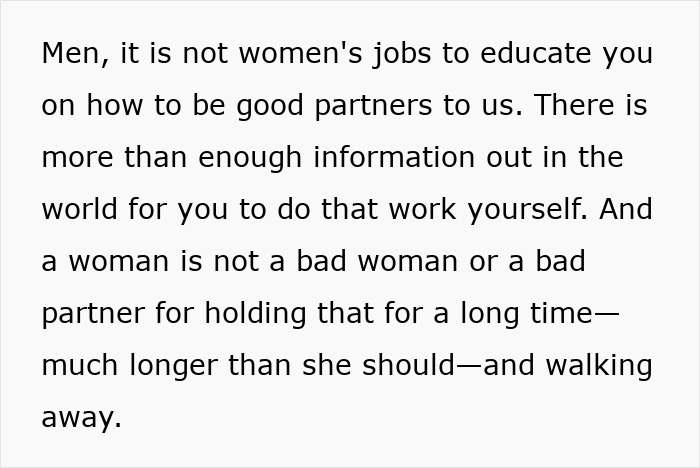
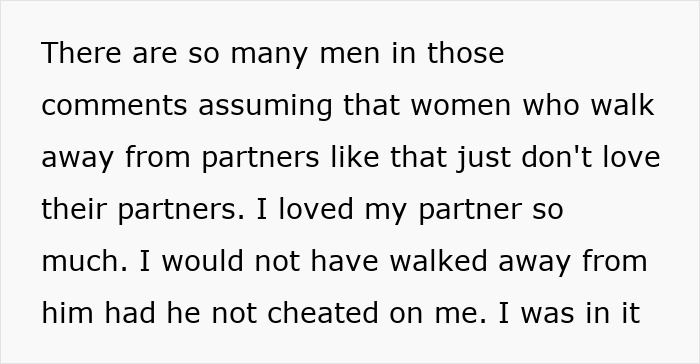

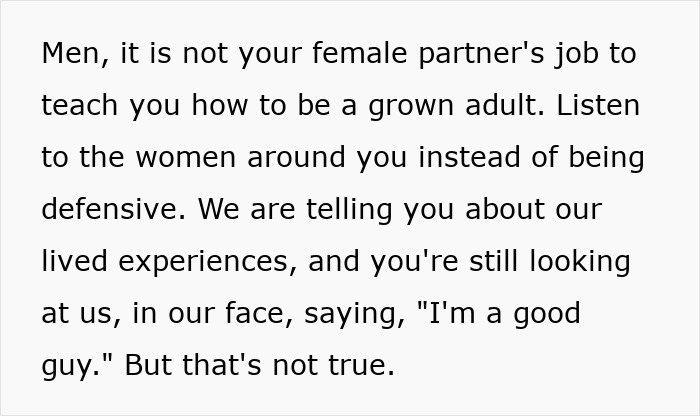
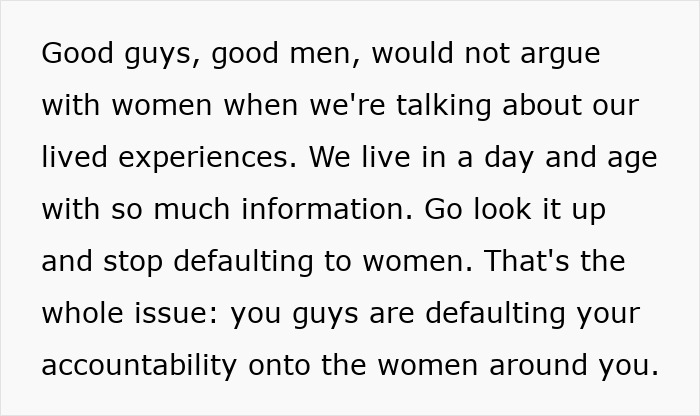
Here’s her response to the men on TikTok
@opallauryn #stitch with @Opallauryn men please- Google. #deconstruction #relationships #mentalload #femininity ♬ original sound – Leo
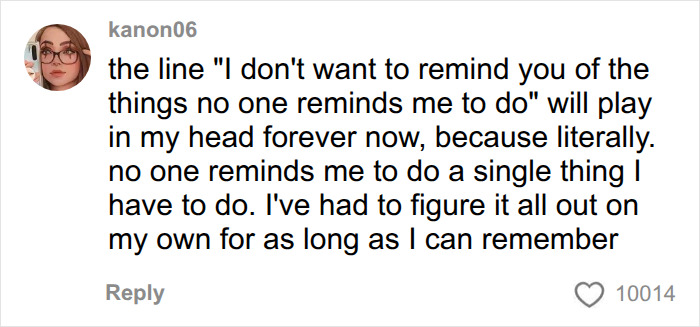
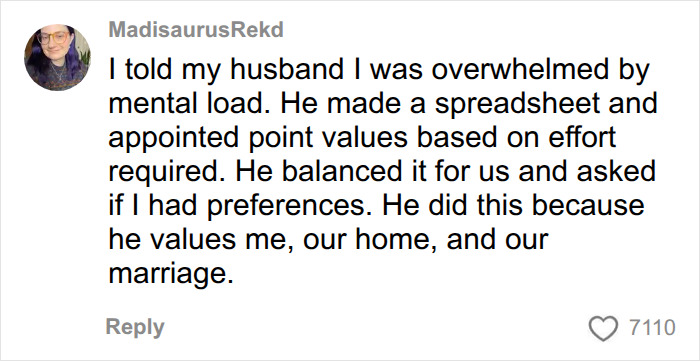
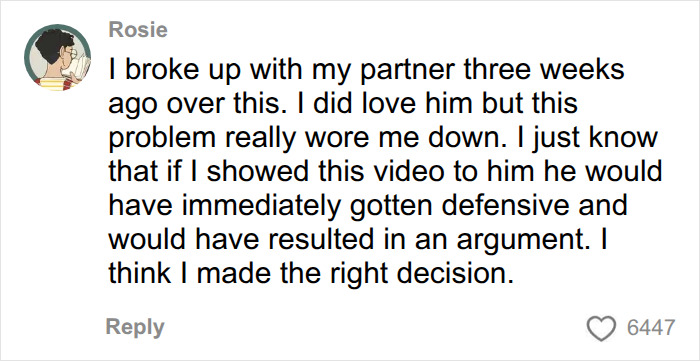
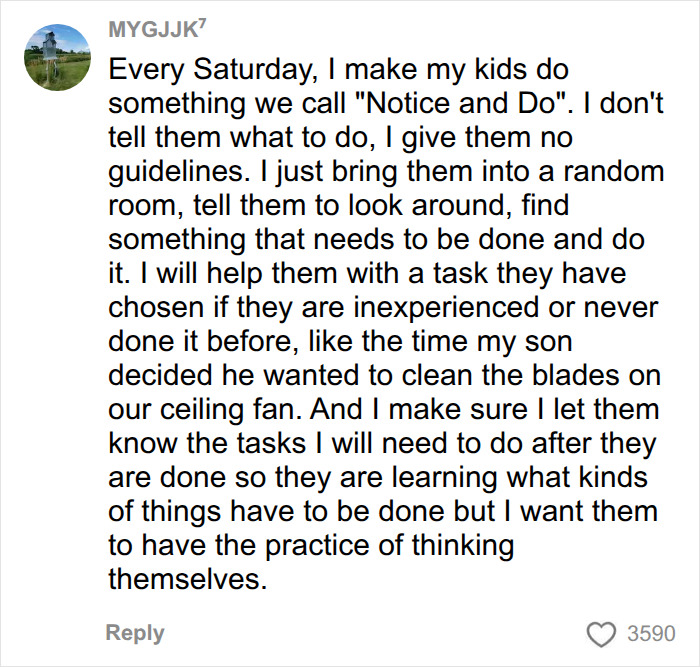
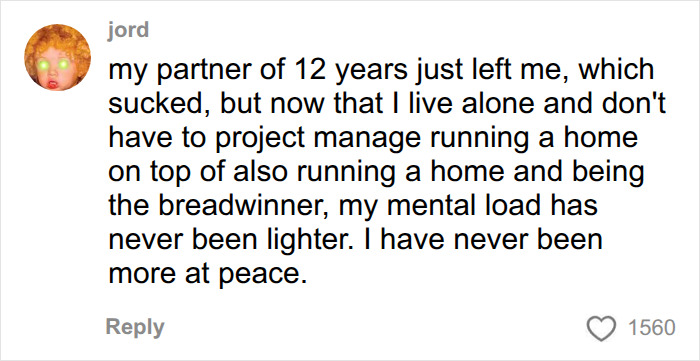
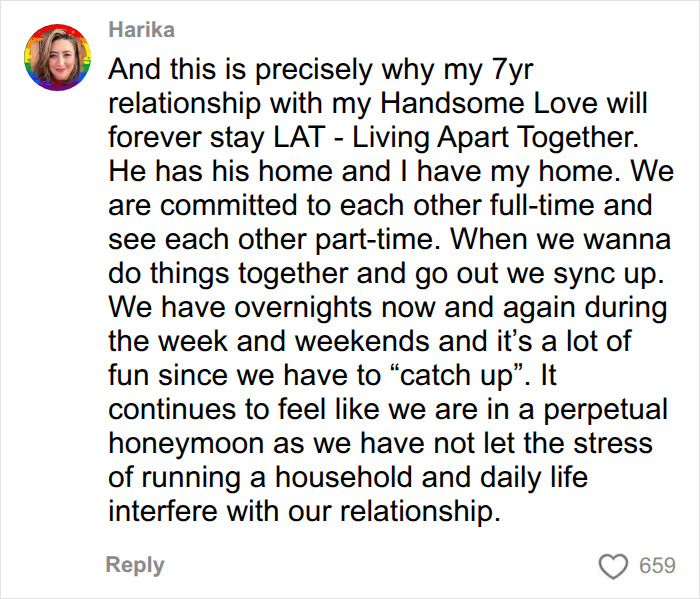
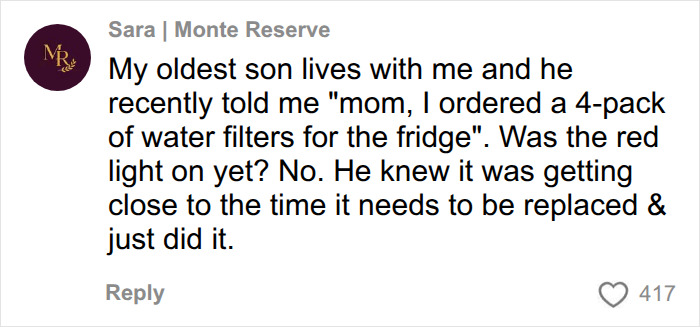
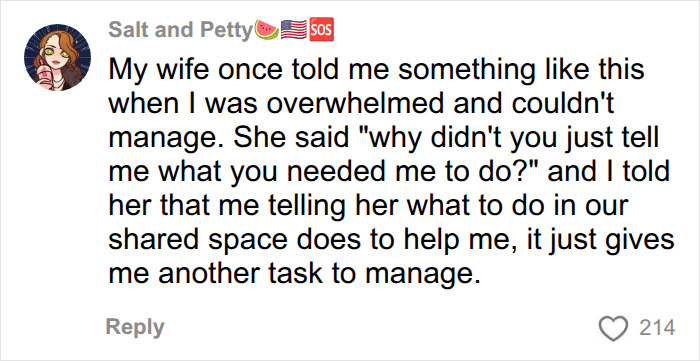
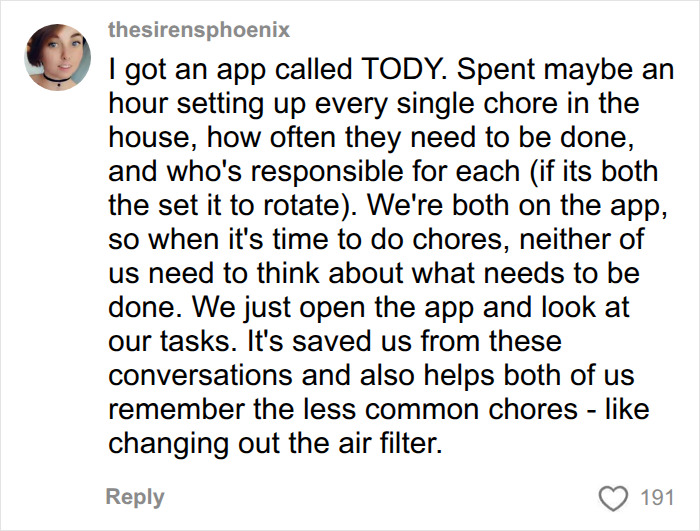
Her second video went even more viral, with thousands of comments. Here are the best ones:






























from Bored Panda https://ift.tt/TaDPrec
via IFTTT source site : boredpanda
