Martha Ann Lillard, believed to be the last person in the United States to rely on an iron lung, has passed away at the age of 78 after spending more than seven decades living with the effects of polio.
Her story touched millions because she refused to let the disease define her life, even as her decades-old breathing machine became harder to repair.
Following the news of her passing, many people reflected on her resilience, with one commenter writing, “I can’t imagine how it would feel to be in one of those. Glad she was able to get out and live with a bit of independence without it for a while every day. May she RIP.”
Martha Lillard spent more than 70 years living with the effects of polio before passing at 78
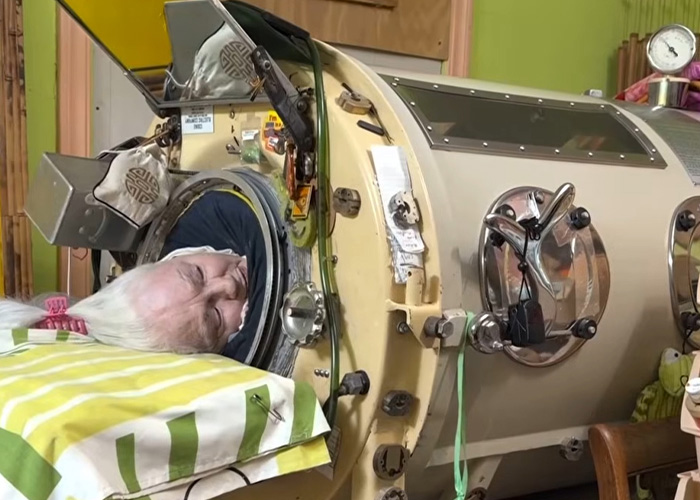
Image credits: KFOR Oklahoma’s News 4/YouTube
Martha Ann Lillard contracted polio in 1953 on her fifth birthday, just two years before the first polio vaccine became available in the United States.
Speaking to Oklahoma station KFOR just days before her passing, she remembered how quickly her condition worsened.
“I woke up, and it was sunny outside, and I started to sit up, and my neck was k*lling me. I couldn’t lift my head off the pillow.”
Just a few days later, she lost the ability to breathe on her own.
“After four days, I went unconscious. I couldn’t breathe. I couldn’t move my arms or legs.”
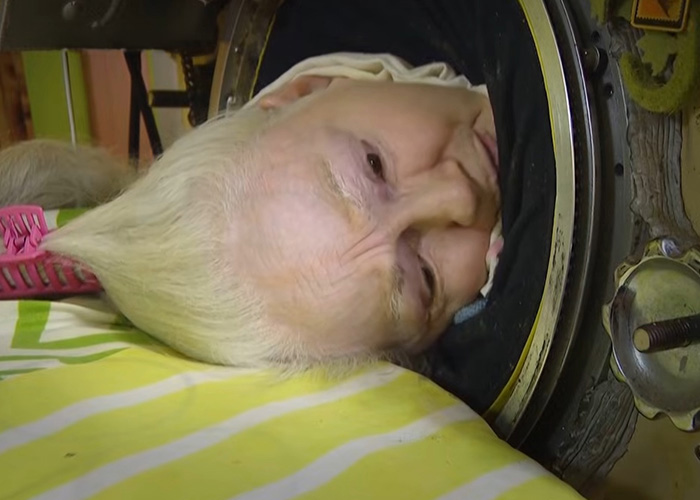
Image credits: KFOR Oklahoma’s News 4/YouTube
Doctors placed her inside an iron lung, a large metal ventilator that uses changing air pressure to help patients breathe when their lungs cannot do the job themselves.
While many children found the machine frightening, Lillard said it gave her a sense of relief.
“They usually didn’t like to put children in because they fought it, but I didn’t. I liked it. It felt good to breathe.”
She spent six months in hospital, using the iron lung for about 23 hours each day while learning how to breathe independently again.


Over time, she regained the ability to walk, although her right arm remained paralyzed. At her healthiest, she needed the iron lung only while sleeping and managed to live independently for many years despite having only 25% lung capacity.
According to a GoFundMe created after her passing, she painted, wrote poetry, composed music for the left-hand piano, and rescued abandoned dogs throughout her life.
“Even as post-polio syndrome continued to affect her, she maintained a wonderful fighting attitude, making the most of what she had left and enjoying life as much as she could,” the fundraiser stated.
Although Lillard eventually learned to live with polio, her health declined significantly in recent years

Image credits: KFOR Oklahoma’s News 4/YouTube
She developed post-polio syndrome, a condition that can cause increasing muscle weakness decades after the initial infection.
She also caught COVID-19 twice and later developed long COVID.
Her sister, Cindy McVey, said those illnesses forced Lillard to rely on the iron lung again around the clock.
At the same time, the machine itself was becoming increasingly difficult to maintain.
Many of its parts dated back to the 1940s, making replacements extremely difficult to find.
“Some of the parts are from the forties, and they’re hard to locate,” McVey explained.
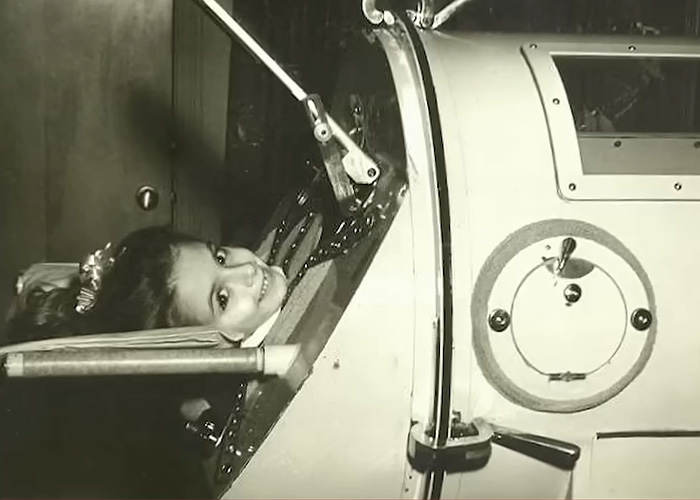
Image credits: KFOR Oklahoma’s News 4/YouTube


“We have a spare motor, but we don’t have anyone to put it back in if we needed it.”
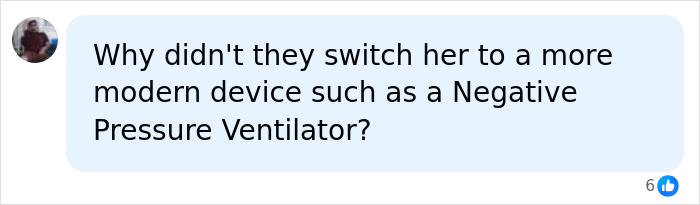
Lillard said she had tried newer ventilators over the years but always returned to the iron lung because modern machines could not provide enough pressure for her breathing needs.
“None of them could get up to 21 pounds, which is what I needed to breathe. So they just weren’t effective.”
Last year, when a tornado knocked out power to her home, her husband, Baha Salh, kept her alive by performing mouth-to-mouth resuscitation until emergency crews arrived.
According to her d*ath certificate, she passed away on June 26 from chronic pulmonary failure linked to post-polio syndrome, with long COVID also contributing to her declining health.
Lillard’s story left many people wondering why a replacement machine was never built
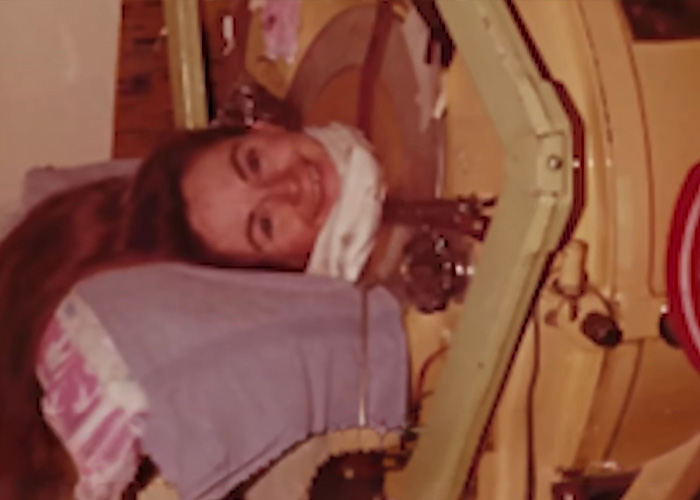
Image credits: KFOR Oklahoma’s News 4/YouTube
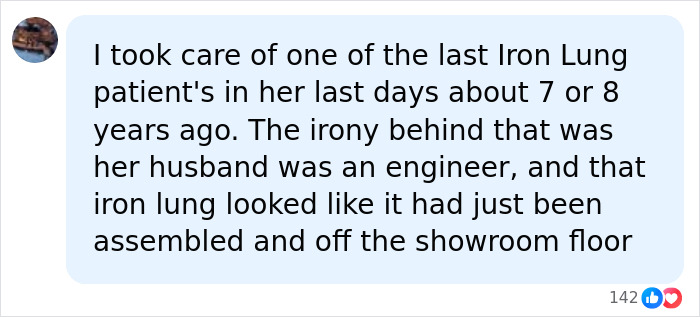
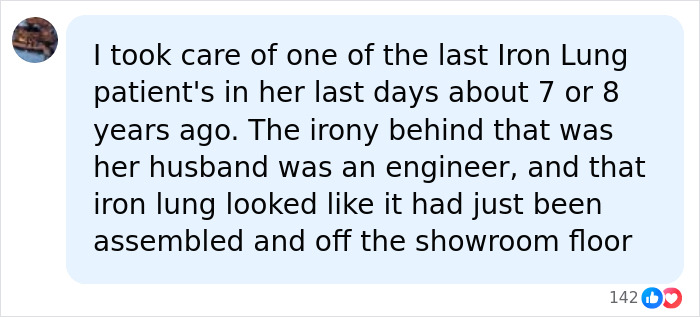
Following news of her passing, many people questioned why someone who depended on an iron lung for survival could not simply receive a newer version.
“I’m pretty sure with our technology they could’ve built a new iron lung,” one commenter wrote.
Another added, “So we can go to the moon but couldn’t just make her a new iron lung?”
Some believed the issue was not technology but cost.
“It wasn’t too old to repair, it was more like too expensive,” one person commented.
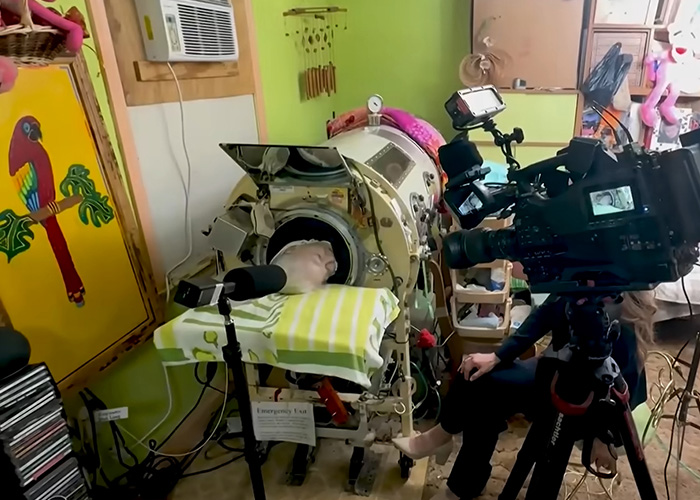
Image credits: KFOR Oklahoma’s News 4/YouTube


Others reflected on the life she had lived.
“Honestly, it’s probably a great release for her. She’s finally free.”
Another wrote, “What kind of life is that? Saw it in a movie but it makes no sense to me.”
Despite spending decades using an iron lung, Lillard attended school, cooked for herself, drove, traveled with her family in a custom trailer built to carry the machine, and recently married Baha Salh after more than 20 years of getting to know each other online.
“They told her she wasn’t supposed to live past 20 years old,” McVey told the Associated Press. “She had the enthusiasm and the drive to continue living and make the best of her life.”
Lillard’s passing came just over two years after another well-known iron lung survivor, Paul Alexander, passed away in March 2024 at the age of 78

Image credits: KFOR Oklahoma’s News 4/YouTube

Image credits: KFOR Oklahoma’s News 4/YouTube
Alexander contracted polio in 1952 when he was six years old and spent nearly 72 years using an iron lung, earning recognition from Guinness World Records as the person who had lived inside one for the longest time.
Like Lillard, he refused to let the disease stop him from building a full life.
Using a breathing technique known as glossopharyngeal breathing, Alexander gradually learned to spend time outside the machine.
He later earned a bachelor’s degree and a law degree from the University of Texas, became a practicing attorney in 1986, wrote a memoir, and even gained hundreds of thousands of followers on TikTok by sharing his life story.
When Alexander passed away in 2024, Lillard became the last known American still relying on an iron lung.
Her passing now marks the end of an era that began before the introduction of the polio vaccine in 1955.
According to the World Health Organization, cases of wild polio have fallen by more than 99% since 1988, a decline attributed to widespread vaccination programs.
“Honestly, it’s a great release for her. She’s finally free,” wrote one netizen




from Bored Panda https://ift.tt/fUj4Idp
via IFTTT source site : boredpanda
