We all make different choices that shape the way we live, from deciding how we spend our money to planning for financial stability to building a future that actually matches our goals. Those choices quietly shape our lifestyle in very real ways, whether it’s budgeting for savings, travel, hobbies, or just a bit of peace of mind. For some people, choosing not to have kids is part of that plan. But here’s the uncomfortable question: does that automatically make them responsible for everyone else’s?
Well, one woman found herself in exactly that situation. Her brother decided that being childfree somehow translated into being the family’s unofficial bank account… especially for his four children. From school fees to daily expenses and everything in between, the expectation just kept growing. And when she finally said “enough,” things didn’t exactly stay calm. Keep reading to see how this family money drama unfolded, and why “we’re family” doesn’t always mean “you pay.”
Raising children can be incredibly expensive, from daily essentials and education costs to unexpected expenses that pop up along the way
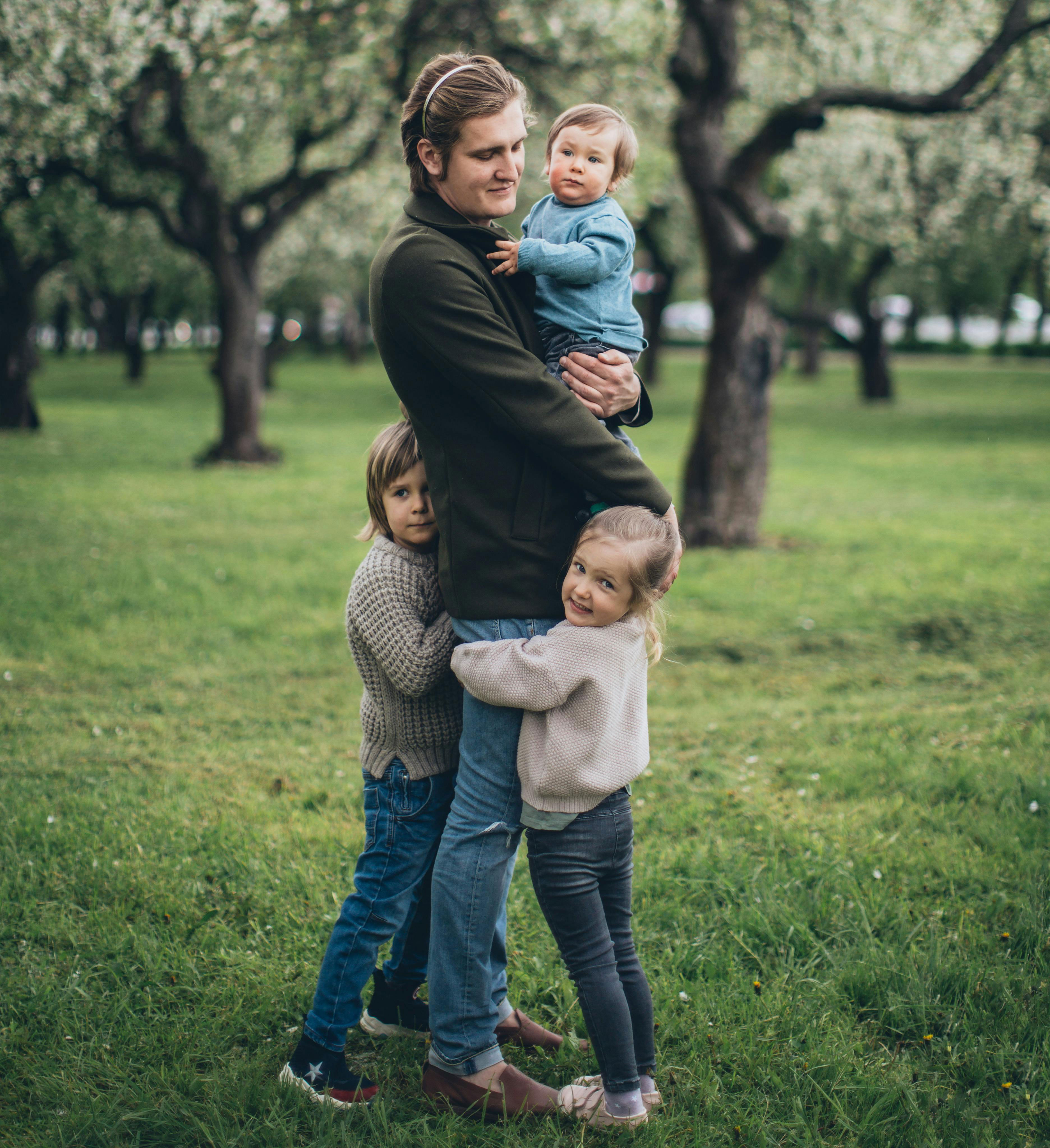
Image credits: Elina Fairytale / Pexels (not the actual photo)
One woman shared how both her brother and even a coworker expected her to financially contribute toward their children simply because she was child-free
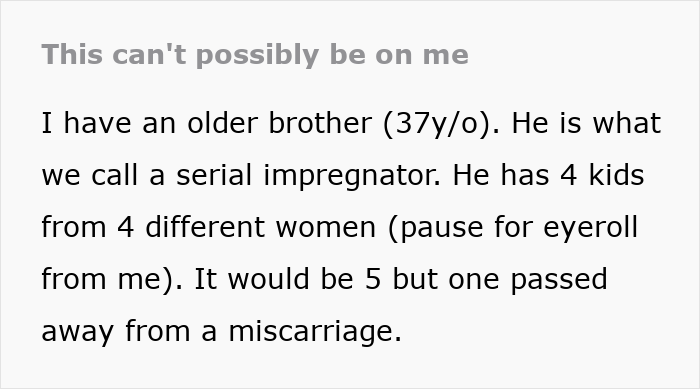
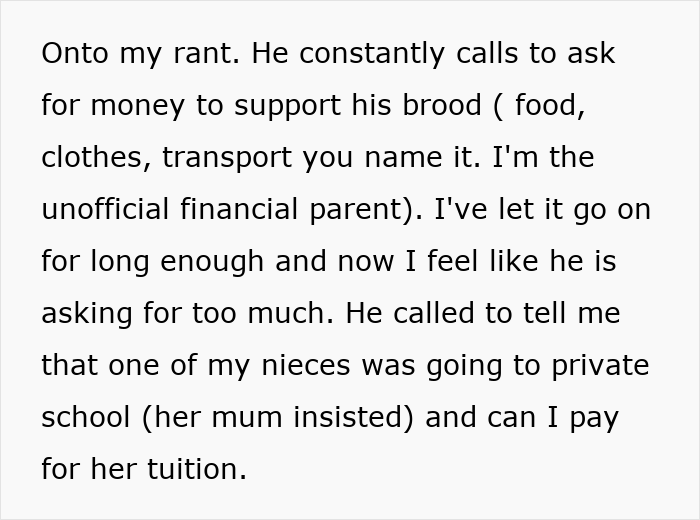
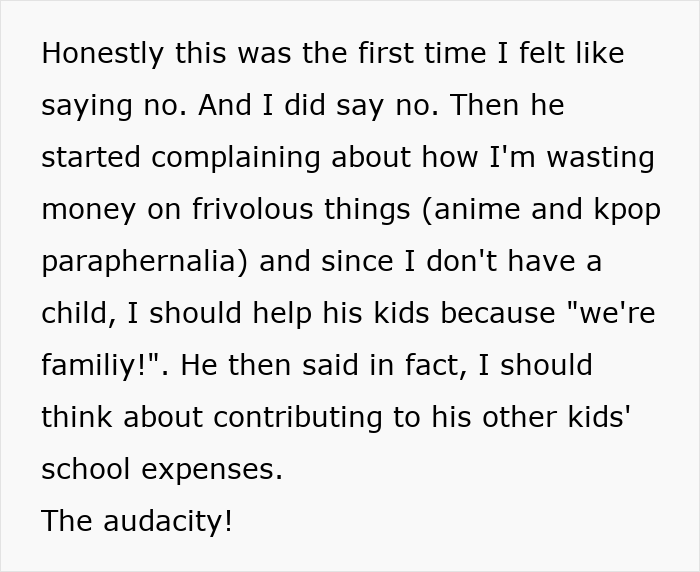

Image credits: Pressmaster / Envato (not the actual photo)

Image credits: Elina Fairytale / Pexels (not the actual photo)

Image credits: TimeladyA613

Image credits: Mikhail Nilov / Pexels (not the actual photo)
In recent times, many young couples rely on dual incomes to manage rising living costs and maintain financial stability
Having or not having children is one of the most personal decisions anyone can make. And it’s no secret that this conversation has been shifting quite a bit in recent years. More and more young couples are openly reconsidering parenthood altogether. For many Gen Z and millennials, the reasons are very practical—rising housing costs, student debt, and the overwhelming expense of raising a child all play a major role in how people plan their futures today. What once felt like a default life path is now something people are actively thinking through from every angle.
These days, the term “DINK” has also become increasingly popular. Short for “dual income, no kids,” it originally emerged in the 1980s as a simple way to describe households with two working adults and no children. Recently, however, it has taken on a new life on social media platforms like TikTok, where couples often share glimpses of their lifestyle—joking about getting a full eight hours of quality sleep, enjoying quiet weekends, or having a home that stays clean and peaceful without constant chaos. While often lighthearted, these posts have turned into a broader cultural conversation about lifestyle differences and personal choice.
Naturally, these kinds of posts haven’t been without controversy. Some people online see them as tone-deaf or insensitive, especially when they are framed in a way that seems to compare lifestyles too directly or casually. Others feel it opens up unnecessary judgment around deeply personal decisions, turning family structure into something that gets debated or ranked rather than respected as individual choice.
The Guardian also points out an important nuance in this discussion. When talking about DINK couples, there is often a careful distinction made: “We’re not talking about couples going through IVF hell or struggling to adopt,” but rather people who simply chose not to have children. While this clarification is meant to avoid unfair judgment toward those facing fertility struggles, it also subtly creates a divide, suggesting that some reasons for not having children are more “acceptable” than others. This, in turn, can unintentionally reinforce the idea that people’s family choices are open for public evaluation in the first place.
Despite the debate, the DINK lifestyle is becoming more visible across different countries and cultures. For example, a survey conducted among 1,241 Japanese couples found that roughly one in five households choose this lifestyle. Among them, 46% share everyday living costs equally, more than half take up to two vacations a year as a couple, and an overwhelming 93% report being able to spend weekends and holidays freely with friends without the limitations of childcare responsibilities. It paints a picture of flexibility and shared independence that appeals to many modern couples.

Image credits: Pavel Danilyuk / Pexels (not the actual photo)
For many DINK couples, flexibility is a key reason behind their lifestyle choice, allowing them greater control over their time, finances, and priorities
In the United States, similar trends are reflected in economic data. According to a Pew Research Center analysis of federal figures, about 12% of married couples in their 30s and 40s fall into the DINK category. Interestingly, their financial profile differs in notable ways. The median household income for DINK couples stands at around $193,900 as of 2023, compared to $151,900 for dual-income couples with children. However, when it comes to wealth accumulation, the gap looks different—median wealth for DINK households is $214,700, while couples with children report a higher median of $361,500, likely reflecting long-term family-focused investments and assets.
So why do people choose this path in the first place? Surveys in the U.S. suggest a mix of motivations rather than a single reason. Around 33% of DINK couples cite financial freedom as their main driver, valuing the ability to shape their spending and savings without the long-term costs of raising children. Another 28% highlight flexibility as a key factor, enjoying the freedom to travel, change careers, or adjust lifestyles more easily. About 26% point to practical constraints such as financial pressure or uncertainty, while 22% mention medical reasons. Only around 21% simply say they do not desire parenthood, showing that for many, the decision is shaped by circumstance as much as preference.
With no children to support, DINK couples often experience a different kind of financial and lifestyle flexibility. This can shape how they choose to spend their time and resources, whether that means saving for the future, exploring new experiences, or simply building a life that feels calm and manageable. But at its core, it’s not about comparison or proving one lifestyle is better than another. It’s about choice. Every path (whether it includes children or not) comes with its own joys, challenges, and meaning. What matters most is that people are able to make decisions that feel right for them, without judgment or expectation.
Coming back to this particular case, the author’s decision to remain childfree seems to have led others to assume she has extra money to spare—and that it should be shared. But that’s a slippery line. Just because someone makes different life choices doesn’t mean they’re automatically responsible for supporting others. Expectations like these can feel unfair, especially when they’re based on assumptions rather than consent or genuine willingness. What are your thoughts on this, pandas?
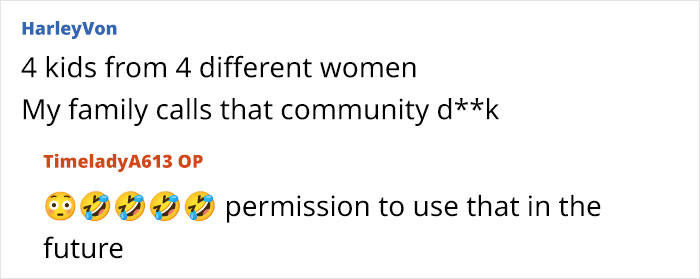
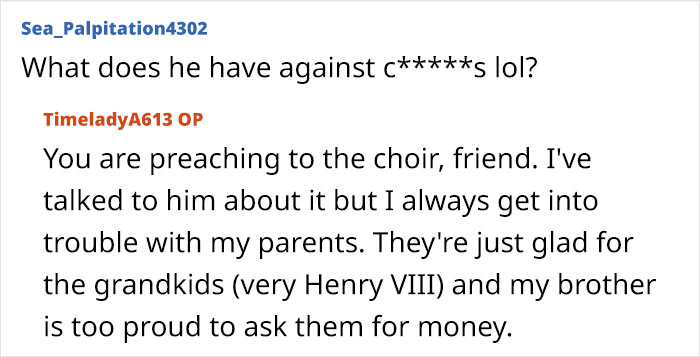
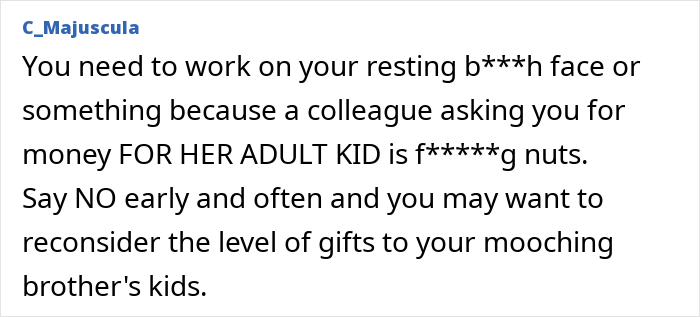
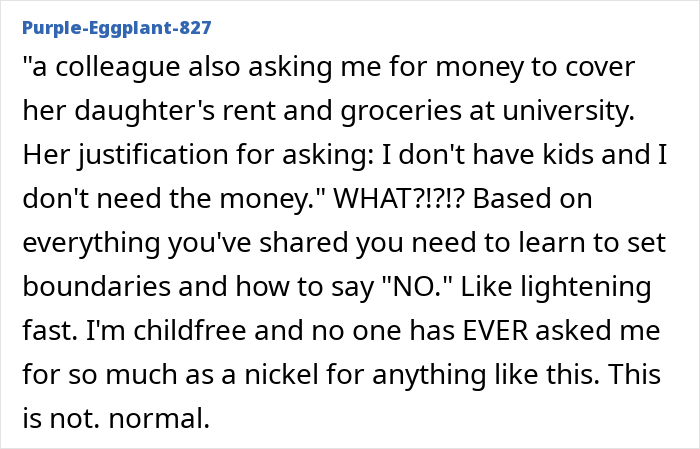
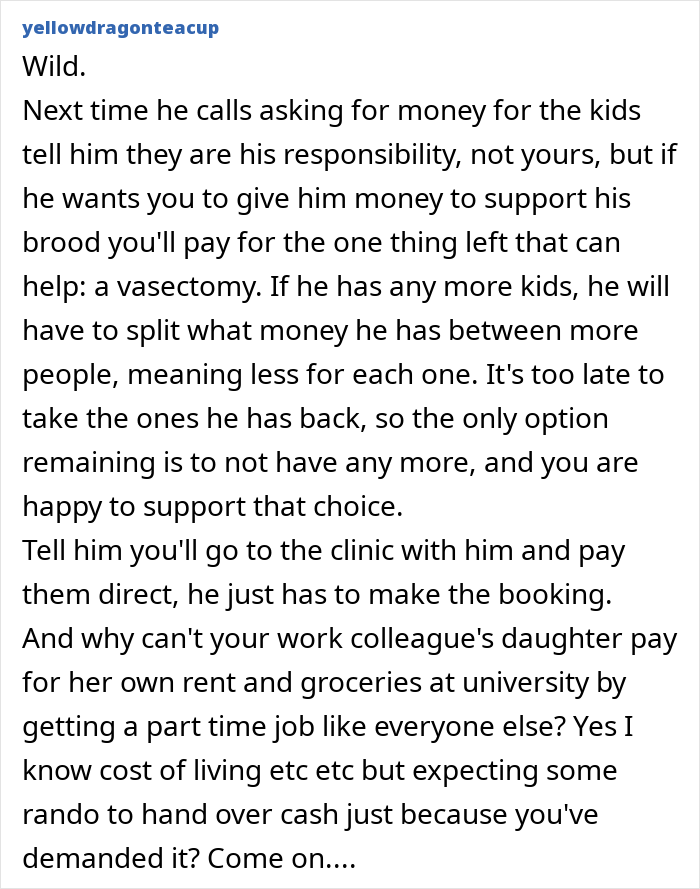
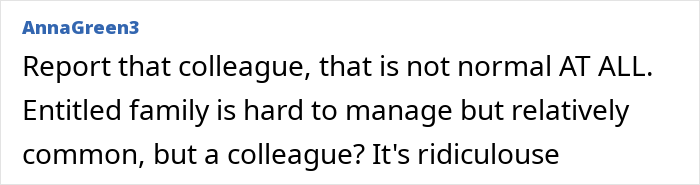
People online had some hilariously sassy reactions and did not hold back while sharing their thoughts on the situation














from Bored Panda https://ift.tt/QsA6Hji
via IFTTT source site : boredpanda
