The Awá tribe has spent generations living deep in the Amazon rainforest, far from the outside world.
They hunt, gather food, and depend on the forest for almost everything they need. But a recent encounter with outsiders has raised fresh concerns about their safety.
Around 20 members of the Indigenous group approached a government outpost in Brazil, looking for something to eat.
While they accepted the food and returned to the forest, the unusual visit has left human rights campaigners worried about what may have pushed them to seek help.
A group of Awá tribe approached an outpost looking for something to eat
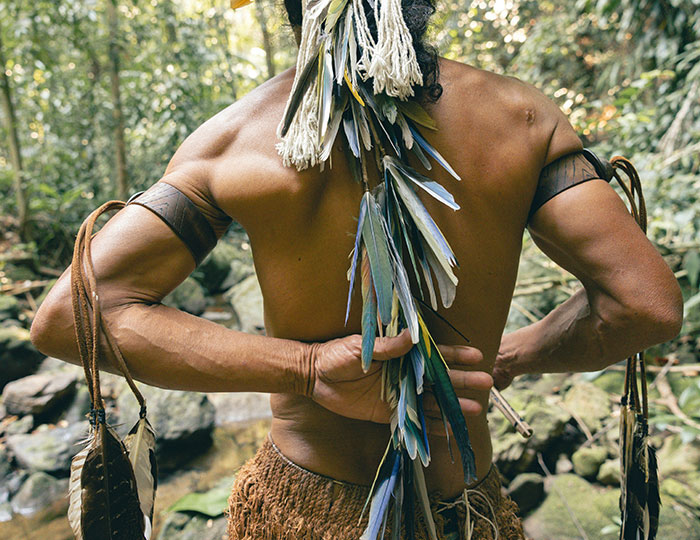

The rare encounter took place on Monday, November 16, in the Amazonian village of Tawari, in Brazil’s northeastern state of Maranhão.
According to human rights organization Survival International, around 20 members of the Awá community approached an outpost and asked for yams.
The group accepted the food offered by government workers before returning to their rainforest territory. Photographs shared by Survival International showed the Indigenous people standing near the edge of the thick forest, holding long wooden spears.
The Awá are among the last uncontacted Indigenous peoples in the world.
Some community members have little to no contact with modern society and continue to live as their ancestors did, relying on hunting and gathering to survive.
However, their recent visit has raised concerns that the group may be struggling to find enough food as outsiders continue to destroy the forest they depend on.
A ancestralidade presente! Não há palavras que expressem a riqueza desse momento: 15 indígenas da etnia Awá-Guajá (povo isolado) foram avistados dentro da Terra Indígena Arariboia, no Maranhão. São muitas as ameaças contra eles. A @funaioficial oficial tenta protegê-los. Força! pic.twitter.com/9W0BtceGZA
— André Trigueiro (@andretrig) November 17, 2026
Caroline Pearce, director of Survival International, described the encounter as a worrying sign.
“This is a troubling indication of how the continued invasion of uncontacted peoples’ forests puts otherwise self-sufficient Indigenous people in real danger,” she said.
“The uncontacted Awá are under extreme pressure as intruders encroach from all sides of their territory, driving them into an ever-smaller island of the Amazon rainforest, surrounded by destruction.”
Sarah Shenker, who heads Survival International’s Brazil arm, also described the encounter as “a crisis moment really and a wake-up call,” according to the Associated Press.
The rare indigenous group depends on the forest to find food and survive
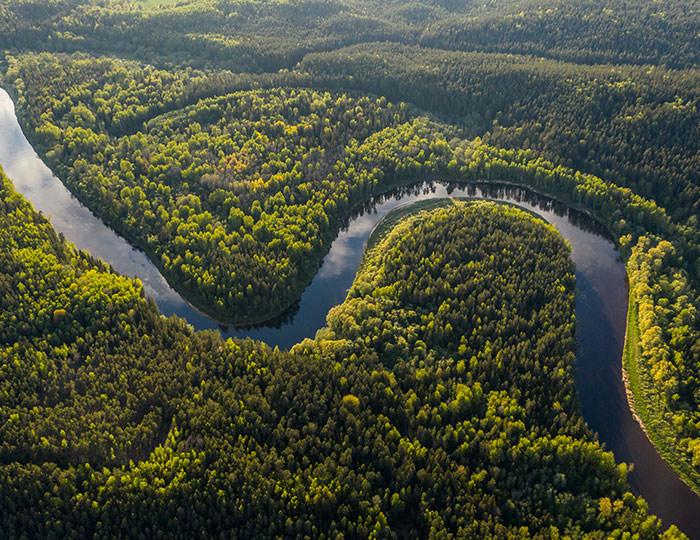
The Awá are a nomadic hunter-gatherer community and do not stay in one place permanently. Instead, they move through the forest to find food and other resources.
They use bows and arrows to hunt animals such as armadillos and gather wild honey and babassu nuts. The forest also provides them with water, shelter, and everything else they need to maintain their way of life.
According to National Geographic, only around 80 members of the nomadic Awá community live in a reserve in the Maranhão forest.
Their way of life has remained largely unchanged for centuries, but the land they depend on has become increasingly threatened.
Illegal loggers, hunters, miners, and cattle ranchers have continued to enter the region, destroying parts of the forest and making it harder for the tribe to live safely.
The non-contact people of the Amazon have violated privacy – due to deforestation of tropical forests
20 men, women and children from the Ava tribe, who have avoided contact with the rest of humanity for decades, came to a village in the state of Maranhão in northeastern Brazil https://t.co/CPDE8BP0Rh
— Neural Network Specialist (@neuralnetw0rks) November 18, 2026
The Awá are also forced to move frequently to avoid dangerous outsiders. Reports have described them as living in a state of “near-constant” flight from chainsaws and wildfires.
Their territory is protected by law, but that has not stopped criminal groups from entering. Logging trucks reportedly travel along poorly patrolled roads before delivering illegally cut timber to secret sawmills.
The scale of the destruction is particularly concerning because much of the surrounding forest has already disappeared.
Around 75% of Maranhão’s original forest has been lost, leaving the protected Arariboia Indigenous Land among the remaining areas containing valuable timber.
The Awá’s struggle is therefore not simply about losing trees. Their entire way of life depends on having enough untouched forest to hunt, gather food, and move freely.
The Awá are not the only Indigenous people living in the region
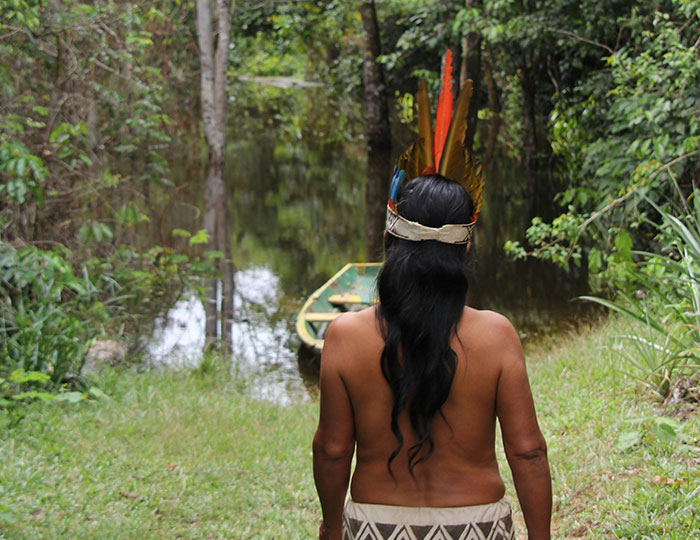
The Guajajara, also known as the Forest Guardians, share the area and have spent years trying to protect the isolated community from illegal activity.
Unlike the uncontacted Awá, the Guajajara have established contact with wider society over the decades. Some members have taken it upon themselves to defend the forest and prevent loggers and ranchers from reaching the areas where the Awá live.
Their efforts have come at a serious cost. In a statement, the Guajajara said they had continued protecting the Awá even when it meant losing members of their own community.
“The situation in the forest is challenging: climate change, fires, deforestation and land encroachment are having a direct impact on their lands and the Awá way of life, which depends exclusively on hunting and gathering,” they said.
They also explained why protecting the isolated group matters.
“The Forest Guardians have always worked to protect the Awá against encroachment, even at the cost of losing warriors in battle,” the statement continued.
The Guajajara called on authorities to act immediately and work directly with local Indigenous organizations and Forest Guardians.
“We demand immediate action from the relevant authorities, in direct dialogue with COCALITIA and the Guardians, to ensure what the Awá believe is best for them, safeguarding their lives, health, safety and dignity. FOR THE AWÁ, FOR THE TENETEHAR AND FOR THE FOREST!”
The Forest Guardians have also spoken about the danger of loggers moving closer to the Awá’s territory.
Tainaky Tenetehar, a member of the Guajajara community, previously told National Geographic that loggers were entering from different sides of the Indigenous land.
“The loggers are entering all around the perimeter of the indigenous land,” he said.
“Their intention is to reach the center — where the isolados are. They have no choice but to flee when the loggers come.”
The Guardians have reportedly taken direct action against illegal logging operations, including setting trucks on fire and seizing weapons and chainsaws.
The recent encounter has renewed calls for the Brazilian government to take stronger action to protect the Awá and the forest they call home
Pearce urged lawmakers to provide the resources needed to stop illegal loggers and ranchers from destroying the protected territory.
“The Brazilian government must commit the resources necessary to protect Arariboia from the loggers and ranchers who are razing it, in flagrant defiance of the law,” she said.
The Arariboia Indigenous Territory covers roughly 1.2 million acres. Although the land has legal protection, campaigners argue that the rules mean little if criminal groups can continue entering the forest without being stopped.
The Awá are part of a much larger group of Indigenous communities around the world that have chosen to avoid contact with modern society.
According to Fiona Watson, research and advocacy director at Survival International, these communities often make their wishes clear through their actions.
“They’re living completely self-sufficiently in their territories, and they’ve made it very clear they don’t want contact,” she explained.
Some leave crossed arrows along hunting trails to warn outsiders. Others shoot arrows towards helicopters and aircraft that fly over their territory.
For these communities, staying away from outsiders is not necessarily a sign that they lack the resources to survive
In many cases, these communities have everything they need as long as their land remains protected.
Watson has previously pointed to the dangers of unwanted contact, particularly when outsiders bring diseases that isolated communities have never encountered.
The Ayoreo people, who live in the Gran Chaco region of Paraguay and Bolivia, experienced this during missionary contact between the 1960s and 1980s.
Missionaries brought diseases, and members of the isolated community had little immunity to unfamiliar infections. Several people died during the outbreaks.
Other communities face similar threats.
The Hongana Manyawa in Indonesia are being pushed off their land as nickel mining expands into their forest. In Brazil, the Kawahiva depend on protected woodland to hunt, fish, and build temporary camps.
The Sentinelese, who live on North Sentinel Island in India, are also known for strongly resisting contact with outsiders.
In 2018, American missionary John Chau was slain after traveling to the island in an attempt to reach the community.
“Probably happier left alone,” wrote one netizen