It can be a lot of pressure when you feel that your parents and siblings might not accept you and your partner for who you are. Your life choices, while 100% right for you, might be causing a rift with your loved ones. And you might resort to lies to protect both yourself and your significant other, rather than being honest.
A man asked the AITA community to weigh in on a very sensitive situation. He asked them whether he was wrong to lie about his trans wife’s supposed “fertility issues” as a way to defend their decision to adopt a child instead. Scroll down for the full story, including an important update where the author shared what happened when the full truth finally came out.
Falling in love is a beautiful thing, but you might feel stressed that your family won’t accept your partner for who they are

Image credits: alvanfotografia / Envato (not the actual photo)
One man asked the internet for advice after revealing why he felt like he had to lie to his loved ones about his wife’s supposed “fertility issues”
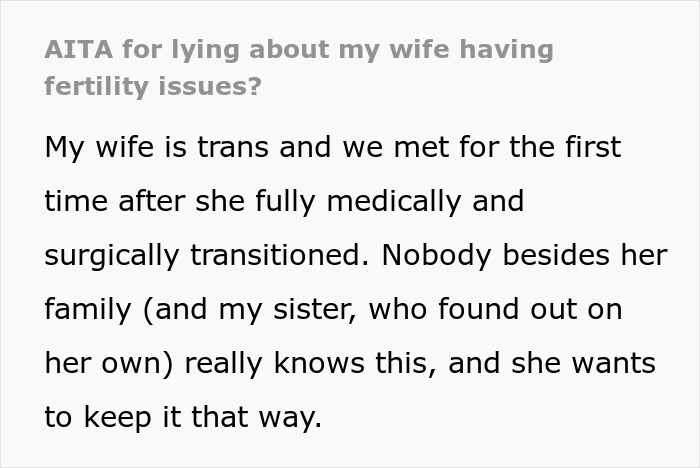
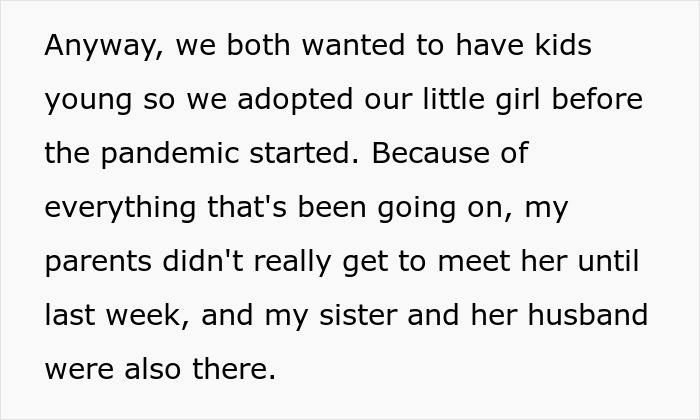
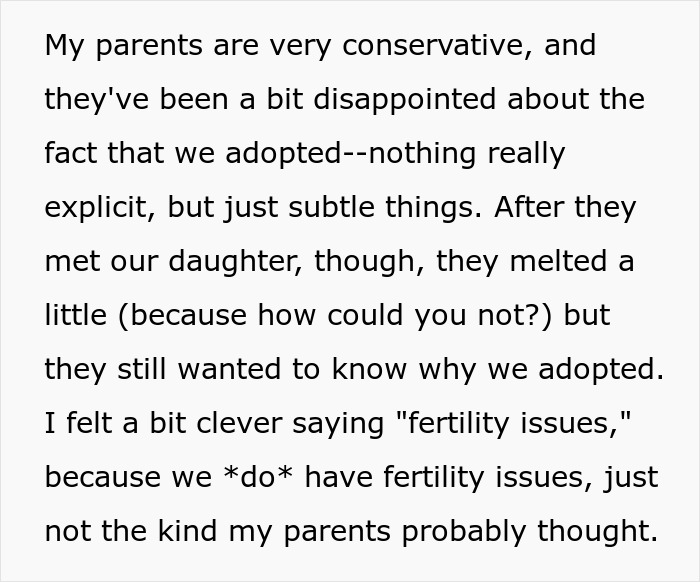
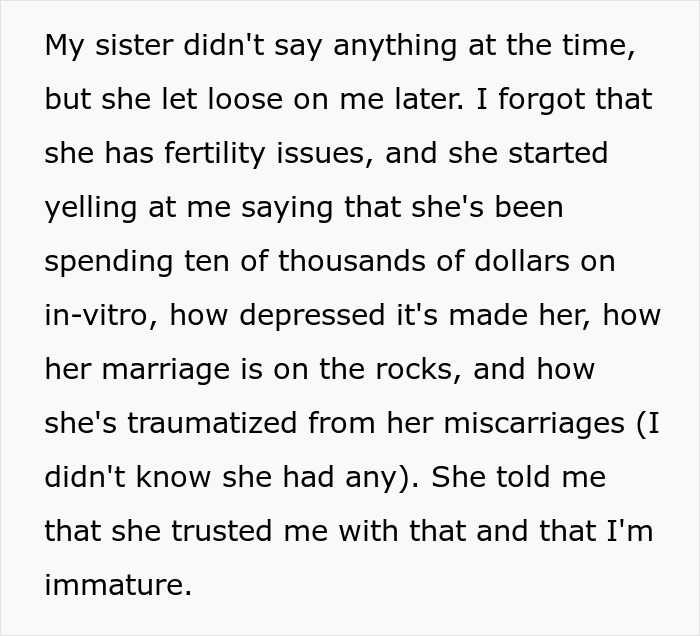
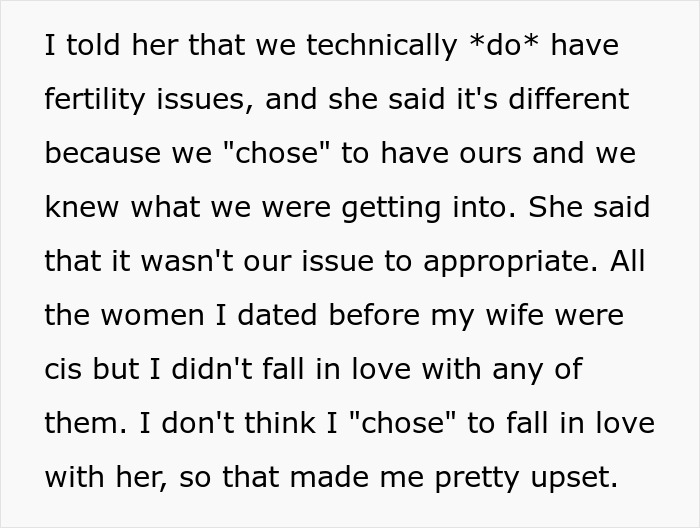


Image credits: AlexVog / Envato (not the actual photo)
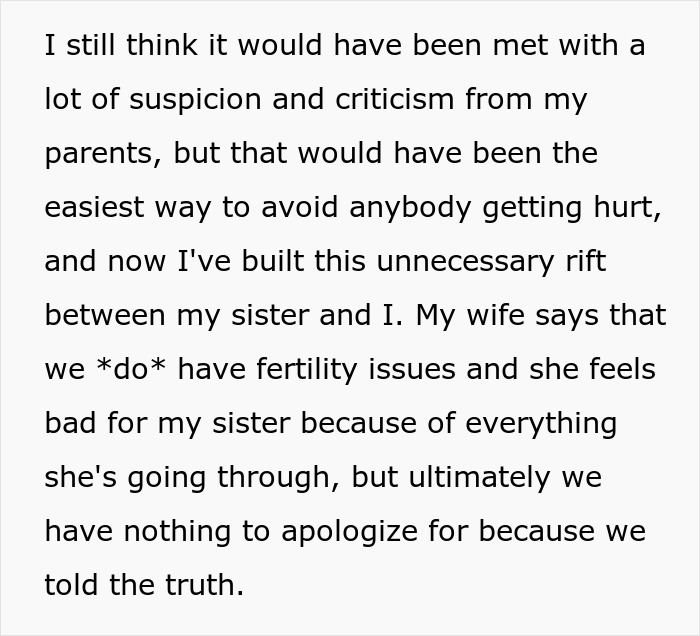

Image credits: anon
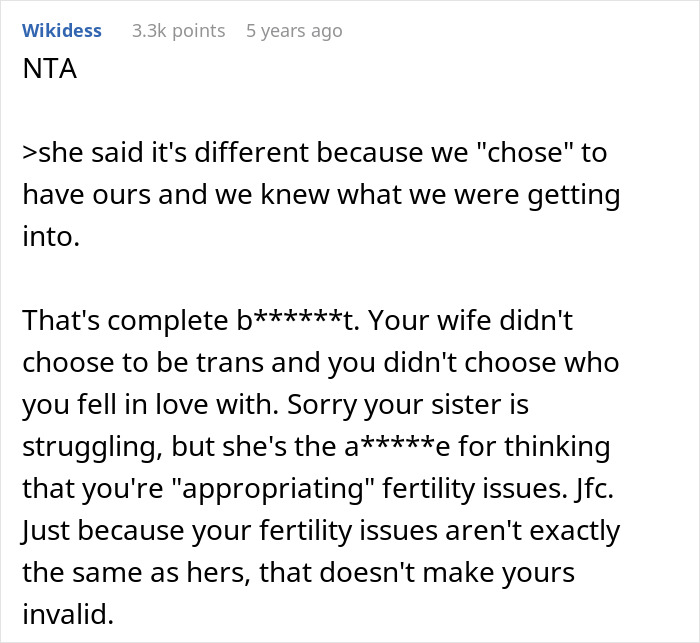
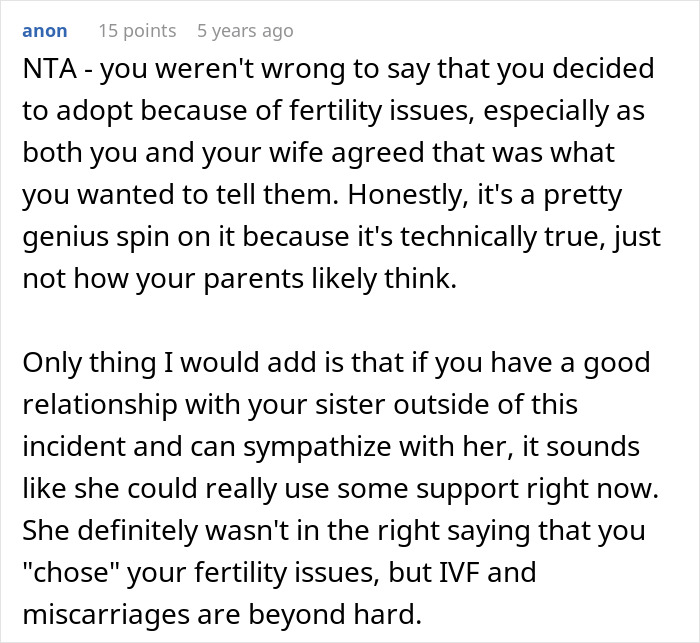
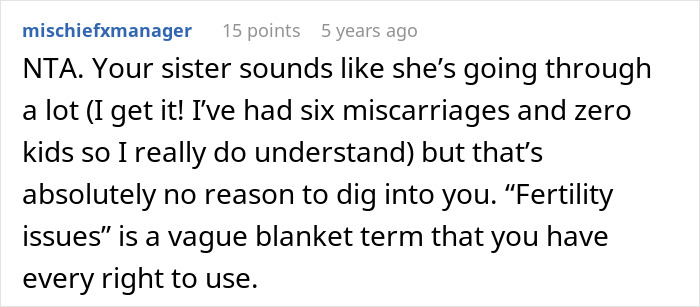
Most internet users thought that the author and his wife did the right thing. Here’s their perspective

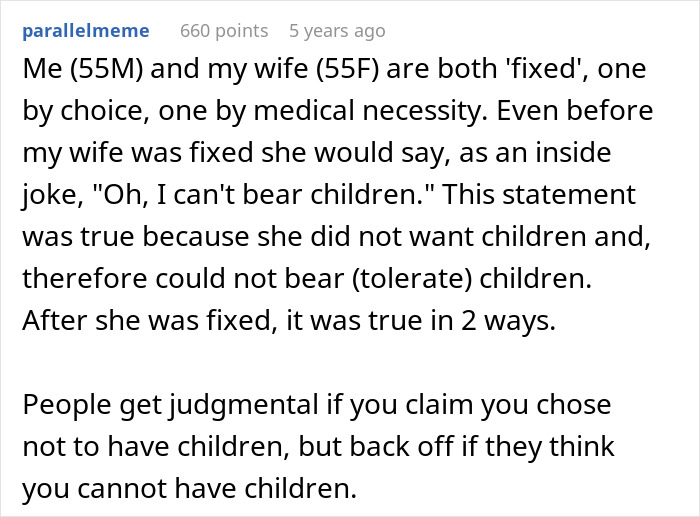
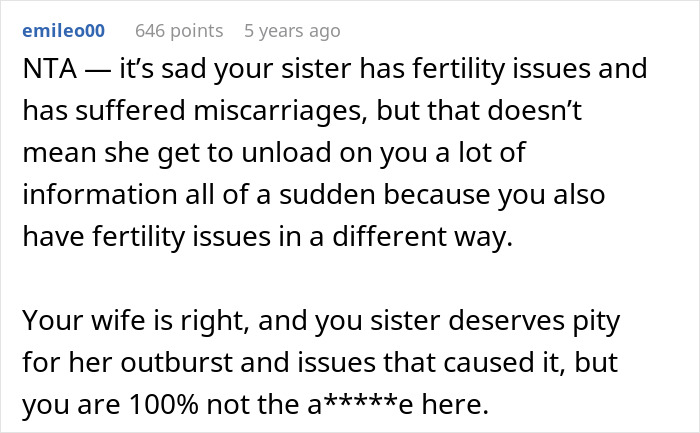
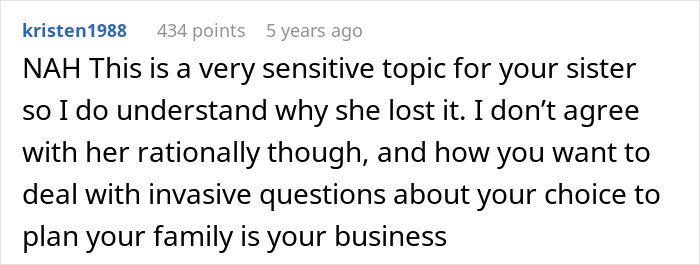
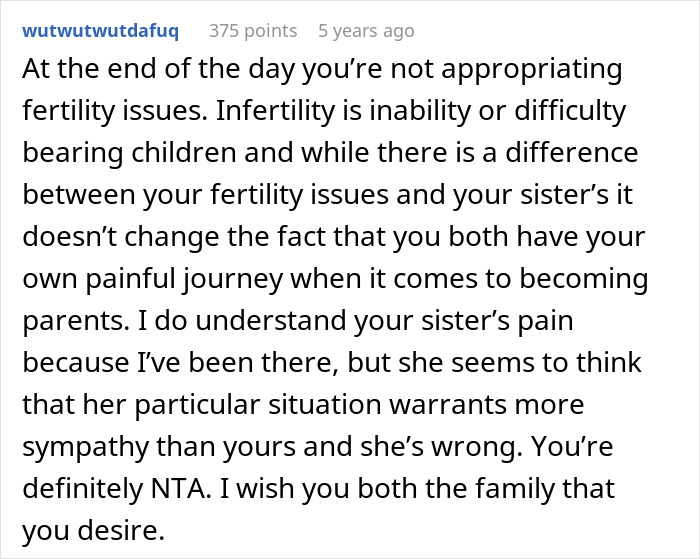
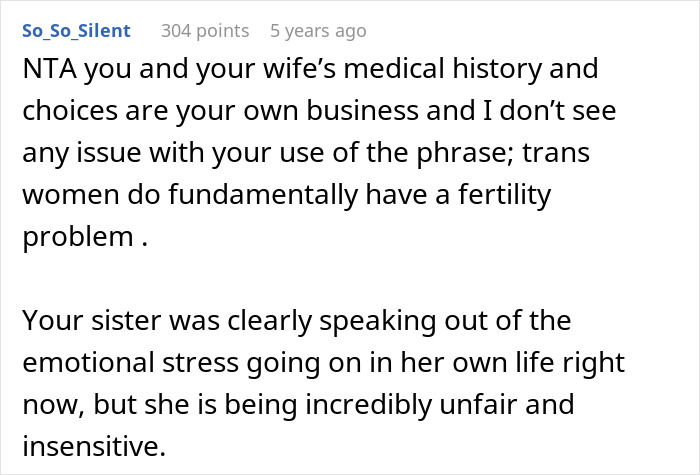
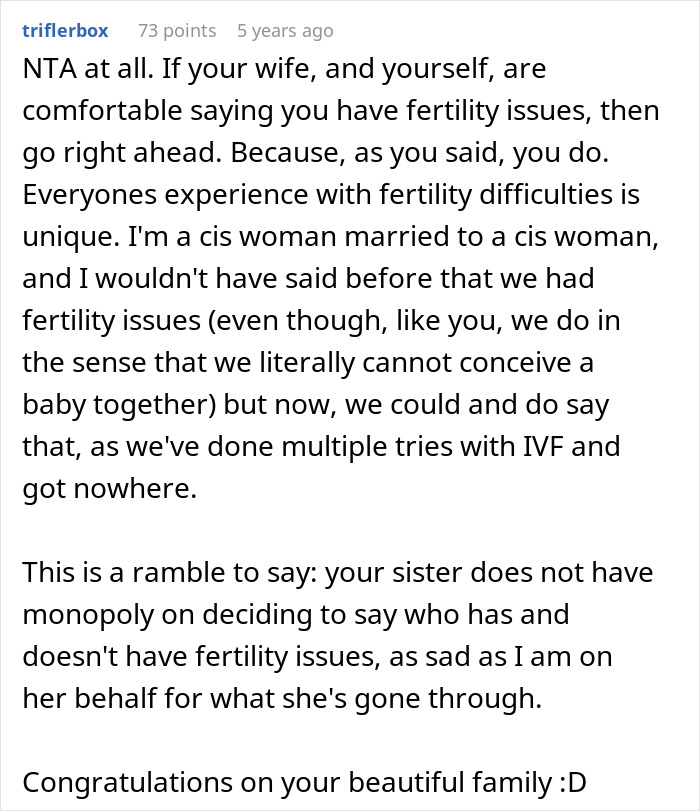
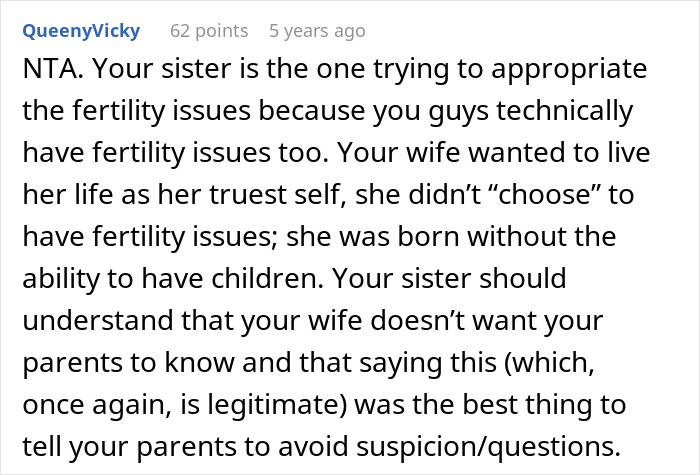
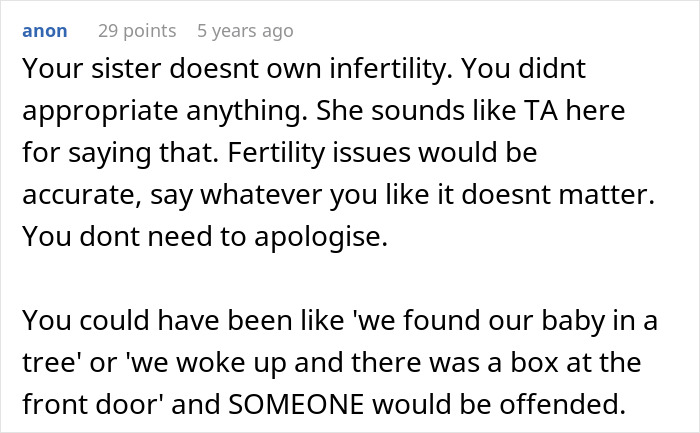
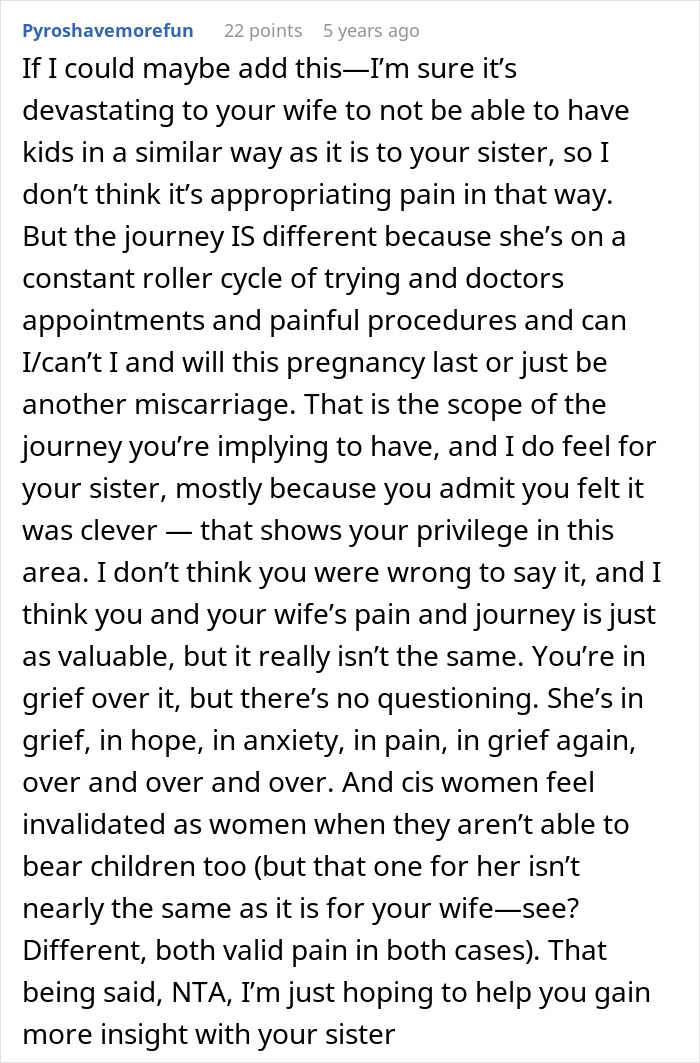
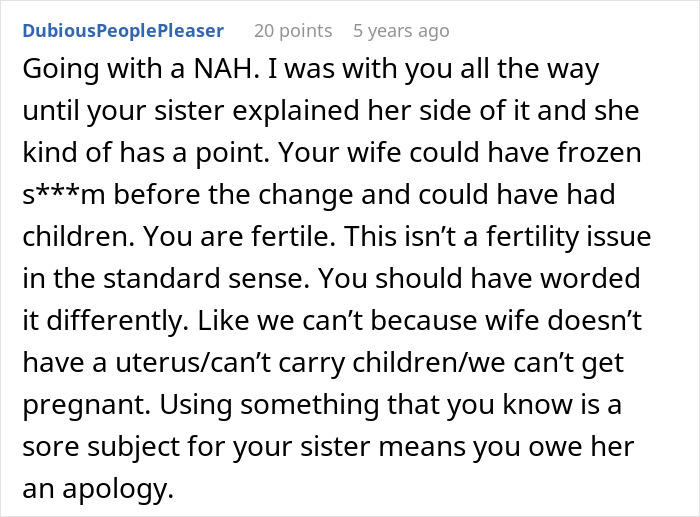
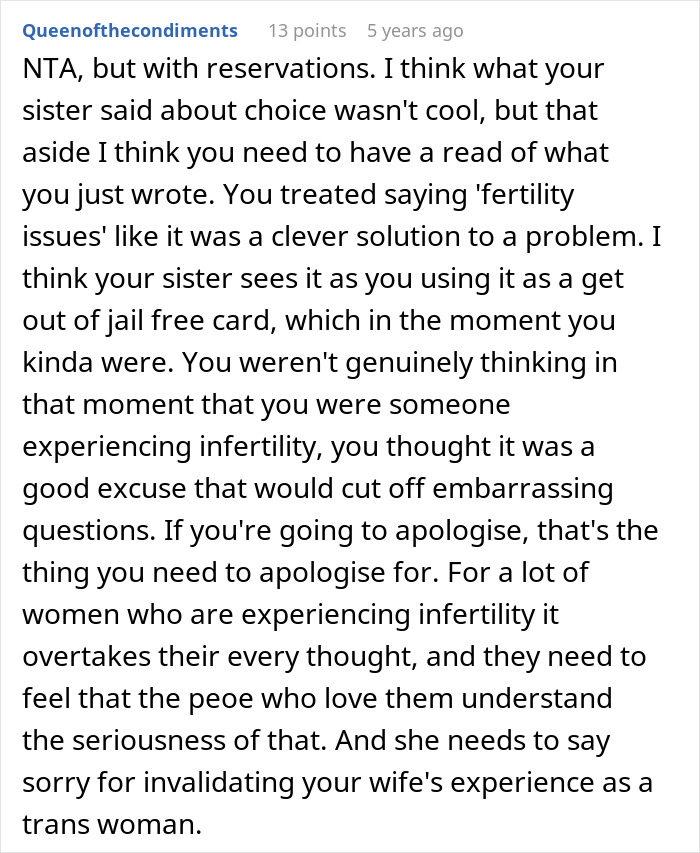

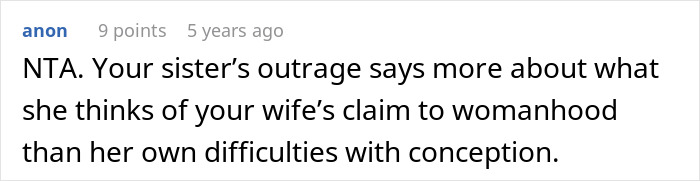
Some readers thought that nobody was in the wrong. Here’s their take
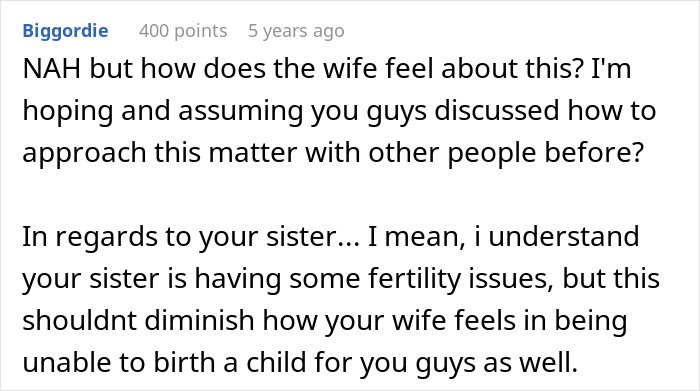
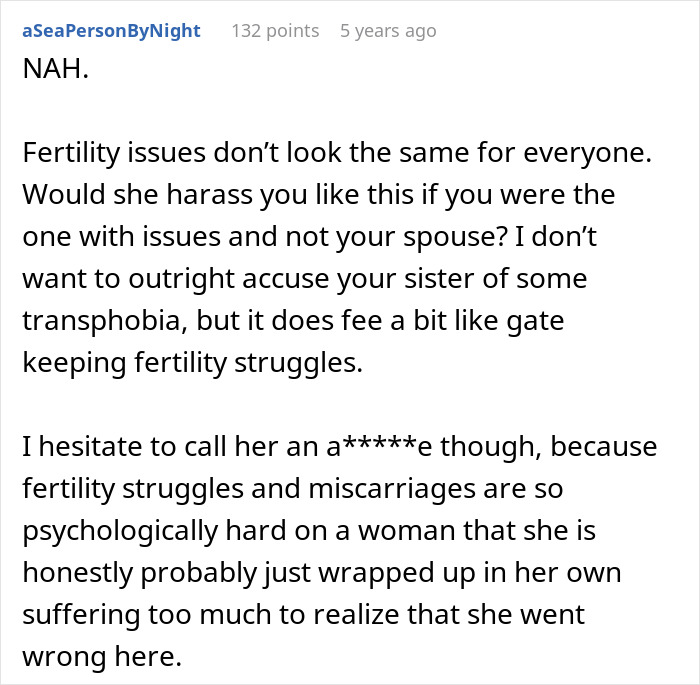
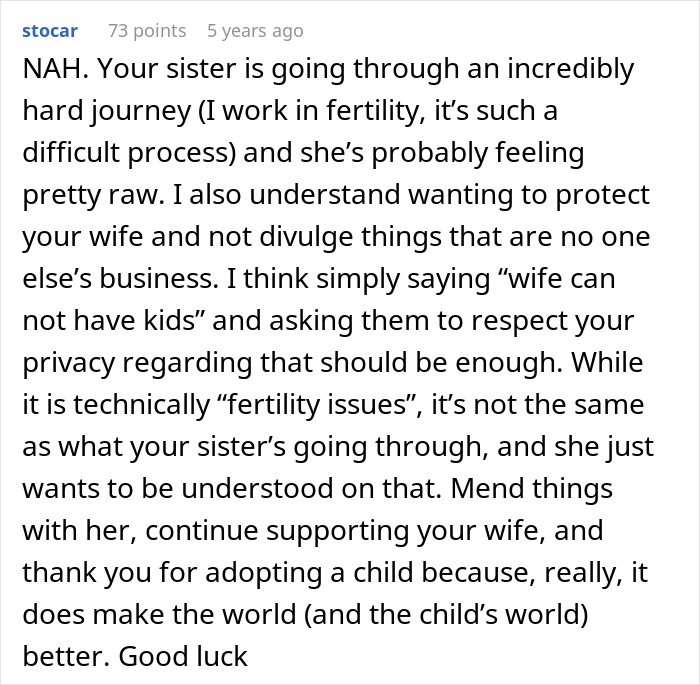
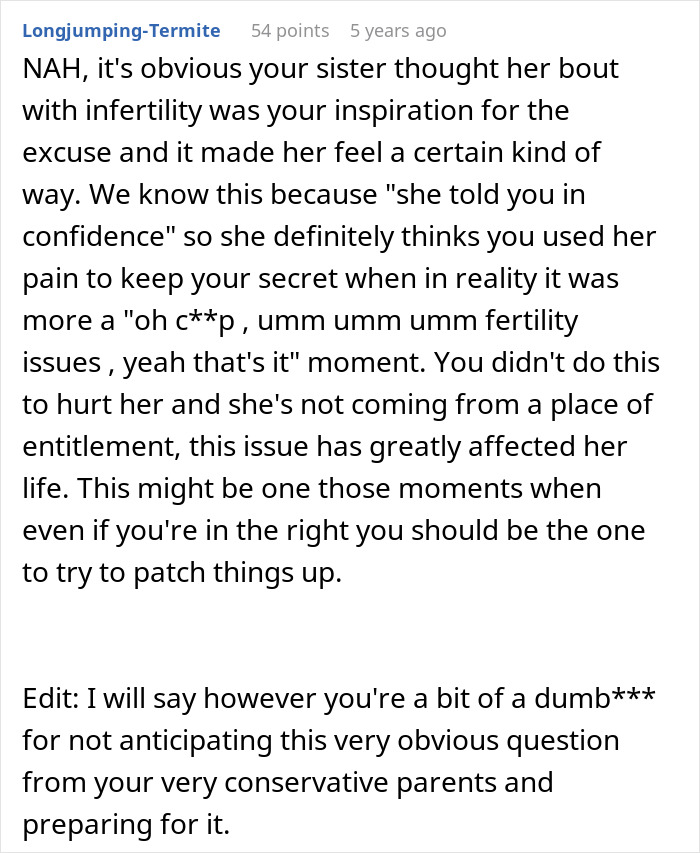
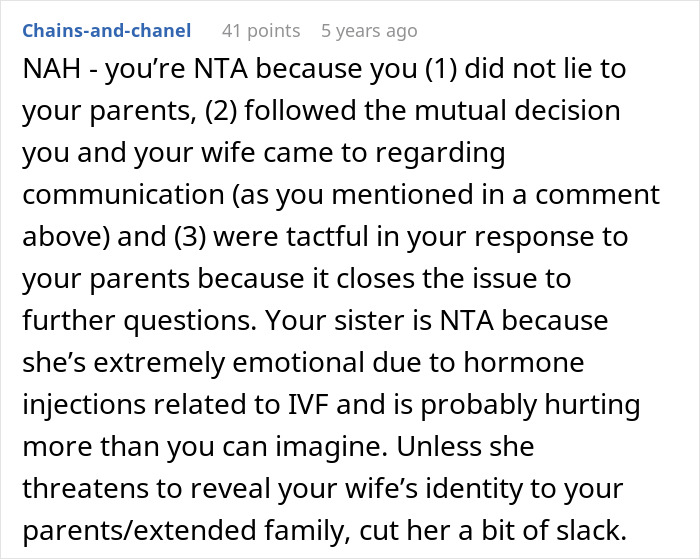


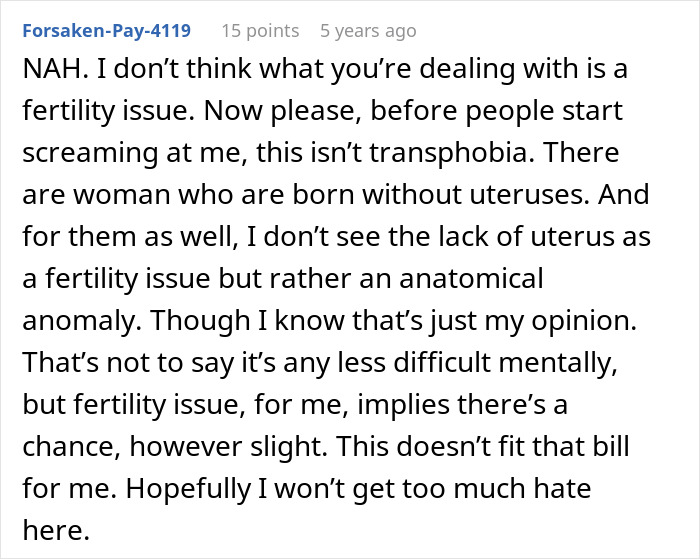
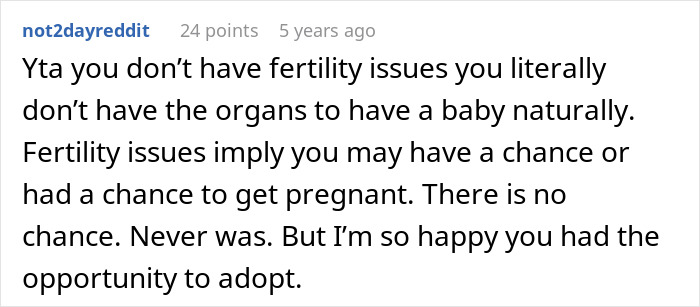
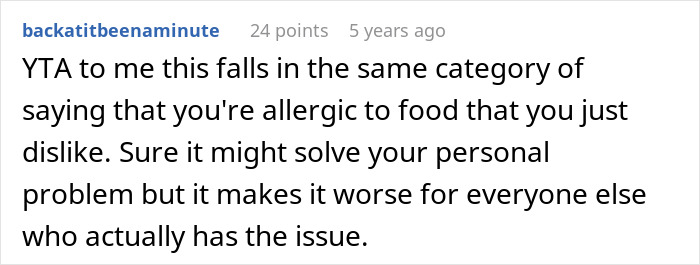
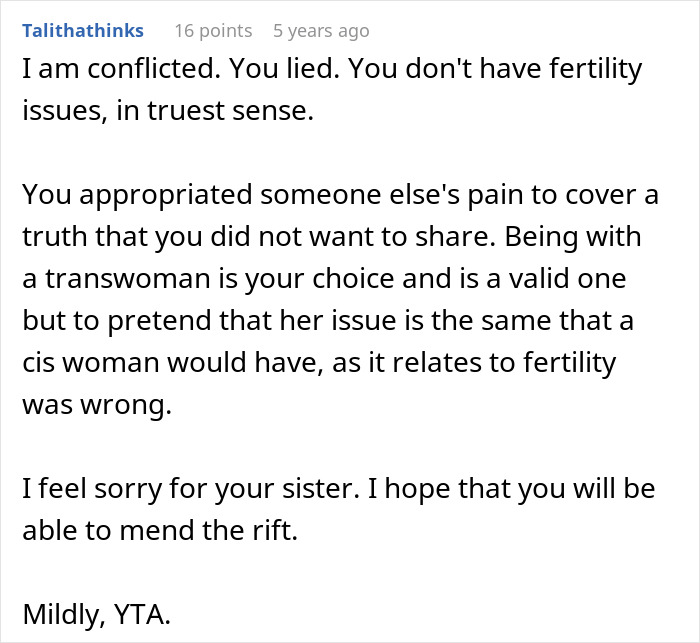
A handful of people were more critical
Everyone wants to be loved, accepted, supported, and respected for who they are, without having to pretend
In an ideal world, you should feel safe enough to share your innermost thoughts, feelings, experiences, challenges, and choices with your loved ones. They would support you, advise you where and when needed, and embrace you for who you are, no matter what. That’s what unconditional love looks like.
However, we do not live in an ideal world. Being open and honest is incredibly difficult if you believe that you will be (harshly) judged for your choices. We all crave love, acceptance, and kindness, so we might feel pressured to adjust our behavior to get those things, even if that means telling white lies or changing our behavior to conform to others’ expectations.
That being said, avoiding being your authentic self can take a toll on your physical and mental health. Having those honest, fully transparent conversations with your family might be awkward, embarrassing, and uncomfortable, but they are your path toward being your true self. And yet, there’s always the fear that you won’t be accepted, that you’ll be rejected instead.
What’s more, you have to take your and your partner’s safety into account. If you feel that you or your partner’s safety might genuinely be at risk by revealing the truth, you may want to reconsider how you approach the situation.
Moreover, some sensitive secrets might not be yours to share. You have to be very mindful of your significant other’s needs and wants. They set the timetable for what they’re comfortable sharing and when. The best you can do is support them and look for compromises where it makes sense.
You do not have to reveal everything about your life to your loved ones. It is healthy to have boundaries and keep some things private. There is a fundamental difference between privacy and secrecy. In short, privacy revolves around the things that mostly affect just you, and it is your right.
Secrecy and privacy are vastly different things because of how they impact the people around you
On the flip side, secrecy is, fundamentally, an intentional act where you withhold important, consequential information from the people in your life. A good rule of thumb is to think about whether a certain piece of info significantly impacts those around you. If it does, withholding it is likely harmful.
For example, lying about your life, misleading others about your habits, and hiding significant aspects of your life, including your physical, mental, and intimate history, would all be considered secrecy.
On the other hand, having private conversations with family and friends, keeping embarrassing stories from your past to yourself, and staying quiet about your intimate relationship with yourself would be examples of privacy.
Privacy is healthy, does not violate anyone’s trust, and is not disruptive or harmful. Meanwhile, secrecy is, at its core, dishonest, violates trust, and is toxic, hurtful, and disruptive.
Honesty leads to less stress and anxiety, improves communication, promotes positive interaction, shows trust and respect, and improves overall life satisfaction and your feelings of self-control.
If you do choose to share an important secret, timing is everything. Some moments that you want to avoid sharing sensitive information include periods of stress, exhaustion, and anger, and when someone is ill or already dealing with tough news. In a nutshell, you want to be in a situation where you reduce the likelihood of misunderstandings and frustration.
What’s your perspective, Pandas? What would you have done in this situation? Have you ever felt like you had to lie to your family about you and your significant other? What advice would you give anyone who wants to reveal the truth about who they are, but they’re scared of the consequences? Feel free to share your experiences and tips in the comments.
Later, the author had a huge update to share after his wife decided to tell his family the truth

Image credits: Image-Source / Envato (not the actual photo)
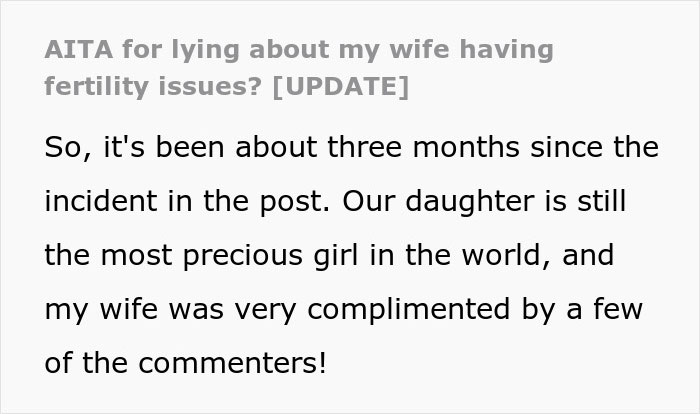
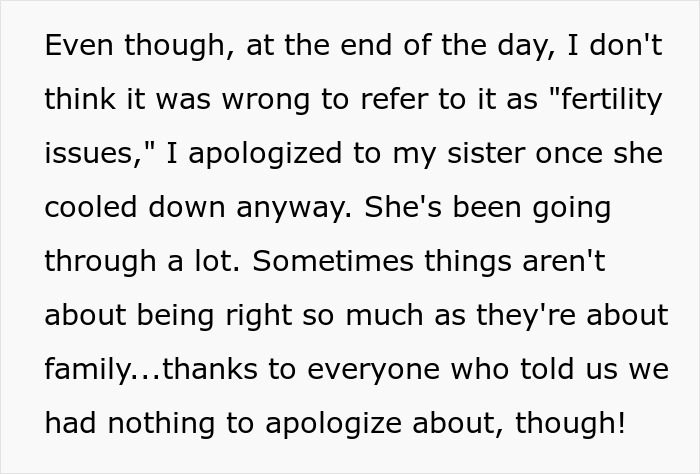
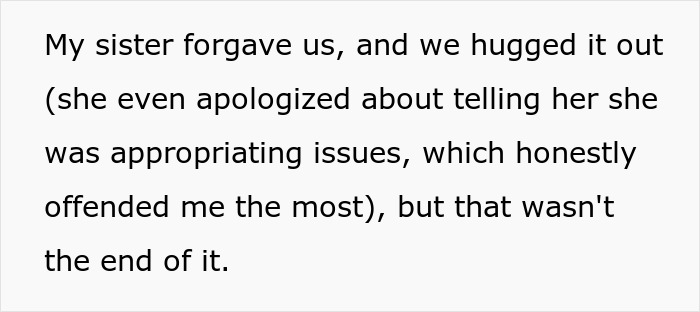
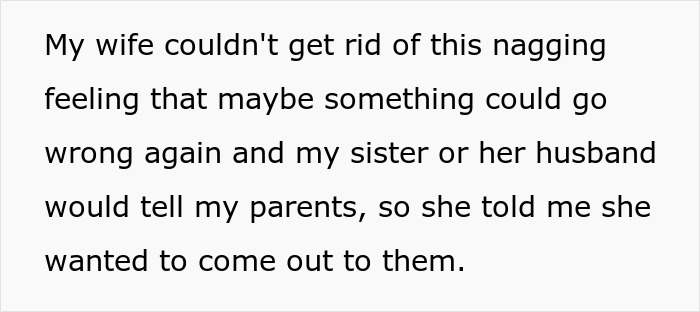


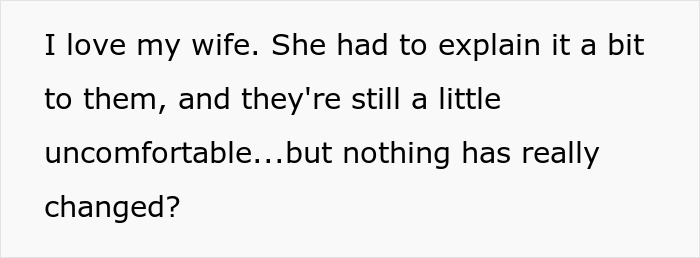

Image credits: prathanchorruangsak / Envato (not the actual photo)


Image credits: anon
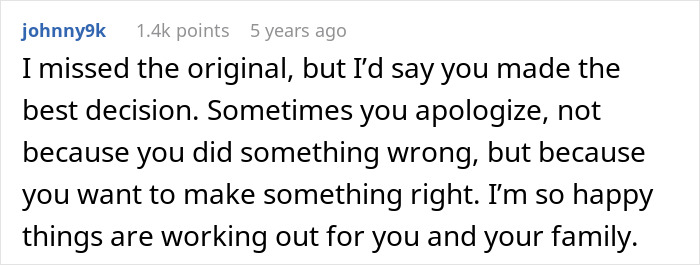
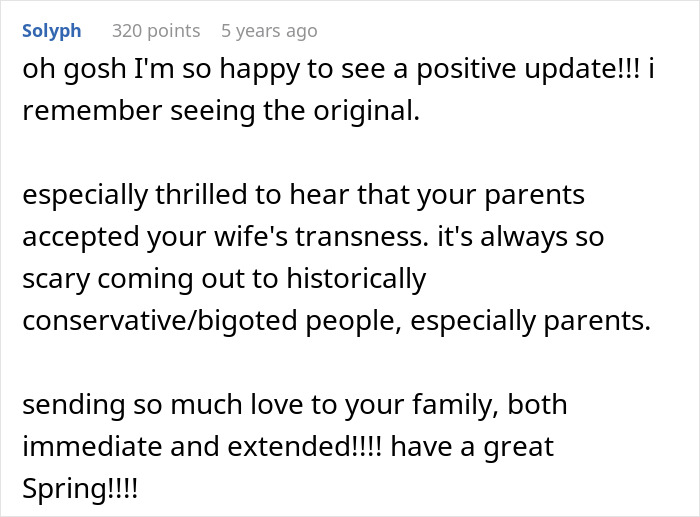
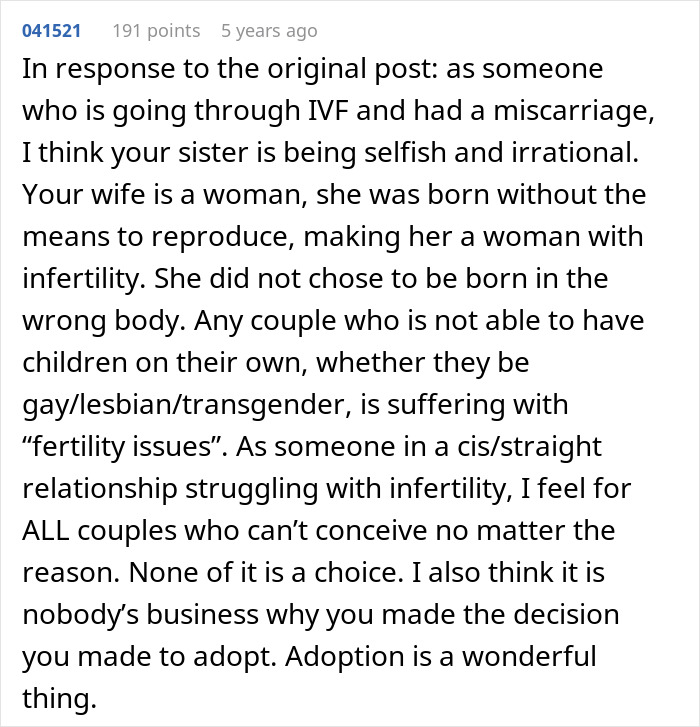
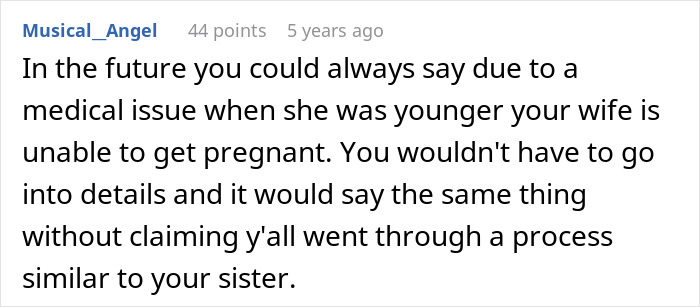
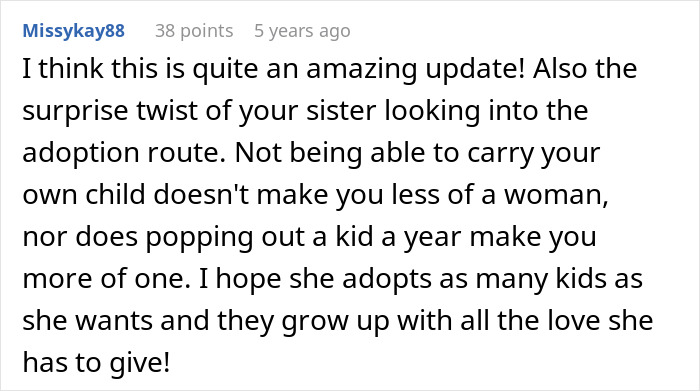
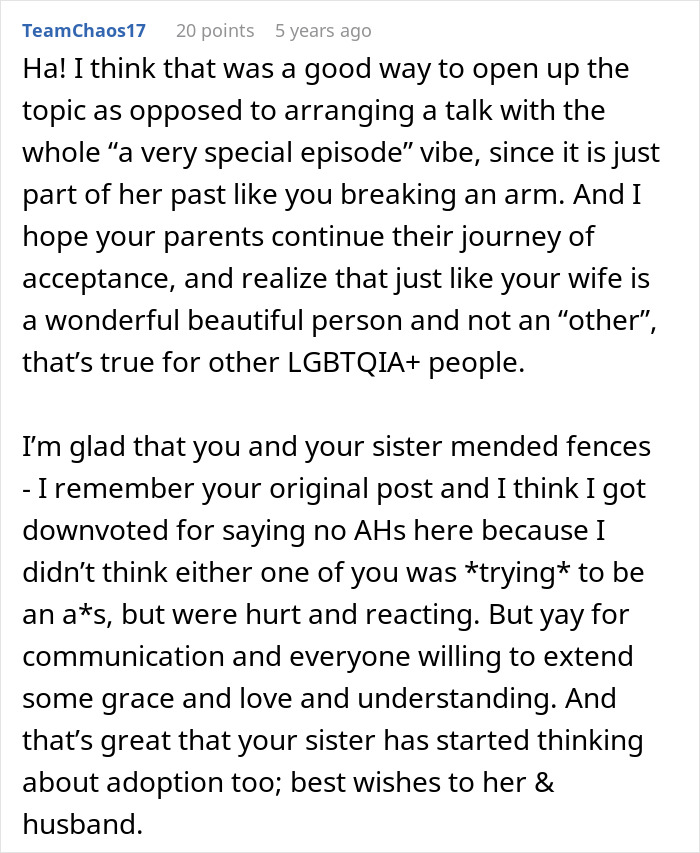
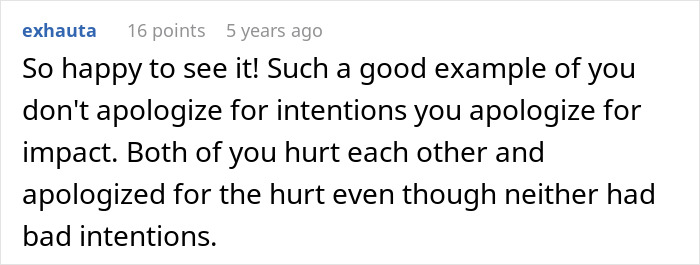
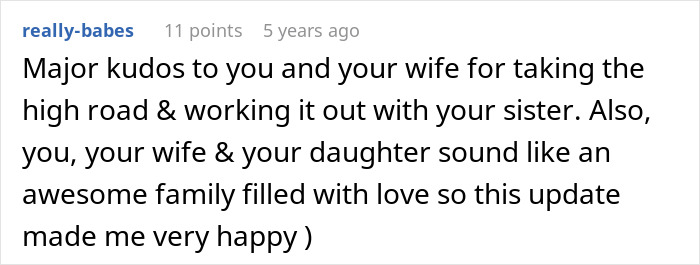
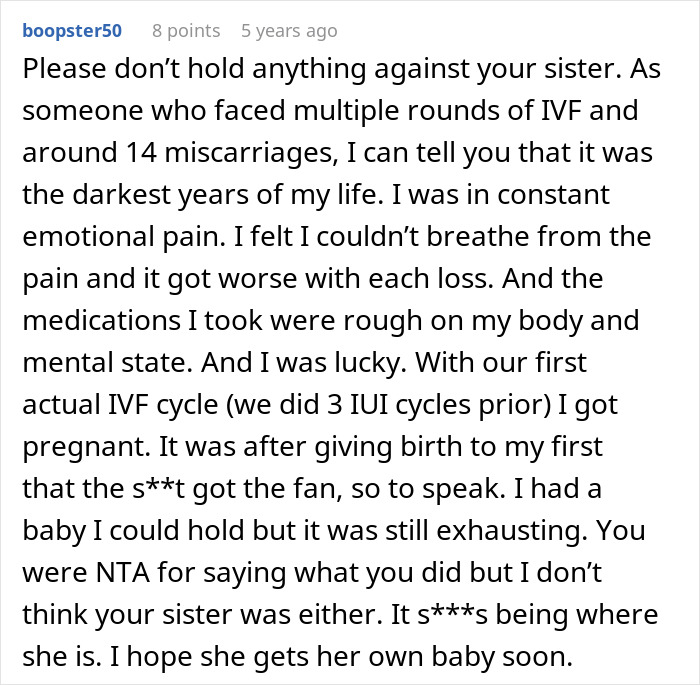
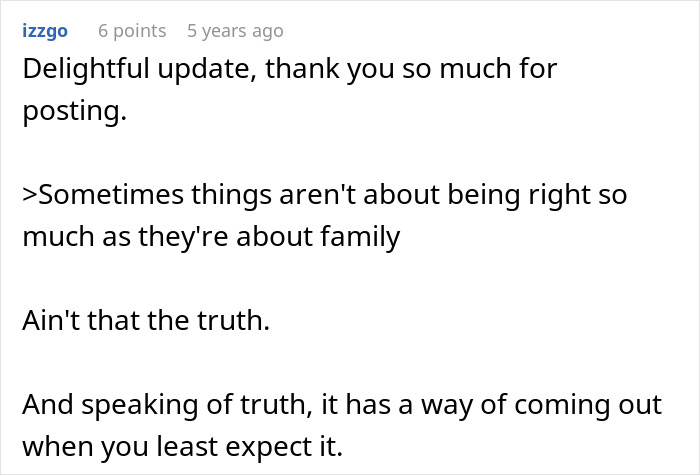
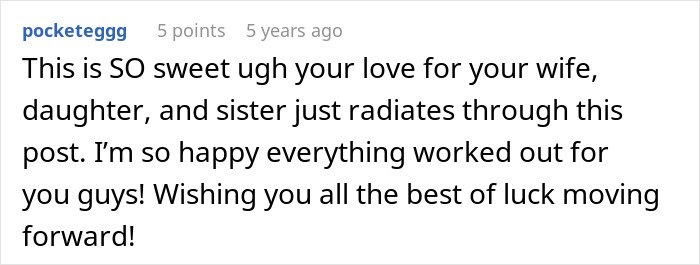
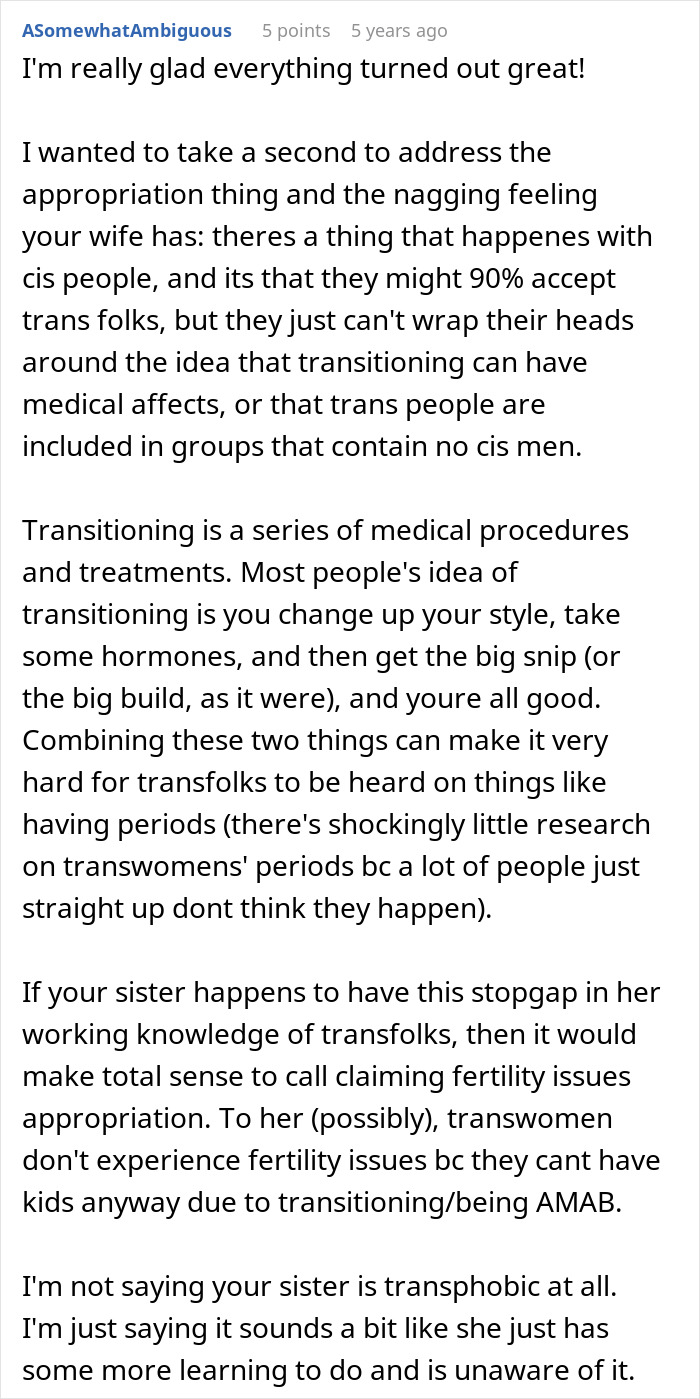
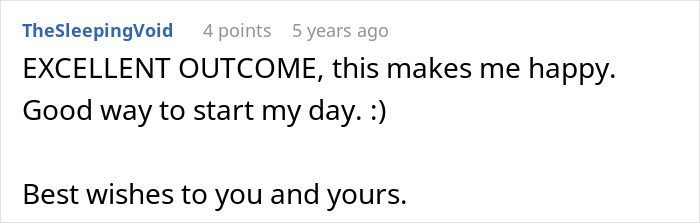
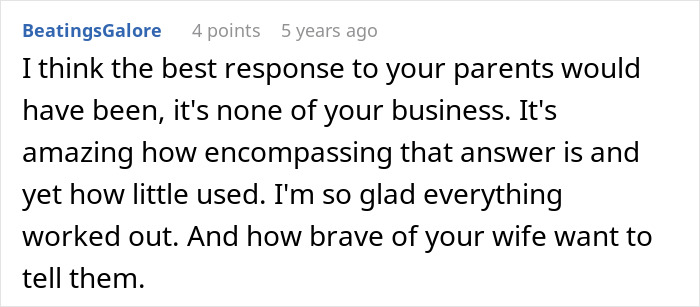
Many people wanted to share their support after the follow-up post














from Bored Panda https://ift.tt/MLHXEr2
via IFTTT source site : boredpanda
