A wedding ceremony isn’t just about the vows or the outfits—it’s a deeply emotional celebration filled with love, memories, and meaning that often goes far beyond a single day. When so much sentiment is involved, it’s only natural that certain boundaries feel especially important to protect.
In this case, a woman shared how she had been saving her late mother’s wedding dress for the day she would finally get to wear it herself, honoring a promise her mom once made. Things took a turn when her brother’s fiancée asked to wear the dress first, hoping to feel connected to the family. When the woman firmly said no, she was labeled “selfish,” and the disagreement quickly turned into a family-wide conflict. Keep scrolling to see how it all unfolded.
Many women dream of wearing their mother’s wedding gown
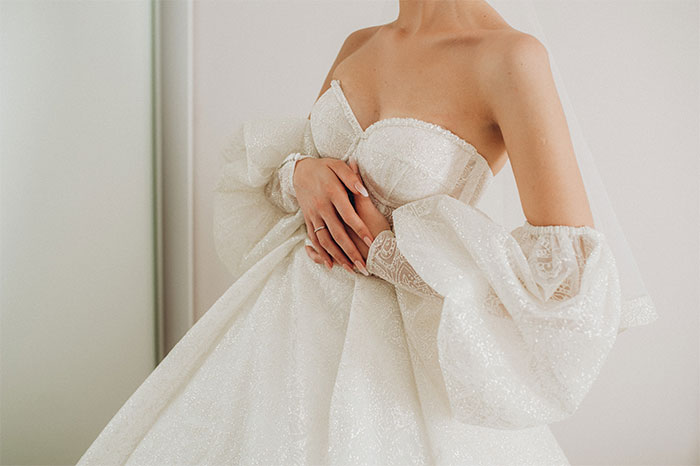
Image credits: fentonroma143 / Magnific (not the actual photo)
So when this woman’s soon-to-be sister-in-law expressed interest in wearing her late mother’s dress, she immediately refused
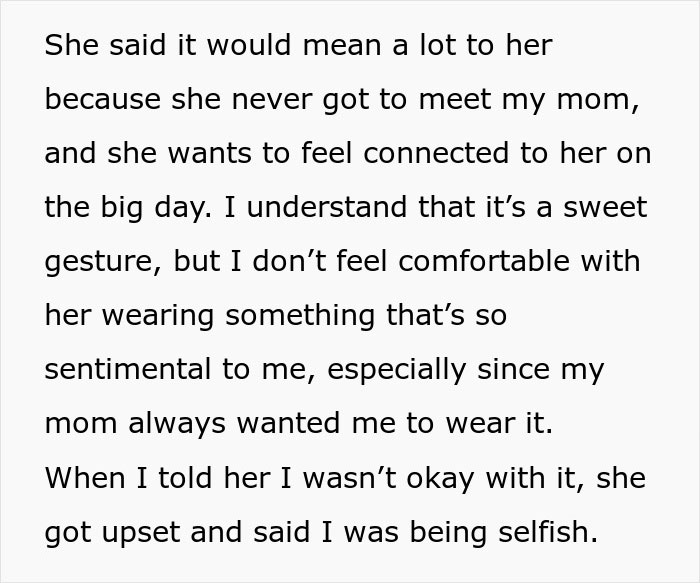

Image credits: Stockbusters / Magnific (not the actual photo)
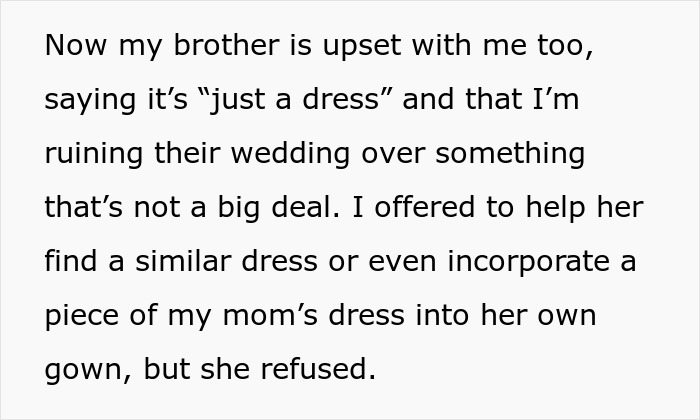
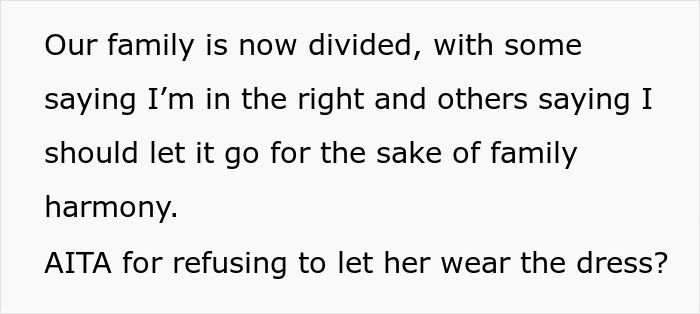
Image credits: BoldBellaXX
Wedding dresses are often financially expensive, but beyond the price tag, they carry deep emotional significance and personal meaning for many brides
According to The Knot 2025 Real Weddings Study, which surveyed nearly 17,000 U.S. couples who tied the knot in 2024, the average cost of a wedding dress sits around $2,000. That number alone can make anyone’s jaw drop, especially considering it’s an outfit worn for just one day. But for most brides, a wedding dress is never just about the price tag or the fabric. It represents months of dreaming, planning, and imagining a once-in-a-lifetime moment. Long after the wedding photos fade, the emotions attached to that gown tend to linger. That’s why its value often feels priceless, no matter the cost.
For many brides, a wedding dress holds deep sentimental meaning that goes far beyond fashion trends. It can symbolize love, commitment, and the beginning of a brand-new chapter in life. Some dresses carry memories of fittings shared with loved ones, tears shed in front of mirrors, and that overwhelming moment of “this is the one.” Others represent personal milestones, like overcoming self-doubt or embracing confidence. The dress often becomes a quiet witness to all the emotions leading up to the big day. Even years later, just seeing it can bring back a rush of feelings. In that sense, it’s less clothing and more emotional keepsake.
For instance, some brides choose to wear dresses that have been passed down through generations, turning the gown into a cherished family heirloom. These dresses carry stories from mothers, grandmothers, or even great-grandmothers who wore them decades earlier. Wearing such a dress can feel like honoring family history while keeping traditions alive. It’s a way of blending past and present into one meaningful moment. Even if the dress is altered or updated, its essence remains the same.
For many, a wedding dress is also a powerful expression of personal style and individuality. Some brides go classic and timeless, while others opt for bold cuts, unconventional colors, or modern silhouettes. The dress becomes a reflection of who they are and how they want to show up on one of the biggest days of their lives. It’s a chance to make a statement without saying a word. From lace and tulle to sleek satin or minimalist designs, every choice tells a story. The gown becomes an extension of the bride’s personality. In that sense, it’s wearable self-expression.
Many women view their wedding dress as an extension of their personality, using it to express their style, values, and individuality on one of the most important days of their lives
In some cases, a wedding dress can also serve as a statement of wealth or status, whether intentionally or not. Designer labels, custom couture, and intricate detailing often come with hefty price tags. For some brides, the dress symbolizes success, celebration, or a reward for years of hard work. It can reflect cultural expectations or societal pressures around weddings. While not every bride views it this way, the association is hard to ignore. The dress can quietly signal luxury, taste, or exclusivity. It’s another layer of meaning stitched into the fabric.
In the end, a wedding dress is rarely just “a dress.” It’s a blend of emotion, identity, tradition, and personal history wrapped into one garment. That’s why conversations around wedding dresses can become surprisingly intense or emotional. What may look like fabric to one person can mean the world to another. Understanding that emotional weight helps explain why brides often feel so protective of their gowns. Whether it’s brand-new, borrowed, or passed down, the dress carries a story worth respecting. And that’s what truly makes it special.
In this particular case, the author wanted to wear her late mother’s wedding dress because it held deep emotional meaning and was something her mom had always hoped for. The dress wasn’t just an item she inherited—it was a promise, a memory, and a way to feel close to her mother on her own wedding day. While her brother’s fiancée may have had her heart in the right place and genuinely wanted to feel connected to the family, many commenters pointed out that her request crossed an emotional boundary. To them, it felt unfair to ask someone to give up something so personal, especially when it had been set aside for years with a specific intention in mind.
In the end, this situation highlights how deeply personal certain heirlooms can be, especially when they are tied to love, loss, and long-held promises. While intentions may be good on both sides, emotional boundaries still matter, particularly during major life moments like weddings. What are your thoughts on this situation: do you think the author was right to say no, or should she have compromised?
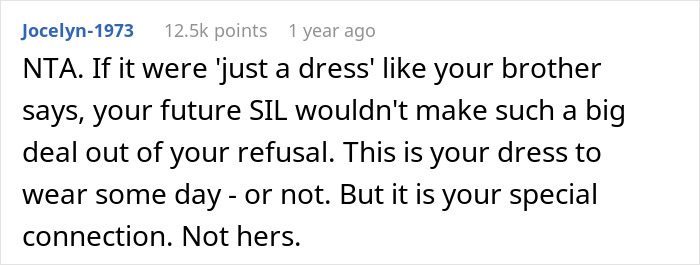
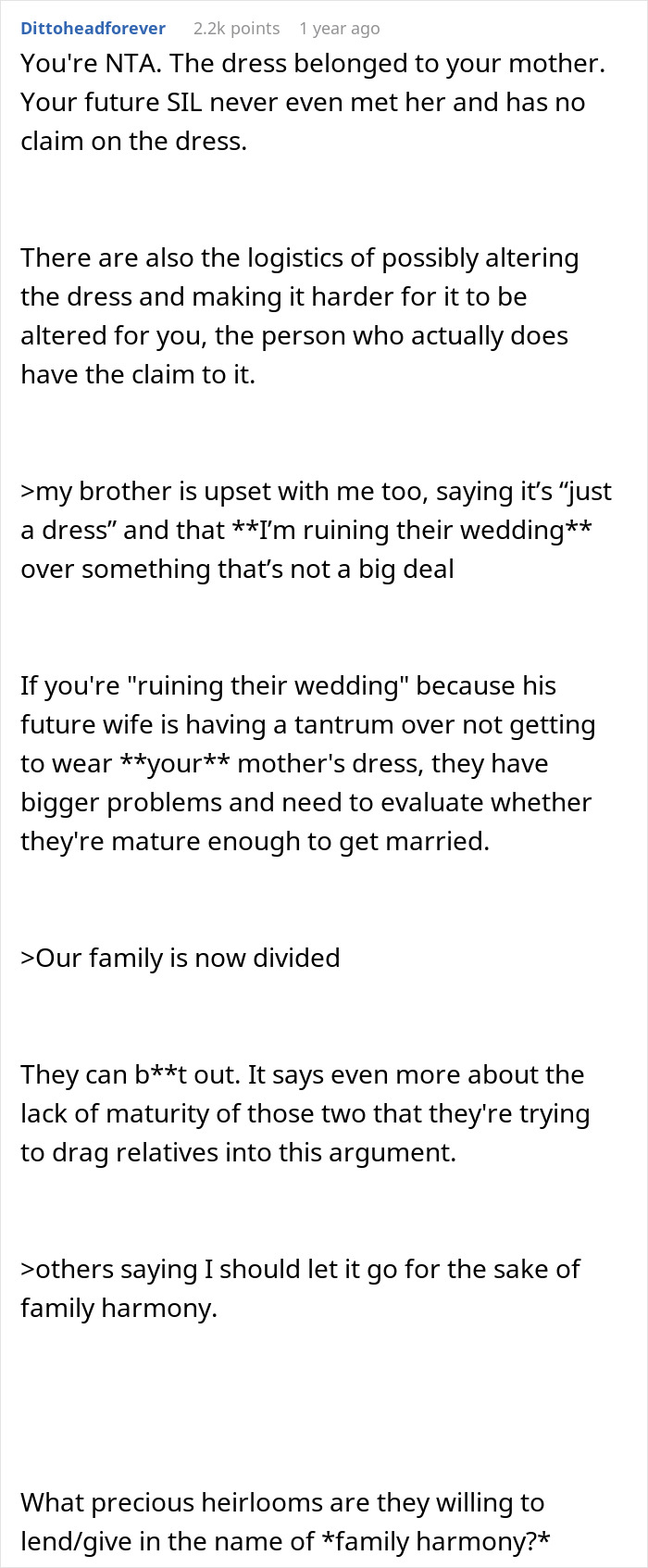
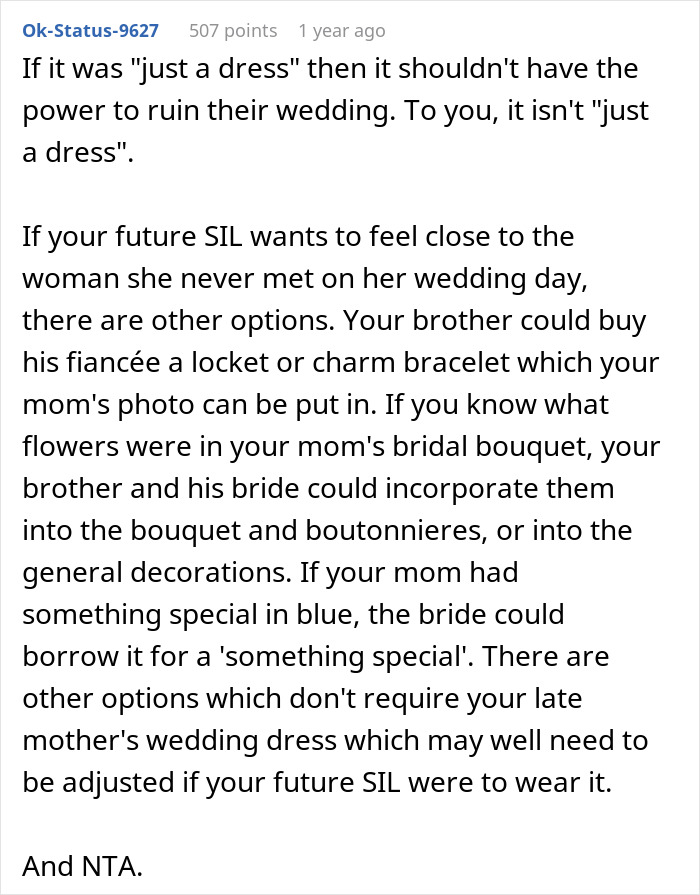
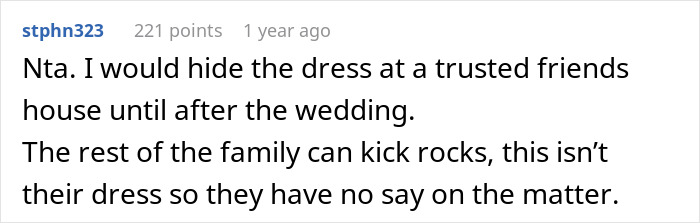
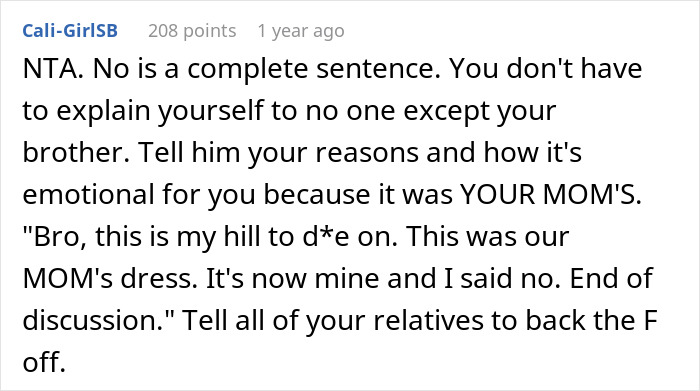
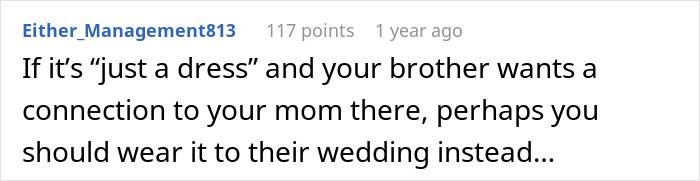
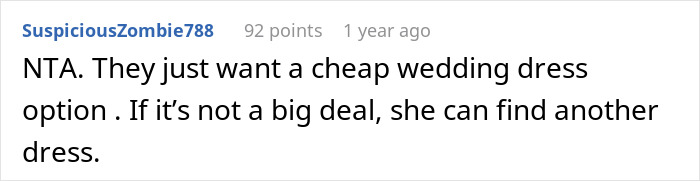
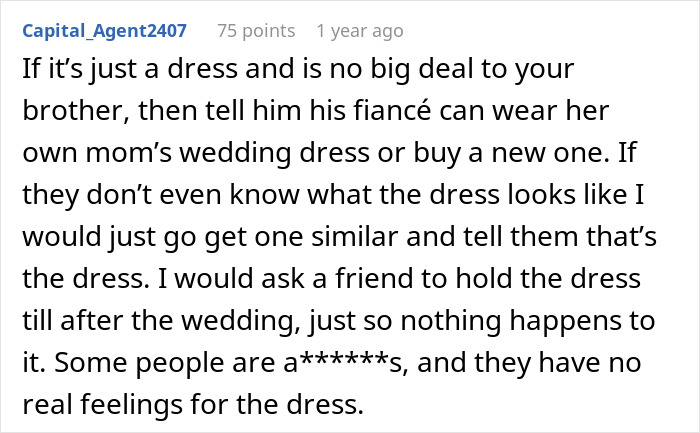
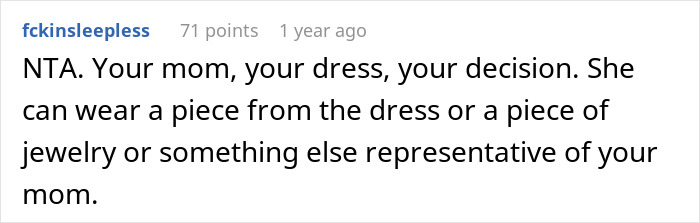
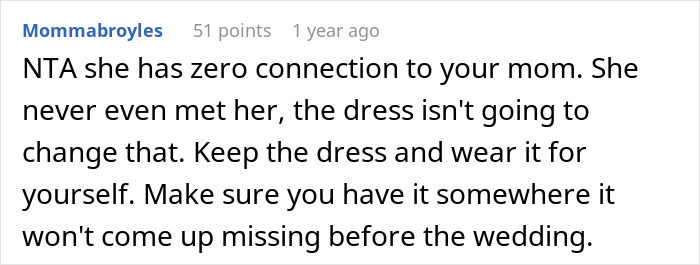
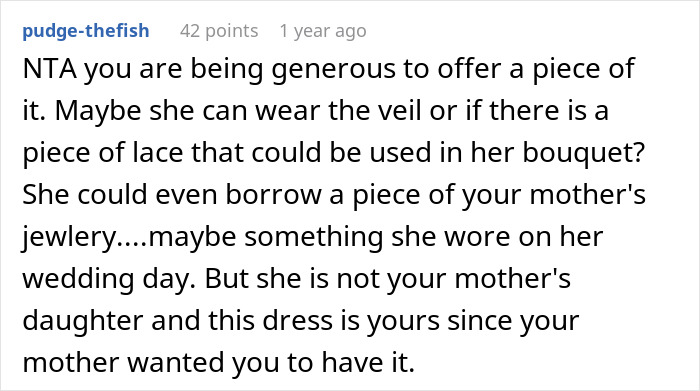
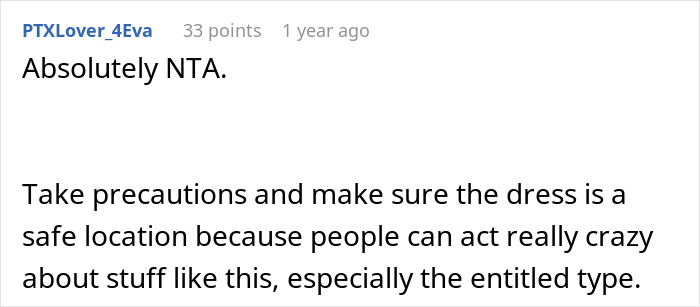
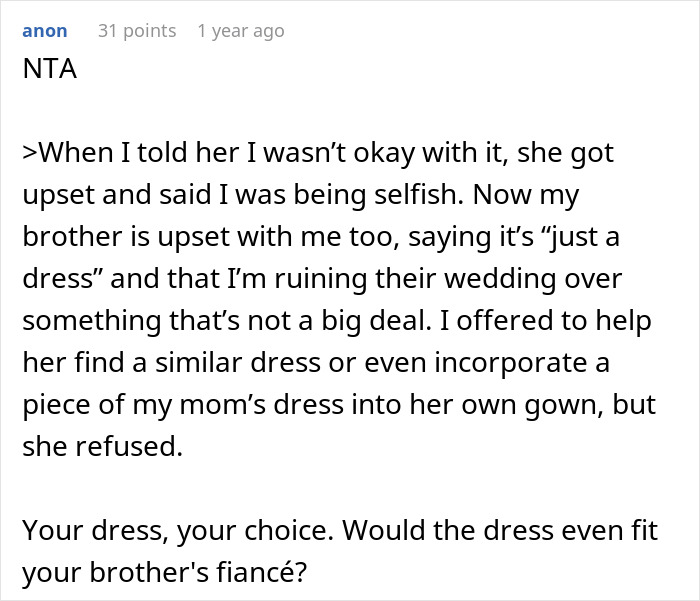
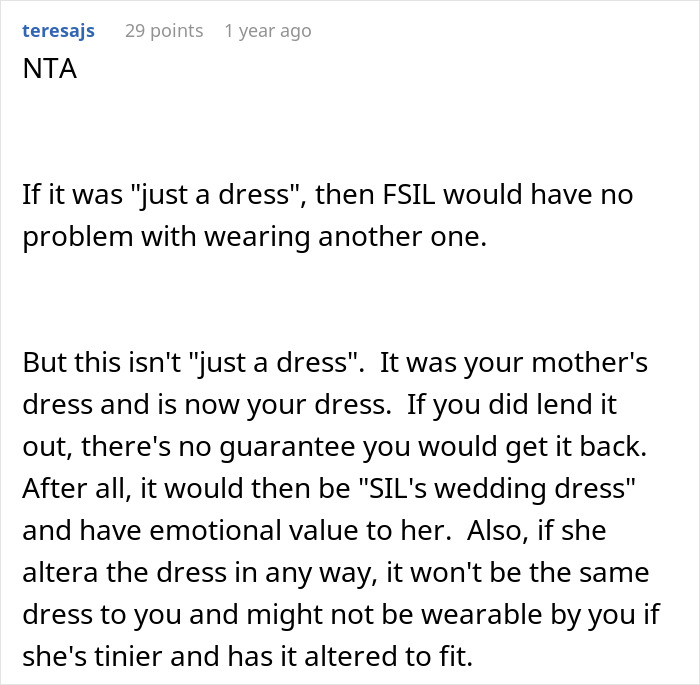
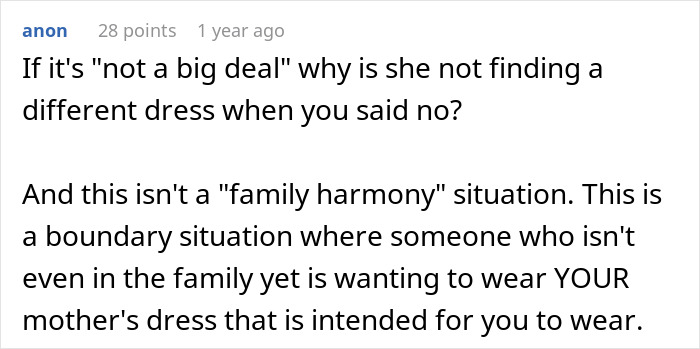
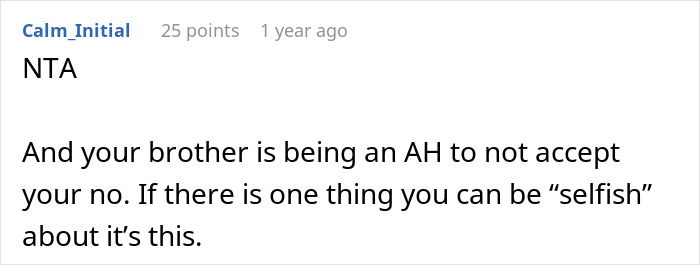
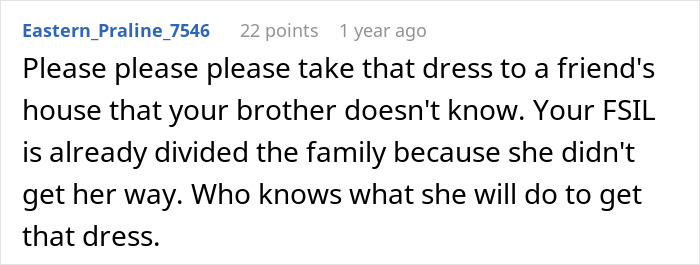
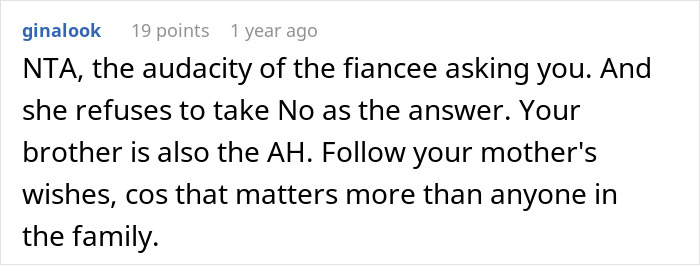
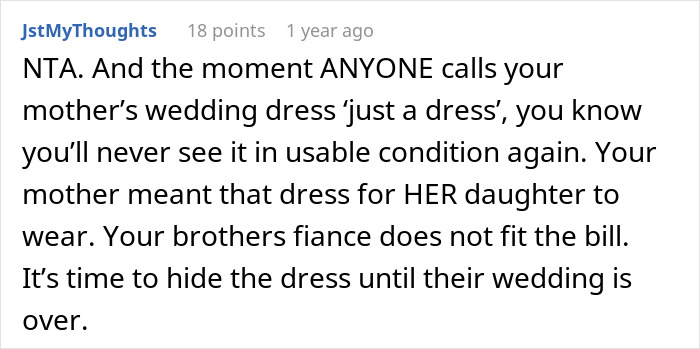
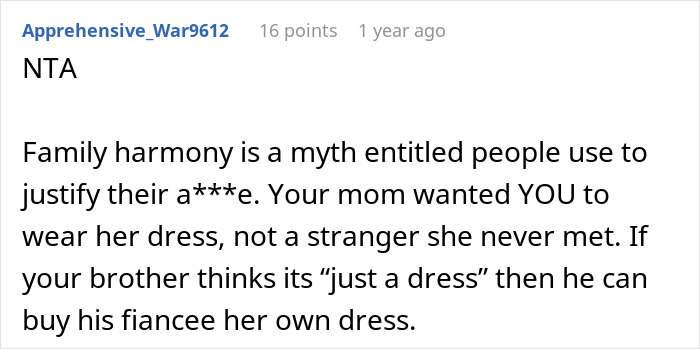
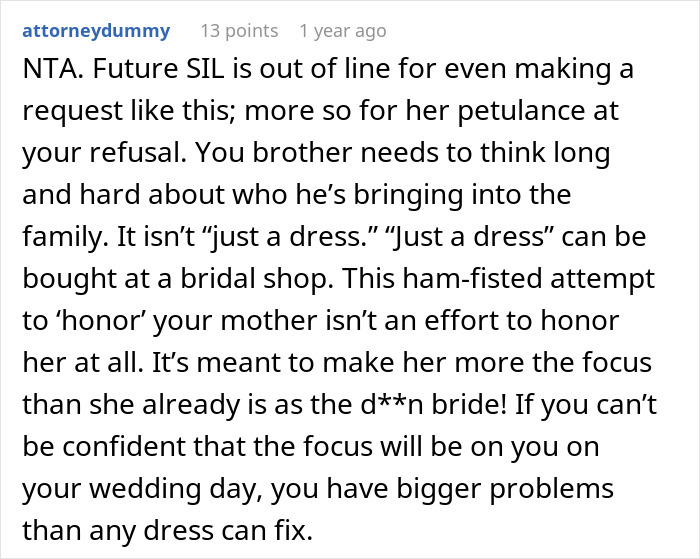
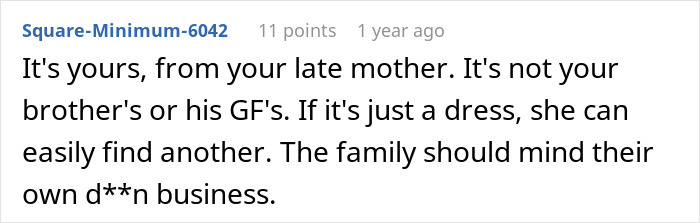
Readers took the author’s side, assuring her that her reaction was justified








from Bored Panda https://ift.tt/F7Plt3H
via IFTTT source site : boredpanda
