It wasn’t the first botched LASIK operation, and it probably won’t be the last. The internet is stunned after 26-year-old Ryan Kingerski, a former police officer in Pennsylvania, took his own life, seemingly because his LASIK eye surgery did not turn out as planned. His parents say his decision to end his life was directly related to LASIK permanently damaging his eyesight.
In August of 2024, Ryan chose to have elective LASIK surgery. He was planning on taking a few days off work, but as the days and months dragged on, his eyesight was not getting any better.
Ryan’s parents told KDKA News, a CBS station from Pittsburgh, that their son was having very bad pain in his head. “He had terrible headaches and wasn’t able to focus, and the vision and blurriness and everything else just continued.”
For five months after getting LASIK, Ryan lived with constant pain until he took his life

Image credits: Getty Images/Unsplash (Not the actual photo)
After living with the pain for five months, he couldn’t take it anymore. In January, Ryan ended his life. He left a note for his parents saying, in part, that he “couldn’t take it anymore. LASIK took everything from me.”
Ryan’s parents said that after the procedure, he was full of regret. But before, he was “witty, charming, smart and a lot of fun to be around,” Stefanie Kingerski said.
They say he decided to go ahead with the elective procedure in part because his doctor told him it was 99.99% effective.
“He couldn’t take it anymore,” Ryan’s parents said, explaining that his sight was worse after the surgery

Image credits: CBS Pittsburgh
LASIK.com, a website with information on the procedure and eye doctors in the U.S. who perform the surgery, has addressed the recent media firestorm about the seeming connection between an unsuccessful surgery and someone taking their own life.
In a press release about Ryan, the site called his story “powerful and emotional.”
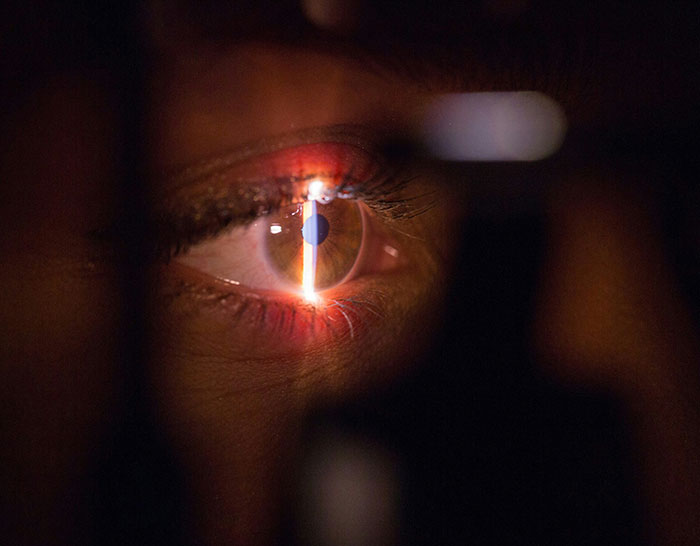
Image credits: Brands&People/Unsplash (Not the actual photo)

But the release urged the public to “be careful” because “there is a difference between honoring someone’s pain and making sweeping conclusions that aren’t supported by evidence.”


Image credits: Pete Dyer
The release said that when people take their own lives, it’s never “caused by a single factor. It’s the result of an incredibly complex interplay of mental health, biology, environment, life experiences, and sometimes physical suffering.”
“Not only misleading, it’s dangerous”: LASIK.com cautions against linking failed surgery to destructive behavior
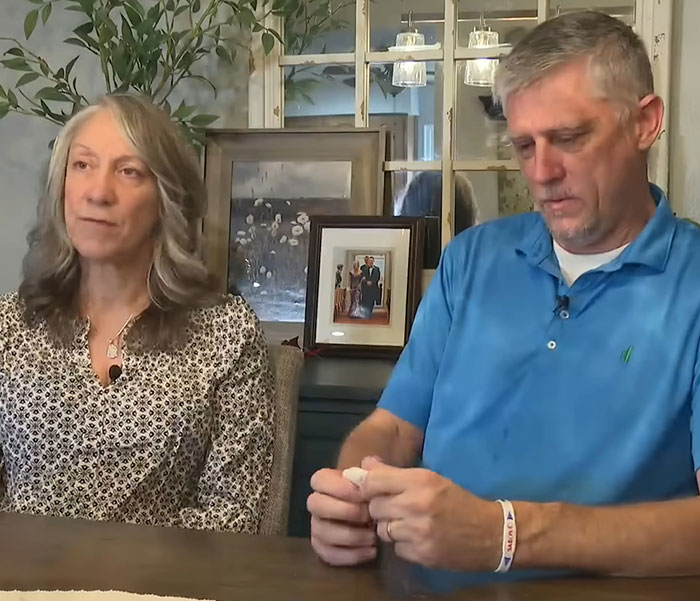
Image credits: CBS Pittsburgh
LASIK.com feels that to draw a direct cause-and-effect line between a failed procedure and taking one’s life, without knowing the full context of that person’s medical history, is “not only misleading, but dangerous.”
The release promoted a balanced approach, “not fearmongering or blind defense.” It said that grief “often seeks a cause,” but that it’s important to remember that “sometimes the most painful truths are the most complicated.”
This isn’t the first time someone has taken their own life after having a LASIK surgery that did not work.
In December of 2018, 35-year-old Jessica Starr, a meteorologist for a TV station in Detroit, also took her own life, seemingly due to complications with LASIK.

Starr was the mother of two young children, and according to her late husband Dan Rose during an interview on Good Morning America, she was not showing any signs of depression prior to the surgery.
Ill-fated LASIK surgeries could have caused more than one person to take their life

After the surgery, her husband says, she knew something was wrong immediately. She began withdrawing from things like eating meals or going out of the house with her family.
In a video diary before she took her life, Starr said that she was “really mad at [herself] for doing this,” explaining, “I don’t know why. I was fine in contacts. Glasses weren’t that big of a deal. It was fine.“
Her husband and her family are convinced that she took her own life because of the failed elective LASIK procedure. “There is nothing else that we can attribute it to.”
Image credits: CBS Pittsburgh
There are multiple cases of LASIK surgeries gone wrong, causing depression or worse
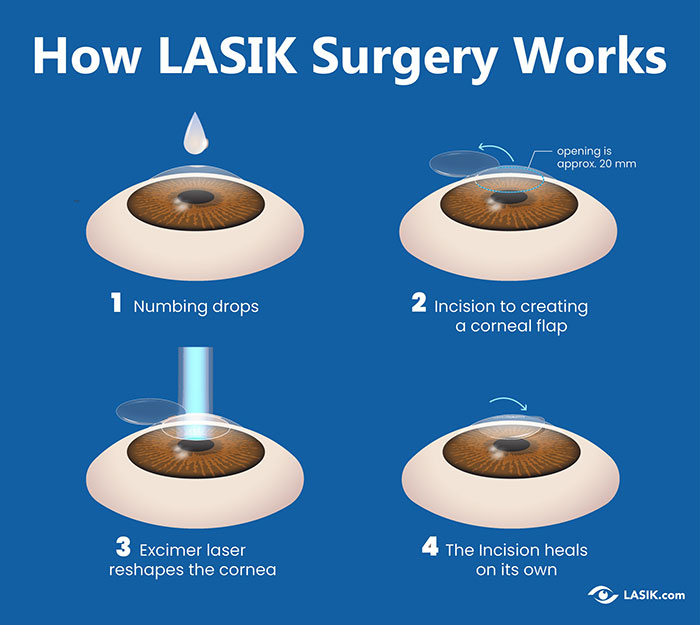
Image credits: LASIK.com
And there are others. According to LASIK Complications, a website for people to share their LASIK complication stories, there have been at least 30 cases of people ending their lives after getting LASIK that didn’t work.
The site says that when LASIK surgery leaves a patient worse than they were before they had the surgery, oftentimes, patients experience extreme depression.

Image credits: Jessica Starr
Now, after several alleged cases of people taking their own lives after disastrous LASIK surgeries, netizens are starting to speak up about their own decisions to get or not get the surgery.
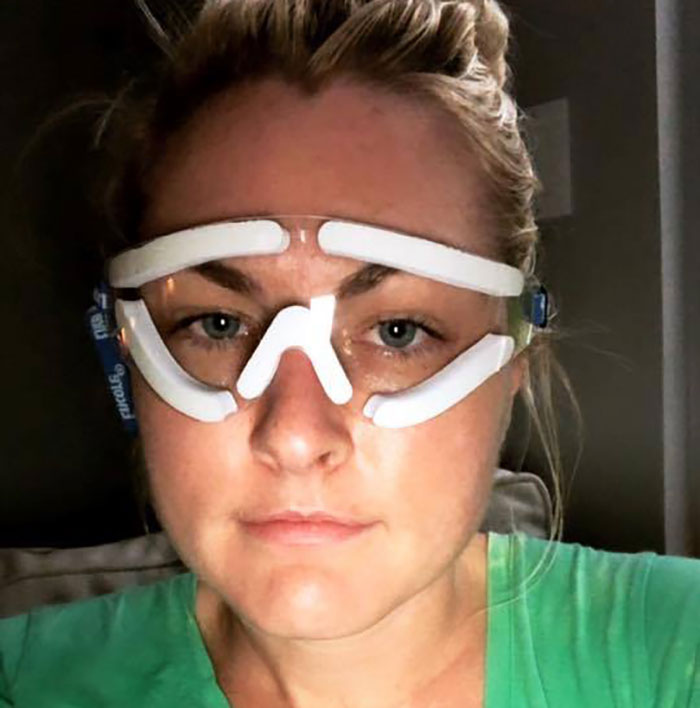
Image credits: Jessica Starr
“I miss being able to see stars clearly, and I even miss the practical and aesthetic benefits of wearing glasses. If I could go back, I’m not sure I’d make the same choice,” one person said.
“I had thought about getting laser eye surgery, but hearing doctors who previously approved it and now speaking against it, was enough for me to just deal with contacts,” said another.
800,000 people get LASIK surgery every year, according to the National Institutes of Health

LASIK stands for laser-assisted in situ keratomileusis. According to LASIK.com, it’s one of the most popular elective procedures in the world to correct things like nearsightedness, farsightedness, and astigmatism.

During LASIK surgery, a laser is used to change the shape of a person’s cornea, the dome-shaped tissue covering the eye.
Image credits: CBS Pittsburgh
Typically, a person’s cornea refracts light precisely onto the retina at the back of the eye. But with nearsightedness, farsightedness or astigmatism, the light is bent incorrectly, resulting in blurred vision.
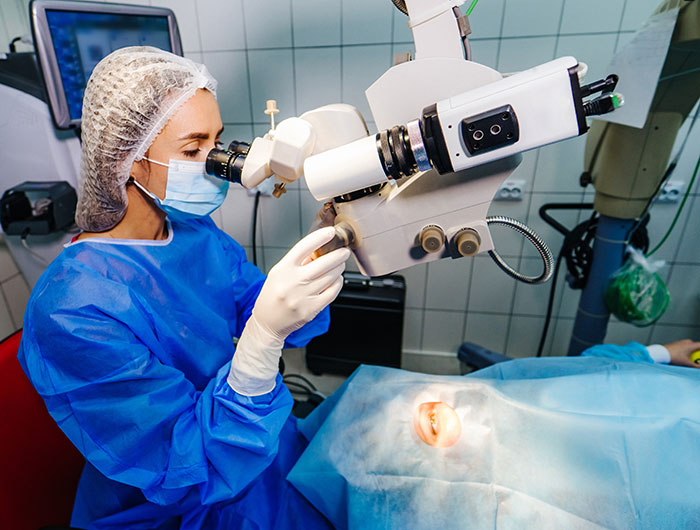
Image credits: Vadim/stock.adobe.com (Not the actual photo)
Generally, patients notice an improvement in their vision immediately after a successful LASIK surgery, but full recovery can take anywhere from 2-3 months, depending on how good their eyesight was prior to the surgery. Patients with post-op complications can suffer from dry eyes, double vision or undercorrection, the Mayo Clinic says.

Image credits: CTV News
Roughly 800,000 people get the procedure in the U.S. every year, the National Institutes of Health said in a report from 2021, with the price being roughly $1,500 per eye. And no, the procedure is not typically covered by insurance.
Image credits: Official W5
Netizens think twice about LASIK after it seems another person took their own life due to a failed surgery


from Bored Panda https://ift.tt/1nvQxPZ
via IFTTT source site : boredpanda
