It’s impossible to know every single thing that happened in the past. We think of history books as the primary source for that information, but written history is only about 5,000-5,500 years old. What about the things that happened before that? And how can we be sure that important things don’t get left out or forgotten from history?
Bored Panda is bringing you some stories from the dark side of history you might not have read in history books. They come to you from the Instagram page “Dark History by Sush,” a place for “the dark, disturbing truths history tried to bury.”
More info: Instagram
#1
Before the 1900s, only men could vote. Feminists fought for decades and by 1920 in the U.S., 1918 in the U.K., and 1947 in India, women finally got that right.
You know, feminism didn’t just randomly appear one day. It started because women were literally treated like they didn’t matter. They couldn’t vote, couldn’t go to school, couldn’t work, and legally everything they owned belonged to a man either their husband or father. In the 1800s and early 1900s, women began to fight back. They protested, went to jail, got beaten, and were mocked for wanting basic rights like education, fair pay, and safety.
Because of those women, laws slowly started changing. We got the right to vote, to study, to work, to keep our own money, to choose who we marry, and to have a voice. Feminists made the world pay attention to issues like domestic violence, sexual harassment, and equal pay things that were just “normal” before. It took decades of people fighting, organizing, and refusing to stay quiet.
But the sad part is even after all that, in so many countries and cultures, women are still treated like trash. Religion, family, and old traditions still silence girls, still blame victims, still shame women for living freely. Men in power still control women’s choices, dress, and bodies. So no, feminism isn’t “over.” It’s still needed because equality on paper doesn’t mean equality in real life.
Feminism isn’t about hating men it’s about demanding the respect and safety that every human deserves. The rights we have today were earned through pain and courage. We owe it to those women and to ourselves to keep that fight alive.

© Photo: dark_history.by_sush
#2
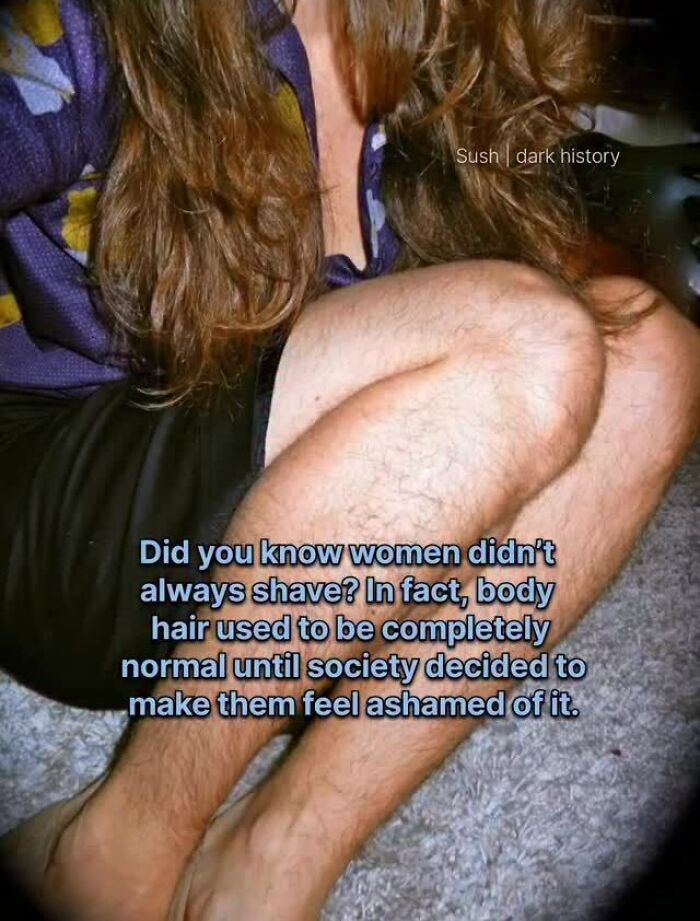
For most of history, women didn’t even think about shaving. Body hair was just… normal. But everything started to change in the early 1900s, when razor companies realized they’d already sold enough to men. So, they turned to women. Advertisements began showing clean-shaven legs and underarms, calling body hair “unhygienic,” “unfeminine,” and “embarrassing.” And slowly, this idea spread that being “hairless” equals being beautiful.
By the 1920s and 30s, magazines and fashion trends joined in. When sleeveless dresses and shorter skirts became popular, ads started guilt-tripping women like, “You don’t want hair showing when you lift your arm, do you?” Women who didn’t shave were seen as “unclean” or “lazy.” They were quietly judged, even excluded from certain social circles. Basically, companies sold razors but they also sold shame.
In the 60s and 70s, a lot of feminist women tried to fight back. They refused to shave as a way of saying, “My body, my choice.” But instead of being respected, they were mocked. Even today, when a woman shows her natural body hair online or in public, people still leave nasty comments proof that those old beauty standards still run deep.
It’s kind of wild when you think about it something completely natural became something women were taught to hide. All because someone wanted to make a profit.
© Photo: dark_history.by_sush
#3
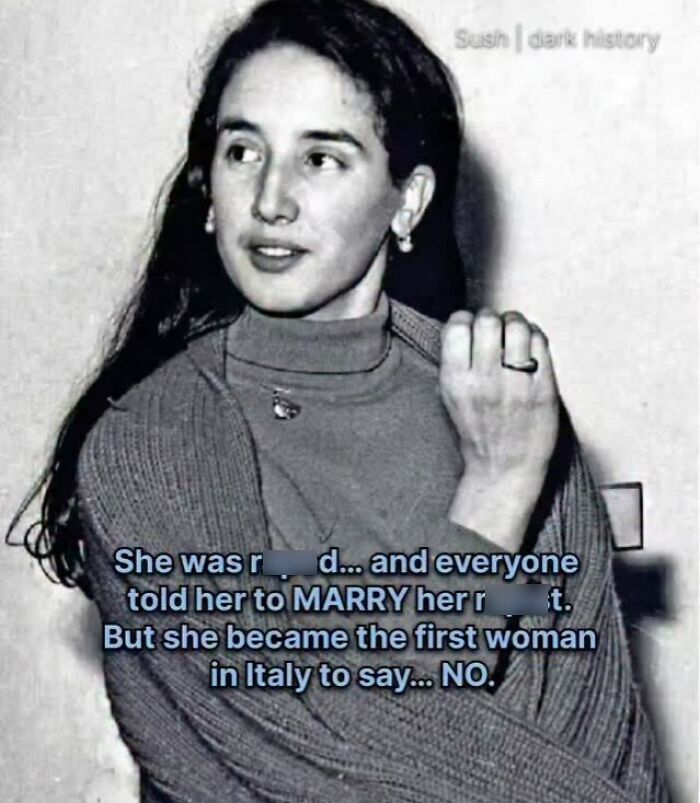
In 1965, a young girl named Franca Viola lived in Sicily, during a time when society’s idea of “honor” mattered more than a woman’s feelings. Back then, Italy had a rule called “matrimonio riparatore,” which allowed a man to avoid legal consequences if the girl agreed to marry him. Many families accepted it because rejecting meant shame and gossip for the girl.
Franca’s former fiancé forcefully took her away, hoping to make her agree to marriage. When she returned, almost everyone told her to accept it relatives, neighbors, society. But Franca, with the support of her father, did something unheard of she said “No, I won’t marry him.” She took the case to court, becoming the first Italian woman to publicly refuse such a marriage.
After a long legal fight, the man was given a prison sentence (around 11 years). And years later, in 1981, the law that protected such marriages was abolished. Franca later married a man she chose herself and lived a quiet life away from the media.
Her courage didn’t just save her it changed history for thousands of girls after her.
© Photo: dark_history.by_sush
#4
WHOLE STORY:
Mileva wasn’t just a background figure. She was one of the only women in physics at the time, and her brilliance showed she outscored Einstein in math, and together they studied, discussed, and maybe even built the early foundation of his theories. But as Einstein’s fame grew, her sacrifices piled up. She had to give up her own career, raise their children, and deal with the heartbreak of losing her first baby. The saddest part? History wrote her out completely.
And here’s the really shocking part: when their marriage started to fall apart, Einstein gave her a list of “rules” for staying with him. Some of them were cruel like she had to bring him three meals a day, stop talking to him unless he allowed it, and even give up intimacy unless he asked. Mileva agreed at first, just to keep the marriage alive, but it eventually broke her, and they eventually broke up. She spent the rest of her life quietly raising her kids, while the world celebrated Einstein as a genius.
It’s painful to think about, because Mileva was brilliant in her own right. But her story reminds us how easily women’s voices and contributions were erased.

© Photo: dark_history.by_sush
#5
In 1937, in the mountain town of Sneedville, Tennessee, 22-year-old Charlie Johns married nine-year-old Eunice Winstead. Her parents were poor and believed Charlie could “look after” her. Tennessee law back then had no minimum marriage age as long as parents gave consent, so on paper it was totally legal even though it was a child’s life being signed away.
Charlie reportedly courted Eunice with her parents’ blessing. There’s no evidence she ever wanted it; at nine she was still in school and playing with friends. Most accounts say she simply obeyed what the adults decided. They held a small ceremony, signed the license, and immediately began living together as husband and wife.
The press went wild. Reporters from across the U.S. descended on Sneedville, calling Eunice “the child bride.” Many locals defended the marriage, saying it was not unusual for the hills, but nationally people were horrified. Despite the outrage, nothing was done to undo it and no charges were filed because the law protected the marriage.
Eunice stayed with Charlie for years. By her mid-teens she had already become a mother, still a child herself. Later in life, she said she just accepted it because everyone around her told her it was normal. Eventually she and Charlie separated and divorced in the 1940s after she was grown. But by then the damage had been done her childhood was gone forever. The case became one of the examples used to push for stronger child-marriage laws in Tennessee and the U.S., showing how badly children needed legal protection.

© Photo: dark_history.by_sush
#6
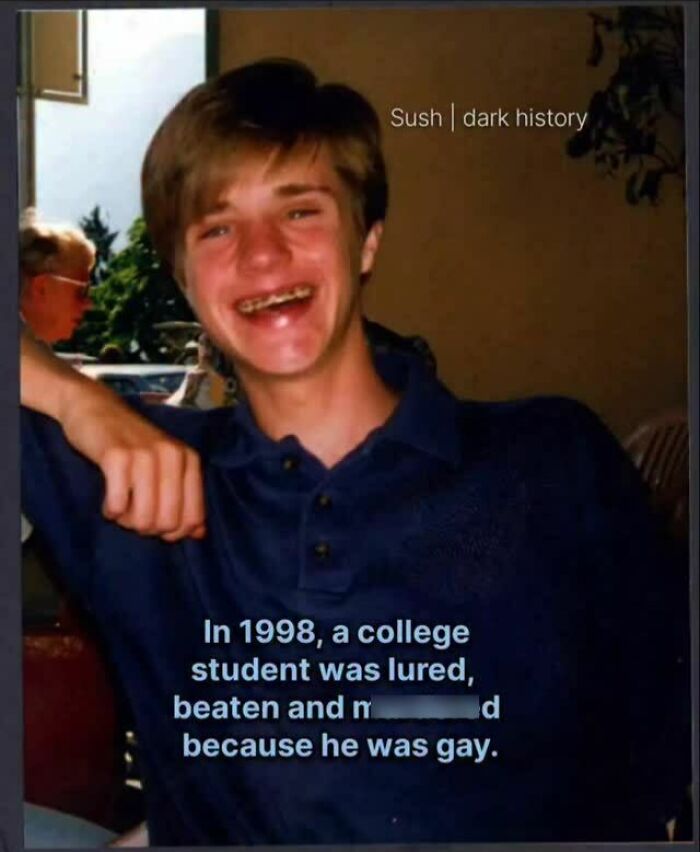
Matthew Shepard was a 21-year-old student at the University of Wyoming in 1998. He was known by friends as a gentle and friendly person who loved politics, languages, and meeting people. On the night of October 6, 1998, Matthew met two men, Aaron McKinney and Russell Henderson, at a bar in Laramie, Wyoming. They told him they were gay too and offered him a ride home. But instead, they drove him to a remote area outside town. There, they robbed him, beat him brutally, and tied him to a wooden fence, leaving him alone in the freezing cold prairie.
Matthew was left there for about 18 hours before a cyclist finally discovered him. At first, the cyclist thought he was a scarecrow tied to the fence, because his body was so still and covered in blood. Matthew was still barely alive, and he was rushed to a hospital in Fort Collins, Colorado. Doctors tried everything they could, but the injuries to his brain were too severe. Six days later, on October 12, 1998, Matthew Shepard died, surrounded by his family.
His death shocked the entire United States and quickly became an international news story. Thousands of people held vigils and protests, demanding stronger laws against hate crimes. During the investigation, police arrested Aaron McKinney and Russell Henderson, who were later convicted of the m*rder. To avoid the death penalty, both men accepted plea deals and were sentenced to life in prison without the possibility of parole.
After Matthew’s death, his parents created the Matthew Shepard Foundation, which works to fight hate and support equality. His story also helped push the U.S. government to pass the Matthew Shepard and James Byrd Jr. Hate Crimes Prevention Act in 2009, a law that expanded federal hate-crime protections. Even decades later, Matthew Shepard’s case is remembered as a powerful reminder of how dangerous hate can be and why protecting human rights matters.
© Photo: dark_history.by_sush
#7
The piece is called The Morning Star, Paul Fryer’s installation that represents Lucifer, a British artist known for using everyday objects like matchsticks, magazines, and even coat hangers in huge installations. He often creates works that feel larger than life, and this angel is no exception. Instead of showing Lucifer with beauty and glory, Mach shows him trapped in wires, almost like a broken puppet.
The location makes it even more powerful it’s installed inside a church. Seeing this “fallen” figure right in a holy space hits differently. It’s not just about Lucifer’s pride, it’s about the constant tension between faith, ambition, and downfall. The wires can be seen as society’s control, punishment, or even the weight of our own choices.
Mach’s works usually provoke strong reactions some people see it as dark and disturbing, others find it deeply symbolic. But one thing is clear: this isn’t just a sculpture, it’s a reminder. Pride, ambition, and rebellion… they can lift us up, or completely destroy us.

© Photo: dark_history.by_sush
#8
Around 50,000 to 200,000 girls and women from Korea, China, the Philippines… suddenly disappeared in the 1930s and 40s.
They were told they’d get jobs….but none of them knew they were being sent into a nightmare.
Some cried until they couldn’t cry.anymore. Some.just.sat quietly, staring at nothing… waiting for the next knock on the door.
They were forced to endure dozens of soldiers a day.
Their bodies broke down.
Their minds broke down faster.
Many were only 13, 14, 15,
Some survived. But even decades later, the pain never left. They carried it alone… because the world stayed silent for too long.
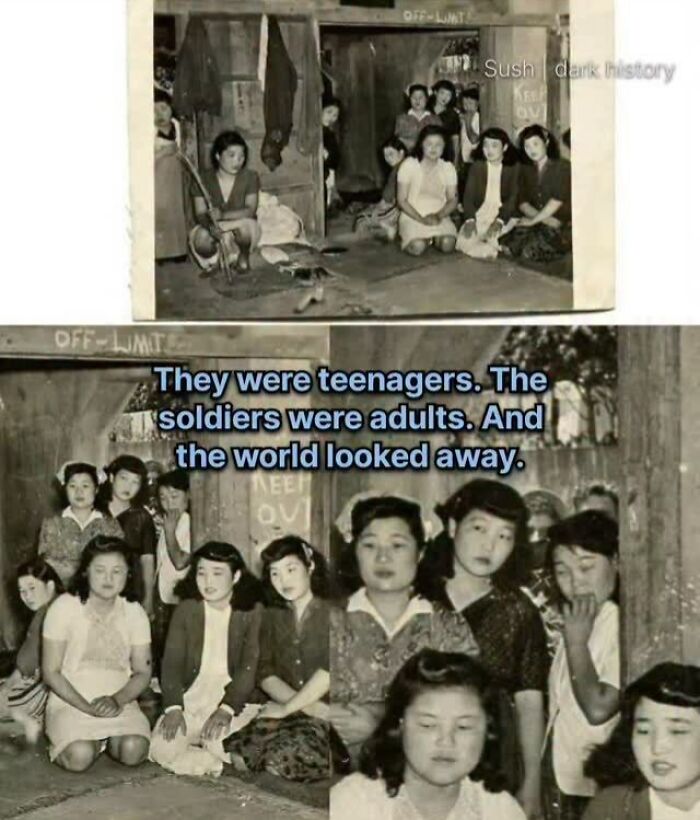
The story of the “comfort women” is honestly one of the darkest parts of World War II, and the saddest thing is that most of the victims were just teenagers. In the 1930s and 40s, the Japanese Imperial Army set up military brothels across Asia. They needed “women” for soldiers, but the way they got those women was through lies, kidnapping, and force. Girls from Korea, China, the Philippines, Indonesia, and other places were taken with fake promises of jobs, nursing work, or factory work. Many didn’t even know what was happening until the doors locked behind them.
Once inside those “comfort stations,” life became a daily nightmare. The girls were trapped in tiny rooms, often not allowed to leave or write home. Some were forced to serve 20 to 50 soldiers a day. Their bodies were pushed past human limits. Many got infections, injuries, or diseases because there was no rest and barely any medical care. Some tried to escape but were beaten or k**led. Others survived physically, but mentally they broke down they stopped recognizing themselves, started dissociating, and lived in constant fear.
The worst part is how long they had to suffer in silence. When the war ended, many survivors went home but couldn’t talk about what happened. Society often blamed them instead of protecting them. Some families didn’t accept them back. So many women carried this trauma alone for decades, pretending nothing happened because they didn’t want to be judged. It wasn’t until the 1990s almost 50 years later that some brave survivors stepped forward and demanded the world to listen.
Even today, it’s still a sensitive issue between countries. Historians agree the Japanese military organized this entire system, but there are still political arguments about responsibility and apology. What’s never in doubt, though, is the reality of what these girls suffered. They weren’t “comfort women.” They were victims of war and they deserved justice long before the world finally started paying attention.
© Photo: dark_history.by_sush
#9
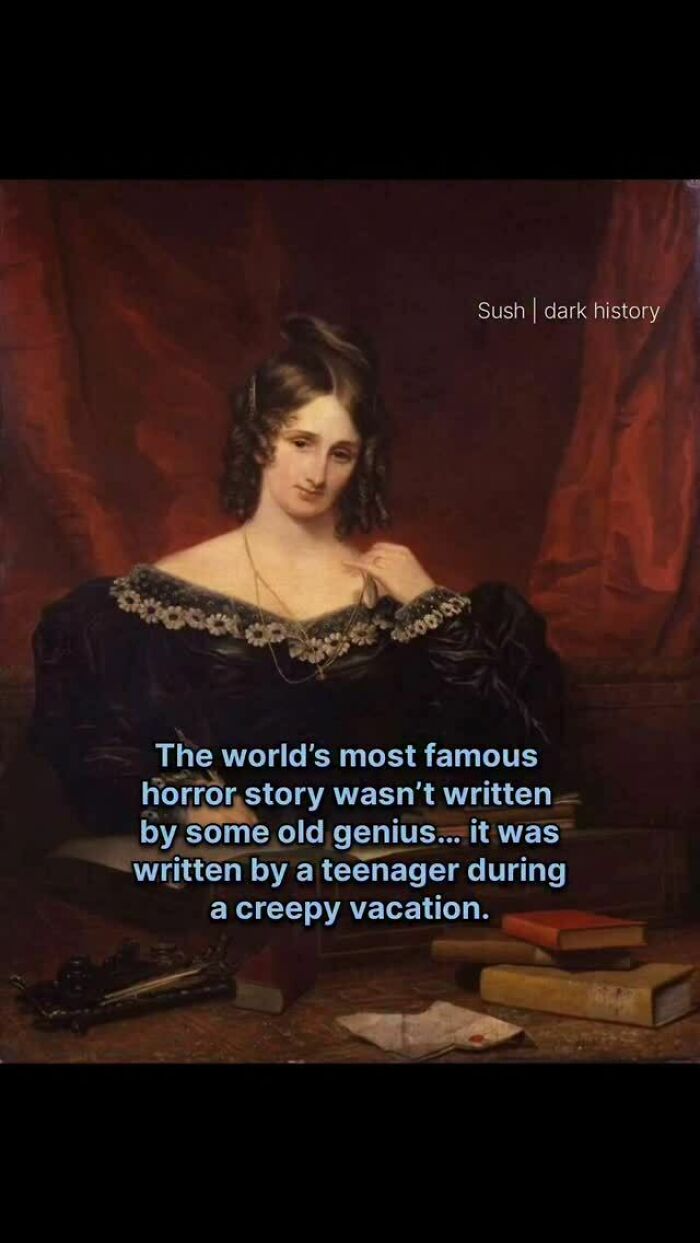
Mary Shelley’s life was honestly as dramatic as the stories she wrote. She grew up around brilliant but chaotic people her dad was a philosopher, her mom was a famous feminist writer who died right after giving birth to her. So Mary grew up reading, thinking, and basically living inside stories. By the time she was a teenager, she already had this deep, almost heavy imagination that came from her strange, intense childhood.
When she was just 16, she fell in love with the poet Percy Shelley and ran away with him. Their life wasn’t glamorous they were broke, traveling from place to place, and dealing with constant drama. But something changed when they went to Switzerland in 1816. It was the “Year Without a Summer,” when a giant volcano explosion messed up the weather worldwide. Dark skies, cold winds, thunderstorms in June… it was like living in a horror movie. And then Lord Byron suggested: “Let’s write a ghost story.” Mary didn’t know what to write until she had that terrifying nightmare of a scientist giving life to a stitched body.
That nightmare became Frankenstein, a book she started at 18 and finished at 20. She had no idea the world would still be talking about it 200 years later. But what makes it more emotional is that Mary wrote that story while dealing with grief, loneliness, and feeling like an outsider. Frankenstein’s creature wasn’t just a monster it was a reflection of how Mary often felt: created by circumstances, misunderstood, and abandoned by the world.
Even after the book got famous, Mary’s life stayed difficult she lost her husband, several children, and faced heartbreak over and over. But she kept writing, kept creating, and became one of the strongest literary voices of her time. Her story isn’t just about inventing a monster; it’s about surviving the chaos around her and turning her pain into something unforgettable.
© Photo: dark_history.by_sush
#10
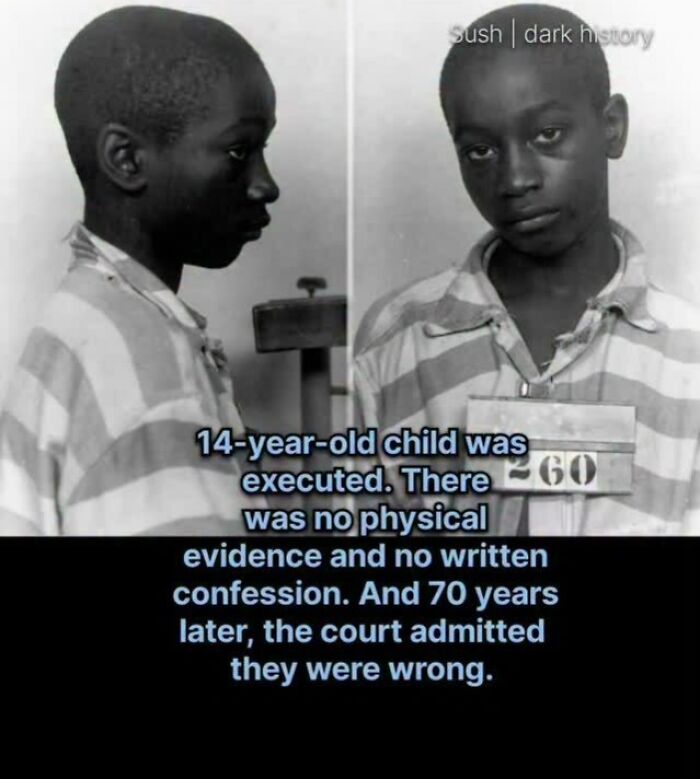
George Stinney Jr. was just 14 years old, living in a small, segregated town called Alcolu, South Carolina, in 1944. He was a normal kid helping his family, going to school, playing around. One day, two white girls were found m**dered nearby. When police asked who had seen them last, someone mentioned George. That was enough. There was no physical evidence. No witnesses. Just an accusation and in that time and place, that could destroy a life.
George was arrested and questioned alone, without his parents or a lawyer. Later, police claimed he confessed, but there was no written or signed confession, and no recording. His trial lasted less than three hours. The jury was all white, the defense barely spoke, and the jury took about ten minutes to decide. Guilty. A death sentence for a child who probably didn’t even understand what was happening.
His parents were powerless. His father was fired from his job and threatened, and the family was forced to leave town for their own safety. They weren’t even allowed to be with George properly during the trial. His mother later said George cried for her, scared and confused. They knew their son was innocent, but they had no voice in a system that had already decided his fate.
On June 16, 1944, George Stinney Jr. was e**cuted in the electric chair. He was so small they had to place books under him to make it work. Witnesses said the hood slipped during the e**cution, revealing a crying child. Seventy years later, in 2014, a judge finally overturned the conviction, saying the trial was deeply unfair. George was innocent but justice came far too late.
© Photo: dark_history.by_sush
#11
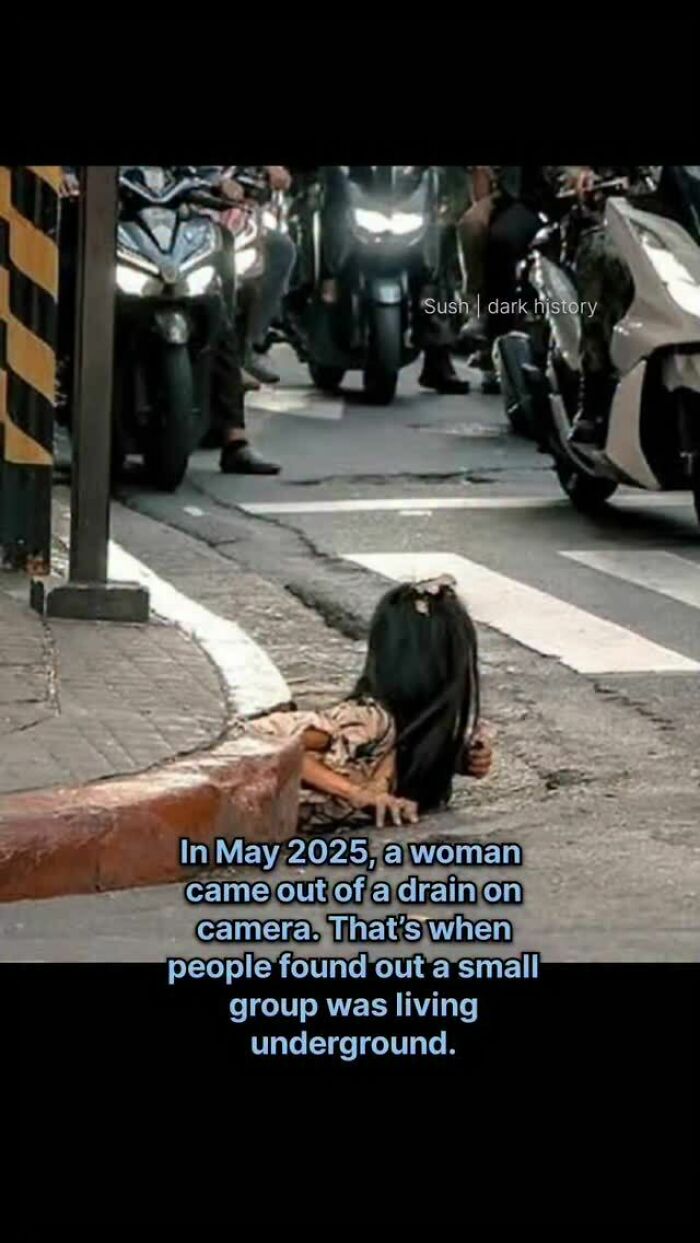
After videos and photos went viral showing people emerging from drainage tunnels in Metro Manila, local authorities were alerted. Agencies like the MMDA (Metro Manila Development Authority) and DSWD (Department of Social Welfare and Development) conducted inspections and clearing operations in several areas. They confirmed that small groups of people were living inside drainage systems and flood tunnels, using them as temporary shelter. These operations were mainly done because the tunnels are part of the city’s flood-control system and become extremely dangerous during heavy rain.
The people found living underground were offered temporary shelters, food, medical checks, and relocation assistance. Some were moved to evacuation centers or housing programs. However, many later returned to the tunnels or nearby streets. The main reason wasn’t refusal of help, but survival relocation sites were often far from their jobs, daily income sources, schools, and hospitals. Without steady work or transport money, staying relocated became impossible for some.
Because of this, the situation remains unresolved. Clearing operations continue before the rainy season to prevent deaths during floods, but long-term solutions are still limited. The issue is not just about homelessness it’s about urban poverty, displacement, and lack of accessible housing. The viral incident didn’t create the problem; it simply made a hidden reality visible for a moment.
© Photo: dark_history.by_sush
#12
© Photo: dark_history.by_sush
#13
There was a time when real people were put on display like animals. During the late 19th and early 20th centuries, something called the Human Zoo became popular across Europe and America. People from Africa, Asia, the Pacific Islands, and even Indigenous groups from the Americas were taken from their homes and exhibited in fairs, world expositions, and zoos. These exhibitions were presented as “educational” or “scientific,” but in reality, they were deeply racist. They were designed to show colonized people as “primitive,” and Europeans as “civilized.”
In these so-called zoos, men, women, and even children were forced to live in fake “villages,” wear traditional clothes, and perform daily tasks while crowds stared, laughed, and pointed. Millions of visitors came to watch them believing they were seeing “real-life tribes.” One of the most heartbreaking examples was Ota Benga, a man from Congo who was displayed in the Bronx Zoo in 1906, inside a monkey enclosure. There were many others too like Filipinos shown in U.S. exhibitions, and Indigenous Australians displayed in Europe.
Over time, people started to question the cruelty of it. By the 1930s and 1940s, as awareness about racism and human rights began to grow, these “human zoos” slowly came to an end. The last known exhibitions happened around the mid-20th century, though some similar displays continued in disguised forms until as late as the 1950s. Today, most countries recognize this chapter of history as shameful a reminder of how colonialism and racism dehumanized people in the name of science and entertainment.

© Photo: dark_history.by_sush
#14
There was a time when Titanic wasn’t a tragedy, just a massive new ship people were proud of. Workers stood beside it, amazed by what they built. People walked its decks without knowing how famous it would someday become. Back then, it was loud, busy, full of life a ship meant to carry stories forward, not become one itself.
Now it sits at the bottom of the ocean, rusting away quietly. No voices, no light, just cold water and time slowly eating it. Looking at the old photos and the wreck today feels strange like seeing two different worlds. It reminds us how fast things change, how something so strong and celebrated can end up forgotten in darkness. Titanic isn’t just history, it’s a reminder of how life moves on, even when something feels too big to ever disappear.

© Photo: dark_history.by_sush
#15
Soraya Manutchehri’s story happened in 1986 in a small village in Iran, and it’s one of those cases that still shocks people today. Soraya was a 35-year-old mother of four children. Her husband, Ali, had become interested in marrying a much younger girl, reportedly around 14. But there was a problem he couldn’t easily take another wife unless he divorced Soraya or proved she had done something “seriously wrong.” So instead of divorcing her, he allegedly came up with a cruel plan. He began spreading rumors in the village that Soraya was having an affair with another man, even though there was no real evidence.
In that small village, gossip quickly turned into accusations. With the help of some local men and the village authorities, Soraya was suddenly put on trial for adultery, which under strict interpretations of law in that area could be punished by death by stoning. The trial was extremely unfair. Soraya had almost no chance to properly defend herself, and witnesses were pressured to testify against her. Very quickly, the village council declared her guilty, even though the accusations were widely believed to be false.
The punishment that followed was horrifying. Soraya was buried in the ground up to her waist, and villagers were ordered to throw stones at her until she died. Reports say that even her own husband and father were forced or pressured to participate. The ex**ution was slow and brutal, and it happened in front of many people from the village. What makes the story even more disturbing is that many of the people involved had known Soraya for years.
But Soraya’s story didn’t completely disappear. Her aunt, Zahra, refused to stay silent. She later told the entire story to an Iranian-French journalist named Freidoune Sahebjam, who happened to visit the village. He wrote a book called “The Stoning of Soraya M.”, which exposed the case to the world. Years later, in 2008, the story was turned into a film with the same name, bringing global attention to Soraya’s tragic fate and sparking conversations about injustice and misuse of power.

© Photo: dark_history.by_sush
#16
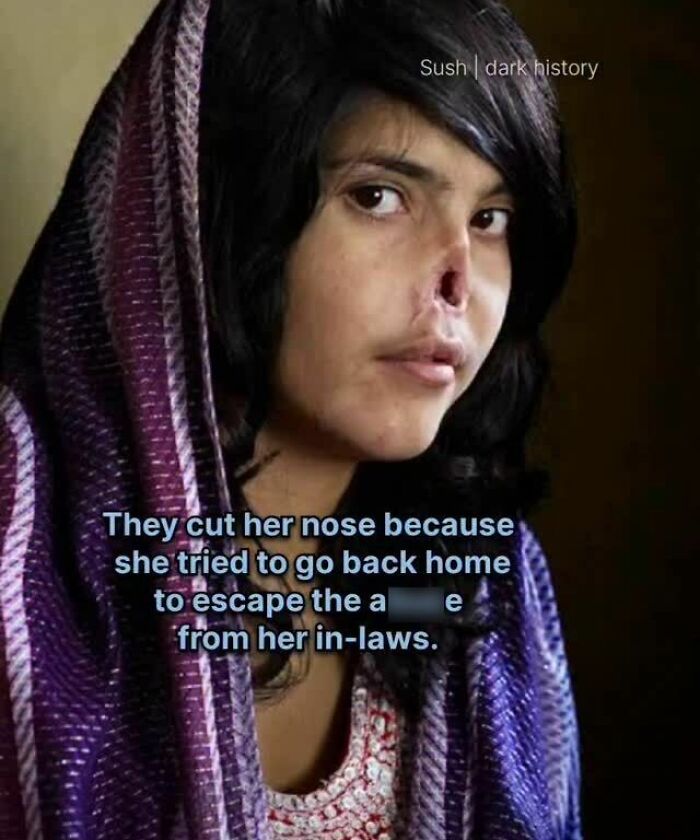
Bibi Aisha was around 18 years old when the world came to know her story, but her suffering started much earlier. She was married off as a child in Afghanistan through a local custom called baad, where girls are given to another family to settle disputes. She didn’t get a choice. From a very young age, she lived under constant control and ab*se from her husband and his family. In her village, this kind of life was expected to be endured quietly.
Eventually, the ab*se became too much. Aisha did something very simple, very human she ran away and tried to go back to her parents. She wasn’t planning revenge or rebellion; she just wanted safety. But leaving was seen as disobedience. Her husband, acting under the influence of a Taliban commander, punished her brutally and left her in the mountains, assuming she would die there. She didn’t. She survived, found help, and reached a women’s shelter.
In 2010, a photograph of Aisha appeared on the cover of TIME magazine, and it stopped people around the world. What struck everyone wasn’t just what had been done to her, but the way she looked straight into the camera calm, present, still standing. That image changed her life. Because of the attention, she was taken to the United States, where she received multiple reconstructive surgeries, medical care, and support that she had never had before.
After that, Aisha didn’t stay in the spotlight. She didn’t try to become a symbol or a spokesperson. She stayed in the U.S., continued her medical treatment, went to school, and focused on healing physically and mentally. Over time, she chose privacy, and the world stopped getting updates about her life. And maybe that’s the most important part of her story. Not that she became famous, but that she finally got something she was never given before the right to live quietly, safely, and on her own terms.
© Photo: dark_history.by_sush
#17
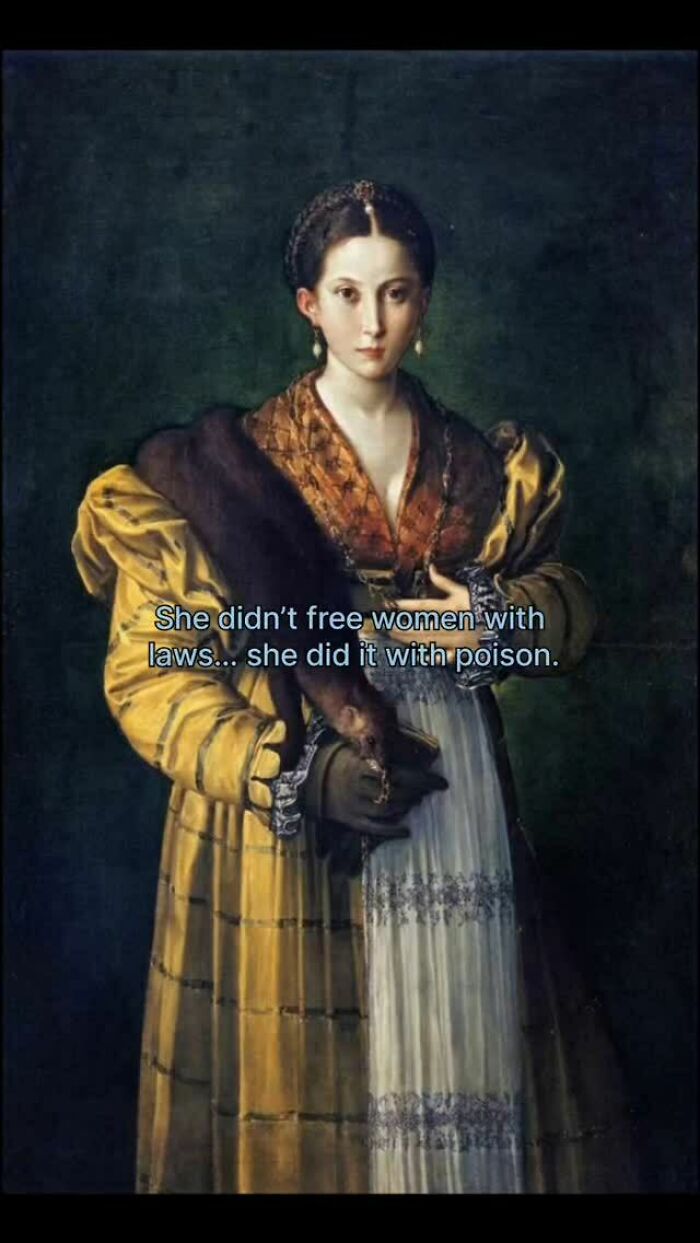
Giulia Tofana was an Italian woman living in the 1600s, during a time when women had no legal rights to escape abusive marriages. She became infamous for creating “Aqua Tofana,” a clear, tasteless poison disguised as cosmetics or holy water. What made her so dangerous and so powerful was how undetectable her poison was. A few drops over several days caused a slow, natural-looking death. She didn’t just sell poison to desperate women; she taught them how to use it carefully without getting caught, turning her operation into a secret sisterhood of survival.
What many don’t know is that Giulia came from a long line of women rumored to be poisoners, some say her mother was executed for it. She likely learned the craft young and refined it into a careful, calculated method. For years, the deaths went unnoticed…. until one woman panicked and exposed everything. Giulia was eventually arrested and tortured. Some say she was executed, while others claim she was granted sanctuary and died peacefully. Even centuries later, people whispered her name in fear… and in admiration.
© Photo: dark_history.by_sush
#18
The Blue Babe bison is one of the most fascinating Ice Age discoveries ever. It was found in 1979 in Alaska, and what made it so special is that it wasn’t just bones like most fossils. This bison was incredibly well preserved because it had been frozen in permafrost for around 36,000 years. It still had skin, fur, and even some flesh intact, which is extremely rare. The name “Blue Babe” came from the slightly bluish color its skin turned after being exposed to air during excavation.
When scientists studied the body, they noticed something really interesting. The bison had deep claw and bite marks, which showed that it had been attacked by an ancient predator called the American lion (now extinct). It likely died during that attack, and then its body froze quickly in the cold environment, which is why it didn’t decay like normal animals. This basically gave scientists a snapshot of a real Ice Age event, almost like freezing a moment in time.
Now here’s the part that surprises most people. During research, one of the scientists, Dale Guthrie, decided to test how well the flesh had been preserved. He took a small piece of the bison’s meat, cooked it (often described like a stew or soup), and actually ate it. According to him, it tasted like beef, but a bit tougher. It sounds strange, but it helped confirm that the tissue was still organic after thousands of years.
Today, Blue Babe is kept at the University of Alaska Museum, where it’s displayed with recreated details of the lion attack. It’s considered one of the best-preserved Ice Age animals ever found, and it helped scientists understand not just the animal itself, but also predators, climate, and survival during that time.

© Photo: dark_history.by_sush
#19
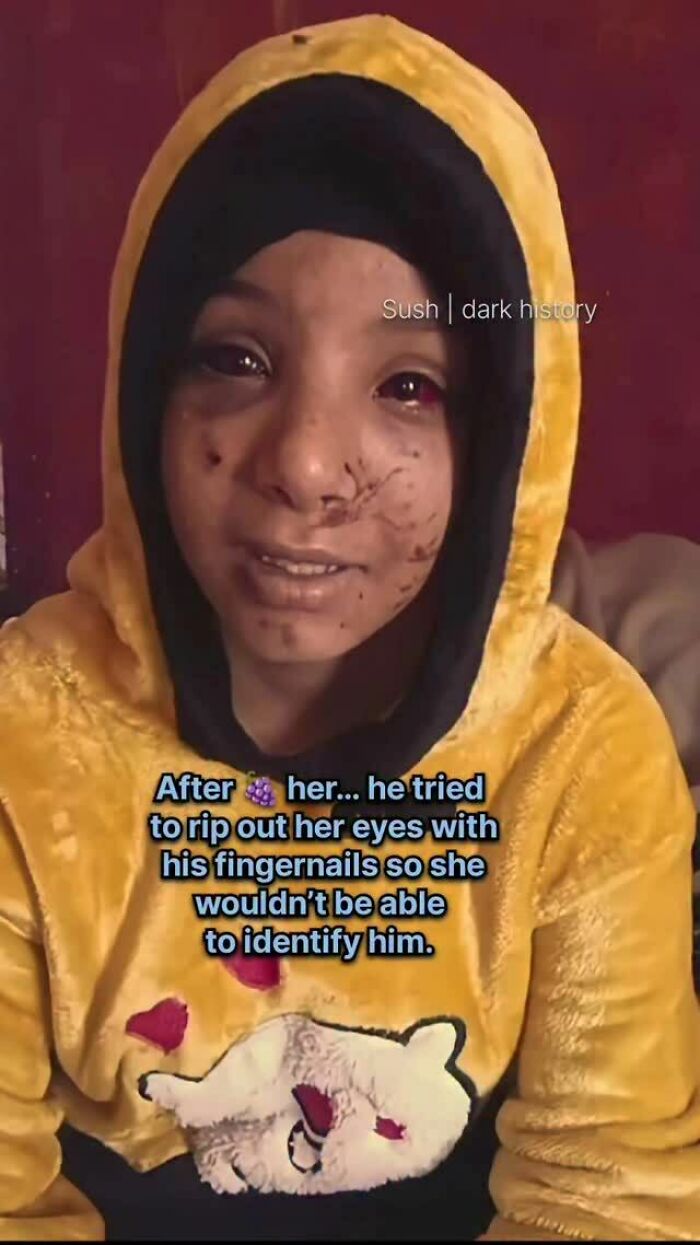
What makes this case unsettling is how little official information is available. The story only reached wider attention after a reporter insisted on bringing it forward and conducting an interview. Without that, this could have easily remained something people never spoke about. There is footage of her speaking, yet the details of the case remain surprisingly limited.
Even more disturbing are the discussions surrounding the accused’s reported reaction after the incident including claims that he attempted to escape consequences by offering marriage after she survived and spoke out. Regardless of interpretation, the situation highlights how complicated and uncomfortable justice can become in the real world.
There are no widely recognized donation links, no clear public updates, and very few reliable sources documenting the full case. And that silence itself leaves a lasting impression.
© Photo: dark_history.by_sush
#20
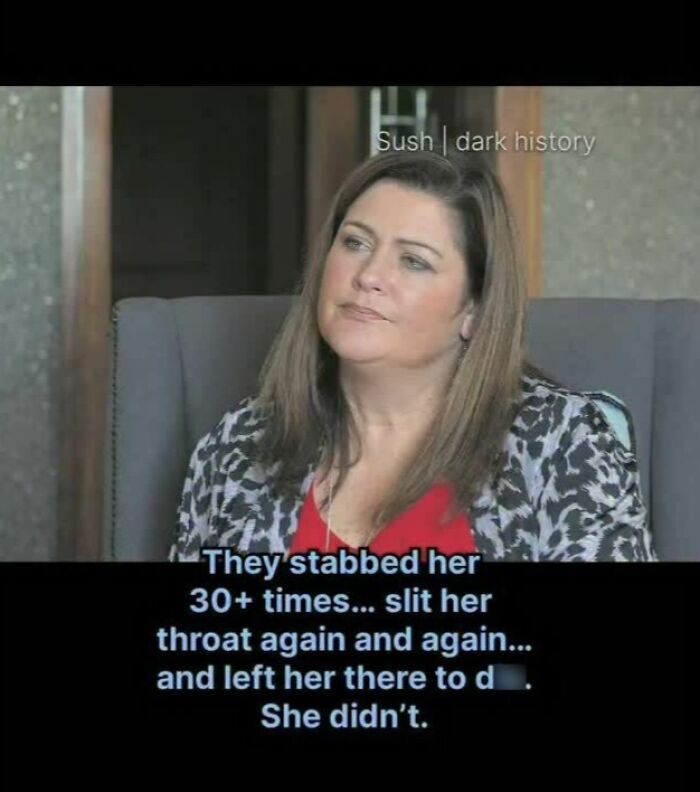
Alison Botha’s story is one of those real-life cases that honestly feels impossible to believe. In 1994, she was a young woman living in South Africa. One night, as she parked her car outside her home, two men forced their way in and kidnapped her. At first, she thought maybe they just wanted her car… but it quickly turned into something far more terrifying. They drove her to a remote area, as**ulted her, and then brutally attacked her st***bing her multiple times and slitting her throat so deeply that she was nearly de**pitated.
What’s truly unbelievable is what happened next. They left her there, thinking she was dead. But Alison didn’t die. She regained consciousness in complete darkness, severely injured, barely able to move. Her neck wound was so deep that she had to literally hold her head in place with her hands. And still… she didn’t give up. Somehow, with all that pain and blood loss, she managed to get up and walk to a nearby road, where she was eventually found and rushed to the hospital. Doctors later said her survival was nothing short of a miracle.
But her strength didn’t stop at just surviving. Alison went on to testify in court against the two men who did this to her, helping to ensure they were convicted and sentenced to life in prison. Facing them again after everything she went through takes a level of courage most people can’t even imagine. Over time, she chose not to live in fear or anger. Instead, she rebuilt her life and even became a motivational speaker, sharing her story to inspire others.
What really makes her story powerful isn’t just the brutality she survived it’s the mindset she chose afterward. Alison Botha didn’t let that one night define her entire life. She turned something unimaginably dark into a story of strength, survival, and resilience. It’s one of those rare cases where you see just how strong a human being can actually be when everything is taken away from them.
© Photo: dark_history.by_sush
#21
Omayra Sánchez’s story is often told through that one haunting image but there are a lot of details people don’t usually talk about. The disaster happened on November 13, 1985, when the Nevado del Ruiz volcano erupted in Colombia. What made it worse is that scientists had actually warned about this kind of eruption weeks before, but the warnings weren’t taken seriously enough. When the volcano erupted, it melted glaciers on top, sending massive mudflows (lahars) rushing down and completely burying the town of Armero. Around 23,000 people died, making it one of the deadliest volcanic disasters in history.
When rescuers finally reached Omayra, they realized something tragic her legs weren’t just stuck under debris, they were trapped beneath the concrete of her house, along with the bodies of her relatives. Some reports say her aunt’s body was holding her down from below. To actually save her, they would’ve had to amputate her legs, but they didn’t have the medical equipment, clean conditions, or proper setup to do that safely in the middle of a disaster zone. Pumps were also needed to drain the water around her, but those arrived too late.
Another thing that made her story spread worldwide was the media presence. Journalists stayed with her almost the entire time, talking to her, comforting her, and broadcasting her condition. She became the face of the tragedy. At one point, she even said she needed to go to school and was worried about missing exams that’s how normal and innocent her mindset still was. But as hours passed, her body started shutting down. Her hands turned white and wrinkled from being in water so long, and her eyes became darker due to poor circulation. Toward the end, she began hallucinating and became disoriented.
After her death, there was a lot of anger not just sadness. People criticized the Colombian government for being unprepared and slow to respond, especially since the disaster had been predicted. The photograph taken by Frank Fournier later won a major award and became one of the most powerful images in history, forcing the world to confront what happened.
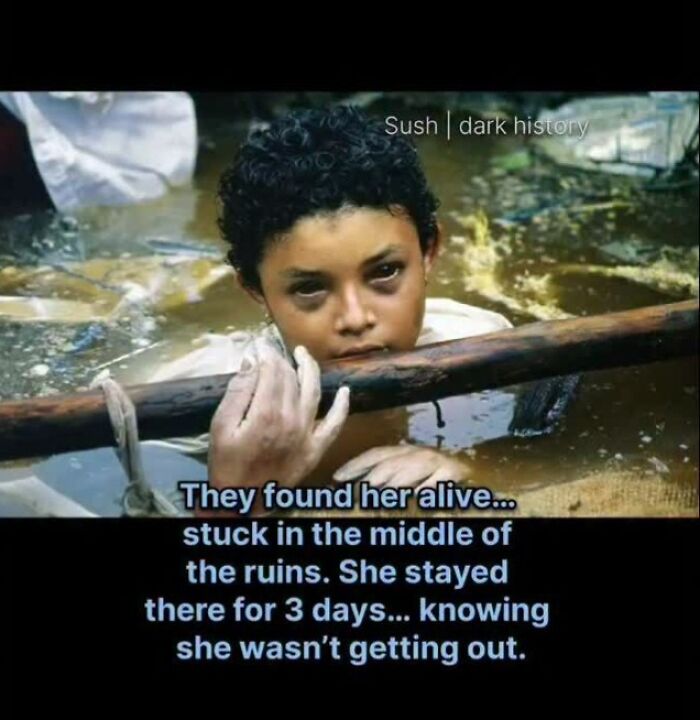
© Photo: dark_history.by_sush
#22
Karen Mulder was one of the biggest supermodels of the 90s like everywhere. She walked for Chanel, Dior, Valentino… you name it. People called her one of the most beautiful women in the world. But behind all that fame and money, her life wasn’t as perfect as it looked.
Years later, Karen spoke out and said that during her modeling years, she was ab*sed and manipulated by powerful men people who had huge control in the fashion industry. She said it started when she was very young, and for a long time, she didn’t even understand what was happening or how wrong it was. When she finally found the courage to talk about it, no one wanted to listen.
In 2001, she went on a French TV show and shared everything everything she’d gone through. But right before it could be aired, the entire episode got pulled off TV. Like it never even existed. After that, she was treated like she was the problem. The media started calling her unstable, saying she needed help. The same people who once called her “perfect” completely abandoned her.
Over time, her mental health got worse, and she disappeared from the public eye. But years later, when more women started speaking out during the #MeToo movement, people began to realize… maybe Karen was never “crazy.” Maybe she was just one of the first to tell the truth long before the world was ready to hear it.
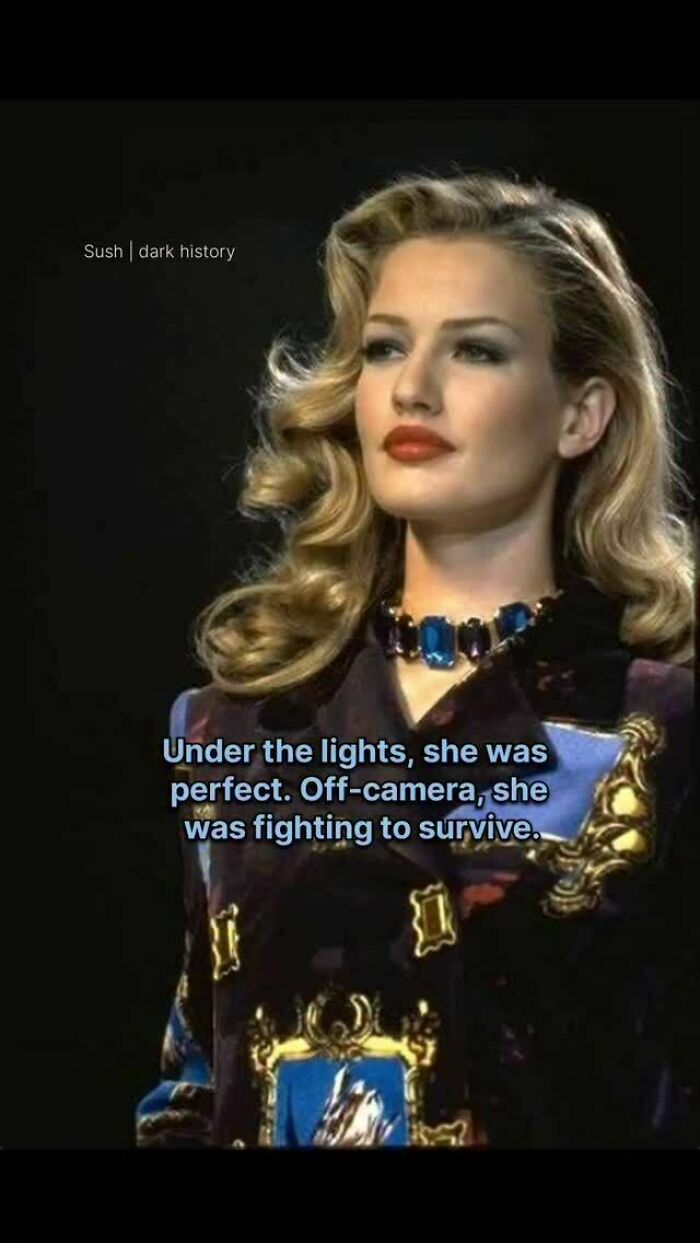
© Photo: dark_history.by_sush
#23
The Dutch Hunger Winter happened in the last months of World War II, from late 1944 to early 1945. By that time, the war was almost over, but western Netherlands was still under German control. After the Dutch resistance supported a railway strike to help the Allied forces, the occupying authorities blocked food and fuel transport to cities like Amsterdam, Rotterdam, and The Hague. Then winter hit one of the coldest in years. Canals froze, transport collapsed, and food simply stopped reaching millions of people.
People were surviving on 400–800 calories a day. That’s not even one proper meal. Bread was stretched with whatever could be found. Families ate tulip bulbs, sugar beets, and potato peels. People walked for hours, sometimes days, into the countryside to trade jewelry, clothes, or furniture for food and often came back with nothing. With no fuel, people burned chairs, books, and floorboards just to stay warm. Hunger wasn’t dramatic. It was slow, quiet, and everywhere.
By the time Allied planes finally dropped food supplies in spring 1945, around 20,000 people had already died, mostly from starvation and illnesses made worse by it. Many more survived but were permanently affected. What’s haunting is that this wasn’t a natural disaster there was food in the world. It just wasn’t allowed to reach these people. Hunger was used as pressure, and civilians paid the price.
One of the most unsettling facts came much later. Babies who were still in the womb during the Hunger Winter grew up with higher risks of heart disease, diabetes, obesity, and mental health disorders. Their bodies remembered the famine decades later. The Hunger Winter proved that starvation doesn’t end when food returns it leaves marks that last a lifetime, sometimes longer.
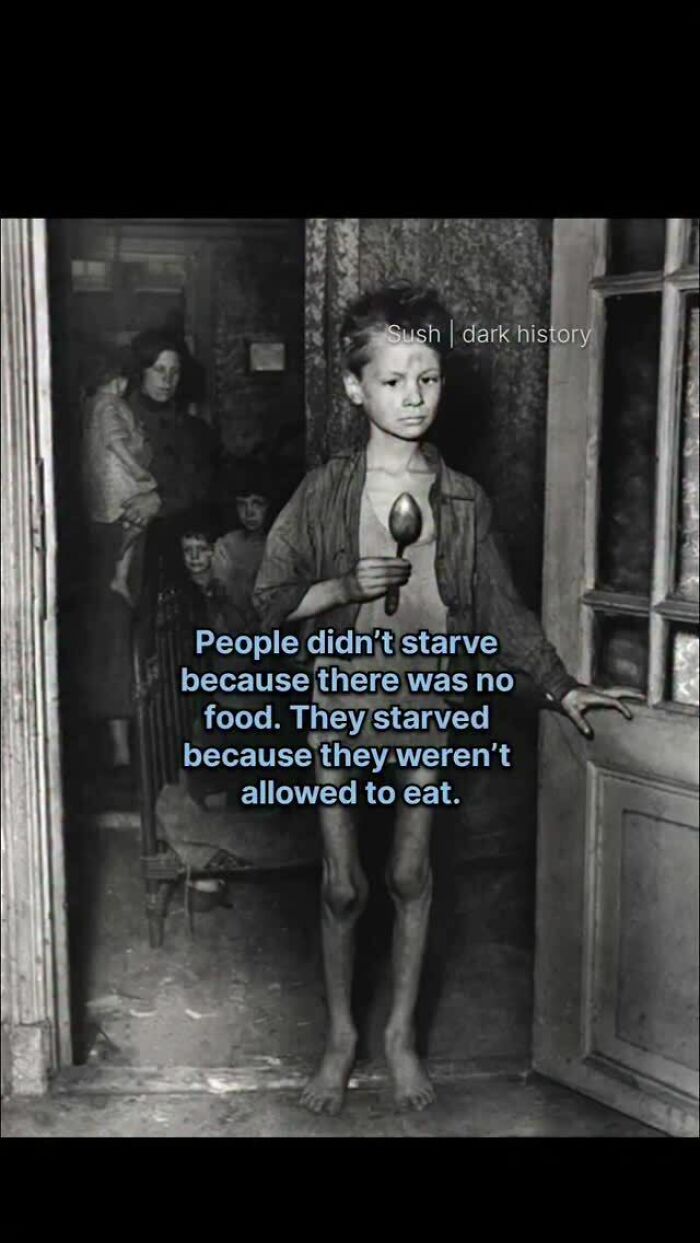
© Photo: dark_history.by_sush
#24
The Gulabi G*ng is one of those real-life stories that almost sounds fictional. It started in the mid-2000s in Banda district, Uttar Pradesh, when a woman named Sampat Pal Devi decided she was tired of seeing women suffer in silence. Rural women were dealing with domestic violence, forced marriages, dowry ab*se, and officials who often ignored their complaints. Instead of waiting for the system to magically improve, Sampat Pal began gathering local women and organizing them into a support network which soon turned into something much bigger.
What made the group instantly recognizable was their bright pink saris. Pink wasn’t chosen for style it became their identity and a symbol of unity. Members often carried lathis (wooden sticks), which created a strong visual impact and sent a clear message: these women were not afraid anymore. The Gulabi G*ng became known for directly confronting abusive husbands, pressuring police to act on complaints, and even challenging corrupt local officials. In many cases, just their presence was enough to force action where victims had previously been ignored.
Over time, the Gulabi G*ng grew into a wider movement, with thousands of members across different parts of Uttar Pradesh and neighboring regions. Their work wasn’t only about confrontation they also helped women access government benefits, education, legal aid, and basic rights. But like many grassroots movements, they also faced criticism and controversy, especially regarding their aggressive methods and internal leadership conflicts. Despite that, their impact on public conversation about women’s rights in rural India has been undeniable.
What makes their story powerful is that these weren’t celebrities or politicians they were ordinary village women who collectively decided they didn’t have to accept injustice as normal. Love them or debate their methods, the Gulabi G*ng became a symbol of resistance, courage, and the idea that social power doesn’t always come from formal authority.
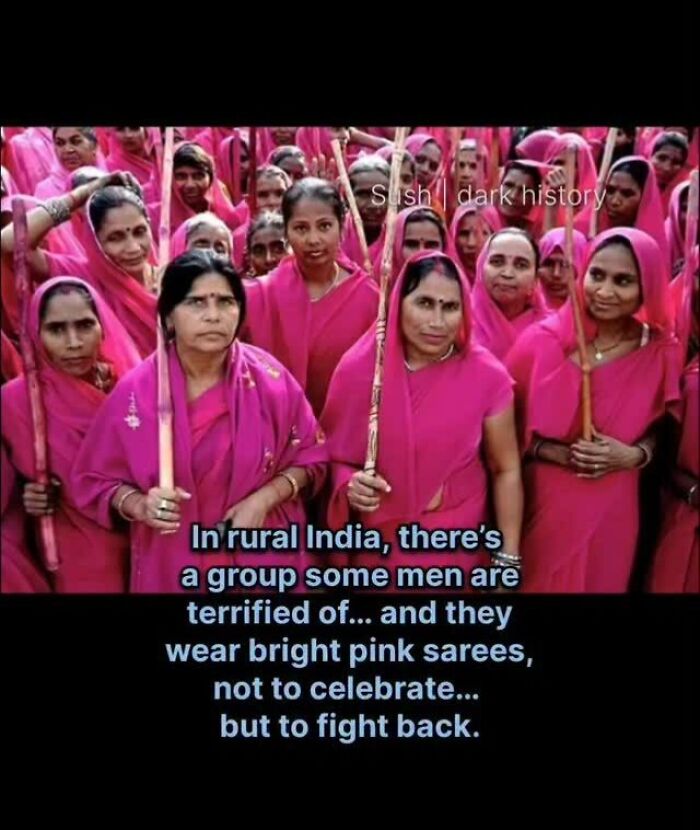
© Photo: dark_history.by_sush
#25
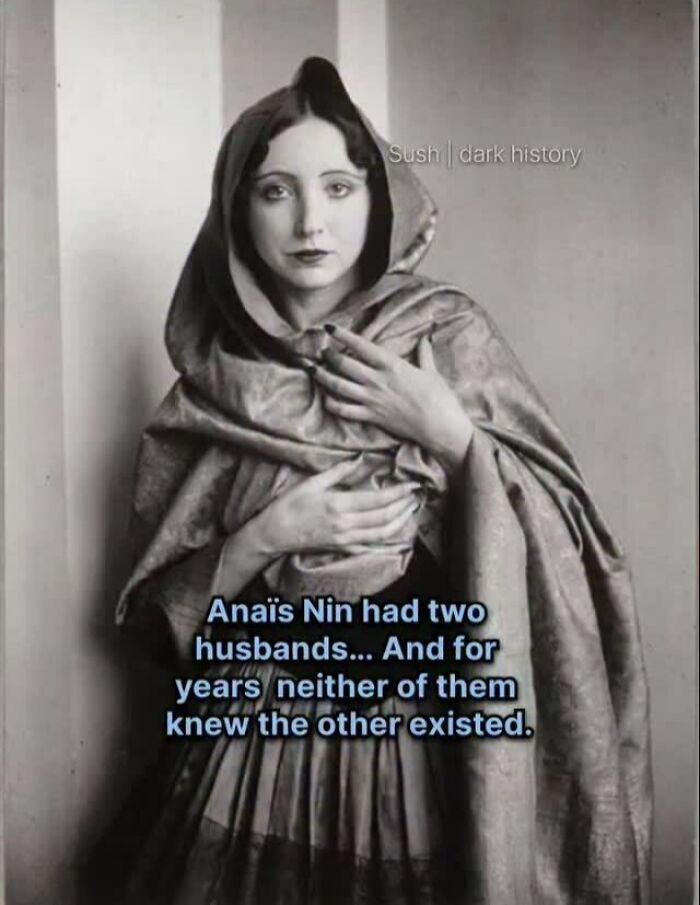
Anaïs Nin was one of the most distinctive literary voices of the 20th century, best known for turning the private diary into a serious literary form. She began writing journals as a child and continued for decades, eventually publishing edited versions that attracted wide attention for their psychological depth and unusual honesty. At a time when women’s inner lives were rarely discussed so openly, Nin wrote directly about emotions, identity, creativity, relationships, and desire. Her work didn’t fit neatly into traditional categories it blended autobiography, fiction, and introspection which is exactly why it stood out.
Beyond her diaries, Nin also wrote fiction that explored the subconscious and human psychology. Books like House of Incest, Winter of Artifice, and her later short stories focused less on plot and more on inner experience, mood, and perception. She was closely connected to influential cultural figures, including Henry Miller and psychoanalyst Otto Rank, and those intellectual circles shaped her thinking and writing. Over time, Nin built a dedicated readership, and her unexpurgated diaries published after her death further cemented her reputation as a writer who challenged conventions around self-expression and female subjectivity.
Anaïs Nin died in 1977 in Los Angeles after a battle with cancer. In the decades since, her influence has only grown, especially among readers and writers interested in personal narrative, psychology, and confessional literature. Today, she is widely regarded as a pioneer of introspective writing, someone who expanded what personal storytelling could look like in modern literature.
© Photo: dark_history.by_sush
#26
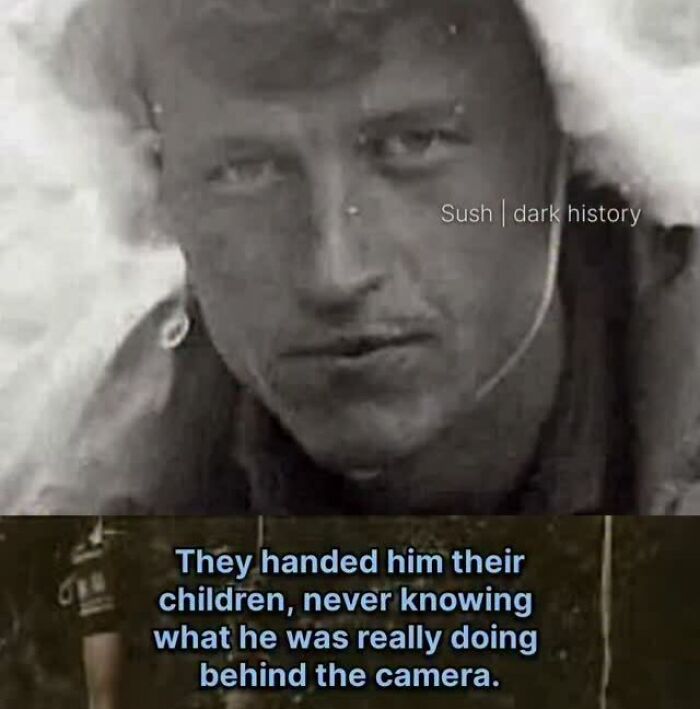
Anatoly Slivko was a Soviet engineer and youth club leader who lived in the Stavropol region of Russia. To the outside world, he appeared respectable and trustworthy. He worked with children, ran a local youth club focused on discipline and outdoor activities, and was even awarded honors for his work with young people. Parents trusted him, and authorities saw him as a model citizen. This public image allowed him long-term access to children without suspicion.
Behind this image, Slivko was secretly recording disturbing acts involving boys from his club. He used manipulation rather than force, convincing children that they were participating in “training,” “experiments,” or character-building activities. He filmed these acts and kept detailed journals documenting his behavior, thoughts, and routines. Over many years, his actions escalated, and several children lost their lives as a result of these activities. For a long time, the crimes went unnoticed because of his respected status and careful planning.
The case finally came to light in the mid-1980s when a surviving victim spoke up, and investigators searched Slivko’s home. What they found was extensive evidence: video recordings, photographs, and written records that clearly documented his crimes over decades. The investigation revealed that warnings had been missed earlier, and complaints were either ignored or not properly investigated, allowing him to continue for years.
In 1986, Anatoly Slivko was arrested, put on trial, and convicted. The court recognized the scale and severity of his crimes, as well as the calculated way he had hidden behind social respectability. He was sentenced to death and executed in 1989. His case later became one of the most studied criminal cases in the former Soviet Union.
Today, the Slivko case is often discussed as a tragic example of how authority, trust, and social reputation can be misused, and how important it is to listen to children and take early warning signs seriously. It remains a painful reminder of the need for accountability and protection for the most vulnerable.
© Photo: dark_history.by_sush
#27
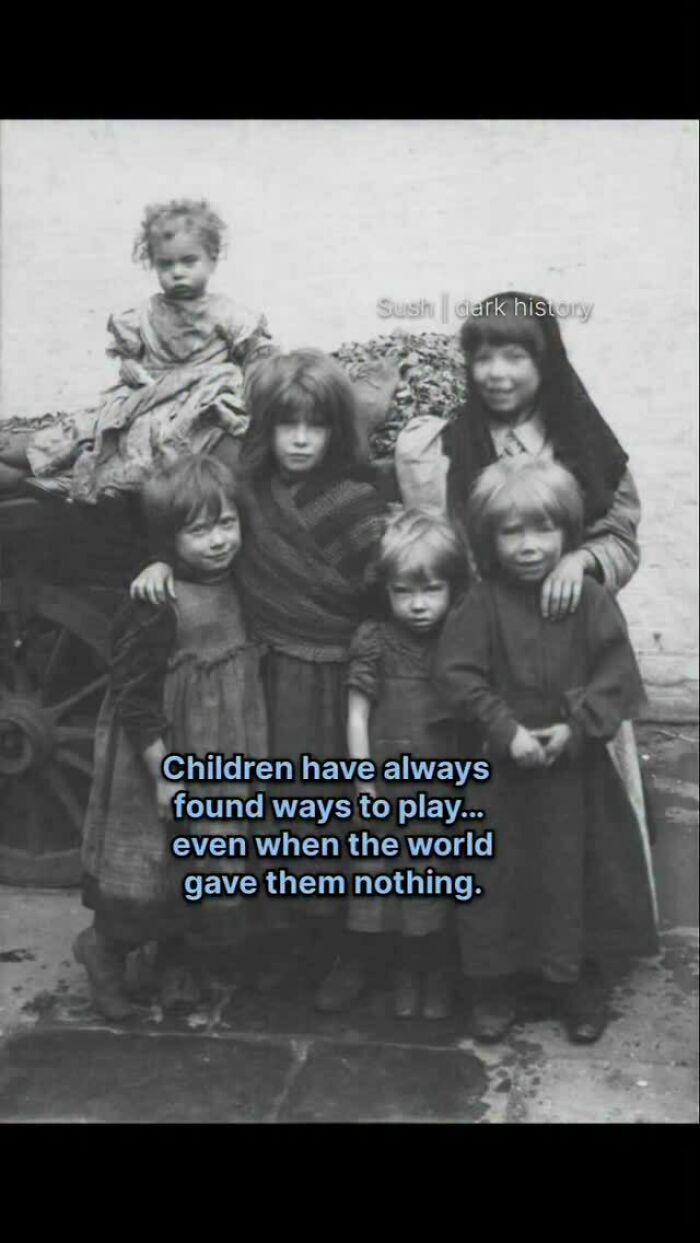
This little “shoe doll” dates to around 1900–1905 and was found in an Edwardian London slum. It wasn’t bought from a toy shop. It was handmade from whatever was available. The head is actually the heel of a man’s leather shoe. The body is made from a black sock, and the dress and apron are stitched together from scraps of household fabric. Small pieces of metal and nails were added to suggest facial features. It’s simple, rough, and a little haunting but it tells you everything about the world it came from.
At that time, London had extreme poverty, especially in overcrowded East End neighborhoods. Many families lived in one or two small rooms, with unstable jobs and very little money. Factory-made dolls especially porcelain ones were expensive and considered luxuries. Working-class children often made their own toys from discarded objects: wood, cloth, bones, paper, or in this case, a worn-out shoe. This doll wasn’t unusual for poor communities but very few survived, because they were fragile and heavily used.
What makes this doll powerful is that it shows childhood doesn’t disappear just because life is hard. Someone took the time to shape this. Someone played with it. It was probably carried around, slept with, maybe even repaired more than once. It wasn’t made to be displayed. It was made to be loved.
Today, the doll is part of the Museum of Childhood in Edinburgh, Scotland (under National Museums Scotland). Even though it was found in London, it became part of a broader collection representing childhood across Britain. It’s preserved not because it’s beautiful, but because it represents something real resilience, creativity, and the everyday lives of children history often forgets.
© Photo: dark_history.by_sush
#28
Hypatia of Alexandria was one of the smartest people of her time. Born around 360–370 AD, she was the daughter of the mathematician Theon, who taught her math and science from a young age. Unlike most women of that era, she didn’t just stay in the background she became a teacher, philosopher, and astronomer, running her own school where both men and women came to learn. She was known for her intelligence, wisdom, and her ability to explain really complex ideas in simple ways.
Alexandria at the time was politically and religiously tense. The city had a mix of pagans, Christians, and Jews, and power struggles were everywhere. Hypatia tried to stay out of politics, but her friendship with Orestes, the governor of Alexandria, dragged her into the chaos. Many Christian leaders saw her influence as a threat, especially because she was a strong, independent woman who didn’t bow to anyone’s authority blindly.
In 415 AD, that tension exploded. A mob of radical Christians attacked her, dragged her from her carriage, and brutally k**led her on the streets. They tore her apart, and her body was destroyed. It was horrifying and violent, but it wasn’t because she did anything wrong it was because she represented knowledge, logic, and freedom of thought, things some people were too afraid to accept.
Even though she was m**dered, Hypatia’s legacy lived on. She became a symbol of intellectual courage and resistance to ignorance. People remember her as someone who refused to let fear, religion, or societal rules stop her from thinking and teaching. Today, she’s celebrated as one of the first great women scientists and philosophers in history a reminder that knowledge can be dangerous to the ignorant, but powerful for humanity.

© Photo: dark_history.by_sush
#29
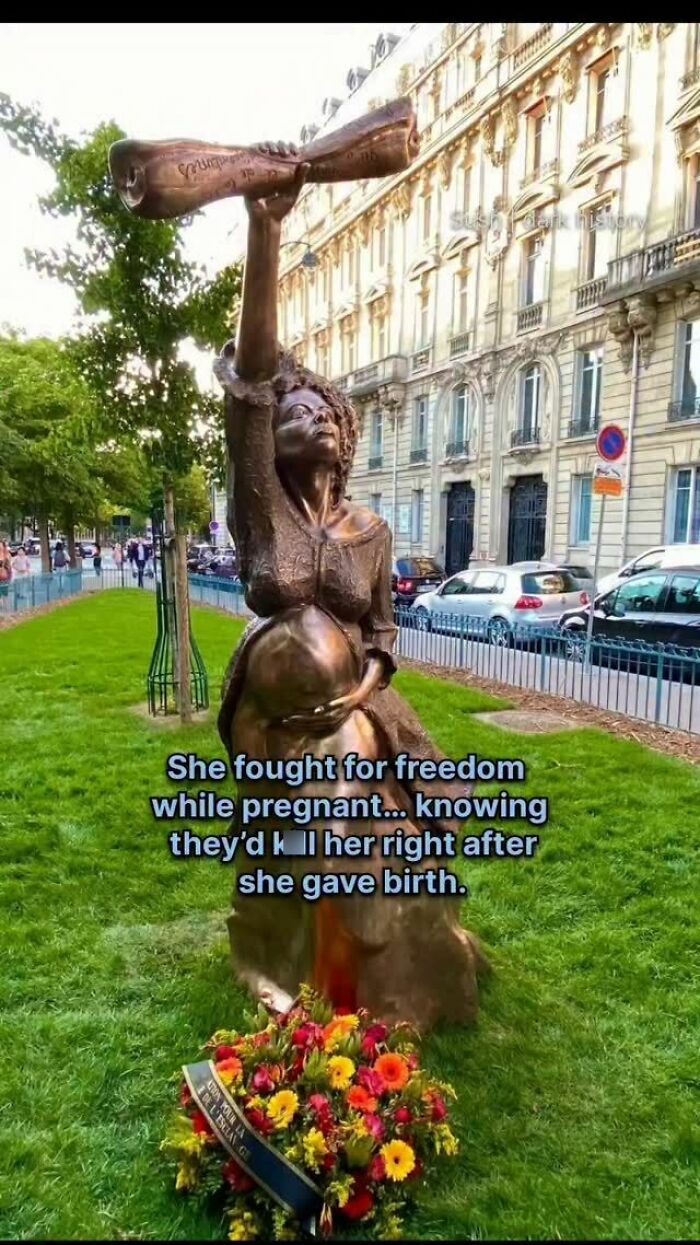
La Mulâtresse Solitude was a real woman from Guadeloupe, born in the late 1700s. She was the daughter of an enslaved African woman and a French sailor, which made her “mulâtresse” meaning mixed-race. But even though her father was white, she still lived as a slave. People say she grew up with a calm spirit but strong fire inside her, because she had seen enough cruelty on the plantations.
In 1794, something huge happened slavery was abolished in the French colonies. People finally felt hope again. But a few years later, Napoleon decided to bring slavery back. Can you imagine? People who were just freed were told to return to chains again. Solitude refused. She joined the rebellion with other freedom fighters, and here’s the powerful part she was pregnant at that time. Despite knowing the danger, she still chose to fight for freedom.
The rebellion didn’t succeed, and Solitude was captured. But the French didn’t execute her immediately. They waited for her to give birth, because k**ling a pregnant woman was illegal. So she carried her child knowing exactly what awaited her. The day after she gave birth, she was e**cuted but her child lived. Even though her life was short, her bravery became a symbol of resistance, especially for Black women fighting for dignity and freedom.
Today, she is remembered as a hero in Guadeloupe. A statue of her stands there as a reminder that courage doesn’t always come with survival sometimes it’s in fighting even when you know you might not win.
© Photo: dark_history.by_sush
#30
Before World War I, society expected women to have long hair because it symbolized femininity, purity, and elegance. Long, almost ankle-length hair was considered “proper,” and it showed status too rich women had the time and help to maintain it. Around 90–95% of women had very long hair, and since most women stayed at home, life was also slower, so long hair wasn’t inconvenient or dangerous. It was simply tradition, passed down from mothers and grandmothers.
But World War I changed everything. When millions of men went to war, women stepped into factories, hospitals, and tough physical jobs. Long hair suddenly became heavy, time-consuming, and even unsafe around machines. Women tied it up, cut it shorter, and realized that shorter hair made their new, active lives easier. After the war, they didn’t want to return to old restrictions. The bob cut of the 1920s became a symbol of freedom, independence, and confidence. millions of young women cut their hair short. In big cities like London, Paris, and New York, about 50–70% of young women, It wasn’t just fashion it was women saying, “We’re not going back.”
That’s why hair changed so dramatically. As women’s roles, work, and identity transformed, their hairstyle followed. The shift from ankle-length hair to bob cuts wasn’t random it reflected a cultural revolution happening inside society and inside women themselves.

© Photo: dark_history.by_sush
#31
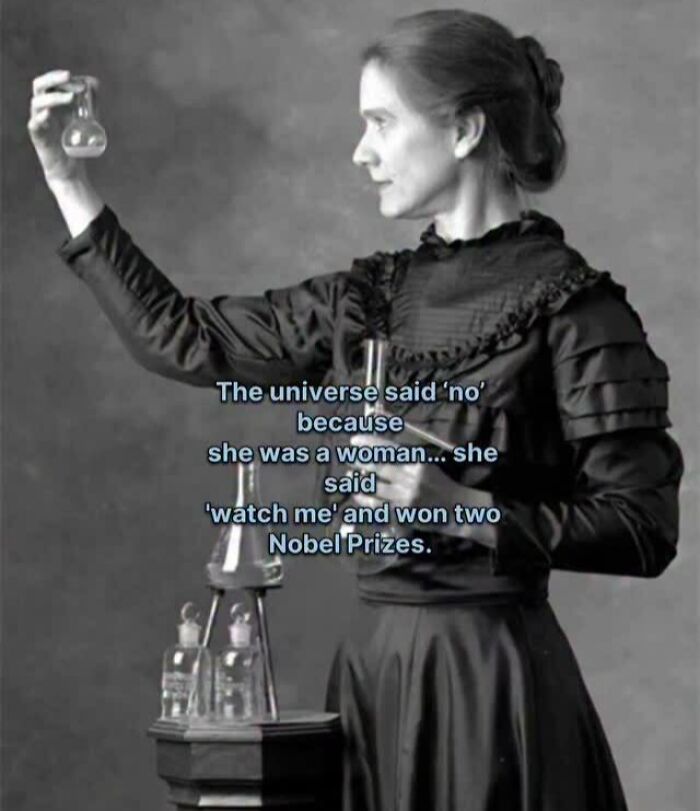
Most people don’t know that before Paris, Marie Curie spent years working as a private tutor and governess to help her sister study. She kept her dream alive quietly, teaching herself physics and math after work. She also attended the secret “Flying University” in Warsaw an underground school for women banned from higher education. This shows how determined she was long before the world even knew her name.
Another thing often missed: Marie and Pierre did their groundbreaking research on polonium and radium in a broken-down shed behind their school it wasn’t a fancy lab at all. They stirred tons of pitchblende ore (a radioactive mineral) by hand to extract tiny amounts of radium. It took them about four years of backbreaking work to isolate just one-tenth of a gram of pure radium chloride. This is also why Marie was so heavily exposed to radiation throughout her life.
After Pierre died in 1906, Marie not only became the first female professor at the Sorbonne, but she also founded the Radium Institute (now the Curie Institute) in 1914. This became one of the world’s leading centers for research on radioactivity and cancer treatment. She trained a new generation of scientists there, including her daughter Irène, who later won her own Nobel Prize. So Marie Curie literally created a legacy of women in science.
There’s also a personal, human side to her story. She faced intense public attacks during a scandal with physicist Paul Langevin after Pierre’s death newspapers called her “a foreign homewrecker.” Despite all of that, she accepted her second Nobel Prize in Chemistry in 1911 with her head held high. And in the same year she was finally recognized with a lab of her own. Her life wasn’t just about discoveries; it was also about fighting prejudice, surviving public shaming, and still showing up for science.
© Photo: dark_history.by_sush
#32
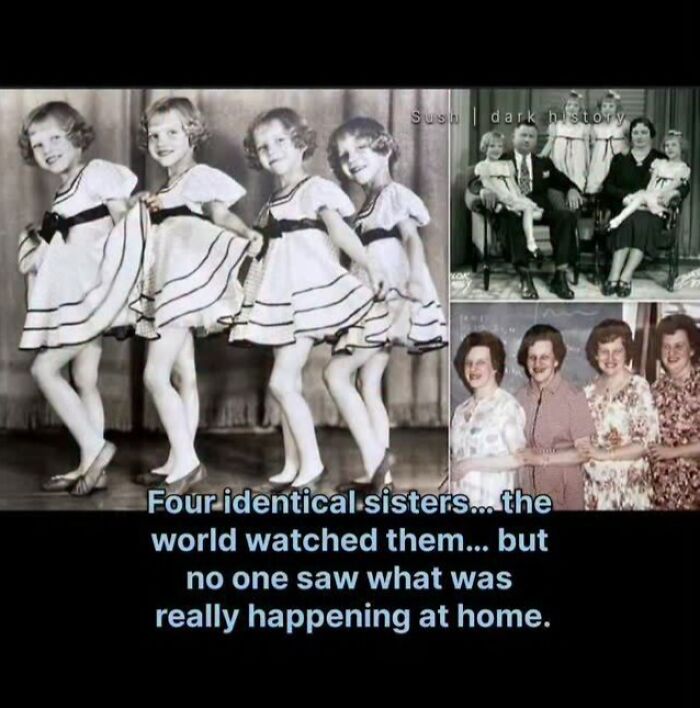
The Morlok quadruplets Edna, Wilma, Helen, and Sarah were born in 1930 in Lansing, Michigan, and were identical, a rare phenomenon that immediately drew public fascination and scientific curiosity. Their early childhood, however, was far from easy. They reportedly endured ab*se from their father, Carl Morlok, and grew up in a strict, harsh household. On top of this, the girls were subjected to intense attention from researchers studying identical multiples, often in ways that were invasive and ethically questionable, adding further pressure to their young lives. Some of the sisters also experienced mental health challenges, reflecting both the trauma of their upbringing and the long-term effects of constant scrutiny. Despite these hardships, the sisters survived into adulthood and lived long, meaningful lives.
Wilma Morlok passed away in 2002 at age 72, followed by Helen Morlok on October 31, 2003, at 73, Edna Morlok on April 10, 2015, at 84, and finally Sarah Morlok Cotton, the last surviving sister, on July 7, 2025, at 95, who carried the memories of her family and witnessed nearly a century of change. Their story, often sensationalized in the media, is ultimately one of resilience, courage, and survival, a reminder that behind every headline there are real people enduring pain, scrutiny, and struggle, yet still finding a way to persevere and live full lives.
© Photo: dark_history.by_sush
#33
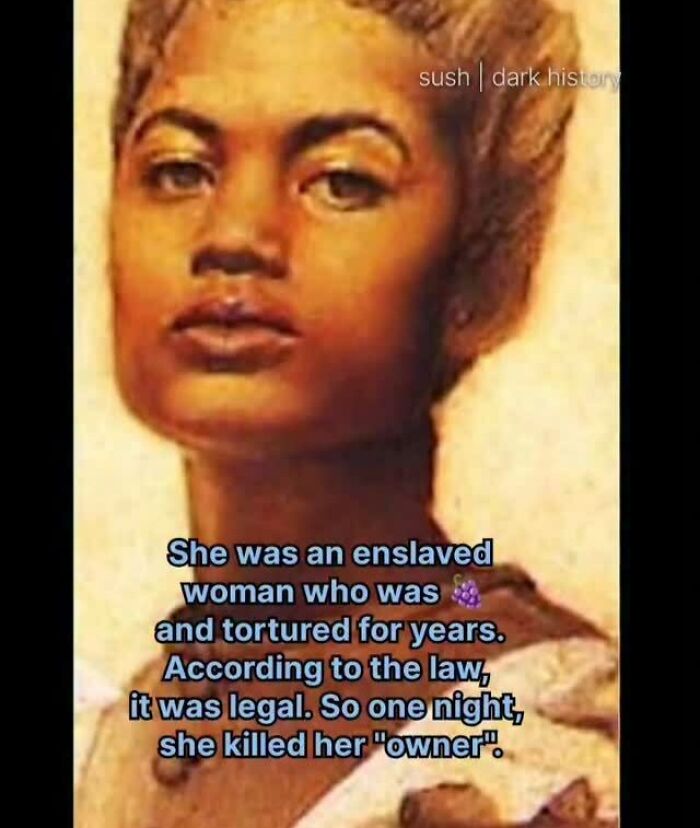
Celia’s story shows how cruel and unfair the system of slavery really was, especially for women. Celia was a teenage enslaved girl living in Missouri in the early 1850s. She was owned by a man named Robert Newsom, who repeatedly forced himself on her over several years. Celia clearly resisted. She said no, she begged him to stop, and she tried to find ways to protect herself. But under slavery, none of that mattered the law did not recognize an enslaved woman’s right to her own body.
In 1855, Newsom came to Celia again despite her refusal. This time, Celia acted to defend herself. Newsom later died from what happened. Celia didn’t try to create a false story; she told the truth about why she acted. Still, the focus of the case was never her suffering. The only thing the authorities cared about was that an enslaved person had caused the death of her owner, which was seen as a serious crime no matter the reason.
During Celia’s trial, her lawyers argued that she should be protected under self-defense, just like any other woman facing repeated harm. The judge rejected this argument completely. The court ruled that enslaved women had no legal right to defend themselves against their enslavers, because they were considered property, not full human beings under the law. That decision revealed how deeply broken and biased the legal system was.
Celia was e**cuted later in 1855, and her case became an important historical example of how slavery stripped women of basic rights. Today, historians remember Celia not as a criminal, but as a young woman who tried to protect herself in a system designed to silence her. Her story forces us to confront a hard truth: justice was never meant for people like her.
© Photo: dark_history.by_sush
#34
James Barry was born around 1789 in Ireland as Margaret Ann Bulkley. From a young age, she wanted one thing to become a doctor. But back then, women weren’t allowed to study medicine. Instead of giving up, she made a bold, almost unimaginable choice: she cut her hair, dressed as a man, and took on a new identity James Barry. No one suspected a thing, and she enrolled at the University of Edinburgh, graduating as a doctor in 1812.
As Dr. Barry, she joined the British Army and spent decades traveling across the British Empire Africa, the Caribbean, India performing surgeries, improving hospitals, and fighting for better treatment of patients, soldiers, and even enslaved people. She was passionate about hygiene and sanitation long before it became common practice, and she famously performed a successful Caesarean section where both mother and baby survived a feat almost unheard of in her time.
Throughout her career, Barry’s colleagues never knew her secret. She lived strictly as a man, sometimes fiercely protective of her privacy, even clashing with authorities to defend patients or hospital conditions. Despite strict social rules and intense scrutiny, she achieved one of the highest ranks in military medicine: Inspector General of Hospitals. She truly broke barriers, not just in medicine, but in defying rigid gender norms.
When Barry died in 1865, the world was shocked to discover that James Barry had been assigned female at birth. Suddenly, her entire life and achievements were seen through a new lens. She had risked everything to pursue her dream and, in the process, left a legacy that still inspires people today a story of courage, intelligence, and determination against all odds.

© Photo: dark_history.by_sush
#35
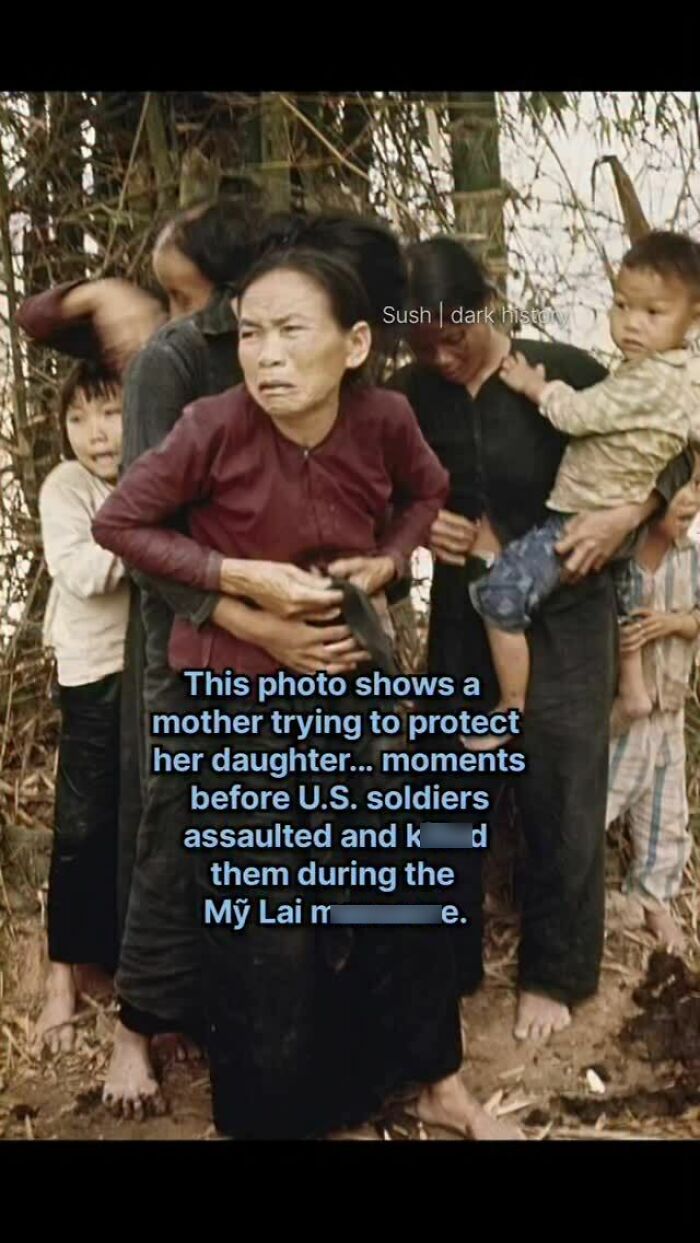
The Mỹ Lai massacre happened on March 16, 1968, during the Vietnam War, in a small village called Sơn Mỹ in South Vietnam. U.S. soldiers from Charlie Company entered the village expecting to find enemy fighters, but instead they found unarmed civilians mostly women, children, and elderly people. What followed was horrifying. Over the next few hours, soldiers k**led hundreds of civilians. Many victims were also beaten and as***ulted before being k**led. It wasn’t a battle it was a mass k**ling of innocent people.
What makes this even more disturbing is that many of the villagers were gathered together before being sh*t at close range. Some tried to run, some tried to protect their families, but they had no chance. One of the most talked-about moments is when a U.S. Army helicopter pilot, Hugh Thompson Jr., saw what was happening from above. He actually landed his helicopter between the soldiers and the villagers and told his crew to protect the civilians, even threatening to fire on his own side if the k**ling didn’t stop. Because of him and his team, a few lives were saved.
After the m**sacre, the U.S. Army initially tried to cover it up. For months, the truth didn’t come out. But eventually, reports and photographs started surfacing, and in 1969 the story shocked the entire world. People were outraged not just because of the k**lings, but because it was hidden. An investigation followed, but in the end, only one soldier, Lieutenant William Calley, was convicted. Even he served only a short period under house arrest, which made many people feel that justice was never truly served.
Today, the Mỹ Lai massacre is remembered as one of the darkest moments of the Vietnam War. It completely changed how many people around the world saw the war and raised serious questions about military ethics and accountability. It’s not just a historical event it’s a reminder of how dangerous war can become when humanity is lost, and why these stories should never be forgotten.
© Photo: dark_history.by_sush
#36
After the Taliban enforced these bans, the global reaction was immediate and widespread. The United Nations, Human Rights Watch, Amnesty International, and the International Olympic Committee condemned the restrictions, calling them a clear violation of basic human rights. FIFA and other international sports bodies stated that banning women from sports directly contradicts global sporting principles. Many Islamic scholars and institutions also publicly rejected the Taliban’s actions, stating clearly that these bans have no foundation in Islamic law.
Despite this condemnation, little has changed on the ground. Women’s national teams were dissolved, athletes went into hiding, and many fled the country fearing retaliation. Some Afghan women athletes managed to evacuate and seek asylum abroad to continue their careers, while others were forced to abandon sports entirely. Inside Afghanistan, women remain banned from sports facilities, gyms, parks, and organized physical activity, with enforcement varying but fear remaining constant.
Today, Afghan women are still systematically excluded from public life. Girls are barred from education beyond early adolescence, women are restricted from most jobs, and any visible form of independence including sports is treated as defiance. The bans remain in place, international pressure continues, and Afghan women are still waiting for their right to simply exist freely in their own bodies.

© Photo: dark_history.by_sush
#37
Amedeo Modigliani wasn’t always the famous artist we talk about today. Back then, he was that struggling painter in Paris broke, sick, and ad**cted. He came from Italy to make it big in the art world, but life hit him hard. He had tuberculosis, which was deadly at that time, and instead of resting, he drowned his pain in alcohol and dr*gs. He was charming, passionate, but also self-destructive the kind of person who’d light up a room and burn it down in the same moment.
Then came Jeanne Hébuterne. She was only nineteen, quiet, and deeply devoted to art. Her family was religious and strict, but she fell for him instantly. He was older, mysterious, and full of chaos everything she wasn’t. She left her family to live with him, even though they hated him. But their life together wasn’t romantic like people imagine from his paintings. They lived in poverty, moving from one small apartment to another, surrounded by unfinished canvases, sickness, and emotional storms.
Modigliani kept painting Jeanne her calm, soft eyes became the face of his art. But behind those portraits, they were falling apart. His health got worse, and Jeanne, pregnant and emotionally exhausted, took care of him till the very end. In January 1920, he died from meningitis at just 35. Jeanne was nine months pregnant and completely heartbroken. The next morning, she jumped from a window. She was only 21. Their baby daughter was left orphaned, and Jeanne’s family never forgave Modigliani for what happened.
It’s tragic because their story is always told like a romantic legend the artist and his muse. But really, it was two fragile souls trying to survive in a world that never showed them mercy. Their love was real, but it came with pain, poverty, and heartbreak that art alone couldn’t fix.
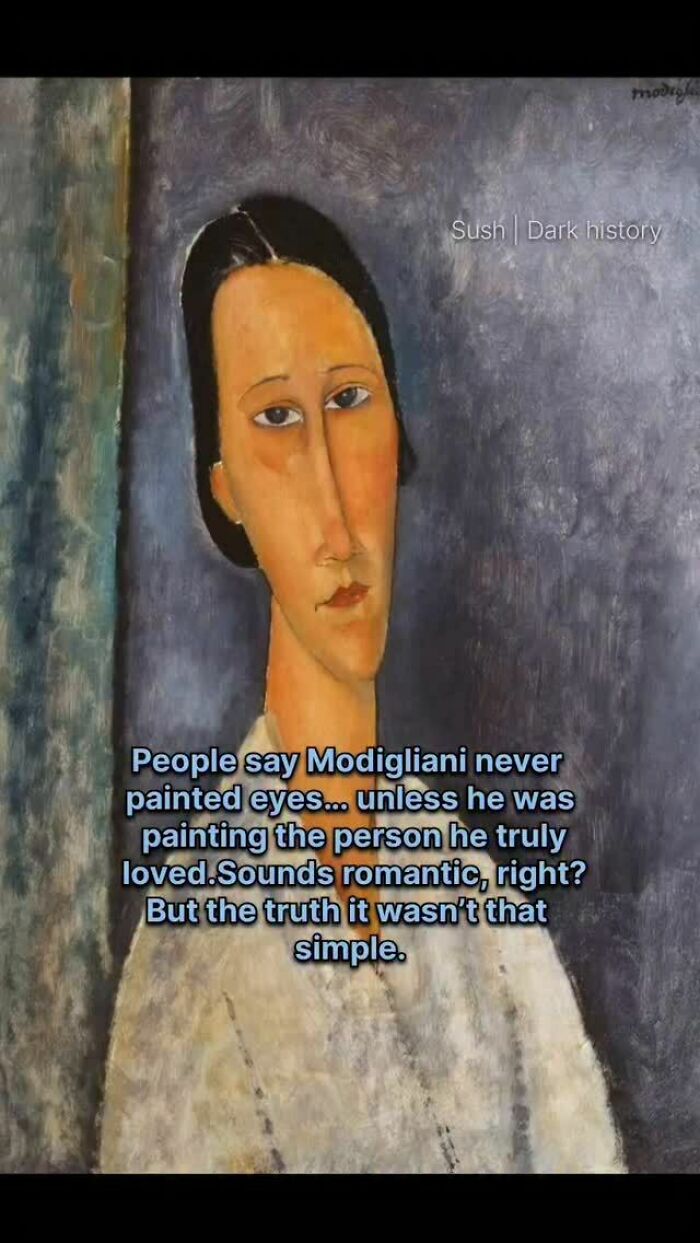
© Photo: dark_history.by_sush
#38
When police and emergency responders entered the house in Louisiana in January 2022, they didn’t just find a death they found evidence of years of abandonment. Lacey Ellen Fletcher was 36 years old. Her parents told authorities she had autism and severe anxiety, but what shocked everyone was that no medical help had been called for years. There were no regular checkups, no social services involved, no outside support. The house looked normal from the outside. That’s what disturbed people the most this wasn’t hidden in a basement or abandoned building. It was a quiet home in a regular neighborhood.
Once the details became public, the reaction was immediate and intense. People weren’t just angry they were confused. How does someone suffer like this without anyone intervening? No school follow-ups. No welfare checks. No neighbors asking questions. The case forced a hard conversation about how easily disabled adults can disappear when families isolate them from the world. Lacey didn’t “fall through the cracks.” She was left there.
In 2023, Lacey’s parents, Clay and Sheila Fletcher, were charged with second-degree m*rder, a charge that later became mansl**ghter. They accepted a plea deal and were each sentenced to 40 years in prison, with 20 years suspended, followed by probation. The court also barred them from ever being caregivers again.
The sentence didn’t bring closure for many people because no punishment can give someone back the life they never got to live.
Lacey Ellen Fletcher’s story isn’t just about neglect. It’s about silence being mistaken for safety, and “private family matters” being used as an excuse to look away. Her case is now often mentioned as a warning: if we don’t check on the quiet ones, if we assume someone else is responsible, this kind of suffering can exist right next door unnoticed, untreated, and unspoken.
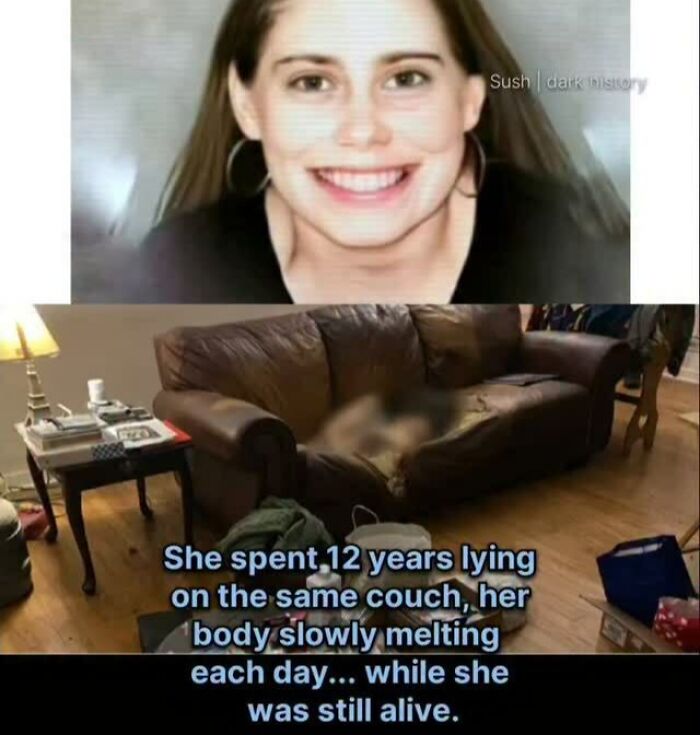
© Photo: dark_history.by_sush
#39
Elisabeth Fritzl’s story is one of the darkest and most shocking cases in modern history. Born in Austria in 1966, she grew up in what seemed like a normal family but behind closed doors, her father, Josef Fritzl, was controlling and ab*sive. When Elisabeth was 18, he lured her into the basement of their house and locked her away in a secret, windowless cellar. She had no freedom, no sunlight, and no contact with the outside world.
Over the next 24 years, Elisabeth endured unimaginable horrors. Her father r**ed her repeatedly, and during her imprisonment, she gave birth to seven children all in the basement. Three of the children stayed with her in the cellar, while the others were taken upstairs and raised by her father and mother, pretending Elisabeth had abandoned them. No one in the neighborhood, school, or family suspected a thing; the world had no idea this was happening right under their noses.
The story finally came to light in 2008, when one of her children fell seriously ill and needed medical attention. Elisabeth was forced to reveal her existence, and authorities discovered the hidden cellar. Josef Fritzl was arrested and later convicted of r*pe, in**st, and m*rder by negligence, receiving a life sentence. Elisabeth and her children, scarred both physically and emotionally, had to rebuild their lives from scratch after decades of ab*se.
Her story is a chilling reminder of how evil can hide behind familiar faces, but also of the human spirit’s resilience and will to survive. Elisabeth’s courage to endure and eventually speak out saved her children and exposed one of the most horrifying crimes of modern times.

© Photo: dark_history.by_sush
#40
Masahisa Fukase was one of Japan’s most emotional photographers and his wife, Yōko, was the center of his world for years. He photographed her constantly, everywhere they went. At first, their photos looked full of love and playfulness, but slowly, something changed. You can actually see it in the pictures her expressions started to feel distant, tired, almost like she was fading away from him little by little.
People who knew them said Fukase wasn’t really in love with her he was in love with how she made him feel through his photos. He used his camera to express his emotions, but it also became a wall between them. Yōko once said she felt more like an “object” in front of his lens than a person. That says a lot about how trapped she must’ve felt being seen but not really seen.
Eventually, Yōko left him in 1976. And that broke him. After she was gone, he started taking photos of ravens dark, lonely, chaotic which became his most famous series, The Solitude of Ravens. Many people believe those photos weren’t really about the birds; they were about him, about the emptiness and loneliness left after Yōko walked away.
It’s sad but also strangely human how sometimes our love for something, or someone, can turn into obsession without us realizing it.

© Photo: dark_history.by_sush
#41
Princess Alexandrine of Prussia was born in 1915 into a powerful royal family she was the daughter of Crown Prince Wilhelm of Germany and Crown Princess Cecilie, making her part of the last generation of German royalty before the monarchy ended. From a very young age, it was clear that her life would be a bit different. She needed extra care and support, and she grew up in a more protected and structured environment compared to her siblings.
What stands out about Alexandrine is how her family treated her. During that time, many royal families across Europe kept children with developmental conditions out of public view, sometimes even sending them away. But Alexandrine wasn’t completely hidden. You can actually see her in family photographs, standing with her parents and siblings, which was not very common back then. It shows that, in their own way, her family still included her as part of their public life.
She was mainly cared for by her nurse, Selma Boese, who played a very important role in her life. As she grew older, Alexandrine also attended a special school (Trüpersche Sonderschule), which focused on children who needed extra support in learning. This tells us that her family didn’t just keep her at home they made sure she received the kind of care and education that was available at the time.
Later in life, she lived a quieter and more private life, especially during and after World War II. She spent time in places like Bavaria, away from the political chaos surrounding her family. Alexandrine lived until 1980, and while her life wasn’t as publicly documented as other royals, her story still stands out. Not because of power or fame but because, in a time when many were hidden, she was still acknowledged and included, even if quietly.
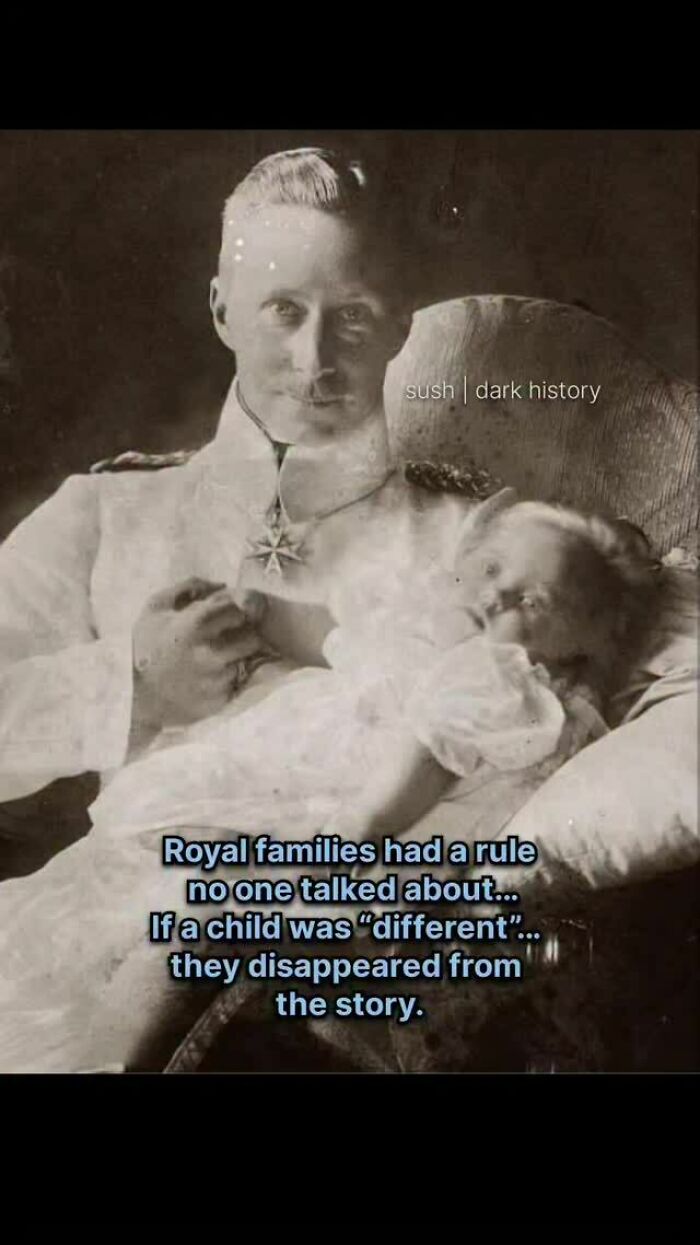
© Photo: dark_history.by_sush
#42
Vincent van Gogh spent most of his life feeling like a failure. He painted obsessively, not for fame or money, but because something inside him had to come out. He sold almost nothing, depended on his brother Theo to survive, and constantly doubted whether his work had any value at all. To him, the world felt cold, unresponsive, and cruelly silent.
He died believing his art meant nothing. He never saw museums filled with his paintings, never knew that his pain would turn into beauty for millions, never heard the love his work would one day receive. Van Gogh didn’t live long enough to be understood but somehow, he painted exactly what the world would need after he was gone.
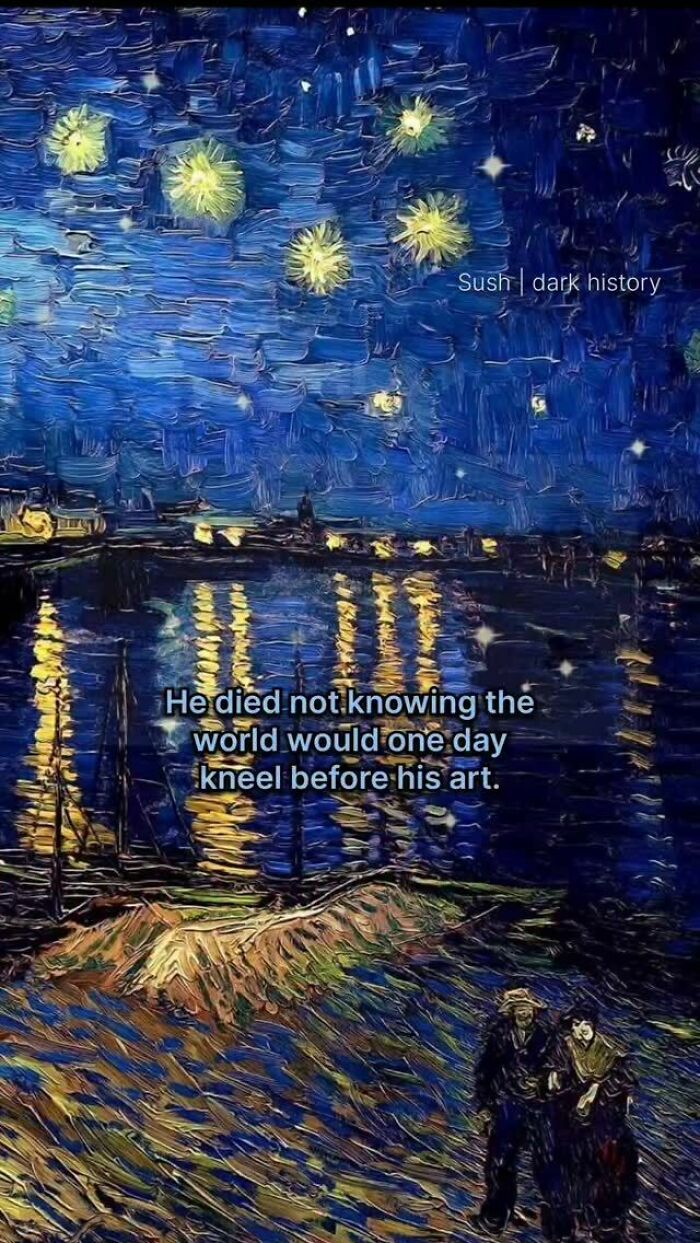
© Photo: dark_history.by_sush
#43
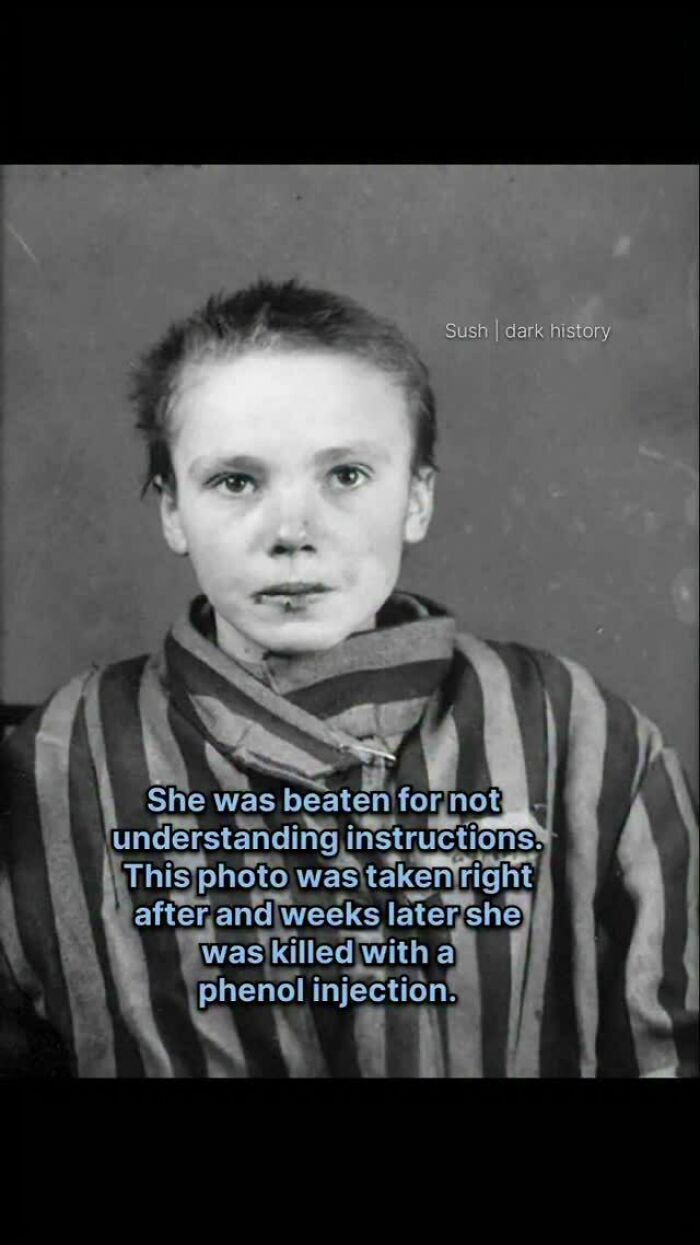
Czesława Kwoka was a Polish Catholic girl deported to Auschwitz-Birkenau in December 1942 along with her mother, Katarzyna Kwoka. They were part of the thousands of non-Jewish ethnic Poles imprisoned in the camp. Upon arrival, Czesława was registered as Prisoner No. 26947. Like all new prisoners, she was forced to sit for identification photographs, which were taken by Wilhelm Brasse, an inmate photographer later known for documenting camp victims.
In her photograph, visible bruising and a cut lip can be seen. Wilhelm Brasse later testified that Czesława had been beaten by a guard shortly before the photo was taken because she did not understand German instructions. This detail is significant because it shows how routine violence was, even during administrative procedures. The photograph was not meant to preserve her memory it was simply part of the camp’s record-keeping system.
Her mother died weeks later from starvation and exhaustion, leaving Czesława alone in the camp. On March 12, 1943, Czesława Kwoka was killed by a phenol injection to the heart, a method commonly used by camp doctors to execute prisoners quickly. She was fourteen years old. Her photograph survives today as evidence of how systematically children were imprisoned, abused, and murdered at Auschwitz.
© Photo: dark_history.by_sush
#44
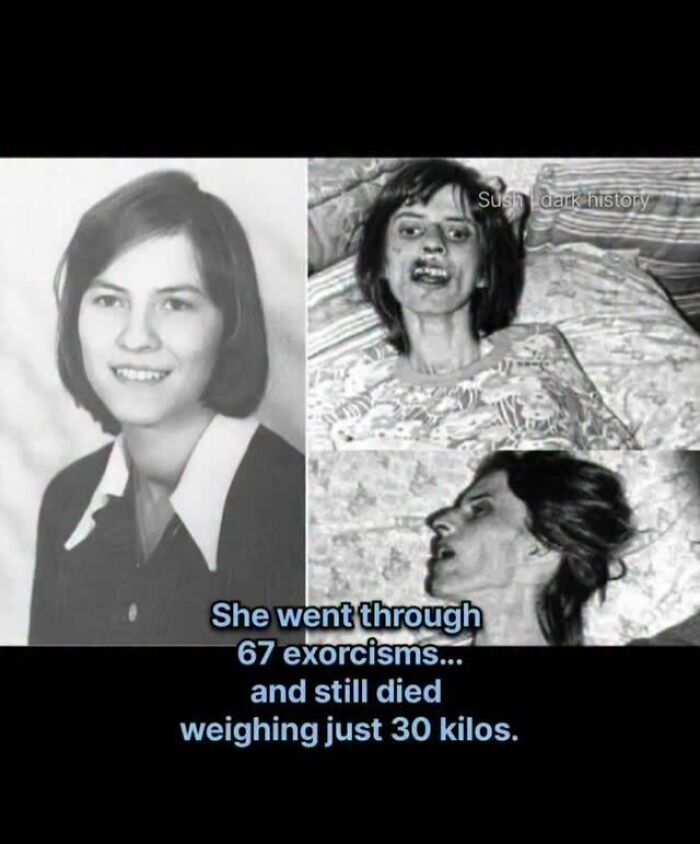
Anneliese Michel was born in 1952 in Germany and grew up in a deeply religious Catholic family. Her life was normal until she was about 16, when she started having seizures and blackouts. Doctors diagnosed her with temporal lobe epilepsy and later depression. She was put on heavy medication, but instead of improving, Anneliese said things got worse. She claimed she saw demonic faces, heard voices, and felt an intense hatred toward religious objects like she couldn’t even walk past a church or look at a crucifix without panic.
As her condition worsened, her family began to believe this wasn’t just a medical issue. After years of asking the Church for help, two Catholic priests Arnold Renz and Ernst Alt were finally allowed to perform an exorcism in 1975. According to the priests, Anneliese was possessed by six demons: Lucifer, Judas Iscariot, Nero, Cain, Adolf Hitler, and a fallen priest named Fleischmann. During the exorcisms, Anneliese reportedly spoke in different voices, growled, identified priests by name without knowing them, and said the demons hated her because she prayed for others.
The priests later said that during the rituals, the demons claimed Anneliese was chosen to suffer as a warning to humanity. One of the most disturbing things recorded was the demons saying she must refuse food and endure pain as part of her “mission.” Over time, Anneliese stopped eating almost completely. She performed repeated kneeling prayers so much that her knees became injured and infected. Audio recordings from the exorcisms exist, and they capture her screaming, crying, and speaking in harsh, unrecognizable tones, which still disturb people today.
Over 10 months, Anneliese went through 67 exorcism sessions. During this time, her medical treatment was basically stopped. By 1976, she was extremely weak, dehydrated, and malnourished. She died at just 23 years old, weighing only 30 kilograms. The official cause of death was starvation and dehydration, and doctors later said she could have survived if proper medical care had continued.
© Photo: dark_history.by_sush
#45
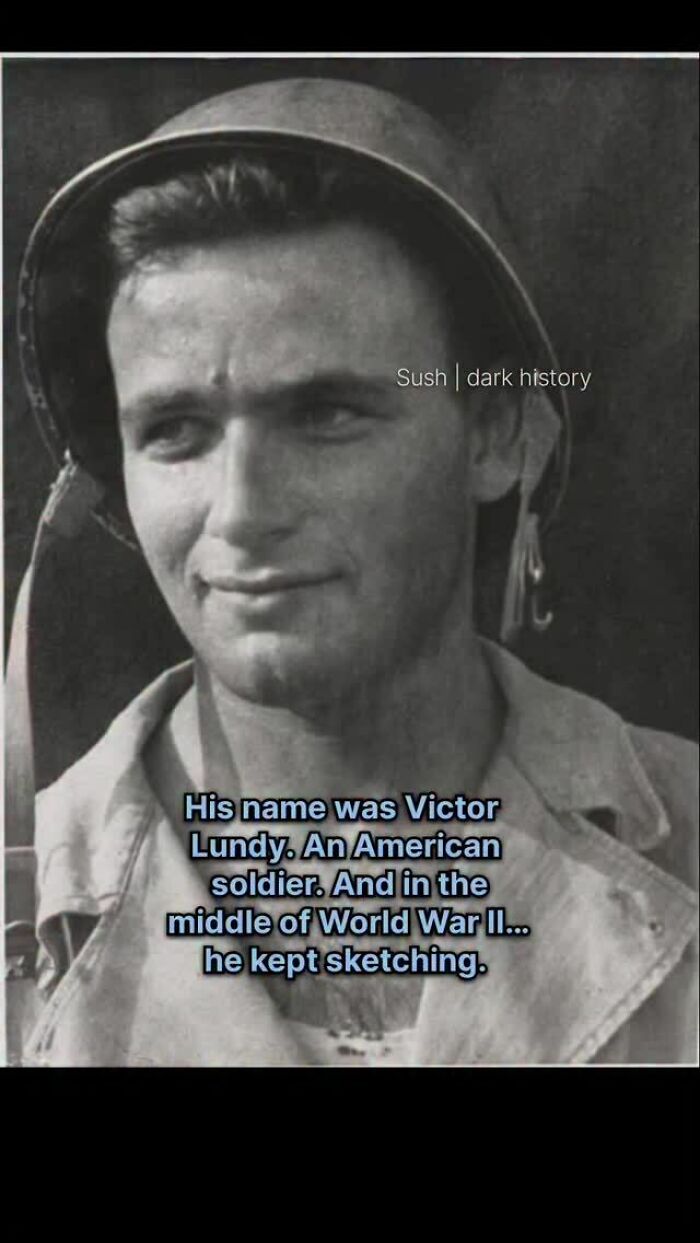
Victor Lundy was a very young American soldier during World War II, and what makes his story fascinating is that he didn’t just carry weapons he carried pens and small sketchbooks. While moving through Europe with the U.S. Army, he constantly drew the world around him. But instead of dramatic battle scenes, his drawings captured the quiet, ordinary moments of military life. You see soldiers resting, sitting, smoking, waiting, sleeping all those very human pauses that rarely make it into history books.
What’s really amazing is how quickly these sketches were made. Lundy often drew in tough conditions, sometimes in the middle of movement or uncertainty, using ink and whatever paper he had. His lines are loose, fast, and incredibly expressive. With just a few strokes, he could show exhaustion, tension, boredom, or calm. These weren’t polished artworks meant for galleries they were more like visual diary entries, created in real time, straight from lived experience.
Another important detail is that many of these sketches survived and are now preserved by the Library of Congress. That’s a big deal, because they offer a rare, personal window into how war actually felt for ordinary soldiers. Instead of heroic propaganda or staged imagery, Lundy’s drawings feel honest and intimate. They remind us that war is not just about battles it’s also about waiting, fatigue, routine, and small moments of humanity.
Today, artists and historians love studying his work because it sits somewhere between documentary and art. His sketches show how powerful simple observation can be. No grand drama, no exaggeration just real people, real emotions, captured with ink in the middle of history.
© Photo: dark_history.by_sush
#46
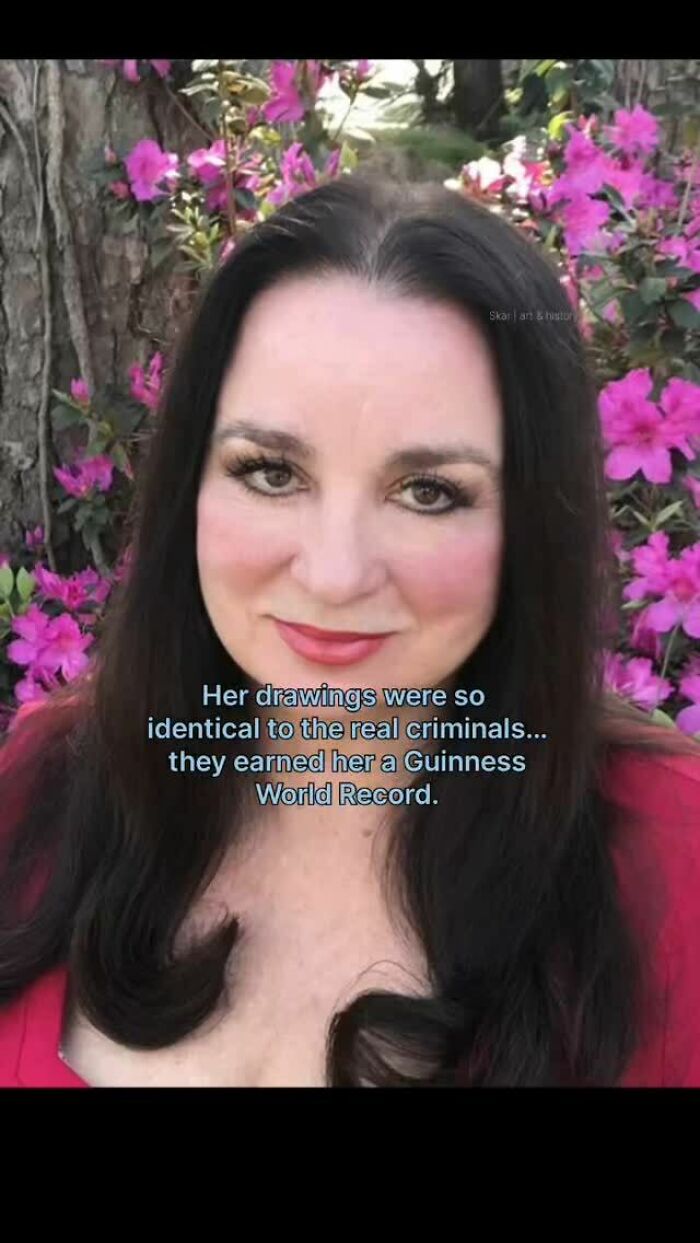
Lois Gibson isn’t just an artist…. she’s the woman whose pencil has put more than 1,266 criminals behind bars. She’s officially in the Guinness World Records as the most successful forensic artist in the world, and when you see her sketches side-by-side with the real criminals, it’s almost eerie how identical they are. But this gift didn’t come out of nowhere…. it came from a place of deep pain.
When Lois was just 21, she was brutally attacked. She survived, but her attacker walked free. That moment changed everything. Instead of letting it destroy her, she decided no other victim should be left without justice. She trained herself to take even the smallest details from a victim’s memory a crooked smile, a scar, a certain stare and turn it into a lifelike portrait. Some victims even said they felt a strange psychic-like pull while describing the face, as if their memory became sharper when Lois began to draw. It was as if she could reach into their mind and pull the image out.
Over the decades, Lois solved over 1,266 cases, working hand-in-hand with police to bring criminals to justice. Her sketches didn’t just catch suspects they gave people closure, hope, and the strength to move forward. She proved that art can heal, and sometimes… art can fight back harder than anything else.
© Photo: dark_history.by_sush
#47
These are the clothes they wore.
Not short dresses. Not revealing outfits.
Just normal clothes jeans, school uniforms, oversized hoodies, even children’s nightwear.
And today, all of those pieces hang in a museum… not as fashion, but as evidence of how society blames the wrong thing.
People walk through that museum and realise something powerful
victims weren’t “inviting it.”
They weren’t “dressed wrong.”
It wasn’t their outfit that caused the assault.
It was the mindset of the person who did it.
Yet, every time something happens, the question still comes
“What were you wearing?”
As if a piece of cloth decides consent.
As if a girl’s dignity fits inside a dress, or jeans, or a dupatta.
These clothes scream a message louder than any speech ever could
It’s never about the clothes. It’s about accountability. Stop teaching girls to change how they dress.
Teach boys to understand boundaries, respect, and consent.

© Photo: dark_history.by_sush
#48
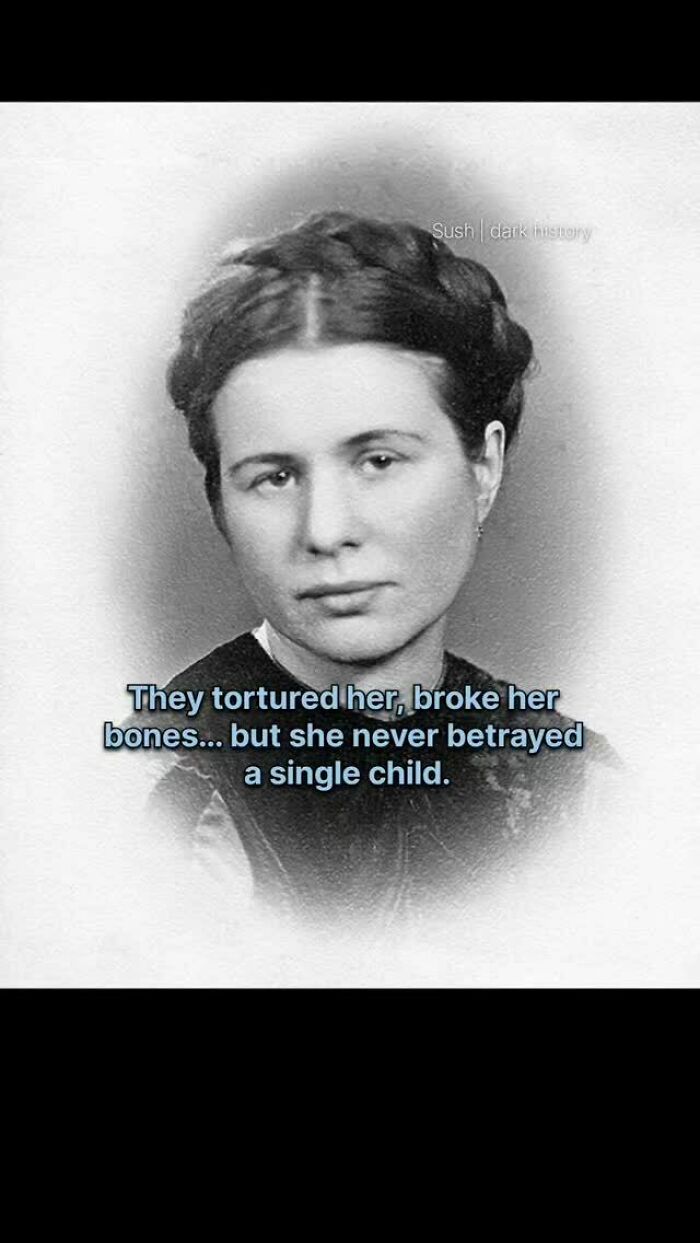
Irena wasn’t just randomly smuggling kids she was part of a secret underground group in Poland called Żegota, created only to help Jews during the Holocaust. She organized a whole network of people priests, drivers, nurses everyone had a role. It wasn’t just about sneaking kids out; she had to place them with safe Christian families, orphanages, and convents, and then make sure the children were raised as if they were really theirs. It was a massive web of lies, forged documents, and trust… and one mistake could cost lives.
What’s even more heartbreaking is that after the war, many of those kids never found their real parents again because most of the parents had been k**led in concentration camps. Imagine growing up and learning you survived only because a stranger risked everything for you. That’s the kind of impact Irena had. And she never thought of herself as a hero when asked later in life, she simply said, “I could have done more. This regret will follow me to my death.”
© Photo: dark_history.by_sush
#49
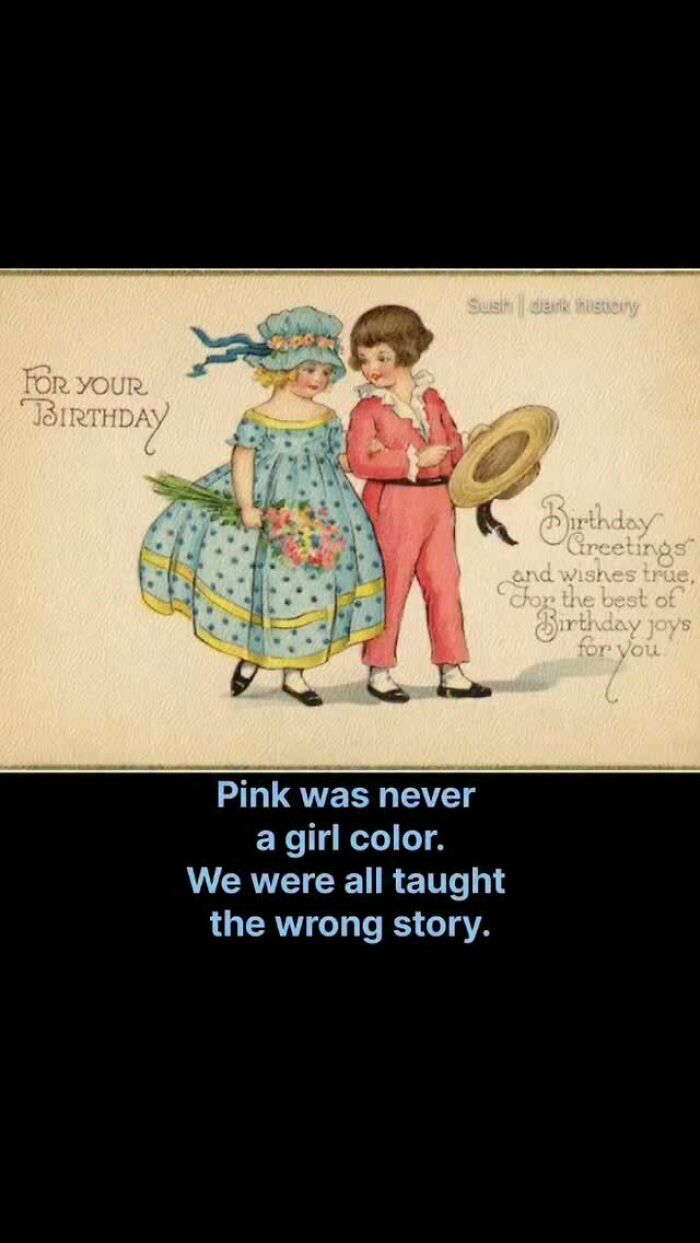
For most of history, colors didn’t have any gender. People actually dressed babies in white boys and girls because it was easy to bleach. The whole pink–blue rule came much later. In the 1700s and 1800s, people saw pink as a lighter version of red, and red was linked to soldiers, strength, and power. So pink automatically became this “mini-masculine” color for boys. And blue was the softer, calmer color connected to the Virgin Mary in paintings, so it felt more “feminine” for girls. It was the exact opposite of what we think today.
By the early 1900s, things got even more confusing because stores didn’t agree. One magazine said “pink for boys,” another said “pink for girls.” It was all random. There was no tradition, no rule, nothing cultural behind it. It was basically chaos, and everyone followed whatever their local store sold.
Then came the big switch. Around the 1940s, clothing companies realised pink dresses sold better for girls, and they pushed it aggressively in ads. After WWII, marketing got even stronger, and by the 1950s, society accepted pink = girls and blue = boys as if it was always a thing. But honestly, it was just a business decision that stuck.
So yeah… the color rules we grew up with aren’t ancient or natural. They’re completely new only about 80 years old. History actually tells the opposite story.
© Photo: dark_history.by_sush
#50
Hirotaka Hamasaki was a high school art teacher in Japan who became quietly legendary among his students for one simple, magical reason: the way he transformed a black chalkboard into a canvas of astonishingly realistic drawings. Every day, he would draw landscapes, portraits, animals, and objects with such precision that they seemed almost alive, capturing the attention and awe of everyone in the classroom. Yet, as soon as the class ended, he would wipe his masterpieces clean, leaving nothing behind but the memory of their beauty.
For Hamasaki, it wasn’t about fame, recognition, or preserving his work it was about the process, the joy of creation, and inspiring his students to see beauty, practice their craft, and embrace the fleeting nature of art. Though little is known about his personal life, early years, or how he became a teacher, the stories that survive paint a picture of a humble, dedicated artist whose passion and ephemeral creations left a lasting mark on those lucky enough to witness them.

© Photo: dark_history.by_sush
#51
In the early 1950s, Ella Fitzgerald was already dazzling the world with her voice, but Hollywood wasn’t ready to fully embrace her. The Mocambo, one of the hottest nightclubs in Los Angeles, refused to book her. The reason? She was Black. Talent didn’t matter racial prejudice did.
Enter Marilyn Monroe. By then, she was Hollywood royalty, adored by millions. When she heard that Ella had been turned away, she didn’t just shrug or feel sorry she acted. Marilyn called the Mocambo herself and told them something bold: “If Ella Fitzgerald isn’t booked, I’ll sit in the front row every night.” That was enough. The club owner couldn’t resist the star power of Marilyn Monroe, and Ella got her chance.
Ella Fitzgerald’s first night at the Mocambo was historic. The club was packed, the crowd mesmerized, and Ella proved why she was one of the greatest voices of her generation. That one act of support from Marilyn didn’t just give Ella a gig it helped break a small part of Hollywood’s color barrier, and it cemented a legendary friendship between two icons.
This story isn’t just about fame or jazz it’s about courage, allyship, and the difference one person can make when they decide to use their influence for good.
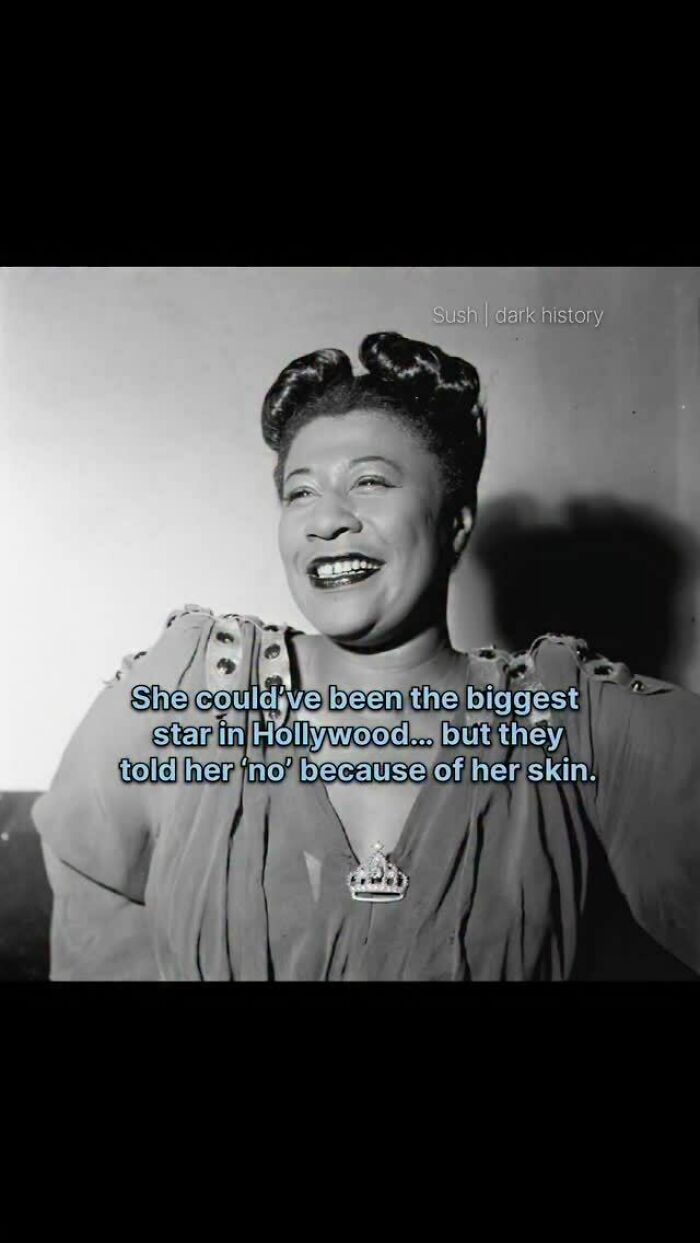
© Photo: dark_history.by_sush
#52
We see people everywhere on streets, on screens, in our daily lives. Conversations are constant, notifications never stop, and yet… something feels missing. It’s like we’ve learned how to exist side by side, but forgotten how to truly feel for each other. A small act of kindness, a moment of understanding, a genuine “are you okay?” these things are becoming rare, even though they matter the most.
Being human is easy, we’re born that way. But having humanity? That takes effort. It’s in how we treat strangers, how we respond when no one’s watching, how we choose empathy over ego. Maybe the world doesn’t need more people… maybe it just needs more heart.

© Photo: dark_history.by_sush
#53
Rosalind Franklin was a brilliant scientist and X-ray crystallographer at King’s College London in the early 1950s. She produced Photo 51, the clearest image showing that DNA has a double-helix structure. Her work was critical: without her measurements and photographs, James Watson and Francis Crick would not have been able to build the correct DNA model. But she did not know that Maurice Wilkins, her colleague, showed her data to Watson, who then used it essentially stealing her work to construct their model.
In 1953, Watson and Crick published the DNA structure first, gained fame, and eventually won the Nobel Prize in 1962, alongside Maurice Wilkins. Rosalind Franklin, who had died in 1958 at just 37, was never credited properly for her role in this historic discovery. Her story highlights how women in science were sidelined, even when doing foundational work, and how recognition and opportunity were often taken by men who had access to their work.
Today, we know Rosalind Franklin’s work was the foundation of the DNA model. Yet she didn’t get the credit. Watson, Crick, and Wilkins built their fame on her stolen data and won the Nobel Prize, while she was erased from the story. Her case shows how brilliant women were often ignored, sidelined, or denied recognition in science, simply because of their gender. It’s a stark reminder that talent alone wasn’t enough when society systematically favored men and dismissed women.
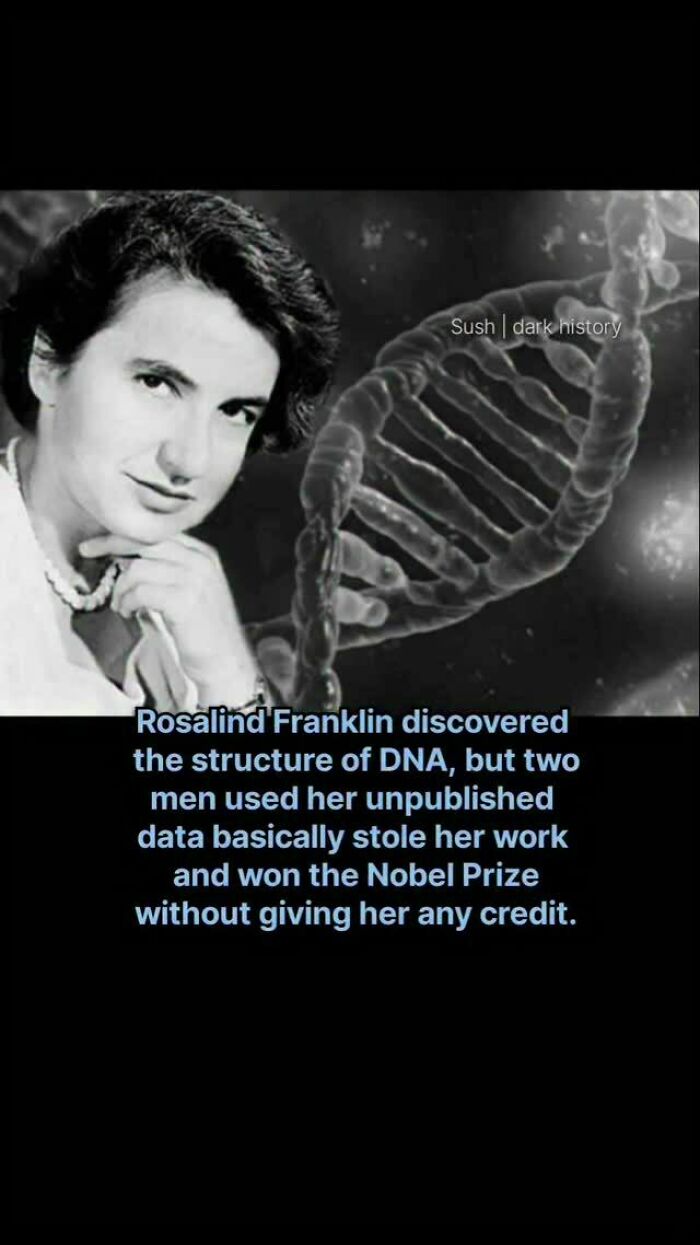
© Photo: dark_history.by_sush
#54
Was it really a miracle… or a silent tragedy the world chose to glorify?
They called her story “extraordinary,” but there was nothing beautiful about it.
Her husband didn’t see her as a person just a body, a machine made to give birth again and again.
No rest between pregnancies. No care. No love. Just the expectation to keep producing more.
The world turned her pain into a record.
Her suffering became a fact to marvel at, not a life to mourn.
No one asked if she was tired. No one asked if she wanted this.
Because in that world, a woman’s body didn’t belong to her it belonged to her husband, to society, to history.
She wasn’t remembered for her strength or her spirit… only for what her body endured.
A woman erased by the very miracle she was forced to create.
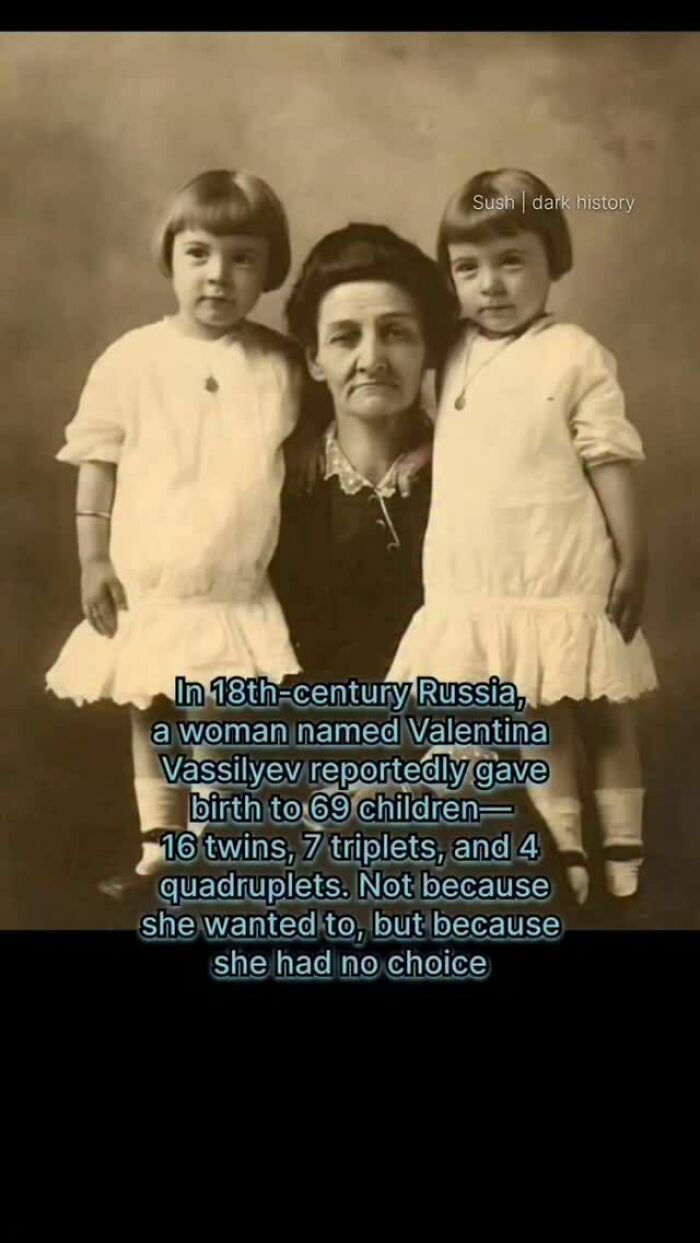
© Photo: dark_history.by_sush
#55
Most people only know that the Bamiyan Buddhas were blown up in 2001, but the story is bigger than that. Back in the 6th century, Bamiyan was a huge Buddhist center along the Silk Road. Monks carved these Buddhas directly into the sandstone cliffs, and inside the mountains they made caves filled with paintings, sculptures, and even living quarters. It wasn’t just two statues it was a whole spiritual complex.
What’s even more fascinating is that these Buddhas weren’t plain stone like they look in old photos. They were once covered in colorful paint, decorated with clay details, and even finished with gold. Imagine standing in front of a 55-meter golden Buddha in the middle of Afghanistan it must have been breathtaking.
Even though the statues are gone, archaeologists found fragments of the original paint, caves with Buddhist murals, and even discovered that the statues were built with a mix of Indian, Persian, and Greek influences. So, in a way, the Bamiyan Buddhas weren’t just religious icons they were proof of how cultures met and blended on the Silk Road.

© Photo: dark_history.by_sush
#56
Harriet Jacobs was born into slavery in 1813 in North Carolina. From a young age, she faced cruelty, but it got much worse when her owner, Dr. James Norcom, started s**ually harassing her. To protect herself and later her two children, she made one of the hardest decisions a person could make she went into hiding.
Harriet hid in a tiny attic above her grandmother’s house for seven years. The space was so cramped she could barely sit or lie down, with almost no ventilation. She couldn’t see her children freely and lived in total isolation. Every day was fear, every moment a fight for survival not just for her, but for her family.
Eventually, Harriet escaped to the North, gained her freedom, and became an abolitionist. She worked to help other escaped slaves and spoke openly about the horrors of slavery. Her autobiography, Incidents in the Life of a Slave Girl, was first published under the pseudonym “Linda Brent” for safety, but it became a powerful voice for enslaved women, exposing s**ual ab*se, oppression, and the struggle for freedom.
Harriet’s story isn’t just about slavery it’s about resilience, courage, and the lengths a person will go to protect themselves and their loved ones. Even in the darkest conditions, she never gave up hope, and her legacy continues to inspire people today.
© Photo: dark_history.by_sush
#57
In ancient Athens, women were generally excluded from formal education and public intellectual life, and their contributions were often downplayed or erased. So even if Aspasia or Diotima genuinely influenced Socrates, male historians and philosophers might have minimized or ignored their role because acknowledging a woman as a teacher or intellectual authority would have challenged social norms.
Aspasia was famous in her time for her intelligence and rhetorical skill, but most surviving accounts focus on her relationship with Pericles rather than her own ideas.
Diotima appears in Plato’s Symposium, but scholars debate whether she was a real person or a narrative device this could have been a way to include a woman’s perspective without fully crediting her historically.
© Photo: dark_history.by_sush
#58
Khutulun wasn’t just a wrestler collecting horses she was also a real warrior who rode beside her father, Kaidu, in battles across Central Asia. Unlike most Mongol princesses, she didn’t sit in a palace she was out on the battlefield, charging with arrows, leading soldiers, and striking fear in enemies. Some historians even say her father wanted her to be his successor, because she was stronger and more capable than her brothers. But Mongol nobles weren’t ready to accept a woman as ruler, so that chance slipped away.
Another interesting bit? Later stories about her life got twisted. In Persian legends and eventually in European plays and operas, her character turned into “Turandot,” a princess who tested suitors with impossible challenges. Of course, the wrestling and horses got swapped for riddles and executions, but the core idea a powerful princess no man could win was inspired by Khutulun. So her legacy lived on far beyond Mongolia, reshaped into legend.
© Photo: dark_history.by_sush
#59
Back in the late 1960s, abortion was illegal in most of America. Women with unwanted pregnancies had nowhere safe to turn some even died from unsafe procedures. But in Chicago, a young student named Heather Booth decided to help a friend in need. That one act of kindness turned into a secret network called The Jane Collective.
They used a code system women in trouble would call and ask for “Jane.” Behind that name were ordinary women: students, mothers, teachers. They offered counseling, comfort, and safe abortions when no one else would. Over time, they learned to perform the procedures themselves to keep women from being hurt by untrained or greedy people.
Between 1969 and 1973, the Janes helped more than 11,000 women in secret apartments around Chicago. They risked prison every day, but they believed saving women’s lives mattered more than the law. In 1972, the police raided one of their safe houses and arrested seven members but just a year later, abortion became legal in America, and the charges were dropped.
The Jane Abortion Service didn’t just break the law they rewrote history. They proved how powerful women can be when they stand together, even when the world turns its back on them.

© Photo: dark_history.by_sush
#60
She was just 13 years old, a young girl whose life should have been filled with school, friends, and ordinary teenage dreams. For a long time, her suffering remained hidden from the public eye. But when the details of her case surfaced in 2018, the news spread rapidly. Media platforms, social networks, and news outlets carried the story, and the reaction was immediate shock, anger, grief.
Her name quickly became more than just a news story. People spoke about her across the country. There were public expressions of outrage, emotional tributes, and widespread conversations about child ab*se and protection. For many, Ochanya came to represent a painful reality that often goes unnoticed until it ends in tragedy.
Despite the intensity of public reaction, the case also became a symbol of frustration and lingering unease. Discussions around justice, legal processes, and accountability continued to circulate, with many people feeling that outcomes in cases like this rarely bring the closure society hopes for. The sense of injustice attached to her story never truly disappeared.
Ochanya’s story is remembered not only for its tragedy, but for the emotions it stirred and the uncomfortable truths it forced into the open.
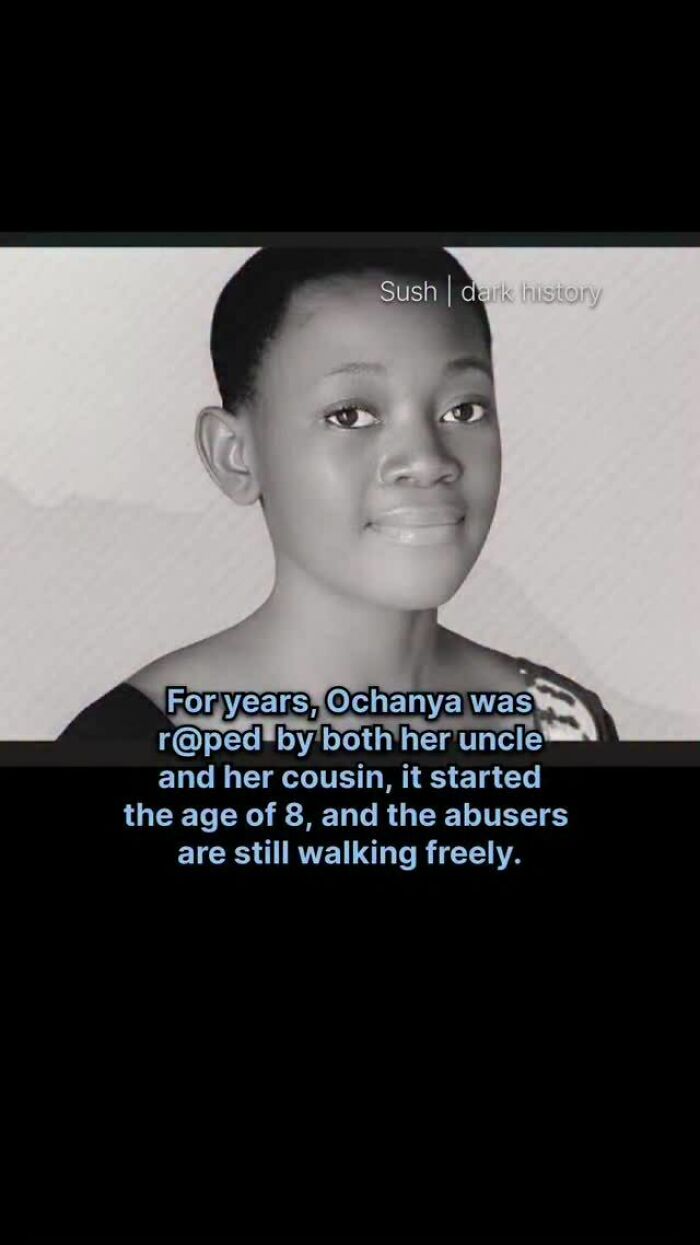
© Photo: dark_history.by_sush
#61
Anne’s diary originally began as a private journal but she later edited it after hearing a radio broadcast that people would want stories of the war after it ended so she hoped to publish it. She dreamed of becoming a writer or journalist.
Otto Frank published it under the title Het Achterhuis (“The Secret Annex”) in 1947, which later became The Diary of a Young Girl in English.
The diary became a symbol of hope and resilience, showing a young girl’s humanity in the middle of terrible persecution.
Anne Frank was a Jewish girl born in 1929 in Germany. When Adolf Hitler and the Nazis came to power, Jewish families faced discrimination and danger. Anne’s parents moved the family to Amsterdam in the Netherlands hoping for safety. But in 1940 the Nazis invaded the Netherlands, and life for Jewish people became even more restricted and threatening.
In July 1942, when Anne was just 13 years old, her family went into hiding in a secret part of her father’s office building called the “Secret Annex.” They lived there quietly with another family for two years, unable to go outside, always fearing discovery. During this time Anne wrote in her diary almost every day, sharing her thoughts, fears, and dreams of a free life after the war. She even began rewriting parts of her diary after hearing a radio broadcast that people would one day want stories about the war. Anne dreamed of becoming a writer or journalist.
In August 1944 their hiding place was betrayed. The Nazis arrested everyone and sent them to concentration camps. Anne and her sister Margot were eventually sent to Bergen-Belsen camp, where they died of illness in early 1945 only weeks before the camp was liberated. Anne was just 15 years old. Anne’s father, Otto Frank, was the only member of the family to survive. After the war he found Anne’s diary and published it in 1947 under the title Het Achterhuis (“The Secret Annex”), which later became known in English as The Diary of a Young Girl. Today it is one of the most famous books in the world, giving millions of people a deeply personal glimpse into the Holocaust and the human cost of hatred and war, while also preserving Anne’s wish to be remembe
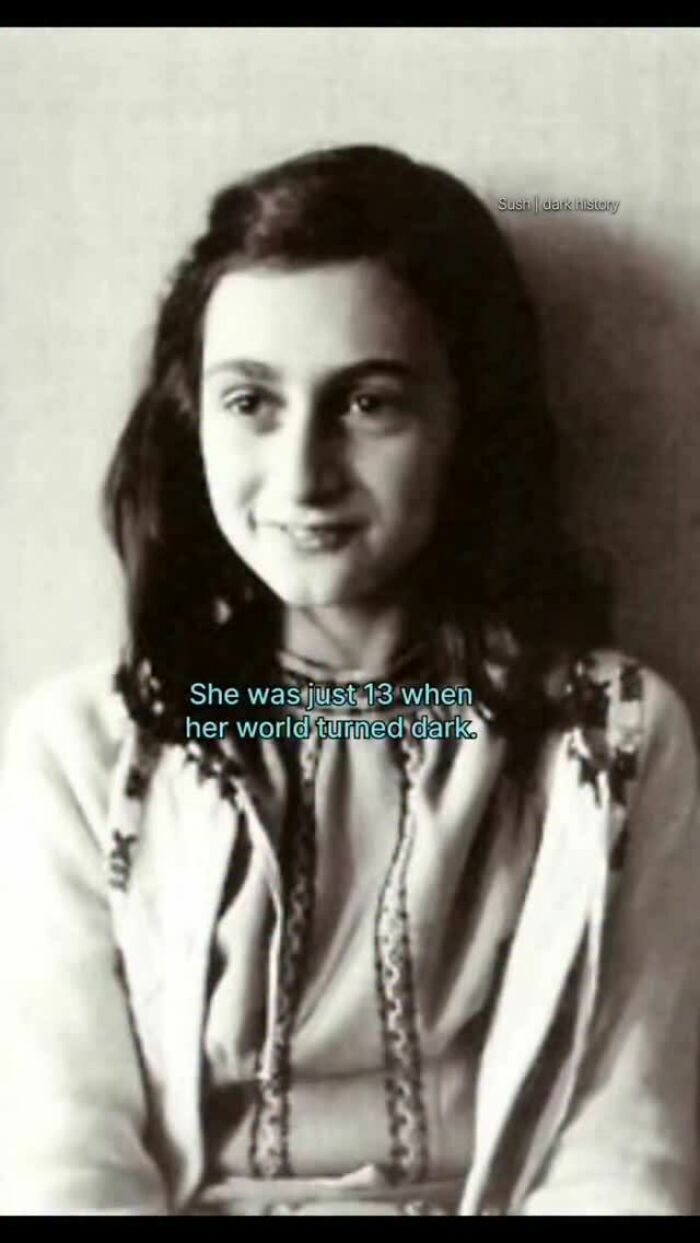
© Photo: dark_history.by_sush
#62
Cats have quietly been part of wars for centuries, even though no one really talks about them. On ships and in military camps, they were actually needed not just for comfort, but for survival. Cats were used to control rats and mice that would destroy food supplies, chew through important equipment, and spread deadly diseases. In both World Wars, you could find cats living on naval ships, in trenches, and even inside tanks or bunkers. Soldiers would often “adopt” them, giving them names, sharing their rations, and keeping them close like little companions in a place that felt completely inhuman.
But beyond their practical use, cats became something much deeper for soldiers. Imagine being surrounded by constant fear, loss, and destruction… and then there’s this small, calm creature sitting beside you, asking for nothing but warmth. Many soldiers wrote in letters and journals about how these cats helped them cope mentally they reminded them of home, of normal life, of something soft in a world that had become brutal. Some cats even became mascots for entire units, traveling with them through different battle zones and becoming a symbol of comfort and luck.
There are also real recorded stories of specific war cats. For example, a cat named “Unsinkable Sam” supposedly survived multiple ship sinkings during World War II, moving from one vessel to another and living through it all. While some parts of his story are debated, he became a powerful symbol of survival. Stories like his and the photos you’re using show something people don’t expect from war: even in the harshest, darkest moments, humans still held onto kindness. And sometimes, that kindness was given to the smallest, most innocent lives.
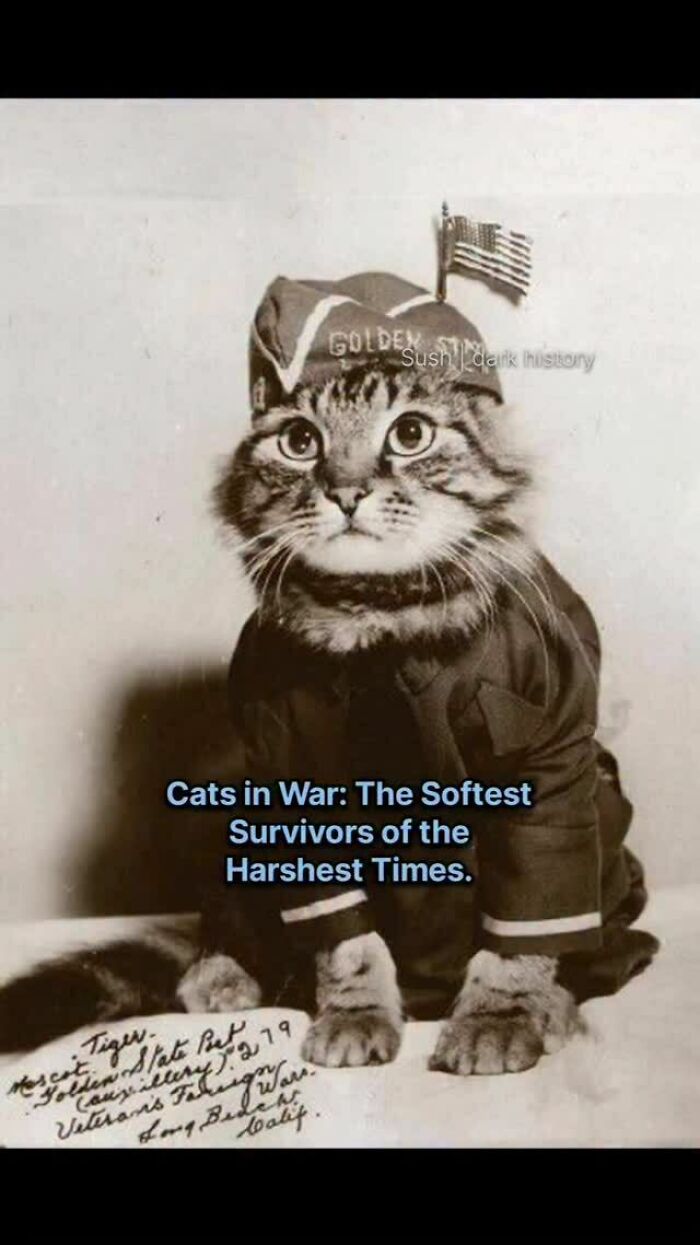
© Photo: dark_history.by_sush
#63
Abby Choi was a 28-year-old model and influencer from Hong Kong. She was known for her beauty, success, and kindness. Even after divorcing her first husband, Alex Kwong, she stayed on good terms with his family. She supported them financially, helped them with a place to live, and even took care of them. From the outside, everything looked perfect she had a new partner, two children, and a thriving career. But behind all that, there was quiet resentment and greed growing within her ex-husband’s family.
In February 2023, Abby suddenly went missing. At first, it looked like a disappearance case until the police made a horrific discovery. Her dismembered body was found in a house in Lung Mei Village, Tai Po. Some of her remains were hidden in a refrigerator, and parts of her body were cooked in a soup pot. The investigation revealed something even darker the ones responsible were her ex-husband, Alex Kwong, his brother Anthony Kwong, their father, and their mother. The motive was money and property they were angry over financial issues and her plan to sell a luxury apartment registered under the brother’s name.
All four family members were arrested. Alex Kwong and his father were charged with m*rder, while his mother and brother faced charges for helping cover it up. The case shocked Hong Kong not just for its brutality, but for the betrayal behind it. Abby had cared for these people, trusted them, and in return, they ended her life in the most horrifying way possible. It was a story that left an entire city shaken a reminder that sometimes, danger doesn’t come from strangers. It comes from the ones sitting at your table.

© Photo: dark_history.by_sush
#64
Sam Ballard was a teenager from Sydney, Australia, whose case became widely known after a 2010 incident in which he consumed a slug during a social gathering. The slug was later understood to have carried Angiostrongylus cantonensis, commonly known as rat lungworm. After the incident, Sam developed a severe infection that led to eosinophilic meningoencephalitis, a rare but medically recognized condition in which the parasite affects the brain and central nervous system. He became critically ill, fell into a coma, and survived with significant neurological damage.
Following the infection, Sam lived with profound disabilities, including loss of mobility and the need for continuous medical care. His condition required long-term support from his family, who became his primary caregivers. Over the years, his case drew international media attention and was frequently cited in discussions about rat lungworm disease, food safety, and rare parasitic infections. Health authorities have long noted that slugs and snails can act as carriers of the parasite, though severe cases remain uncommon.
Sam Ballard passed away in 2018, approximately eight years after the infection, due to complications related to his condition. His story is often referenced as a real-world example of how rare biological risks can have life-altering consequences, and it has contributed to broader public awareness about the transmission pathways and potential severity of rat lungworm disease.

© Photo: dark_history.by_sush
#65
Turnspit dog wheels were actually a very real part of old kitchens, especially in Europe between the 1500s and early 1800s. Before electricity, roasting meat evenly over a fire was not easy you had to keep turning the spit constantly. So instead of a machine, people used a small dog running inside a wooden wheel, kind of like a hamster wheel. As the dog ran, it turned the spit over the fire. It sounds strange now, but back then, this was considered normal kitchen work.
These dogs were even specially bred for this job and were called Turnspit dogs. They had short legs, long bodies, and a lot of stamina basically built for running in that wheel for hours. They lived most of their lives in kitchens, close to heat and smoke. In bigger households, they often kept two dogs so they could switch when one got too tired. There are even stories that on Sundays, when the dogs weren’t working, they would rest in churches and people joked that if a sermon was too long, the dogs would start getting restless, like they were used to running.
What’s a bit sad is that these dogs weren’t really seen as pets. They were more like tools just another part of the cooking process. If they slowed down or refused to run, they could be punished or replaced. Over time, as technology improved and mechanical devices replaced them, these dogs slowly disappeared. By the 19th century, the breed basically became extinct.
Today, you can still see some of these wheels preserved in museums, and they remind us how different life used to be not just for humans, but for animals too. It’s one of those forgotten histories that makes you pause and think about how far we’ve come.

© Photo: dark_history.by_sush
#66
A girl from a small village in Peru was only five years old when her parents noticed her belly was growing. At first, they thought it was a tumor, so they took her to the doctor. To everyone’s shock, the doctor discovered she was actually seven months pregnant.
Her body had started puberty extremely early a rare condition called precocious puberty which meant she was physically capable of carrying a child at an age when most kids are just starting school. She had no understanding of what was happening to her, and her childhood was effectively taken away before it even began.
She gave birth through a Cesarean section to a healthy baby boy. The father was never publicly identified, and her family’s life was forever changed. The boy, who grew up thinking she was his sister, lived until he was 40 years old.
This case is considered one of the most shocking and heartbreaking in medical history. It highlights how fragile childhood innocence can be and how some real-life stories are far stranger and more tragic than fiction.
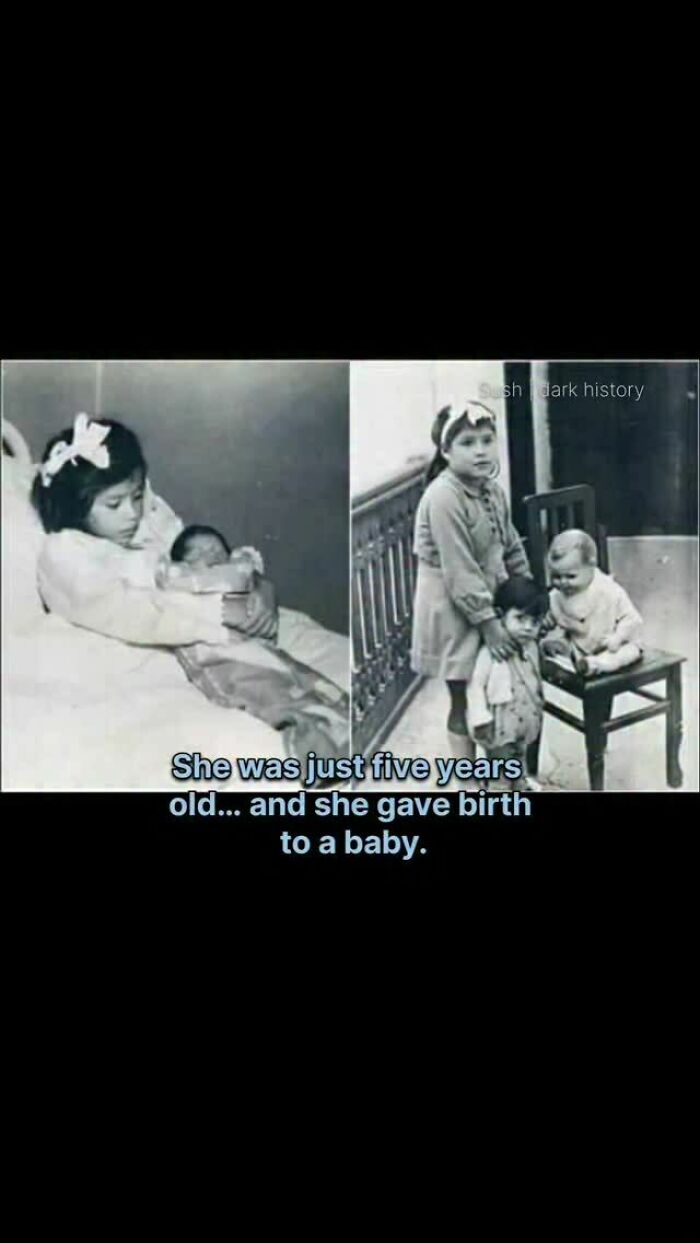
© Photo: dark_history.by_sush
#67
Kevan Chandler was born with spinal muscular atrophy, which made it impossible for him to walk. For most people, traveling the world is exciting but for Kevan, it felt like a dream he could never touch. He loved the idea of exploring
new places, seeing the sky from above, feeling the wind of different countries but his condition made it seem impossible.
But here’s where the story gets truly amazing. Kevan had three really close friends who refused to let him be left behind. They didn’t see his disability as a limit they saw his dreams as something worth fighting for. So they came up with a
plan: a special harness, and they took turns holding him during flights so he could travel safely. Every mile, every flight, Kevan was literally carried by love and friendship.
Thanks to them, Kevan finally got to see the world, experience new countries, and feel the freedom he had always imagined. For him, it wasn’t just about visiting places it was about belonging, being included, and proving that nothing should stop you from chasing your dreams, no matter what obstacles life throws at you.
Kevan’s story is a powerful reminder that strength isn’t just in your body it’s in the people who lift you, and in your heart that refuses to give up. His journey inspires anyone who feels limited to remember: dreams can happen, with persistence, love, and support.

© Photo: dark_history.by_sush
#68
Junko Furuta was a bright 17-year-old high school student in Japan, known for her kindness, good grades, and strong sense of responsibility. On November 25, 1988, while returning home from school, she went missing. Her sudden disappearance alarmed her family and community, but what followed was something no one could have imagined.
Junko had been kidnapped by a group of teenage boys and held against her will for 44 days in a residential home. During her captivity, Junko endured unimaginable cruelty. She was mentally and physically ab*sed ra**d, tor***ed, and mu***red. Her ab**e was mainly perpetrated by four male teenagers—Hiroshi Miyano (18), Jō Ogura (17), Shinji Minato (16), and Yasushi Watanabe (17)—and took place 44 days period starting on 25 November 1988. In Japan, the case is known as the “concrete-encased high school girl m*rder case”. Despite being in a neighborhood surrounded by people, her suffering went unnoticed. The details of her time in captivity were heartbreaking, and the way the people around her turned a blind eye made the incident even more tragic.
Eventually, her life was taken, and her body was hidden in a drum filled with concrete.
What shocked the nation even more was the outcome of the case. The young boys involved received surprisingly lenient sentences, leading to public outrage across Japan. Junko’s case became a symbol of how the justice system can fail victims, especially in crimes involving minors. To this day, her story remains one of Japan’s most haunting and unforgettable tragedies — a reminder of the urgent need for justice and humanity.
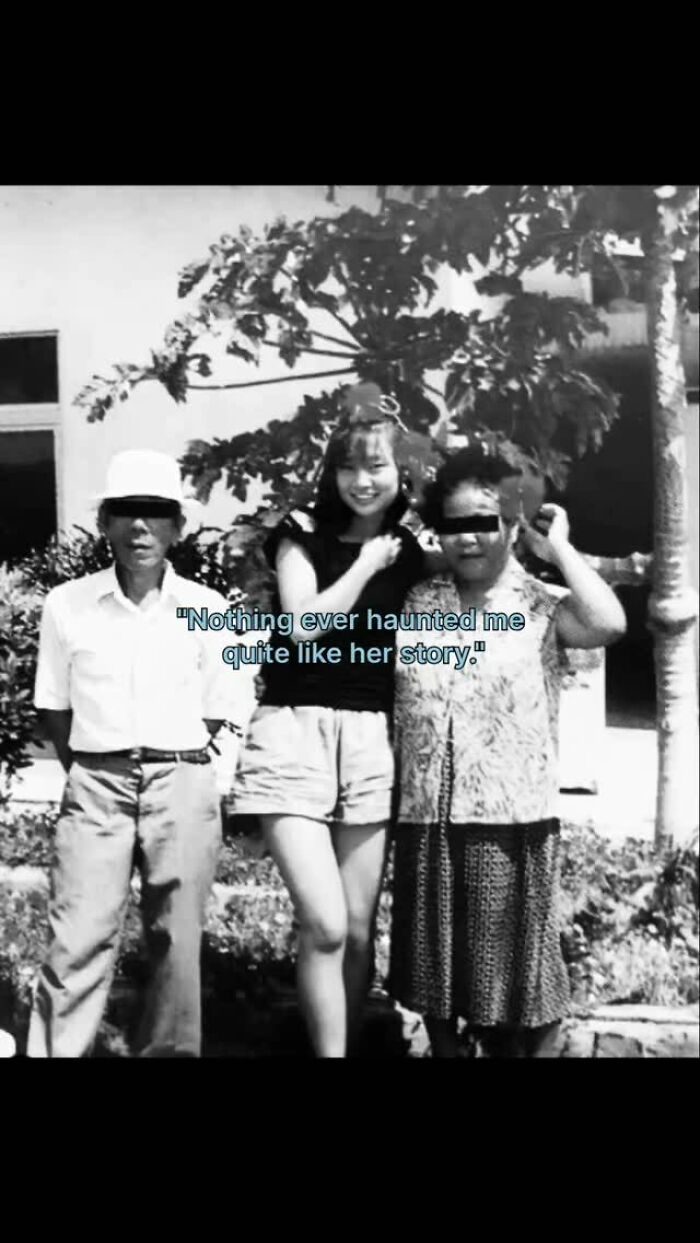
© Photo: dark_history.by_sush
#69
Lizzie Magie was more than just a game creator she was a writer, activist, and a woman ahead of her time. Born in 1866 in Illinois, she had strong political views, especially influenced by Henry George, a thinker who criticized how wealth and land often stayed in the hands of a few while everyone else struggled. She wanted to show people how monopolies and unfair wealth worked, and she came up with a creative way to teach it: a board game.
In 1903, she invented The Landlord’s Game, which was the blueprint for what we now know as Monopoly. But unlike Monopoly, her version had two sets of rules: one showed how wealth could hurt society if one player dominated, and the other showed a more cooperative style where everyone could benefit. So her game wasn’t just entertainment it was basically a lesson about economics and fairness, cleverly disguised as fun.
Magie tried to share her game widely. She even got a patent in 1904, and the game circulated in small circles for decades. But because the game spread informally, people added their own rules and shared it from person to person. Eventually, Charles Darrow saw a version, made minor changes, and sold it as Monopoly in the 1930s. Parker Brothers bought it from him, and Lizzie got a tiny $500 payment for her patent. She didn’t get fame or royalties, even though her idea became one of the most popular games in the world.
Despite that, Lizzie continued to create games and write, staying true to her mission of educating people about fairness and society. She died in 1948, largely forgotten, while Monopoly went on to become a household name. Her story is a reminder that sometimes the people behind the ideas that shape history never get the credit they deserve especially women in a world that often overlooked them.
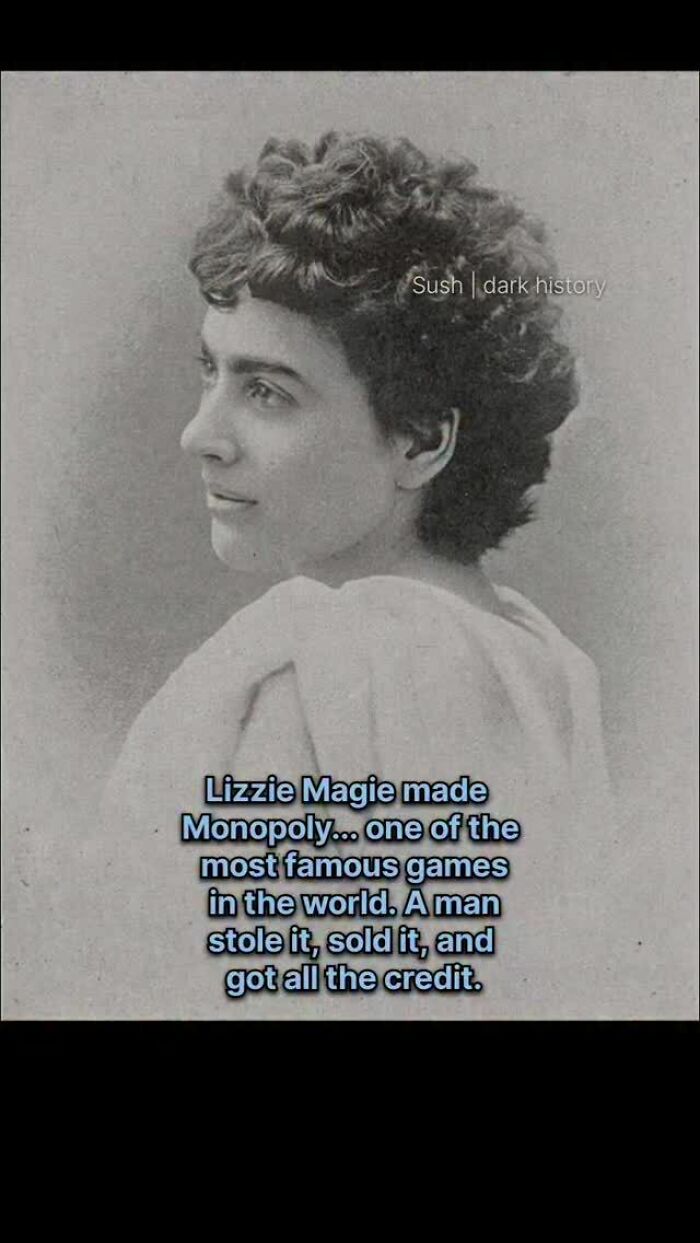
© Photo: dark_history.by_sush
#70
The fossil known as SK 54 was discovered in the Swartkrans cave in South Africa. It belonged to Paranthropus robustus, one of our distant cousins who lived around two million years ago. What makes this skull famous are the two small puncture marks just above the eyes. For a long time, scientists debated what caused them were they wounds from tools, or even signs of early human violence?
The breakthrough came when researchers compared the holes with the spacing of a leopard’s canine teeth. They matched perfectly. This was a game-changer because it showed that big cats weren’t just around our ancestors they were predators that actively hunted us. In fact, leopards are known even today to drag monkeys and baboons into caves, and SK 54 seems to have been treated the same way.
So the story of SK 54 is more than just a fossil with holes in it it’s hard evidence that two million years ago, humans were not sitting on top of the food chain. We were small, vulnerable, and very much a part of nature’s menu.
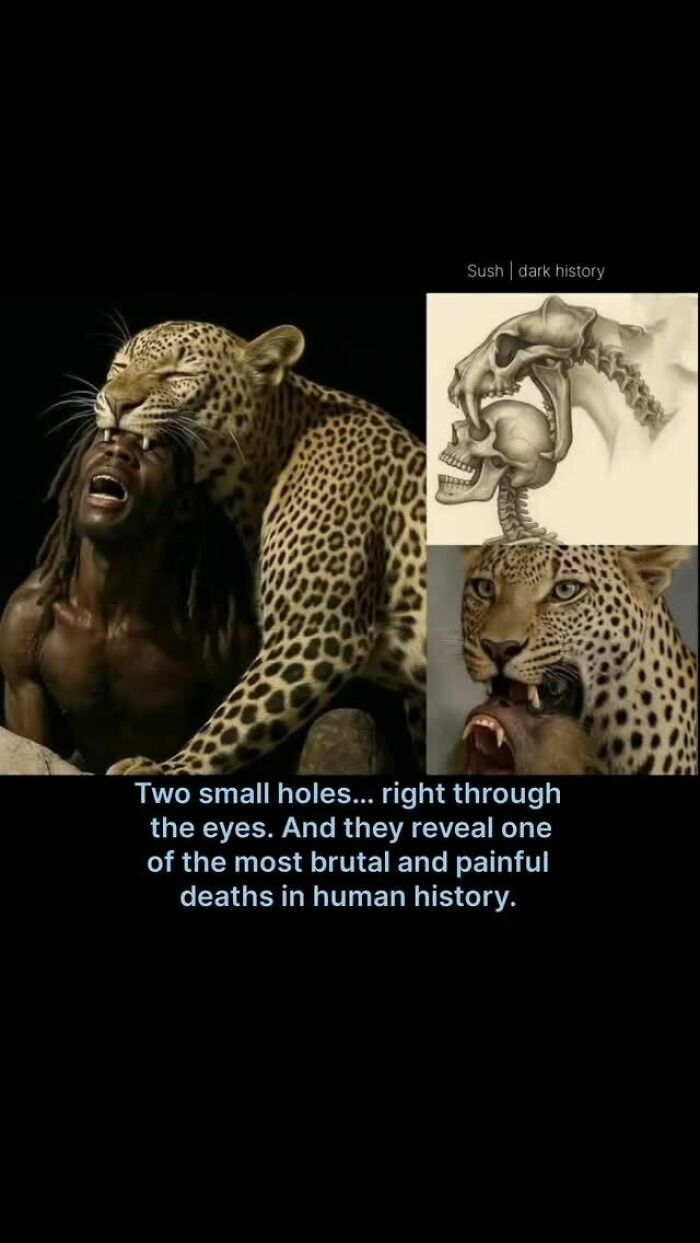
© Photo: dark_history.by_sush
#71
In July 1518, in the city of Strasbourg (then part of the Holy Roman Empire), a woman named Frau Troffea suddenly began dancing in the street. There was no music, no celebration just uncontrolled movement. She kept dancing for hours, then days. Instead of stopping, more people began joining her, as if pulled into the same strange force. Within weeks, dozens and possibly hundreds were dancing uncontrollably, unable to rest even when their feet blistered and their bodies collapsed.
The situation became deadly. Many dancers reportedly suffered from extreme exhaustion, dehydration, strokes, and heart failure. Some are believed to have died. Terrified and confused, city authorities turned to local doctors for answers. The medical belief at the time was that the dancers suffered from “hot blood,” and the so-called treatment was shocking they encouraged more dancing. Platforms were built, musicians were hired, and people were pushed back into the streets, which only made the outbreak worse.
Eventually, officials realized the approach was failing. The dancers were taken to shrines and places of prayer, particularly dedicated to Saint Vitus, whom people believed had the power to curse or cure uncontrollable movement. Gradually, the dancing faded. No clear records explain exactly how or why it stopped only that it did.
Even today, the true cause remains uncertain. Some historians believe it was mass psychogenic illness caused by extreme stress, famine, disease, and religious fear. Others suggest ergot poisoning, a hallucinogenic mold found in bread. Whatever the cause, the Dancing Plague of 1518 remains one of the most disturbing examples of how the human mind and body can completely lose control under pressure.
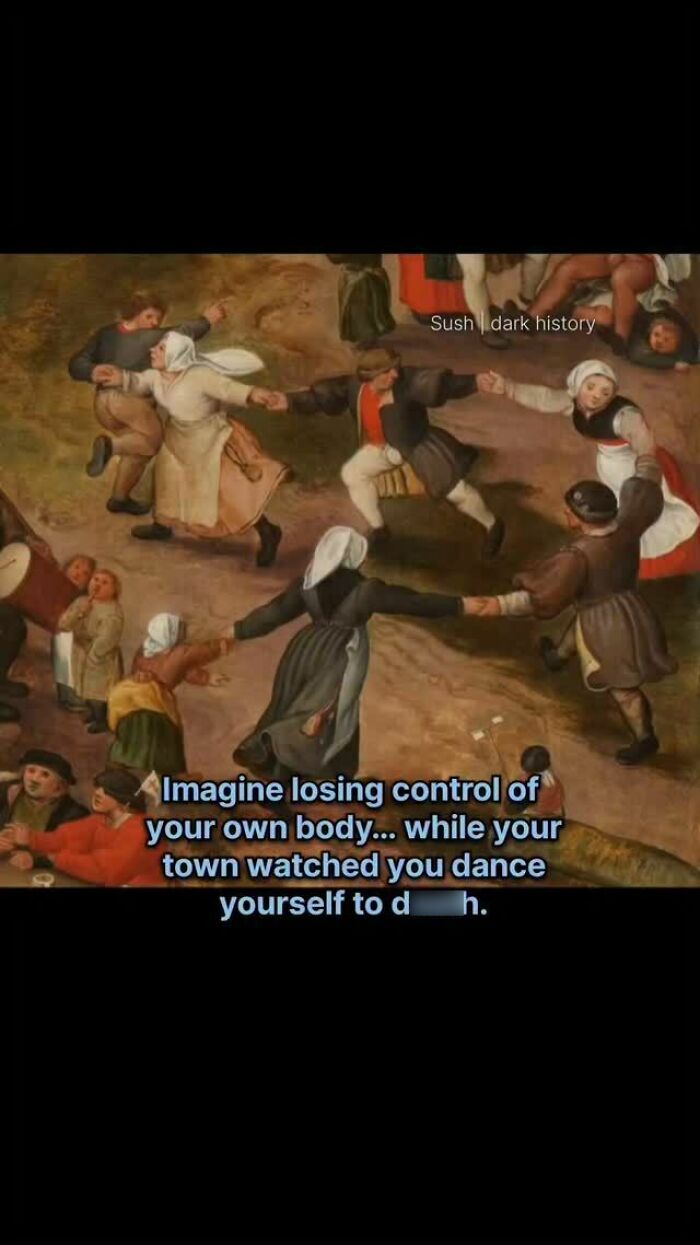
© Photo: dark_history.by_sush
#72
In January 2015, Brock Turner was a student at Stanford University when he s*xually as***lted an unconscious woman behind a dumpster after a fraternity party. She had been drinking heavily and could not stand, speak clearly, or consent. Two Swedish graduate students cycling nearby saw Turner on top of her and intervened, chasing him down and holding him until police arrived. The woman woke up hours later in a hospital, confused, injured, and with no memory of what had happened to her body.
Medical examinations, eyewitness testimony, and physical evidence all confirmed the as**ult. Turner was convicted on three felony counts. Still, during sentencing, the focus shifted. The judge spoke about Turner’s age, his swimming career, his family, and the potential harm that prison could cause him. He was sentenced to six months in county jail and served only three. The victim later wrote a statement describing how the as**ult fractured her sense of safety, her sleep, her relationships how she would carry it forever. The sentence did not reflect that weight.
Now look at Cyntoia Brown. She was 16 years old, homeless, a**sed, and being trafficked by an older man. She was living in constant fear and survival mode, moving between motels, strangers, and threats. In 2004, she sh*t and k**led a man who had paid to have s*x with her. Brown later said she believed he was reaching for a weapon and that she was going to die. There was no safe adult in her life. No protection system. No exit.
Cyntoia Brown was tried as an adult and convicted of first-degree m*rder. The court did not center her age, her trauma, or the reality of trafficking in the way it centered Brock Turner’s future. She was sentenced to life in prison, with the possibility of parole only after 51 years. A child acting out of fear was treated as irredeemable. Survival was interpreted as intent. Context was stripped away.

© Photo: dark_history.by_sush
#73
Christopher Eric Todd was 23 years old when he died in Arizona in 2012 after experiencing a severe mental health crisis. After his death, a critical failure occurred in the system: Christopher was mistakenly classified as an “unclaimed body.” Because of this error, authorities never contacted his mother, Kim Smith, even though she was alive and actively looking for her son. She was not informed of his death, did not identify his body, and never gave consent for donation or use of his remains.
Because he was listed as unclaimed, Christopher’s body was transferred through legal channels into the anatomical donation system. His remains were later plastinated and prepared for public display. Eventually, his body became part of the “Real Bodies” exhibition, where it was presented as an educational specimen. The organizers stated they relied on documentation that showed the body had been legally obtained, but later investigations confirmed that family consent was never given.
Years later, Kim Smith discovered what had happened by accident. While watching television, she recognized her son’s face in footage from the exhibit. This led her to confirm that one of the displayed bodies was Christopher. She filed lawsuits against multiple parties, including exhibition organizers and agencies involved in handling his remains. Her legal fight focused on lack of notification, lack of consent, and the ethical handling of unclaimed bodies.
As a result of the legal action, Christopher’s remains were removed from public display, and the case was settled. His mother was ultimately able to reclaim her son’s remains and arrange a proper burial. The case drew widespread attention and led to renewed scrutiny of how unclaimed bodies are classified, how consent is verified, and how commercial anatomy exhibits operate. Christopher’s case is now frequently cited in discussions about ethics, accountability, and the treatment of vulnerable individuals after death.
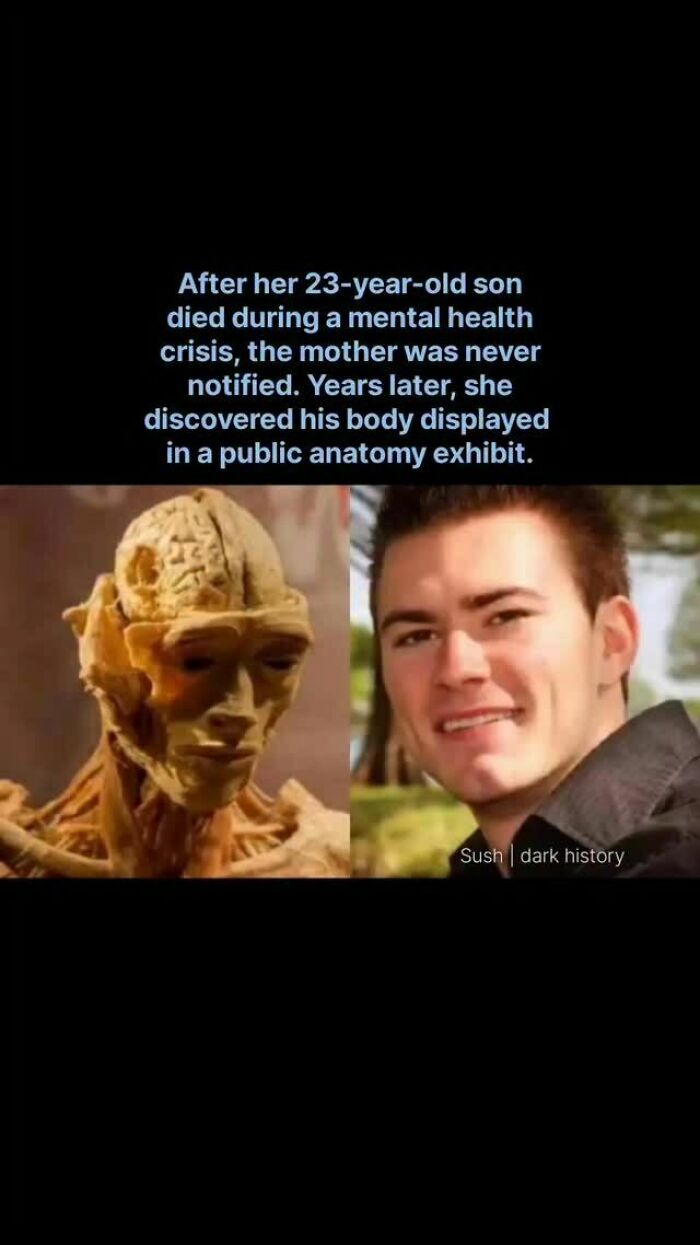
© Photo: dark_history.by_sush
from Bored Panda https://ift.tt/5y4TENt
via IFTTT source site : boredpanda
