It’s easy to feel like the entire world is just a non-stop loop of heavy headlines, political noise, and stressful global conflict. But staying informed shouldn’t have to mean constantly draining your mental battery.
You should also know that an incredible 11-year-old recently logged 100 volunteer hours simply reading stories to shelter animals to keep them calm. Or that a Golden Retriever once decided to follow a Google Maps snapper around, casually photobombing over 1,000 street-view photos.
For a much-needed dose of positivity, we took a deep dive into @WolfofX — an account with some of the most heartwarming stories from around the globe.
Stop the doomscrolling and read these wholesome wins and acts of pure kindness that will most likely restore your faith in humanity.
#1
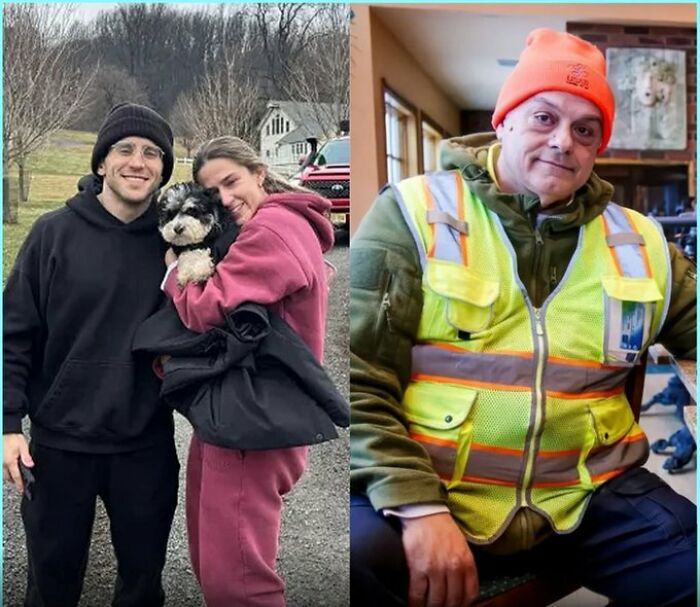
When a family in New Jersey loses a pet, Michael Parziale sometimes sees places they cannot.
The restaurant owner founded the U.S.A.R. Drone Team, a nonprofit that uses drones equipped with thermal cameras to search for missing animals. At night, those cameras can pick up body heat in woods, fields, marshes and other places that are difficult to search on foot.
By January 2026, Parziale and his team had helped recover 122 animals across New Jersey, including dogs, cats and even a cow.
Some searches have been remarkably quick.
When five-month-old puppy Shade disappeared in Cherry Hill and spent a freezing night outside, Parziale’s thermal drone found him after about 41 minutes of searching. Another missing dog, Logan, was located in just six minutes.
The team operates with volunteers and an 18-drone fleet, responding to families when a pet disappears and time can make a huge difference.
For Parziale, a small glowing shape on a thermal screen can mean something much bigger on the ground.
A family getting their pet back.
© Photo: WolfofX
#2
Nehemiah Turner was just 9 years old when he began spending some of his free time at the Jacksonville Humane Society in Florida.
He wasn’t there to adopt a pet.
He came carrying books.
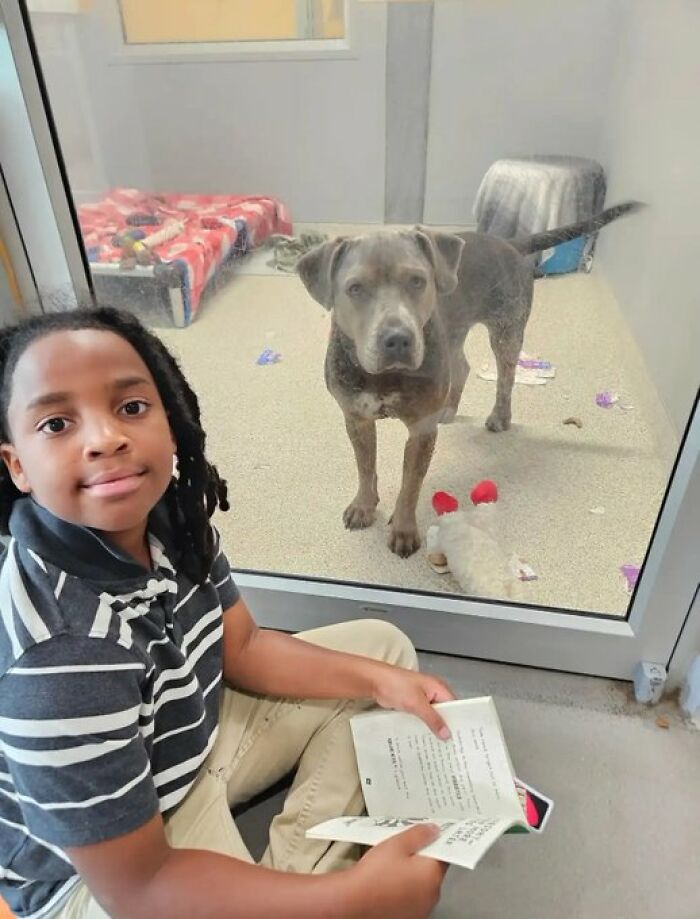
Nehemiah joined the shelter’s Pawsitive Reading program in 2024, sitting near dogs and other animals waiting for homes and simply reading aloud to them. His grandmother regularly accompanied him on the visits.
The first dog he remembers reading to was Auggie. Nehemiah became so attached that he cried when it was time to leave.
But he kept coming back.
Over the next two years, those visits slowly added up. Thirty minutes here. Another reading session there. One book after another.
Among the dogs he regularly spent time with was Hopper, who had been waiting at the shelter for nearly 400 days. Nehemiah would sit with him and read.
Eventually, Hopper found a home.
Then, in June 2026, Nehemiah reached a milestone nobody his age had reached in the program before.
At 11 years old, he officially logged 100 volunteer hours reading to shelter animals, becoming the first child in the history of Jacksonville Humane Society’s Pawsitive Reading program to do it.
He received a certificate and the program’s special gold paw-print recognition.
Nehemiah is already thinking about what comes next.
110 hours. Then 150.
Maybe even 200.
For a boy who first walked into the shelter with a book at 9 years old, reaching 100 hours wasn’t where he decided to stop.
© Photo: WolfofX
#3
This Golden Retriever followed a Google Map Snapper and appeared in over 1000 photos

The news feeds us chaos nonstop, and turning off the TV rarely shuts it out. Headlines follow us through group chats, social feeds, and casual conversations. To stay grounded in this hyper-connected world, we first have to understand why our brains crave the chaos we claim to hate.
Human biology hardwires us to seek out information. Uncertainty triggers anxiety, so our minds frantically hunt for updates to feel in control. Add a splash of natural curiosity, and tuning into current events feels more like a basic survival instinct.
#4
In 2018, Swedish YouTuber David Martinsson uploaded a video called “Being Ugly: My Experience.”
For nearly 24 minutes, he spoke openly about rejection, loneliness and how years of being turned down had affected the way he saw himself. At one point, David had even considered plastic surgery because he believed his appearance might keep him from ever finding love.
The video stayed online, slowly reaching millions of people.
Years later, a woman from Argentina named Juli found it in her YouTube recommendations.
She left a simple comment telling David that she thought he was cute.
David replied.
That comment became a conversation. The conversation continued across countries, and eventually Juli flew to Sweden to meet him.
David later admitted he was terrified waiting for her at the airport. Part of him wondered whether she would feel differently when she finally saw him standing in front of her.
Instead, Juli ran toward him, hugged him and kissed him.
They married in 2023.

© Photo: WolfofX
#5
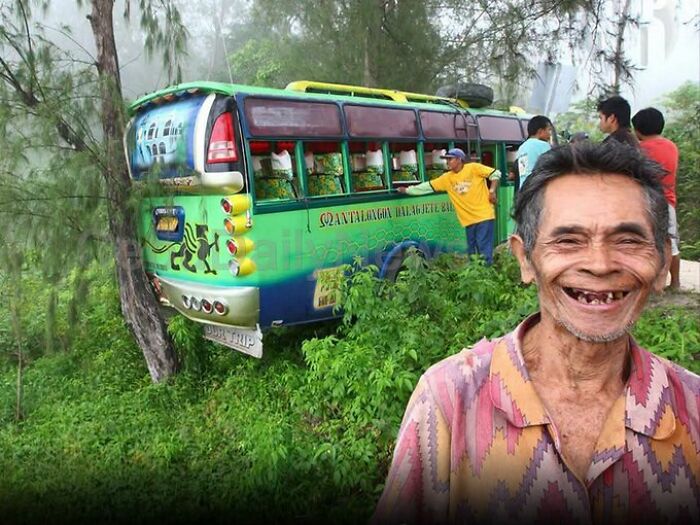
In August 2010, a bus carrying students was traveling through the mountains of Dalaguete, Cebu, when hot water from its radiator splashed onto the driver and burned his legs.
He lost control.
The bus rolled toward a ravine roughly 500 feet deep. But before it could go over the edge, something stopped it.
A pine tree.
About 35 years earlier, a local man named Epimaco Amancio had planted that tree while working as an area caretaker. He originally planted trees along the roadside to help protect his farmland below from falling debris.
He could never have known what one of them would eventually do.
Now 98 years old, Amancio heard about the accident and made his way to the scene. There he found the bus resting against the tree he remembered planting decades earlier.
The passengers made it out alive. Contemporary reports placed the number aboard at 32, while the driver suffered burns.
Photographer Tonee Despojo captured Amancio standing near the scene with a wide smile.
A tree he planted for an ordinary reason 35 years earlier had been standing in exactly the right place when a bus full of people needed it most.
© Photo: WolfofX
#6
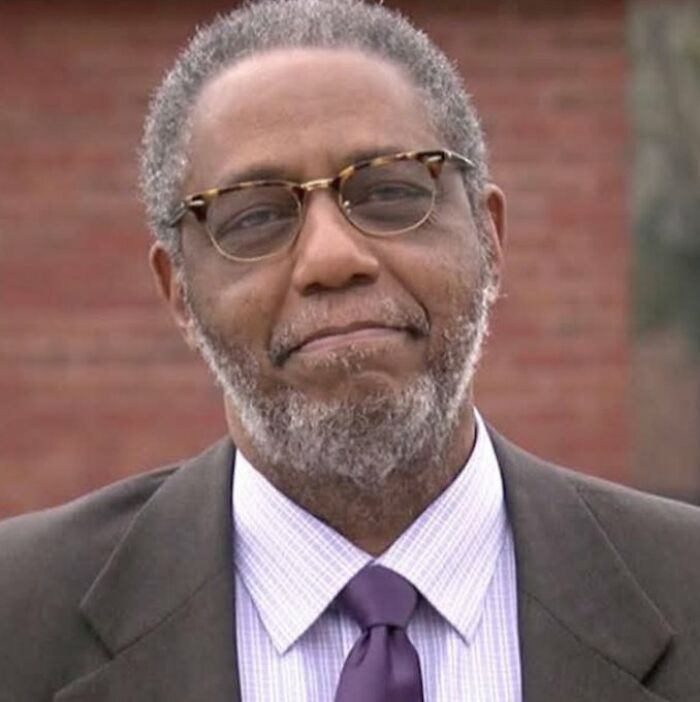
In 2020, Henry Darby was the principal of North Charleston High School in South Carolina, where many of his students came from families struggling financially.
He saw things most principals never expect to see. Students sleeping under a bridge. A former student living in a car with her daughter. Families struggling to keep food on the table and pay basic bills.
Darby was already helping whenever he could, but he wanted to do more without constantly asking teachers and staff to contribute.
So he quietly got a second job.
After finishing his work as principal, Darby would arrive at a local Walmart around 10 p.m. and spend the night stocking shelves. Some shifts lasted until 7 the next morning.
Then he went back to being a principal.
He worked roughly three nights a week and directed the money he earned toward helping students and their families with groceries, clothing, bills and other necessities.
Darby didn’t plan on anyone knowing.
That lasted one shift.
A student spotted him working at Walmart and recognized his principal stocking shelves in the middle of the night. Eventually, the reason he was there became public.
When the community learned what Darby had been doing, people began contributing too. More than 50,000 USD was raised within days, and Walmart later donated another 50,000 USD to North Charleston High School.
Darby had started with nothing more complicated than an extra paycheck and a few sleepless nights.
By the time everyone else joined him, one principal’s night job had turned into nearly 100,000 USD in support for the students he had been trying to help quietly.
© Photo: WolfofX
Tragedy and tension draw us in for the same reason blockbusters pack theaters. Nobody buys a ticket to watch a static security camera; we pay for high-stakes drama and explosions.
Research shows that bad news triggers a quick dopamine spike in the brain, creating a loop that keeps us refreshing our feeds for the next big jolt.
“It does seem to be a feature of our brains where we’re wired to look out for things that may be a threat to us. These things will catch our attention. They’ll be things that concern us. A part of what we know is that when we are exposed to negative things in the news it creates an emotional response for us,” says Dr. Adam S. Anderson, a clinical psychologist with Mayo Clinic.
#7
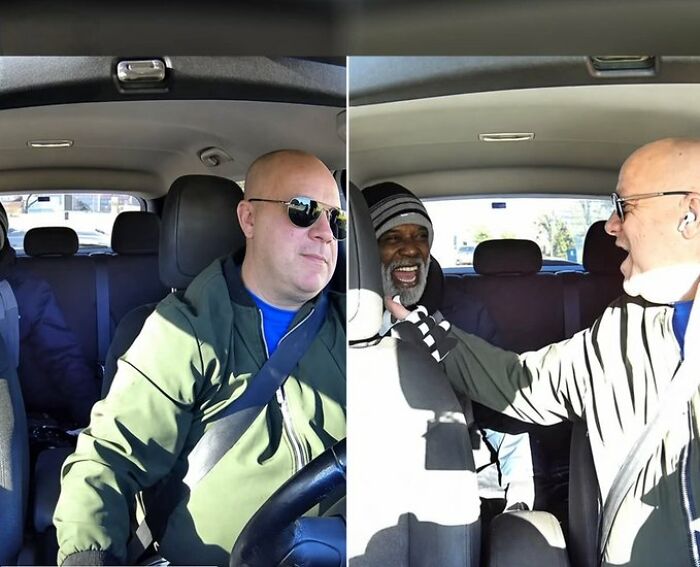
In January 2024, 51-year-old Danny Blanton was driving for Uber in Texas when he decided to accept one last ride before calling it a day.
The passenger was 60-year-old John Johnson.
At first, neither man recognized the other. They made ordinary small talk as Danny drove toward UT Southwestern Medical Center in Dallas. But after listening for a while, John noticed something familiar about his driver’s voice.
He asked him his name.
When Danny answered, John realized exactly who was sitting in front of him. Danny looked into the rearview mirror, turned around, and suddenly recognized John too.
More than 20 years earlier, the two had worked together at a Dallas nightclub called Phenomenon. Danny was a bartender and John was the head of security. They became good friends, but after leaving the club, their lives went in different directions and they eventually lost contact.
Neither could even remember who left the nightclub first.
For more than two decades, they didn’t see each other.
Now they were sitting in the same car because John had requested an Uber and Danny happened to accept it.
Danny’s dashcam captured the moment they recognized each other, laughing and shaking hands as the years between them seemed to disappear.
During the rest of the drive, they caught up on their lives and remembered people they had known together. Before Danny dropped John off, they exchanged phone numbers.
This time, they stayed in touch and later met again.
Danny wasn’t even supposed to be driving much longer that day. He had simply decided to take one final passenger.
That passenger turned out to be an old friend he hadn’t seen in more than 20 years.
© Photo: WolfofX
#8
Marjorie Fiterman and Bernie Littman had already lived through long marriages, raised families and lost the people they had once expected to grow old beside.
Then, much later in life, they found each other.
The two were living at the same senior community in Philadelphia when they met at a costume party on their floor. They began dating and stayed together for the next nine years.
There was an unusual coincidence in their story too. Decades earlier, both had attended the University of Pennsylvania around the same time, but their paths never crossed. Bernie became an engineer and Marjorie a teacher. It took most of a lifetime before they finally met.
Both had previously been married for more than 60 years. And when Bernie eventually decided he wanted to marry Marjorie, he didn’t want it to be merely ceremonial. He wanted a real, legal wedding.
On May 19, 2024, surrounded by family and friends in Philadelphia, they married.
Bernie was 100.
Marjorie was 102.
Their combined age on their wedding day was 202 years and 271 days, earning them the Guinness World Records title for the oldest couple to marry by aggregate age.
Two people who could have crossed paths at university decades earlier finally found each other near the end of their lives, spent nine years together, and at 100 and 102 still decided there was time for one more beginning.

© Photo: WolfofX
#9
A stray dog kept showing up at a police station in Rio de Janeiro, Brazil, day after day.
At first, officers simply fed him and offered him a safe place to rest, but the friendly dog continued returning until he became part of the station’s daily life.
The officers eventually adopted him and gave him the name Corporal Oliveira.
He received his own custom police-style uniform and became the beloved mascot of the 17th Battalion of the Military Police.
While he was not an officially trained police K9, he was given an honorary role and quickly won the hearts of both officers and the local community.
Corporal Oliveira often accompanied police officers, took part in community outreach programs, and visited schools, helping strengthen the bond between the police and the public.

© Photo: WolfofX
In a 2013 study published in Proceedings of the National Academy of Sciences (PNAS), Dr. E. Alison Holman and her team analyzed people’s reactions to news coverage of the Boston Marathon explosions.
The findings were alarming: people who consumed six or more hours of daily news coverage suffered higher levels of acute stress than many of those who were actually at the scene or had loved ones directly involved.
#10
In 2015, 16-year-old Jamie Harrington was walking through Dublin when he noticed a man sitting on the edge of the Ha’penny Bridge, preparing to end his life.
Instead of walking past, Jamie stopped and asked four simple words:
“Are you okay?”
The teenager stayed with the man for around 45 minutes, talking to him, listening, and convincing him to step away from the edge. Although the man begged him not to, Jamie called an ambulance to make sure he received the help he needed.
Before they parted ways, they exchanged phone numbers.
A few months later, Jamie received an unexpected phone call. The man shared that his wife was expecting a baby boy and told Jamie they had decided to name their son Jamie in honor of the teenager whose kindness had given him a second chance at life.
It was a powerful reminder that sometimes the smallest act of compassion can change a life forever. A simple question, asked at the right moment, can become the reason someone chooses to keep living.

© Photo: WolfofX
#11
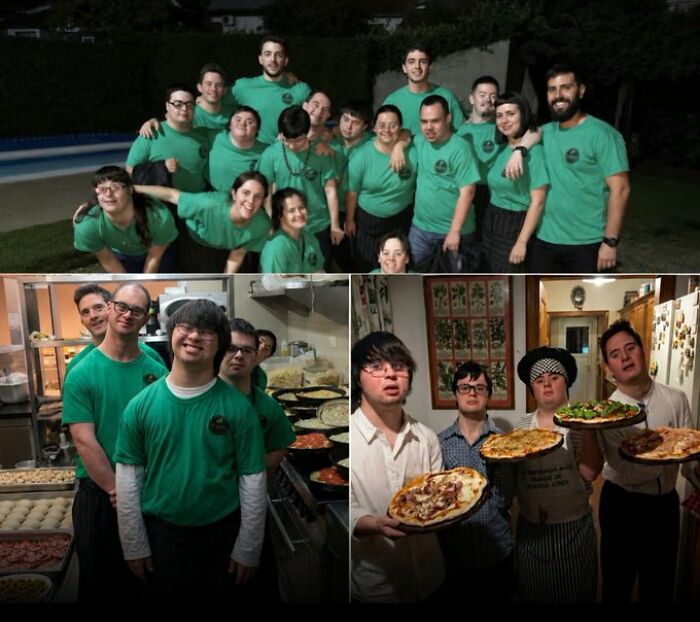
In 2016, four friends with Down syndrome in Buenos Aires were struggling to find something many people take for granted. A job.
Mateo Kawaguchi, Leandro López Padrós, Franco Noseda and Mauricio Roldán had faced limited opportunities in the traditional job market. Instead of waiting for someone to give them a chance, they began building one of their own.
Together with support from their families and coordinators, they launched Los Perejiles, a mobile pizza catering business.
Their first event was small, serving around 50 people. They prepared the dough themselves and travelled to birthdays, weddings and company events with their equipment, making fresh pizzas for guests on site.
People kept calling.
Within only a few months, Los Perejiles had catered dozens of events around Buenos Aires. More young people with Down syndrome joined the team, turning what began with four friends into a growing source of paid work, training and independence.
Mateo took it even further.
In 2017, he travelled to Parma, Italy, to compete at the World Pizza Championship, becoming the first person with Down syndrome to participate in the competition.
He didn’t go there just to make an appearance.
Mateo finished fourth in his category, only eight points away from the podium.
A year earlier, he had been part of a group trying to find their place in the working world.
Now he was standing among some of the world’s best pizza makers, while the little catering business back home was opening the same door for others.
© Photo: WolfofX
#12
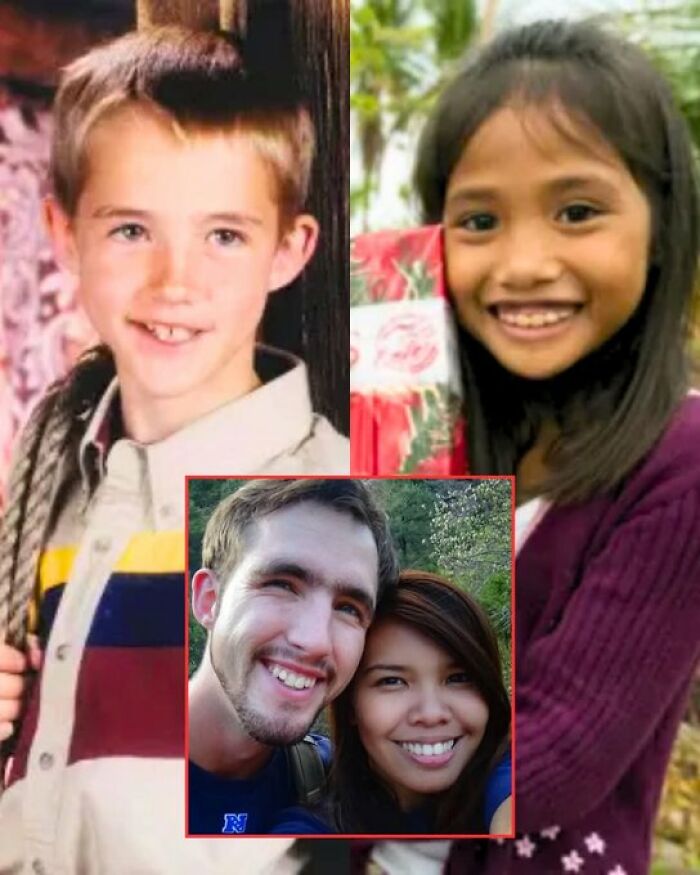
In 2000, 7-year-old Tyrel Wolfe from Idaho packed a shoebox with Christmas gifts for a child he had never met. Before sending it through Operation Christmas Child, he slipped in a photo of himself dressed like a little cowboy.
Nearly 7,000 miles away in the Philippines, 8-year-old Joana Marchan received it.
She kept Tyrel’s photograph.
Eleven years passed.
In 2011, Joana remembered the boy in the picture and searched his name on Facebook. She found him. Tyrel barely remembered sending the box at first, but when Joana described the cowboy photograph, everything clicked.
Messages became long conversations. Friendship became something more.
Tyrel eventually flew to the Philippines to meet her. He returned home, worked extra hours to save money, then made another trip back. This time, he asked Joana’s father for permission to marry her, speaking to him in Tagalog.
Joana moved to Idaho in September 2014.
On October 5, 2014, they married on Tyrel’s parents’ cattle ranch, almost exactly 14 years after one small shoebox had traveled across the world and quietly connected two children who had no idea they would meet again.
At their wedding, they asked guests to pack more Operation Christmas Child shoeboxes.
The gift Tyrel sent at seven years old had eventually brought its recipient back into his life as his wife.
© Photo: WolfofX
Most of us hop online or turn on the TV just to stay informed, but we end up walking away feeling completely drained.
A 2025 Pew Research study backed this up, revealing that roughly four in ten Americans frequently feel angry or sad after checking the news. On top of that, about a quarter of people say the daily headlines leave them feeling scared or downright confused.
Sadly, the positive vibes are almost nowhere to be found. Only a tiny fraction (14%) of folks report feeling hopeful, happy, or empowered by the stories they consume.
#13
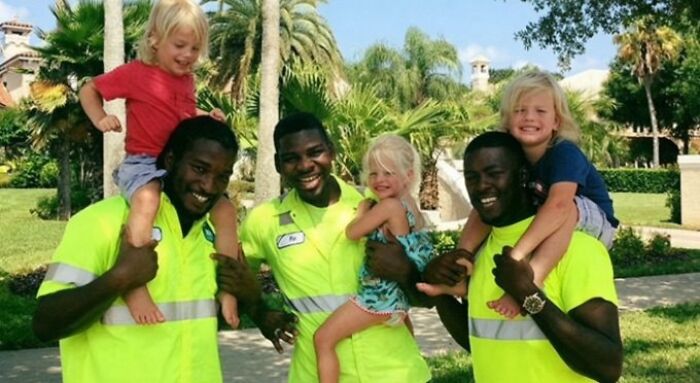
In an Orlando neighborhood, a set of triplets formed an unexpected friendship with their sanitation workers, Chad, Rob, and Andrew.
Every Tuesday and Friday, the children would rush outside to greet the crew, excitedly waving, sharing hugs, giving high-fives, and sometimes bringing them snacks.
What started as a simple garbage collection route became a special bond built on kindness, consistency, and genuine human connection.
The sanitation workers became familiar faces the children looked forward to seeing each week, while the kids brightened the crew’s day with their enthusiasm and affection.
Their heartwarming friendship is a reminder that some of life’s most meaningful relationships can grow from the simplest everyday moments, proving that kindness has the power to turn routine encounters into lasting memories.
© Photo: WolfofX
#14
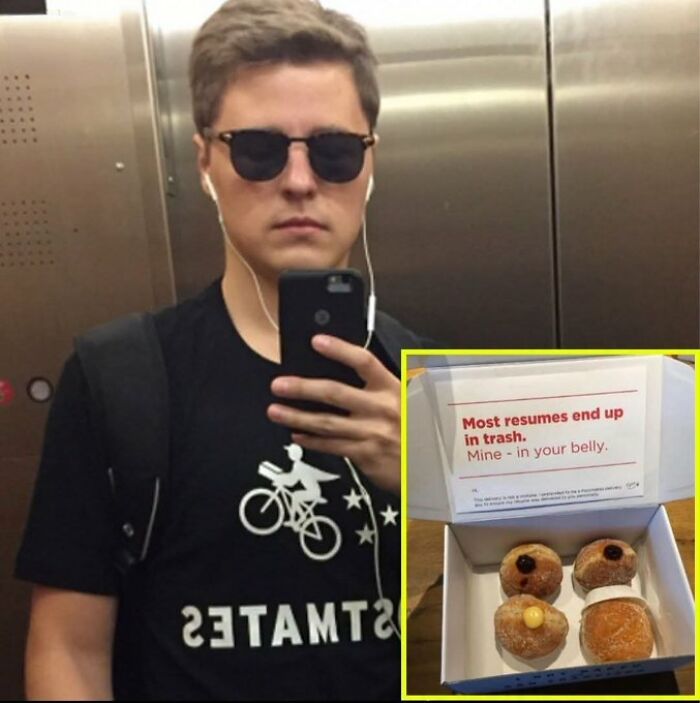
In 2016, 25-year-old Lukas Yla moved from Lithuania to San Francisco looking for a job in marketing.
He knew his résumé would be competing with hundreds of others, so instead of simply emailing it, he bought boxes of donuts.
Inside each box, he placed his résumé with a message.
“Most resumes end up in trash. Mine — in your belly.”
Then he dressed like a Postmates delivery driver and personally walked into offices around the San Francisco Bay Area, delivering the boxes directly to people involved in hiring.
He delivered them to 40 companies.
The unusual approach worked. Those 40 deliveries reportedly led to 10 job interviews, and even caught the attention of Postmates itself after the company learned what he had done.
The donuts didn’t prove he was qualified for a marketing job. They simply gave him the chance to be noticed.
And for someone trying to work in marketing, turning his own job search into a campaign was already a pretty convincing introduction.
© Photo: WolfofX
#15
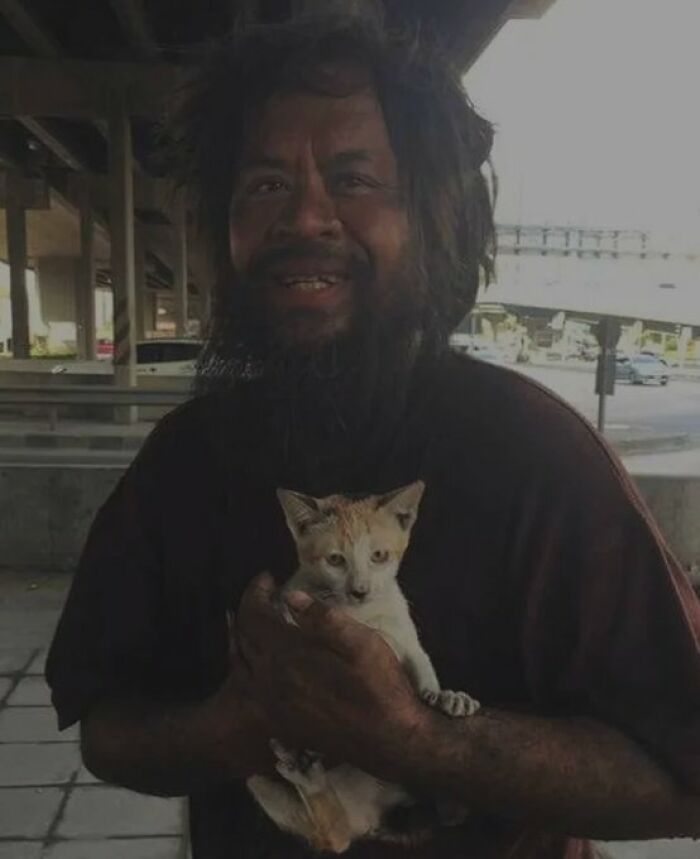
In 2017, a homeless man known as Loong Dum could often be found near Mo Chit in Bangkok, Thailand, pushing a small cart and selling bags of limes.
Each bag cost 20 Thai baht.
But beside the limes was a handwritten sign explaining why he was selling them. A portion of what he earned would be used to buy food for stray cats.
Loong Dum had very little himself. Before selling limes, he survived partly by collecting discarded bottles. Yet around the Five-Way Lat Phrao area, he had taken responsibility for dozens of stray cats.
When reporters found him in June 2017, he said he could sell around 500 to 600 Thai baht worth of limes on a good day. Some of that money went straight back to the cats.
Then someone photographed him and his little handwritten sign.
His story spread across Thailand.
People began searching for his cart just to buy his limes. Others brought food for the cats, and some offered the animals permanent homes. By the time he was interviewed, the dozens of cats he once cared for had been reduced to 11 as more found families.
Loong Dum still had no permanent home of his own.
But because people stopped beside one small lime cart in Bangkok, several of the cats he had been feeding finally did.
© Photo: WolfofX
To make matters worse, the habit feeds itself: the more closely you track the headlines, the harder those heavy emotions hit you. Staying constantly plugged in comes with a pretty heavy price tag for our peace of mind.
While media companies push drama, we as readers actively demand it. The age-old industry rule “if it bleeds, it leads” endures because our brains fall for it every time.
Research shows negative headlines get over 60% more clicks than positive ones, proving our curiosity fuels the outrage cycle.
Algorithms and newsrooms simply react to this habit. Social media platforms and news outlets profit off our attention — the more eyes they hold, the more ad dollars they collect. Because shocking and upsetting stories grab us fastest, media platforms intentionally push high-drama content to keep us scrolling.
Ultimately, news outlets supply the outrage, but our clicks give them the green light.
#16
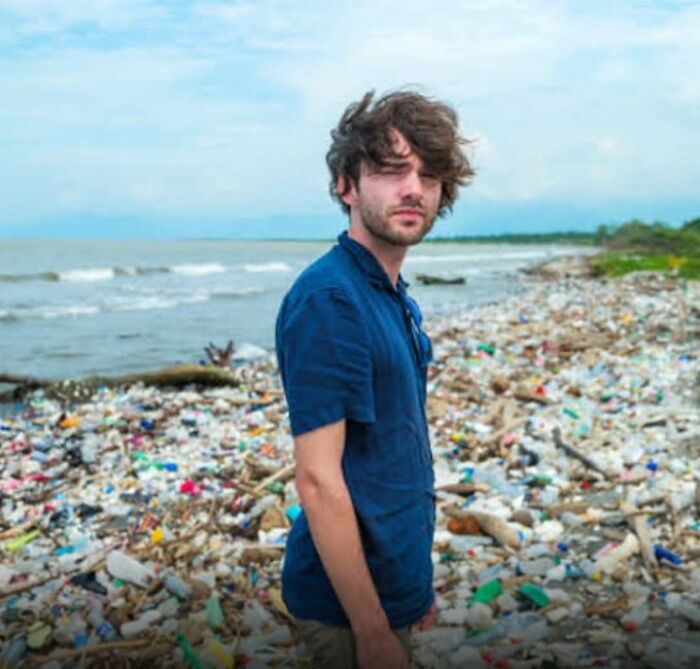
When Boyan Slat was 16, he went scuba diving in Greece and came back thinking about something he couldn’t ignore.
There seemed to be more plastic bags around him than fish.
He began asking a simple question. Why couldn’t we just clean it up?
That question became a high school science project. Slat started studying ocean currents and plastic pollution, eventually developing an idea that worked with the movement of the ocean instead of sending ships around trying to chase the waste.
After high school, he enrolled in aerospace engineering at Delft University of Technology in the Netherlands. But the ocean project kept pulling him back.
In 2012, he presented his idea at TEDxDelft. Months later, he left university to work on it full time, starting with just 300 euros of his own savings.
He was 18 when he founded The Ocean Cleanup in 2013.
What followed wasn’t an instant success. There were prototypes, failures, broken systems, redesigns and years of testing.
The organization eventually expanded beyond collecting plastic already floating at sea. It also developed systems to intercept waste in polluted rivers before it could reach the ocean.
By March 2026, The Ocean Cleanup said its operations had removed more than 50 million kilograms of trash from aquatic ecosystems around the world.
That’s roughly 110 million pounds.
The question Slat asked while diving as a teenager eventually became an organization of around 200 people, working toward a goal that once sounded almost impossible to many experts.
Remove 90 percent of floating ocean plastic by 2040.
© Photo: WolfofX
#17
On Christmas Eve in 1955, a simple newspaper mistake created one of the most heartwarming Christmas traditions in history.
A Sears advertisement invited children to call Santa Claus, but the phone number printed in the ad accidentally connected callers to the Continental Air Defense Command operations center in Colorado Springs instead.
The first child who called asked if Santa was there. Instead of dismissing the call, Colonel Harry Shoup — the officer on duty that night — decided to play along.
He instructed his staff to check radar systems and give children updates on Santa’s “current location” as he traveled across the world delivering presents.
What began as an accidental mix-up soon became an annual tradition. After NORAD replaced CONAD in 1958, the program evolved into the famous NORAD Santa Tracker, which now uses satellites, radar, aircraft, and volunteers to “track” Santa every Christmas Eve for families around the globe.

© Photo: WolfofX
#18
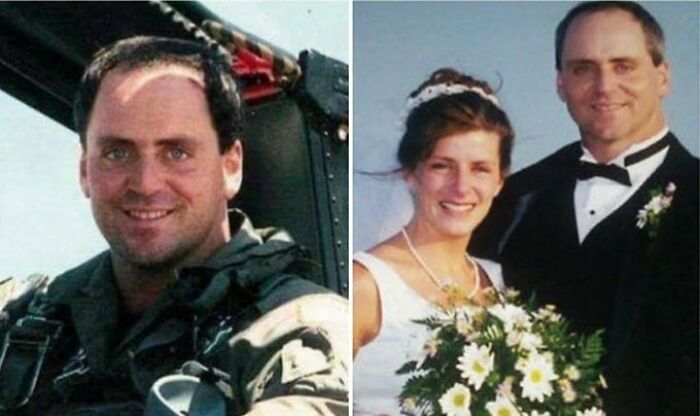
Brian Sweeney’s voicemail to his wife Julie (Jules) from flight 175 on 9/11.
“Jules, this is Brian. Listen, I’m on an airplane that’s been hijacked. If things don’t go well, and it’s not looking good, I just want you to know I absolutely love you. I want you to do good, go have good times. Same to my parents and everybody, and I just totally love you, and I’ll see you when you get there. Bye, babe. I hope I call you.”
Life is so full of tragedy. Be kind. Take nothing for granted ❤️
© Photo: WolfofX
At the same time, positive news can do far more than just give us a quick mental break — it can actually inspire real-world action and rewire how our brains handle stress.
Research published by Professor Denise Baden at the University of Southampton found that positive, solution-focused stories directly encourage people to take constructive steps in their own lives, such as adopting eco-friendly habits.
The study revealed a stark contrast in human behavior: the more anxious or pessimistic a story made participants feel, the less motivated they were to take action.
#19
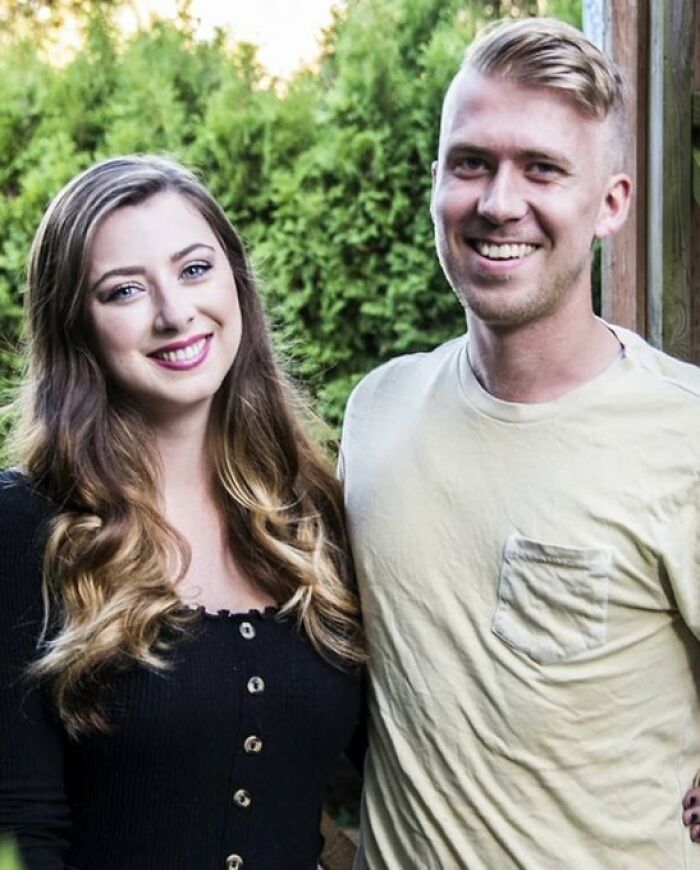
Nine months after Laura and Brayden Faganello were married, a steel support pole collapsed during an event setup and struck Laura in the back of the head.
When she woke up, she believed she was 17 years old.
She remembered her childhood. She remembered her family. But every memory of meeting Brayden, falling in love with him, and marrying him had disappeared. The man standing beside her was a complete stranger.
Recovery was slow. She had to relearn how to read, write, and speak clearly while living with someone she couldn’t remember loving. Brayden never tried to convince her to become the person she had been. He introduced himself again. He left her notes, took her on dates, answered her questions, and gave her the time to build something new.
Over the next two years, Laura fell in love with him again. Not because the old memories returned, but because they created new ones together.
Although they were still legally married, Brayden proposed once more, and they celebrated with a second wedding. This time, Laura was there to remember every moment.
© Photo: WolfofX
#20
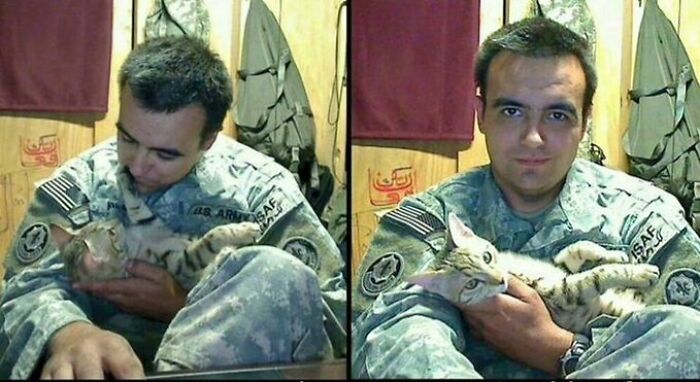
After returning home from Iraq, U.S. Army veteran Josh Marino was struggling with severe PTSD and had reached one of the darkest moments of his life.
Feeling overwhelmed and believing he had nothing left to live for, he was on the verge of taking his own life.
Then a tiny stray kitten appeared.
The kitten meowed, rubbed against him, and refused to leave his side. Marino later said the unexpected encounter broke through his despair and gave him something to care about.
He named the kitten Scout, took it home, and credited it with giving him the reason to keep living.
That single moment became the first step in his recovery. Years later, Marino has continued to share his story to raise awareness about PTSD, mental health, and the life-changing impact that compassion, hope, and even the smallest acts of connection can have.
© Photo: WolfofX
Building a better world starts with noticing the good that is already taking shape around us. Our communities run on quiet, unseen acts of cooperation, where even the smallest positive story can spark a massive chain reaction.
Reading about progress is a great start, but creating it is even better. You can add to the momentum today with simple, intentional choices — buy a stranger a coffee, check in on a neighbor, or choose patience the next time you find yourself stuck in a slow line.
#21
Jacob McPeake was 11 when the length of his hair started attracting attention at school.
Some of that attention wasn’t kind.
The boy from Gloucester, England, loved rugby and played for Brockworth Badgers, but as his hair grew longer, other children began teasing him about it. At one point, the comments became difficult enough that Jacob considered cutting it all off.
But there was a reason he had been growing it.
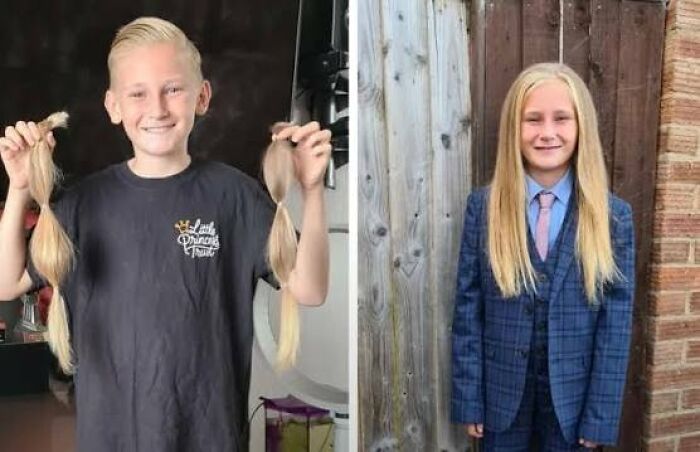
Three of Jacob’s grandparents had experienced cancer, and he wanted to do something in their memory. His plan was to grow his hair long enough to donate it to The Little Princess Trust, which provides real hair wigs free of charge to children and young people who have lost their hair.
While Jacob was struggling with the teasing, professional rugby player Guy Thompson heard about what he was doing.
Thompson knew something about long hair himself. He had grown and donated his own hair to the same charity.
So he wrote Jacob a personal letter.
He reminded the 11 year old that having long hair didn’t make him any less of a rugby player or a person. Instead, he told Jacob that what he was doing showed independence, strength, generosity and kindness.
For a young rugby player hearing those words from a professional meant a lot.
Jacob kept going.
In July 2021, he finally sat down for the haircut he had spent so long working toward. Eighteen inches of his hair, roughly 46 centimetres, were cut and donated to The Little Princess Trust.
And the hair wasn’t his only contribution.
Jacob had also been raising money during the process. By the time the charity shared his story, he had raised £1,230 to support its work.
The hair that had once made him a target for teasing had become exactly what Jacob intended it to be from the beginning.
A gift for another child who needed it.
© Photo: WolfofX
#22
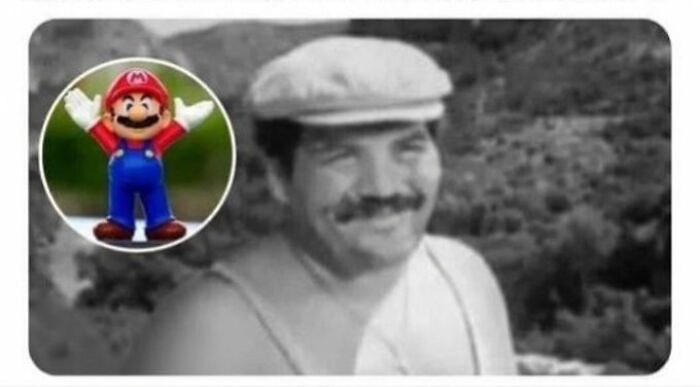
Super Mario is named after real-life businessman Mario Segale, who was renting out a warehouse to Nintendo.
After Nintendo fell far behind on rent, Segale did not evict them but gave them a second chance to come up with the money.
Nintendo succeeded and named their main character after him.
© Photo: WolfofX
#23
Colin Farrell remembers watching his son James take his first steps.
James was nearly four years old.
He had spent years crawling, pulling himself up against furniture and working relentlessly toward something most parents expect to happen naturally. When he finally walked on his own, Farrell later described the moment as overwhelming.
James was born in 2003 and was initially believed to have cerebral palsy. He was later diagnosed with Angelman syndrome, a rare neurogenetic disorder that can severely affect speech, movement and development.
James is nonverbal, but Farrell has always been careful not to measure his son’s life by the things he cannot do.
Instead, he watched the effort behind everything James learned.
Walking. Feeding himself. Communicating with the people around him. Small everyday things could require years of patience and determination.
As James grew older, another concern began weighing on his father.
What would happen when he became an adult?
Many of the educational and support services available to people with intellectual and developmental disabilities change dramatically once they reach adulthood. Farrell began thinking not only about James’s future, but about families facing the same uncertainty.
In 2024, he launched the Colin Farrell Foundation to advocate for adults with intellectual disabilities and help create greater opportunities for inclusion, independence and meaningful lives.
It was also one of the rare occasions Farrell spoke so openly about his son.
James was 20 at the time, approaching an age when his parents would increasingly have to make decisions about his future without being able to ask him exactly what he wanted.
Farrell knew he would not always be there to protect him.
So when he was asked what he hoped the future would look like for his son, his wish wasn’t complicated.
“I want the world to be kind to James.”
More than twenty years after becoming his father, that concern has grown beyond one family.
Farrell is still acting and making films. He never abandoned Hollywood for his son.
What James changed was something deeper.
He gave his father a reason to use the life and platform he already had to help build a world where people like his son could have a place in it long after their parents were gone.
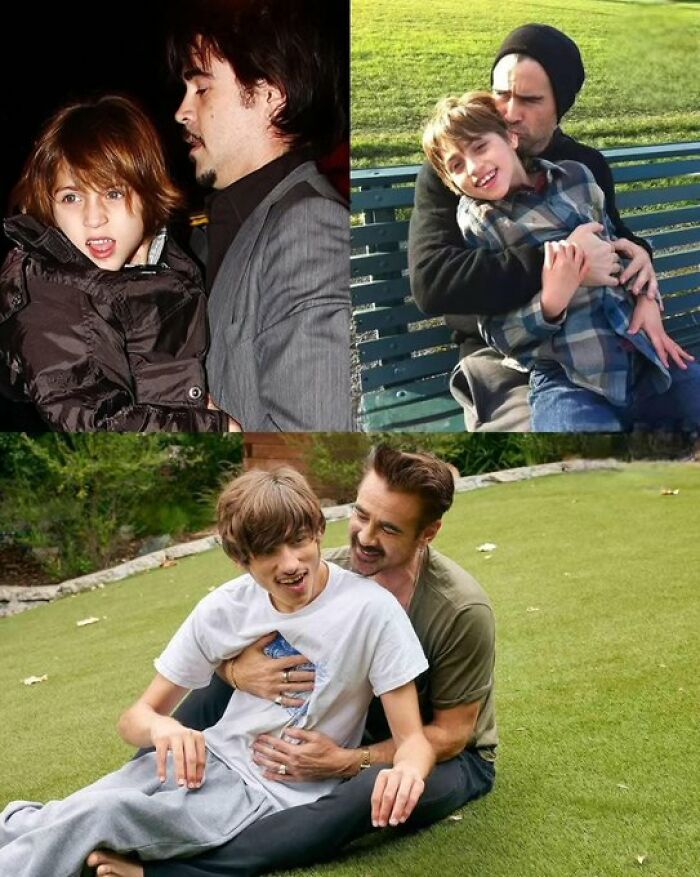
© Photo: WolfofX
#24
Just after midnight on May 2, 2024, a young man named Chris made a call to 911 in East Boston.
There was no fire. No accident. No crime.
It was his 25th birthday, and he simply wanted someone to wish him a happy birthday.
Boston Police Officers Israel Bracho and Franklin Ortiz had just begun their midnight shift when they were sent to check on him. At first, they weren’t sure what to expect. But once they realized Chris was serious, they decided they couldn’t show up empty handed.
On the way, they stopped and bought a banana nut muffin and a pack of colorful birthday candles.
Around 12:40 a.m., the officers arrived at Chris’s home.
Chris answered the door and confirmed that he had just turned 25. Then he invited them inside.
The officers placed the candles into the muffin and lit them. Standing together in his home in the middle of the night, two police officers sang Happy Birthday while Chris smiled and blew out the candles.
It wasn’t a big party. There was no elaborate cake or room full of guests.
Just a muffin, a few candles and two officers who decided a strange 911 call deserved a little kindness.
Chris thanked them, and police later said he told them they had made his day.
Officer Bracho explained why they did it simply. Everyone deserves to feel special on their birthday.
What began as an unusual call to 911 ended with Chris no longer celebrating his 25th birthday by himself.
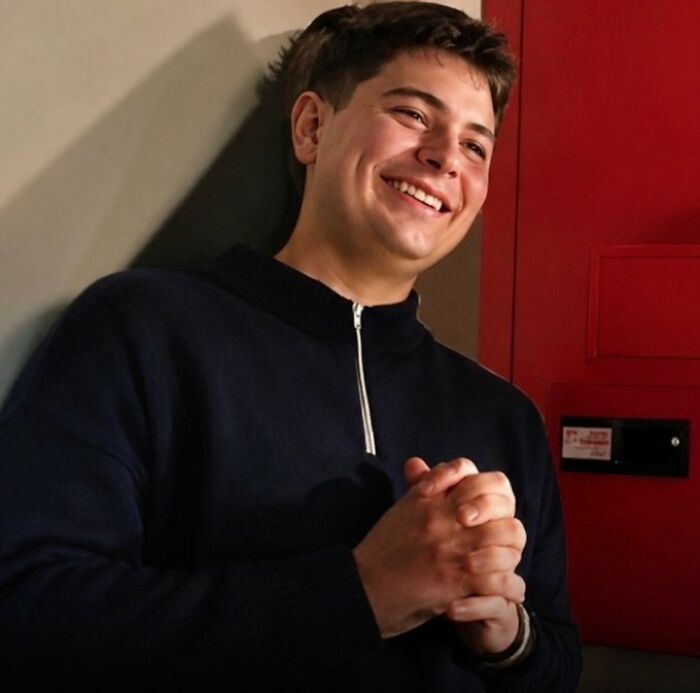
© Photo: WolfofX
#25
Davi Teles had been fascinated by garbage trucks for as long as his mother could remember.
Whenever the sanitation crew came down his street in Padre Bernardo, Brazil, the little boy would rush outside to see them. Even before he could properly speak, he would wave as the workers passed.
So when Davi’s third birthday arrived in July 2025, his family decided to celebrate it with some of the people he was always happiest to see.
They set up a breakfast table outside and waited for the garbage truck to arrive on its usual route.
There was bread, cake, juice and other food waiting for the crew.
Davi was excited all morning. But when the truck finally appeared and the workers walked over to him, all that excitement suddenly turned into shyness.
The sanitation workers stopped their route and joined him for breakfast. They talked with him, hugged him and posed for photos while celebrating his third birthday together.
Then they gave Davi one more surprise.
They let him climb aboard the garbage truck he had spent so much time watching from the street.
His mother later thanked the workers for the affection they had always shown her son and for taking the time to make his birthday special.
She said that although it was Davi’s birthday, the family felt as though they were the ones who had received a gift.
For Davi, the people he had spent so many mornings waving to from a distance had finally stopped their truck, sat at his table and celebrated right beside him.
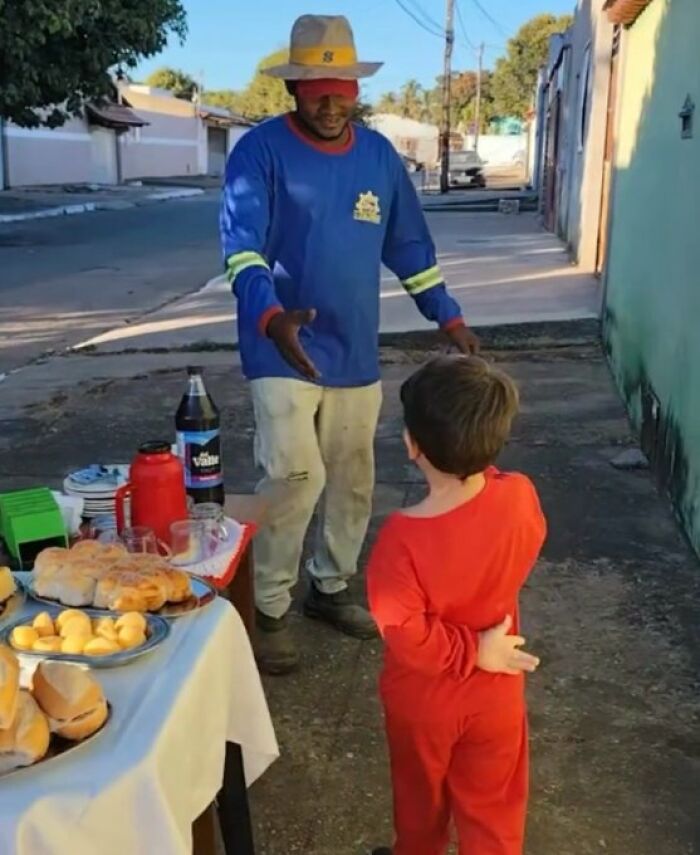
© Photo: WolfofX
#26
For most of his life, Tom Keating had lived with his mother.
He never married, and even as the decades passed, the two remained together at their family home in Liverpool, England.
Then, in 2016, things had to change.
Tom was 80 years old and needed additional care, so he moved into Moss View Care Home in Huyton. For the first time after spending so much of their lives under the same roof, mother and son were living apart.
Ada Keating was 98.
A little over a year later, she decided she didn’t want that separation anymore.
Ada moved into the same care home as her son.
It was an unusual sight even for the staff. A 98-year-old mother and her 80-year-old son, both residents of the same home, settling back into routines that had been part of their lives for decades.
Every morning, Ada would visit Tom and tell him she was heading downstairs for breakfast.
Every evening, she would go to his room again just to say goodnight.
They drank tea together, played games and watched television, including Emmerdale.
And when Ada occasionally went out to the hairdresser, Tom would wait for her to return. When she came back through the doors, he would greet her with his arms open for a hug.
Tom was 80, but some things hadn’t changed. Ada could still tell him to behave himself.
Before retirement, Ada had worked as an auxiliary nurse, while Tom had been a painter and decorator. She had spent much of her life caring for others, and nearly a century after she was born, she was still looking out for her eldest son.
When asked about it, Ada explained it in a way only a mother really could.
“You never stop being a mum.”
At 98 years old, she proved she meant it by moving home just so she could be beside her 80-year-old boy again.

© Photo: WolfofX
#27
Lenny Robinson had already built the kind of life most people would have been satisfied with.
He started a cleaning business while still in high school in Maryland. It eventually grew to employ hundreds of people, and after selling the company, Lenny had enough money to live comfortably.
Instead, he spent a remarkable amount of it becoming Batman.
It had started years earlier when one of his sons became fascinated with the superhero. Lenny began dressing up as Batman, but over time he noticed something bigger. When sick children saw him walk into a hospital room, even for a few minutes, their attention shifted away from treatments, needles and everything else they were going through.
So he kept showing up.
Lenny bought a professional Batman suit that cost around 5,000 USD and weighed roughly 35 pounds, about 16 kilograms. He drove expensive Batman themed cars, including a Lamborghini, and regularly visited hospitals around Baltimore and Washington, D.C.
But the cars and costume were never really the point.
He brought toys, books, shirts and other gifts for children undergoing treatment, spending more than 25,000 USD of his own money each year on the effort. He also worked closely with the children’s charity Hope for Henry.
For years, much of this happened without the wider public knowing who was underneath the mask.
Then, in March 2012, police in Maryland noticed something unusual traveling along Route 29.
A Lamborghini with a Batman symbol where its license plate should have been.
They pulled it over.
When the officer approached the car, Batman was sitting behind the wheel.
It was Lenny.
His real license plates were inside the vehicle, and he explained that he was on his way to Georgetown University Hospital to visit children. Police allowed him to continue, but not before taking a few photographs with him.
Dashcam footage of the encounter soon brought national attention to the man people began calling the “Route 29 Batman.”
Lenny continued visiting hospitals.
When children called him a superhero, he often turned it back on them.
“You are the real superheroes.”
He liked Batman partly because Batman didn’t have supernatural powers. To Lenny, that meant becoming a hero wasn’t something reserved for fictional characters.
“We all can be Batman,” he once said.
On August 16, 2015, Lenny was driving his custom Batmobile along Interstate 70 in Maryland when it developed engine trouble. He stopped to inspect it and was struck after another vehicle hit the Batmobile.
Lenny Robinson died at the scene.
He was 51.
At his funeral, among the people mourning him was a four year old boy named Reilly Brown. He arrived wearing Batman sunglasses Lenny had given him.
When someone asked what Batman had done that made him happiest, Reilly didn’t mention the expensive car, the costume or the presents.
He remembered that Batman used to tickle him.
For Lenny Robinson, all the money spent building a real life Batman mattered because, for a few minutes inside a hospital room, a child could forget why they were there.
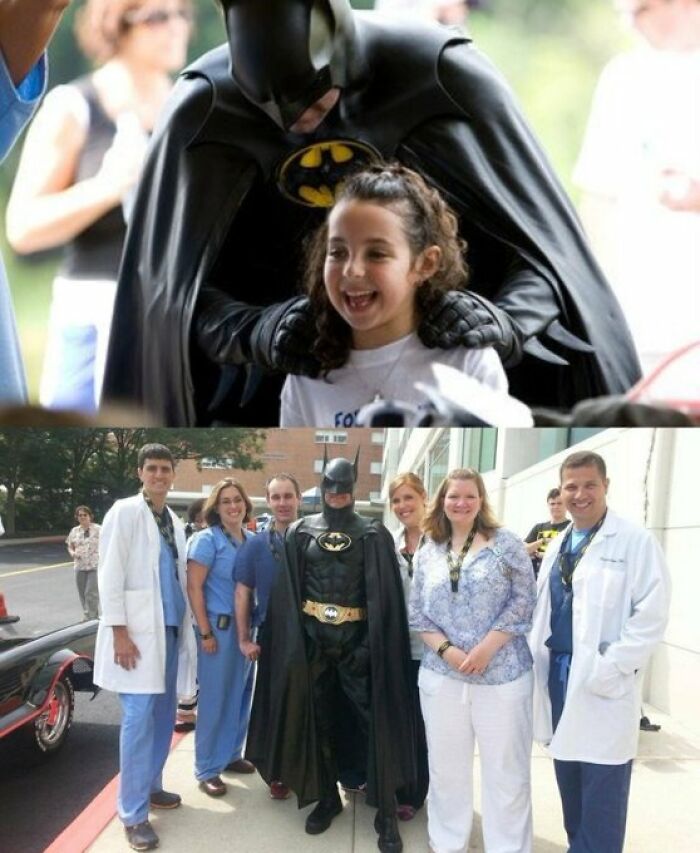
© Photo: WolfofX
#28
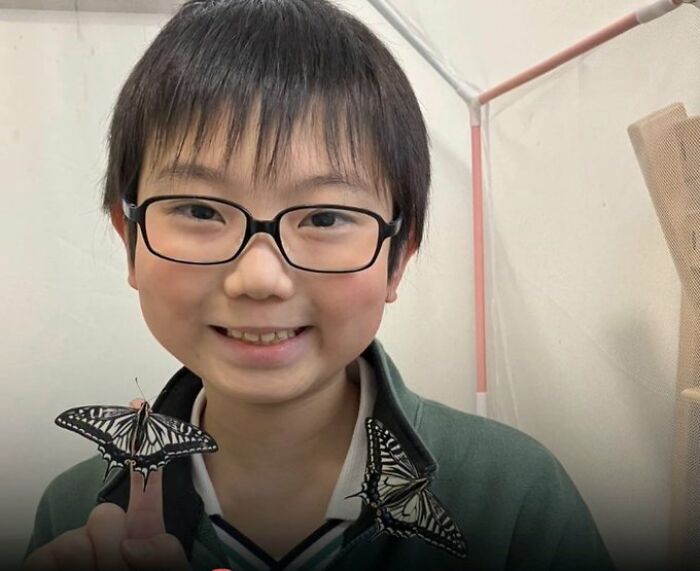
When Jo Nagai was eight years old, he had a question about the swallowtail butterflies he raised at home in Kobe, Japan.
After caring for them as caterpillars and releasing them as butterflies, Jo noticed that some seemed to remain near him instead of immediately flying away.
He began wondering whether they remembered him.
In 2022, while still in second grade, Jo wrote a four page handwritten letter to Martha Weiss, an entomologist at Georgetown University in the United States. Years earlier, Weiss and her colleagues had shown that moths could retain certain learned associations from their caterpillar stage even after metamorphosis.
Jo wanted to know whether swallowtail butterflies could do the same.
With Weiss offering guidance from thousands of kilometers away, Jo began designing experiments at home using Asian swallowtails, Papilio xuthus.
He trained caterpillars to associate the smell of lavender with an unpleasant electrical stimulus. Then he waited.
The caterpillars formed chrysalises.
Eventually, butterflies emerged.
Jo placed the adult butterflies in a Y shaped testing apparatus where they could choose between different paths. Many of the butterflies that had been conditioned as caterpillars avoided lavender even though their bodies had undergone the enormous transformation of metamorphosis.
But Jo wasn’t finished.
He bred the butterflies and tested their descendants, even though those younger generations had never received the original conditioning.
The numbers caught the attention of the scientists following his work.
Among the conditioned parental generation, 70.9 percent avoided lavender.
Among their offspring, it was 64.8 percent.
Among the grandchildren, 60 percent.
For comparison, the avoidance rate among wild, unconditioned butterflies was 51 percent.
The effect appeared to weaken with each generation, but Jo’s results raised an intriguing possibility that a learned behavioral response could somehow influence descendants. Epigenetic changes are one possible explanation, although proving the exact mechanism will require larger studies, independent replication and further biological evidence.
Jo’s work eventually took him far beyond the experiments he had started at home. He met Weiss in person at the International Congress of Entomology and discussed his research with professional scientists.
In March 2026, his research was listed at the 73rd Annual Meeting of the Ecological Society of Japan in Kyoto under the title “Epigenetic Transmission of Learned Larval Memory across Generations in Papilio xuthus.”
© Photo: WolfofX
#29
When Destiny Smith left church one day in September 2024, the last thing she expected was for a 97 year old stranger to crash into her car.
The damage was minor. But instead of worrying about the vehicle, she walked over to make sure the elderly driver was alright.
His name was Jim.
As they spoke, Destiny learned that Jim lived alone. He had no children, very little support, no driver’s license, and no insurance. When she asked who looked after him, his answer was simple.
“Nobody.”
She couldn’t stop thinking about that conversation.
A few days later, she went back to check on him. Then she visited again. She brought him meals, sat with him, listened to his stories, and what began as concern for a stranger slowly became a genuine friendship.
Determined to help, Destiny contacted a social worker and connected Jim with local services. Soon, home health aides and nurses were visiting regularly, giving him the support he had been missing for so long.
Their friendship continued to grow. They celebrated birthdays together, shared meals, laughed like family, and when Destiny later told Jim she had moved just two minutes away, he couldn’t hide his joy.
As Jim’s health declined, he was eventually moved into a nursing home where he could receive full time care. Destiny continued checking in through his family and remained part of his life.

© Photo: WolfofX
#30
shirt to school because he didn’t own official UT gear.
Some classmates laughed at him, but the story reached the university and turned into something beautiful.
UT took his hand-drawn design, made it an official shirt, and fans bought tens of thousands of them.
The Pride of the Southland Band even wore the shirt during a football game.
The proceeds went toward an anti-bullying cause, and the university later offered the boy a four-year scholarship, if he chooses to attend and meets admission requirements.
What started as a child being mocked for a simple homemade shirt became a reminder that kindness can turn embarrassment into honor.

© Photo: WolfofX
#31
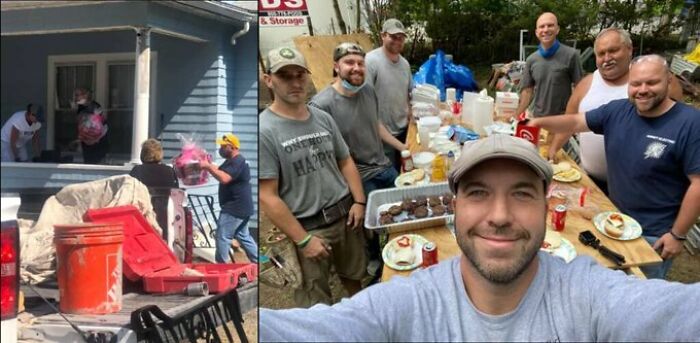
In 2020, electrician John Kinney arrived at 72-year-old Gloria Scott’s home in Woburn, Massachusetts, for what seemed like a simple job : fixing a broken light.
But once inside, he realized the light was the least of her problems.
Gloria lived alone in a badly deteriorating house. There were serious electrical and plumbing issues, damaged ceilings, broken windows and problems with running water. Raccoons had even been getting inside. She simply couldn’t afford the repairs her home desperately needed.
John completed the electrical job, went home… and couldn’t stop thinking about her.
So he came back.
He began repairing Gloria’s house without charging her, then reached out to friends and people in the community for help. What happened next was extraordinary.
Electricians, plumbers, carpenters and complete strangers showed up. Others donated materials, food and supplies. Together, they repaired the plumbing and electrical systems, fixed walls and ceilings, replaced windows and worked on the roof, porch and backyard.
The group became known as “Gloria’s Gladiators.”
It all started with one broken light and one electrician who decided that walking away wasn’t an option.
© Photo: WolfofX
#32
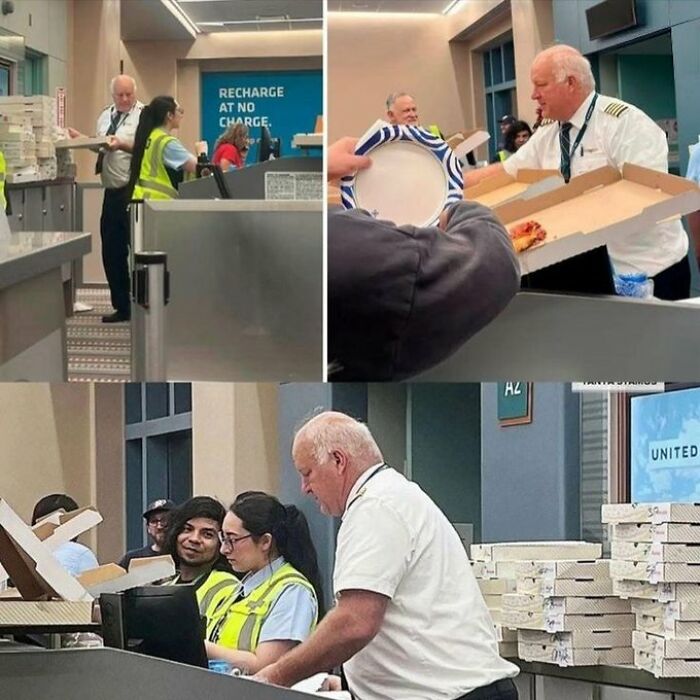
In September 2024, a United Airlines flight traveling from San Francisco to Houston was forced to make an emergency diversion to Albuquerque, New Mexico, after a passenger experienced a medical emergency onboard.
After the passenger received medical attention, the flight was unable to continue immediately because the crew eventually reached their federally mandated duty-time limits.
As a result, approximately 150 passengers were left waiting at the airport for nearly seven hours while a replacement crew was arranged.
Although passengers were provided with food vouchers, many airport restaurants had already closed for the night.
Seeing the situation, the flight’s pilot took matters into his own hands and ordered around 30 pizzas for everyone at the gate.
Passengers later said the pilot personally helped hand out the pizzas and made sure every passenger was served before taking any food for himself.
Photos of the moment quickly spread online, with many praising the captain for his kindness and leadership during a frustrating delay.
United Airlines later acknowledged the incident and commended the pilot for going above and beyond to care for his passengers.
© Photo: WolfofX
#33
In 1920, a farmer named Jacobus Hermanus Brits was ploughing a field near Grootfontein in what is now Namibia when his ox-drawn plough suddenly struck something buried beneath the soil.
At first, it looked like an enormous piece of rock. But what Brits had uncovered was something that had travelled far beyond Earth.
It became known as the Hoba meteorite.
The massive object measures roughly 2.7 metres across, is about 0.9 metres thick, and is composed mostly of iron with a significant amount of nickel. Its estimated mass is around 60 tonnes, making it the largest known intact meteorite ever found on Earth.
Scientists believe Hoba fell to Earth tens of thousands of years ago, possibly less than 80,000 years ago.
Yet there is something unusual about where it rests.
There is no obvious impact crater.
Exactly why remains uncertain. Researchers believe its relatively flat shape and its passage through Earth’s atmosphere may have slowed it considerably before impact, allowing it to reach the ground without creating the enormous crater that might be expected from an object of its size.
More than a century after Brits’ plough struck it, the Hoba meteorite remains in Namibia, at essentially the same place where it was discovered in 1920.
A 60-tonne piece of space, lying in a farmer’s field for thousands of years until one ordinary day, a plough finally found it.

© Photo: WolfofX
#34
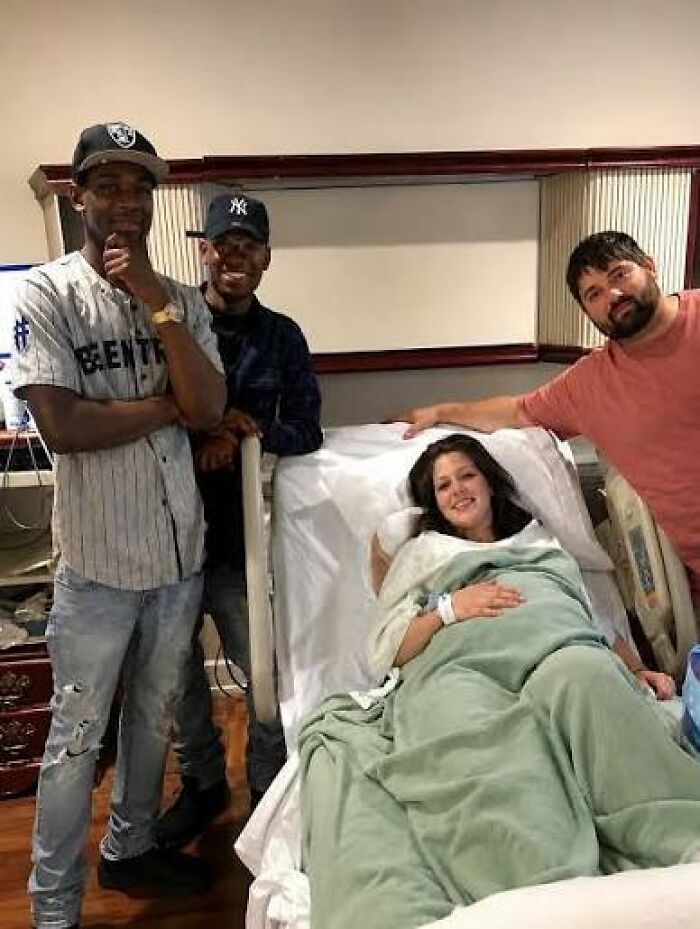
In March 2016, Mark and Lindsey Lashley were at a hospital in Bainbridge, Georgia, waiting for the birth of their son, Cason.
As relatives exchanged updates through a group text, one message accidentally went to a number that no longer belonged to the family member they thought they were contacting.
It reached two brothers, Deorick and Dennis Williams.
At first, they simply replied to say someone had the wrong number. But the family kept sending updates, and soon the brothers received a photo announcing that Cason had been born, weighing 7 pounds 11 ounces.
Instead of ignoring the messages, they decided to do something completely unexpected.
They asked what hospital room the family was in and told them they were coming.
Not empty handed either.
Deorick and Dennis arrived with diapers, baby bottles and pacifiers for a newborn they had never met, belonging to a family they had never known before that day.
For a moment, everyone in the room was stunned that the two strangers from the accidental text had actually shown up.
Then they welcomed them in.
They took photos together, met little Cason and became part of a birth story none of them had planned.
One wrong phone number had somehow brought two strangers to Room 130 with gifts in their hands, simply because they wanted to share in someone else’s happiness.
© Photo: WolfofX
#35
Sue Jacquot never expected to become a Minecraft creator at 81.
The Arizona grandmother first learned the game from her grandsons, Austin and Jack. It wasn’t about views or subscribers. Minecraft was simply another way for her to spend time with them.
Then life changed.
In 2024, her 17-year-old grandson Jack was diagnosed with a rare and aggressive form of sarcoma. Along with the fear of what he was facing came the enormous cost of treatment.
Sue looked at the game her grandsons had taught her and wondered if it could help.
In late 2025, she started a YouTube channel called GrammaCrackers and began uploading videos of herself playing Minecraft. She was still learning the game, making mistakes and figuring things out as she went.
But she had a purpose behind every video.
Sue pledged the advertising revenue from her channel toward Jack’s medical expenses and shared the family’s fundraiser with her viewers.
People started finding her videos.
Then thousands more arrived.
Within roughly two months, the 81-year-old grandmother had gained around 360,000 subscribers after uploading only about a dozen Minecraft videos. By January 2026, more than 48,500 USD had also been donated through the family’s fundraiser.
Jack even joined his grandmother during a livestream, where Sue proudly showed him around the Minecraft world she had been building.
Then came the update everyone had been hoping for.
After undergoing treatment, Jack was reported cancer-free and later described as being in remission.
Sue kept playing.
What began as an grandmother learning Minecraft so she could spend a little more time in her grandsons’ world became something neither of them could have imagined, with hundreds of thousands of strangers eventually joining her there too.

© Photo: WolfofX
#36
When 5-year-old Brian Kelly’s father, Dan, was deployed to Syria with the U.S. Air Force in 2017, Brian didn’t just miss having his dad at home. He missed the ordinary things they used to do together.
Especially yard work.
Brian loved following his dad outside, helping mow the lawn, trim bushes and tackle whatever needed doing around their home in Belleville, Illinois. It was their routine, and after Dan left for a six-month deployment, that routine suddenly disappeared.
Then Brian noticed his neighbor, Dean Cravens, working outside.
One day, he walked over and knocked on Dean’s front door. He wanted to know if he could help.
Dean said yes.
And Brian kept coming back.
For roughly six weeks, he knocked on Dean’s door virtually every day. They bagged grass clippings, used the leaf blower and worked around the yard together. Dean never seemed too busy for him.
Eventually, it became about much more than mowing lawns.
Dean, an IT worker and father of three daughters, began playing basketball, golf and catch with Brian too. They spent hours together doing the kind of simple “dad activities” Brian had been missing.
Brian’s mother, Barbara, knew exactly why her son kept showing up at the neighbor’s house. He missed his father deeply. Dean wasn’t trying to replace Dan. He was simply giving a little boy some of the normalcy he needed while his dad was thousands of miles away.
Dean’s daughter Molly eventually shared photos of the unlikely pair in June 2017, and their friendship reached people far beyond their neighborhood.
Six months after leaving home, Dan finally returned from his deployment.
Brian had his dad back.
And the neighbor who had quietly filled those afternoons with yard work, basketball and games of catch could finally hand the job back to him.
Dean said that if Dan ever had to leave again, he would be there for Brian.
The lawn work may have started with one little knock on a neighbor’s door, but Dean kept answering it until Brian’s dad came home.

© Photo: WolfofX
#37
In March 2019, Keanu Reeves boarded a flight from San Francisco to Burbank expecting an ordinary journey.
Then something went wrong.
A mechanical problem forced the plane to make an emergency landing in Bakersfield, leaving the passengers stranded more than 100 miles from their destination.
Keanu could have quietly arranged a private car and disappeared.
Instead, he stayed with everyone else.
As passengers tried to figure out how to reach Los Angeles, Keanu joined the discussions, helped with the travel plans and climbed into a shared van with the stranded group.
Then the road trip began.
For the next two hours, one of Hollywood’s biggest stars sat among ordinary passengers, reading strange facts about Bakersfield from his phone and playing local country music for everyone.
At one point, he even played music connected to Bakersfield legend Buck Owens.
Passengers filmed the journey as Keanu laughed, talked and turned an exhausting travel disaster into an unexpectedly memorable road trip.
And as people were dropped off, Keanu stayed until it was his turn to leave, saying goodbye to his fellow passengers.
No red carpet.
No private escape.
Just Keanu Reeves, a broken flight and a van full of strangers making their way home together.

© Photo: WolfofX
#38
During a dangerous ice storm in North Carolina, gas station owner Hitesh Patel was supposed to close at 10 p.m. Instead, he kept his store open all night so stranded travelers would have a warm and safe place to stay.
Among those sheltering inside were a young mother traveling with four children and other motorists who could no longer safely drive on the icy roads.
One traveler later shared the story online, saying they would have been freezing in their car if not for Patel’s kindness.
Sometimes the people who make the biggest difference are the ones who quietly choose to help when others need it most
© Photo: WolfofX
#39
He was supposed to be getting ready for one of the biggest days of his life.
Instead, 18 year old Timothy Harrison clocked in for his shift at a Waffle House in Center Point, Alabama, on May 27, 2021.
Not because he wanted to miss graduation.
He believed he had no way to get there.
He had missed the rehearsal where students received their cap, gown and tickets because he was working. His mother couldn’t get time off from work. He had no ride to the ceremony at the Birmingham CrossPlex. So he quietly accepted that graduation wasn’t going to happen and showed up to work instead.
His manager, Cedric Hampton, immediately knew something was wrong.
When Timothy explained the situation, the restaurant became more than a workplace.
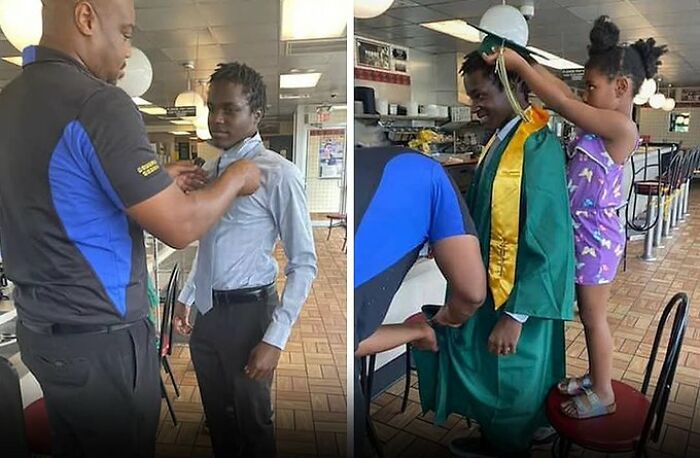
One coworker drove to Timothy’s school to collect his graduation cap and gown. Another rushed to Target to buy him dress clothes. Four employees each pitched in 40 United States dollars. Customers who heard the story added money too.
Back at the restaurant, Cedric helped button Timothy’s new shirt.
A little girl stood on a chair to place his graduation cap on his head.
Another coworker drove him nearly 20 miles to the ceremony, arriving just in time for him to walk across the stage with the Woodlawn High School Class of 2021.
The story didn’t end there.
After it spread across the country, Lawson State Community College offered Timothy free tuition and books, giving him the chance to continue his education.
What began as a shift at a Waffle House became the day a group of ordinary people refused to let a young man’s future slip away. They didn’t just help him attend graduation.
They made sure he never forgot that he was worth showing up for.
© Photo: WolfofX
#40
In 2013, Anaïs Bordier was a 25-year-old fashion student living in London when a friend sent her a YouTube video.
There was a woman in it who looked almost exactly like her.
Her name was Samantha Futerman, an actress living in Los Angeles.
Anaïs started looking into her and found something even stranger. Samantha had been born in South Korea and adopted as a baby, just like her.
Then she found Samantha’s birthday.
November 19, 1987.
It was Anaïs’s birthday too.
Anaïs had grown up with her adoptive family in France. Samantha had been raised by her adoptive family in New Jersey. Neither had been told she had a twin sister.
On February 21, 2013, Anaïs reached out to Samantha online.
They began talking through messages and video calls, comparing their faces, childhood photographs and the details they knew about their births. Eventually, they met in person and took a DNA test.
The result confirmed it.
Anaïs Bordier and Samantha Futerman were identical twins.
They had been born on the same day in South Korea, separated as babies and adopted by families on different continents. For roughly 25 years, each had lived without knowing the other existed.
Their extraordinary reunion was later documented in the 2015 film Twinsters.
Two sisters separated at the beginning of their lives found each other again because, decades later, a friend happened to recognize one sister’s face on a YouTube screen.

© Photo: WolfofX
#41
Erling Haaland and his father Alfie reportedly paid around 134,000 USD for an extremely rare 1594 book about Norway’s medieval kings and Viking-era rulers.
Instead of keeping it privately, they donated it to Bryne Library so the public can see it for free.

© Photo: WolfofX
#42
Lucy Humphrey had spent more than 15 years battling lupus when a simple day at the beach changed everything. Her Dobermans kept running to a stranger named Katie James, who later turned out to be the perfect kidney donor, giving Lucy a second chance at life and a lifelong friend.

© Photo: WolfofX
#43
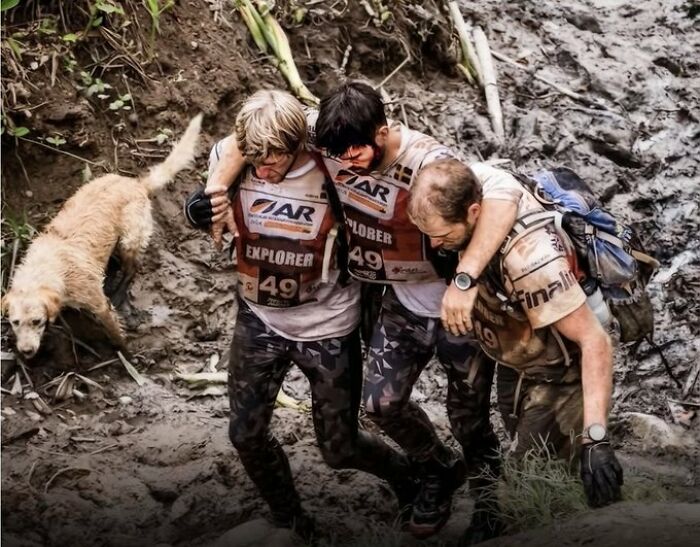
A wounded stray dog followed a team of racers for 435 miles through the Ecuadorian jungle after Swedish athlete Mikael Lindnord shared a single meatball during a rest stop. After the race, Lindnord adopted him and gave him the name Arthur.
© Photo: WolfofX
#44
When Józef Peruga first sat for Poland’s high school graduation exams, he was already 85 years old.
Most of the students around him were preparing to begin their adult lives. Józef had already lived one.
A former bus driver from Kalisz, he wasn’t chasing a promotion, a university place, or a bigger paycheck. He simply wanted to achieve something he had never had the chance to finish.
His first attempt ended in disappointment. He passed the oral exams but fell short in the written Polish and mathematics papers. Many people would have accepted the result and moved on.
Instead, he came back the following year at 86.
He studied again, retook the exams, and narrowly missed passing once more. At first, he thought that would be the end of the journey. But the dream never really left him.
So, at 87 years old, Józef returned for another attempt.
He still didn’t get the result he hoped for, but he refused to let age decide when he should stop learning. His determination earned admiration across Poland, with many people seeing him as proof that the desire to grow does not disappear with the passing years.
For Józef Peruga, the exam was never just about a certificate. It was about finishing a chapter of his own life that had remained open for decades.

© Photo: WolfofX
#45
A simple act of kindness by Florida State football player Travis Rudolph touched countless hearts when he noticed a young boy sitting alone during a team visit to a middle school.
Without being asked, Rudolph chose to sit beside the boy, share lunch with him, and spend time talking with him.
The boy’s mother later revealed that her son is autistic and often struggles to make friends, saying the gesture meant the world to him and inspired her to write a heartfelt thank-you letter.
A photograph of the moment quickly spread, becoming a powerful reminder that even a few minutes of compassion and inclusion can leave a lasting impact on someone’s life.

© Photo: WolfofX
#46
Ashley Hilliard had planned nothing more than a princess day with her two little girls.
On July 11, 2026, she took 6-year-old Paisleigh and 4-year-old Blakeleigh to Great Lakes Crossing Outlets in Auburn Hills, Michigan. They were eating lunch at HopCat when weaponfire suddenly sent people running through the mall.
Ashley tried to reach her daughters, but in the chaos she fell and was trampled. For a terrifying moment, she couldn’t get to both of them.
Then she heard a stranger’s voice.
“It’s okay, I have her.”
A woman Ashley had never met picked up Paisleigh and began getting her to safety. As Ashley struggled forward with Blakeleigh, another stranger, a man, stepped in and picked up the younger girl.
Neither of them knew this family. They simply saw a mother and two children who needed help and acted.
Ashley later learned the woman had done even more than she realized. As people rushed around them, she had huddled over the girls, using her own body to protect them from being trampled.
The attack lead to a 20-year-old man passing away and a 19-year-old woman beingwounded.
Afterward, Ashley couldn’t stop thinking about the two strangers who had helped protect her daughters. She began searching for them and eventually found both.
She and the woman spoke on the phone for more than an hour before arranging to meet in person.
This time, there was no panic or running.
They met for ice cream.
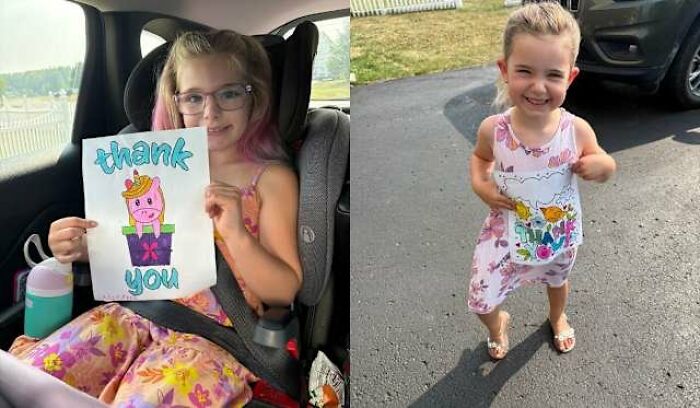
Paisleigh and Blakeleigh arrived carrying flowers, balloons and coloring pages they had made themselves. On them were two simple words.
“Thank you.”
The two people who helped the family have chosen to remain anonymous.
Ashley may never be able to repay what they did that afternoon, but her daughters now know the strangers who carried them to safety when their mother couldn’t reach them.
And their princess day ended with two unexpected heroes becoming part of a family story they will never forget.
© Photo: WolfofX
#47
For years, John Unger would carry his aging dog into the cold waters of Lake Superior and simply hold him there.
The dog’s name was Schoep.
John had adopted the shepherd mix when he was young, and they had spent nearly two decades together. By 2012, Schoep was about 19 years old. Age had caught up with him. Arthritis made his joints ache, and some days even resting comfortably was difficult.
But John had discovered something about the water.
When he supported Schoep in the lake, the buoyancy took pressure off his aching body. Schoep, who wasn’t particularly fond of swimming, didn’t have to swim at all. He could simply float in John’s arms.
And sometimes, he became so comfortable that he fell asleep against his shoulder.
In July 2012, John feared their time together might be running out. He asked his photographer friend Hannah Stonehouse Hudson to take some photographs of them.
On July 31, she met John and Schoep at Lake Superior.
As John stood in the water holding him, Schoep closed his eyes and drifted to sleep. Hannah quietly captured the moment.
She shared the photograph on her photography Facebook page the following day.
Within days, millions of people had seen it.
Then strangers began asking how they could help.
People contributed toward Schoep’s veterinary care, and an anonymous donor offered to pay for laser treatments for his arthritis. The support eventually grew beyond what Schoep himself needed, with more than 25,000 USD reported to have been raised. John later used the unexpected generosity to help other families struggling with veterinary expenses through Schoep’s Legacy Foundation.
Most importantly, John got something he hadn’t been sure he would have when that photograph was taken.
More time.
Schoep reached approximately 20 years old before dying in July 2013, almost a year after the photograph that introduced him to millions of people.
John had originally asked Hannah for a photograph because he thought he might soon have to say goodbye.
Instead, she captured the quiet routine that showed exactly what nearly two decades together had come to mean.

© Photo: WolfofX
#48
Mary didn’t grow up with LEGO.
She discovered the hobby much later in life, long after most people would have assumed it was too late to start something new. What began as simple curiosity slowly turned into a weekly ritual. Even at 97 years old, she still spends around four to six hours building, one brick at a time, patiently bringing enormous LEGO creations to life.
Her collection includes some of the most demanding sets LEGO has ever produced. The LEGO Titanic alone contains 9,090 pieces and stretches more than 135 centimeters long. She has also completed the LEGO Colosseum, another masterpiece made from over 9,000 pieces, along with several other highly detailed display models.
Photographer Steven Farrel has documented her journey, often capturing her building in her cozy living room with her dog resting nearby. Those photos introduced millions of people to the woman now affectionately known as “LEGO Grandma.”
There is no rush in the way she builds. No race to finish. Just steady hands, quiet focus, and the satisfaction of watching thousands of tiny pieces slowly become something extraordinary.
At an age when many people believe their best years of learning are behind them, Mary continues to prove that curiosity never grows old. Every completed model is a reminder that it’s never too late to begin something new, and that passion doesn’t measure time by birthdays.
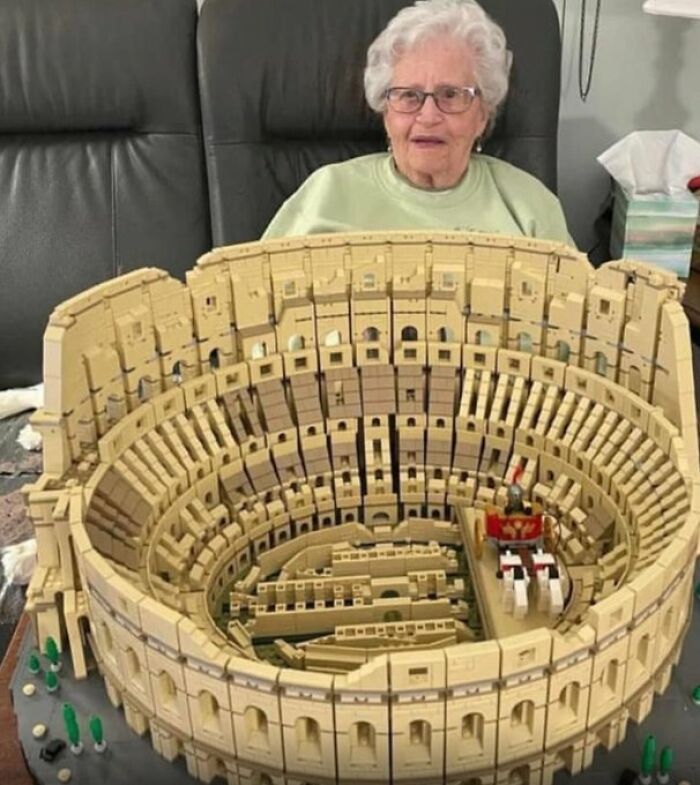
© Photo: WolfofX
#49
A few years later, they met again. This time Manoel wanted Maria in his life.
Her mother initially opposed the relationship, so Manoel worked to earn her family’s trust. He even began building a home where the two of them could start their life together.
On November 20, 1940, Manoel, 21, and Maria, 17, were married at a small chapel in Ceará.
They spent the decades that followed working the land, cultivating and selling tobacco and raising 13 children. As those children grew and started families of their own, the numbers became remarkable.
Eventually there were 55 grandchildren, 54 great grandchildren and 12 great great grandchildren.
By February 2025, Manoel was 105 and Maria was 101. Guinness World Records confirmed that they had been married for 84 years and 77 days, making them the longest married living couple in their category at the time.
Their final years together looked very different from the busy life they had once shared.
Manoel spent much of his day resting. Around 6 in the evening, he would join Maria in the living room. Together they listened to the rosary on the radio and then watched Mass on television.
When the family was asked how a marriage could survive more than eight decades, the answer was simply love.
Manoel died on October 20, 2025, at 106 years old.
The young couple who married in a small Brazilian chapel in 1940 had remained husband and wife for nearly 85 years, raising 13 children and living long enough to see their family reach five generations.
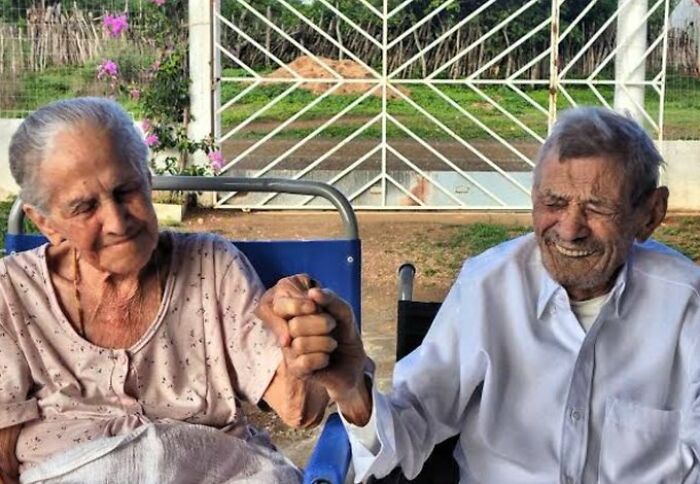
© Photo: WolfofX
#50
A Japanese man named Sakae Kato has dedicated his life caring for the animals that were abandoned after the Fukushima Daiichi nuclear disaster.
The 57-year-old spends around $7,000 a month taking care of the animals, and he has been doing this for the last ten years.
When asked about why he stayed behind in the contaminated zone, he said, “I want to make sure I am here to take care of the last one. After that I want to die, whether that be a day or hour later.”
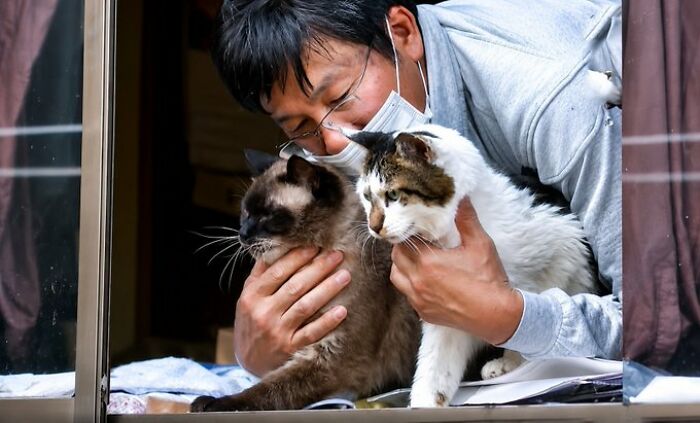
© Photo: WolfofX
#51
In Ñemby, Paraguay, 72-year-old Félix Cárdenas had a routine that his daughter Belén could never quite talk him out of.
Every night after work, Belén would arrive by bus at around 8:30 or 9 p.m. The stop was several blocks from their home, and the walk could be dark and deserted.
So Félix went to meet her.
He would leave the house, walk to the bus stop and wait there until his daughter arrived. Then the two of them would make the journey home together.
Belén was already 22 years old, and she had told her father that he didn’t need to keep coming for her. But asking him to stay home only made him worry more.
Eventually, she stopped trying to convince him.
In February 2022, Belén photographed her father standing at the stop waiting for her. She shared the picture online and explained that no matter whether she arrived at 8:30 or 9, he was always there.
By then, Félix had reportedly been doing it for about three years.
Belén later explained that her father had always been protective of her and her siblings. At one point, he would even meet her closer to her workplace. As she grew older, the bus stop became their compromise. She could have her independence, and he could still know she wasn’t walking those final blocks alone.
For Félix, being 72 didn’t mean he had finished looking after his daughter.
It just meant the walk to meet her took a little more effort.

#52
In May 2025, students at Yilong No. 1 Middle School in Sichuan, China, were preparing for one of the last photographs they would take together before graduation.
But one person was missing.
Their 15-year-old classmate Ren Junjie had been away from school while battling non-Hodgkin lymphoma. By then, his condition had become so serious that he was bedridden in hospital, dependent on oxygen and too weak to return to school.
Ren still wanted one thing.
A graduation photo with his classmates.
So his classmates decided he wouldn’t have to come to them.
On May 17, more than 60 students put on their green-and-white school uniforms and walked more than two kilometres from their school to the hospital. They even carried the benches they needed for the photograph.
Participation was voluntary.
Not one student from Ren’s class stayed behind.
At the hospital, Ren was dressed in his school uniform while remaining in bed. Six of his classmates helped wheel him outside, where everyone had arranged themselves for the photograph.
They left one space open in the middle.
That was Ren’s place.
His hospital bed was positioned among them, and despite being extremely weak and wearing an oxygen mask, Ren tried to lift his head and smile for the camera.
His classmates also brought handwritten letters and a basketball covered with their signatures, leaving him messages of encouragement and telling him they hoped he would return to their class one day.
They couldn’t have known how little time remained.
At around 4 a.m. the following morning, May 18, Ren’s condition deteriorated.
He died from his illness, roughly 12 hours after taking the photograph.
The graduation picture his classmates had walked more than two kilometres to give him became the last photograph they would ever take together.
Ren never made it back to his classroom.
But when his class gathered for one final photo, they made sure his place among them wasn’t empty.

© Photo: WolfofX
#53
In February 2019, a mother boarded a roughly 10 hour flight from Seoul to San Francisco with her four month old son, Junwoo.
It was his first flight, and she was worried he might cry and disturb the other passengers. So she came prepared in a way nobody expected.
She handed out more than 200 small goodie bags to people on the plane. Inside each one were Korean sweets, a pair of earplugs and a little note written as if it came from Junwoo himself.
The note introduced him as a four month old baby traveling with his mother and grandmother to visit his aunt. It explained that because this was his first flight, he might become nervous, cry or make some noise.
His mother had included the earplugs just in case.
Passenger Dave Corona photographed the bag and shared the gesture on Facebook, describing it as very touching.
After all that preparation for what could have been a long and noisy flight, something rather funny happened.
Junwoo barely made a sound.
Corona later summed up the entire journey in five words.
“Not a peep out of the kid.”

© Photo: WolfofX
#54
In May 2019, a 6-year-old boy in Tallahassee, Florida, secretly picked up the phone and called 911 while his mother wasn’t aware.
There was no fire. No accident. Nobody was hurt.
He was just lonely.
When the dispatcher asked what was wrong, the little boy explained that he wanted someone to be his friend.
The call reached the Tallahassee Police Department, and Officer Joe White was sent to the home. He arrived expecting to deal with an emergency, but instead found a young boy who simply wanted some company.
White explained to him that 911 was only for real emergencies and that he shouldn’t call the number just because he was feeling lonely.
But he didn’t end the conversation there.
When the boy asked if White would be his friend, the officer told him he would always be one.
White stayed for a while and spent time with him. He let the boy sit inside his patrol car and gave him a stuffed animal to remember their meeting.
What began as an unnecessary 911 call ended with a six-year-old learning an important lesson and, just as he had hoped when he picked up the phone, finding himself a new friend in Officer Joe White.
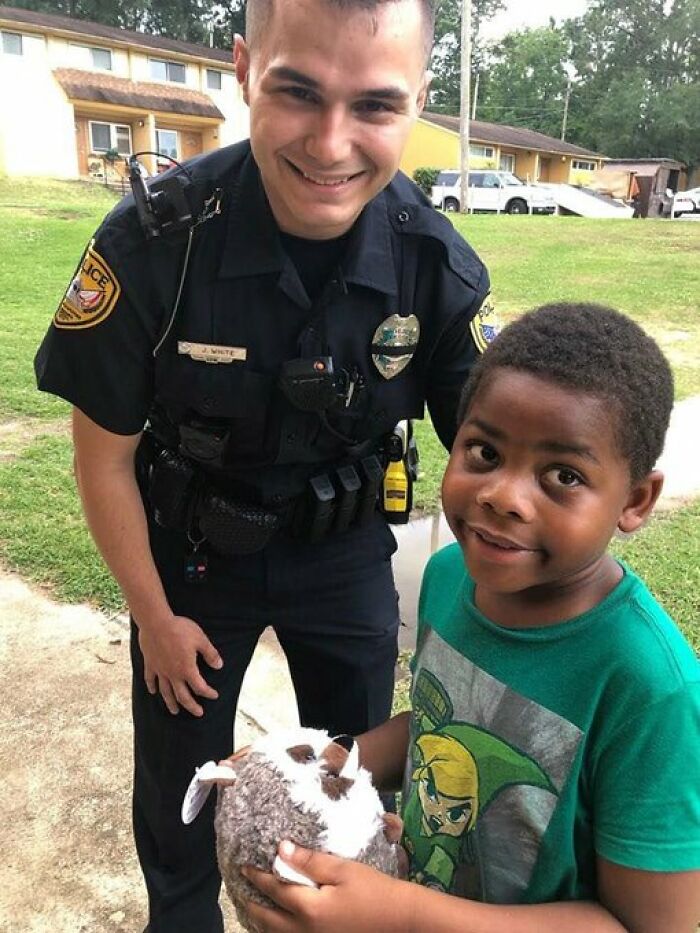
© Photo: WolfofX
#55
For 23 years, Jane Sayner called the same house in St Albans, Melbourne, home. She wasn’t the owner. She was the tenant. Month after month, year after year, she paid her rent on time and treated the property as if it were her own.
The owners lived overseas, so Jane became the person they trusted completely. She looked after the house, handled many small repairs herself instead of bothering the landlords, and quietly cared for the property for more than two decades. Over the years, the relationship grew beyond that of landlord and tenant. It became a genuine friendship built on trust and respect.
When the owners eventually decided they no longer wanted to keep the house, they made an extraordinary decision. Rather than putting it on the market, they transferred ownership directly to Jane.
There was no legal obligation and no agreement promising her the property after a certain number of years. It was simply a remarkable gesture from owners who believed the person who had faithfully cared for their home for 23 years deserved to have it become her own

© Photo: WolfofX
#56
In 1986, registered nurse Sandra Clarke was caring for a terminally ill man at Sacred Heart Medical Center in Eugene, Oregon. Alone and nearing the end of his life, he looked at her and asked a simple question.
“Will you stay with me?”
Sandra wanted to, but she was responsible for several other patients. She promised she would return after finishing her rounds. About 90 minutes later, she came back to his room.
He had died alone.
The moment stayed with her for the next 15 years. She couldn’t forget the feeling that while death itself was unavoidable, no one should have to face it without another human being by their side.
In 2001, Sandra helped launch the No One Dies Alone program. It trains volunteers to sit with dying patients who have no family or friends present. They don’t provide medical care. They simply offer companionship by holding a hand, reading a book, playing gentle music, praying if requested, or quietly sitting beside someone during their final hours.
What began with one patient’s final request has since inspired hundreds of hospitals and hospices to create similar programs, ensuring that countless people spend their last moments not in solitude, but in the comforting presence of another person
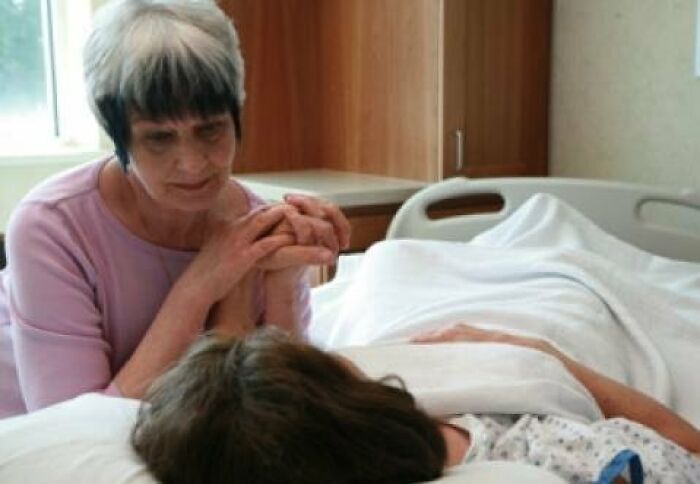
© Photo: WolfofX
#57
At 67, Miryam found an unusual way to make money in Armenia, Colombia. She sells gossip.
Neighbors come to her when they want to know what is happening around the community. According to Miryam, a small piece of information might cost 5,000 or 10,000 Colombian pesos, while more sensitive secrets can be worth considerably more.
She even keeps track of what she knows. During an interview with Colombian content creator Lady Daniella in 2024, Miryam showed a board covered with photographs, which she said helped her remember relationships, affairs and other neighborhood stories.
But her business works both ways.
Miryam said people don’t only pay her to talk. Sometimes they pay her to stay quiet. She recalled receiving 700,000 Colombian pesos, around 160 USD at the time, to keep information about an alleged infidelity to herself.
After years of listening, remembering and selling what she knew, Miryam said the income had helped her buy two houses.
There are no publicly available financial or property records confirming that gossip alone paid for those homes, but Miryam’s interview was real, and so was the little neighborhood business she described.
At 67, she had somehow turned the oldest currency in the neighborhood into an actual source of income: knowing everybody else’s business.
© Photo: WolfofX
#58
WRBH 88.3 FM in New Orleans is a non-commercial radio station that reads newspapers, magazines, and books aloud for blind and print-impaired listeners. It has been doing this for over 40 years.
© Photo: WolfofX
#59
Their dog hasn’t eaten well since they brought their baby home – dog kept taking food into the living room and leaving it there. Someone sugg- ested the dog might be worried the baby isn’t visibly eating, so is “feeding” the baby. They tried giving the baby a bowl of food at the same time.
It worked!

© Photo: WolfofX
#60
An 11 year old boy in England ran a mile every day for 30 days after his best friend was diagnosed with stage 4 rhabdomyosarcoma. The challenge raised more than 65,000 pounds, around 88,000 USD, for his friend’s family.
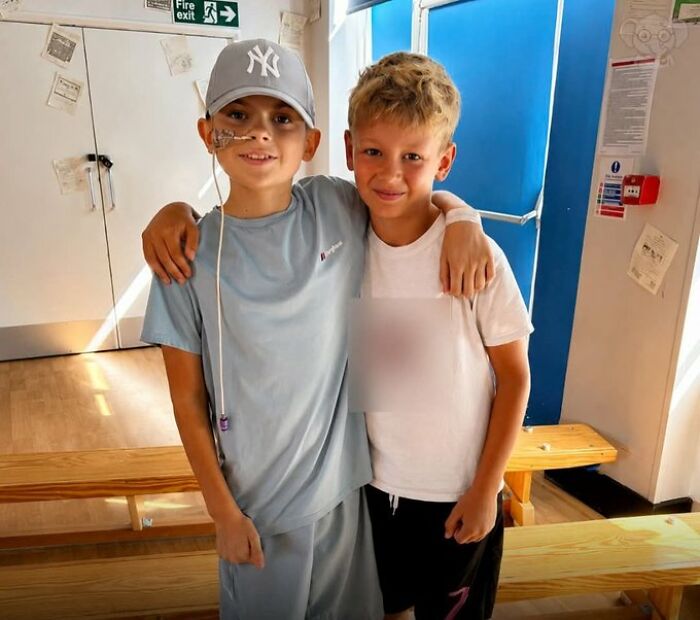
© Photo: WolfofX
#61
An 18 year old college freshman needed money for tuition but didn’t want student loans. So he asked 2.8 million newspaper readers for just one penny each. The idea spread across America and eventually raised more than 28,000 US dollars, enough to pay for his education.

© Photo: WolfofX
#62
At just 20 months old, Casper, a Great Pyrenees livestock guardian dog, fought off a pack of 11 coyotes to protect his flock in Georgia. He disappeared for two days with devastating injuries, but survived, recovered, and later became an award-winning farm dog.
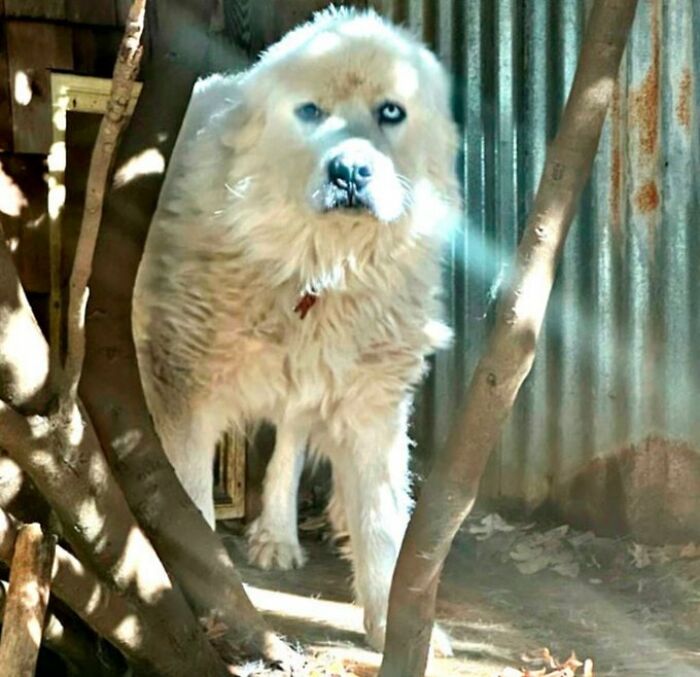
© Photo: WolfofX
#63
A man gave a stranded mother his last 40 United States dollars for fuel, and three years later she unexpectedly became the caregiver who looked after his terminally ill mother in her final days

© Photo: WolfofX
#64
A mother asked if a few neighbors would let her 11-year-old son with autism go trick or treating for his birthday, and 83 families turned their homes into surprise candy stops to make his dream come true.
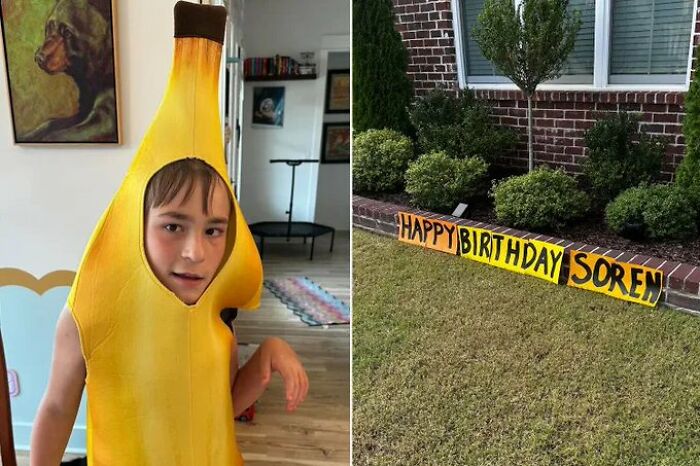
© Photo: WolfofX
#65
Almost 5,000 people waited for hours in the rain at a swabbing event in Worcester, to get tested to see if they were a match to help save the life of a five-year-old boy fighting a rare cancer, after his parents asked for help

© Photo: WolfofX
#66
Every day, Royal Mail postman Gary followed the same route through Horsham, delivering letters and parcels to the people who lived there. One of those homes belonged to Spanish footballer Marc Cucurella.
Not long after helping Spain lift the 2026 FIFA World Cup, Cucurella was back home when Gary arrived with the day’s post. What began as another routine delivery quickly became something neither of them expected.
Instead of simply accepting the mail, Cucurella invited Gary over and placed his FIFA World Cup winners’ medal around his neck. For a lifelong football fan, it was a moment that felt almost impossible.
Gary later described Cucurella as “a very nice, down to earth guy” and joked that he might have become the first Englishman to wear a World Cup winners’ medal in 60 years.
The medal will always belong to Marc Cucurella. The memory of wearing it, even for a few moments on an ordinary delivery round, now belongs to Gary forever.
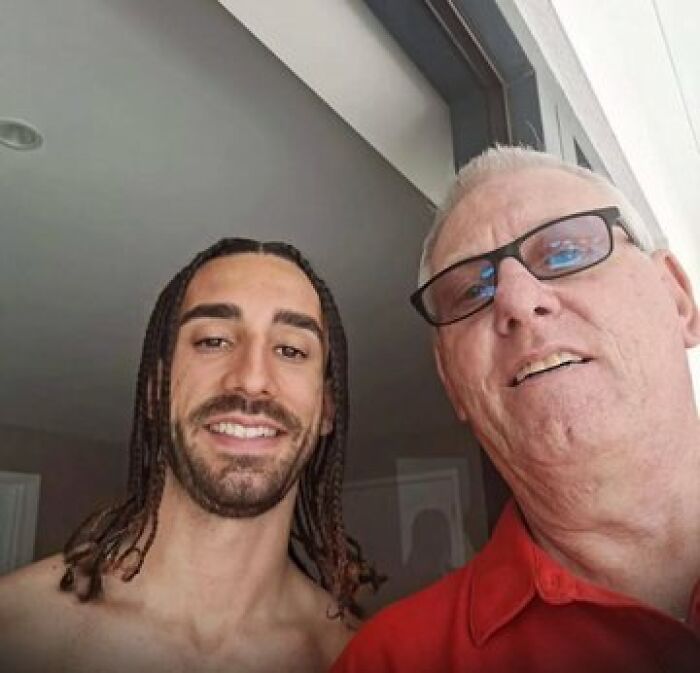
© Photo: WolfofX
#67
When Ali Riza Doğan arrived in New York from Turkey, he barely spoke English and knew almost nothing about the city.
Just days after starting work as a dishwasher, he got lost on his way home. It was the middle of winter. With no phone, no familiar faces, and nowhere to go, he found an unlocked building and spent the night sleeping in its heated hallway, hoping morning would come quickly.
That single night stayed with him long after his life changed.
Years later, Ali opened Ali Baba Mediterranean Cuisine in Manhattan. Success gave him something he never had that night, a warm place where people could feel safe.
Now, whenever freezing temperatures hit New York, he keeps the heated entrance of his restaurant open so people experiencing homelessness have somewhere warm and dry to rest. Every Wednesday, he and his team also prepare and hand out free meals to around 100 to 150 people, along with sleeping bags for those facing another night outside.
Ali has often said he never forgot what it felt like to be cold, alone, and unsure where he would sleep. That memory became the reason someone else doesn’t have to face the same night by themselves.
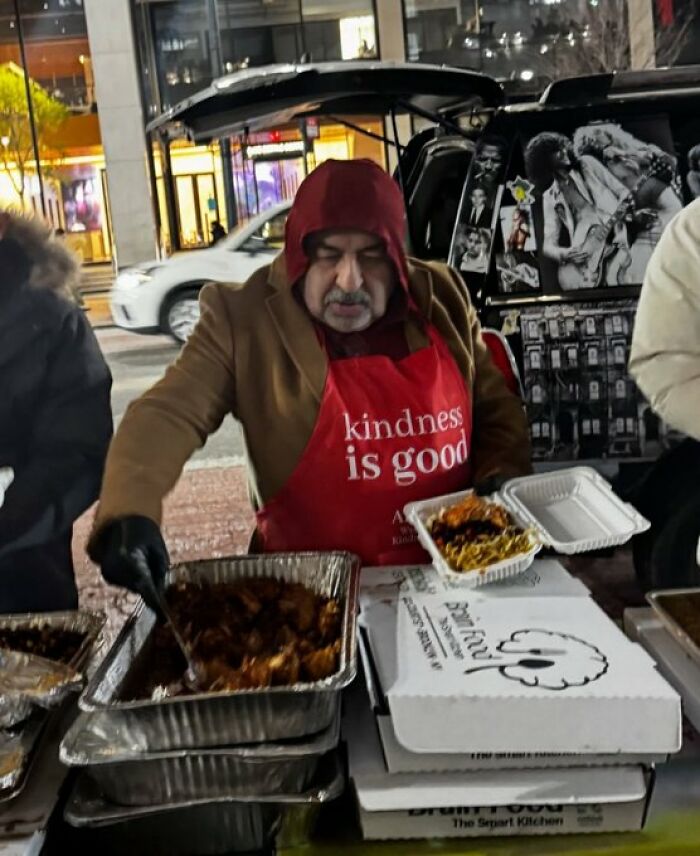
© Photo: WolfofX
#68
On April 24, 2024, 14 year old Acie Holland III was riding home from Glen Hills Middle School in Glendale, Wisconsin, when he noticed something wasn’t right. The school bus had passed his usual stop, and the driver suddenly slumped over the steering wheel after losing consciousness.
As the bus drifted into oncoming traffic, Acie didn’t freeze.
He ran to the front, grabbed the steering wheel, pulled the driver’s foot off the accelerator, pressed the brakes, and guided the bus safely to the curb. Then he told another student to call 911 before running to get his grandmother, a nurse, who helped until emergency crews arrived.
There were 14 other students on board that afternoon. Every one of them made it home safely because a teenager made a life changing decision in a matter of seconds.
Later, Acie said the experience made him feel proud, more confident, and braver. His school recognized him for his courage, but the people who were on that bus will always remember him for something much bigger.
On an ordinary ride home from school, a 14 year old quietly became the reason fifteen families got to see their children again that day.
© Photo: WolfofX
from Bored Panda https://ift.tt/FwYxdps
via IFTTT source site : boredpanda
