Living as an LGBTQ+ person in a religious community can be challenging. 47% of Americans say that they’ve left their religion because of its negative teachings on how to treat LGBTQ+ people. But those who leave often have difficulty cutting all contact with their family members.
When this man’s little brother reached out to him, he was excited at first. But, after finding out that his brother lied to their parents about him wanting to come back to the church and even made a fake Instagram account, red flags started flashing right before his eyes. Looking for guidance on what to do next, the man went online for guidance.
Bored Panda wanted to know more about what specific challenges LGBTQ+ people face when they leave religious communities. So, we reached out to two mental health experts who work in this field: Katherine M. Schneider, LCSW, and Anna Clark Miller, LPC-S, LMHC-S, NCC.
They told us why being shunned by Jehovah’s Witnesses is particularly difficult and how young people can establish independence from their families. Read their expert insights below!
Gay people who escape from strict religious communities most often never want to get roped back in
Image credits: seventyfourimages / envato (not the actual photo)
This young man became worried his family might try to manipulate him when his younger brother reached out


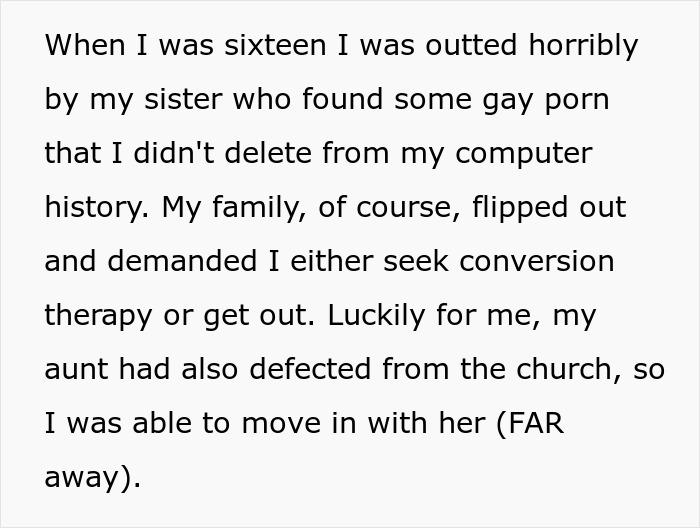

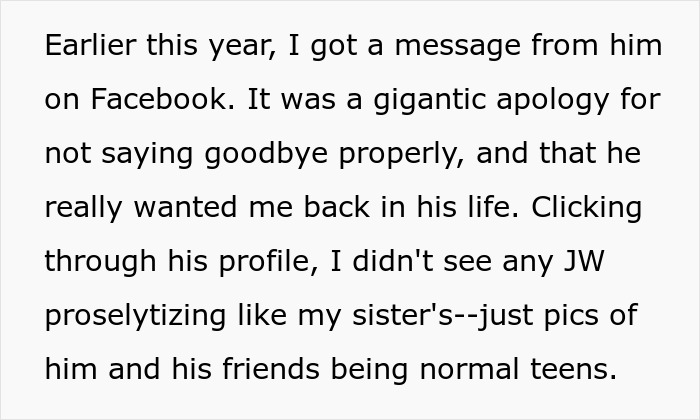
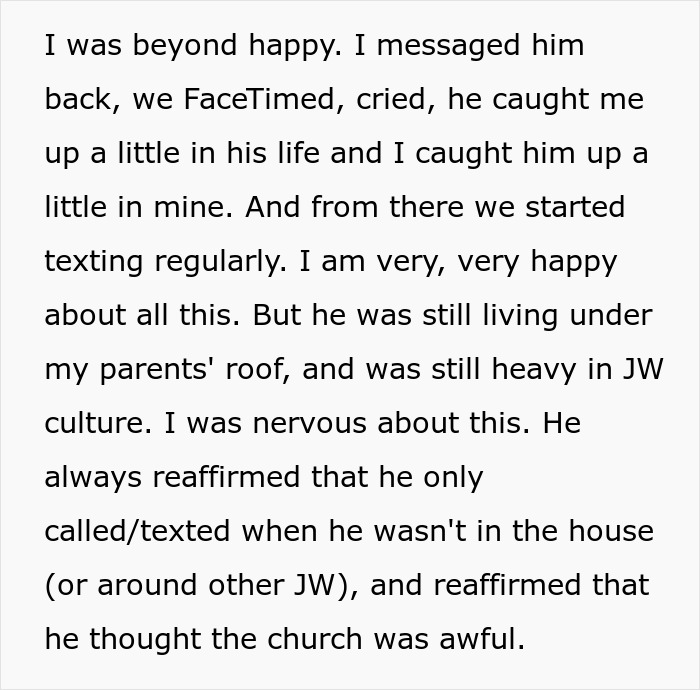



Image credits: lucigerma / envato (not the actual photo)


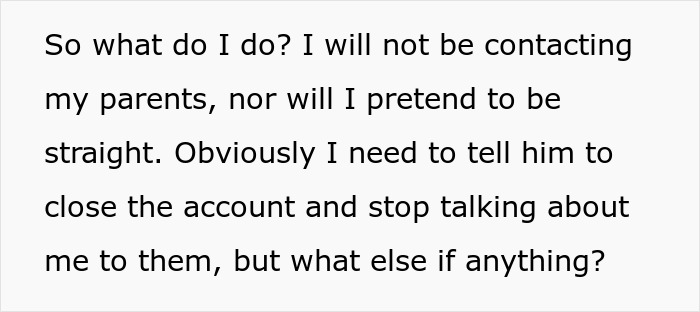
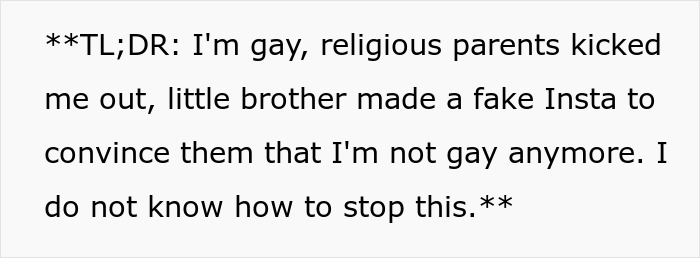
Image credits: ohjesusohf**kohno
People in the comments suggested that maybe the little brother is looking for a way out himself
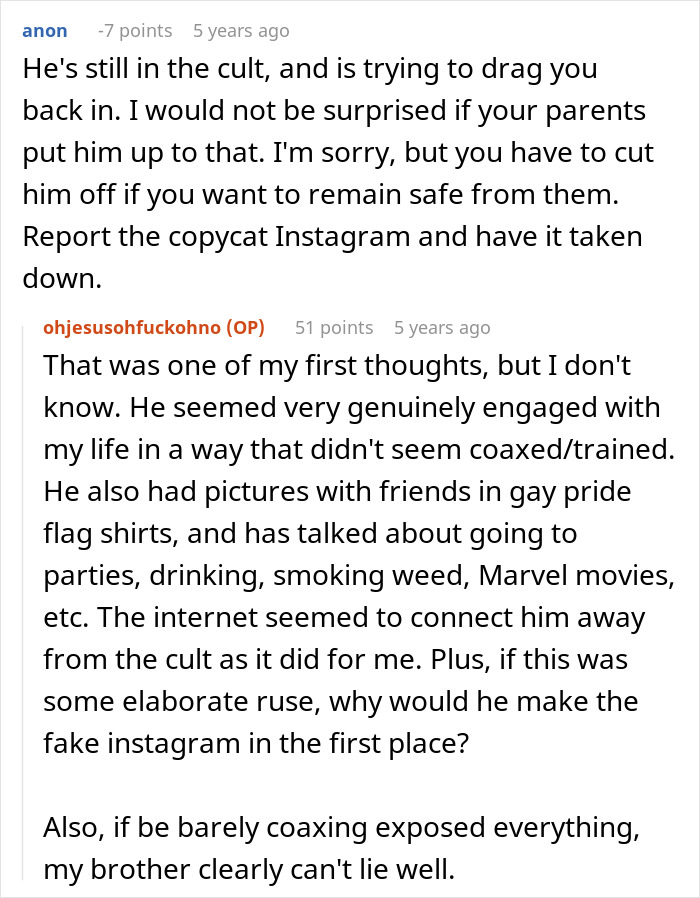
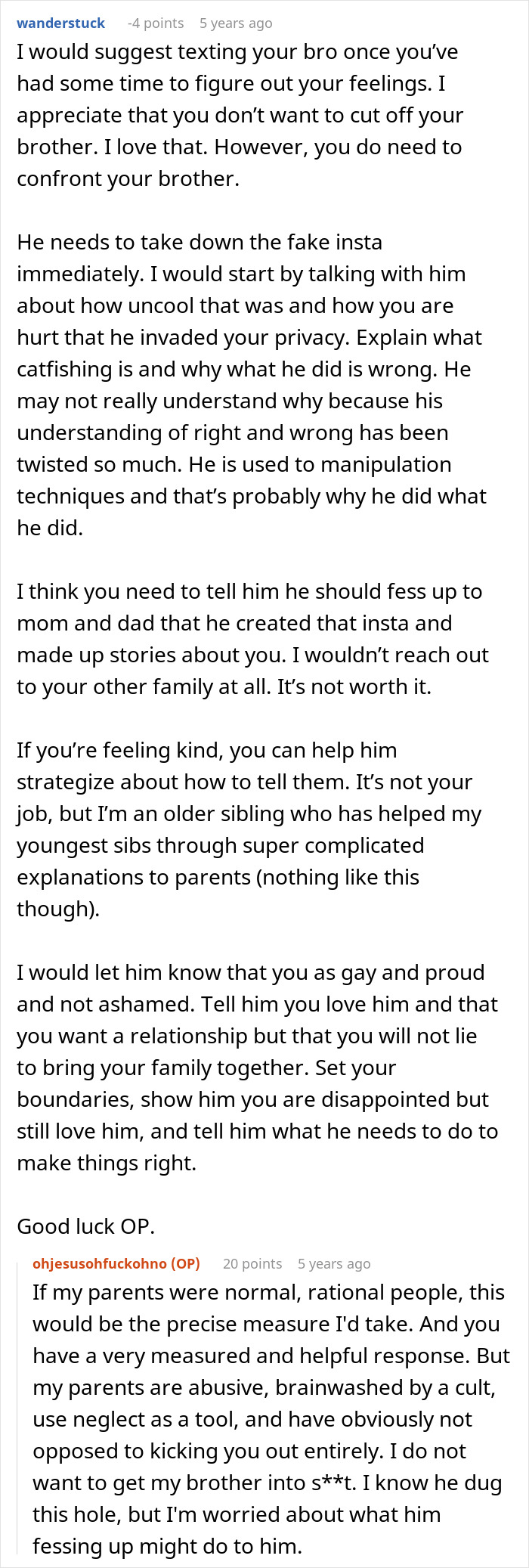
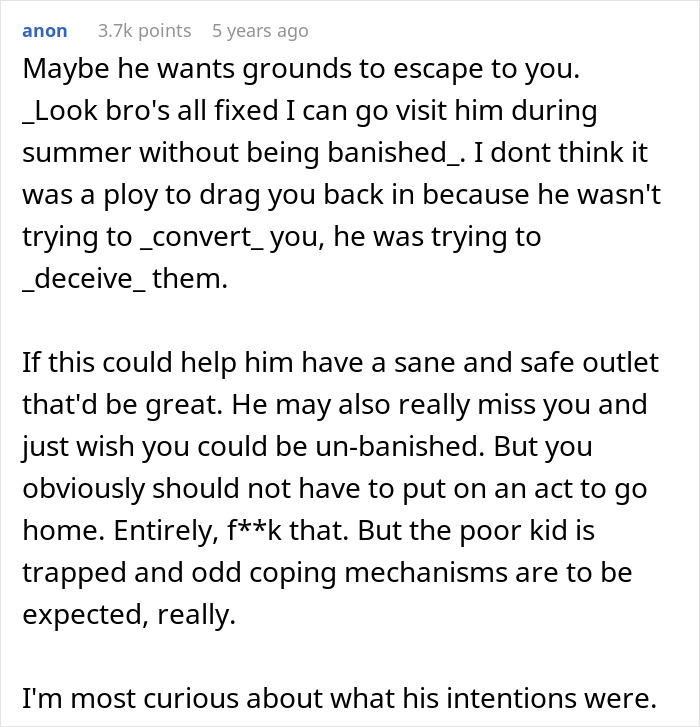
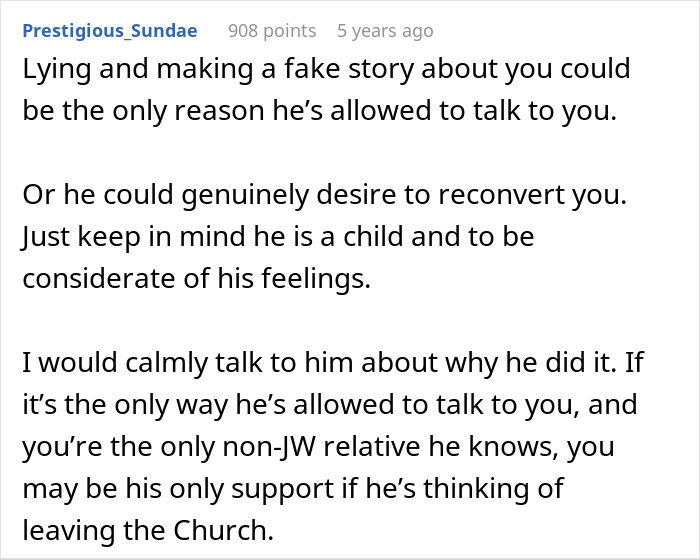
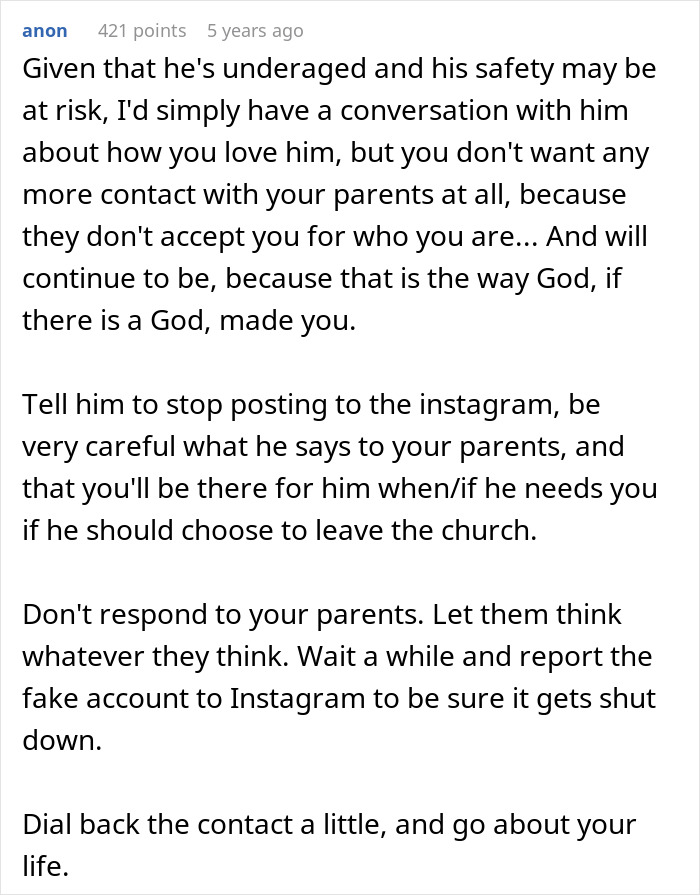



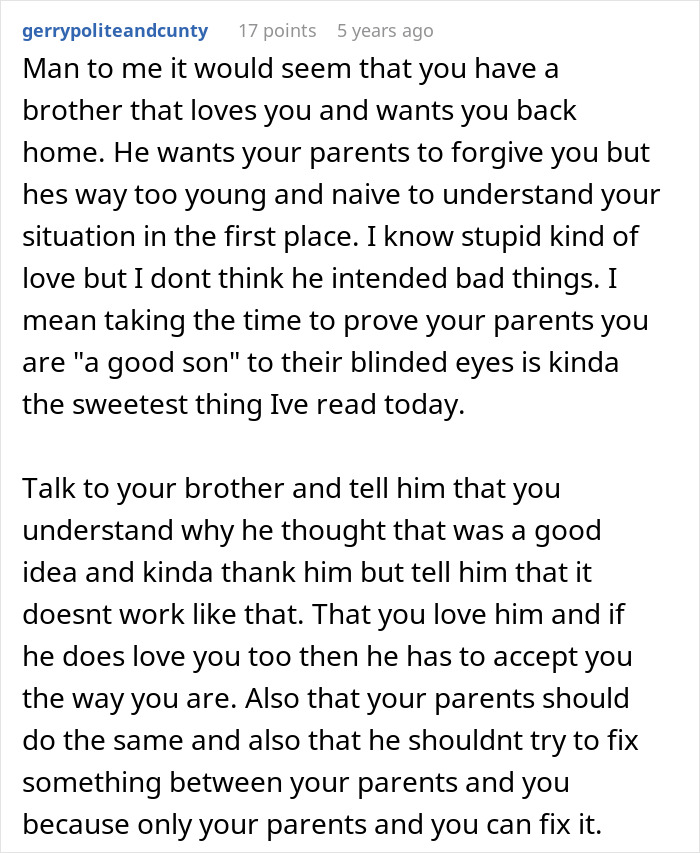
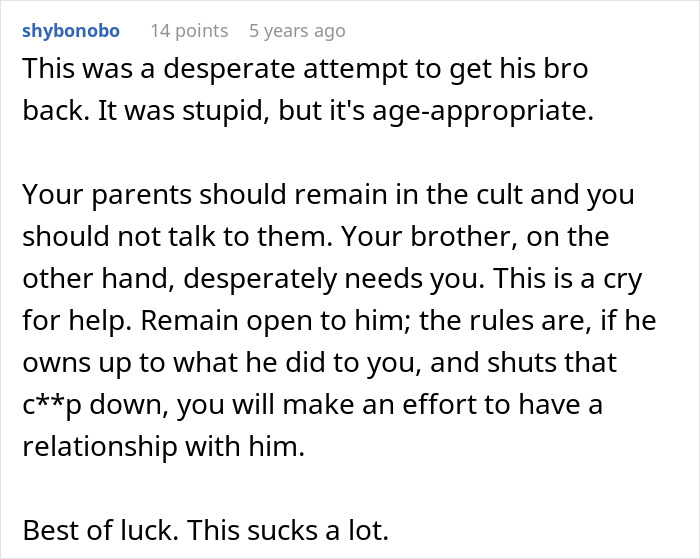

Turns out, they were right, and the man vowed to help his little brother however he could

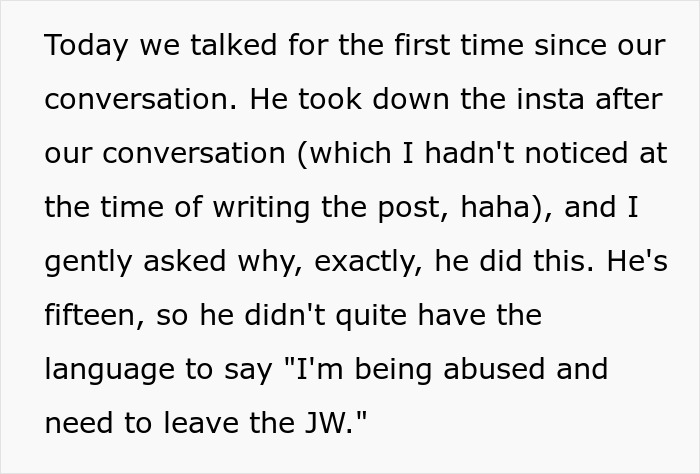


Image credits: Prostock-studio / envato (not the actual photo)

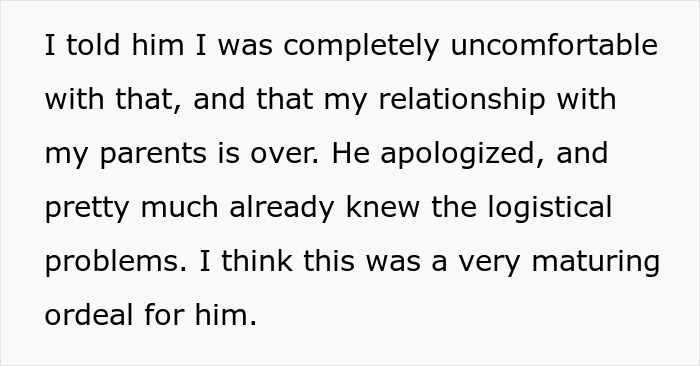
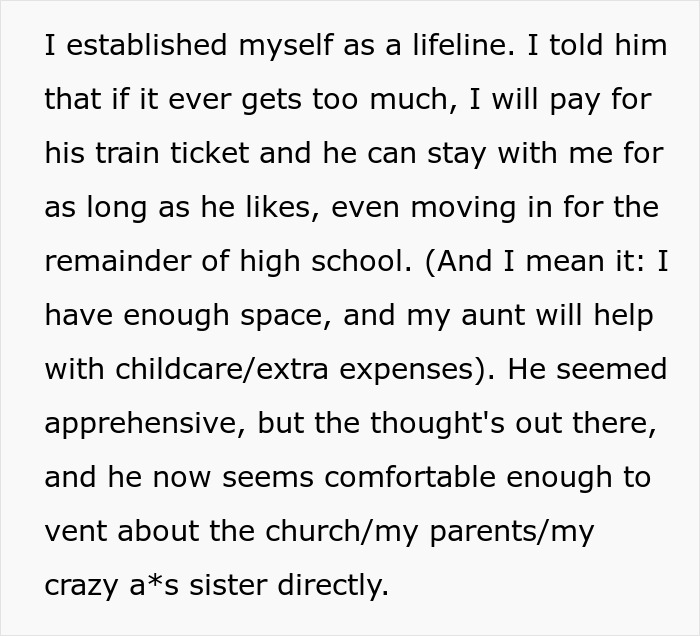
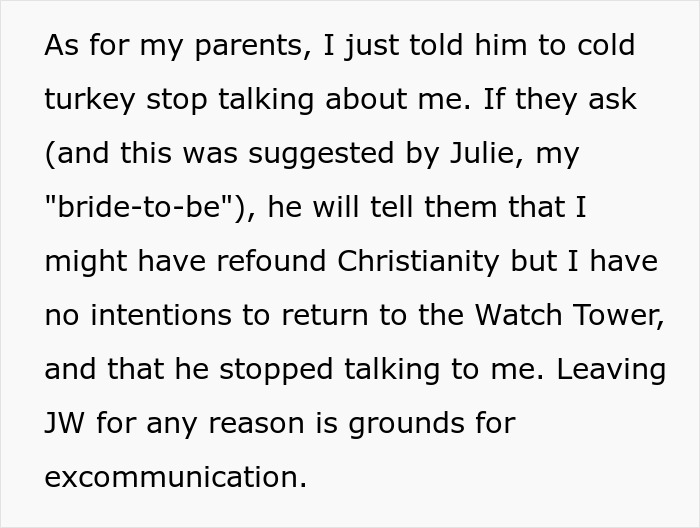
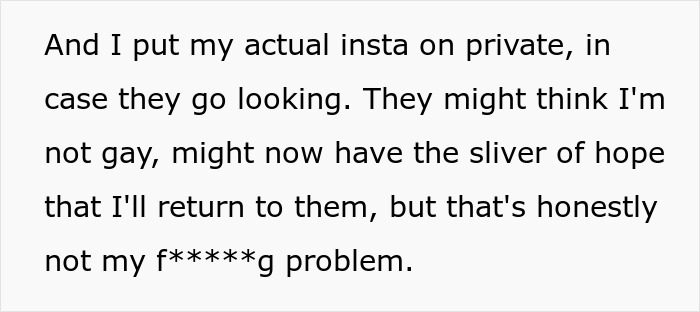


Image credits: ohjesusohf**kohno
Image credits: Shlomi Glantz / Unsplash (not the actual photo)
Teenagers who wish to leave a religious community need at least one person who can be their lifeline
”If you’re a teenager grappling with your religious beliefs, it’s essential to recognize that your parents’ or religious group’s beliefs and biases don’t have to be your own,” Anna Clark Miller, a therapist specializing in religious trauma, explains. “Questioning assumptions, changing your mind, and acknowledging differing opinions are all healthy parts of being an independent adult.”
She says that it’s important for such teenagers to affirm their autonomy and build confidence. “Practicing self-affirmations can reinforce empowering beliefs about themselves, such as, ‘I have the right to think for myself’ or ‘I can speak up for myself in a respectful way.’”
Both experts emphasize how important it is to have a support system outside of the religious community. Katherine M. Schneider, LCSW, says that finding safe people can be a lifesaver. “Having a friend who is outside of the community can mean they have a safe place to go if they are kicked out,” she notes. “Having even one safe person can be enough to help a teenager hold on to hope that it will get better.”
If there are no safe people in real life, teens can try counting on friends online. Schneider warns, though, that the Internet can be a vast and dangerous place, so teens should be very careful and use good judgment when they browse.
“The internet can allow a teenager in a high-control group to reach out to crisis lines or even enter therapy, depending on the specific state laws around informing the parents of a minor,” she observes. “If any teenagers are reading this and thinking of ‘That weird kid in school’ or the kid who manages to bring Jesus into every conversation or whatever, that kid may be hurting in ways you cannot imagine,” Schneider says.
“Consider reaching out to them, or just letting them know that you care about them,” she adds. “A kind word or smile or message that they are seen and valued for who they are could be enough to help that kid hold on for another day.”
“Ultimately, though, prioritizing your own safety and well-being is vital,” therapist Anna Clark Miller adds. “You matter and you don’t have to do this alone.”

Image credits: gpointstudio / Envato Elements (not the actual photo)
Leaving an anti-LGBTQ+ religious group often results in cutting ties with one’s family for good
For a person not familiar with Jehovah’s Witnesses and other fundamentalist religious groups, all this hassle just to leave a church might seem extreme. But leaving often means you’ll never speak to your family and friends again. Jehovah’s Witnesses practice excommunicating their ex-members, especially those who are LGBTQ+.
“Very often, being excommunicated can mean being kicked out of your family or your home entirely,” Katherine Schneider, LCSW, explains. “Your family considers you [deceased].” She explains that with Jehovah’s Witnesses, this excommunication is particularly extreme.
“Members are taught that someone who has committed a ‘serious sin’ (a list that includes both being gay and committing murder!) must be disfellowshipped or excommunicated,” Schneider says. That’s to both protect the congregation and to let them repent and return to Jehovah.
Those who maintain contact with the disfellowshipped are also looked down upon. “To not disfellowship someone after the Elders have deemed it necessary is akin to committing the ‘serious sin’ yourself,” Schneider tells Bored Panda.
“Sometimes, this can look like a teenager being given a tray to eat alone in their room, while the rest of the family eats at the table together, every night, while the excommunicated teen is never even spoken to by the rest of their family, until they are 18 and are expected to leave the home,” she adds.

Image credits: maxim bober / Unsplash (not the actual photo)
Being a Jehovah’s Witness can impact an LGBTQ+ individual even years after leaving the group
While many religious organizations welcome LGBTQ+ people, such fundamentalist denominations as Jehovah’s Witnesses feed their communities misinformation about queer people.
Katherine M. Schneider explains that in some religious communities, being queer is synonymous with being a child molester. This happens because people are allowed very little information about sexual orientation and what being gay is. “These communities often limit access to information, to the point that many members are quite proud of having been censored from ‘worldly’ things,” she says.
“Those beliefs are often based on miseducation, fear-based assumptions, and over-spiritualizations about what causes someone to be LGBTQ+ and what that means about their character,” Anna Clark Miller adds.
For Jehovah’s Witnesses, an LGBTQ+ person is automatically a sinner. They might receive congregational discipline, which, as Katherine Schneider explains, can be anything from losing “special privileges of service” to complete excommunication.
“While from the outside, losing ‘special privileges of service’ can look like a nice break from evangelizing, in the JW community, evangelizing and leading others to Jehovah is an obligation, and failure to do so could prevent someone from surviving Armageddon and being cast aside by Jehovah (the ultimate punishment),” she explains.
“So, not only is the LGBTQ+ [person] sinning, they are being prevented from obtaining the only thing that matters in all of life, as the faith teaches.”
“Whether an LGBTQ+ person chooses to leave the religious group or not, they’re likely to feel intense hurt, shame, and anger about what they’ve gone through and have greatly increased risk of mental health struggles and suicidal ideation,” Anna Clark Miller adds.
“In the long term, they may experience trauma responses and recurring self-doubt that make it hard to feel confident or trust other people to truly know and accept them.”
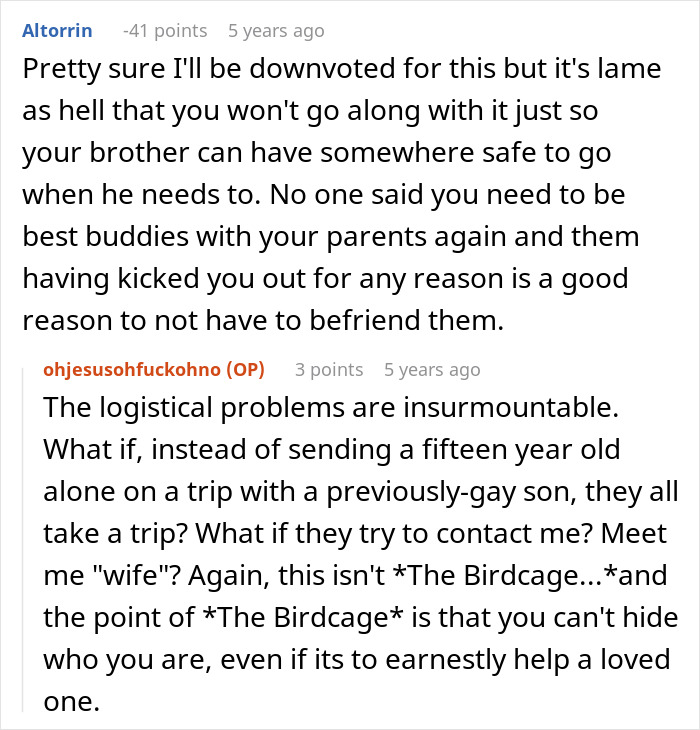
“Glad you got out, hope your brother does soon as well”: The commenters wished the brothers well

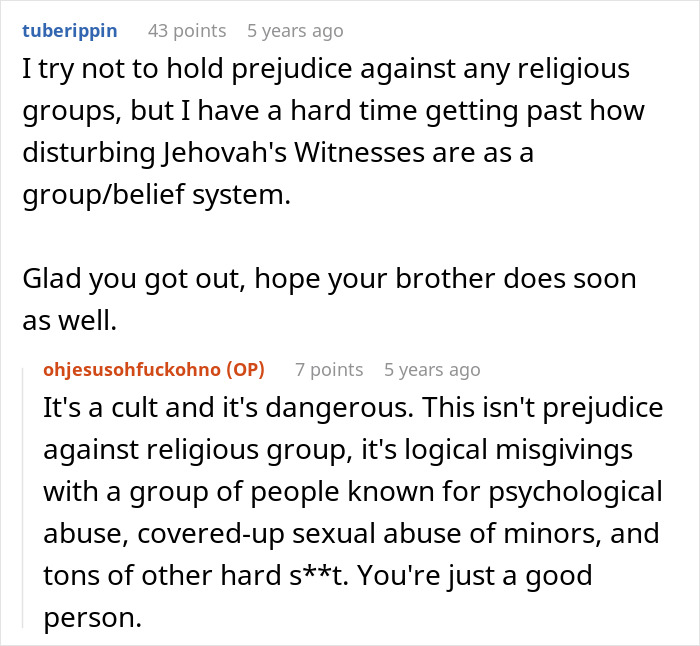



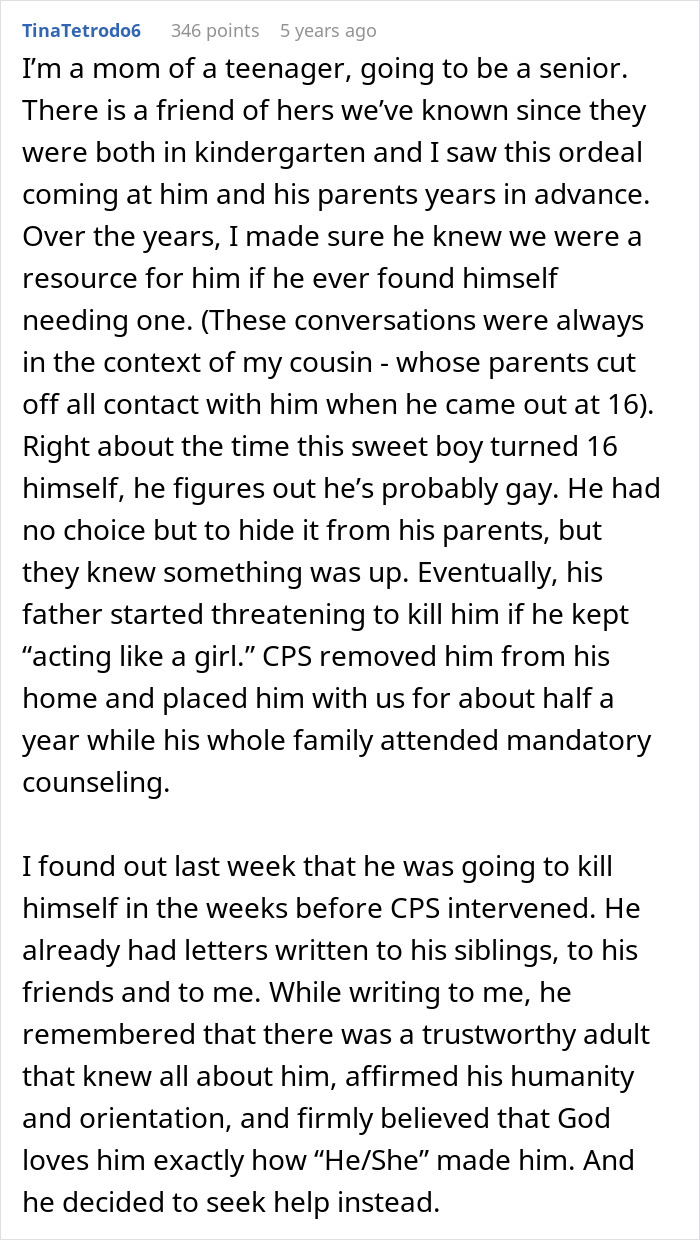
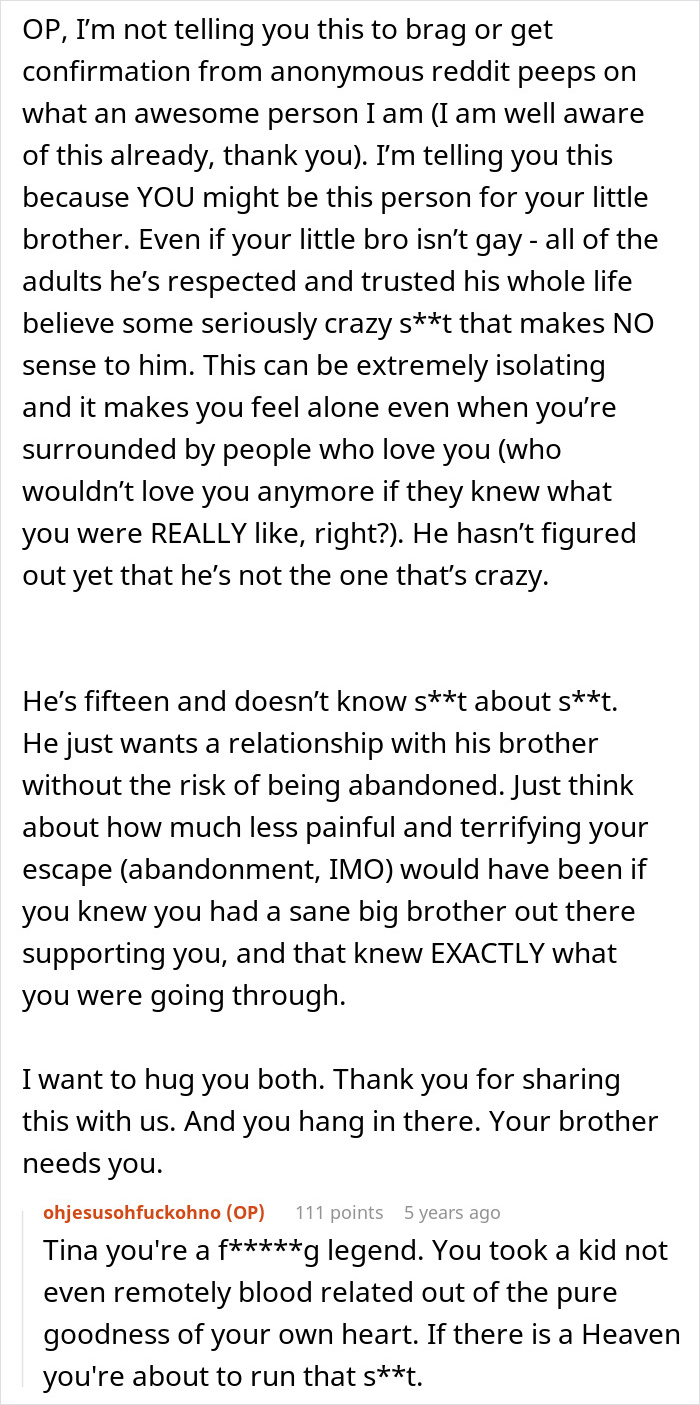
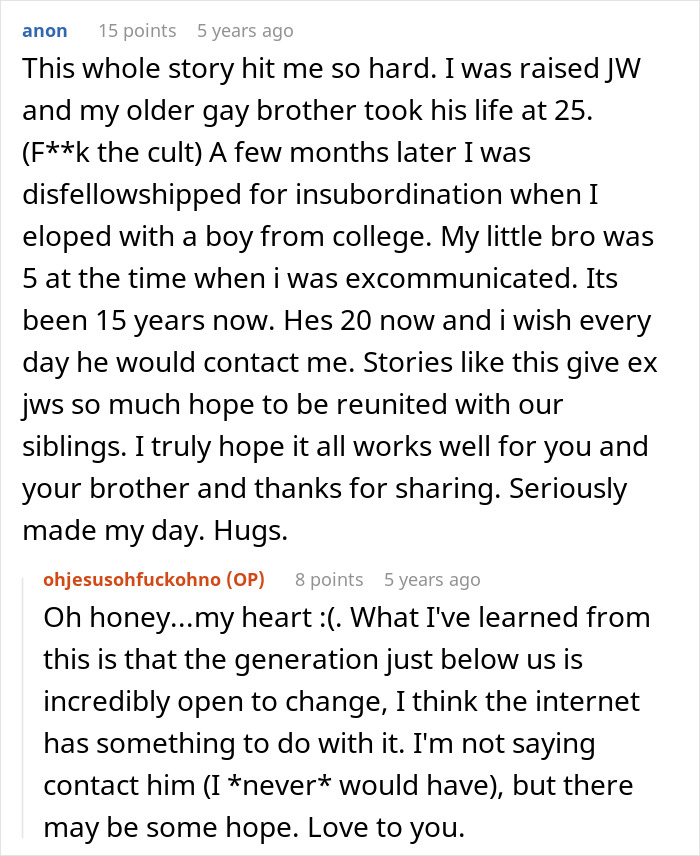
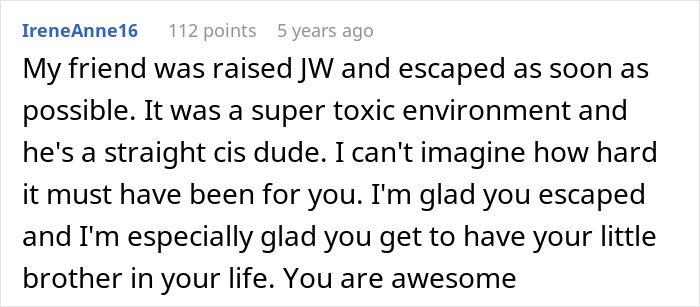
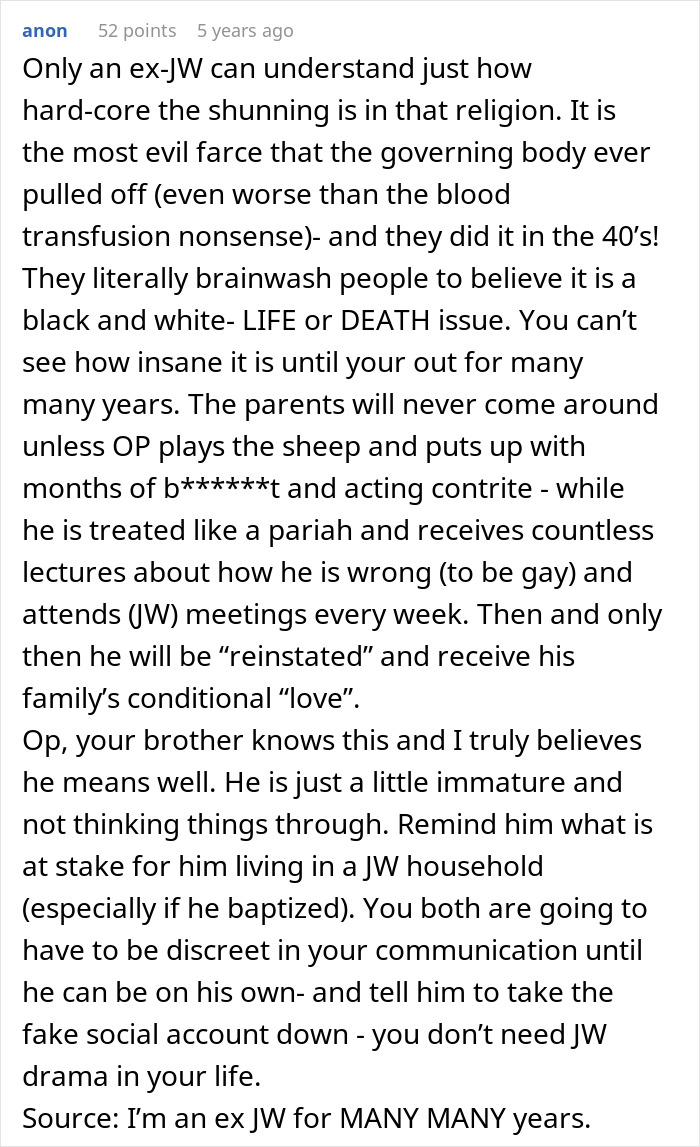
Some commenters shared their heartfelt stories about LGBTQ+ kids struggling in religious communities


The post Teen Makes Fake Account To Prove To Religious Parents Their Brother Isn’t Gay Anymore first appeared on Bored Panda.
from Bored Panda https://ift.tt/Nzn78Jk
via IFTTT source site : boredpanda
