A mysterious skull pulled from the wall of a cave in northern Greece more than 60 years ago has finally given up one of its secrets.
According to new research, the fossil is around 300,000 years old and doesn’t belong to modern humans or Neanderthals.
Instead, scientists believe the “Petralona Man” represents a different branch of the human family tree that may have once lived alongside other species in Europe.
The skull’s discovery in Petralona Cave sparked decades of debate
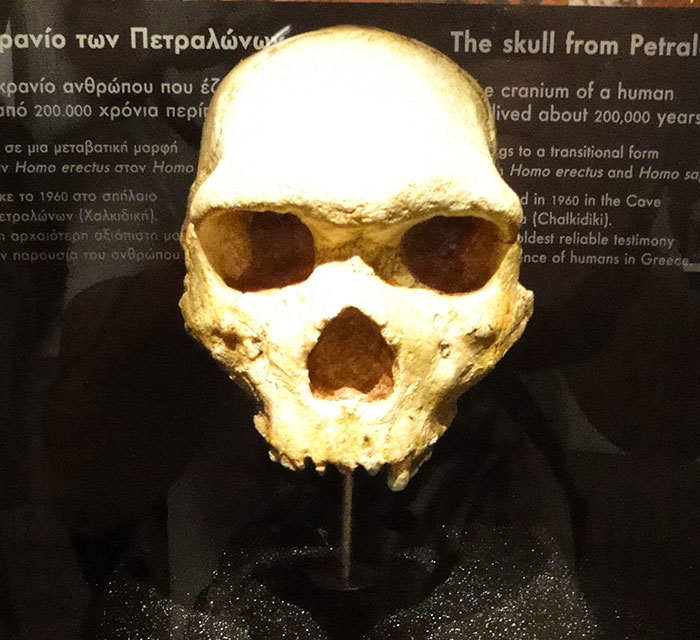
Image credits: Knop92/Wikimedia Commons
The story of the skull began in 1960 when it was found inside Petralona Cave in northern Greece.
What made the find unforgettable was its strange appearance. Its fossilized cranium was still attached to the cave wall and a stalagmite was growing directly out of it, according to the New York Post.

The stalagmite gave the skull, which has since been dubbed the “Petralona man,” a horned appearance.
For decades, scientists struggled to place it in the human timeline. Some argued it was Neanderthal, while others believed it belonged to early Homo sapiens.
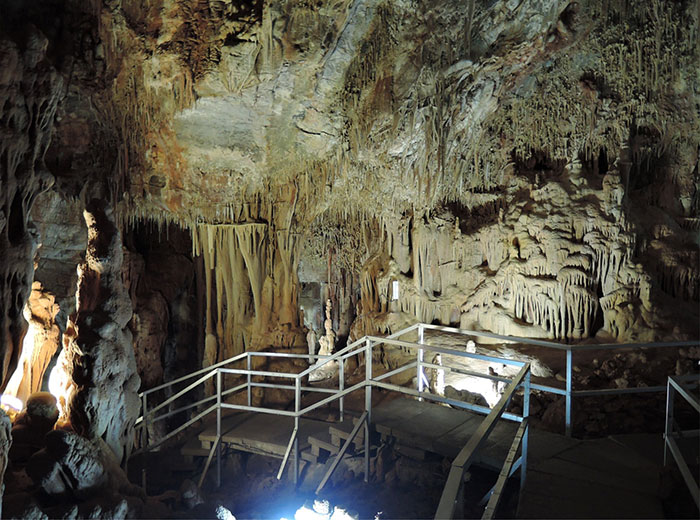
Image credits: Carlstaffanholmer/Wikimedia Commons
Age estimates were equally messy, with guesses ranging anywhere from 170,000 to 700,000 years old.
In the new study, published in the Journal of Human Evolution on August 14, researchers finally narrowed down the Petralona man’s age.
Uranium-series dating revealed the skull’s true age
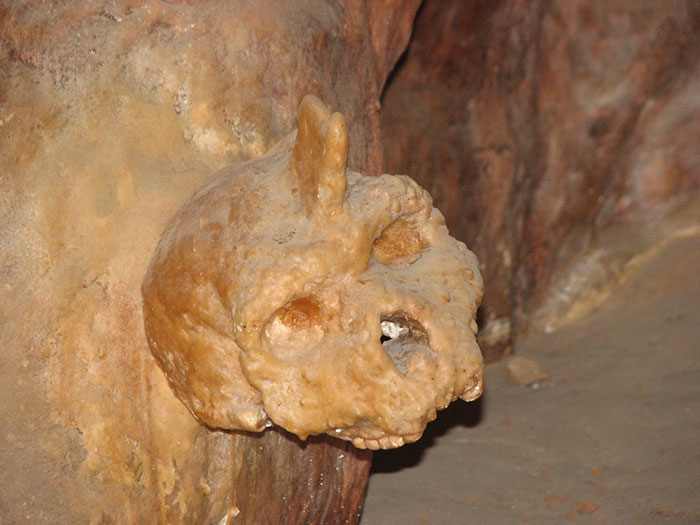
Image credits: Nadina/Wikimedia Commons
To crack the mystery, the study’s research team used uranium-series dating, a method that measures how uranium inside minerals slowly decays into thorium.
By analyzing the calcite coating on the skull, they calculated that it formed roughly 286,000 years ago, with a lower limit of 277,000 years.

Interestingly, the calcite appears to have grown quickly in Petralona Cave. This means that the skull itself had not been lying there for long before the first layers of calcite began forming.
This also suggests that the skull might date back 300,000 years or more.
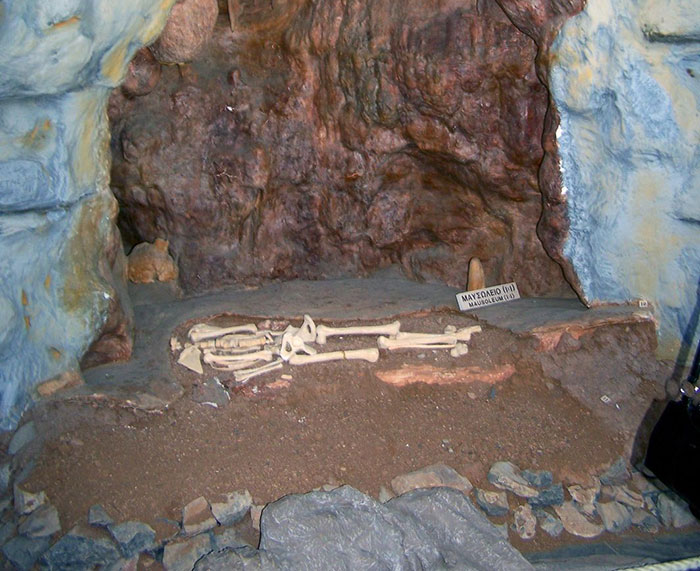
Image credits: Hombre/Wikimedia Commons
Co-author Chris Stringer, a paleoanthropologist at London’s Natural History Museum, explained that this new estimate lines up with another ancient fossil, the Kabwe skull from Zambia.
In 2019, his team dated the Kabwe specimen to around 299,000 years, also attributing it to å heidelbergensis.

“That fossil is closely comparable to the Petralona one, and I would classify them both as Homo heidelbergensis,” he said.
The Petralona man likely lived beside Neanderthals, but it belonged to a different human group
Overall, the study’s findings indicated that the Petralona man lived in Pleistocene-era Europe.
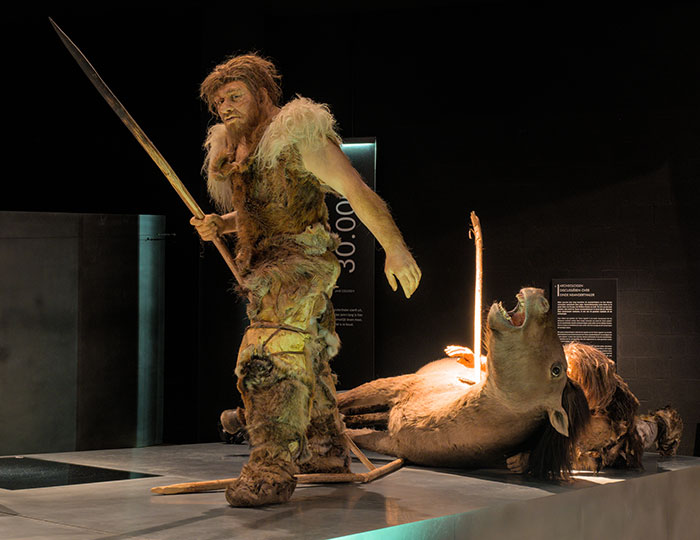
Image credits: Trougnouf (Benoit Brummer)/Wikimedia Commons
Petralona man likely lived alongside Neanderthals while being part of a completely different human group.
Stringer told Live Science that the Petralona fossil is distinct from both Homo sapiens and Neanderthals.

“The new age estimate supports the persistence and coexistence of this population alongside the evolving Neanderthal lineage in the later Middle Pleistocene of Europe,” Stringer stated.
Stringer added that based on the skull’s size and robustness, the Petralona man was probably male.
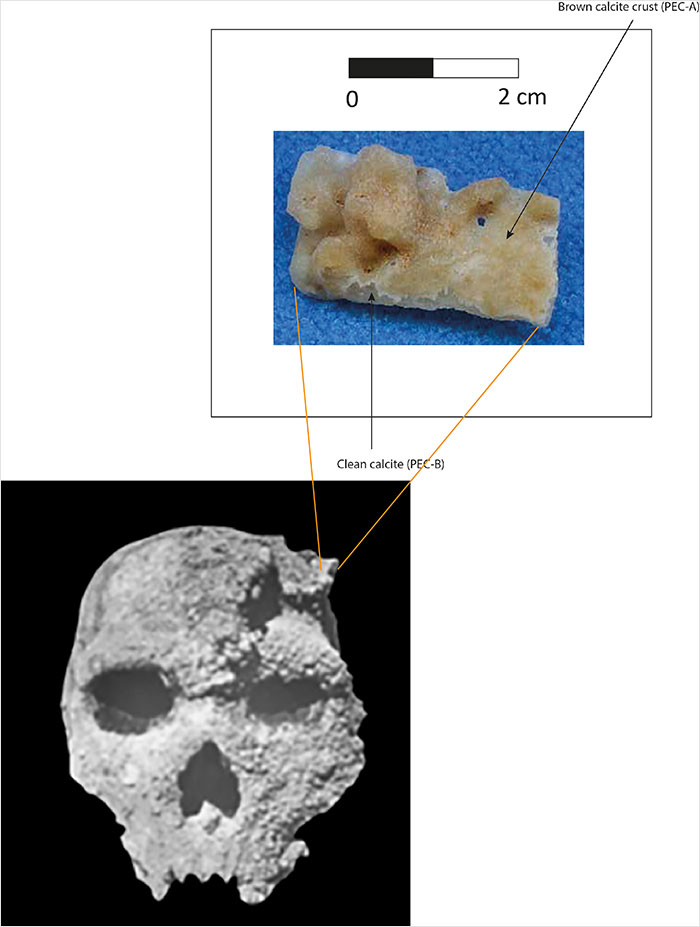
Since the skull also featured moderate wear, it also likely belonged to a young adult.
There’s also evidence suggesting that the skill was stuck to the wall by calcite encrustations, the same kind that formed the Petralona man’s “horn.”
The Petralona man suggests that multiple human species lived side by side

Homo heidelbergensis is thought to be the last common ancestor of modern humans, Neanderthals, and Denisovans.
If the Petralona Man indeed belongs to this group, it reinforces the idea that multiple human species lived side by side in Europe during the Middle Pleistocene.
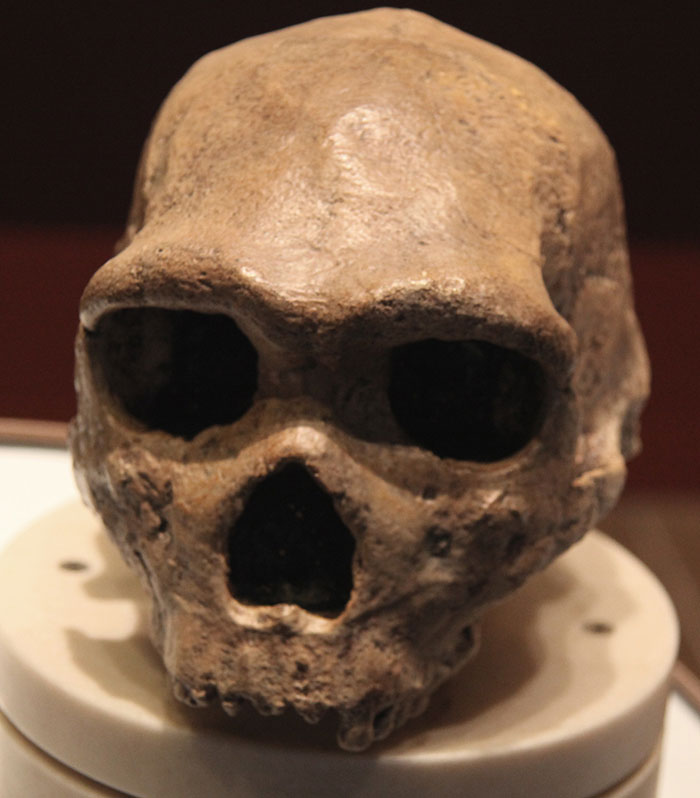
Image credits: Tim Evanson/Flickr
These species might have even influenced each other’s evolution. The find also emphasizes how complex human ancestry really is.
Rather than one straight line, there were overlapping populations, migrations, and interactions that shaped who we are today.

Netizens, for their part, have speculated that the Petralona man, and his iconic horn in particular, will likely be embraced on social media.
“Conspiracy TikTokers will have a field day with this,” one commenter wrote.

Image credits: Tim Evanson/Flickr
“I suspect that all of the pseudoarcheologists are going to go crazy over the stalagmite on its forehead,” wrote another.
Netizens shared their thoughts on the Petralona man’s skull on social media













from Bored Panda https://ift.tt/3QiwNIG
via IFTTT source site : boredpanda
