Every family has its own eating habits that reflect their unique blend of cultural influences, personal preferences, and traditions passed down through generations.
However, when Redditor Plotthick was little and went to her friend’s home for a sleepover, the parents forced theirs onto her a bit too hard.
In a post on the subreddit ‘Malicious Compliance,’ Plotthick explained that the couple pushed her to try the onion soup even though she said she didn’t want to, and she eventually obliged, but eventually felt it coming back up her throat.
Continue scrolling to read her story, which serves as a perfect reminder that you have to respect other people’s food boundaries.
Force-feeding, pushing food, and nagging don’t work on kids
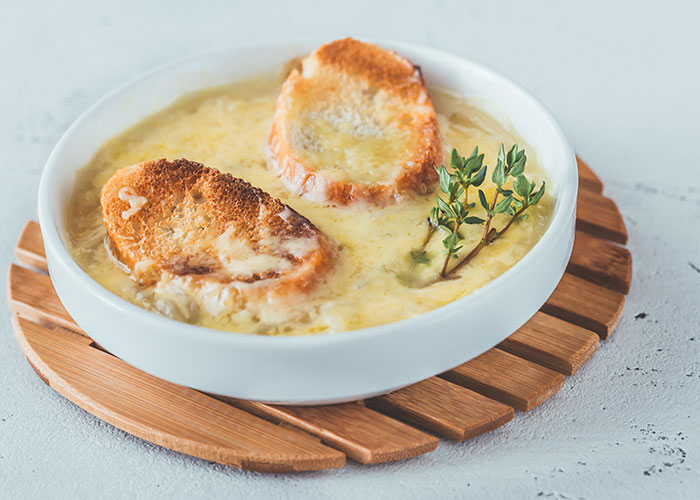
Image credits: Alex9500 (not the actual photo)
Yet this person had to go through it when they were little
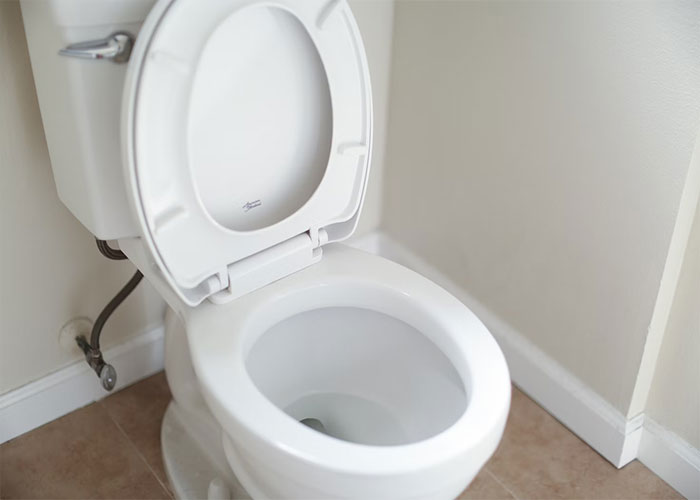
Image credits: Giorgio Trovato (not the actual photo)
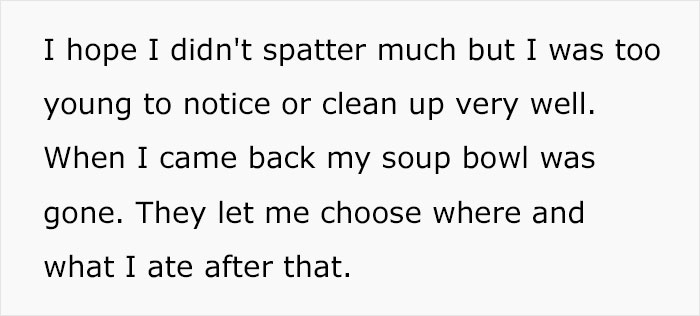
Image credits: plotthick
As her story went viral, the original poster (OP) joined the discussion in the comments section
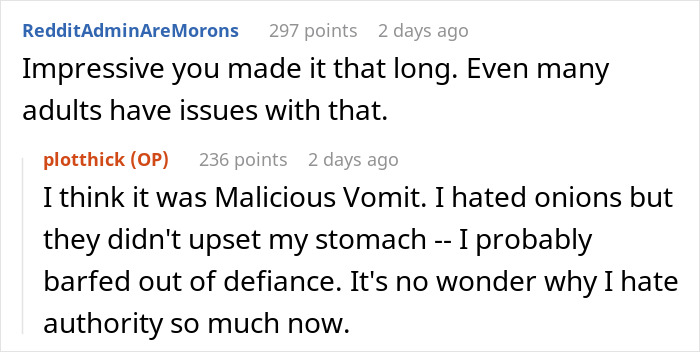
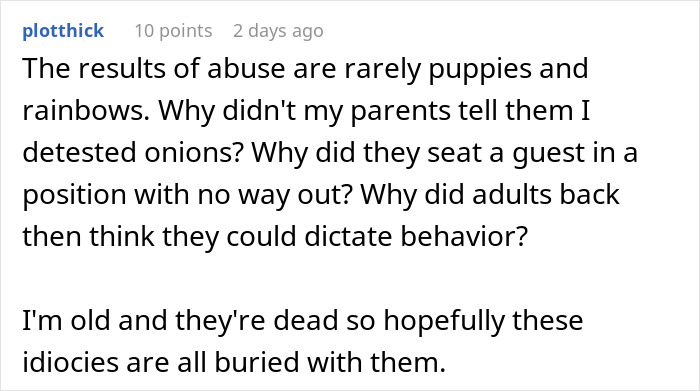
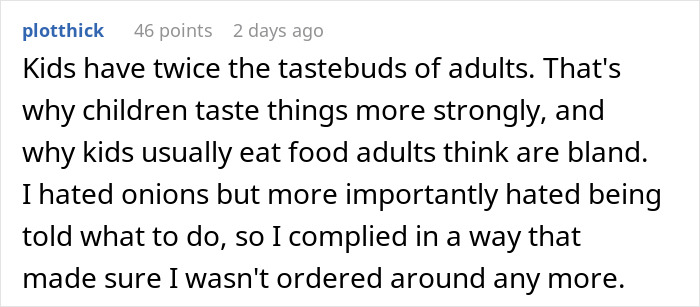
Pressuring or strongly encouraging kids to eat is a bad idea
According to the Child Feeding Guide, a platform developed by academic psychologists to provide parents with effective and evidence-based resources on feeding children, it’s bad to pressure (or strongly encourage) them to eat, and doing so is linked to numerous negative consequences, including:
- Less liking for the food. Children are quick to make associations between foods and unpleasant experiences that accompany them. If they are pressured to eat more than they wish to, then the negative emotional and/or internal feelings of being too full can become associated with a particular food, leading to a reduction in liking for the food.
- Less willingness to eat the food. Similarly, willingness to try a particular food can be reduced if the initial experiences are negative. For example, their first exposure to cabbage may be met with refusal, either due to their natural neophobia-based response (see the food refusal pitfall section) or a lack of hunger. If this refusal was met with constant verbal coaxing and a parent attempting to put the cabbage in their mouth, the association that the child would likely make with the cabbage would not be a positive one.
- Overeating and overweight. Pressuring a child to eat can undermine their ability to learn appropriate appetite control. Children need to be allowed to learn to recognize their body’s hunger and fullness signals. Through experiencing feelings of hunger and a reduction in these feelings when they eat, children learn how their body signals that it requires more energy and, conversely, when enough energy has been consumed and it is appropriate to stop eating.
A 2018 longitudinal study in Appetite emphasizes that it’s not just the pressure to eat itself that may cause a disturbance in self-regulation, but the intent, tone, and manner by which it is communicated that may be more important, too.
“It’s hard to know if you’re doing harm by pressuring your child to eat, because each child is different,” pediatric dietitian Jill Castle explained.
“Some kids may not be bothered by encouragement to eat. Other kids may dig in their heels and be offended by pressure, or worse, force-feeding.”
According to Castle, the line between encouragement and pressure is blurry, so it helps to know a child’s temperament and how they respond to these in general. If you don’t, it’s probably best to take the safe route and take the leftover onion soup to the fridge.
Image credits: Providence Doucet (not the actual photo)
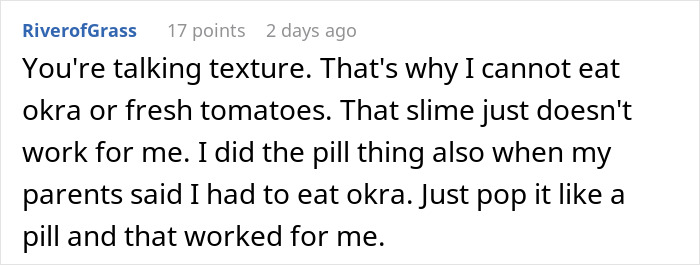
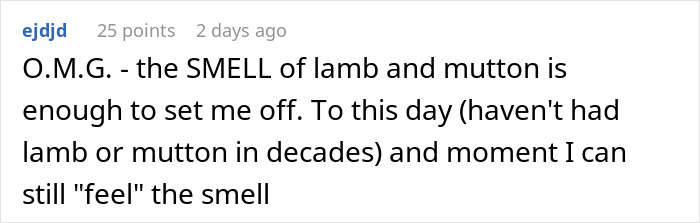
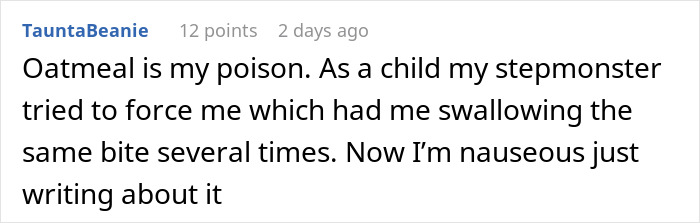
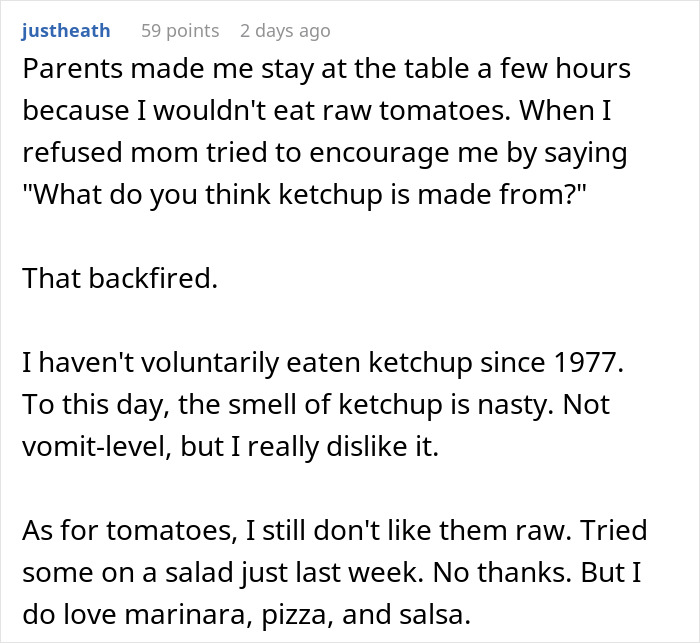
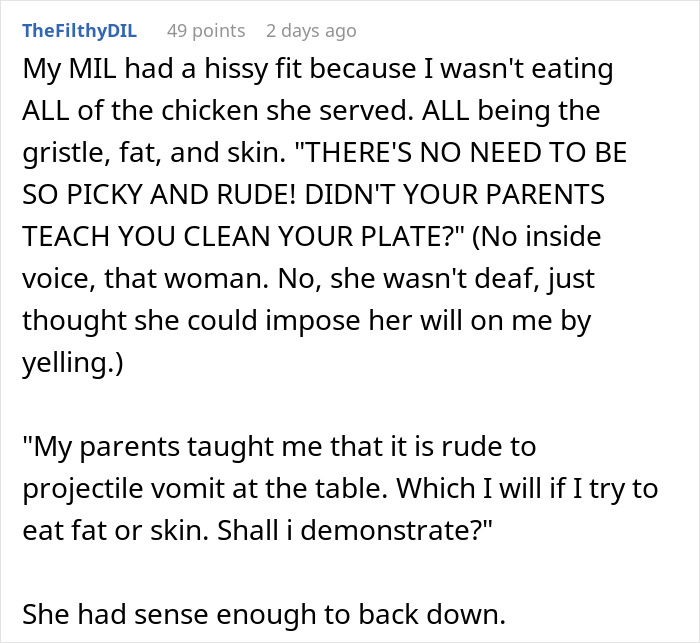
People had plenty of strong reactions to the post, and some also shared their own similar experiences





from Bored Panda https://ift.tt/CKnIprH
via IFTTT source site : boredpanda
