Often, parents tend to see the best in their children. Whether it’s celebrating their creativity, cheering on their curiosity, or simply noticing the little things they do, parents usually focus on the positives. But on the flip side, they’re also the first ones to notice when their kids do something a little unexpected or even slightly mischievous.
Speaking of which, one dad shared how his daughter took a simple prank toy and turned it into something far more surprising. What started as a harmless gag quickly escalated when she decided to switch things up in a way he definitely didn’t see coming. While the moment left him impressed by her cleverness, it also made him a little concerned. Keep reading to find out exactly what happened.
A dad shared how his daughter swapped a fake prank spider with a real one to scare him
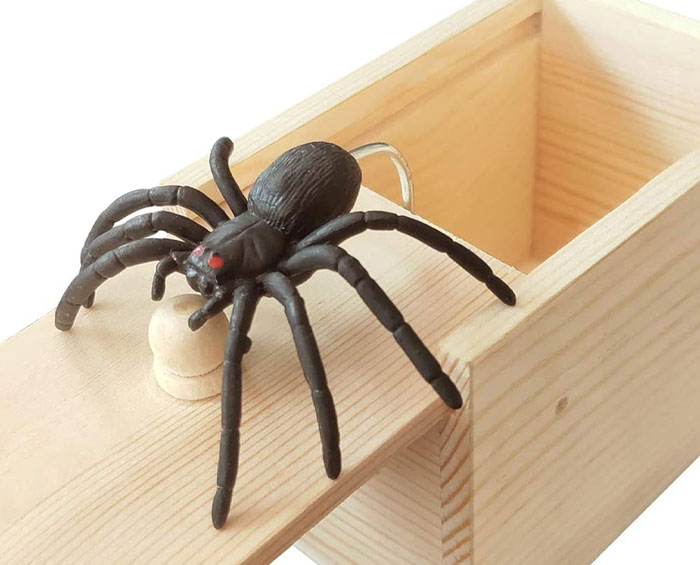
Image credits: Motiloo Store (not the actual photo)
He went on to describe how she reacted to his startled response
Image credits: Brooke Cagle (not the actual photo)
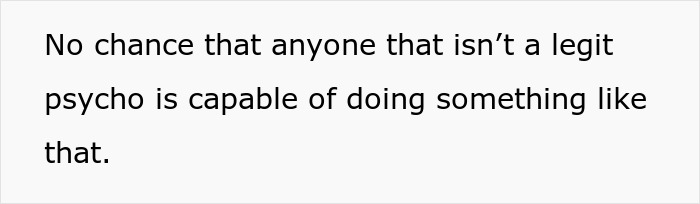
Image source: WallStreetShiba
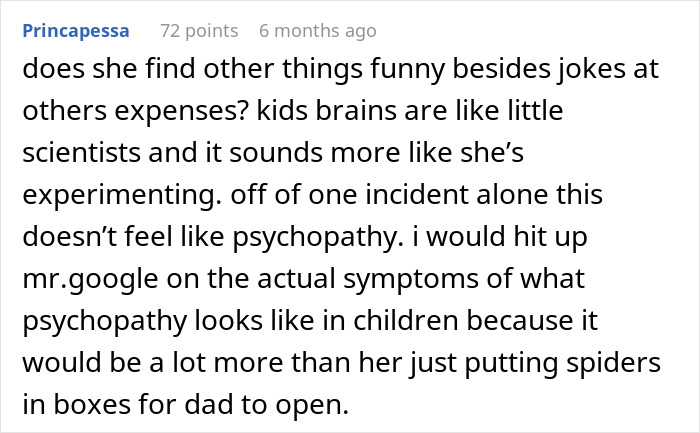
The author clarified that he doesn’t actually think his daughter is a “psycho”
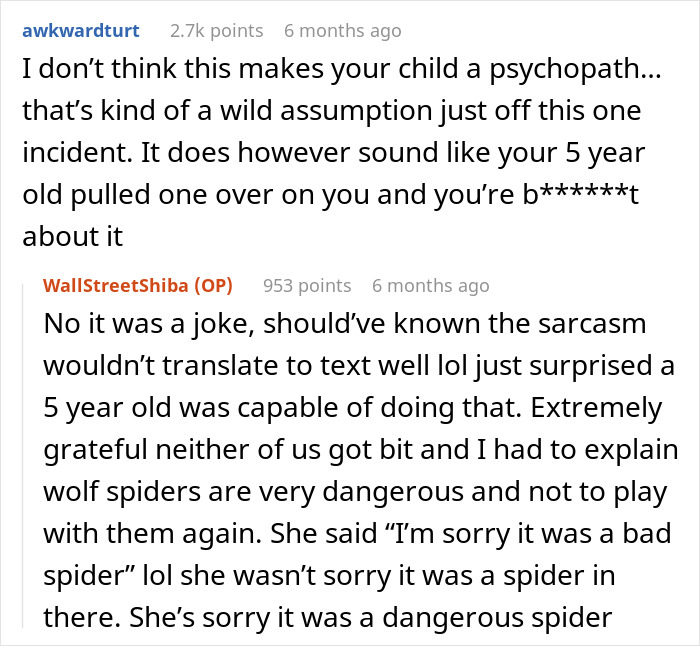
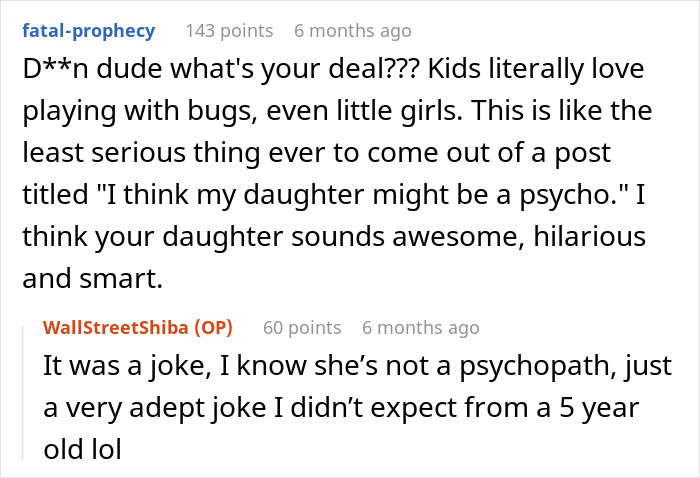
Research indicates that some early traits linked to psychopathy can appear in children as young as two years old
Image credits: Jelleke Vanooteghem (not the actual photo)
Most parents have had those tiny, slightly uncomfortable moments where they pause and wonder about their child’s reaction to something. Maybe your kid knocks over their sibling’s Lego tower and instead of apologizing, they just shrug and walk away. Or they laugh when someone gets startled or mildly hurt. In that brief moment, a thought might flash through your mind: “Wait…should they feel bad about that?” Of course, no parent actually wants to imagine that their child could have psychopathic tendencies. The truth is, kids are still learning empathy, emotions, and how their actions affect others. But those confusing moments can still leave parents wondering whether what they’re seeing is just a phase or something they should pay closer attention to.
Picture this scenario: an otherwise adorable 11-year-old who seems sweet, polite, and charming around adults. But then you discover they’ve been deliberately hurting a pet or another animal, and what’s more worrying is that they don’t seem bothered by it at all. Instead of remorse, they might laugh it off or cleverly talk their way out of trouble. Most children do not show signs of psychopathy. Still, experts say it’s helpful for parents to understand certain behavioral patterns so they can recognize when something might need extra guidance or professional attention.
First, it’s important to clear up a common misconception. The word “psychopath” isn’t actually an official diagnosis that doctors give children. In everyday language, people use it to describe a group of traits—things like being unusually manipulative, lacking empathy, showing little remorse, or frequently deceiving others. In adults, these traits may be linked to certain personality disorders. But with children, things are far less clear-cut because their brains and emotional skills are still developing. Kids are constantly learning right from wrong, experimenting with behavior, and figuring out social rules. So while the term gets thrown around casually, experts usually look at patterns of behavior rather than labeling a child.
One of the signs people sometimes notice is when a child doesn’t seem guilty after doing something wrong. Most parents are familiar with that classic “guilty face.” You point out that your child shouldn’t have taken something or hurt someone, and suddenly their expression changes; they look embarrassed, defensive, or quietly apologetic. That reaction shows they understand the impact of their behavior. But occasionally, some children might show no reaction at all. They might seem completely unfazed, even after someone explains why their actions were hurtful. If this happens repeatedly, it can raise questions about how they process empathy and emotional responsibility.
Another thing adults may notice is how a child responds to consequences. Kids naturally push boundaries; that’s part of growing up. Sometimes they’ll test limits just to see what happens. Usually, though, once they face consequences a few times, they adjust their behavior. They learn that certain actions lead to trouble and try to avoid repeating them. But if punishment or consequences never seem to change the behavior, it can signal that something deeper might be going on. That said, even this isn’t a guaranteed sign of anything serious, because stubbornness and rebellion can also be perfectly normal phases.
Selfish behavior is another trait that sometimes gets attention, though it’s important to look at it in context. Many young children struggle with sharing; it’s a normal developmental stage. Anyone who’s watched toddlers argue over toys knows that “mine!” is practically a universal childhood word. However, if a child consistently shows no concern for other people’s feelings, refuses to cooperate, or intentionally takes things from others without caring about the consequences, parents may want to gently guide them toward understanding empathy and fairness. Teaching kids to consider others’ feelings is a gradual process that develops over time.
It’s crucial to avoid jumping to conclusions and to carefully observe behavior in context
Image credits: Getty Images (not the actual photo)
Lying is also a behavior that can worry parents, but again, context matters. Small, harmless lies are actually quite common in childhood. Kids might deny eating the last cookie, claim the dog made the mess, or insist they finished their homework when they didn’t. Those moments are usually part of learning boundaries and consequences. However, frequent, calculated lying can be a different story. If a child consistently creates elaborate stories or blames others without hesitation, it may be worth looking at the pattern more closely.
At the end of the day, it’s important not to jump to conclusions based on a single behavior. Children are complex, constantly changing, and still figuring out how the world works. Even well-behaved kids can have moments where they act selfishly, lie, or fail to show empathy. The key is noticing patterns over time rather than isolated incidents. Parents can help by talking openly with their children, modeling empathy themselves, and encouraging emotional awareness. And if something truly feels concerning, reaching out to a child psychologist or counselor can provide guidance. Often, the goal isn’t to label a child—it’s simply to help them grow into kinder, more emotionally aware people.
In this particular case, it’s possible the father may have been overthinking—sometimes parents notice small things and their worries grow bigger than the situation itself. At the same time, parenting often means finding that balance between instinct and perspective. When something feels off, it can also be an opportunity to gently guide a child toward empathy, kindness, and a better understanding of others. Of course, every child is different, and context always matters when interpreting behavior. What are your thoughts on this situation?
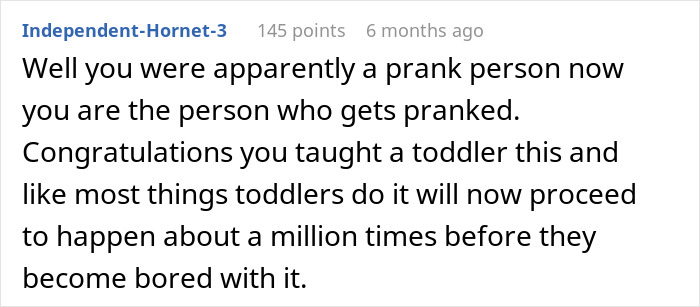
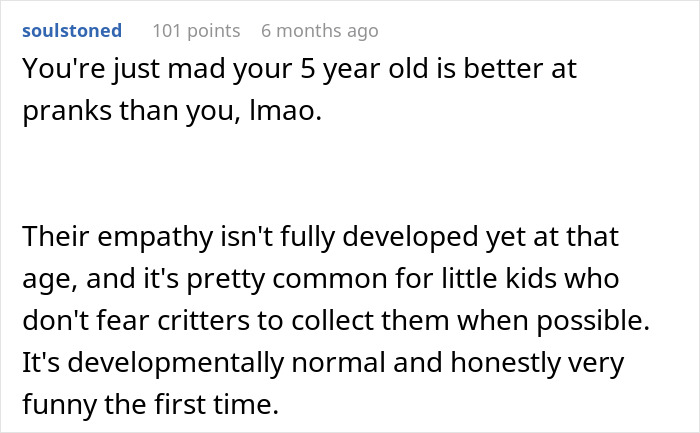
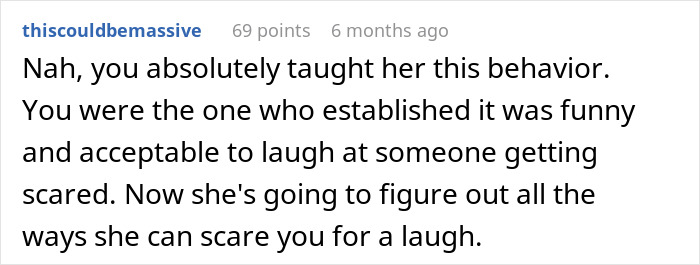
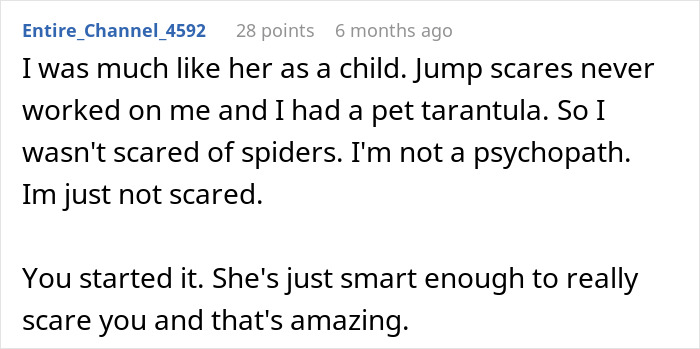
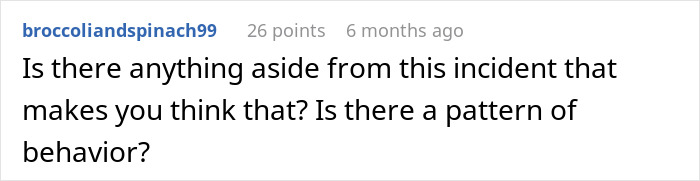
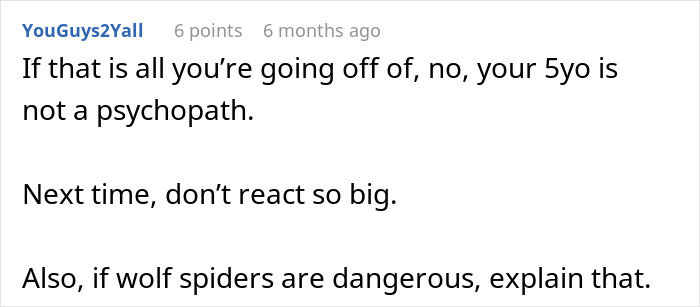
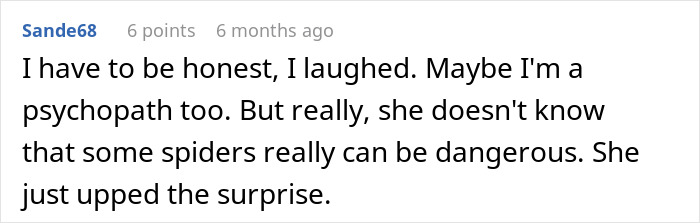
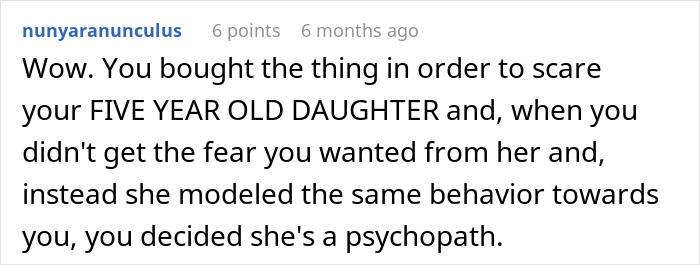
Many people felt the daughter was clever and brilliant for pulling off the prank so convincingly

















from Bored Panda https://ift.tt/f0rN9jO
via IFTTT source site : boredpanda
