Female beauty standards put a lot of pressure on women’s appearance. At 13 years old, 53% of American girls say they are dissatisfied with their bodies. By the time they’re 17, the number grows to 78%. Body hair is a big source of shame for many women, as hairlessness gets associated with femininity.
But some women are trying to end that stigma. Claudia du Lievre is one of them, as she decided to document her mustache-growing journey on TikTok. Unsurprisingly, people have mixed reactions. Some are championing her project and calling for “body hair summer.” Others are borderline repulsed: “Not my cup of tea.”
A woman decided to document her body hair journey online to challenge female beauty standards
Image credits: freepik (not the actual image)
She is embracing her facial hair and growing out her mustache
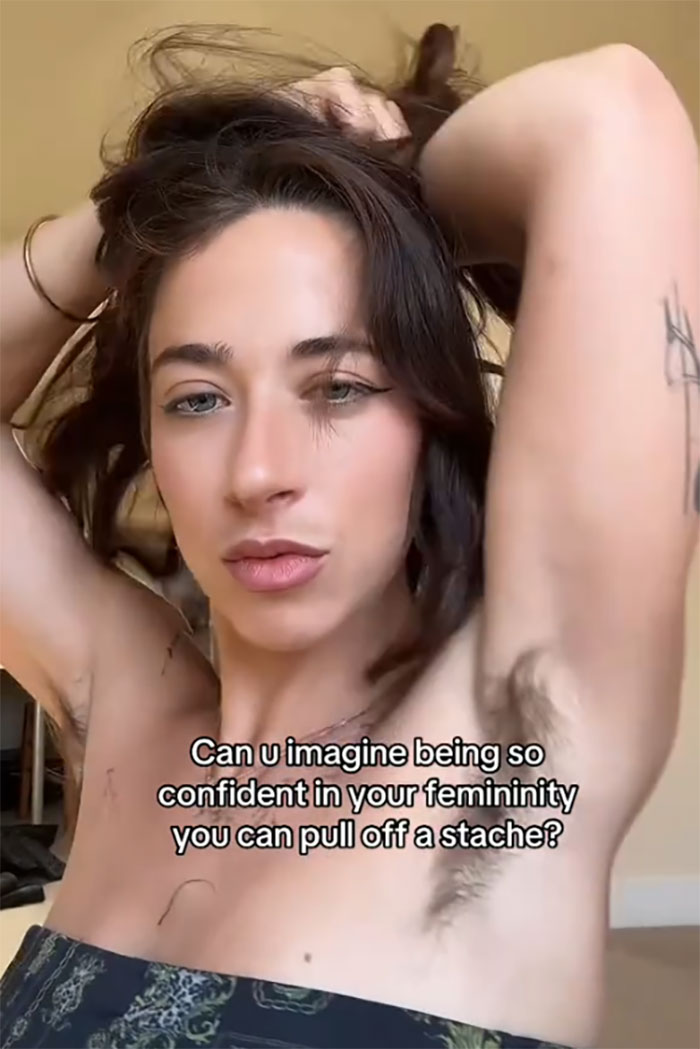
Image credits: cdulievre
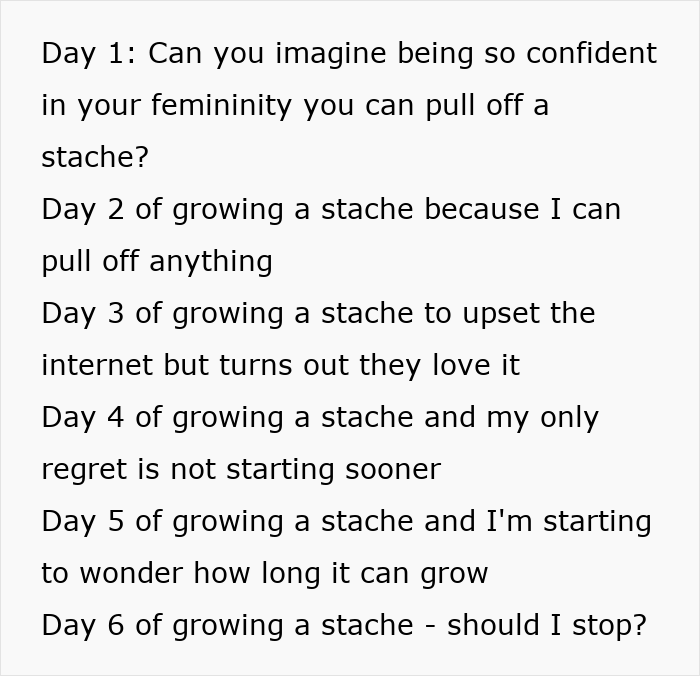
Image credits: cdulievre
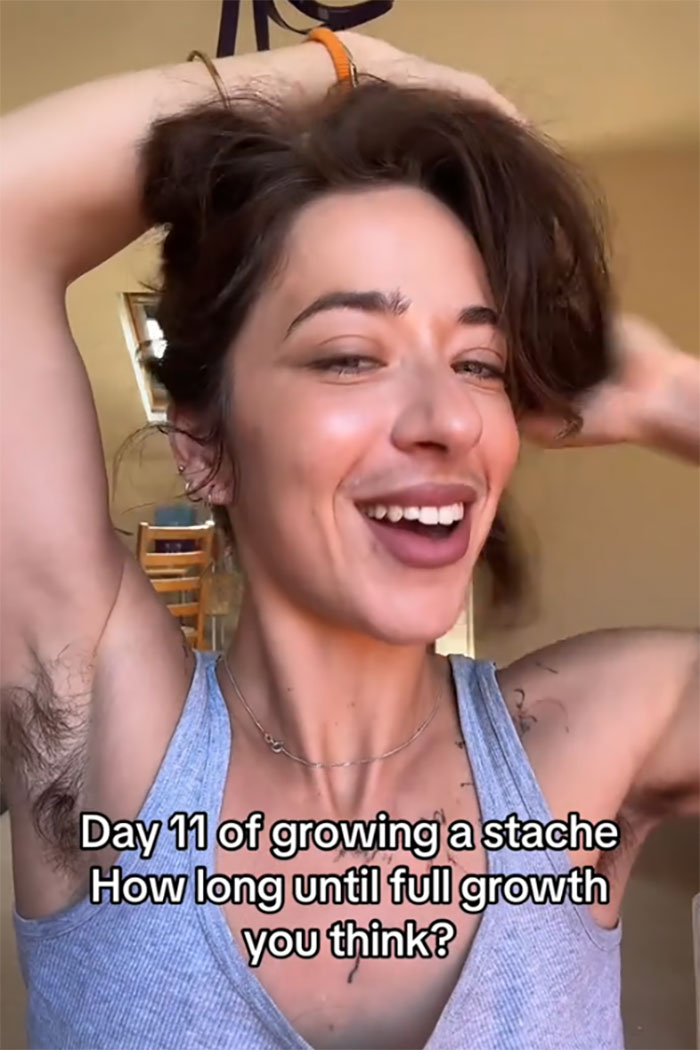
Image credits: cdulievre
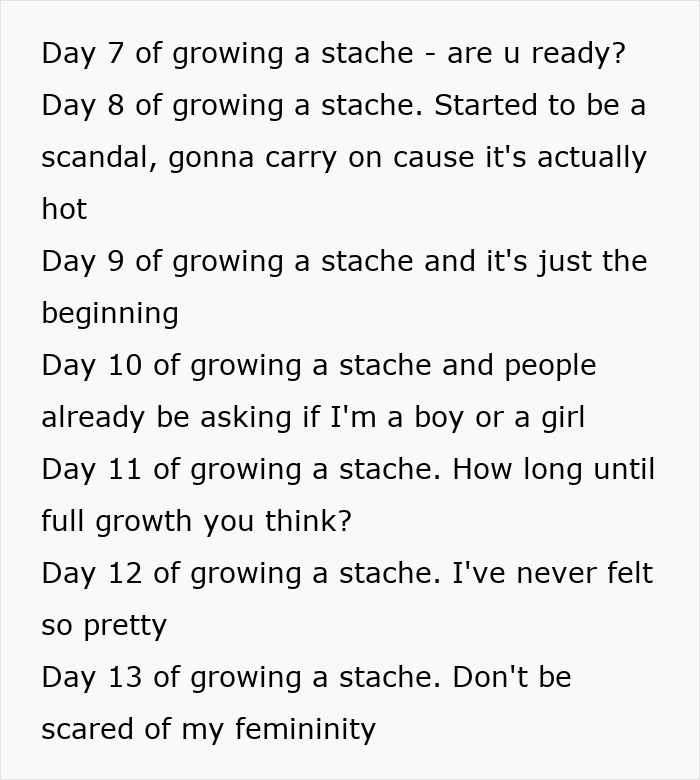
Image credits: cdulievre
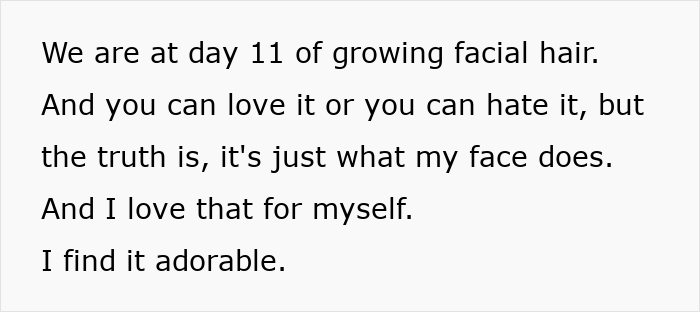
Image credits: cdulievre
“I don’t think it makes me look like a man any more than before,” Claudia claims
@cdulievreCause we re not there yet I swear♬ original sound – Dulievre
Society perceives body and facial hair as masculine
Modern beauty standards would have you believe that women don’t have body or facial hair. Or, if they do, that it’s minimal and almost unnoticeable.
But studies show that almost half of all women will grow facial hair in their lifetime. Hirsutism, a condition where excessive body hair appears in a male pattern in women, affects between 5% and 10% of women.
So, if facial hair is that common, why are women conditioned to be so ashamed of it? For one, our society associates body hair with masculinity. And looking like a man certainly doesn’t adhere to female beauty standards.
Historically, women with excessive facial hair have been othered. Take P.T. Barnum’s bearded lady Annie Jones, who was deemed a “circus freak” due to her hirsutism.
Women who grow out their hair elsewhere on their bodies, like their armpits, legs, and the pubic region, are rebels as well. To let your body do its natural thing – grow hair – is thus seen as an act of rebellion.
Even talking about facial hair removal for women is taboo
We accept that men grow beards and mustaches, and shaving is just a normal, everyday thing. Yet it’s different for women. As dermatologist Dr. Zainab Laftah explained to Refinery29, even talking about hair removal is taboo amongst women.
“Removing facial hair is not a topic of open discussion. It’s almost a shameful secret that is kept behind closed doors, but openness around this topic will help break down the stigma surrounding it,” she believes.
What’s more, most women are not ready to stop removing their facial hair. Women and gender studies professor and author of “Unshaved: Resistance and Removal in Women’s Body Hair Politic” Breanne Fahs found that women will rebel by growing out their armpit or leg hair, but not shaving their facial hair is often seen as too much.
According to a 2006 British study, a woman will spend 104 minutes per week managing her facial hair. More than half of the participants of that study also said they constantly check their facial hair in mirrors or by touching it.
However, there’s nothing wrong with wanting to remove your facial hair. Sure, growing it out can be empowering, but some women might simply not be ready, as 75% of women in the 2006 study claimed facial hair sometimes gives them clinical levels of anxiety.
Excessive facial hair in women can be a sign of some medical conditions
The amount of facial and body hair differs from woman to woman. Ethnic background can sometimes play a role, as women of Middle Eastern, South Asian, or Mediterranean descent report more excessive body hair than others.
Yet excessive body and facial hair can also signal some health problems for women. It can be a symptom of these conditions:
- Polycystic ovary syndrome;
- Adrenal gland disorders;
- Side effect of medications such as minoxidil, steroids, or testosterone;
- Idiopathic hirsutism (meaning there’s no medical cause of excessive body hair).
Ultimately, every woman gets to decide for herself how to deal with unwanted body hair. For some, the body and facial hair might be very much wanted. Others might choose to remove it for hygiene, aesthetic, or other personal reasons. We shouldn’t shame them, no matter what they prefer.
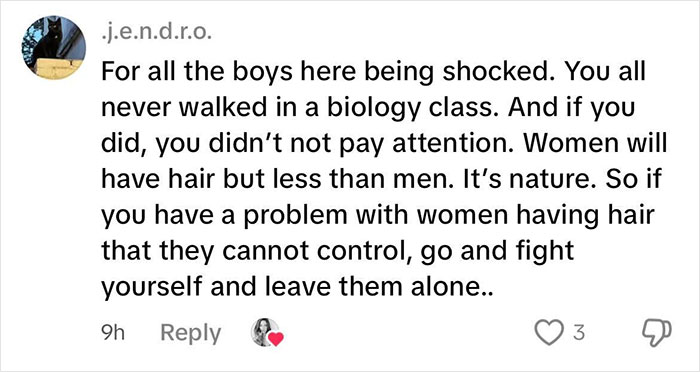
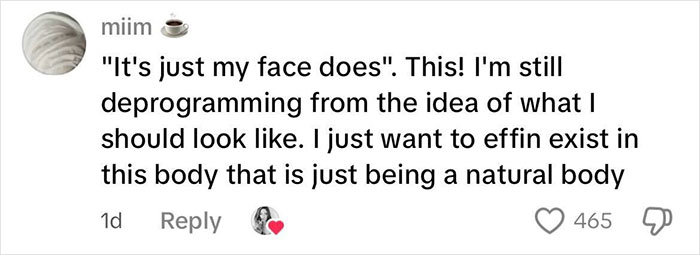
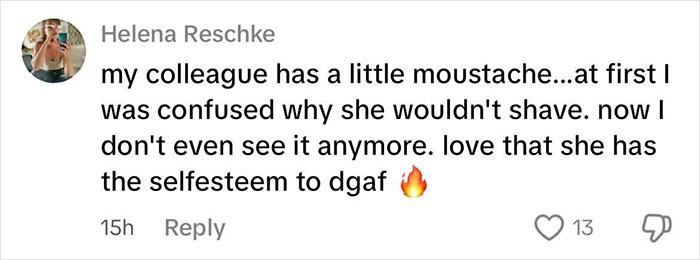
People had mixed reactions: some cheered, others asked, “Why?”
















from Bored Panda https://ift.tt/WCiyE4M
via IFTTT source site : boredpanda
