While working overtime isn’t anyone’s idea of fun, we all do it at some point, whether it’s because the job demands it, the pay makes it worth it, or you simply have a good working relationship with your team. Whatever the reason, you’d at least expect some fairness and understanding when it comes to those extra hours.
However, dealing with strict and unbending overtime rules became a nightmare. When a ransomware crisis hit, they decided to play by the book using malicious compliance to expose just how flawed the policy really was. Keep reading to see how their clever move shook up workplace dynamics and left the boss scrambling!
Overtime rules don’t always favor employees, which can often feel unfair

Image credits: YuriArcursPeopleimages / envato (not the actual photo)
An employee shared how they used malicious compliance to highlight the flaws in overtime policies after putting in extra hours during the week


Image credits: bnenin / envato (not the actual photo)

Image credits: Local_admin_user
Overtime work can significantly benefit companies by helping them meet deadlines and boost productivity
There are times when not everything on your to-do list can be wrapped up during regular work hours. That’s when overtime comes into play. It’s an option to get things done, meet deadlines, and keep projects on track. It might mean longer hours, but sometimes, it’s the only way to handle those pressing tasks.
For employers, overtime can be a great way to balance fluctuating workloads and meet market demand. It provides flexibility, allowing them to scale production when needed without hiring additional staff. Plus, it helps companies stay competitive when deadlines are tight.
For employees, working overtime can mean higher total earnings, especially if those extra hours are compensated fairly. Who doesn’t like a bit of extra money for putting in extra effort? But fair compensation is key to making overtime worth it.
However, not all overtime rules are created equal. Some countries have well-structured and fair policies, while others have more complicated or less favorable regulations. This can make overtime a blessing in one place and a burden in another.
In the USA, overtime pay is regulated by the Fair Labor Standards Act. Nonexempt employees are paid by multiplying their regular hourly rate by all overtime hours worked plus an additional 50% of their hourly rate for those same hours. It’s a structured approach, ensuring workers get compensated for their extra time.
While many countries have laws ensuring fair compensation for overtime, others lack such regulations, leaving workers unprotected

Image credits: Yan Krukau / pexels (not the actual photo)
In the Philippines, labor laws go the extra mile for employees. Workers are entitled to an additional 25% of their hourly rate for overtime on regular days and 30% on rest days or holidays. It’s a system designed to reward hard work fairly, even on days off.
Over in the UK, there’s an interesting concept called “time and a half.” Employees are paid 1.5 times their normal rate for overtime or working holidays. However, while employers can offer overtime to handle increased demand, there’s no legal requirement to pay for those extra hours unless it’s in the employment contract.
In Australia, overtime policies depend on an employee’s contract unless covered by a modern award or enterprise agreement. This means overtime pay isn’t always guaranteed, and the specifics can vary widely, making it crucial for employees to understand their contracts.
Overtime policies may differ around the world, but the principle should always be fairness and compliance. In this case, the author didn’t receive what they deserved, and they used clever, malicious compliance to highlight the issue. What about you? How would you handle such a situation if you felt short-changed at work?
Many people online called out the company for having unreasonable overtime policies
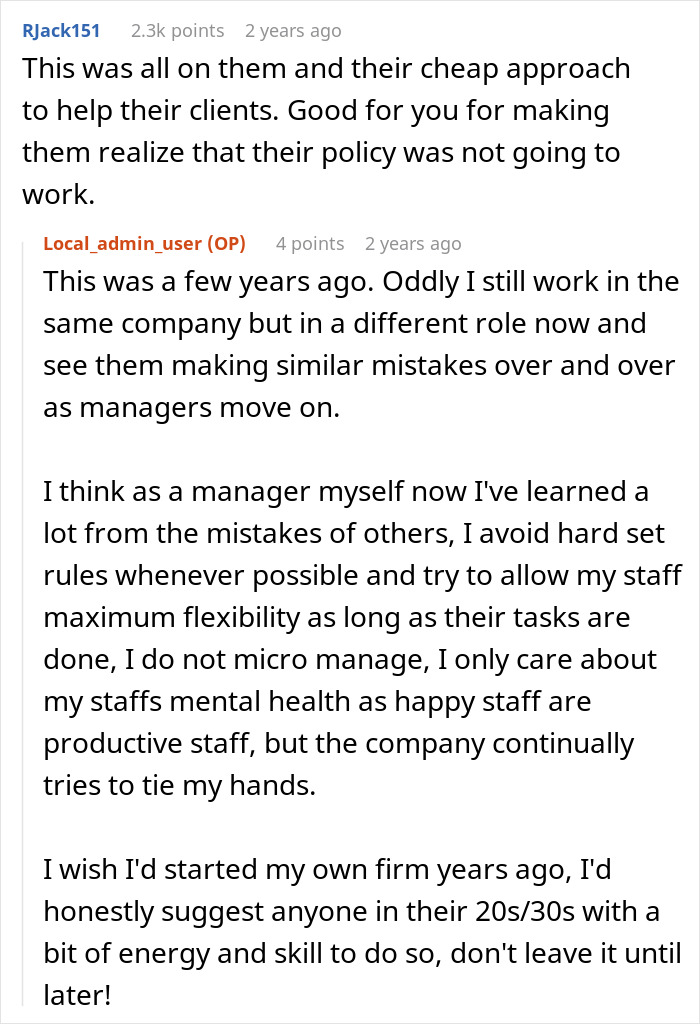
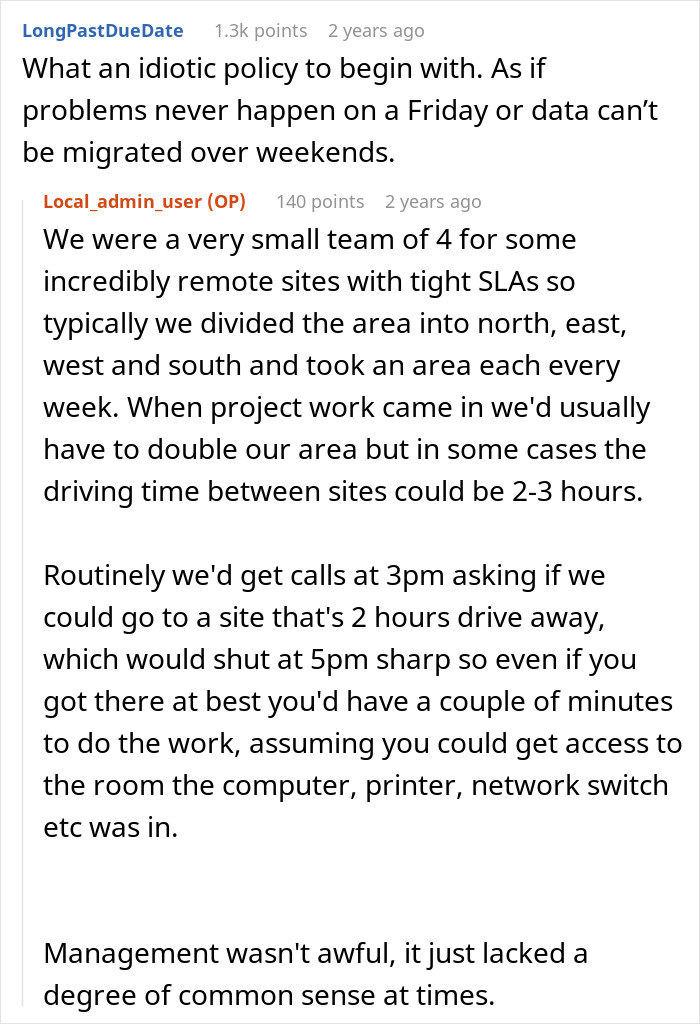



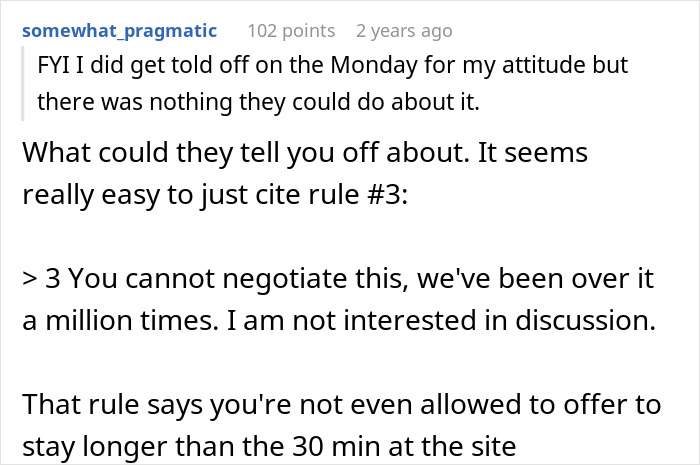


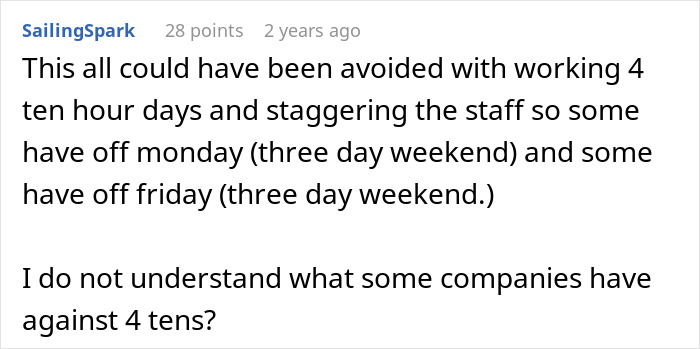








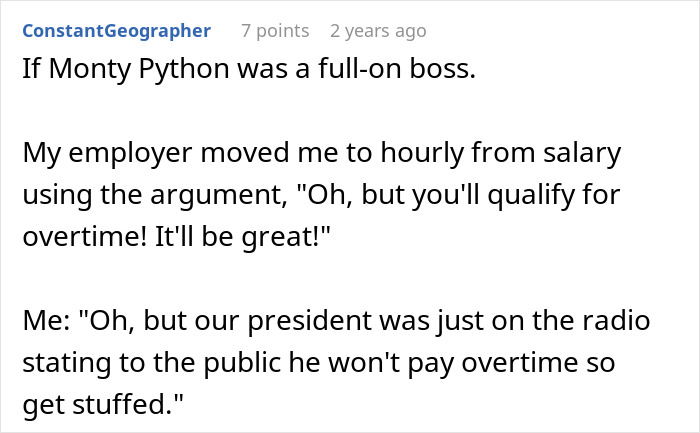

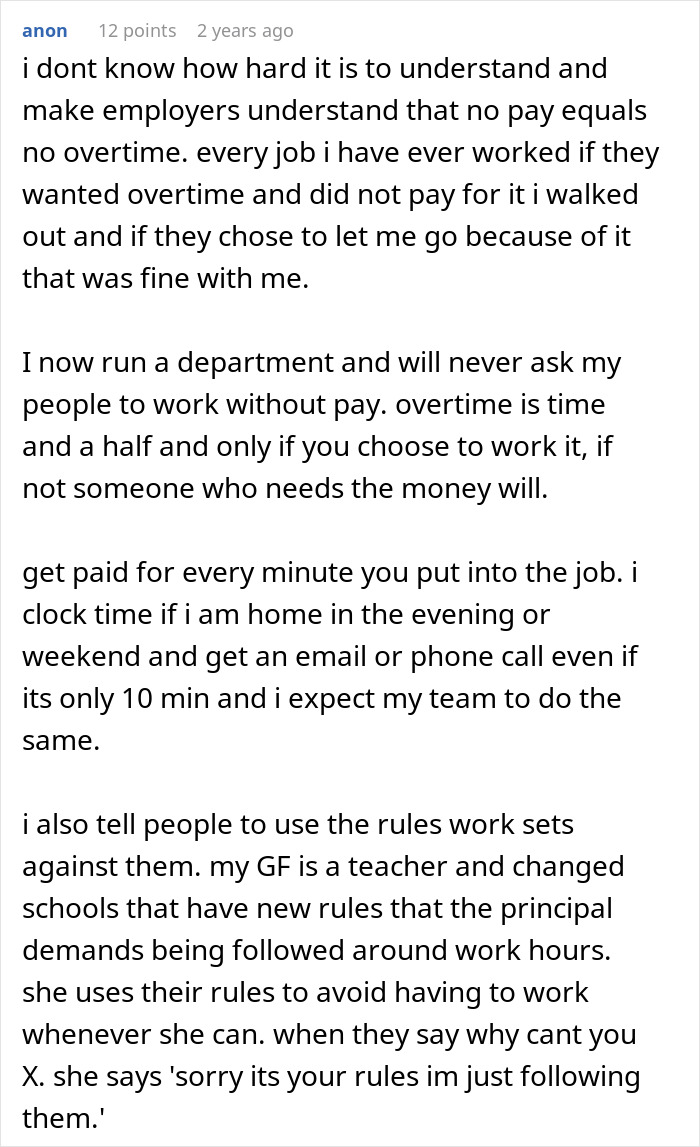
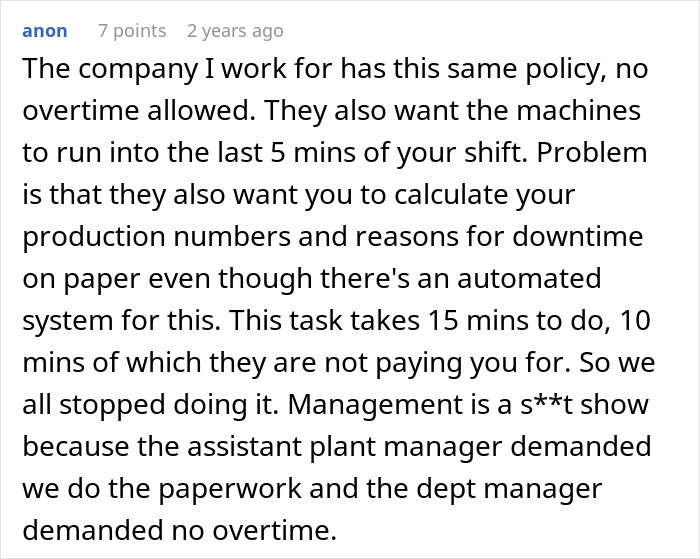
Several others chimed in with their own stories of dealing with similar workplace rules

from Bored Panda https://ift.tt/AL0zJfN
via IFTTT source site : boredpanda
