After being stuck in space for 286 days, Starliner astronauts Barry “Butch” Wilmore and Sunita Williams returned to Earth aboard a SpaceX Crew Dragon capsule.
Images of the astronauts being wheeled off the spacecraft on stretchers sparked widespread speculation about their health.
Williams and Wilmore’ June 2024 mission was initially meant to last for only eight days. But their stay unexpectedly turned into a 9-month-long odyssey in outer space that finally came to an end this week.
Netizens expressed concern after Barry “Butch” Wilmore and Sunita Williams returned to Earth
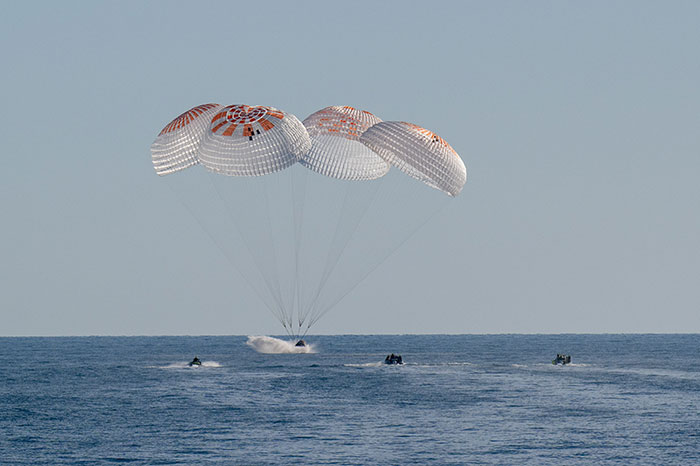
Image credits: www.nasa.gov
The SpaceX capsule carrying the astronauts was surrounded by a pod of dolphins as it made a splashdown off Florida’s Gulf Coast on Tuesday, March 18.
They’re an “honorary part of the recovery team,” NASA commentators joked about the marine creatures.
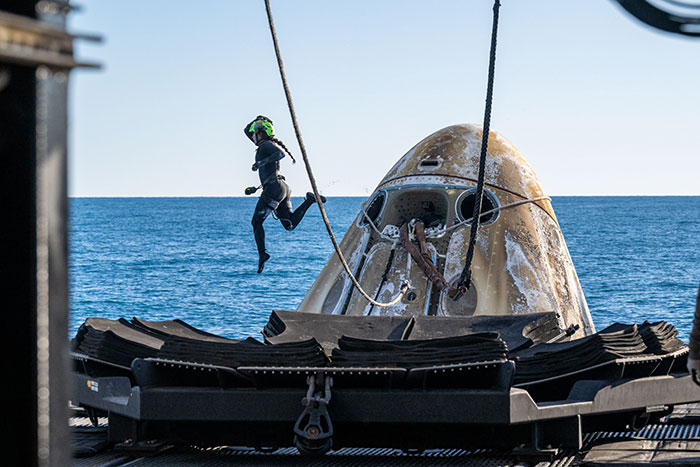
Image credits: NASA/Keegan Barber
Netizens were both relieved and concerned to finally see the pair return to solid ground.
“Thats awesome. Im sure they must have some wild stories to tell about space!!!” one commenter said.
Another wrote, “What an amazing thing to witness! The pod of dolphins that greeted the SpaceX capsule was great!”
Williams and Wilmore were accompanied by the other members of NASA’s Crew-9 Mission, American astronaut Nick Hague and Russian cosmonaut Aleksandr Gorbunov
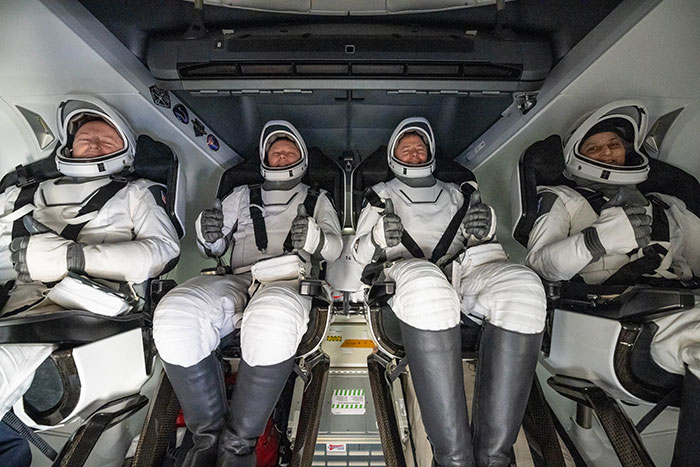
Image credits: NASA/Keegan Barber



Other comments took a different tone, with one saying, “Welcome back to hell.”
“They may want to take the next shuttle back,” another wrote.
One joked, “Welcome back! just don’t look at the egg prices.”
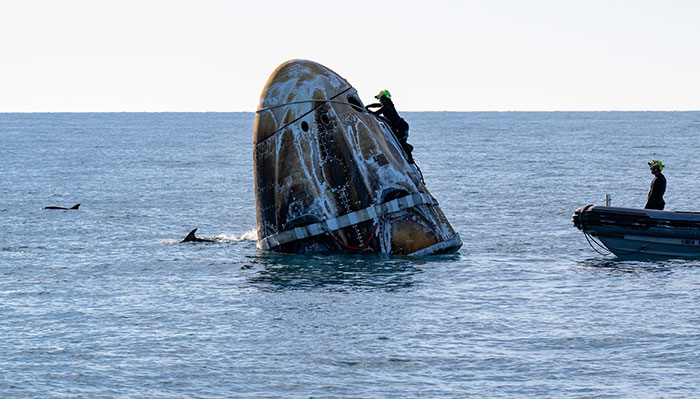
Image credits: NASA/Keegan Barber
Many were worried about the astronauts’ health, wondering when they would be able to fully adjust to life back on Earth.
“They won’t be walking for a while,” one commenter said, while another wrote, “Wonder how long it’ll take them to rebuild their muscles and coordination to start running again.”
“I’d be curious to read about their health in the next few weeks,” one social media user said
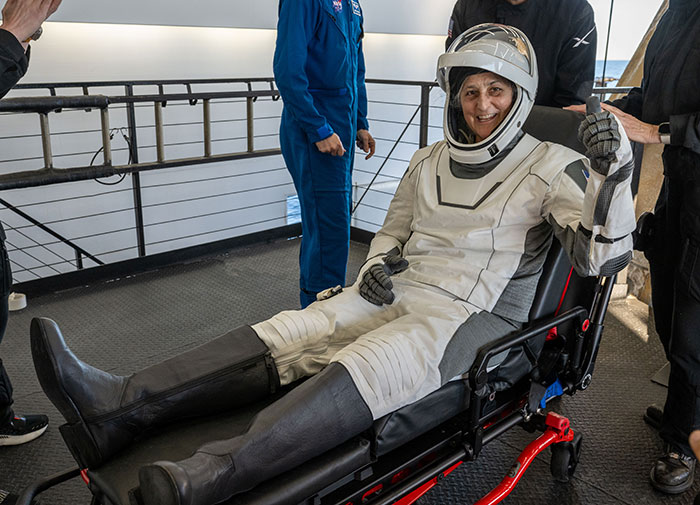
Image credits: NASA/Keegan Barber
“Nine months is nasty,” one said. “I imagine they lost a lot of weight.”
“I’d be curious to read about their health in the next few weeks. I think something happens to the bones,” another wrote.
“It is hard to imagine their mental state. Although they are professionally trained, staying in outer space for such an unexpectedly long time is truly beyond imagination,” one said.
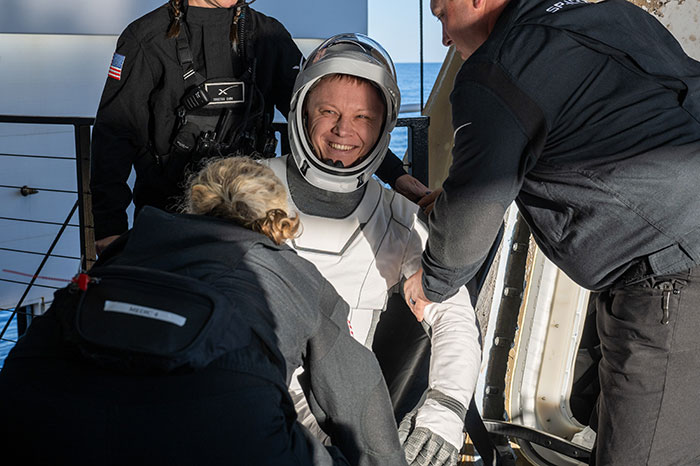
Image credits: NASA/Keegan Barber
It may have been unusual for some people to see the astronauts being carried out of the SpaceX Dragon on stretchers.
However, it was nothing more than the protocol to be followed after space travelers return from prolonged periods of living without gravity.
“A lot of them don’t want to be brought out on a stretcher, but they’re told they have to be,” John DeWitt, director of applied sports science at Rice University in Texas and a former senior scientist at NASA’s Johnson Space Center, told Live Science.
It is protocol to carry space travelers on stretchers as they may not immediately be able to walk
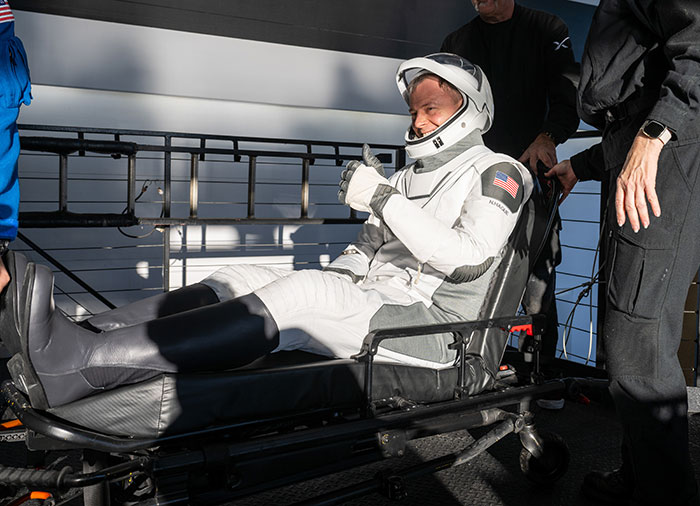
Image credits: NASA/Keegan Barber
DeWitt explained that astronauts may experience dizziness and nausea after touchdown and may not be able to walk right away.
The human body is designed to function in a world with gravity, and many parts of the body and its sensory organs have evolved to respond to gravity’s pull.
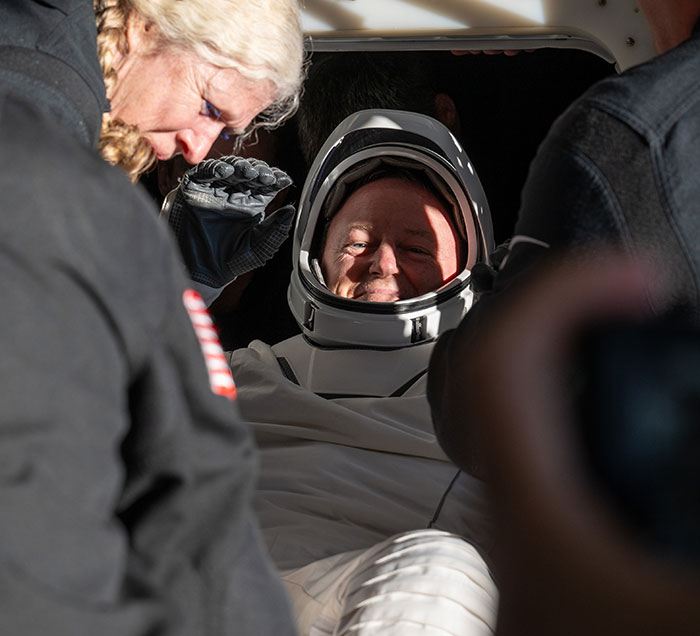
Image credits: NASA/Keegan Barber



When in space, the brain adjusts to the weightlessness in different ways. And once the space travelers return back to Earth, their body once again starts readjusting to life with gravity and may experience “space motion sickness” from their journey, DeWitt said.
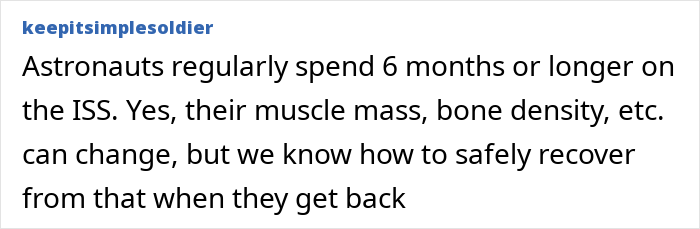
After prolonged periods of time in space, astronauts also undergo a number of physiological changes, such as loss of muscle and bone density.
The body undergoes several changes during prolonged periods of time in microgravity or weightlessness
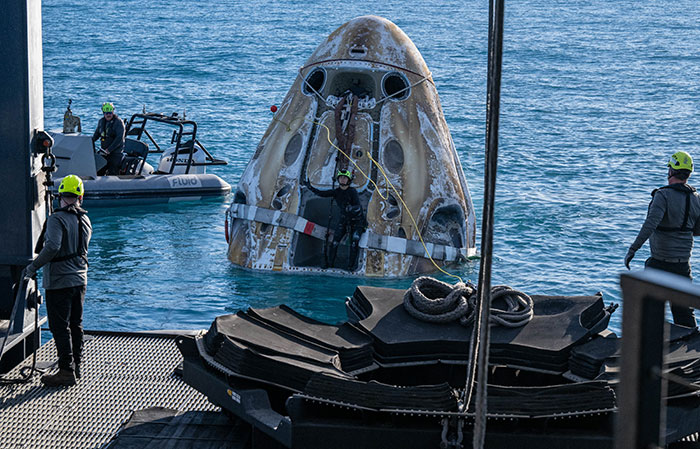
Image credits: NASA/Keegan Barber
“I’ve been up here long enough right now I’ve been trying to remember what it’s like to walk,” she told the students of her alma mater, Needham High School in Massachusetts, in January.
“I haven’t walked. I haven’t sat down. I haven’t laid down,” she continued.
“You don’t have to,” she added, explaining that one can simply close their eyes and float right where they are.
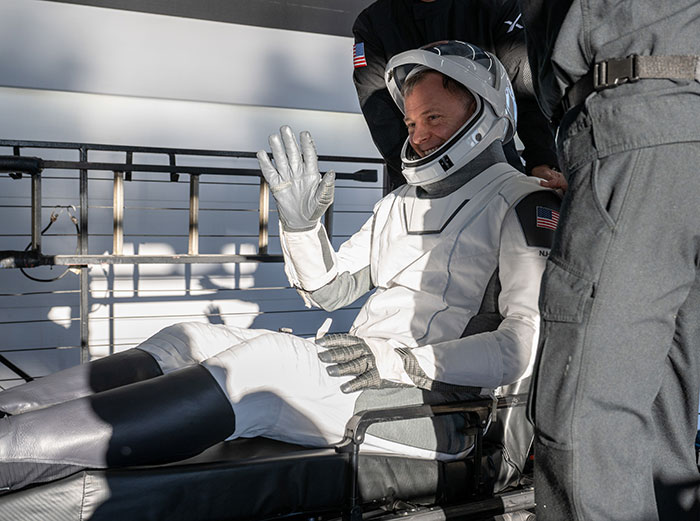
Image credits: NASA/Keegan Barber
Without Earth’s gravity, weight-bearing bones can lose an average of 1% to 1.5% of bone mineral density per month, according to NASA.
Shenhav Shemer, a professor of biology at the Technion—Israel Institute of Technology who researches muscle loss, told Axios that the impact on Wilmore and Williams’ muscle mass would have been “completely reversible” if they only stayed for the initially planned duration of about a week.
Williams spoke about how she hasn’t walked, sat down, or laid down while in space
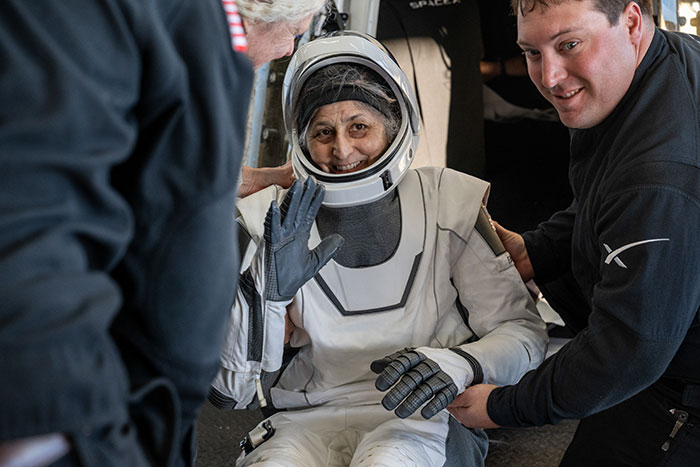
Image credits: NASA/Keegan Barber



However, “there are expected to be metabolic and physiological changes that might be irreversible” with long-duration stays in space, she said.
When it comes to long space muscles, an astronaut’s muscles typically return to their pre-flight mass in about a year.
But Shemer said this can vary, based on age and physiology, and some astronauts could take up to four years.
It could take one to four years for astronauts’ muscles to return to their pre-flight mass, depending on their age and physiology
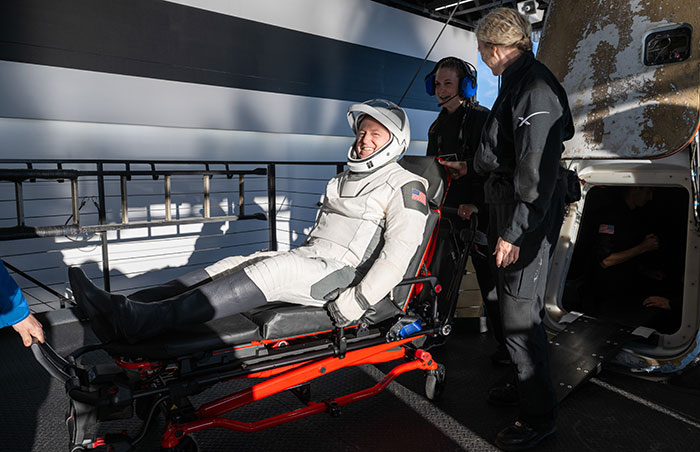
Image credits: NASA/Keegan Barber


Astronauts living in microgravity or weightlessness may also see the impact on their vision.
Vision problems can arise because the fluids in the body shift upwards in space, causing pressure on the eyes.
Image credits: NASA
DeWitt told Live Science that Wilmore and Williams are confident about readjusting to life back on Earth without any “major issues.”
He noted that they would be getting the exact treatment they would have gotten if their trip was initially planned for nine months.
“They’re in good spirits and feel very confident that there’s not going to be any major issues because of being on the space station so long from a physiological perspective,” he said.
“Their bodies probably feel like noodles,” a social media user said







The post “They Won’t Be Walking For A While”: Doctors Rushing To Help Stranded Astronauts Spark Worry first appeared on Bored Panda.
from Bored Panda https://ift.tt/ADKoaOt
via IFTTT source site : boredpanda
