Having continuous difficulty parting ways with possessions despite their value may be a sign of a mental health disorder. In some cases, hoarding may not have a noticeable impact on a person’s life, while in more severe instances it can greatly affect daily functions and even pose a threat to well-being.
This guy recently shared how his in-laws’ inability to farewell with their belongings made their home unlivable for the second time. With nowhere to go, his wife suggested they stay with them, but he quickly opposed, thinking of all the things that could go wrong if they did.
Not being able to part with belongings can reach an extreme where a home is no longer safe to live in
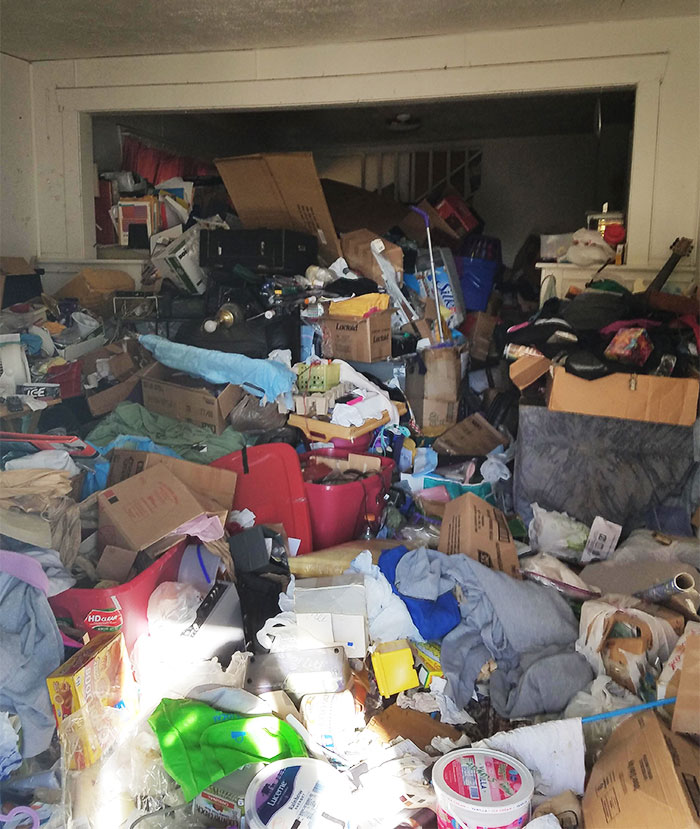
Image credits: drunkjockey (not the actual photo)
Like what happened with this guy’s in-laws, whose home was condemned for a second time and they had nowhere to go, as he didn’t want to let them in his home
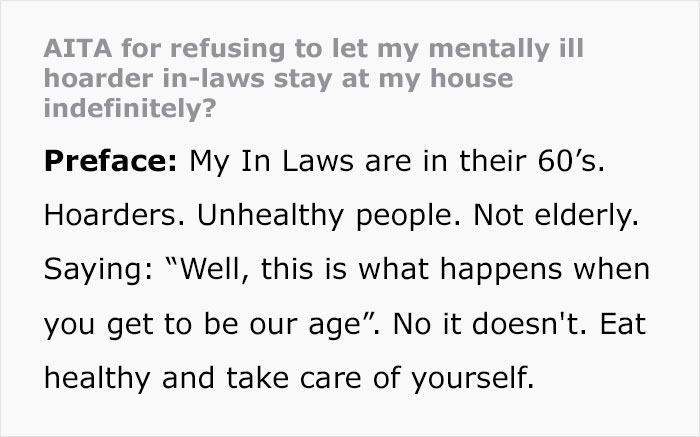


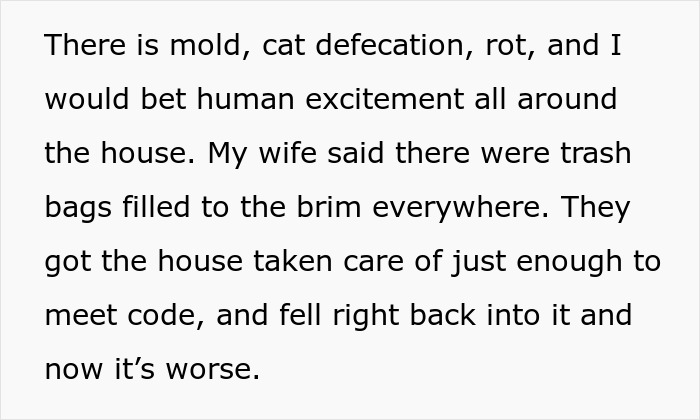

Image credits: YuriArcursPeopleimages (not the actual photo)
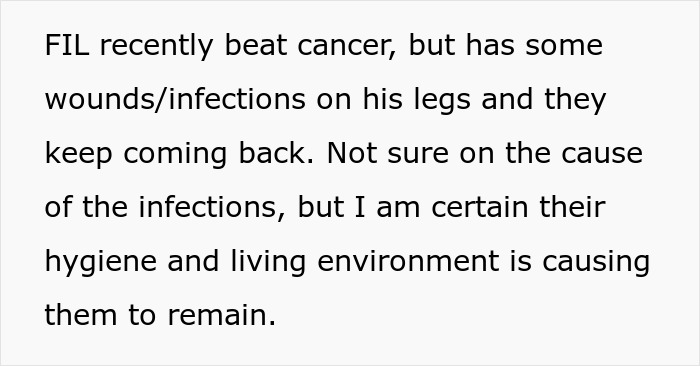

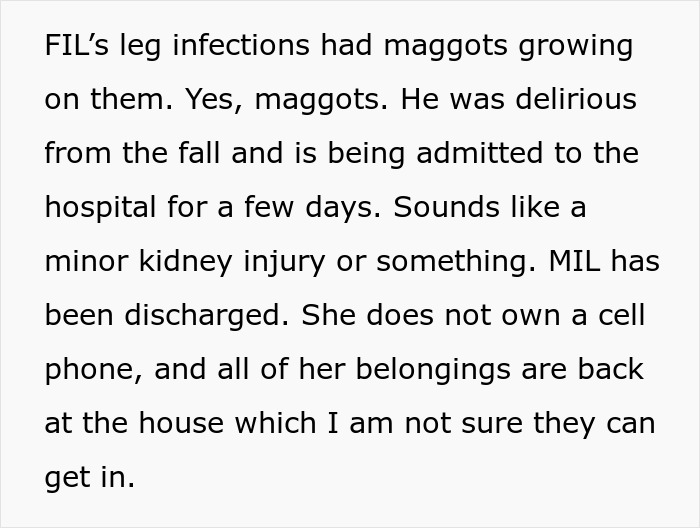

Image credits: AITA_Throwaway_66666
2 to 6 percent of the world’s population suffers from a hoarding disorder
It’s estimated that around 2 to 6 percent of the world’s population suffers from a hoarding disorder. This translates to about 158–474 million people having such a mental health condition globally in 2021.
The National Health Service describes this disorder as the storing of an excessive number of items in a chaotic manner, usually resulting in an unmanageable amount of clutter. “The items can be of little or no monetary value,” the website writes.
Hoarding becomes a significant problem when the amount of possessions starts interfering with everyday activities. The person might not be able to use their kitchen, bathroom, or other rooms because all surfaces are piled with a mixture of newspapers, books, clothes, and other things. If the clutter causes distress or negatively affects an individual’s quality of life and they become upset when someone tries to clean up, it’s another sign that material possessions are taking over their life.
Unfortunately, such cumulative tendencies only get worse with age and often come in combination with other mental health conditions, which makes it harder for people to see it as a problem. Hoarding issues gradually develop over time privately, so it often goes unnoticed by family and friends, fostering their inability to part ways with their possessions.
Some people who have this disorder are aware of it but feel reluctant to seek help because they feel shame, humiliation, or guilt about it. So it’s usually family and friends who can help them get better once they notice what their loved one is going through. It’s very important that they do, as a house brimming with clutter can be a dangerous safety hazard.
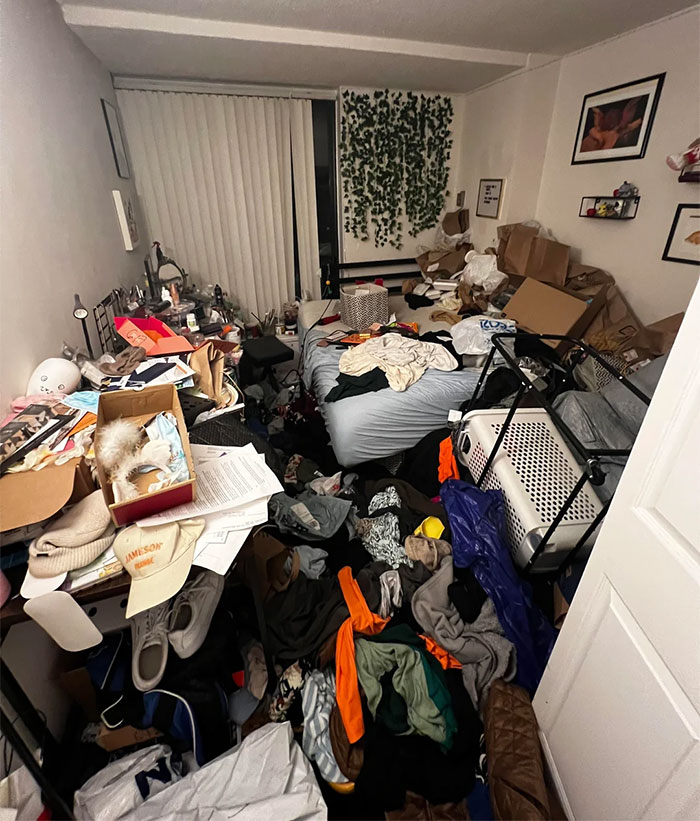
Image credits: DianaDitch_ (not the actual photo)
Throwing everything out isn’t going to fix hoarding issues
However, throwing everything out isn’t the first solution to a hoarding issue, even though it might seem like it. As they or someone else is sorting through their possessions, they might feel anxious, stressed, and uncomfortable, which can make them backtrack and rethink their decision to get better. The sudden surge of upsetting emotions can cause them to start buying and accumulating even more stuff.
Therefore, it’s important to take it slow and make sure the person is feeling as comfortable with cleaning up as possible. Therapy can help with that, as mental health specialists use cognitive behavioral therapy so they could understand the reason for their actions and how to lessen the anxiety around throwing items away. Specialists also teach them organization and decision-making skills, which help them better manage their possessions.
In some instances, healthcare professionals may prescribe antidepressants to treat the hoarding disorder. Since it’s linked to obsessive-compulsive disorder and anxiety, such medication can relieve hoarding symptoms for some people.
“Friends and family members think the person should just be able to clean up, but this isn’t something that they choose to do,” says professor of psychiatry Catherine Ayers, PhD, ABPP. “This is a chronic and progressive mental health condition that needs treatment.”
So it’s important that family and friends contact local authorities like the police, fire department, public health, social services, or animal welfare agencies if they notice extreme hoarding in their loved one. Even though it might be hard to do, it’s necessary for their safety and health.
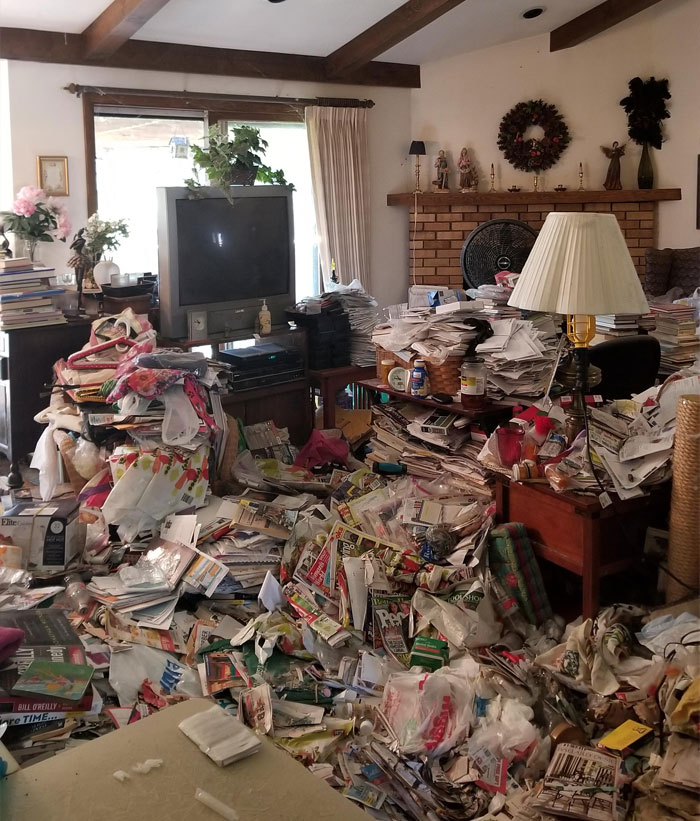
Image credits: praboin1 (not the actual photo)
Most readers justified author’s behavior
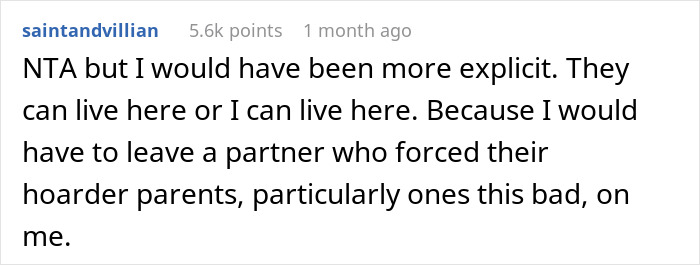
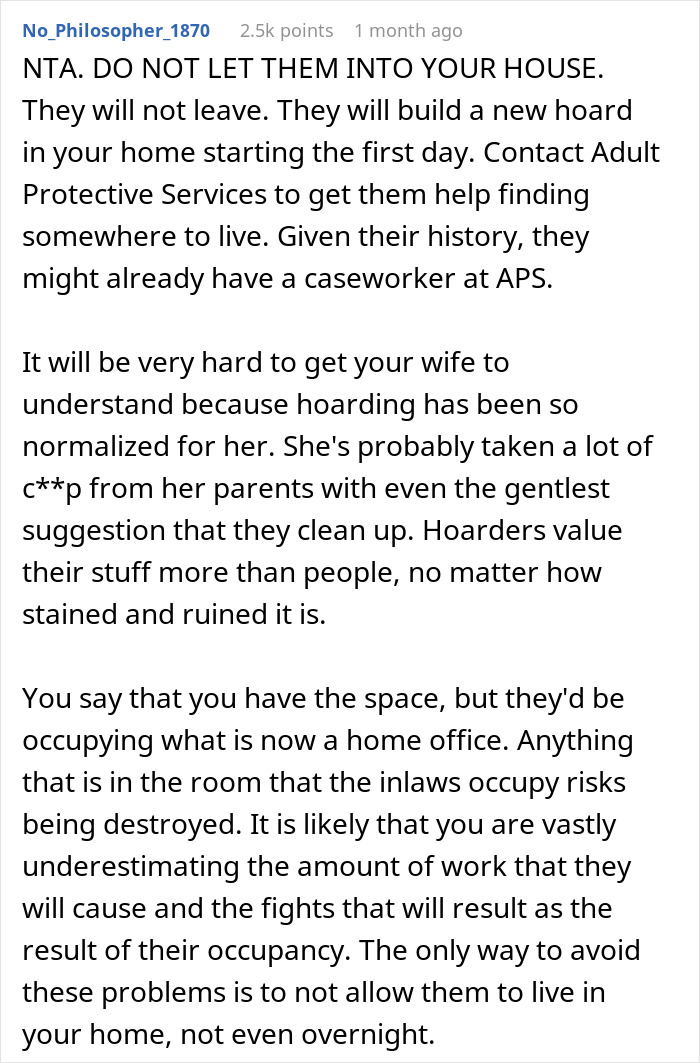
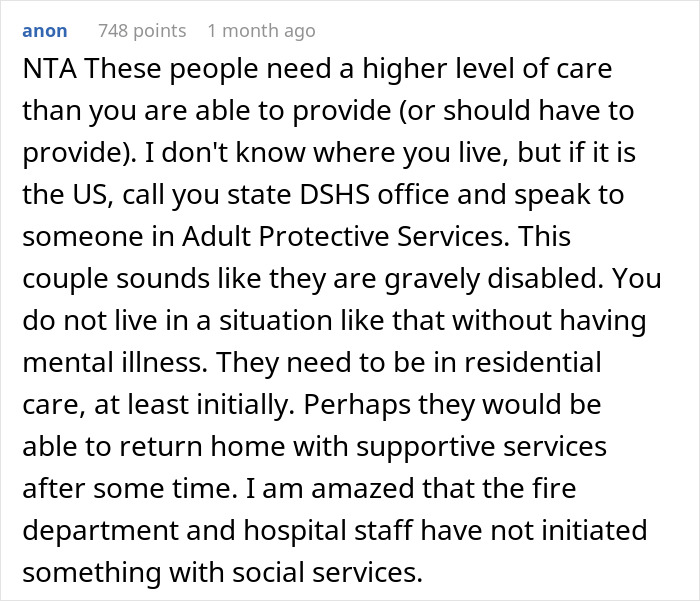
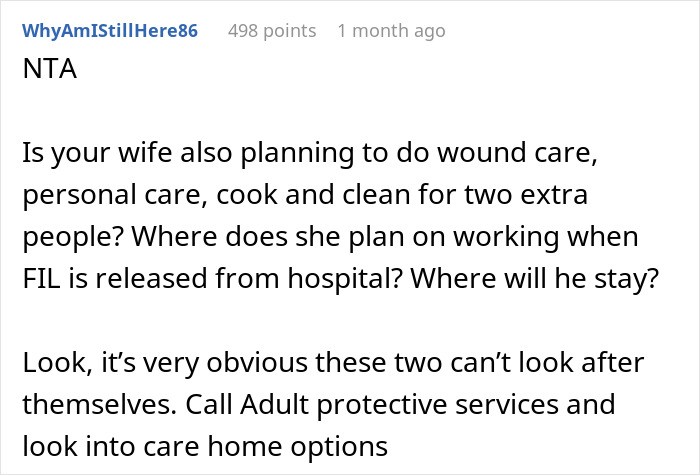
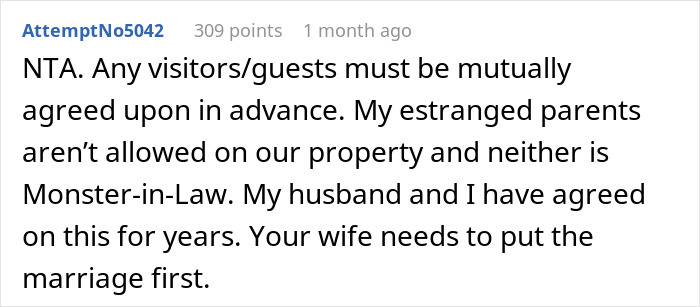
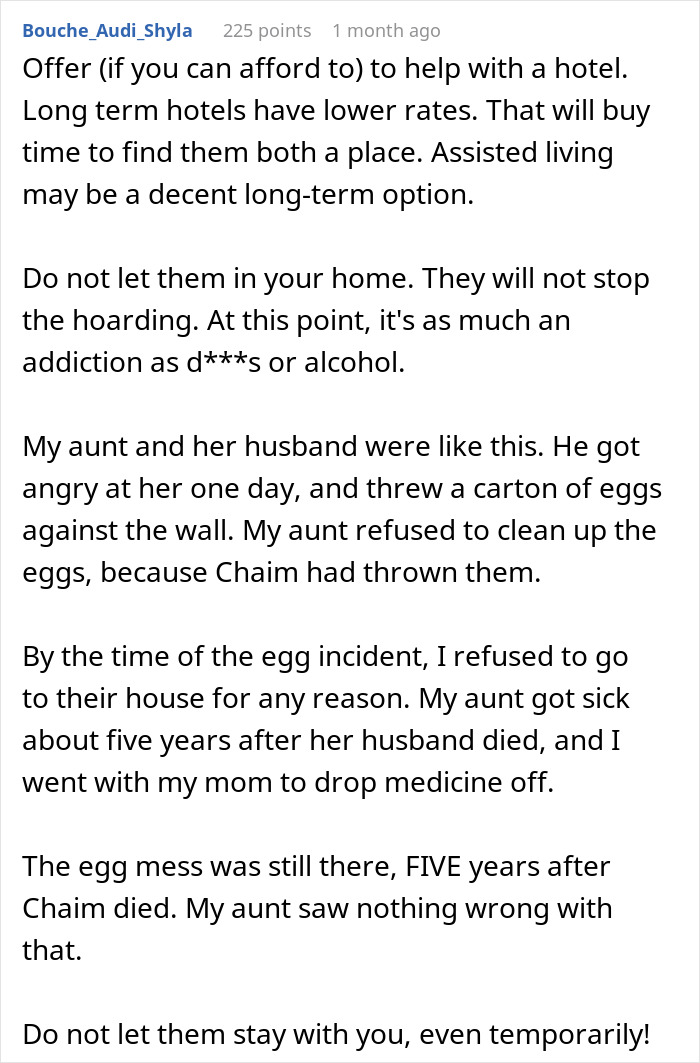

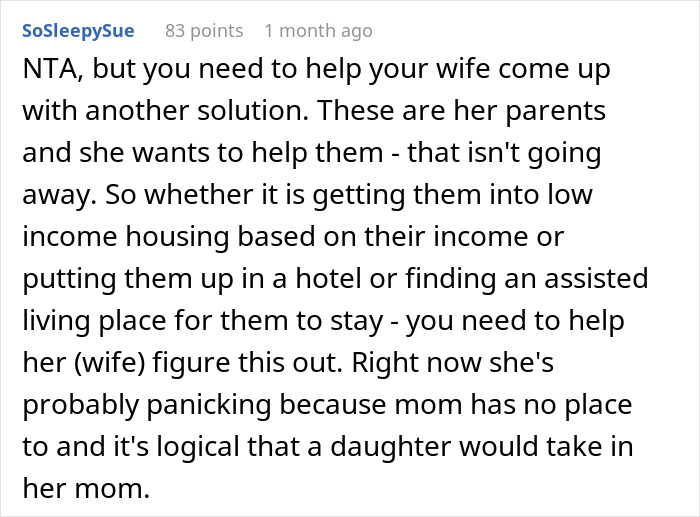
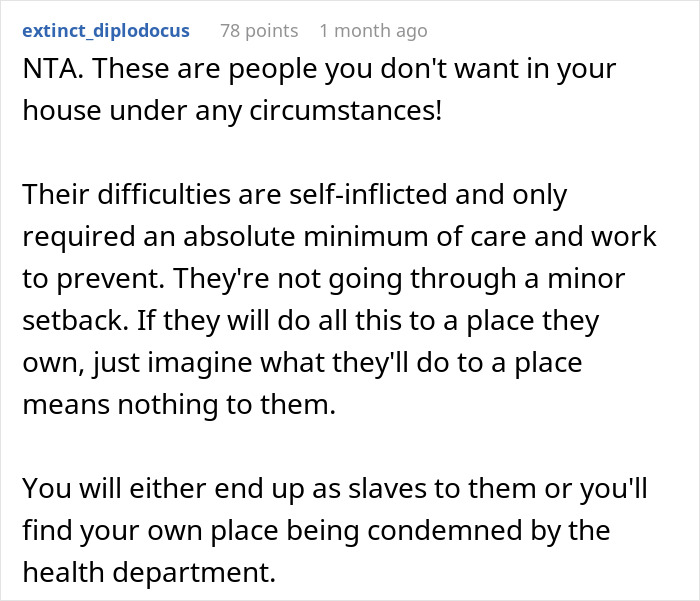
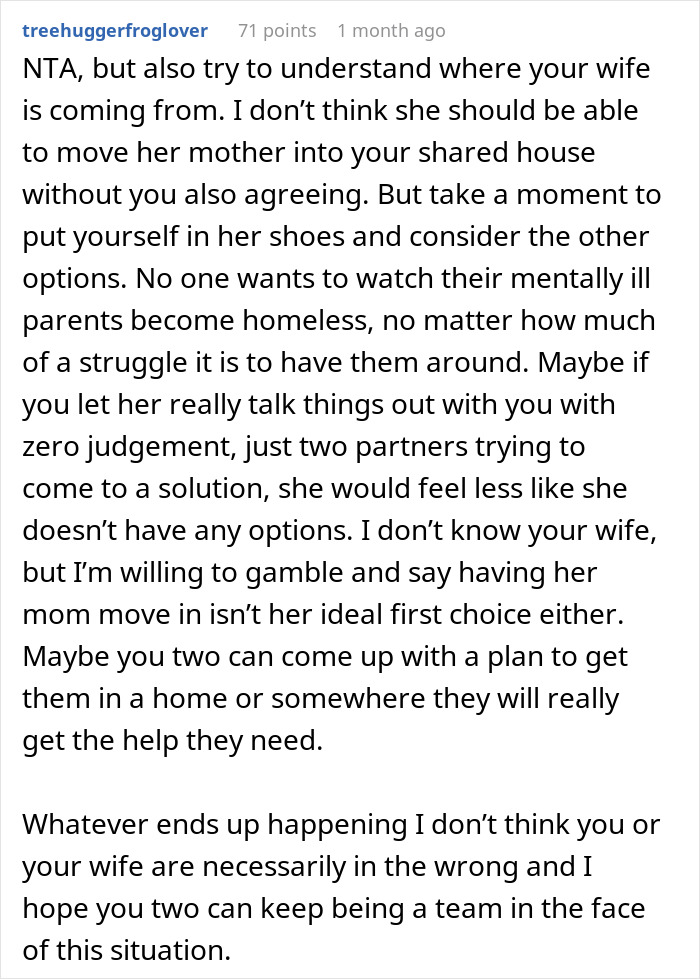
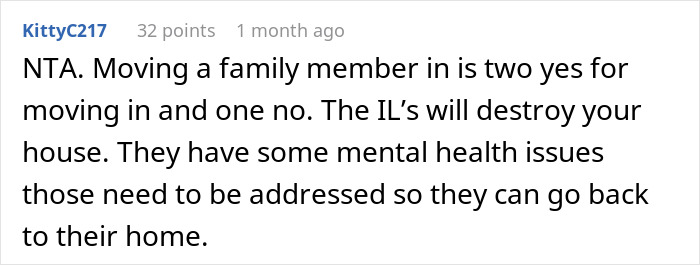
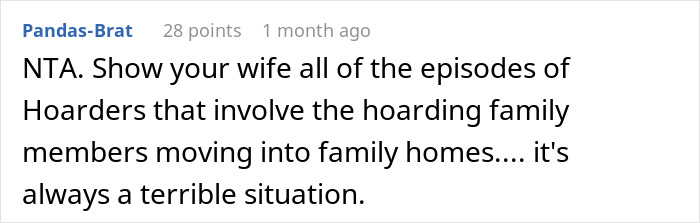

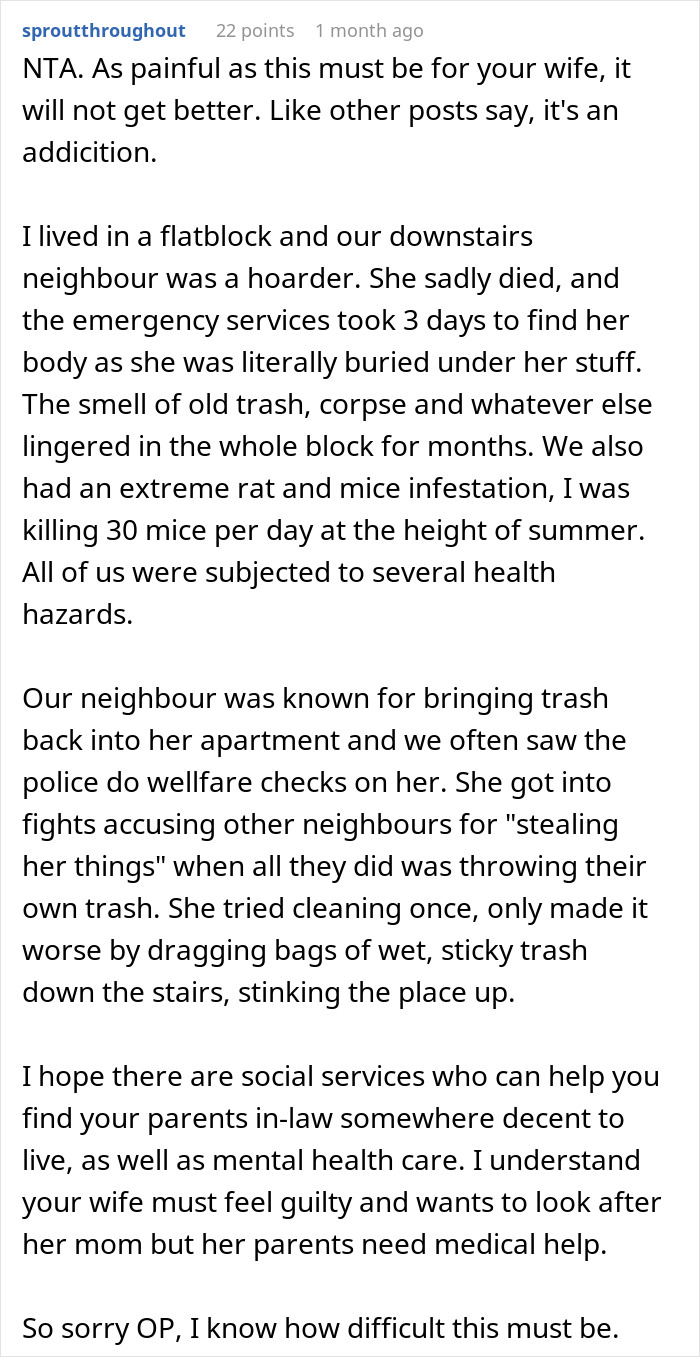

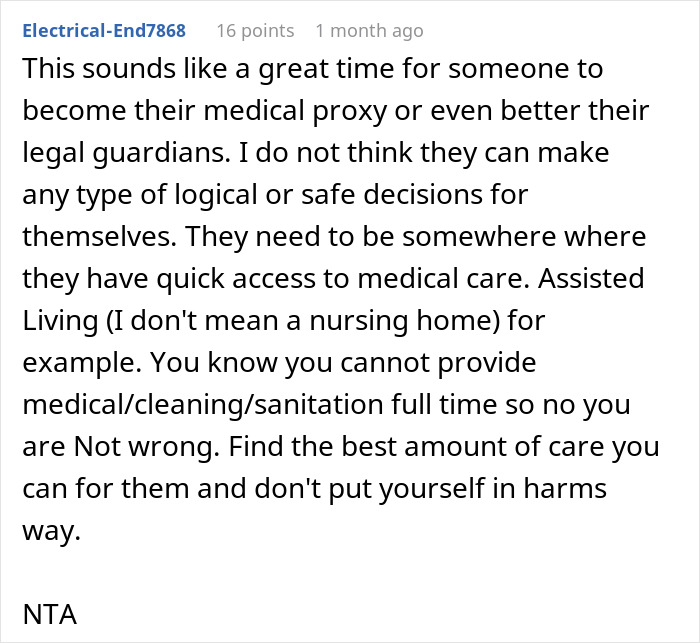

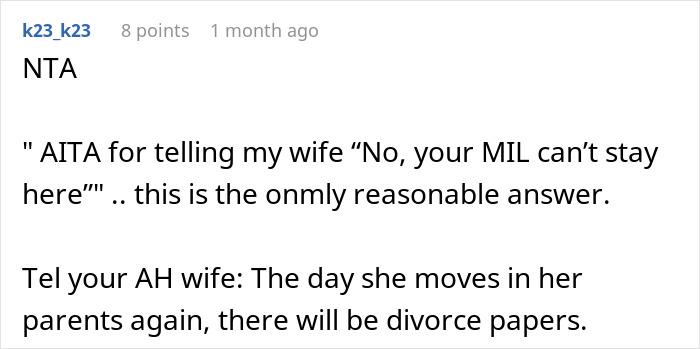
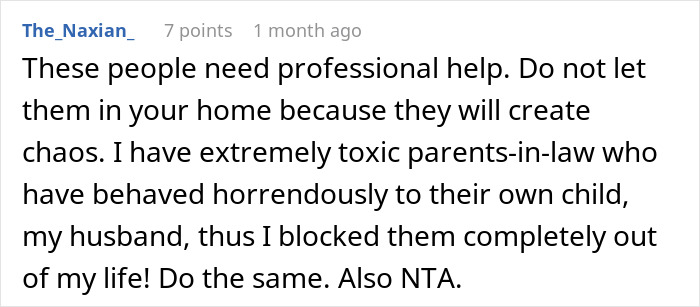

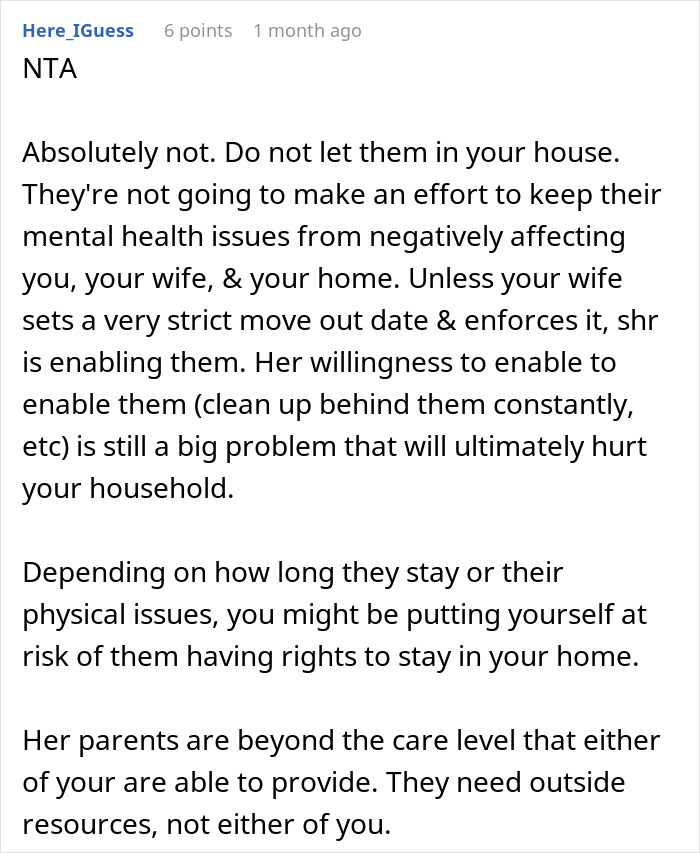
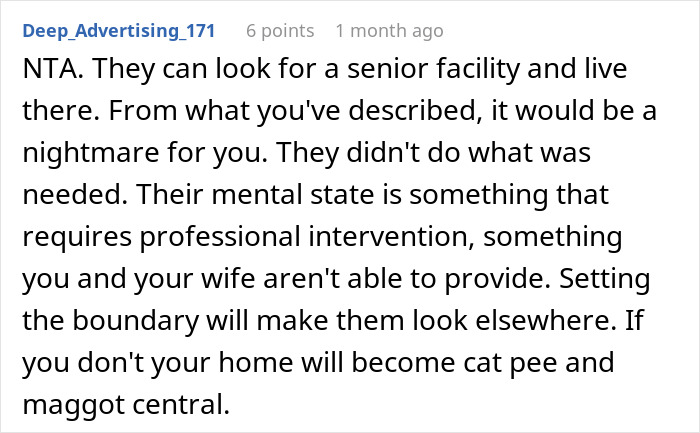


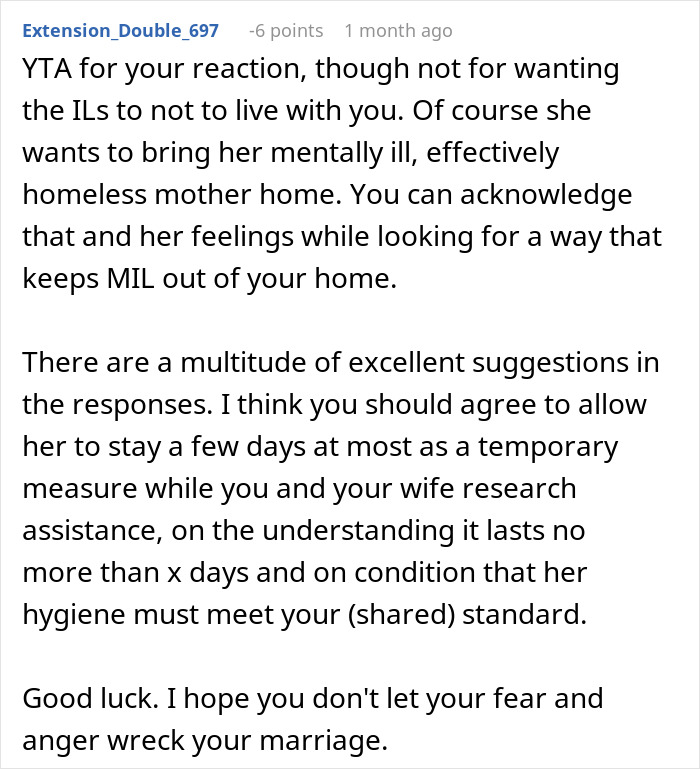
While some thought that he should have let the in-laws stay

The post Guy Refuses To Let Hoarder In-Laws Live With Him: “They’re Just Gross” first appeared on Bored Panda.
from Bored Panda https://ift.tt/x06h9L1
via IFTTT source site : boredpanda
