When a new boss walks into a new company, it’s unfamiliar territory to them. And it’s not just their suitcase that they’re carrying but also the weight of expectations and scrutiny, both from the higher-ups and the people they now oversee.
Driven by a desire to assert their authority and leave a lasting impression, these leaders may embark on bold initiatives or make drastic changes. However, this statement of self-validation can backfire. Just a few days ago, Reddit user MooseQuirky1702 submitted a story to the platform’s ‘Malicious Compliance‘ community that perfectly illustrates this.
In it, they explained that since the pandemic, their company had structured everything around remote work, which also brought tremendous results. However, the new guy in charge decided it was time to come back to the office. And it only went downhill from there.
This manager just left the company they had been at for 27 years, and many followed

Image credits: Israel Andrade (not the actual photo)
All because the new boss was fixated on bringing them back to the office after everyone got used to working remotely
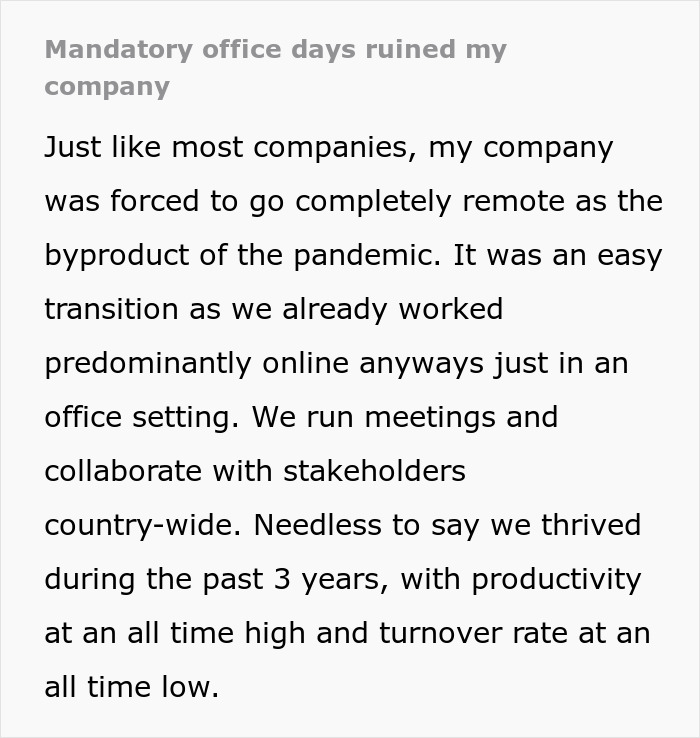
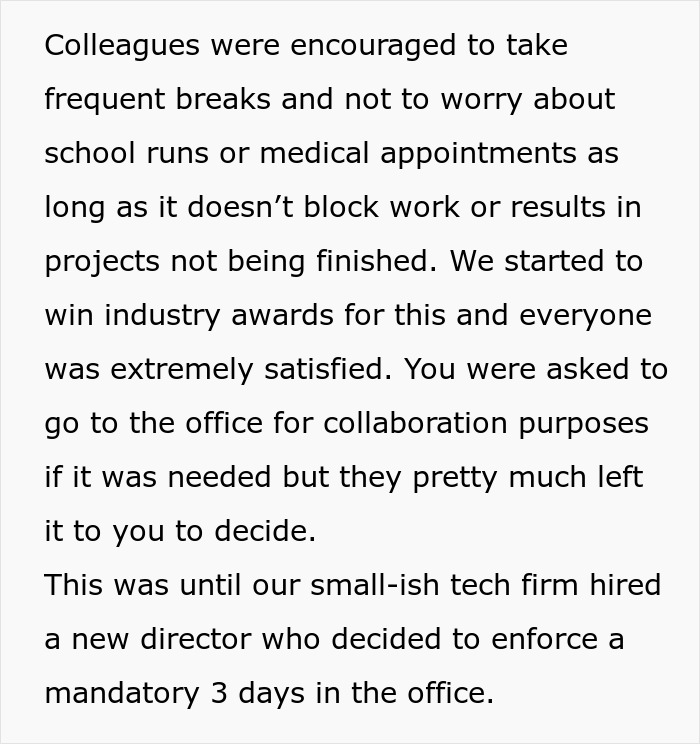

Image credits: LinkedIn Sales Solutions (not the actual photo)
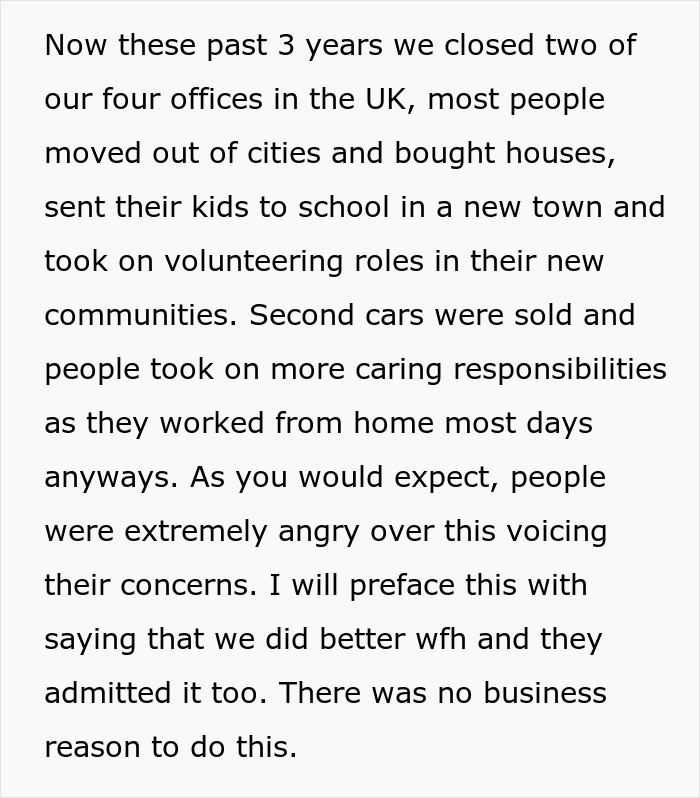
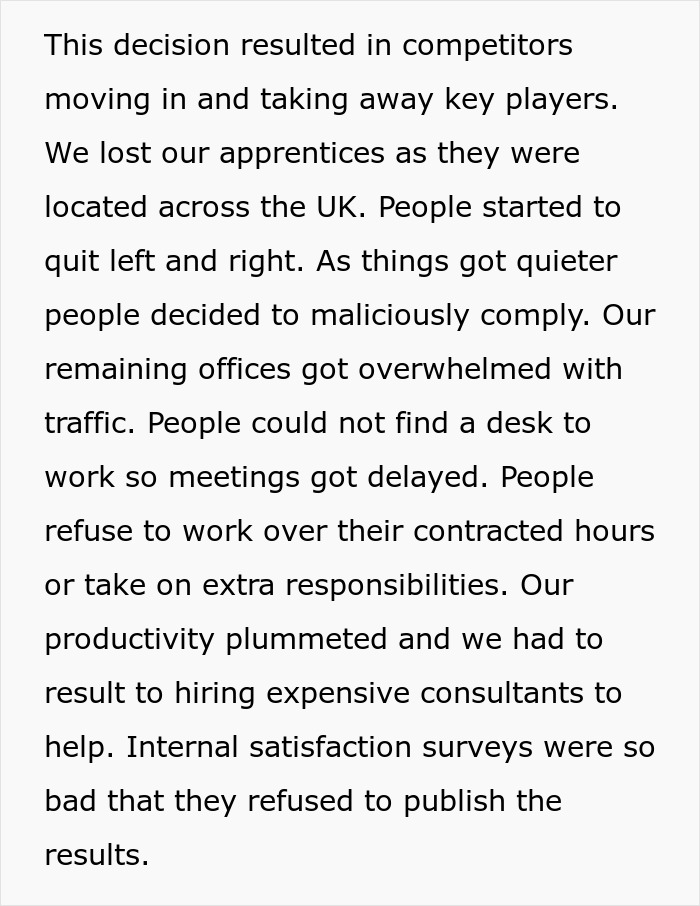

Image credits: Johnny Cohen (not the actual photo)
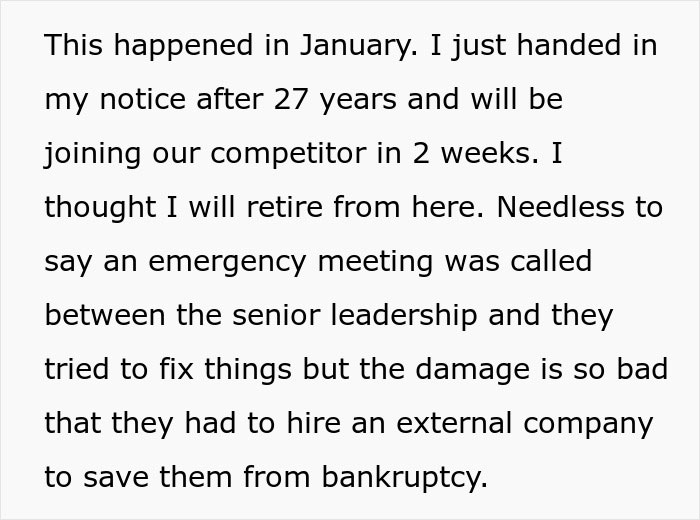
Image credits: MooseQuirky1702
Nowadays, many companies are requiring employees to return to the office full or part-time
Since COVID-19 restrictions eased, many companies have been calling their employees back to the office because some executives and leaders believe this will increase productivity.
Among major employers, for example, JPMorgan Chase is abandoning a hybrid attendance policy it adopted during the pandemic and requiring people to return to the office. Meanwhile, Amazon’s Andy Jassy issued a mandate for corporate staffers, and Salesforce’s leadership has also drafted a return-to-office policy.

Image credits: Ant Rozetsky (not the actual photo)
However, that can be done in accordance with the employees’ needs
Workplace platform Envoy surveyed 800 company leaders who shared the incentives and changes they are employing to encourage people to return to the office.
The results showed that:
- 88% of companies are using incentives to get their workers back on site;
- 77% of organizations have adopted a hybrid working model, with an “at-will” hybrid policy being the most popular;
- 61% of businesses are making changes to the physical workplace;
- 5% have no office attendance policy.
Meanwhile, Blackhawk Network, an e-commerce payment platform, conducted research into the workplace preferences of more than 3,000 Americans. The company found that while remote workers want to stay remote, various incentives can be effective in encouraging employees to return to physical offices.
In addition to monetary incentives, 49% of respondents—including those who enjoy and even prefer working in person—said they’d be more willing to work in a physical office if they were able to enjoy a four-day workweek.
Meaning that a lot of current workers are looking for flexibility in their schedules.

Image credits: ConvertKit (not the actual photo)
More than half of workers are now actively trying to make a career change
In a recent FlexJobs survey, more than 1 in 5 (21%) said inflexible work hours were the main reason why they want to quit their jobs. Fortunately, flexible schedule jobs—where the employee can work a variation of hours and be mostly in charge of their own scheduling—can help workers regain control over their working hours and maintain a healthy work-life balance.
The survey also found that as the workforce continues to shift, so do people’s attitudes toward their current profession. In fact, a whopping 58% of workers are actively trying to make a career change.
FlexJobs told Bored Panda in an email statement that the top 10 flexible schedule remote job titles in 2023 are:
- Accountant
- Account Manager
- Bookkeeper
- Business Development Manager
- Content Writer
- Customer Service Representative
- Product Designer
- Product Manager
- Therapist
- Virtual Assistant
FlexJobs said that people who are looking for a more flexible job could start by keeping an eye out for certain keywords in the ads, such as:
- Completely flexible. This means having total control over start and end times.
- Alternative schedule. Working outside of the typical 9-to-5 shift (such as a second shift or overnight).
- Compressed workweek: Fitting a five-day workweek into three or four days by working longer hours on scheduled days.
- Results-only work environment (ROWE). These places focus completely on results and productivity, instead of the number of hours clocked in. If a worker finishes their tasks before the workday ends, they’re free.
- Split shift. Working in blocks throughout the day, and still working eight hours, but not all at once. Employees might need to work four hours in the morning, take a long break, then work another four hours after dinner.
- Flex time. This usually means having the option to start earlier or end later while maintaining a consistent daily or weekly work schedule.
“When researching companies, see if flexible schedules are a part of everyday life or only offered to certain positions,” the team at FlexJobs highlighted. “This will help narrow the search to companies that support flexibility throughout their culture. If it’s unclear whether the role has a flexible schedule, don’t hesitate to reach out to a recruiter or HR representative to clarify.”

Image credits: Brooke Cagle (not the actual photo)
As the story went viral, its author provided more context in the comments
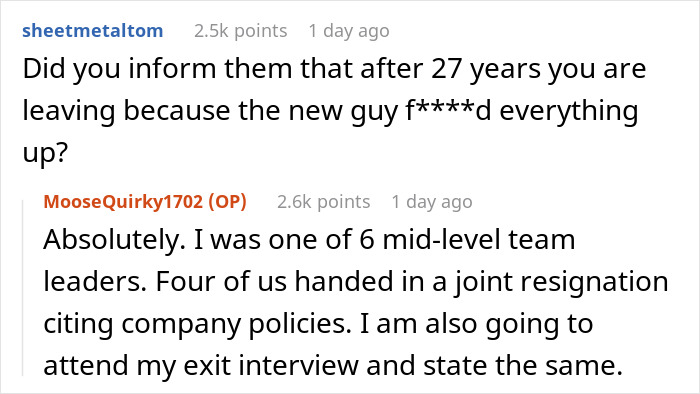
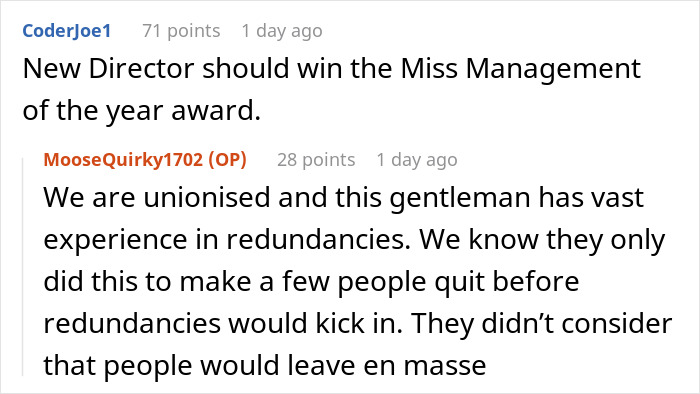
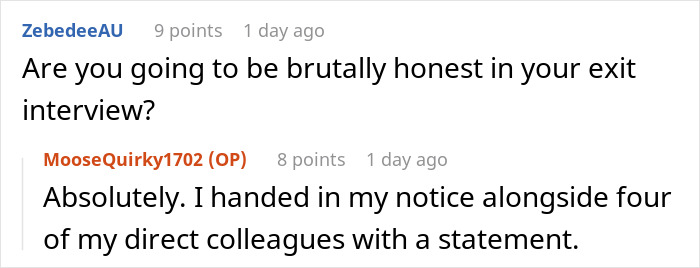
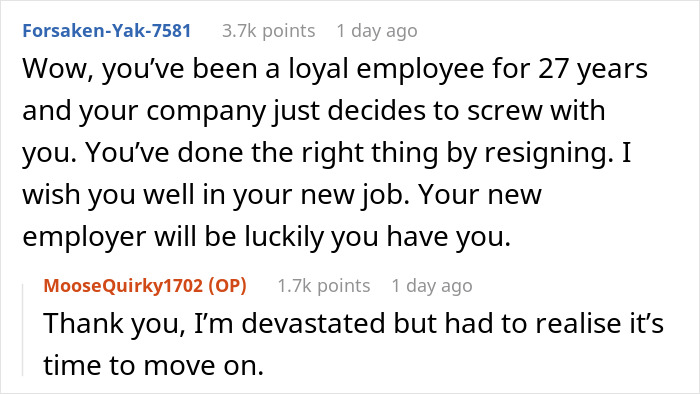
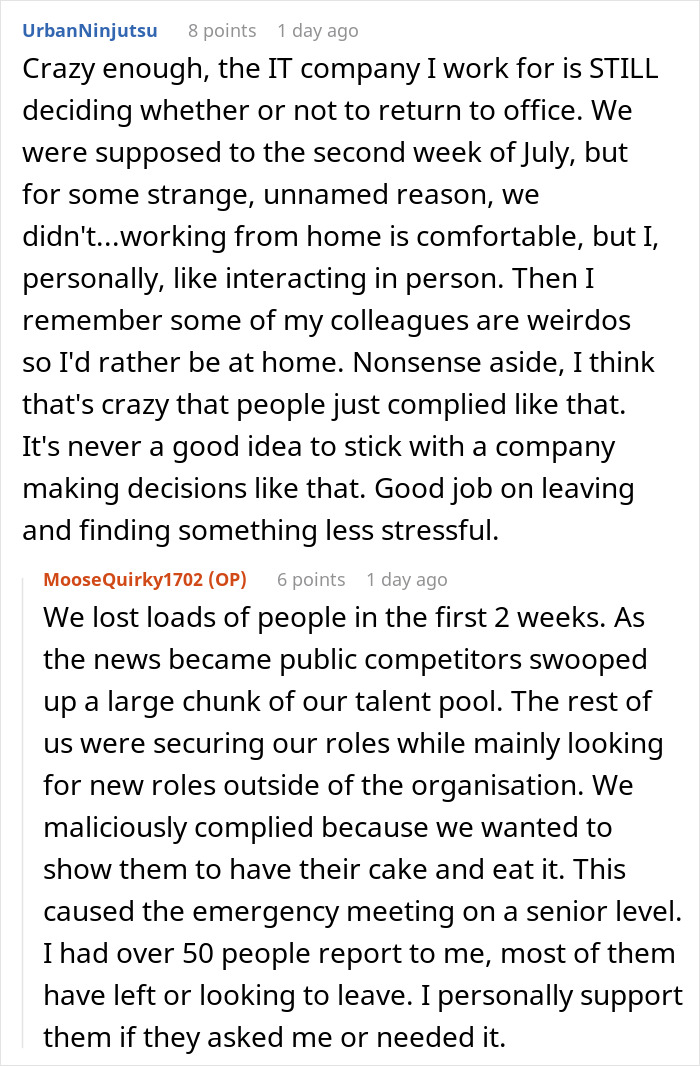
And people were just as appalled as the former employee

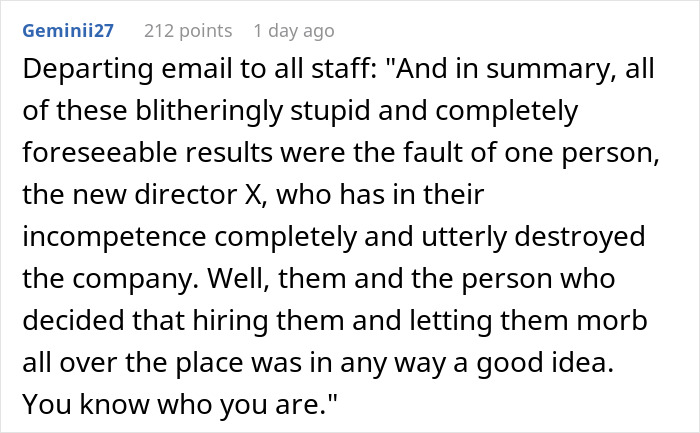
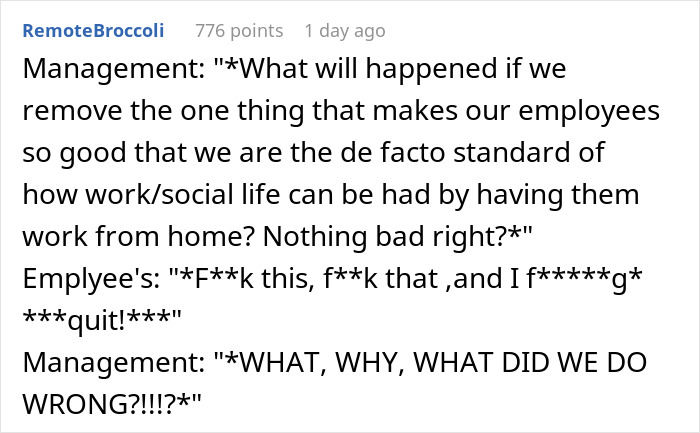
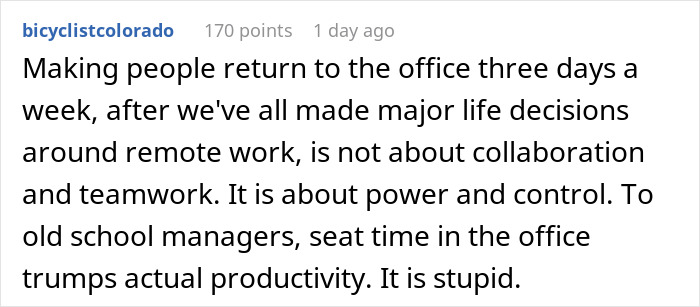
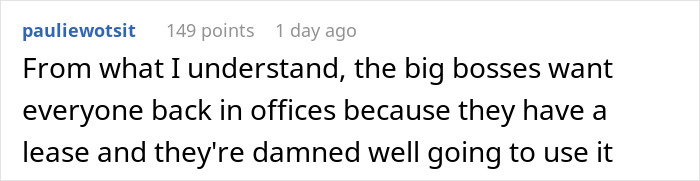
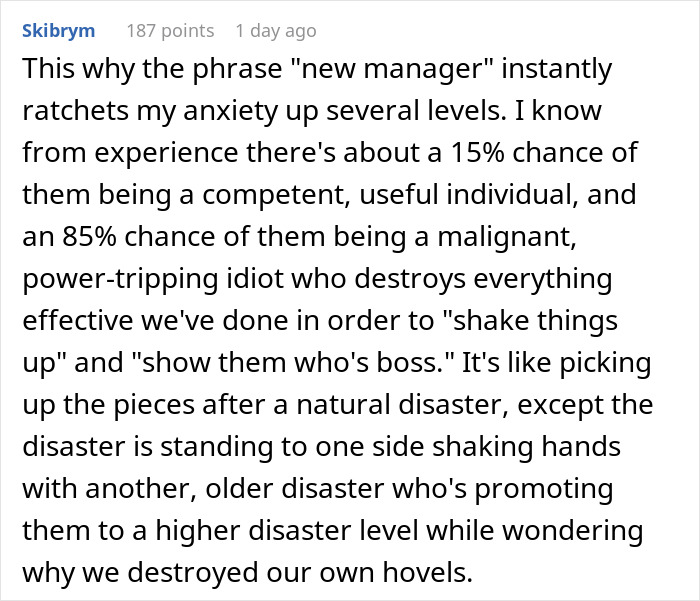
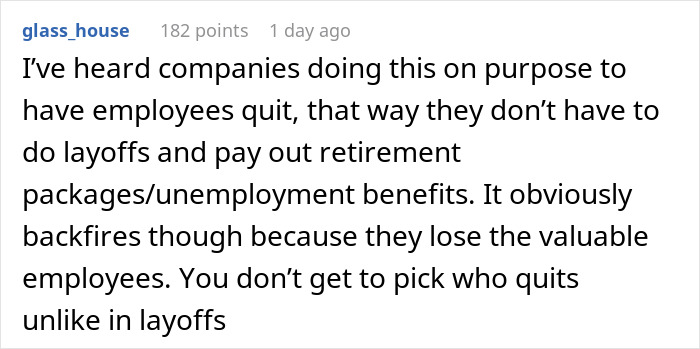
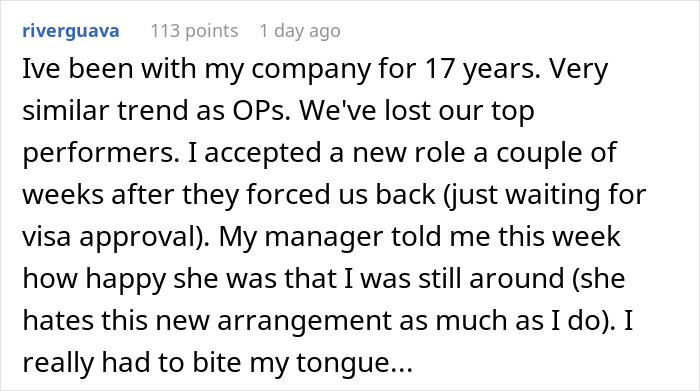
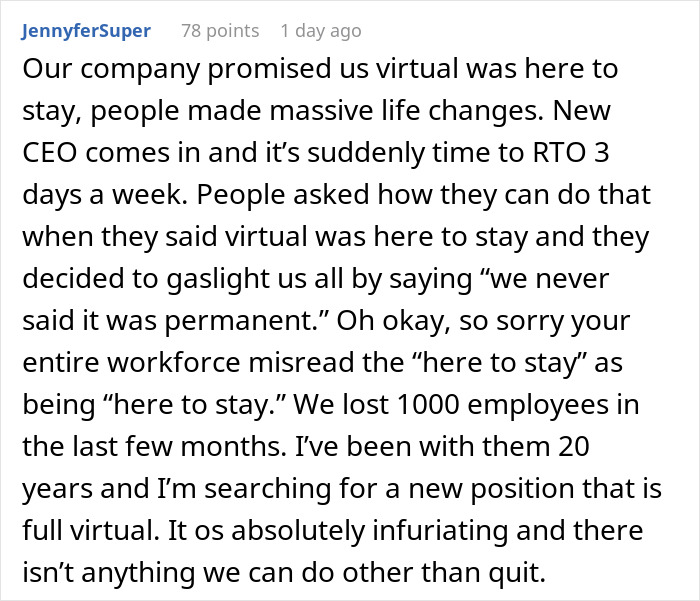
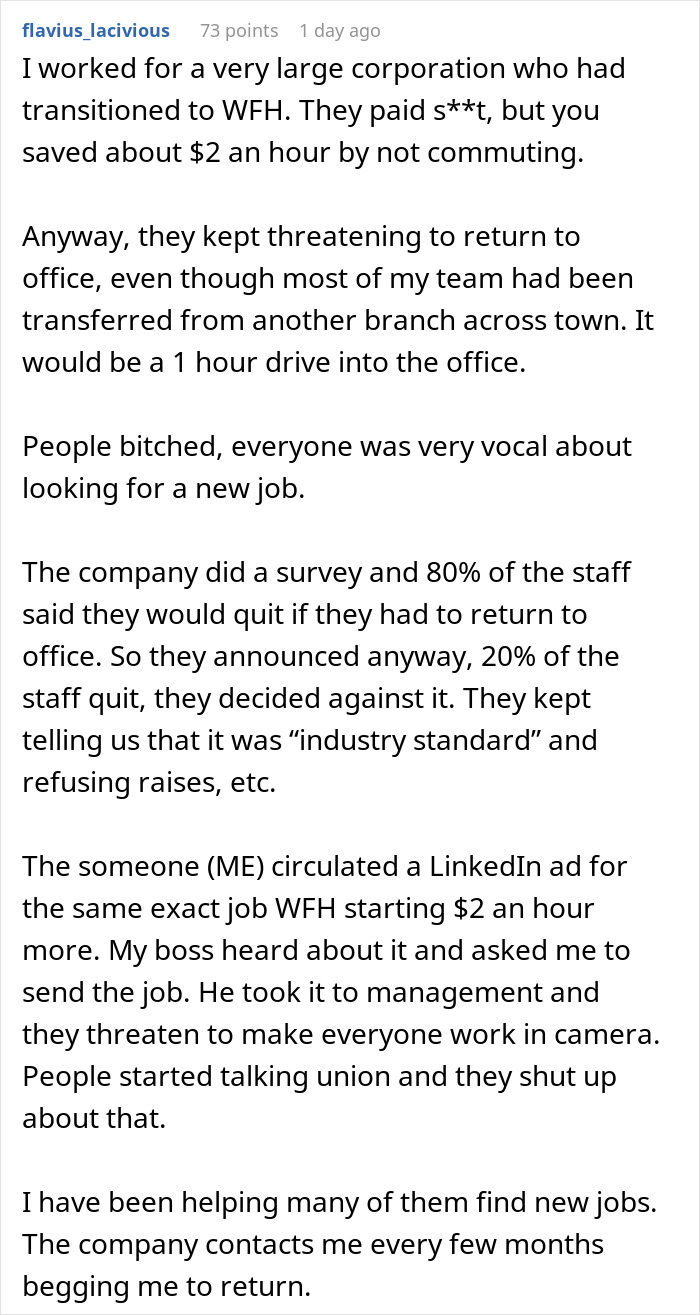
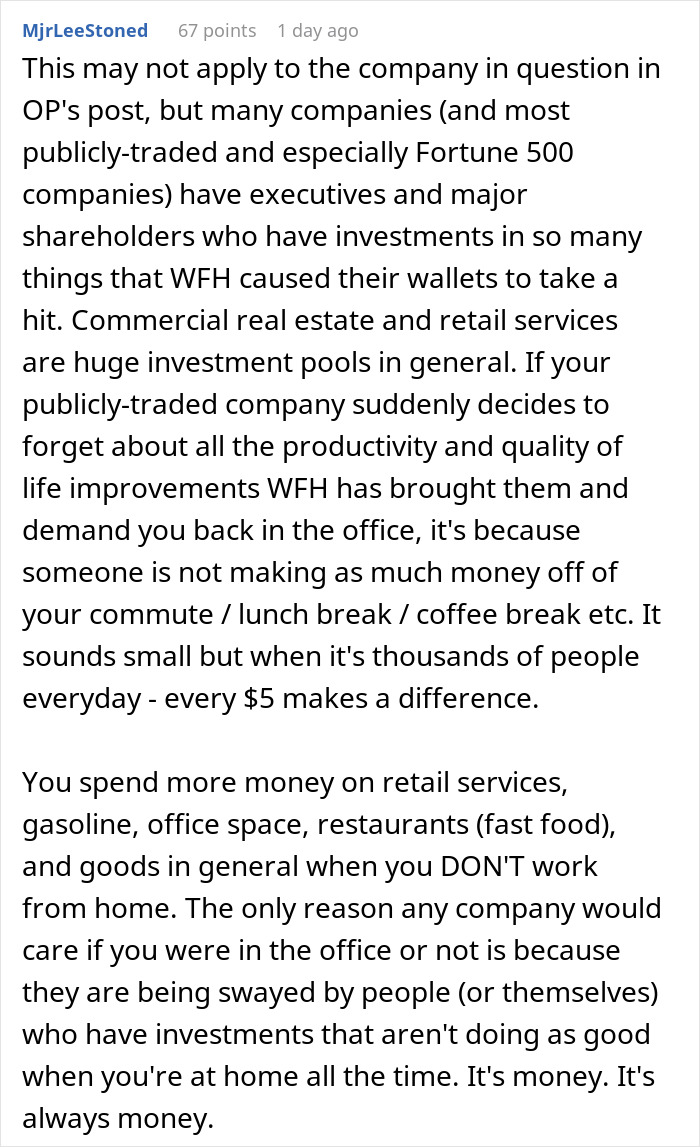
Some even shared similar experiences of their own
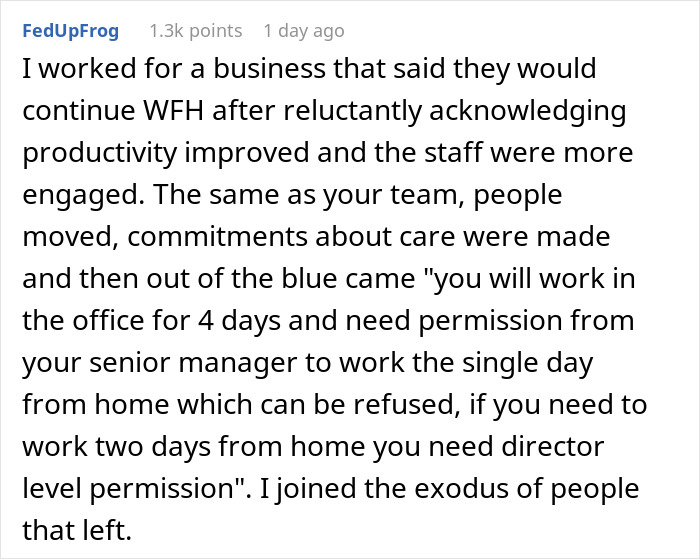
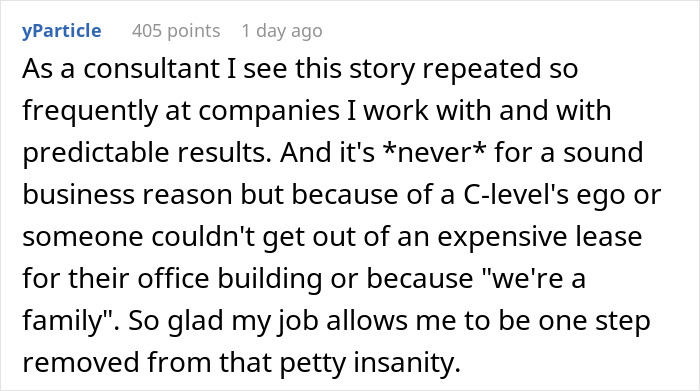
The post New Boss Reintroduces Work From The Office, And It Destroys The Company first appeared on Bored Panda.
from Bored Panda https://ift.tt/rc1bFTE
via IFTTT source site : boredpanda
