Who goes to a literal dinner party and refuses to even try a bite of food that was prepared for them? That’s the question people were left pondering after one woman shared how a family get together got real awkward, real fast.
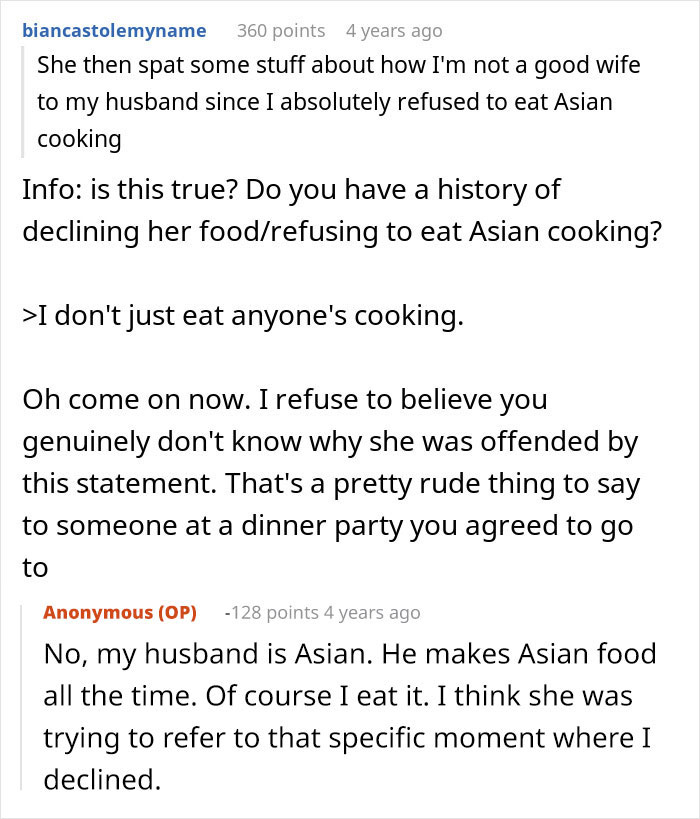
The woman says her Asian mother-in-law prepared a special dish and was excited for the guests to try it. When DIL refused to even taste it, all hell broke loose. The MIL accused her of being “too American” and said she wasn’t a good wife. The woman claims she didn’t mean to be rude. But netizens believe otherwise… all because of one detail.
Being in an intercultural marriage means you might be exposed to food you’re not used to

Image credits: Andrea Piacquadio / Pexels (not the actual photo)
So when one woman turned her nose up at her MIL’s dinner, it didn’t go down well
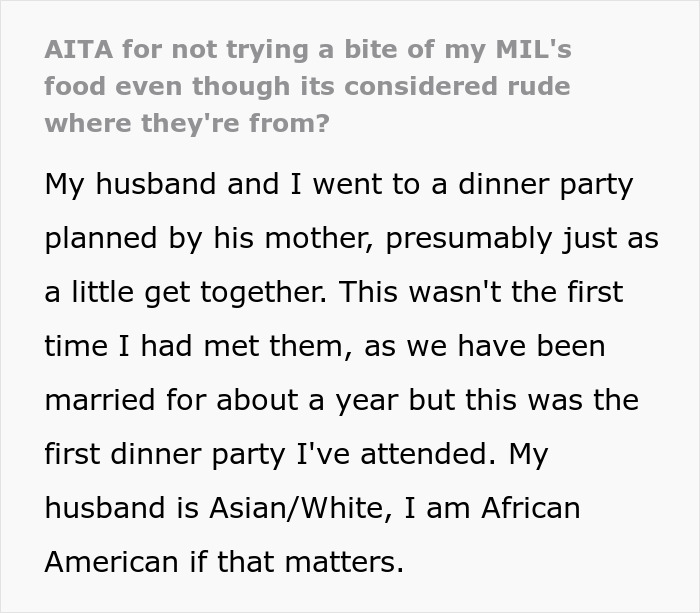
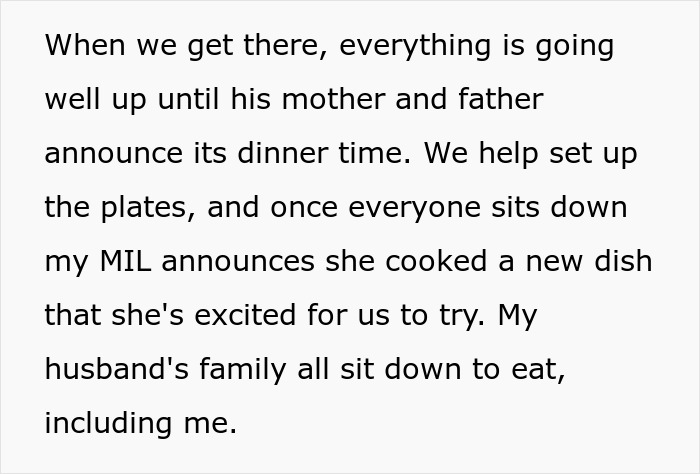

Image credits: cottonbro studio / Pexels (not the actual photo)
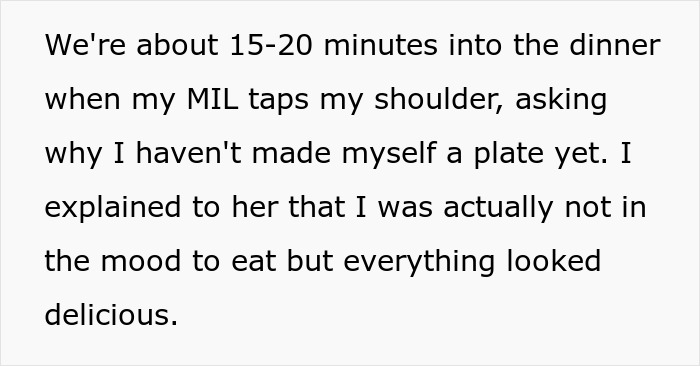
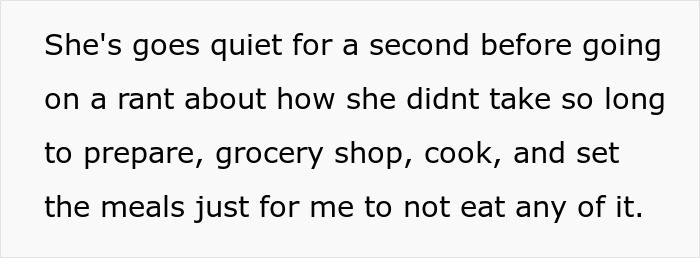

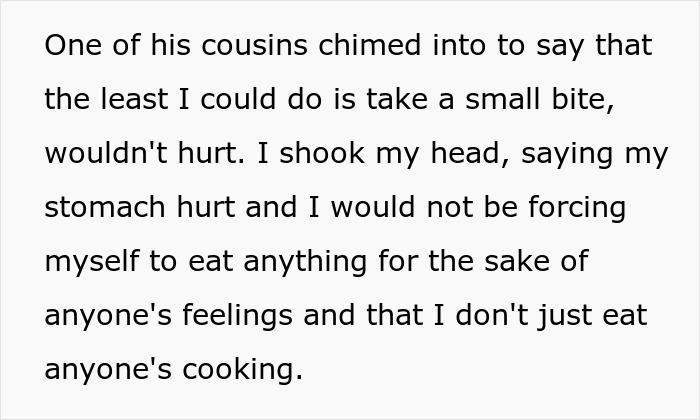

Image credits: Vitaly Gariev / Pexels (not the actual photo)
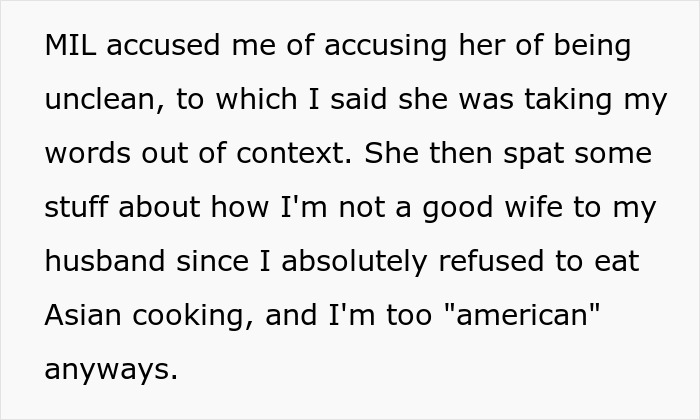
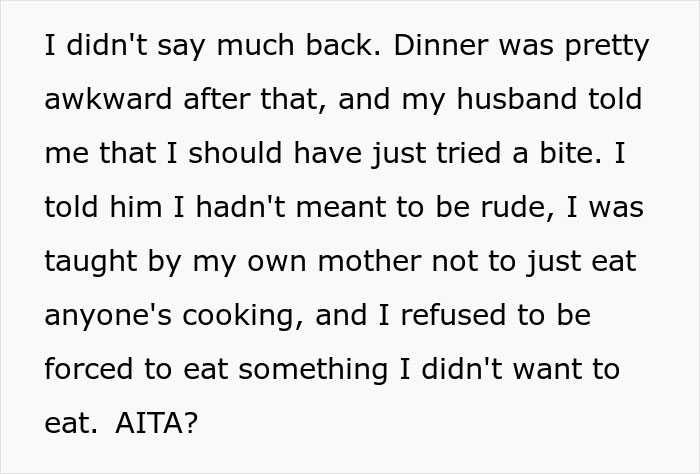
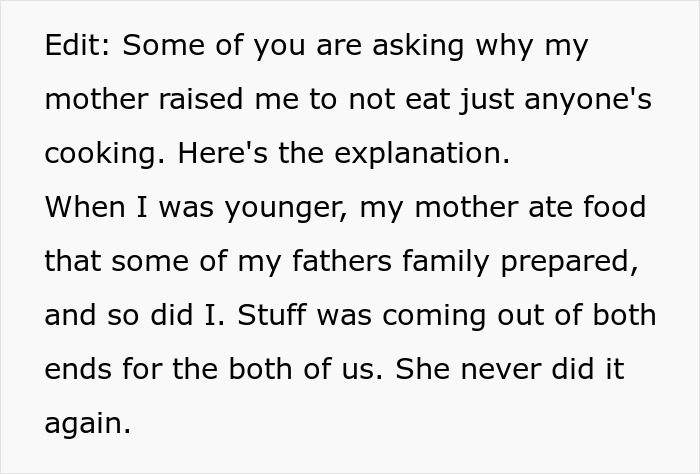
Image credits: anonymous
Image credits: cottonbro studio / Pexels (not the actual photo)
“By accepting an invitation to attend a dinner party, you enter into a social contract that includes certain expectations, such as eating”: an expert’s opinion
There’s no rule that forces you to eat everything anything served to you at a dinner party. However, there is a right and wrong way to decline a meal. It’s all about being respectful of others and considerate of their feelings.
“Since refusing food could be viewed as disrespectful or insulting — especially when someone has invested time in preparing a dish — it’s important to make sure your fellow guests understand your reasons if such a situation arises,” explains food writer Chris Sands in an article for Food Republic.
The foodie expert says that if it’s a case of you having allergies other restrictions, it helps to disclose your your dietary needs to your host in the days leading up to the dinner party. However, if you still find yourself needing to decline a particular dish, Sands warns that you should have an explanation ready.
“If you can frame your refusal as a compliment, or include one afterward, so much the better,” he adds.
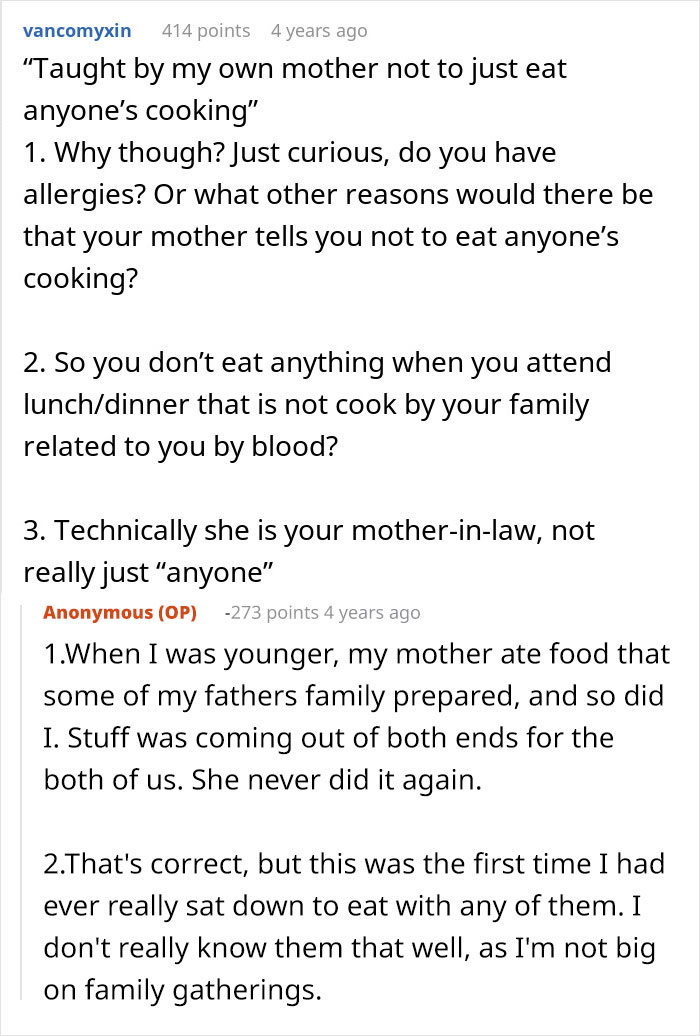
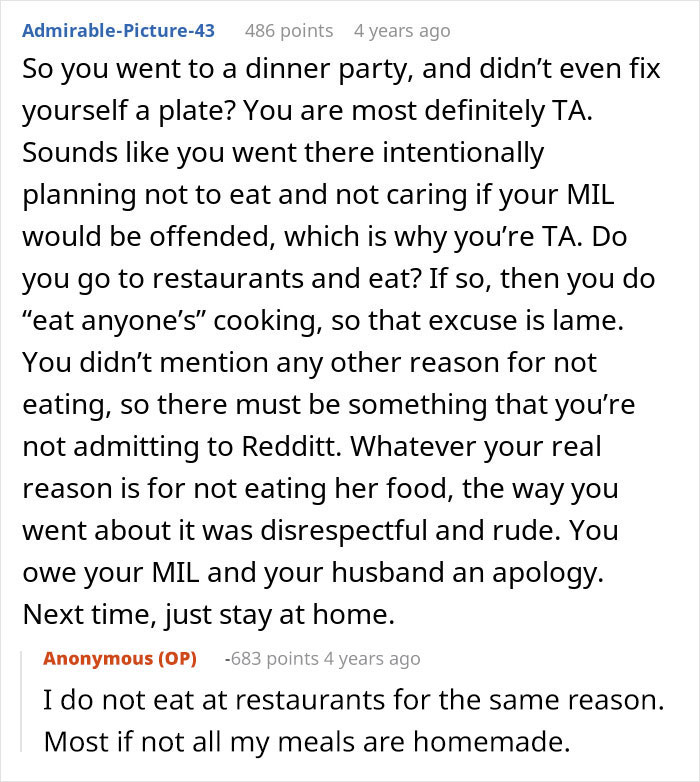
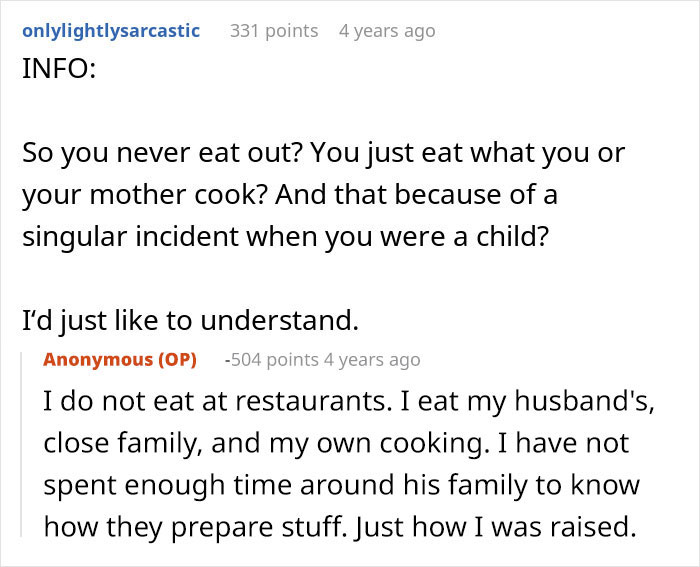
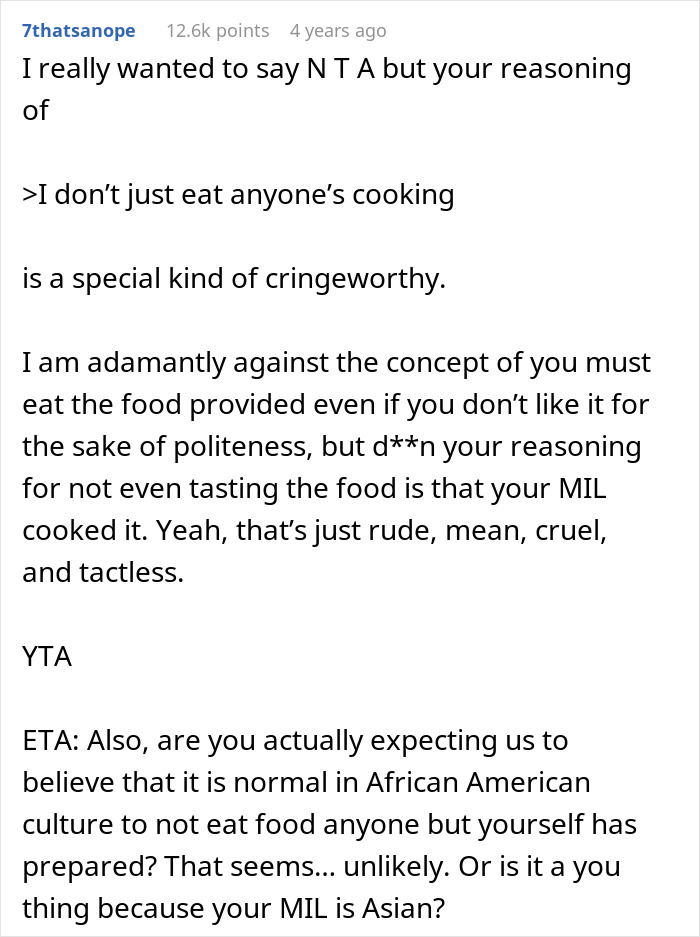
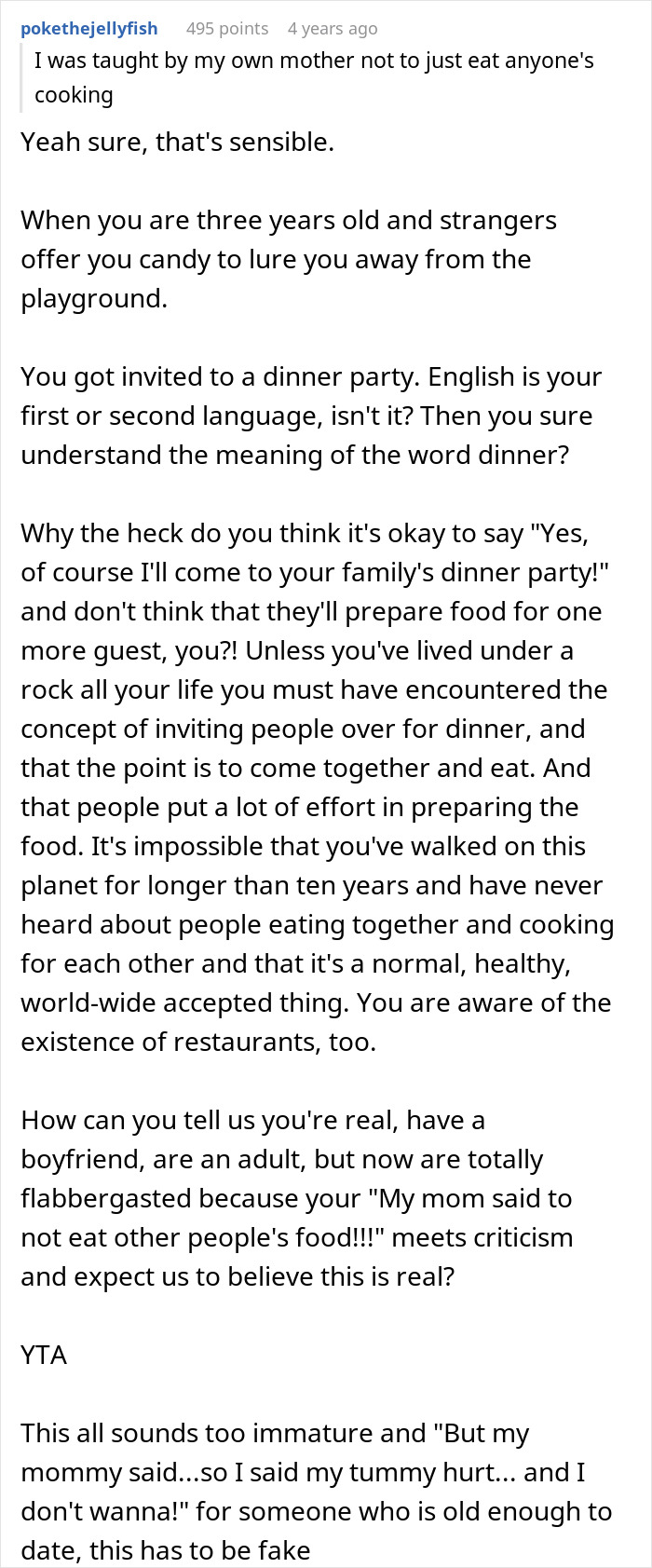
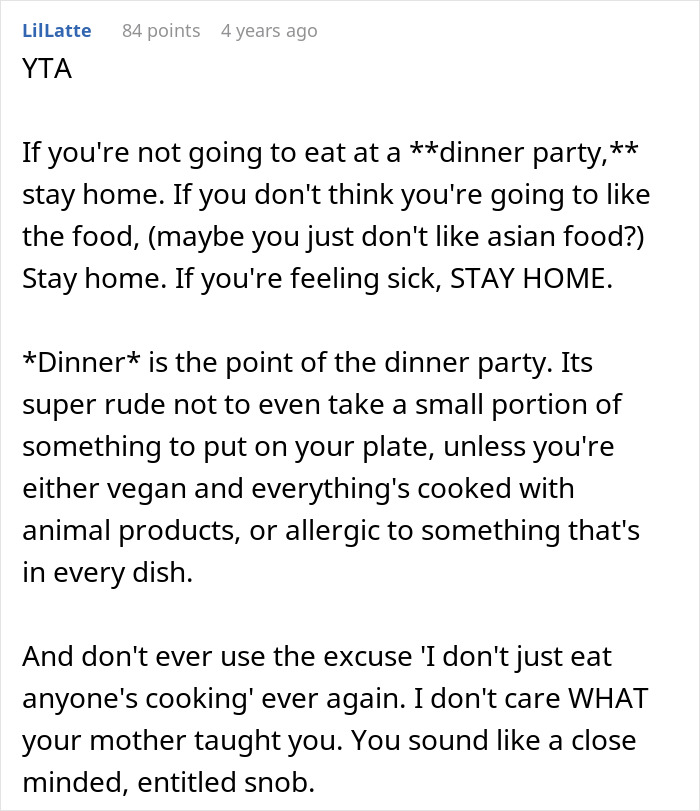
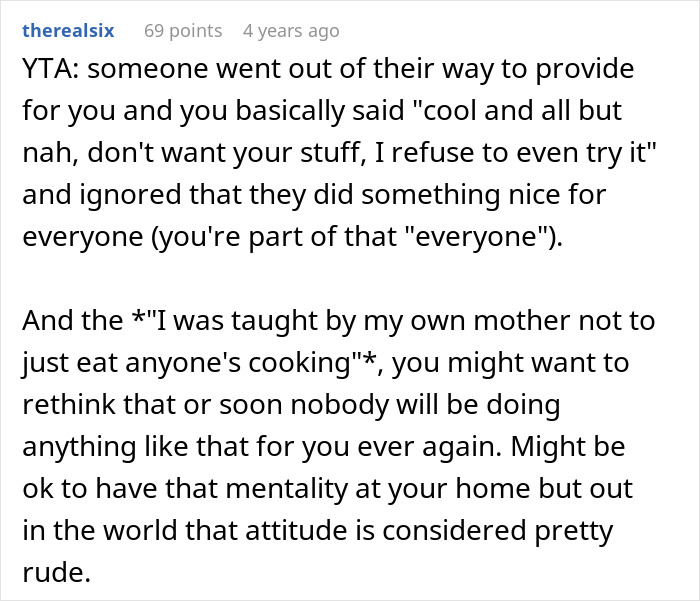
If it’s simply a case of you not wanting to eat every single dish, you should politely decline, and offer an explanation. “My mother raised me to not eat just anyone’s cooking” is probably not a good one.
Sands notes that when attending a dinner party, you should also make an effort to arrive with an appetite so you can at least sample some of the offerings. You are there to eat after all. That is the whole point of a dinner party.
“By accepting an invitation to attend a dinner party, you enter into a social contract that includes certain expectations, such as eating,” Sands says, adding that this doesn’t mean you’re obligated to overindulge or eat anything you dislike. “However, a little tact can go a long way when it comes to declining food.”
Etiquette expert Myka Meier, founder of Beaumont Etiquette, agrees. “Even if you aren’t a fan of the food in front of you, put your relationship with the host first and steer clear of harsh, discourteous wording,” Meier told Eating Well.
She suggests avoiding phrases like “I didn’t like it” or “It wasn’t for me.” Use a gentler approach, she advises. “You could simply say ‘No thank you for now, maybe later’ or ‘I’m so full but thank you anyway,’” Meier suggests.
And if your mother did raise you to not eat anyone’s cooking, then you should probably ask yourself why you’ve accepted an invitation to a dinner part in the first place.
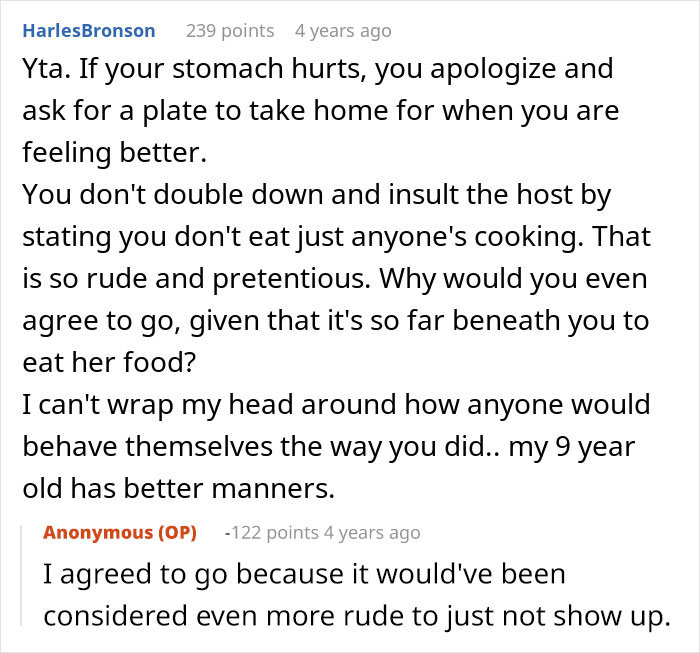
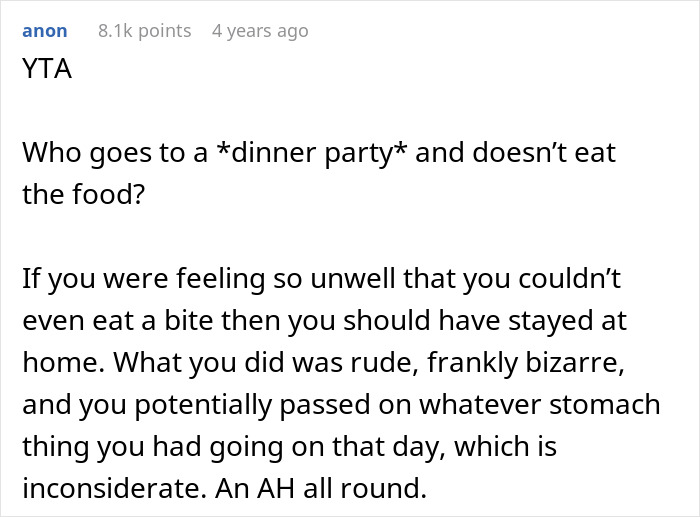
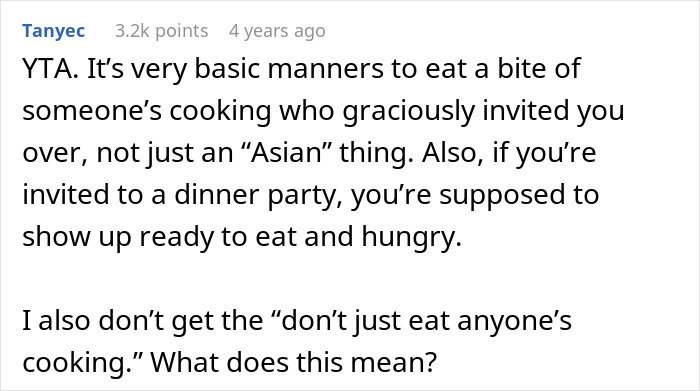
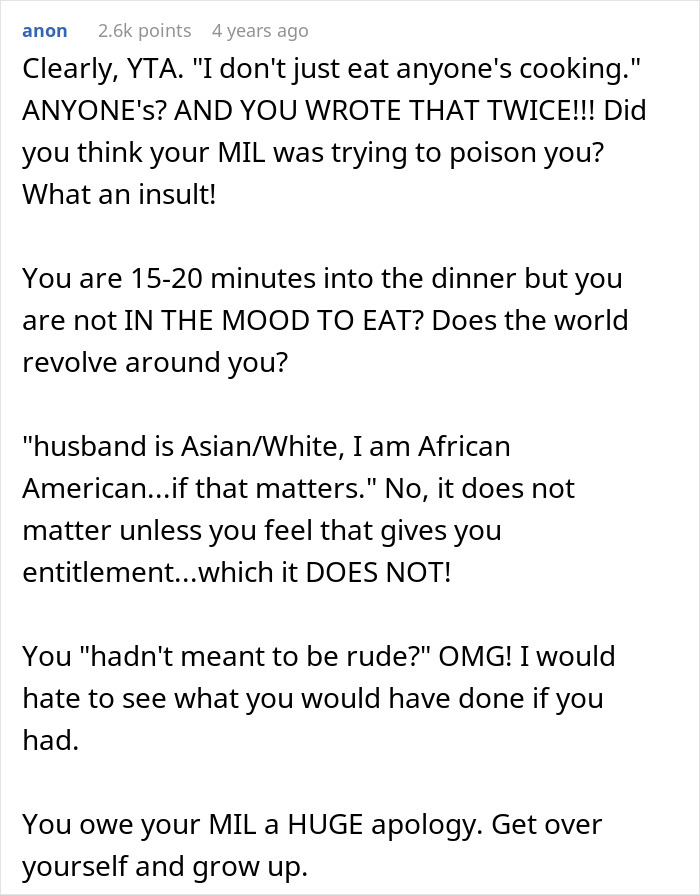
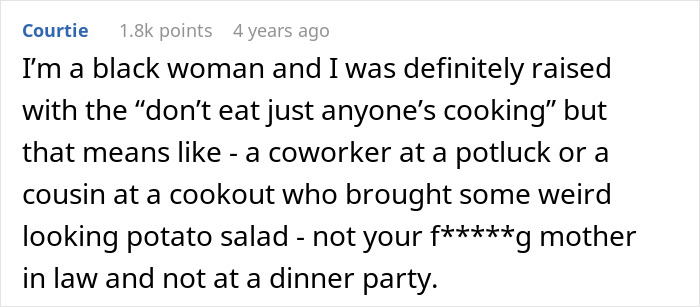
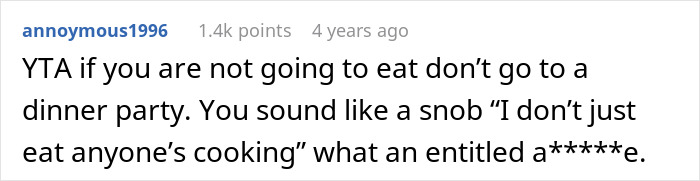
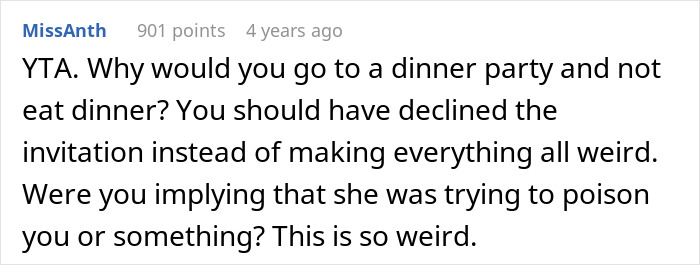
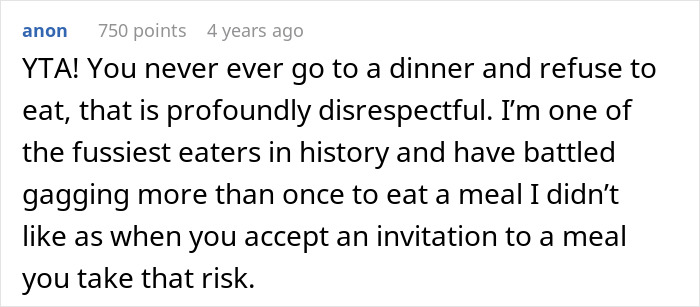
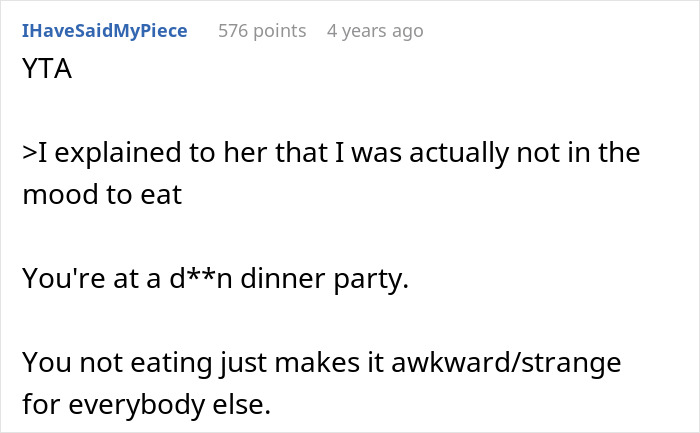
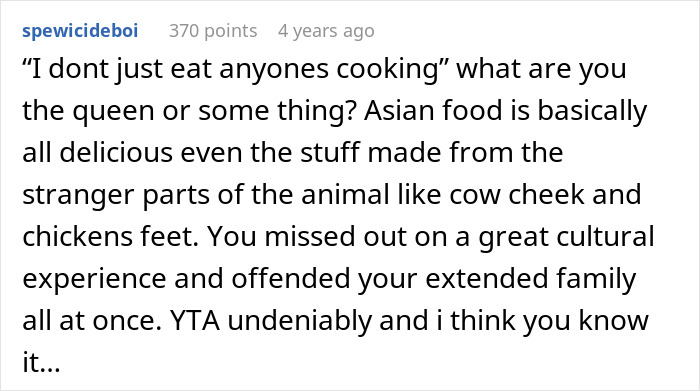
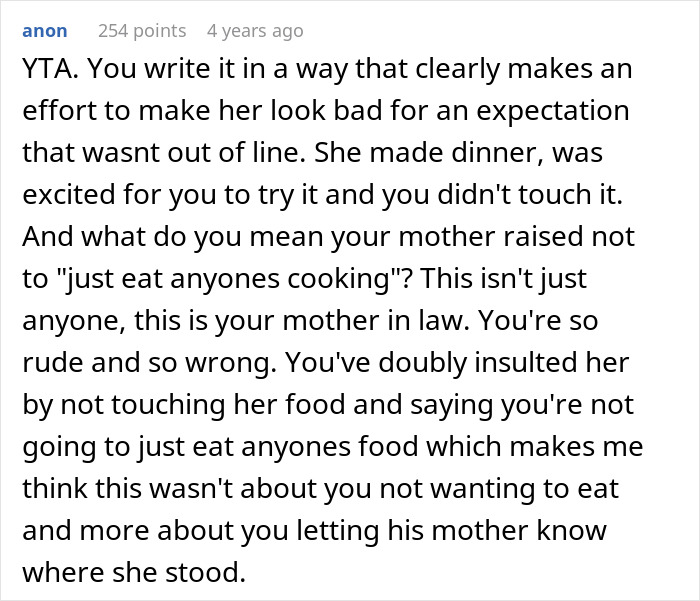
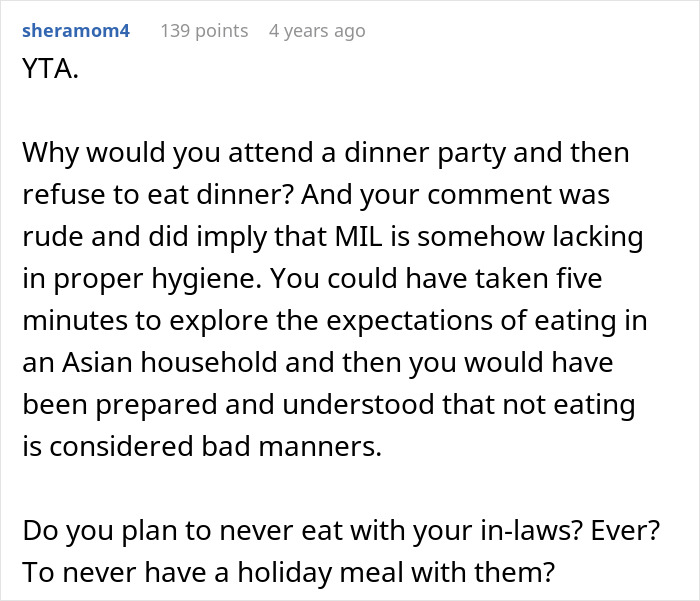
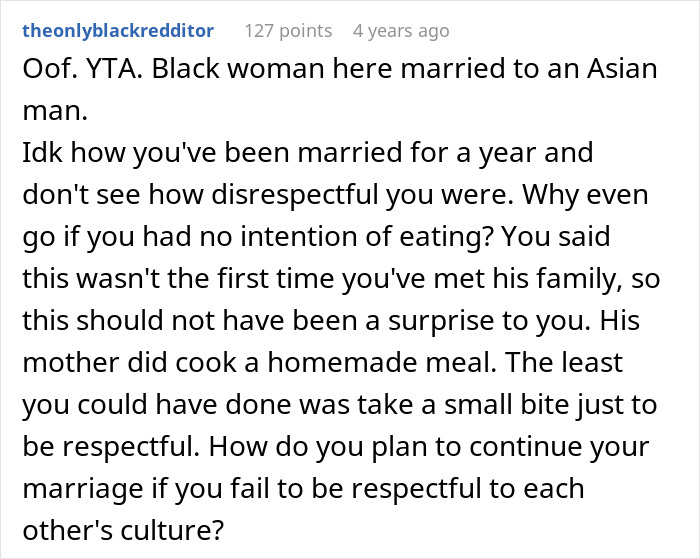
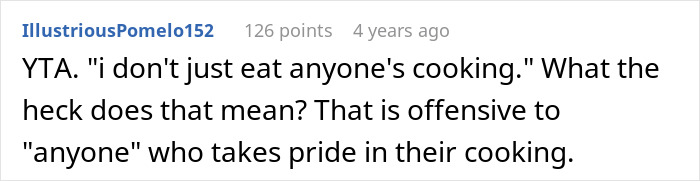
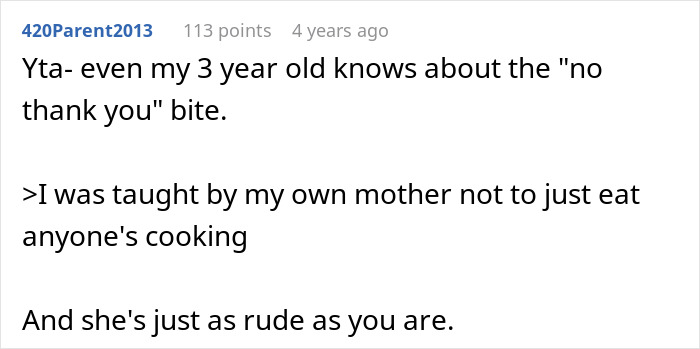
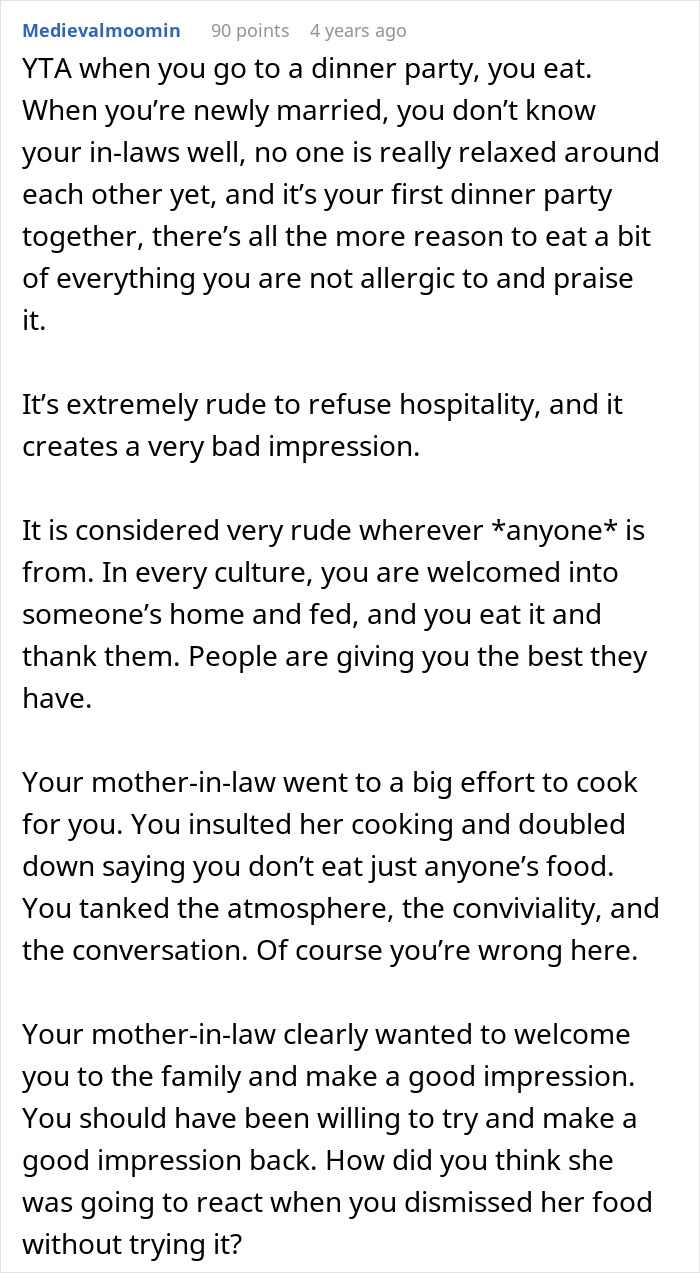
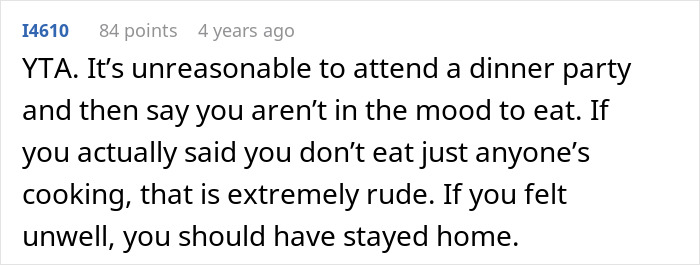
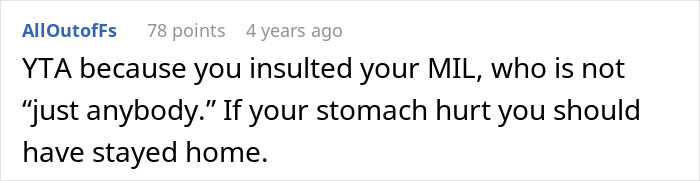
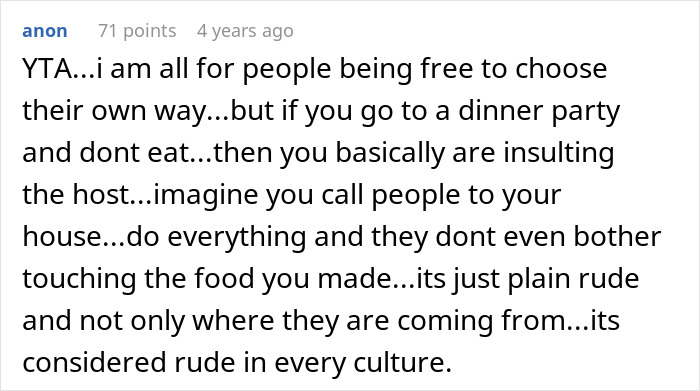
“You owe your MIL and your husband an apology”: If the woman was expecting sympathy, she didn’t find it online




from Bored Panda https://ift.tt/Fie31Ox
via IFTTT source site : boredpanda
