Man Spends His Life Thinking Something Is Wrong With Him Until One Diagnosis Changes Everything

Spread the love

In many professions, small mistakes can usually be corrected without too much damage. A writer can fix a typo with a quick edit, an accountant can revise a wrong entry, and even a missed email can often be sorted out with a follow-up. But there are certain fields where even a seemingly minor error can have life-altering consequences. In medicine, especially, one incorrect diagnosis can send someone down the wrong path for years, affecting not just their treatment but their entire understanding of themselves.

That’s exactly what happened to a man named Tyler Barnett. In an emotional video, Tyler opened up about the overwhelming sense of peace and relief he felt after finally being diagnosed with autism and ADHD at 42. For years, he had been treated for conditions that never fully explained what he was experiencing, and the misdiagnoses only made things harder to navigate. Keep scrolling to watch the entire video.

Getting the right diagnosis can be life-changing, helping people better understand themselves and access the support they truly need

A man thinks something is wrong with him as he sits, hands clasped, listening to a diagnosis that changes everything.

Image credits: prostooleh

A man named Tyler Barnett finally received an autism and ADHD diagnosis at 42 after years of unanswered questions
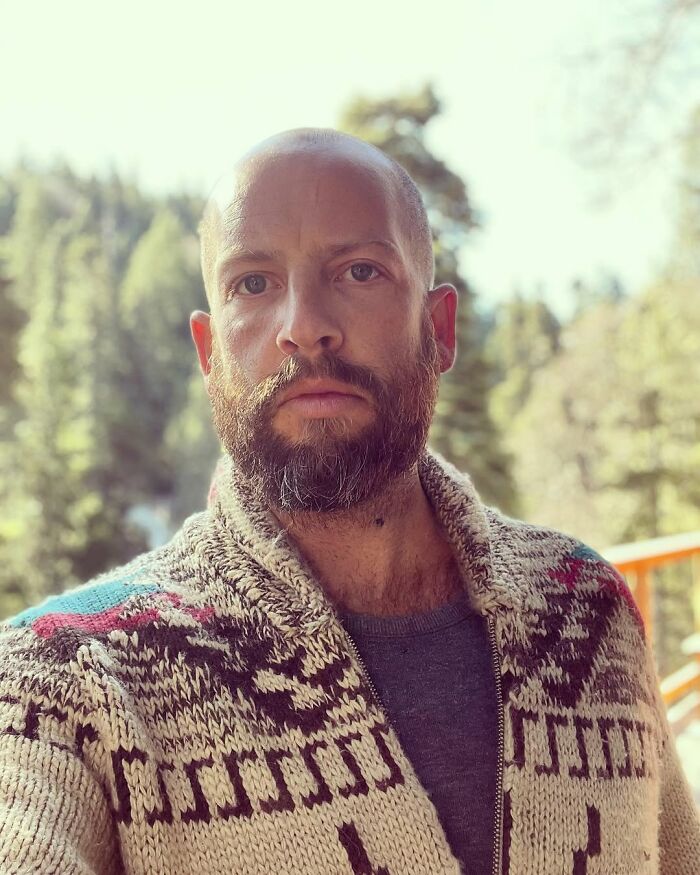
A bearded man, looking intently at the camera, wearing a patterned cardigan. His life changes after one diagnosis.

Image credits: tylerlbarnett

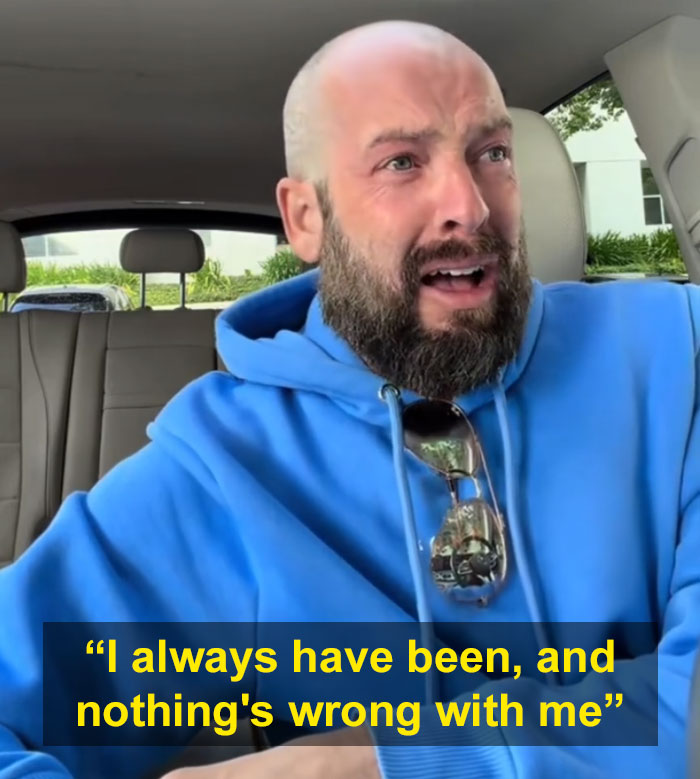
Overcome with emotion, Tyler shared the powerful realization that there was never anything “wrong” with him
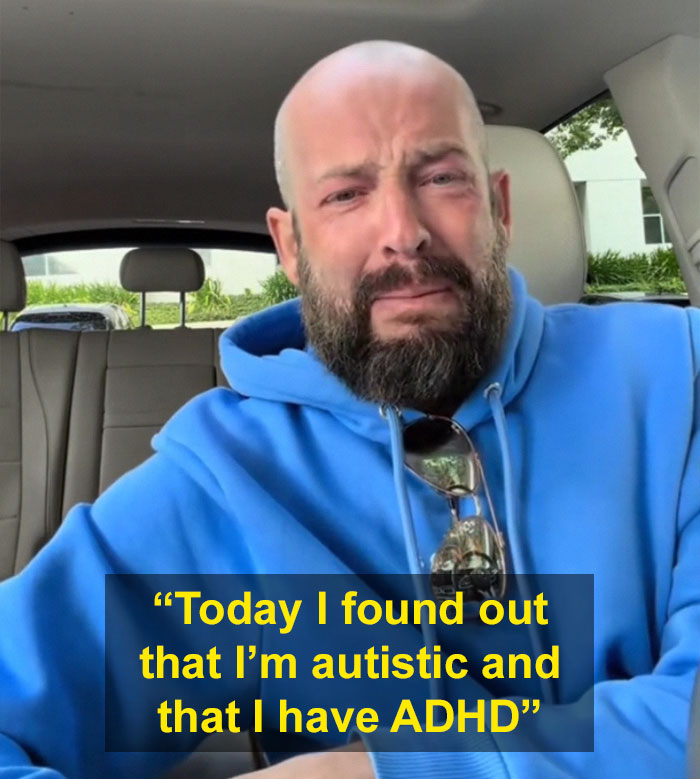
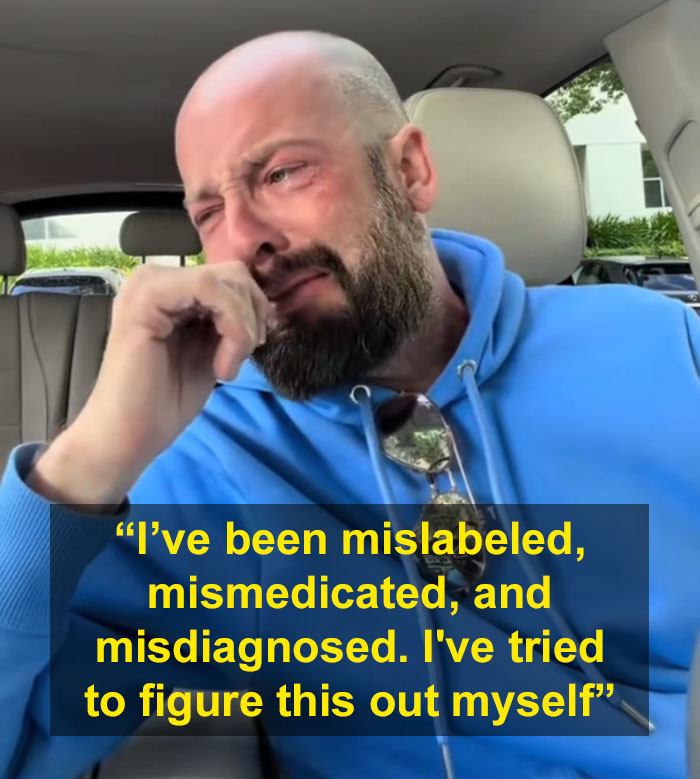
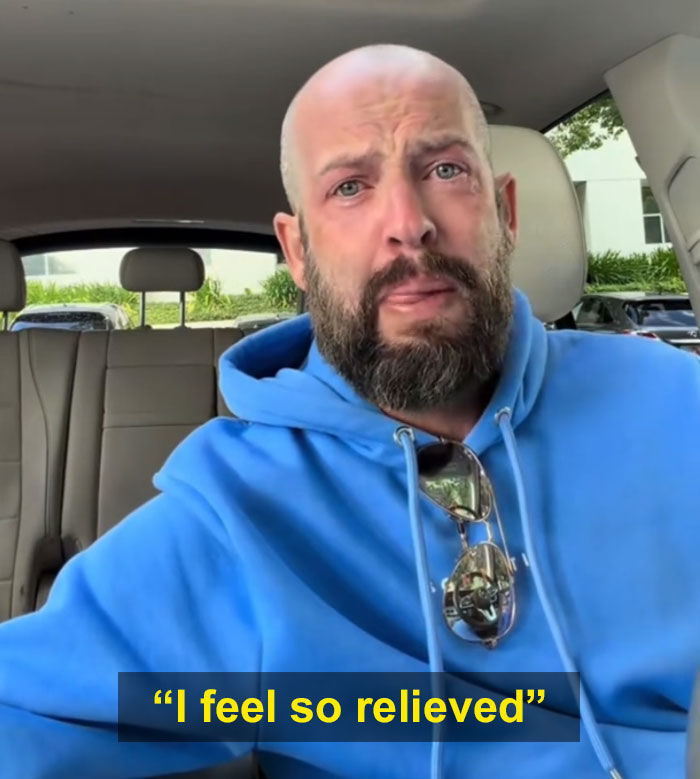
A man in a blue hoodie crying, expressing relief after a diagnosis that changes everything. Feeling something is wrong with him.

Image credits: millennialdad

A man in a blue hoodie with a beard, looking emotional, finding nothing's wrong with him after a diagnosis.

Image credits: millennialdad

A crying man in a blue hoodie in his car, expressing how a diagnosis changes everything after feeling something is wrong.

Image credits: millennialdad

Man with beard and blue hoodie, tears in his eyes, feeling relieved after a diagnosis, no longer thinking something is wrong with him.

Image credits: millennialdad

Watch his full story here

@millennialdad Just got diagnosed with autism and adhd after 42 years of trying to figure out just what exactly was wrong with me. Feeling so much relief…but so much grief for little me who deserved to know. #autism #adhd #audhd #actuallyautistic #neurodivergent @autism speaks ♬ original sound – Millennial Dad
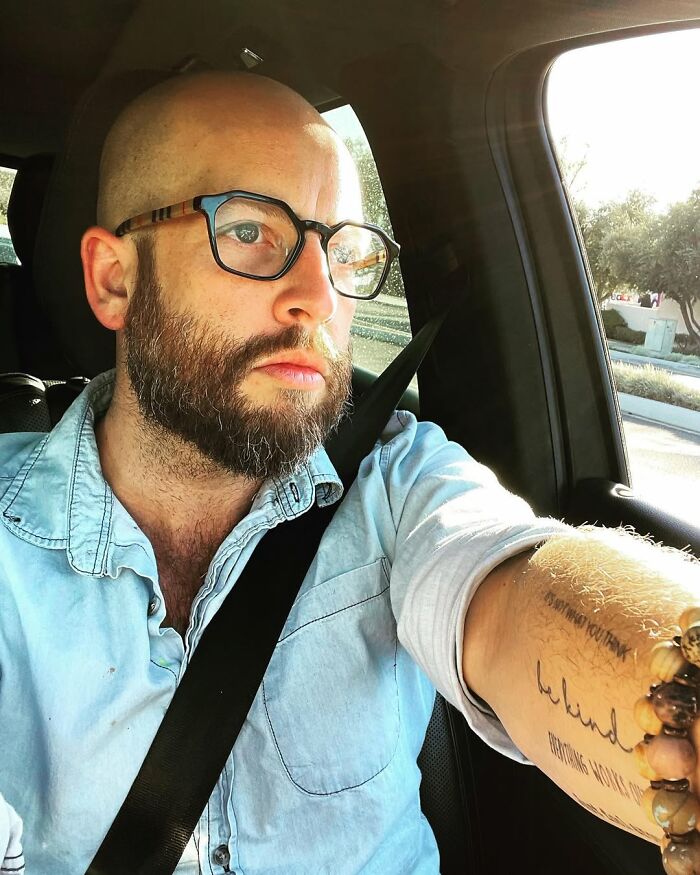
Man with a beard and glasses in a light blue shirt, wearing a seatbelt, looking thoughtful in a car. Life-changing diagnosis.

Image credits: tylerlbarnett

Tyler opened up about the many struggles he faced throughout his life, sharing how years of confusion made it difficult to fully understand himself

Imagine spending 42 years believing something was fundamentally wrong with you, only to later discover that the real issue was never who you were, but that no one had correctly understood how your brain worked. It is a heartbreaking thought, but it is far more common than many people realize. Diagnostic errors, whether that means overlooking a condition entirely, identifying the wrong one, or diagnosing it far too late, remain a serious issue in healthcare systems around the world. According to a study published in BMJ Quality & Safety, an estimated 371,000 people die every year following a misdiagnosis, while another 424,000 are left permanently disabled. That adds up to roughly 800,000 people experiencing serious harm annually. And even those numbers may be conservative, since many cases of misdiagnosis are never formally detected.

The scale of the problem becomes even more sobering when looking at emergency care. A report highlighted by The New York Times noted that as many as 250,000 people die every year due to misdiagnoses in emergency rooms, often because doctors fail to identify life-threatening conditions such as stroke, sepsis, or pneumonia in time. Data from the Agency for Healthcare Research and Quality estimates that out of 130 million annual emergency department visits in the U.S., roughly 7.4 million involve inaccurate diagnoses, with 370,000 patients suffering serious harm as a result. These numbers reflect just how critical accurate diagnosis is; not only for physical health, but for emotional wellbeing and quality of life.

Thankfully, Tyler Barnett’s story did not involve those kinds of devastating medical outcomes. But the emotional toll of being misunderstood for decades is its own kind of pain. The public relations specialist spent much of his life trying to make sense of a brain that even he did not fully understand. In an interview with People, Barnett shared a deeply vulnerable reflection: “I was told I should be integrating with everyone else and something was basically wrong with me if I didn’t.” That message shaped much of his life. Over time, he learned to mask his natural instincts, carefully observing and mimicking the behaviors of others just to fit in. He described constantly adjusting himself to make other people comfortable, even when it meant suppressing who he truly was.

That pressure showed up early in school. Tyler explained that he managed to get by academically, but not in the way most people assumed. He told People that his success often came through instinctive pattern recognition rather than traditional learning methods. “Somehow, likely because of my strong autistic pattern recognition, I was able to pass every test by basically guessing the answers,” he shared. On the outside, everything appeared fine. He got good enough grades, didn’t outwardly stand out, and moved through school without raising concerns. But internally, he described feeling exhausted, confused, scared, and deeply isolated. It was a silent struggle hidden behind what looked like normalcy.

As he entered adulthood, that confusion only deepened. In his twenties, Tyler was treated for anxiety and depression, diagnoses that seemed to fit on the surface but never fully explained his experiences. The medications prescribed to help him did not align with the way his brain functioned. Instead of relief, he faced worsening mental health challenges and even struggled with addiction. Then, in his thirties, after reaching another emotional breaking point, he was diagnosed with bipolar disorder and placed on intense medications. Once again, the treatment path never quite matched what he was living through.

The turning point came from an unexpected source: his 10-year-old daughter. According to People, she regularly suggested that her father might have autism. He began researching, reflecting, and eventually sought formal evaluation. Finally, Tyler received an official diagnosis of Level 1 autism and ADHD. After decades of confusion, he finally had answers.

In the now widely shared video documenting the moment, Tyler’s raw emotion was impossible to miss. There was relief, disbelief, grief for the years lost, and perhaps most powerfully, validation. Across social media, countless people resonated with his story because late diagnosis journeys like his are becoming increasingly visible. Many adults have spent years feeling like outsiders, struggling to understand why everyday experiences seemed harder for them than for everyone else. For many, receiving the correct diagnosis can feel like finally being handed the missing piece of a lifelong puzzle.

Receiving the right diagnosis can be incredibly important, as it helps people move forward with greater clarity, self-awareness, and compassion for themselves

Tyler’s diagnosis also shines light on a term many people are only just beginning to hear more often: AuDHD. This community-driven term refers to people who are both autistic and have ADHD. While it is not listed as a standalone diagnosis in manuals like the Diagnostic and Statistical Manual of Mental Disorders, it reflects a clinically recognized overlap. For many years, autism and ADHD were thought to be mutually exclusive. That changed in 2013, when modern diagnostic frameworks began allowing dual diagnoses. Studies now suggest that between 50% and 70% of autistic individuals also have ADHD, making this overlap far more common than once believed.

Living with AuDHD can often feel like existing in a constant internal contradiction. One part of the brain may crave structure, routine, and predictability, while another craves novelty, spontaneity, and stimulation. Even focus can feel conflicting. Autism may create deep, sustained concentration on specific interests, while ADHD can cause rapid shifts in attention and bursts of intense but inconsistent energy. Many describe it as living in cycles of intense productivity followed by exhaustion—a rhythm of bursts and crashes that can be difficult to explain to others who have never experienced it.

For Tyler Barnett, finally receiving the right diagnosis brought clarity that years of misdiagnoses never could. It allowed him to stop viewing himself through the lens of something “broken” and instead understand himself through a framework that actually made sense. His story is a powerful reminder that the right diagnosis can do far more than guide treatment; it can reshape identity, self-compassion, and healing. Technology and growing awareness around neurodivergence are helping more adults access these answers than ever before, but Tyler’s experience also shows how much work still remains.

At its heart, this is not just a story about diagnosis. It is about finally being seen clearly after years of misunderstanding. Sometimes the most life-changing words a person can hear are not “something is wrong with you,” but rather: this is who you’ve been all along, and there was never anything wrong with that.

People flooded the comments with support, celebrating that he can now move forward with clarity, and self-understanding
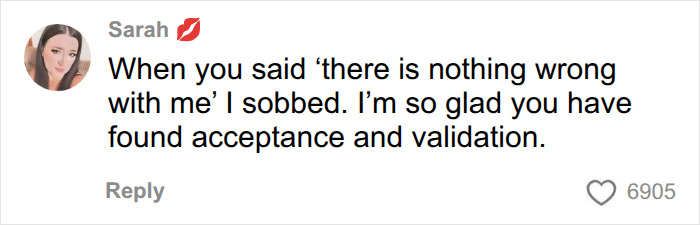
A comment from Sarah, with a red kiss emoji, saying When you said there is nothing wrong with me I sobbed. This diagnosis changes everything for those who think something is wrong with them.

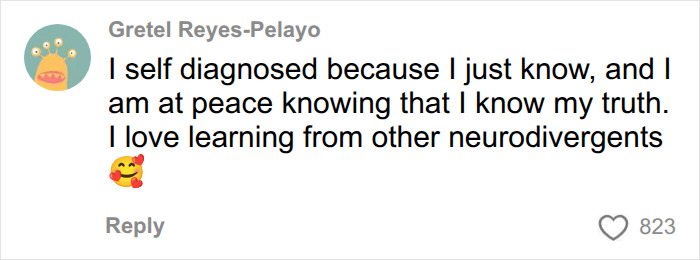
A comment by Gretel Reyes-Pelayo on self-diagnosis, peace, and neurodivergence, relating to a man's life-changing diagnosis.

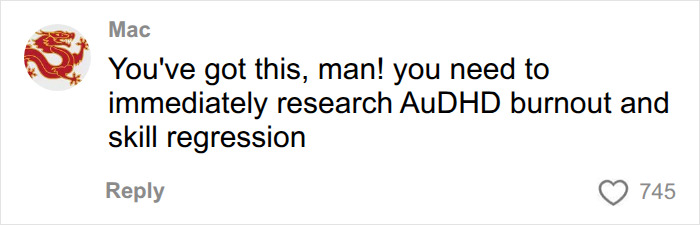
A comment suggests researching AuDHD burnout. This relates to the SEO keyword of a man's life-changing diagnosis.

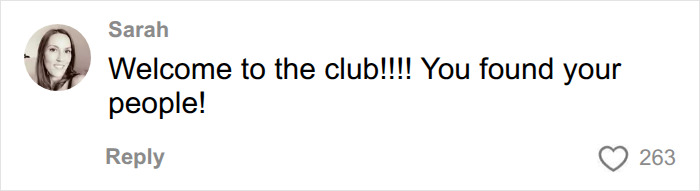
A comment from Sarah: Welcome to the club! You found your people! This offers a sense of belonging after a diagnosis changes everything.

A comment from Spectre Cat saying, "Welcome. I have been waiting for you. What do you need?" This interaction could be a diagnosis changing everything for someone.

A social media comment by Southern Jenn, with a smiling profile picture, stating The smartest and coolest people, related to a life diagnosis.

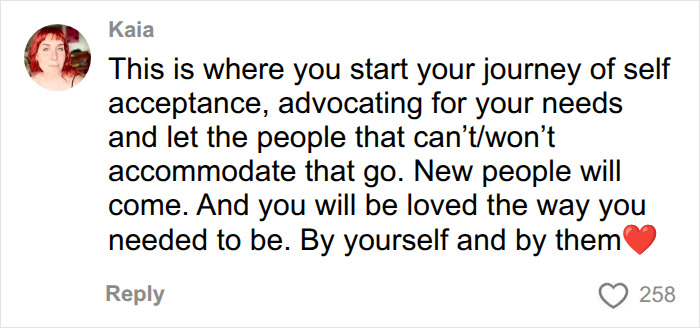
A comment from Kaia on self-acceptance and advocating for needs. This relates to thinking something is wrong with him.

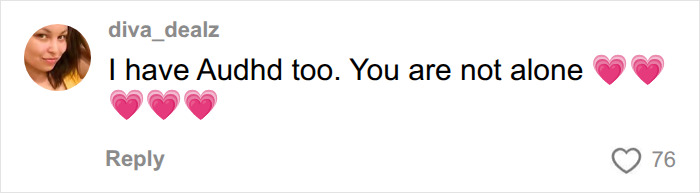
A social media comment from "diva_dealz" stating, "I have Audhd too. You are not alone" with pink hearts. Relatable diagnosis.

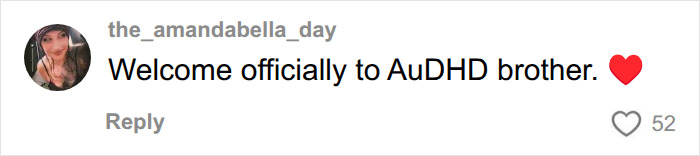
A social media comment reads: Welcome officially to AuDHD brother. A diagnosis changes everything for a man.

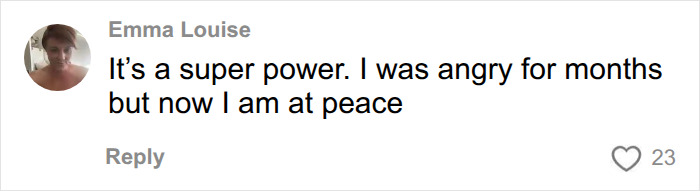
A comment from Emma Louise: It's a super power. I was angry for months but now I am at peace, reflecting on a diagnosis.

A comment from Catie, with a profile picture of a couple, says, Welcome to the wonderful world of whimsy we've been waiting for you! diagnosis changes everything.

Anna Louise Gardner's profile picture with two people smiling, commenting: "I am so glad you got validation." This relates to the Man Thinking Something Is Wrong With Him until a Diagnosis Changes Everything.

A comment from Bambi saying Bro we all autistic, with 9 likes. Relates to the diagnosis changing everything keyword.

A user comment from caitlina222 reads: "I often wonder how my childhood could have been so different!" This relates to the feeling something is wrong until one diagnosis changes everything.

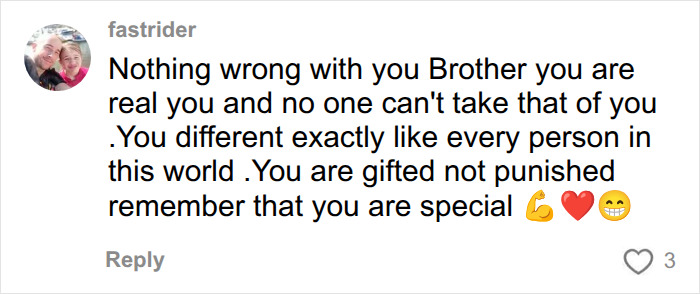
A supportive comment to someone thinking something is wrong with him, stating he is gifted and special after a diagnosis.

A comment by ST3L7H on an article about a man's life-changing diagnosis. The comment says, "You got this bro" with 2 likes, offering encouragement.

A comment from GShell reads, Bless you 🙏 with 2 likes. This positive interaction highlights the emotional impact of a diagnosis changing everything for a man.

A user comment on a video, stating lovly accomplishment video, with a profile picture of a tech setup. Could a diagnosis change everything for a man?

Comment from Chris Norm reading Sending man hugs dude, showing support for a man's life diagnosis story.

A comment from Ashley says, "Omg I'm crying 😭🥺 happy for you." This reaction follows a life-changing diagnosis story.

A comment from Ressie with a honey pot emoji says, Congratulations!!!, symbolizing positive emotions after a man's diagnosis.

A comment on a post about a Man with a diagnosis, showing support with 'Hugs for the little you', sad and praying emojis.

A comment from Dimps, expressing intense grief and relief, resonating with the struggle of living with something wrong.

A comment by user Gio392, offering love and support, implying a man's life changed with a diagnosis.

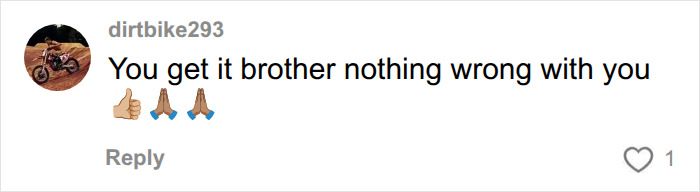
A user comment "You get it brother nothing wrong with you" with a dirtbike profile picture, relating to feeling something is wrong.

A user comment from Betucha_Tcm reads "you are perfect" with a smiling face and hearts, a heartwarming diagnosis.

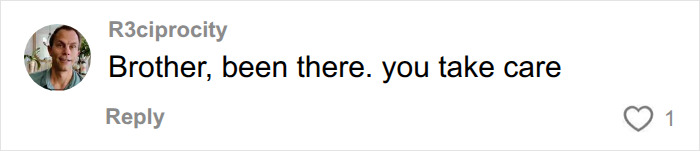
A profile picture of a man next to a comment that reads, "Brother, been there. you take care." This relates to a man getting a life-changing diagnosis.

A comment from Doris Maciel saying Yess king! with a crown emoji and a red heart. It relates to a man's diagnosis.

A user comment with a profile picture, saying "just here to send love" with a heart emoji, changing everything for Man.

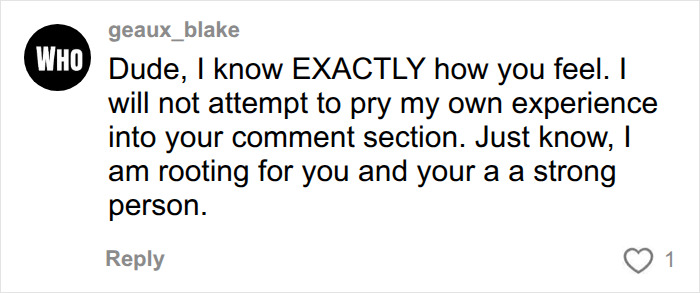
A social media comment from geaux_blake saying, "Dude, I know EXACTLY how you feel." This relates to a man thinking something is wrong with him.

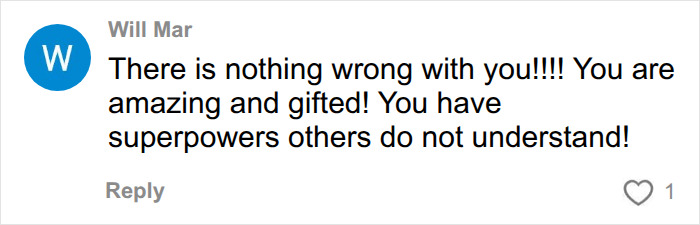
A comment from Will Mar stating, There is nothing wrong with you! You are amazing and gifted! This diagnosis changes everything.

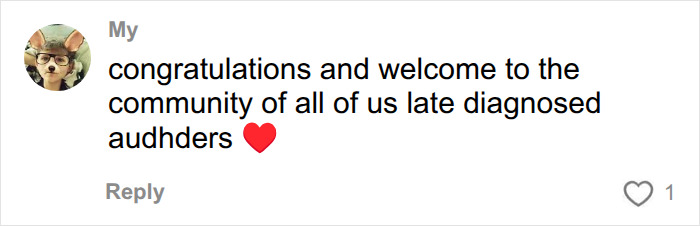
A social media comment from "My" with a profile picture of a person with animal ears and glasses, congratulating on a diagnosis.

A comment reading 'You're all right,' with a profile picture of a man. Relates to a man finding a diagnosis.

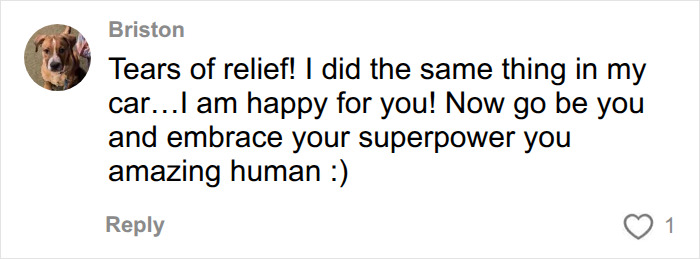
A user comment offers encouragement, saying "Tears of relief! ... embrace your superpower." It relates to a man's life-changing diagnosis.

A social media comment from dakotaaa with a smiling emoji, saying we love you. Relates to diagnosis, Man.

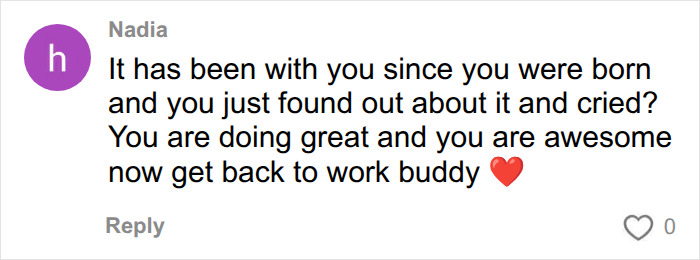
A supportive comment on a post about a diagnosis that changes everything, encouraging the person to get back to work.

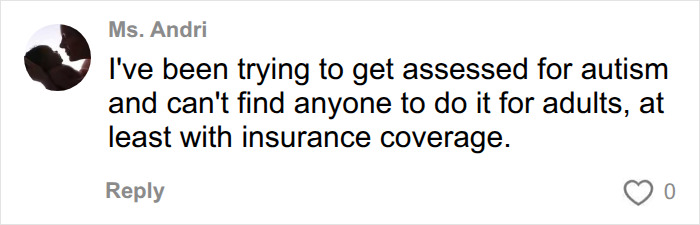
A user comment about difficulties getting an autism diagnosis as an adult, relevant to diagnosis changes everything.

A social media comment from Dollche & Co., a therapist for autistic children, expressing love for them. One diagnosis changes everything.

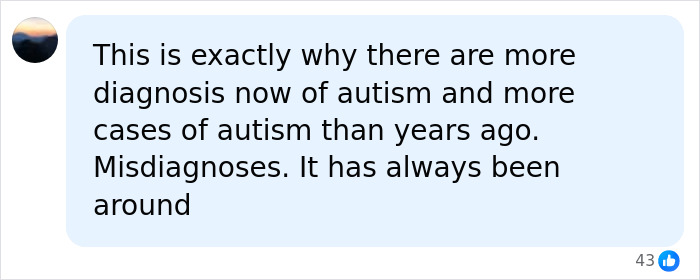
A social media comment explaining that autism misdiagnosis explains current autism diagnosis rates, relating to the article's theme of a man's life-changing diagnosis.

Many people online also opened up about their own late-diagnosis journeys

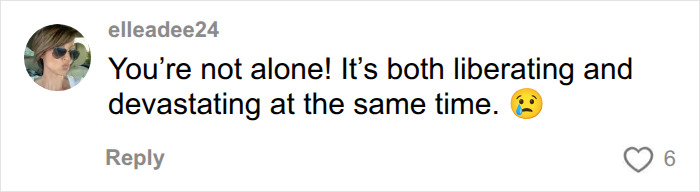
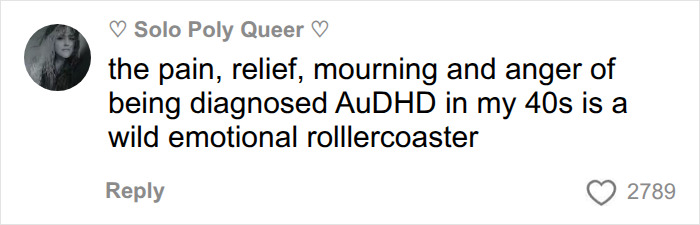
A tweet about the emotional impact of a late AuDHD diagnosis, describing the rollercoaster of pain, relief, mourning, and anger after thinking something is wrong.

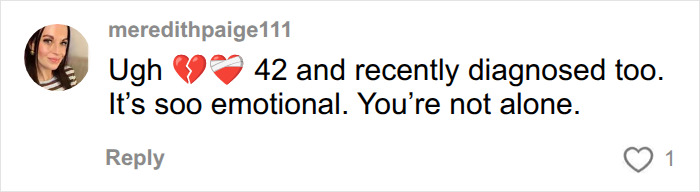
A user comment from meredithpaige111, saying "Ugh 💔 ❤️‍🩹 42 and recently diagnosed too. It's soo emotional. You're not alone." This relates to the main SEO keyword: Diagnosis changes everything.

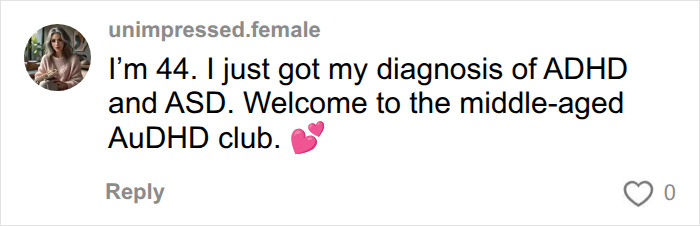
A woman posts about her ADHD/ASD diagnosis at 44, changing everything for her. A diagnosis changes everything.

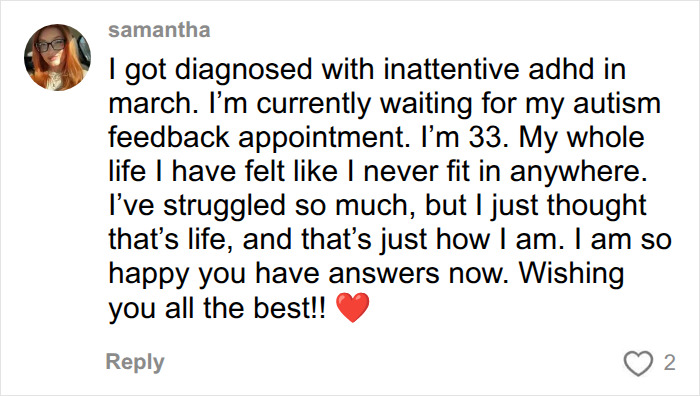
A person shares their life thinking something is wrong, and a diagnosis changes everything. They discuss ADHD and autism.

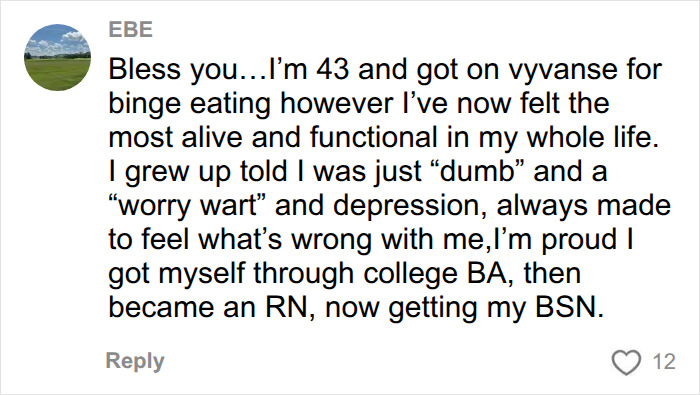
A text comment from EBE discusses life changes after a diagnosis, feeling alive and functional, overcoming feeling something is wrong with him.

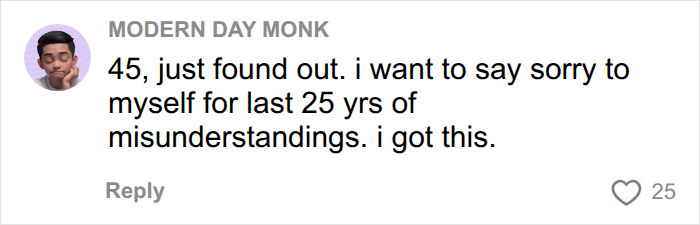
A comment from Modern Day Monk about finally understanding a diagnosis after years of thinking something is wrong with him.

A comment from Northern Woods Candles saying, Me too bro. Just found out at age 58 😲. Relatable to 'something is wrong with him' diagnosis.

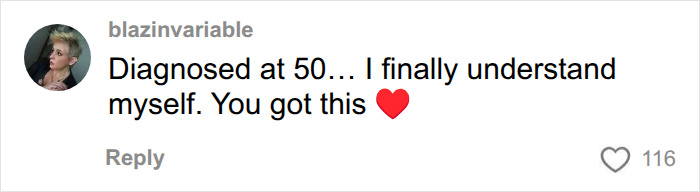
A user shares their diagnosis at 50, finally understanding themselves. This diagnosis changes everything for them.
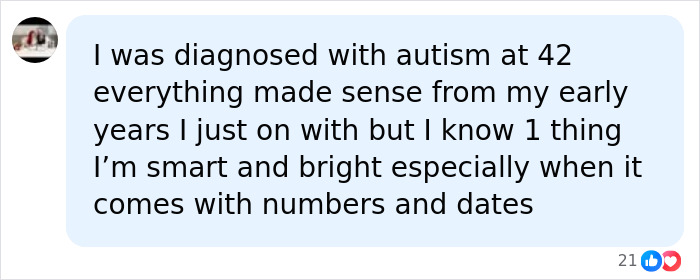
A person shares a diagnosis changing everything for them. This diagnosis helps clarify past life experiences.

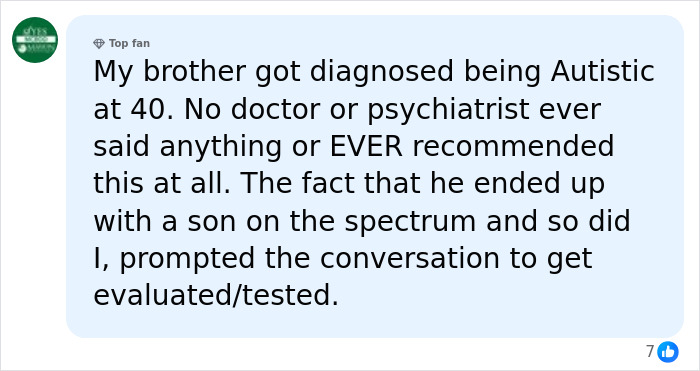
A text message: "My brother got diagnosed Autistic at 40. No doctor ever said anything... thinking something is wrong with him until one diagnosis changes everything."

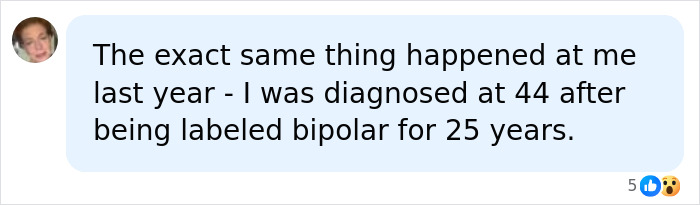
A user's comment detailing their diagnosis at 44 after 25 years, relating to the feeling something is wrong with him.

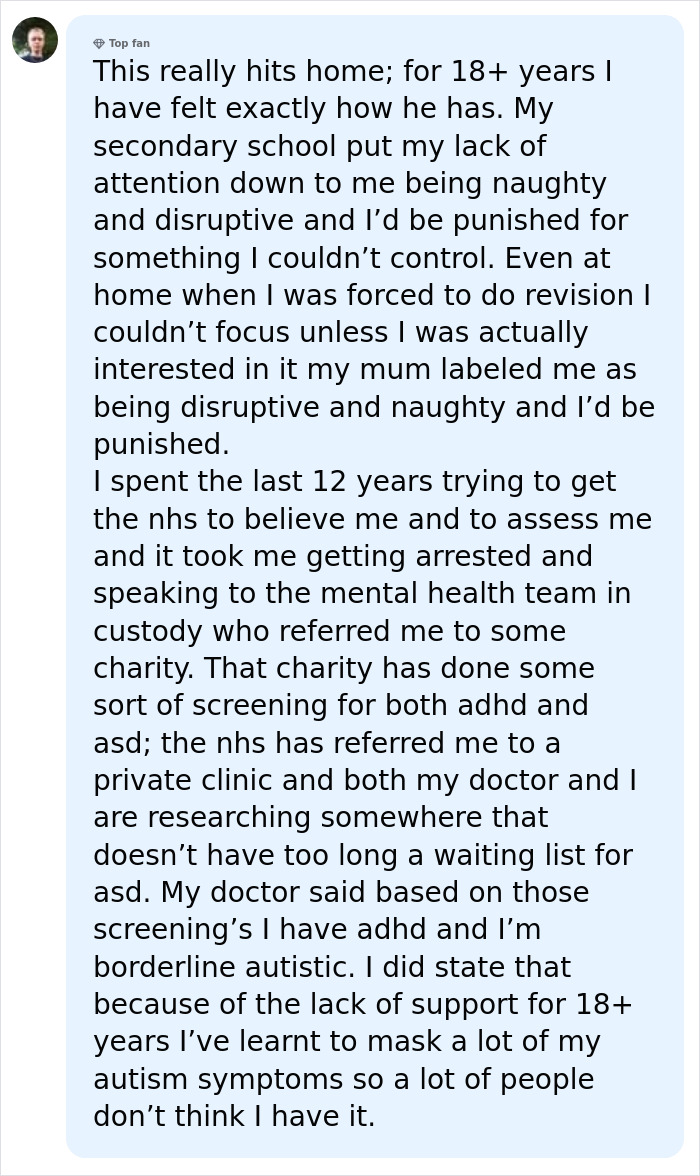
A man shares his experience of feeling something is wrong with him for 18+ years, leading to a life-changing diagnosis.

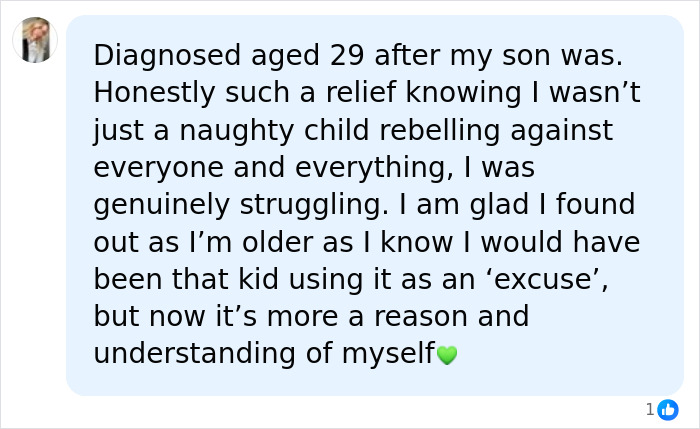
A screenshot of a personal testimonial. A woman found relief from a wrong diagnosis, leading to understanding and a new diagnosis.

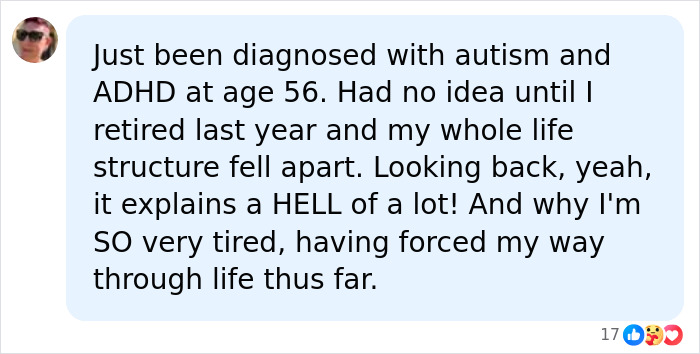
A person describes getting an autism and ADHD diagnosis at age 56, after life felt wrong. The diagnosis changed everything.
from Bored Panda https://ift.tt/Iv7POkZ
via IFTTT source site : boredpanda

,

Leave a Reply