Finding a great place to live is always exciting and it feels even better when you’re welcomed by a friendly neighbor. You know the type: they smile when you pass by, keep you in the loop about building updates, and maybe even invite you over for coffee once in a while. But let’s be honest… not every neighbor is a dream. Some can be a little too curious, a little too involved, and sometimes downright intrusive.
Take this story, for example: one man shared how his neighbor didn’t just drop by his home uninvited; she went a step further and tracked down his ex-wife on social media to question her parenting. Yes, really. Keep reading to find out how this awkward situation unfolded and what happened when the lines between “friendly” and “nosy” got seriously blurred.
Sometimes neighbors can become overly nosy and cross personal boundaries

Image credits: The Yuri Arcurs Collection (not the actual image)
One man shared how his neighbor tracked down his ex-wife on social media and contacted her
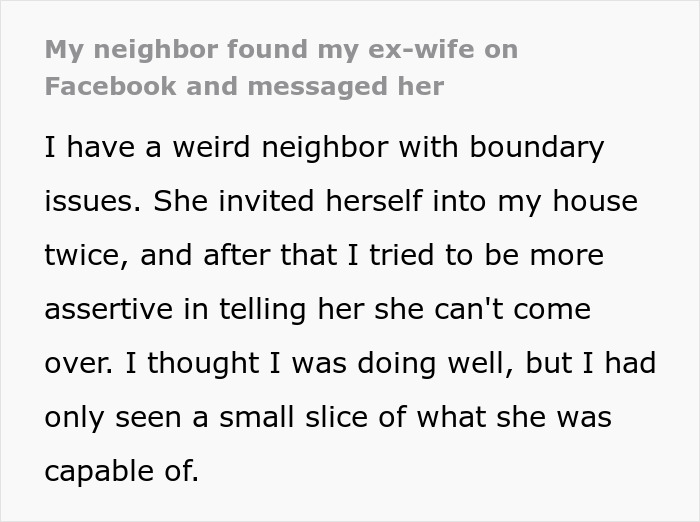
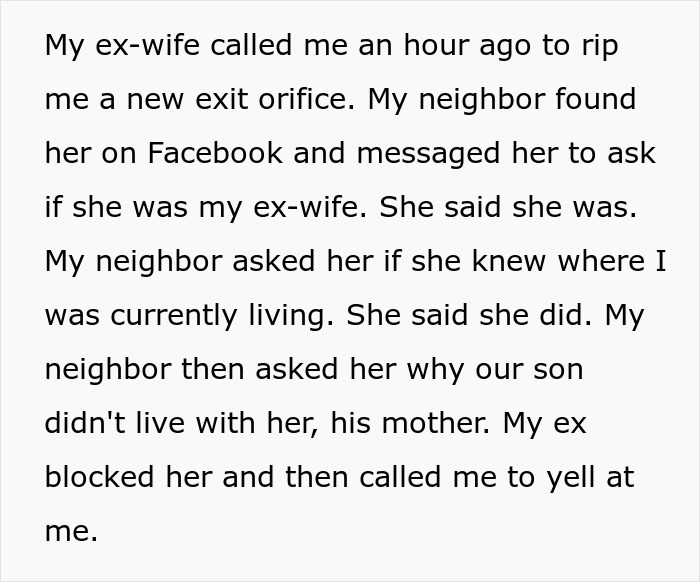

Image credits: Solen Feyissa (not the actual image)
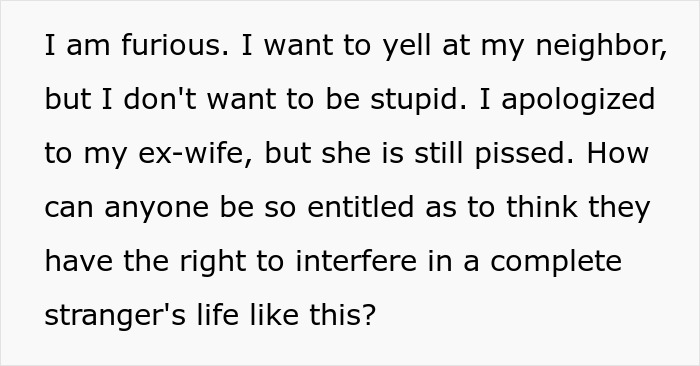

Image credits: MostAnimal5816
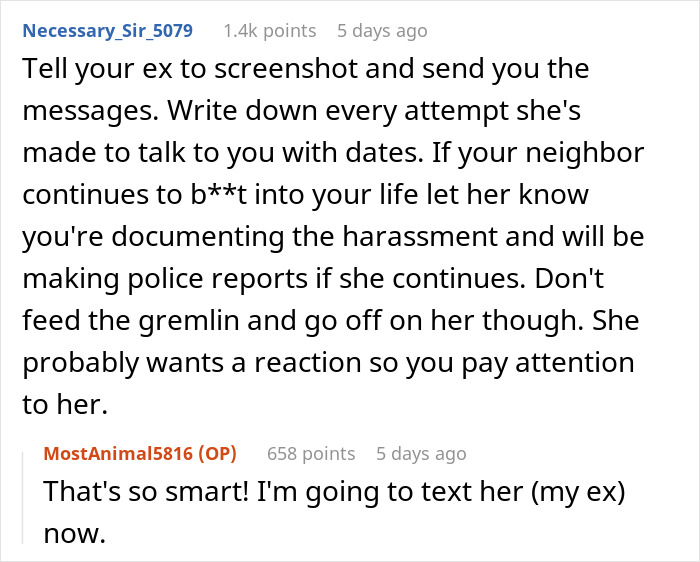
He provided more details about the situation as people online offered advice and support
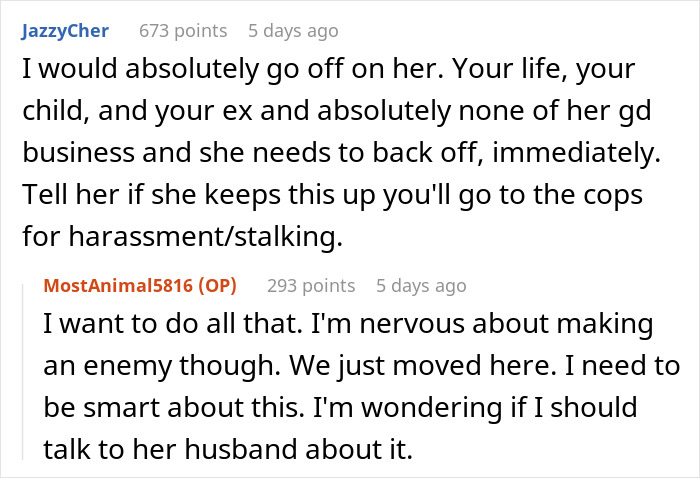
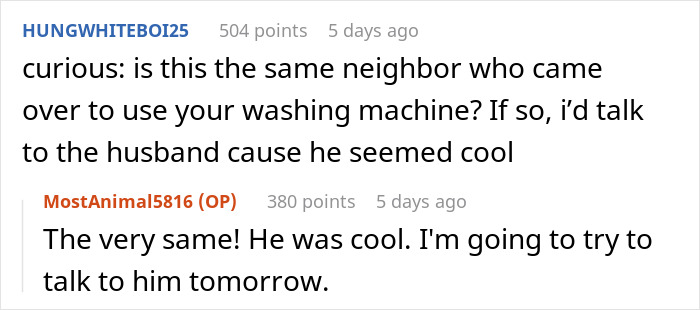

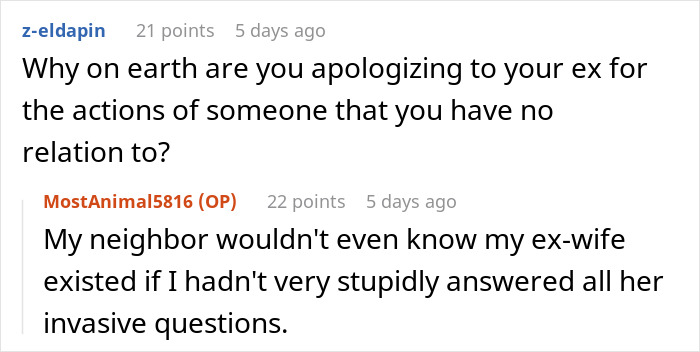
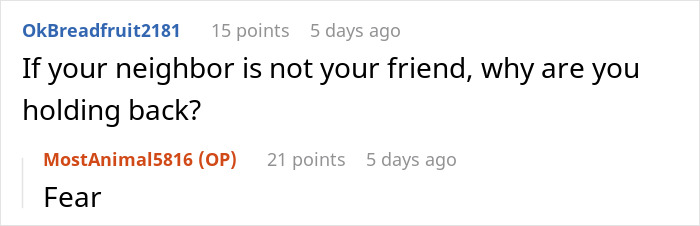
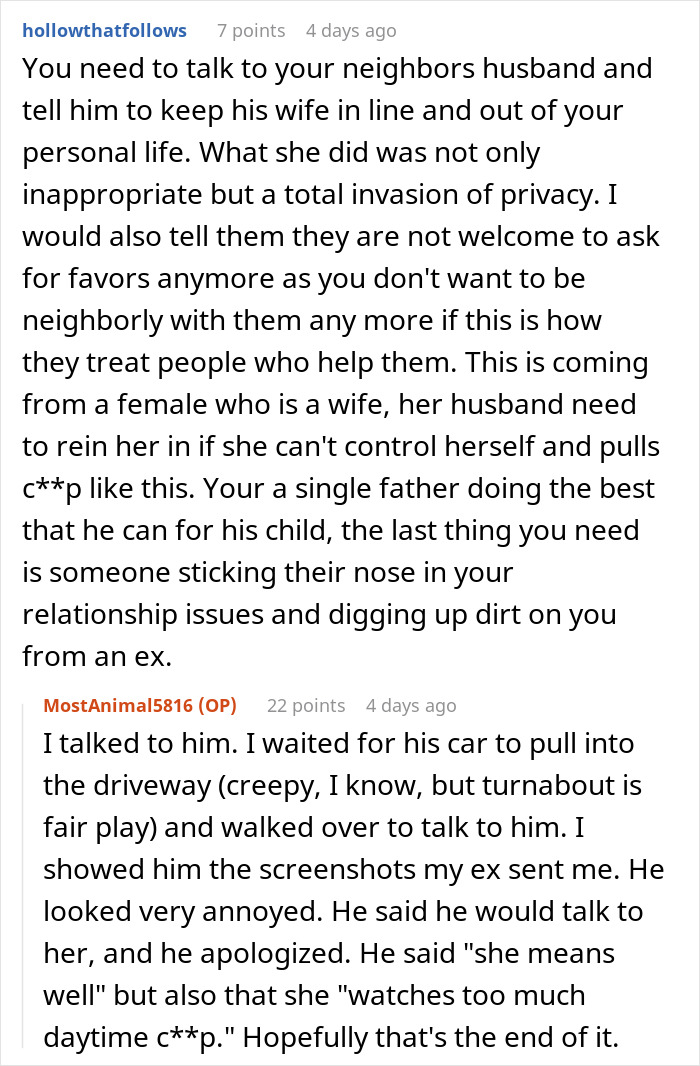
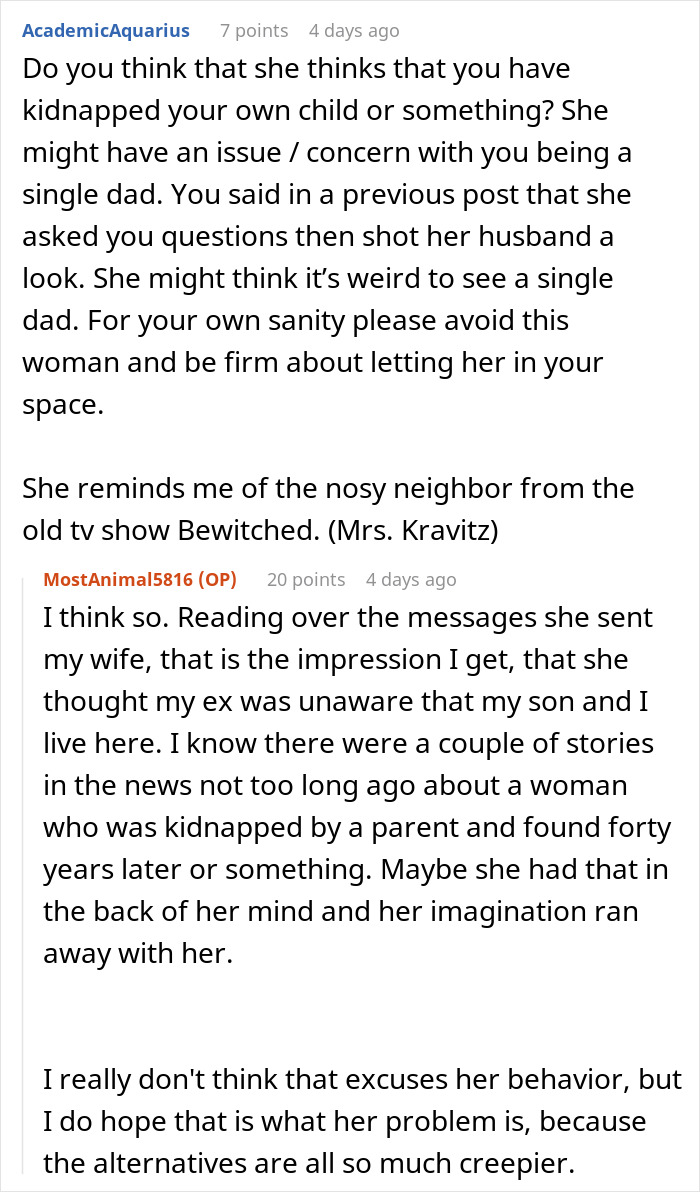
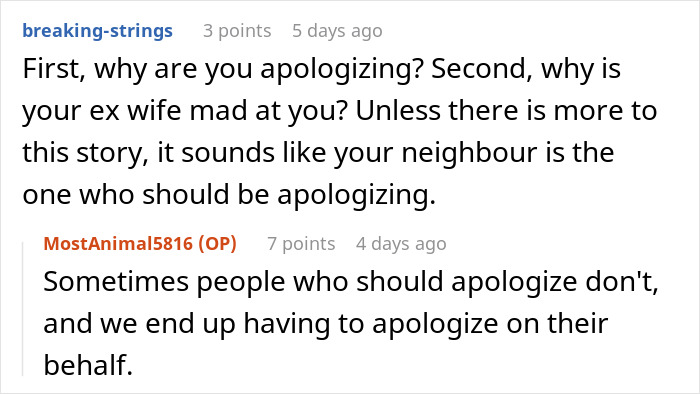
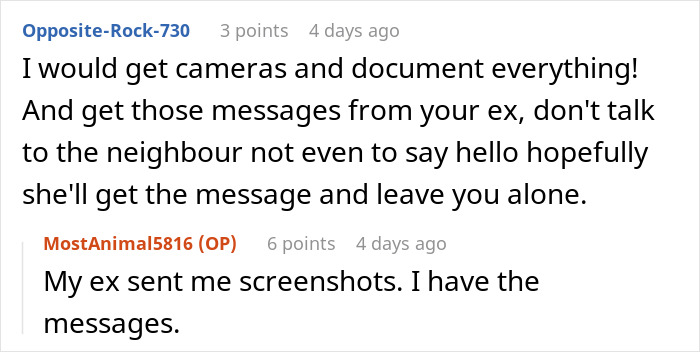

Living next to difficult neighbors can slowly take a toll on your mental health
If you think you’ve got the worst neighbor imaginable, you might want to think again. Across the world, people regularly share horror stories about the folks living next door and in some extreme cases, neighbors have even ended up in legal trouble for their outrageous behavior. From petty disputes to full-blown feuds, difficult neighbors seem to be a universal experience. Living close to others can be wonderful, but it can also test patience in unexpected ways. And as cities grow denser, these tensions are only becoming more visible. So if your neighbor plays loud music once in a while, you may still be among the lucky ones.
So what actually makes someone a “bad” neighbor? According to Bob Borzotta, an ABC News consultant and author of the book Neighbors From Hell: Managing Today’s Brand of Conflict Close to Home, the core issue often comes down to empathy or the lack of it. Writing for Forbes, he explains that troublesome neighbors are those who simply don’t consider how their actions affect people living nearby. Some even thrive on confrontation, which makes resolving disputes especially difficult. This is often why considerate residents end up moving away instead of fighting an endless battle.
One of the biggest sources of neighbor conflict today is noise. As high-density housing becomes more common, people are living closer together than ever before, which means sound travels faster and patience runs thinner. Complaints about loud music, late-night gatherings, or constant renovation work have become a defining feature of modern urban life. What might feel normal to one household can be incredibly disruptive to another.
Noise isn’t just irritating; it can actually affect how people feel and behave. Studies have linked neighborhood noise to higher levels of stress, anxiety, and irritability. Over time, constant disturbance can make people more short-tempered and less willing to help those around them. It can disrupt sleep, concentration, and even productivity when working from home. In other words, what starts as background annoyance can slowly chip away at mental well-being. A peaceful environment isn’t just a luxury; it’s essential for feeling settled and safe where you live. That’s why respectful noise levels matter far more than people often realize.

Image credits: freepik (not the actual image)
Respecting your neighbors’ privacy is essential for a healthy living environment; small acts of consideration go a long way in maintaining peace and mutual trust
Because complaints about neighbors are so widespread, many countries have created formal systems to handle them. Public complaint platforms now exist in places like Australia, the United States, and the United Kingdom to help residents report issues and seek solutions. These systems don’t just resolve individual disputes; they also provide valuable data that governments can use to improve housing policies and community planning. When authorities track recurring complaints, patterns begin to emerge. This helps identify common problems in urban living and shape better regulations. In many ways, these platforms show just how common neighbor conflicts have become.
Then there’s the classic issue of irresponsible pet owners. Barking dogs left alone for hours, pets roaming freely into other people’s yards, or owners who never clean up after their animals can quickly strain relationships. Pets bring joy, but poor ownership brings frustration. When animals become a nuisance rather than a companion, tensions can rise fast. Responsible ownership isn’t just about caring for the pet, it’s about respecting the shared environment. After all, neighbors didn’t choose the pet, so they shouldn’t have to deal with its consequences. Courtesy here can prevent a surprising amount of resentment.
Some neighbors don’t just annoy — they confront. These are the ones who react aggressively to minor issues, escalate every disagreement, and treat normal conversations as personal attacks. Living next to someone constantly on edge can make home feel less like a sanctuary and more like a battleground. When every interaction risks turning into an argument, people start avoiding each other altogether. That breakdown in communication only deepens the divide. Over time, small misunderstandings can turn into long-lasting hostility. And once that happens, peaceful coexistence becomes very hard to rebuild.
Finally, there are neighbors who cross clear personal lines. Entering someone’s property without permission, showing up uninvited, or prying into private matters can feel deeply unsettling. Privacy is a basic expectation in any living situation, and when it’s ignored, trust quickly disappears. Good neighbors understand the difference between friendliness and intrusion. When that boundary is crossed, it stops being about community and starts feeling like surveillance.
In this particular case, it definitely seemed like the man’s neighbor had crossed a serious line. Not only did she contact his ex-wife out of the blue, but she also tried to show up at his house uninvited. Have you ever dealt with a neighbor who went too far? How did you handle the situation? Share your stories and tips — we’d love to hear how you set limits and kept your peace at home!

Image credits: freepik (not the actual image)
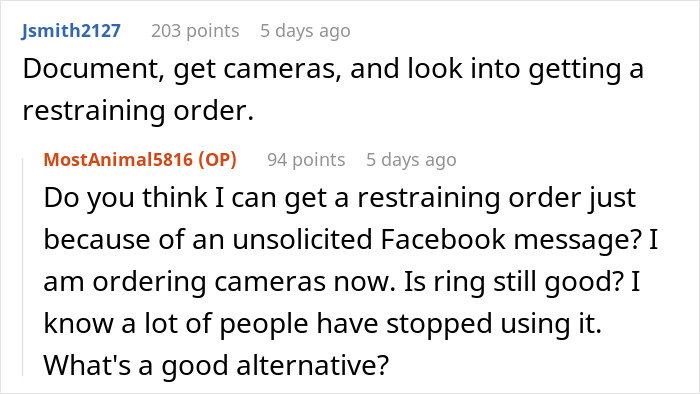
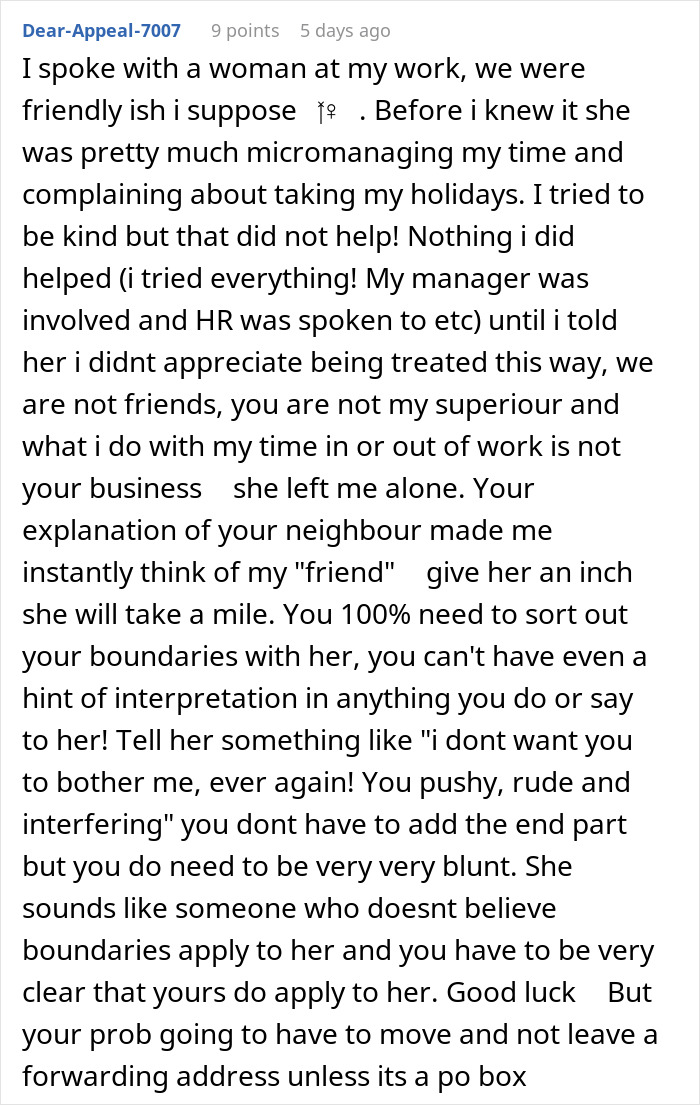
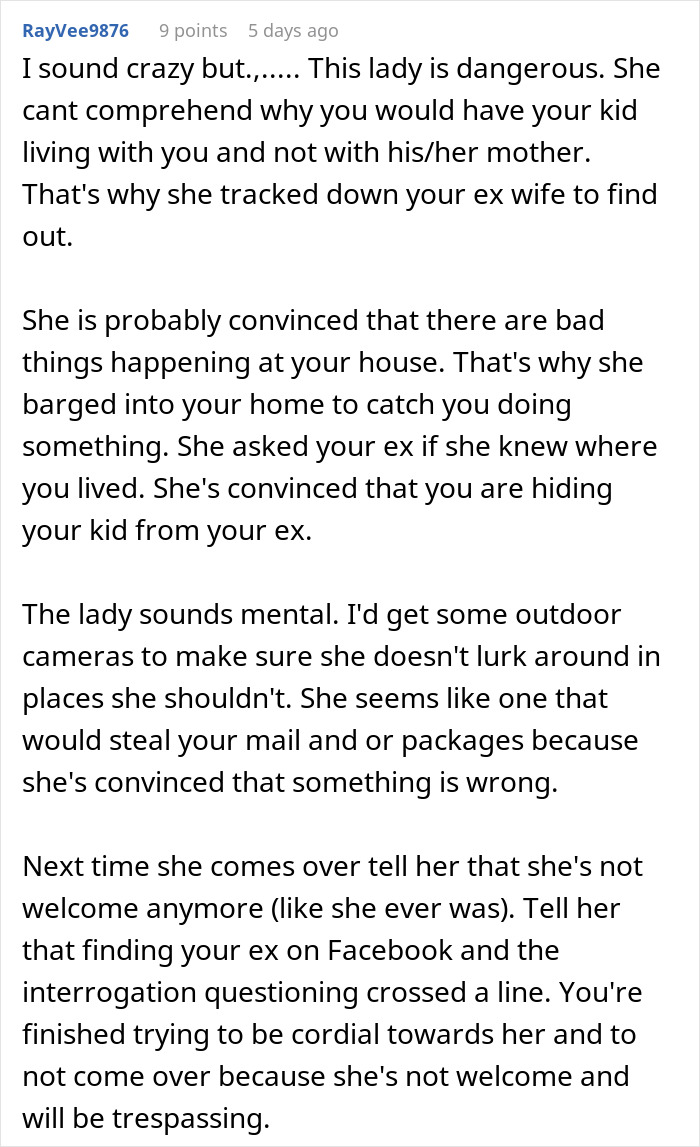
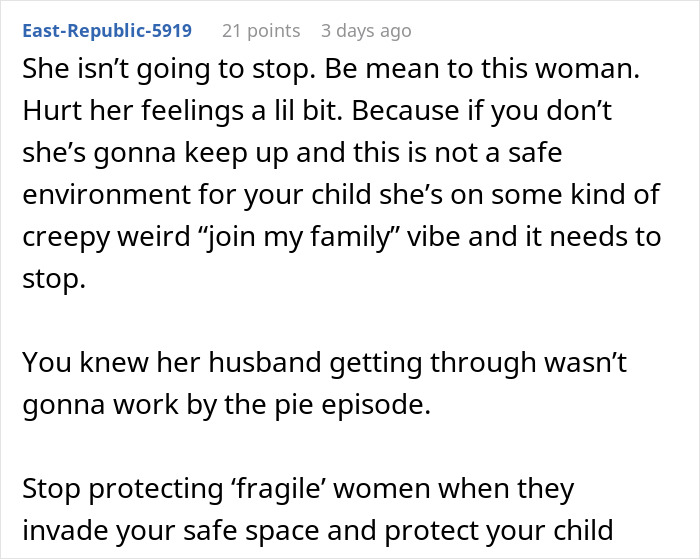
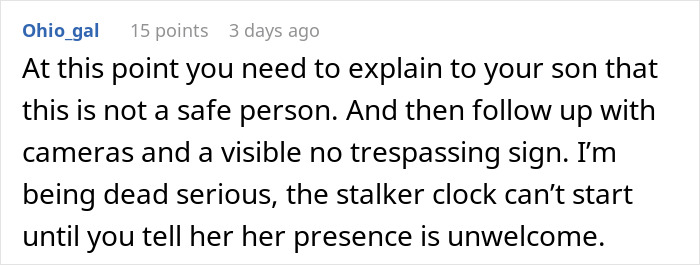
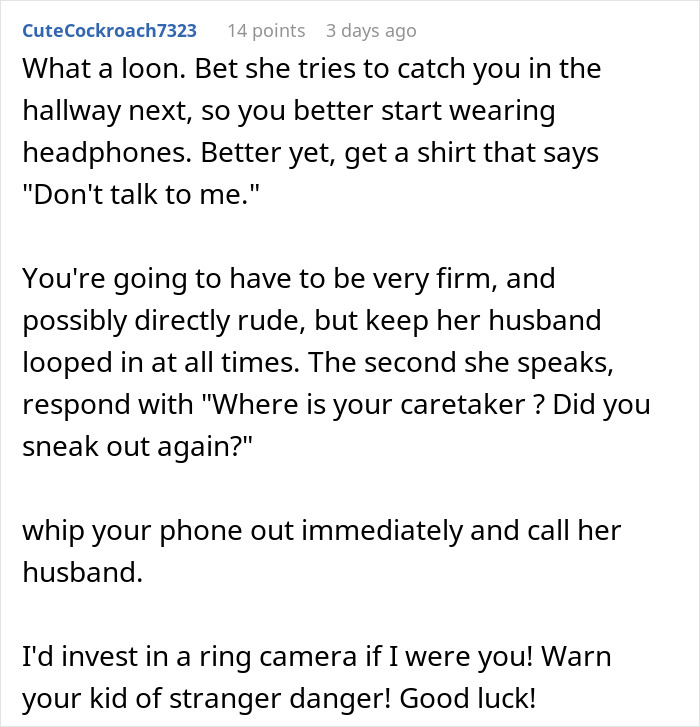
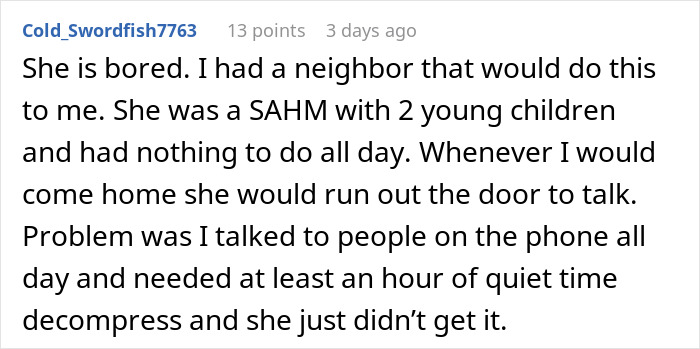
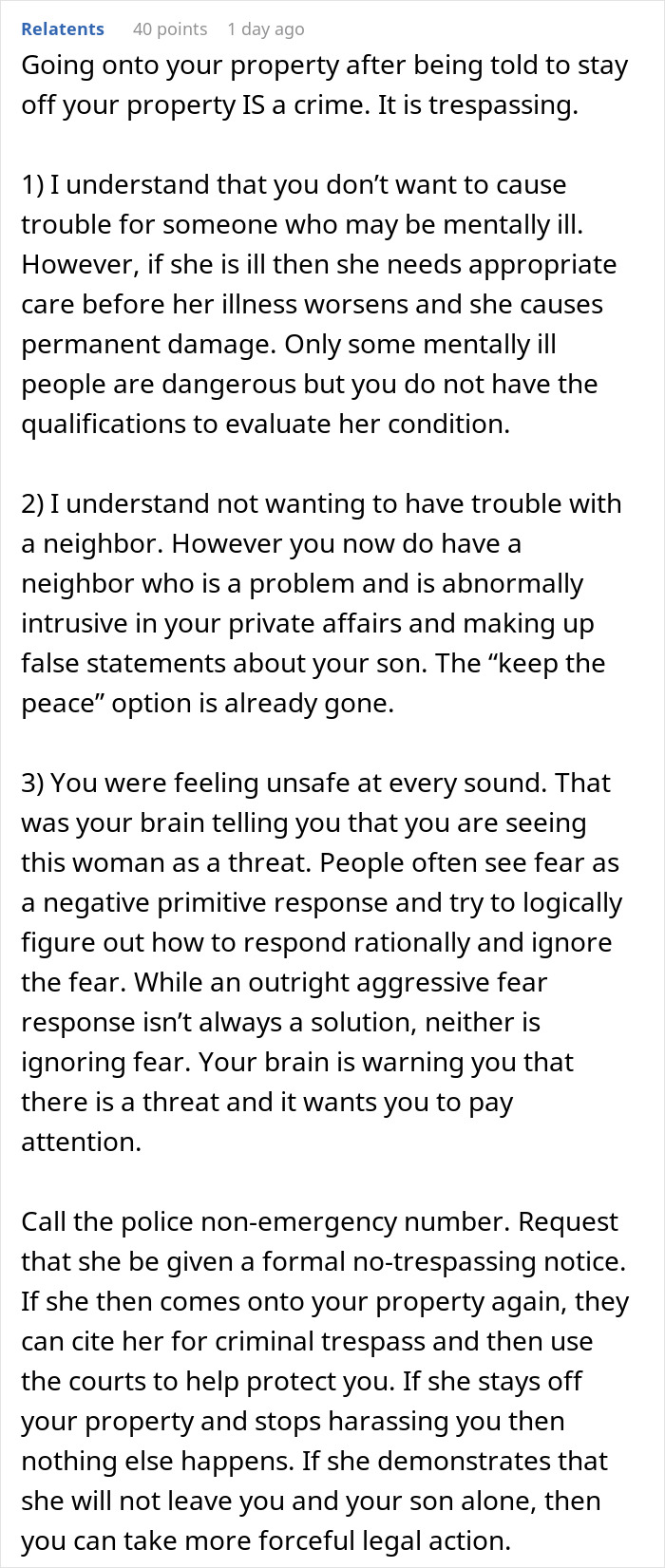
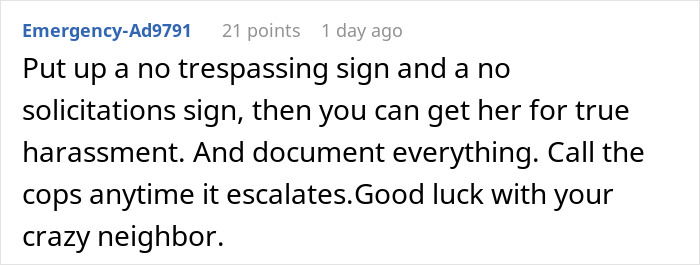
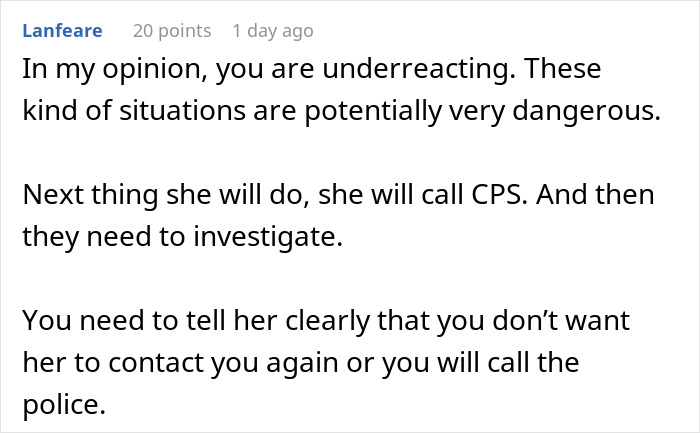
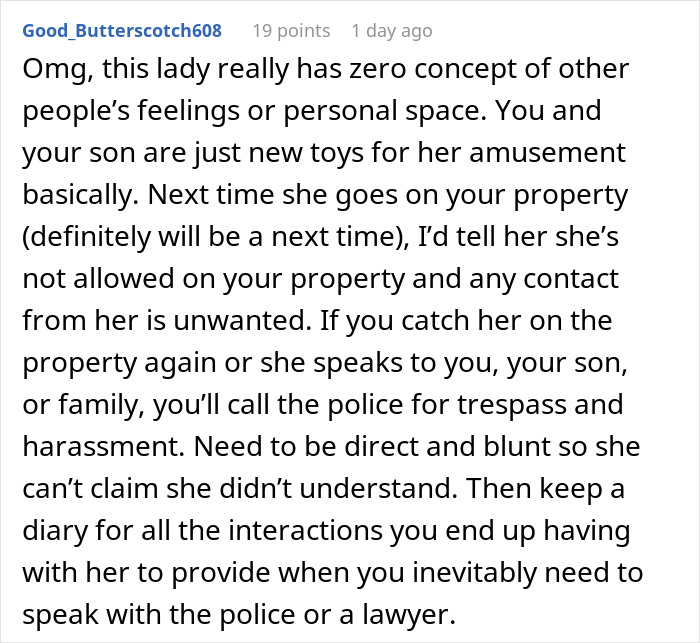
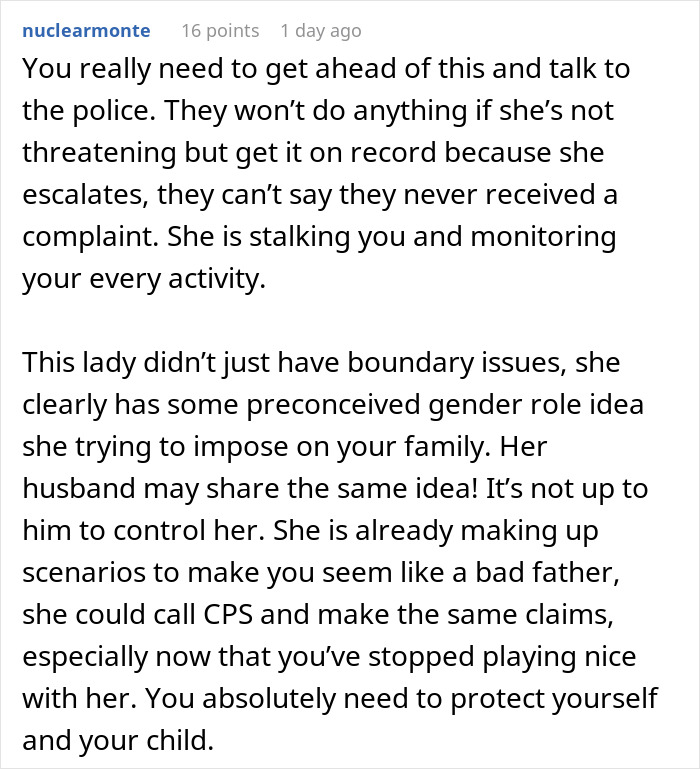
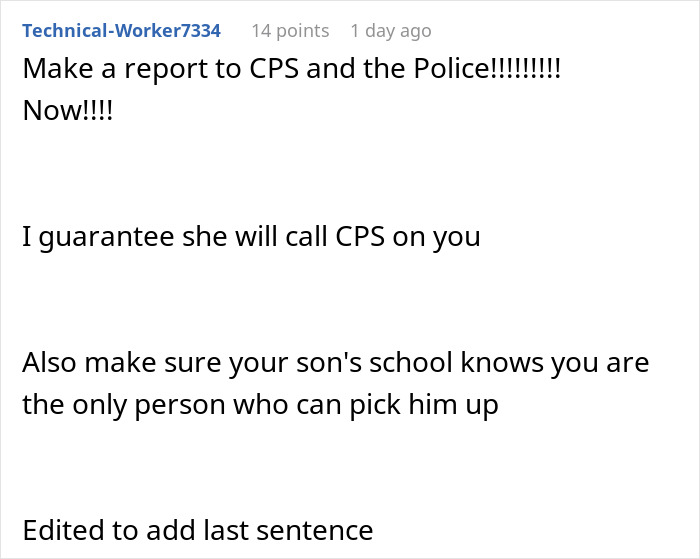
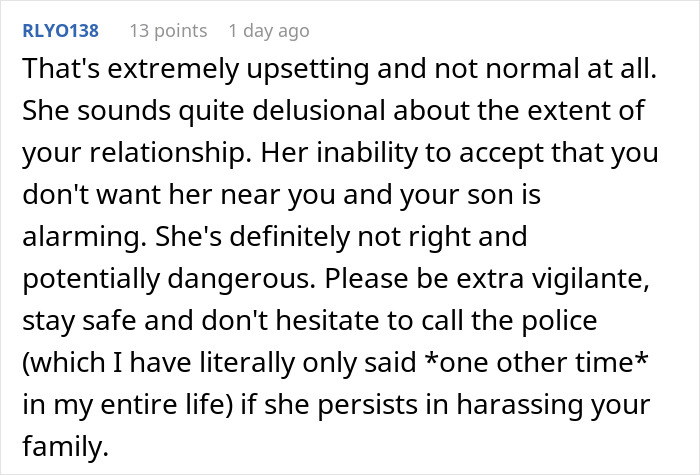
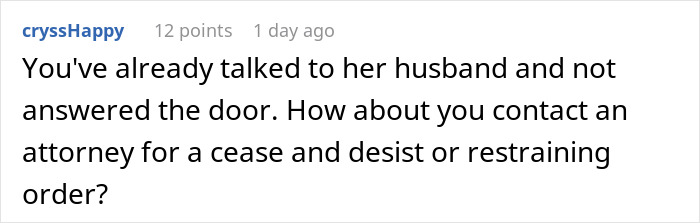
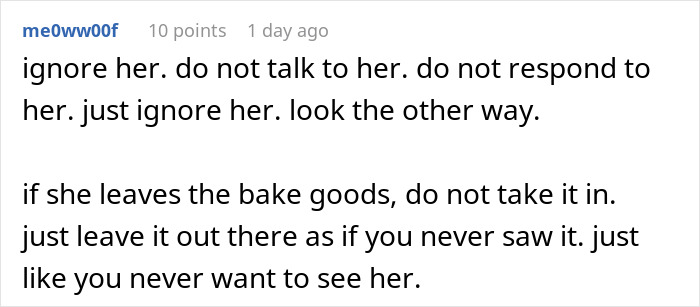
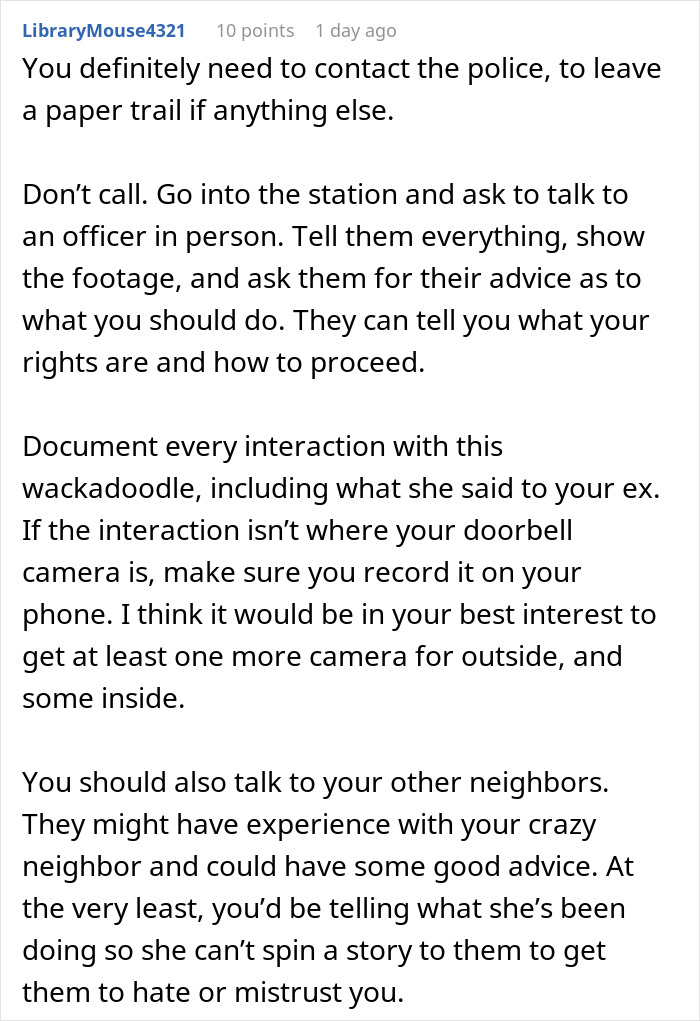
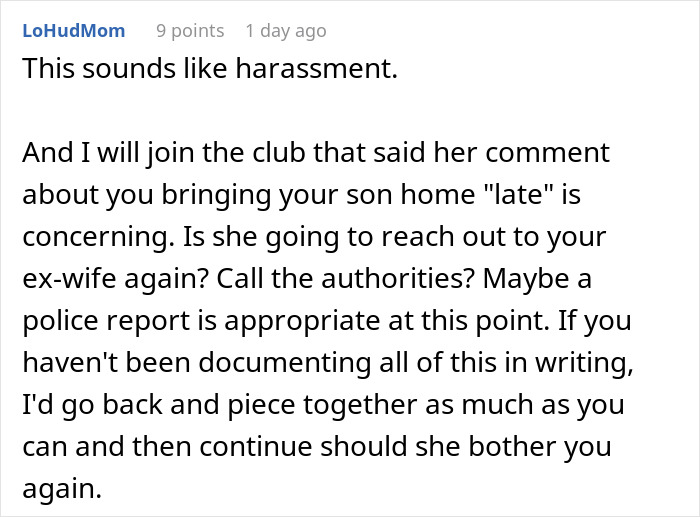
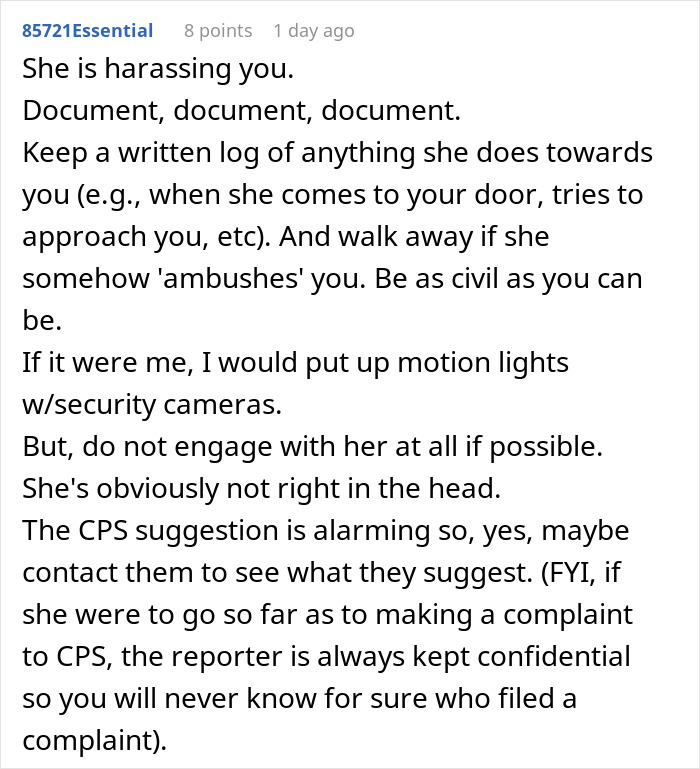
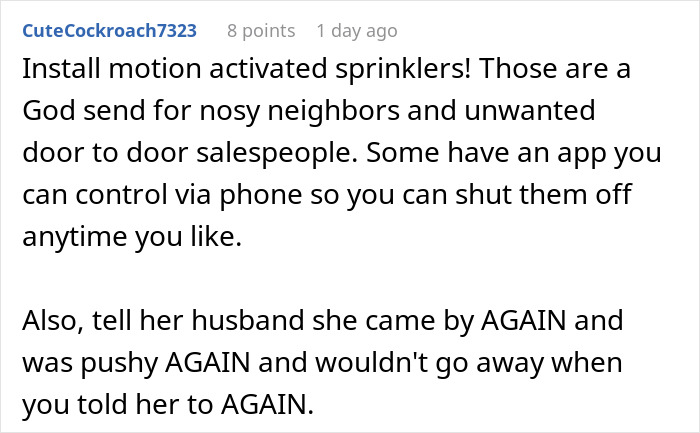
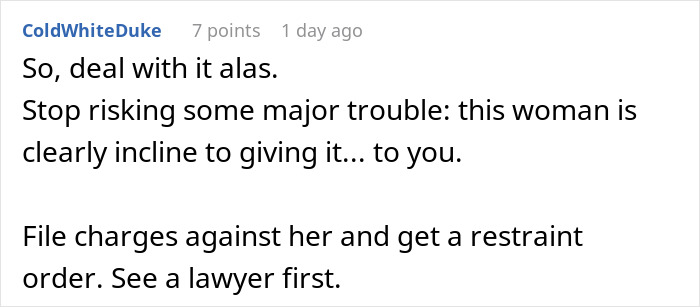
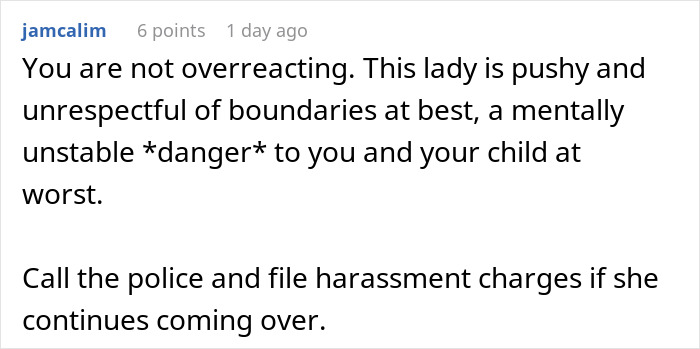
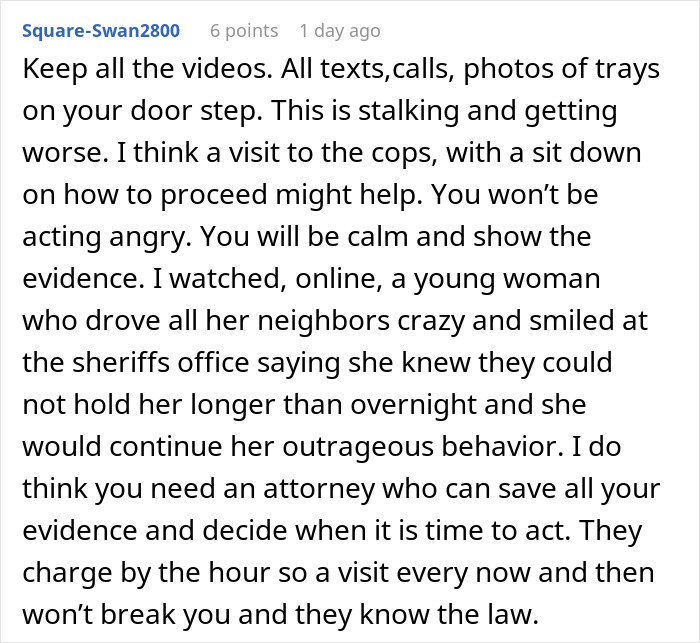
Many readers criticized the neighbor’s behavior and urged him to consider legal steps
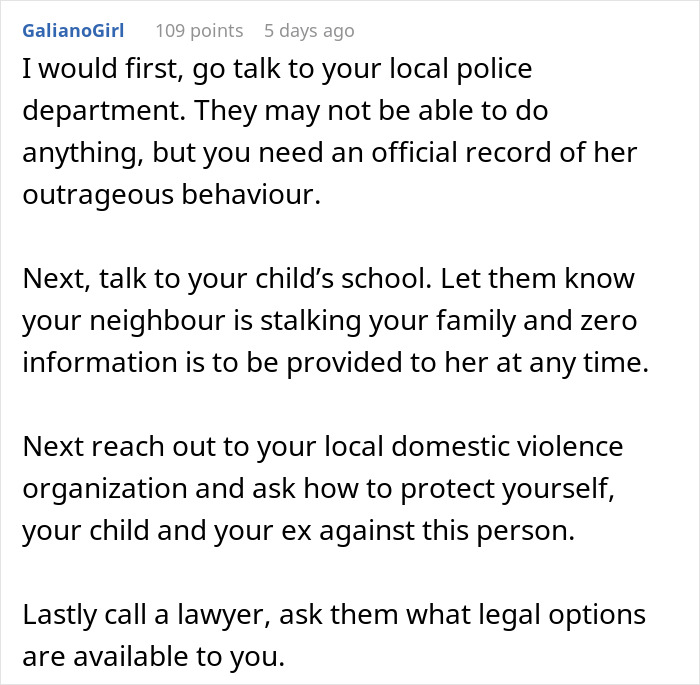
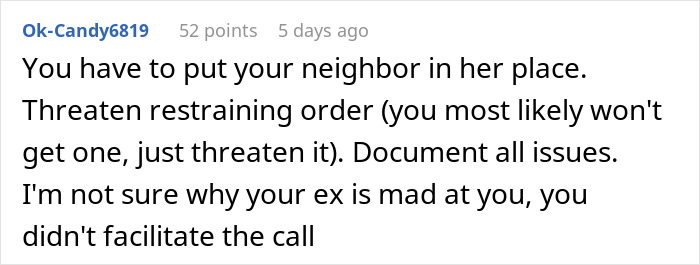


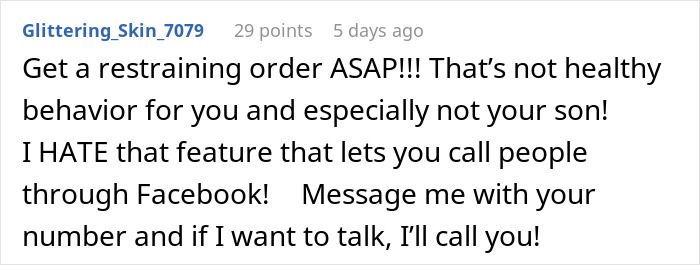
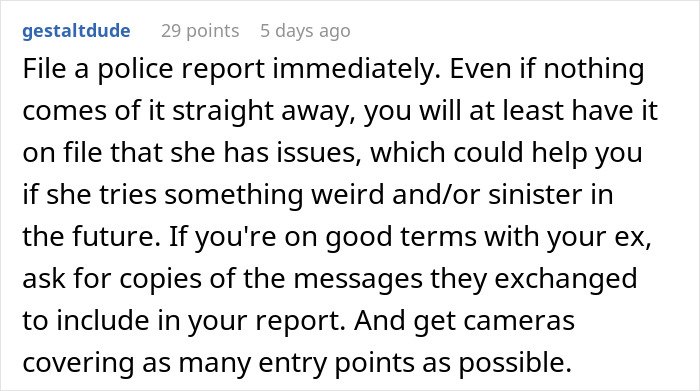
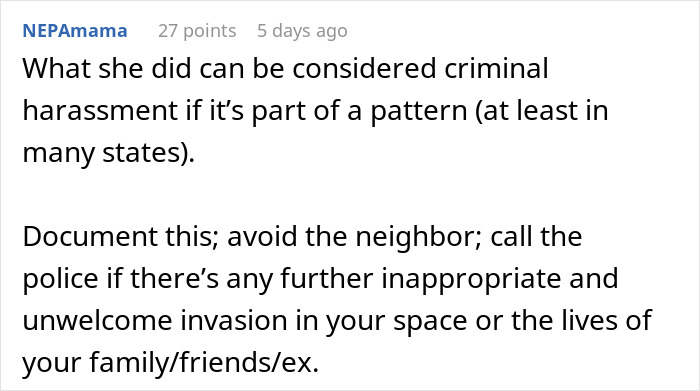
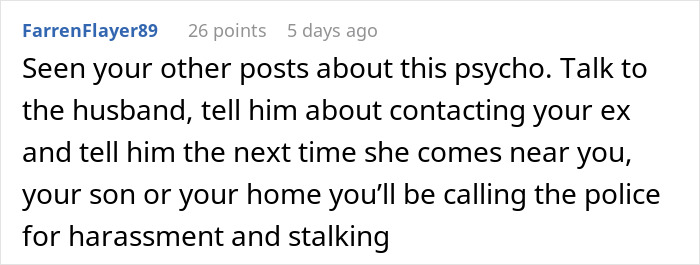










He later revealed that the woman showed up at his home again without warning
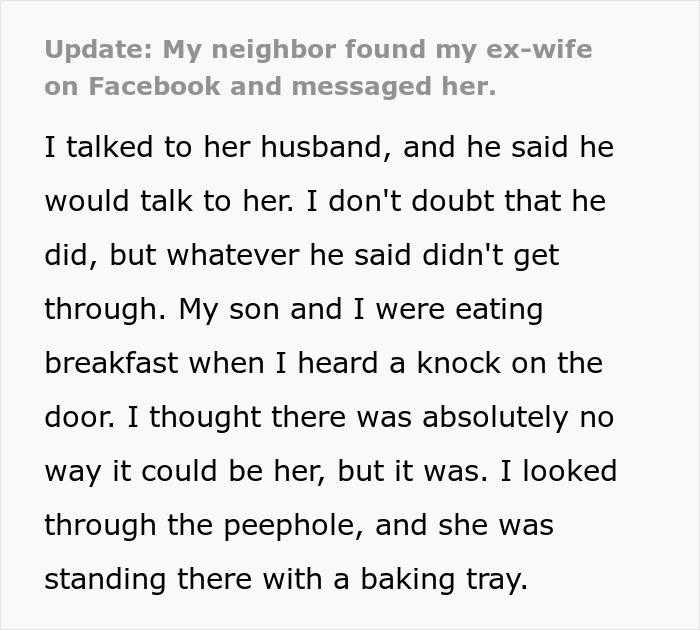
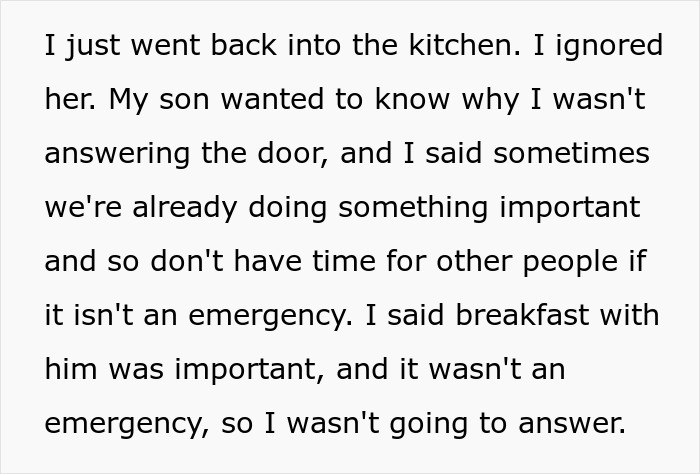
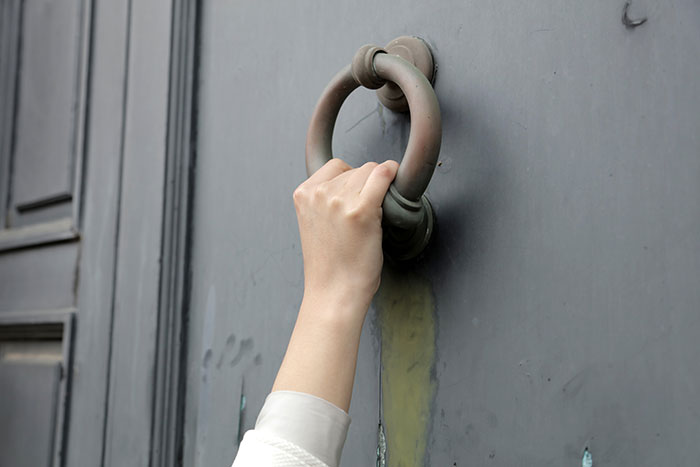
Image credits: wirestock (not the actual image)
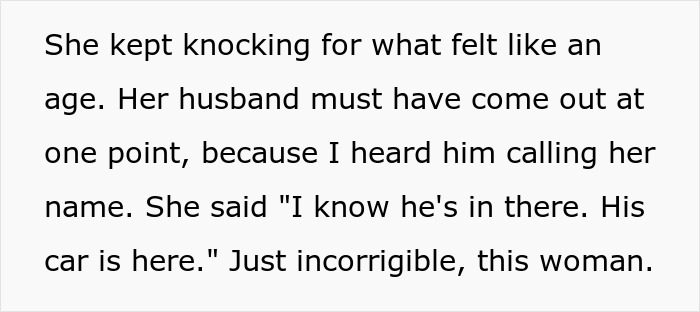

Image credits: MostAnimal5816
The man said he now plans to install security cameras for peace of mind
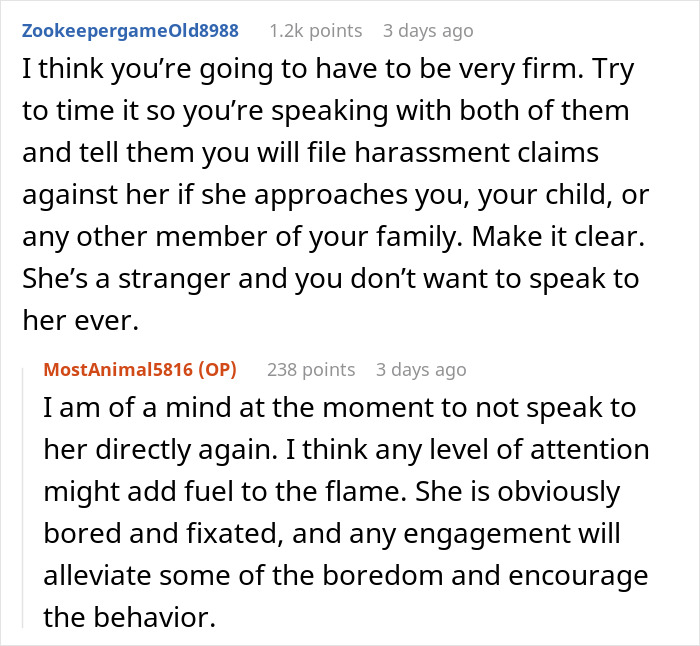

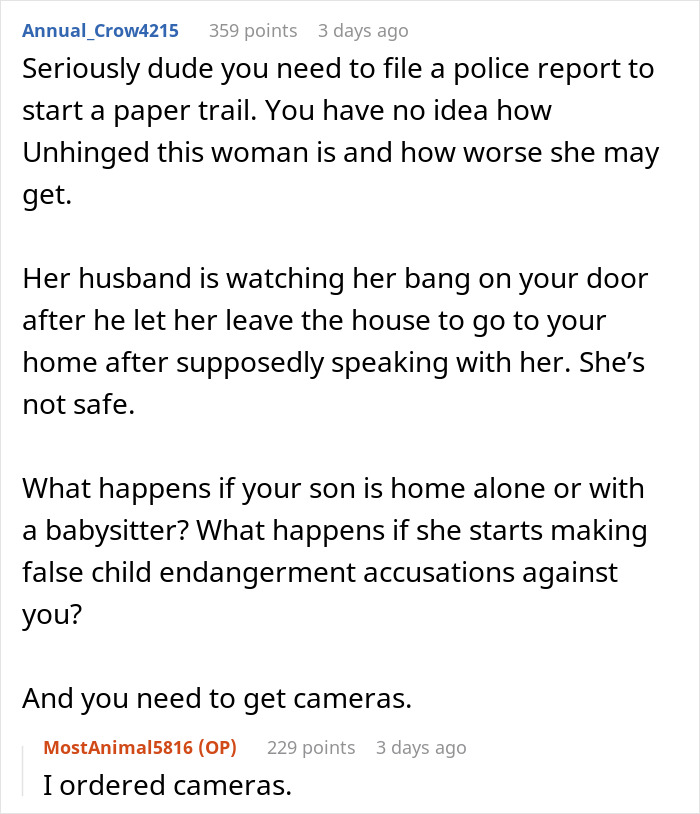
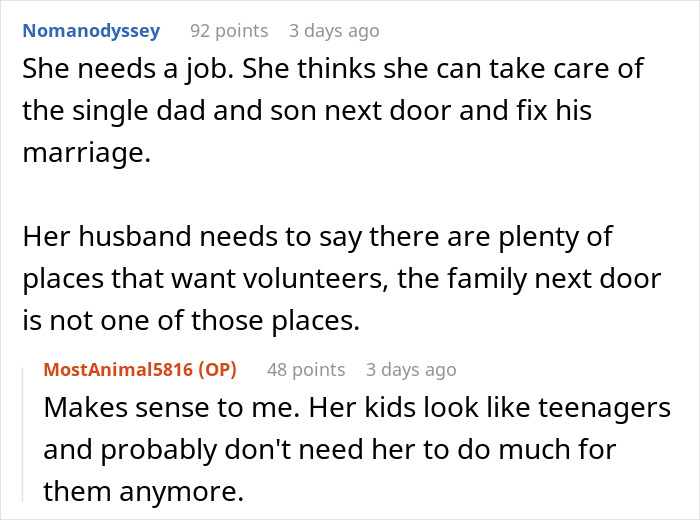
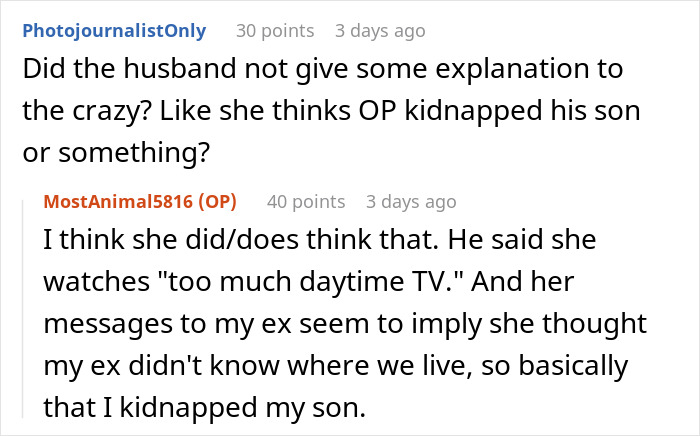

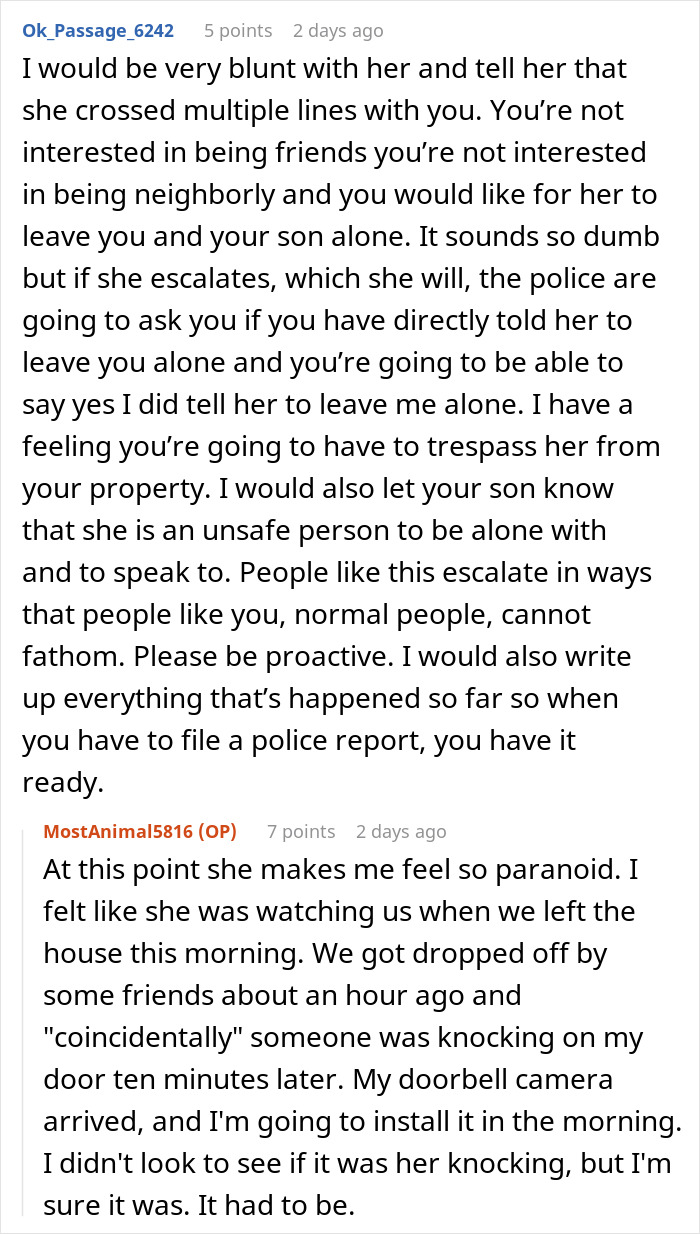
People were outraged to hear how far the neighbor’s behavior had escalated

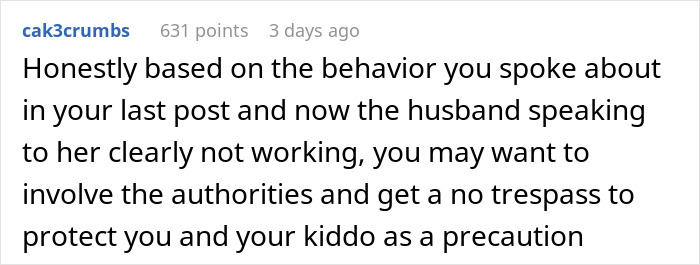

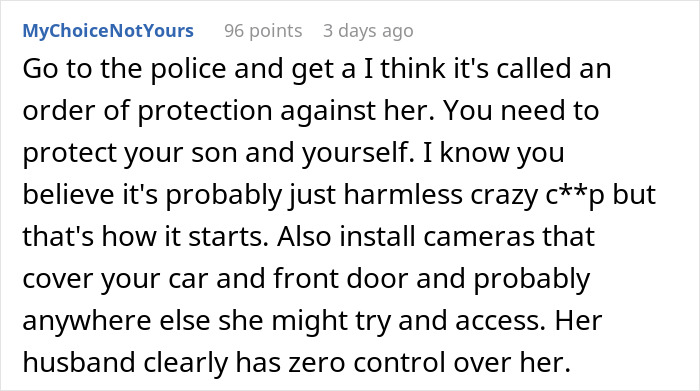

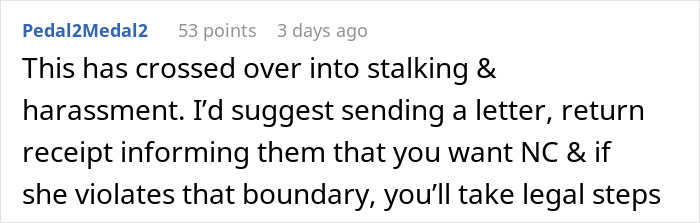



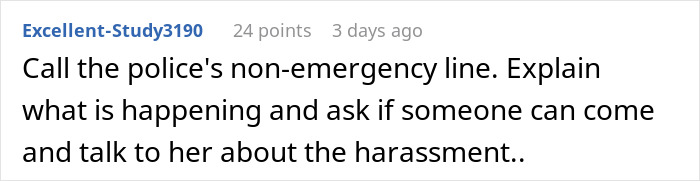

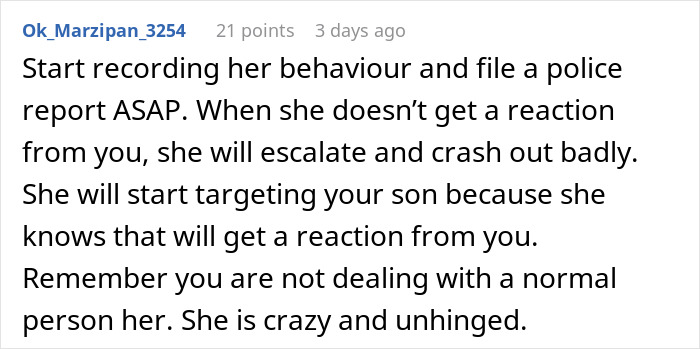


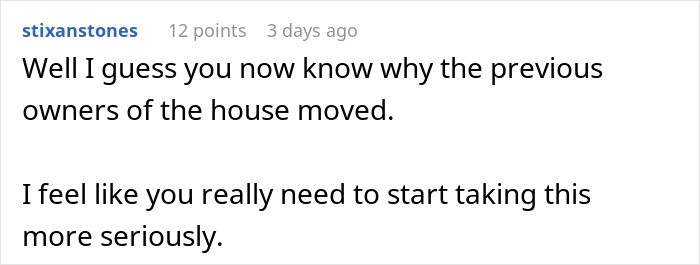


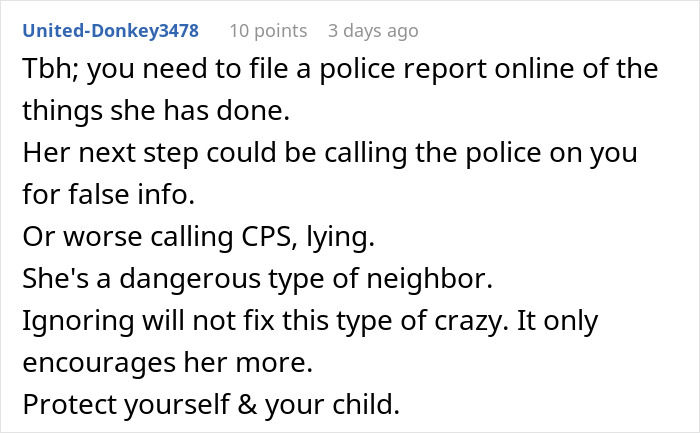
He admitted the situation has left him feeling anxious and uneasy in his own home
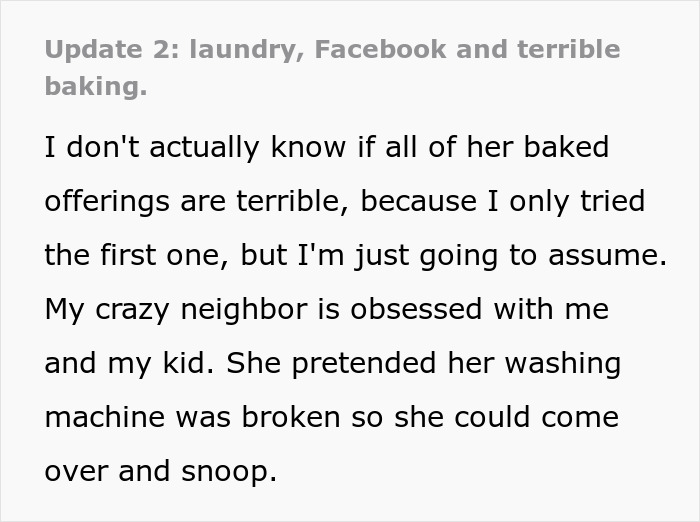
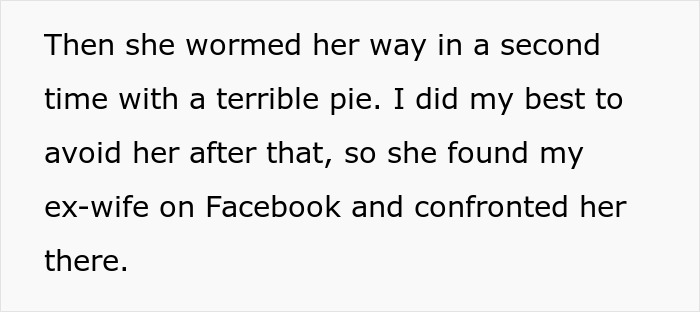
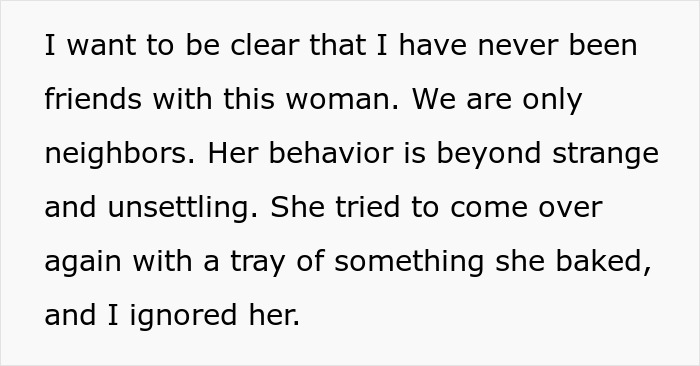

Image credits: freepik (not the actual image)
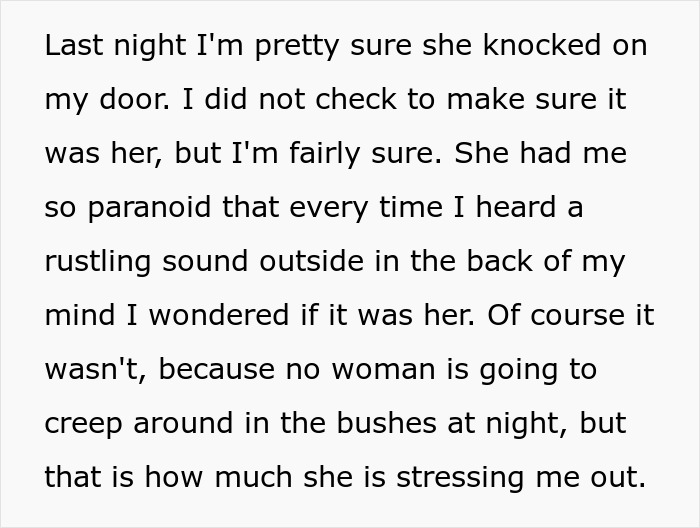
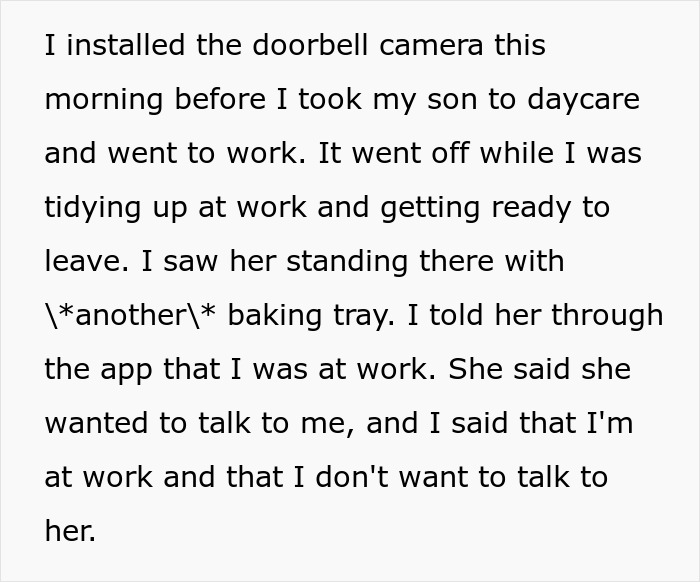
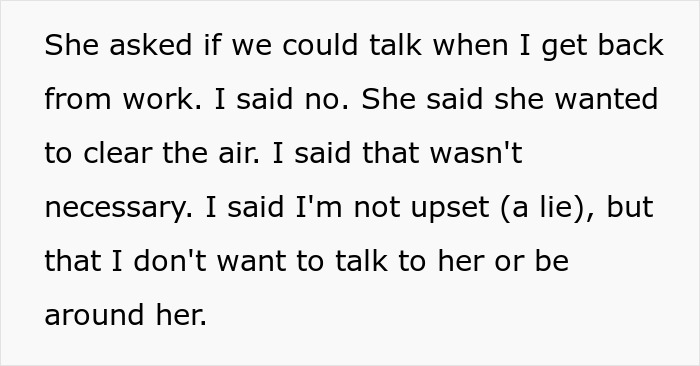
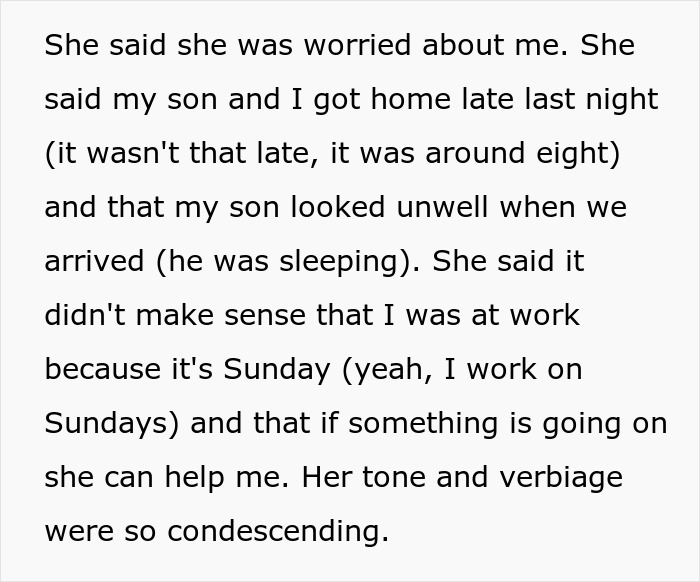

Image credits: namii9 (not the actual image)
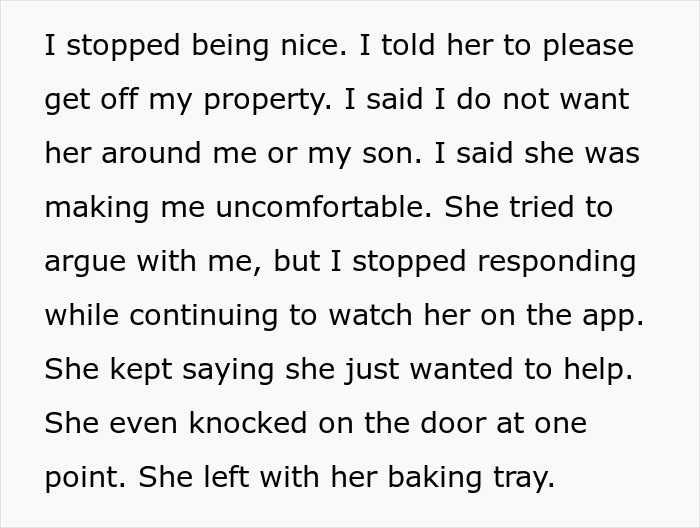
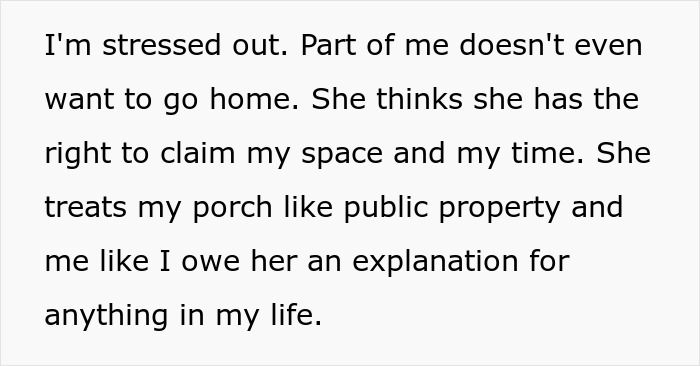

Image credits: MostAnimal5816 (not the actual image)
The author continued to share further context about how events unfolded
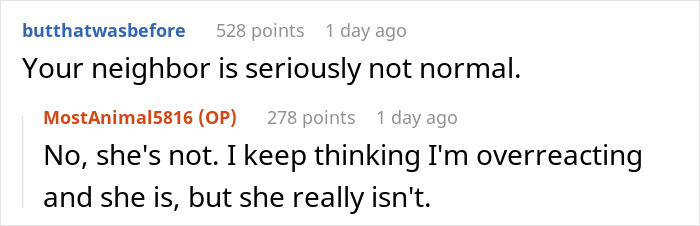
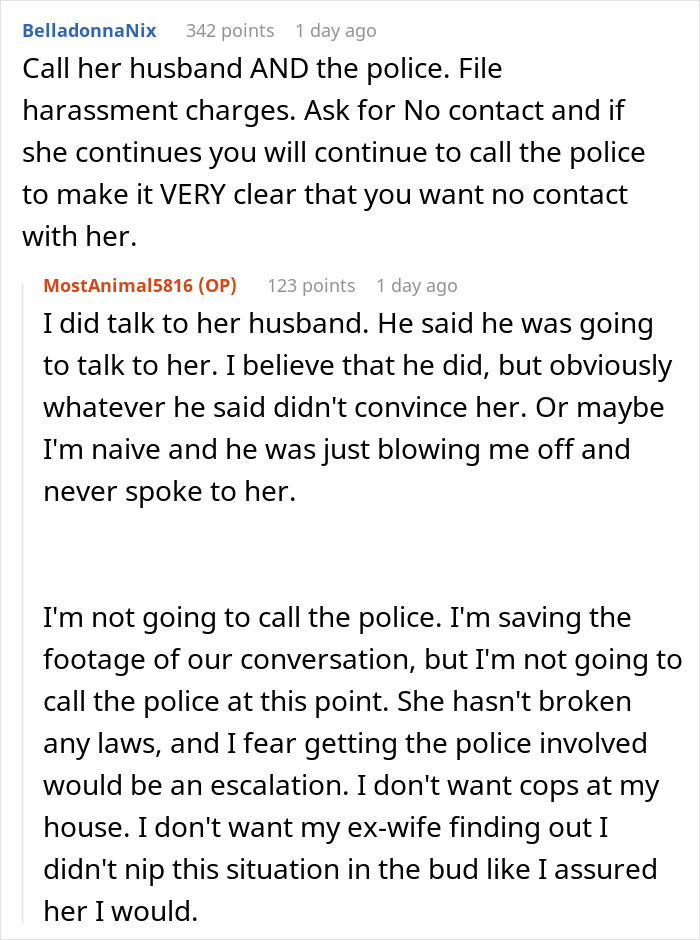
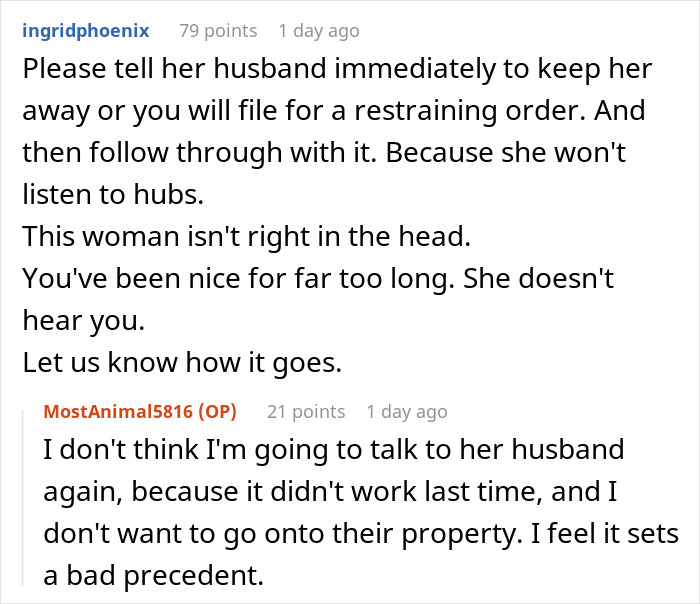
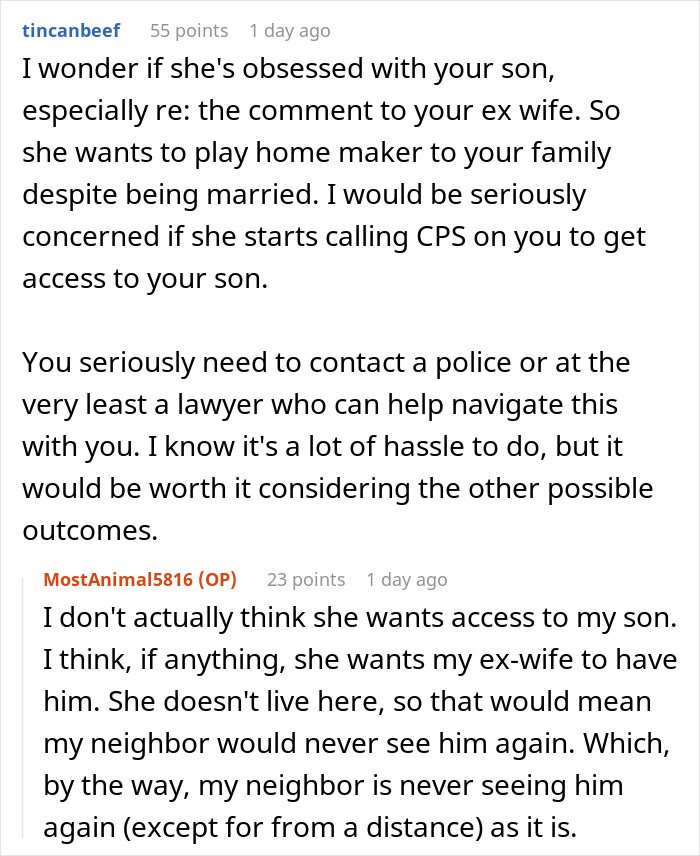
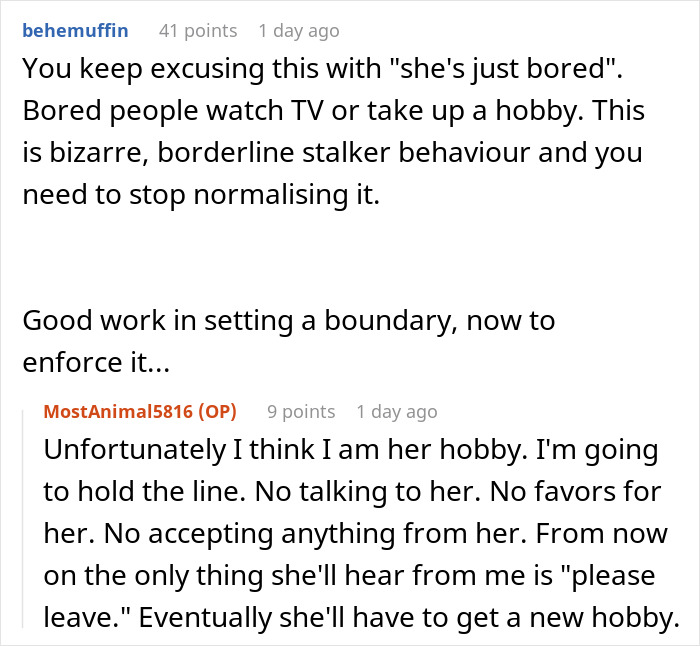
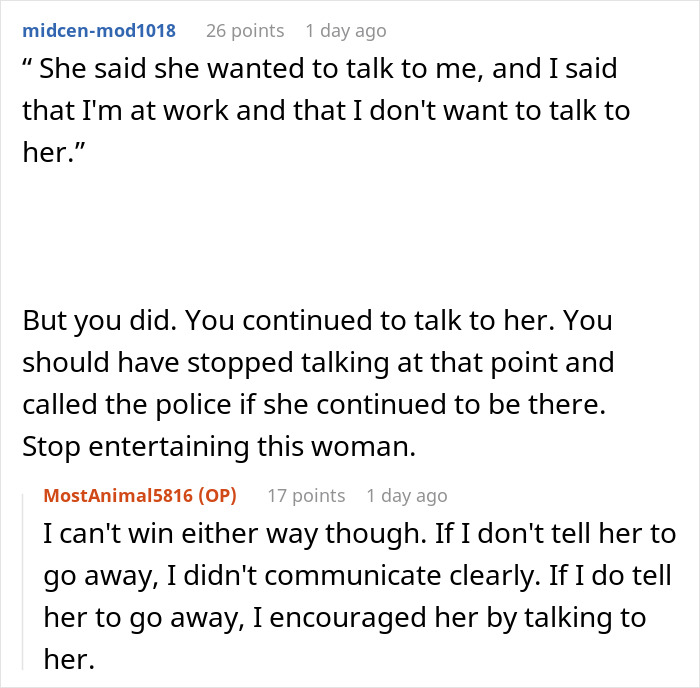
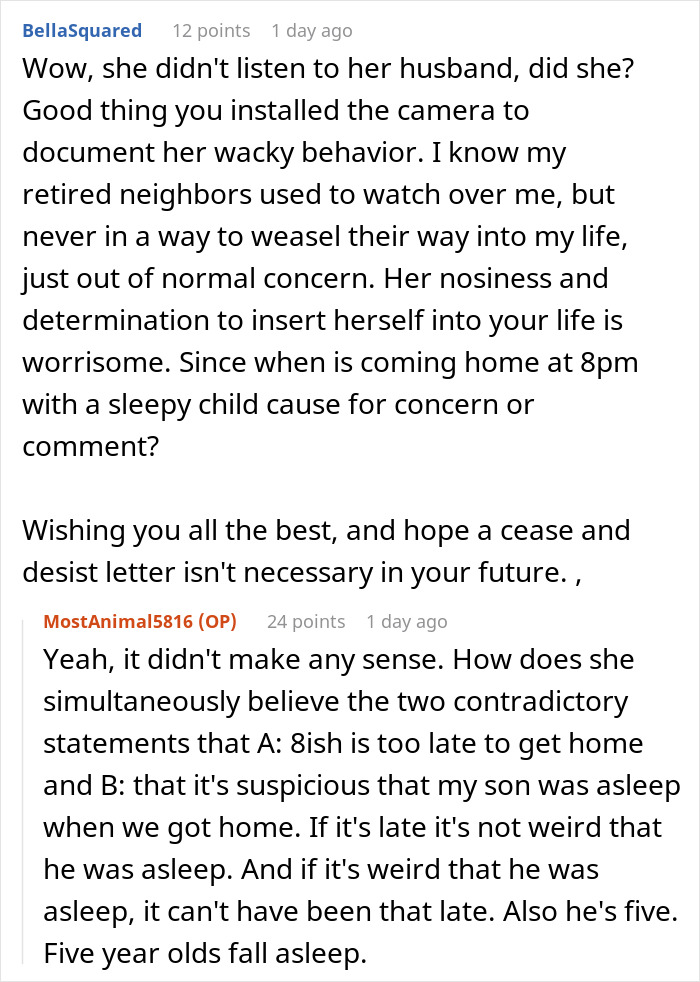
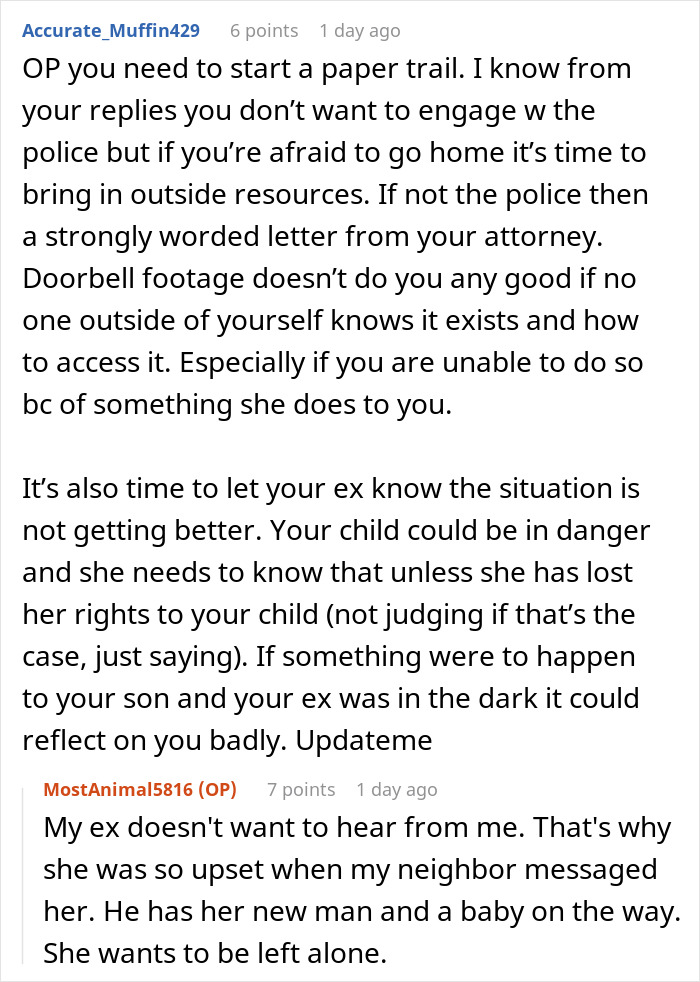
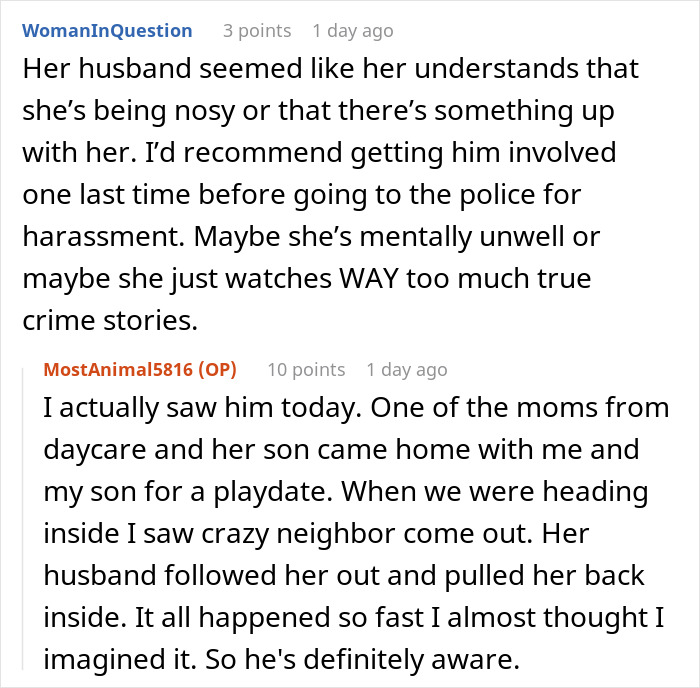

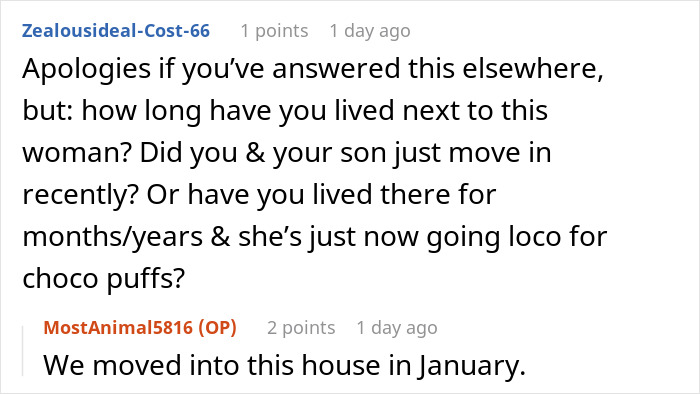
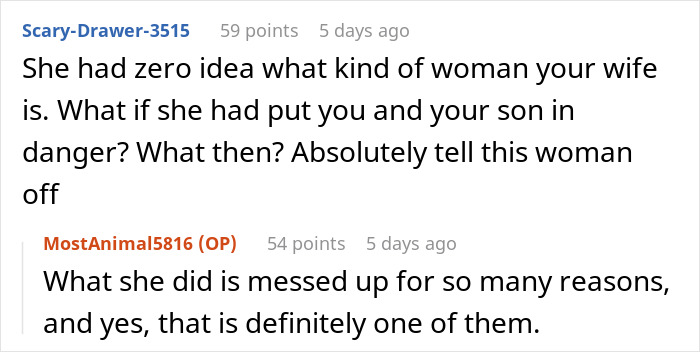
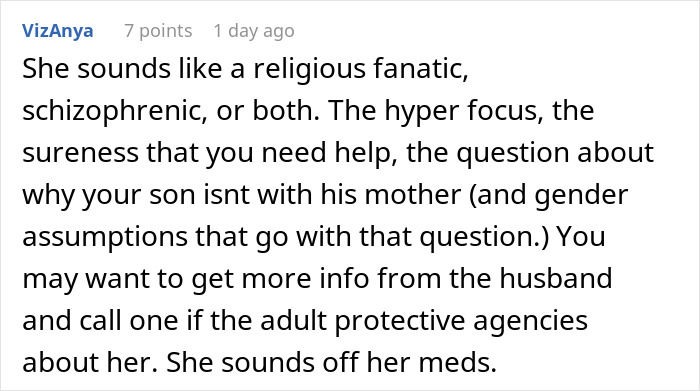
By this point, many readers were genuinely concerned about the safety of him and his son




from Bored Panda https://ift.tt/oRVdkl5
via IFTTT source site : boredpanda
