From the time children are toddlers, we drill one golden rule into them above almost all others: share. “Sharing is caring” is practically a parenting mantra, plastered on classroom walls and echoed at every playdate. We teach kids to take turns, split snacks, and think about others’ feelings—and for good reason. Learning to be generous and considerate of others is a cornerstone of growing into a kind, empathetic adult.
But does that rule apply in every situation, or are there exceptions? One mom was put to the test when her 8-year-old son won not one, but two raffle prizes at a family banquet. Other parents at the table began nudging her to have her son give one of his winnings to another little boy who had walked away empty-handed.
She held her ground in the moment, yet now she’s second-guessing herself, wondering if she made the right call. To help sort through it all, Bored Panda reached out to parenting coach Megan Thompson, who was kind enough to weigh in on the situation. Read the full story and her thoughts below!
From a young age, children are taught that sharing is caring and that generosity is one of the greatest values they can have
Image credits: Wavebreakmedia / Envato (not the actual photo)
But when one boy won two raffle prizes, his mom didn’t think he should have to give one up—even as other parents at the table disagreed
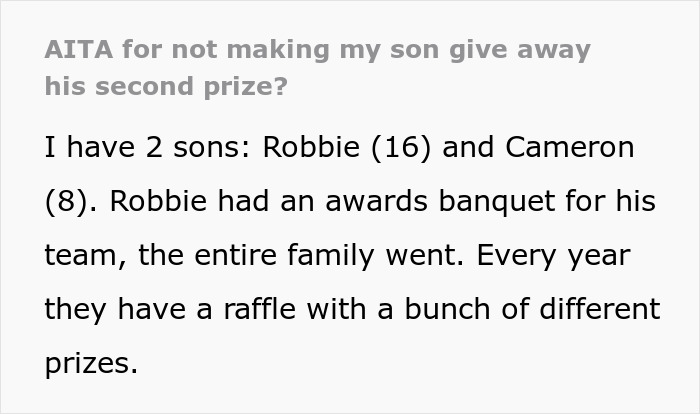
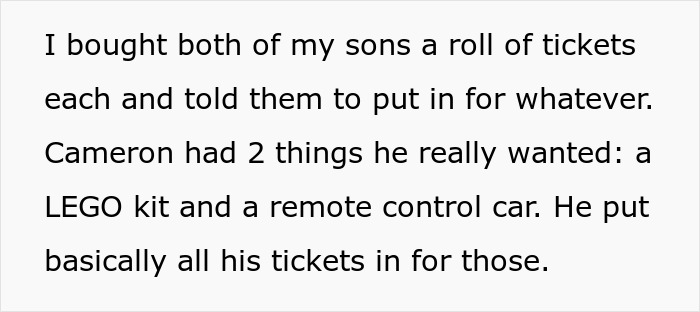
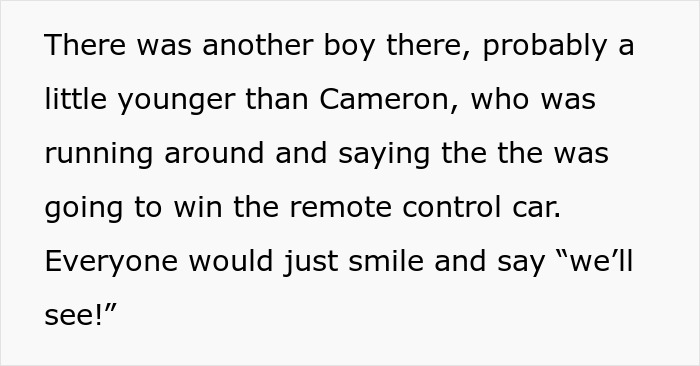
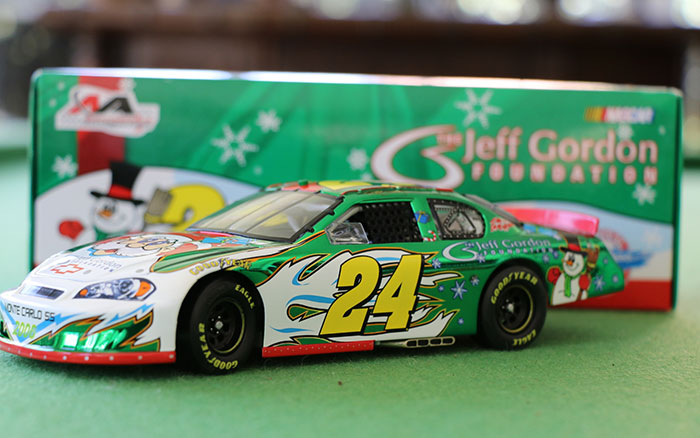
Image credits: peakpx (not the actual photo)
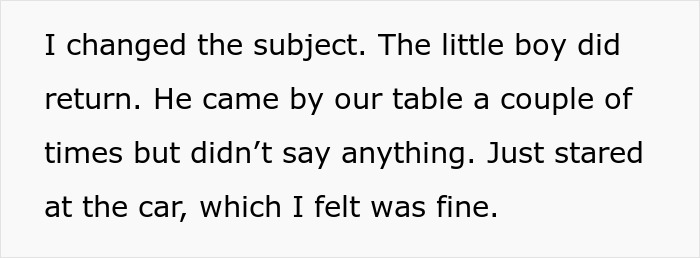
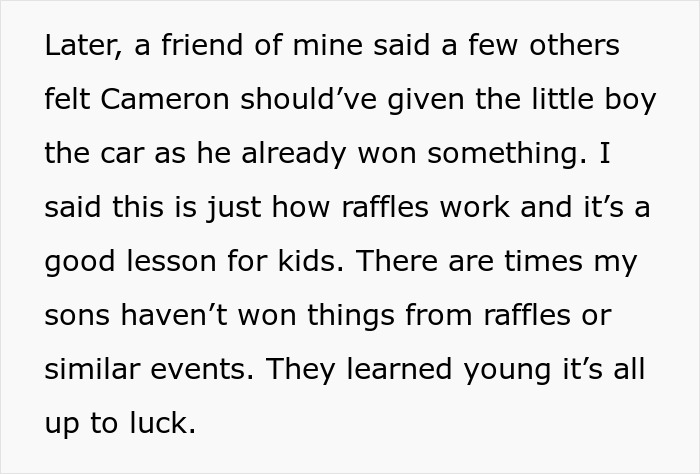
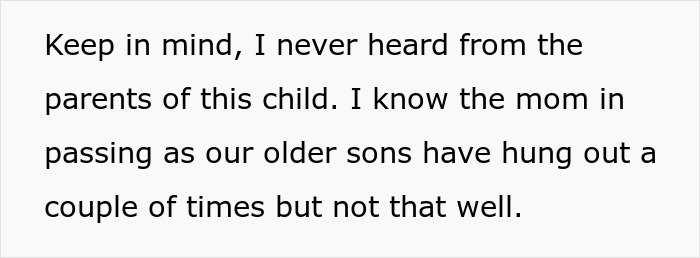
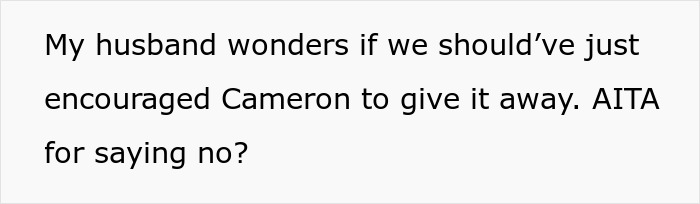
Image credits: ButterscotchNaive801
Parenting coach Megan Thompson says the mom was right to let the child decide for himself
The situation the author describes in her post isn’t anything unheard of. We all know kids don’t particularly like to share their stuff. Parenting coach Megan Thompson tells Bored Panda that they’re similar to adults in that regard. “Most adults are not great at sharing either. We just get better at appearing we do,” she says.
“If someone gifted an adult two brand new cars, do you think their immediate reaction would be to look at their neighbor’s old car and think, ‘I really think they could use the other car more than my family,’ and give it to them straight away?” Probably not.
“That’s what it would feel like for a child to be given two new toys and be told to give the other one away.” She says that whether this could’ve been a teaching moment really depends on the child’s age. As the mother mentioned, her kids are both old enough not to throw tantrums when they don’t get a prize, it seems they might be old enough to make a decision themselves.
“I would make it the child’s choice to share the other toy,” she somewhat agrees with the author’s decision. “I’d first have a chat with my child and let them think about it. Let them try on how it feels. Don’t let other parents pressure you—it’s an opportunity to learn and grow,” Thompson notes.
She says that this is perhaps a bigger learning experience for the child who didn’t get the toy car. She has some advice for the parents of the other kid: “If the other child doesn’t share with them, coach them through how that feels. Don’t fix it or promise to make it up to them. Your child may be more generous to others the next time they are given an abundance.”
She argues that the kid who didn’t win anything actually got the better end of the stick in the long term. “Your kid is going to grow and learn from disappointment in this situation—in fact, I’d argue [that] while they may have lost the prize, they really won. Kids have to flex their disappointment like a muscle and build resilience. It’s one of the greatest gifts we can give them. We can empathize and coach them through it,” Thompson explains.
Peer pressure can be hard to deal with, but parents should stick to their guns

Image credits: Brett Sayles / Pexels (not the actual photo)
In the situation the mother describes, it seems that the main problem here stems from the opinions of other adults. The mom felt quite firm in her decision to let her son choose whether to give up the toy car until other parents and her husband prompted her to doubt it.
VeryWell Family writes that parents should be confident in themselves and their decisions: “Count all the things you are doing right as a parent and trust yourself.” When other parents are giving advice, more often than not, they’re coming from a good place. The best reaction is to politely let them know you’ve already made up your mind.
Of course, it’s healthy to consider suggestions from others. When choosing to stick to your guns, think about:
- Do you think your parenting decision is what’s best for your child?
- Do you have any scientific evidence supporting your decision?
- Might what you’re doing be harmful or dangerous to your child?
After considering these questions, make a decision that suits your values and parenting strategy. After all, when children see their parents not sway from peer pressure, it sets an example in their minds. They should be able to handle pressure from their peers better if they see their parents being firm with their beliefs.
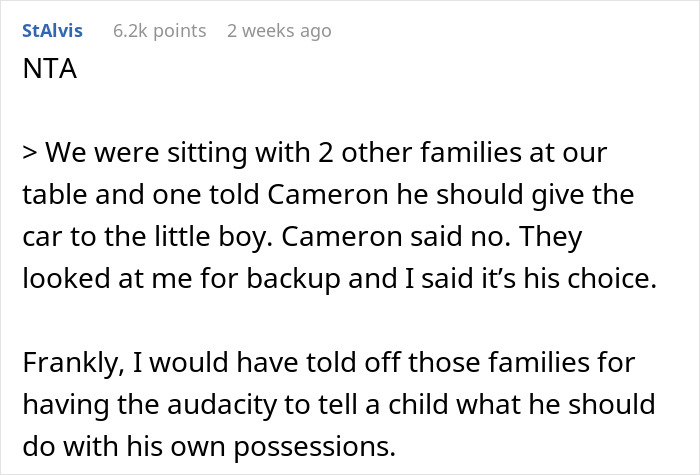
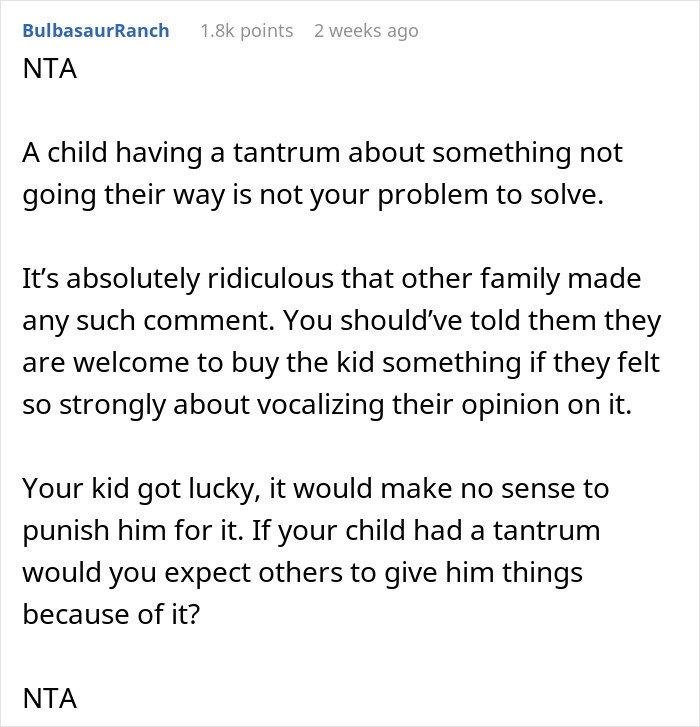
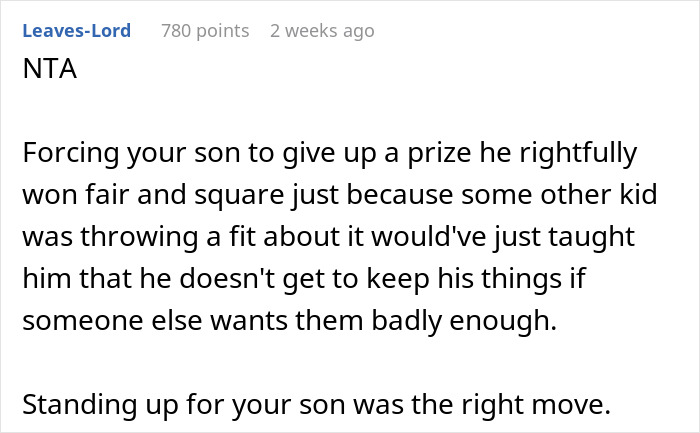
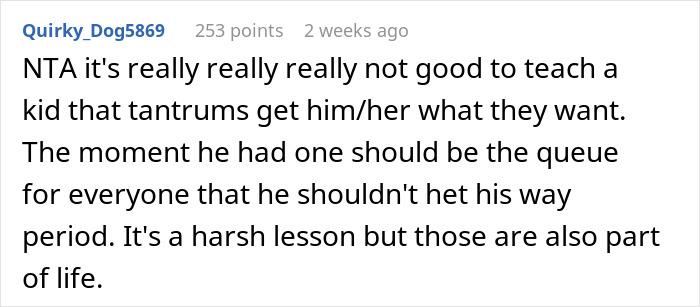
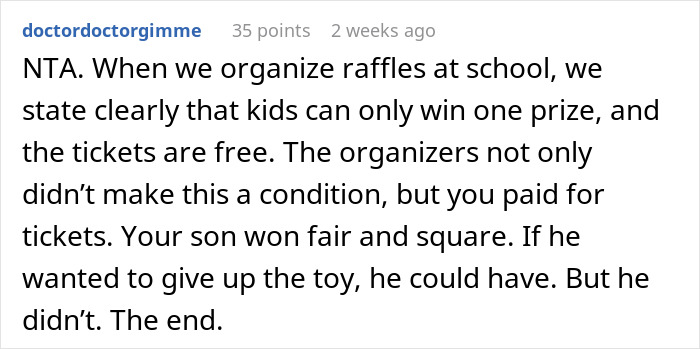
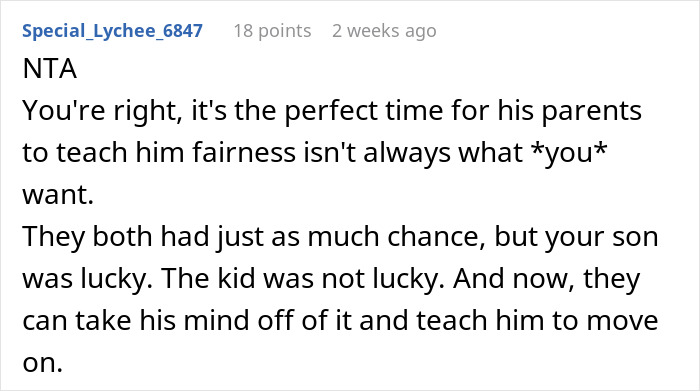
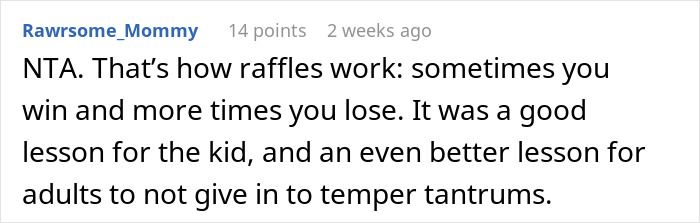
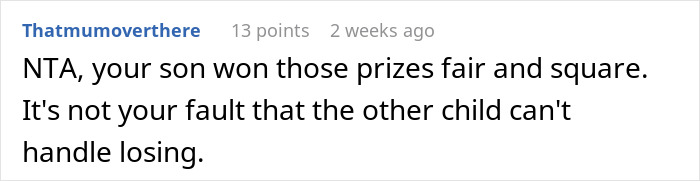
The majority of people agreed the kid should have kept what he won fair and square
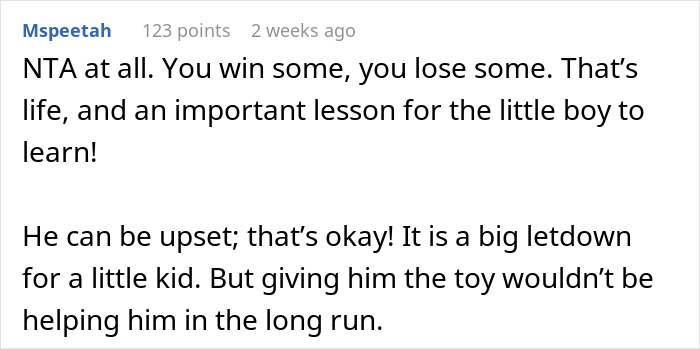
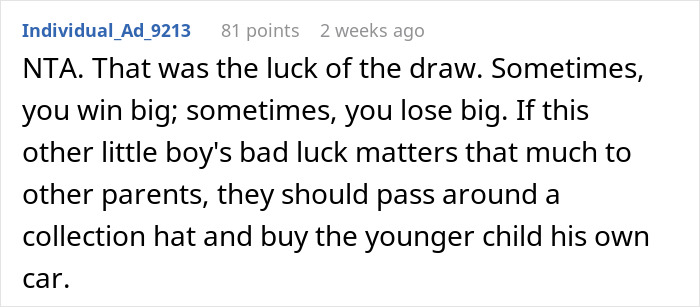

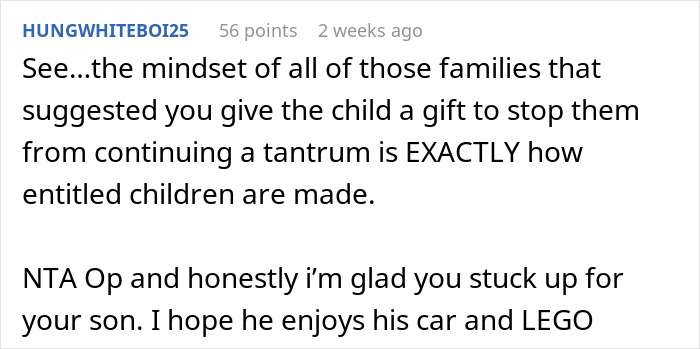
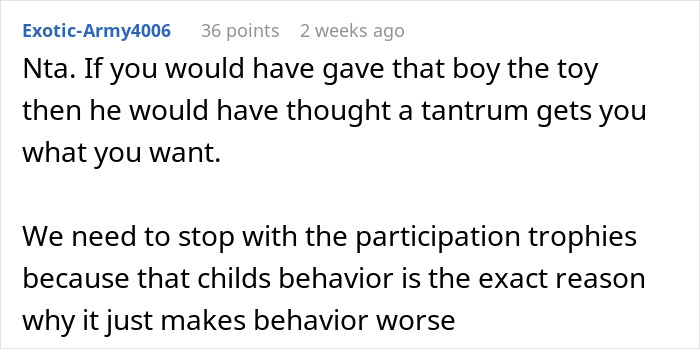
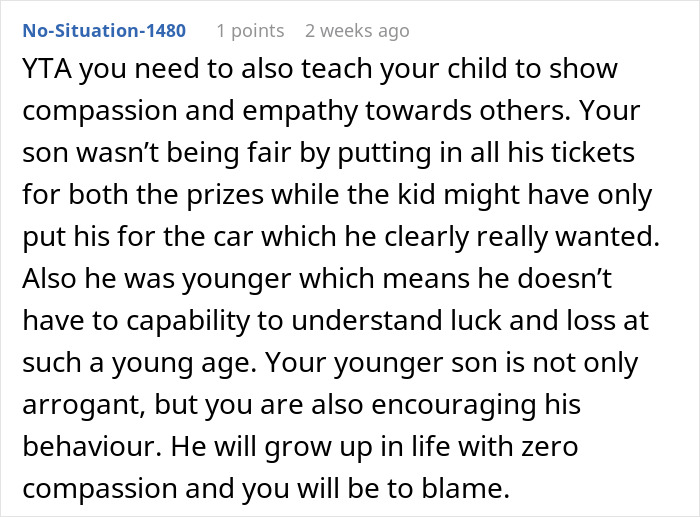
Some, however, thought the mother should’ve intervened
from Bored Panda https://ift.tt/z1x7Duy
via IFTTT source site : boredpanda
