Weddings are meant to be joyful celebrations. They are filled with laughter, dancing, and happy memories unless some family drama or bad behavior spoils the mood. But no matter how lighthearted the atmosphere, it’s never the right occasion for pranks that can ruin someone’s evening.
For example, a man shared how his brother-in-law, the groom, pulled not one but two outrageous “pranks” on him and his girlfriend. First, he pressured the author to propose to his girlfriend, laughing it off with, “Relax, just a joke, bro!” Then he went even further, spilling milk all over her expensive dress. Keep reading to see exactly how things spiraled out of control.
Wedding guests often spend hundreds of dollars on outfits, making them a prized possession at celebrations

Image credits: LeylaCamomile (not the actual image)
A man shared how his brother-in-law, the groom, took things too far by throwing milk on his girlfriend’s expensive dress as a prank

Image credits: Dhaya Eddine Bentaleb (not the actual image)
Image credits: macondoso (not the actual image)
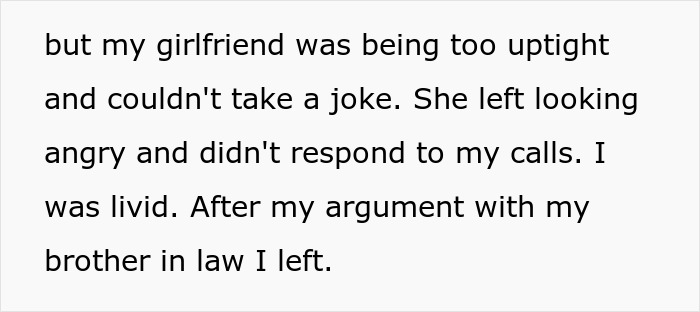

Image credits: voronaman111 (not the actual image)
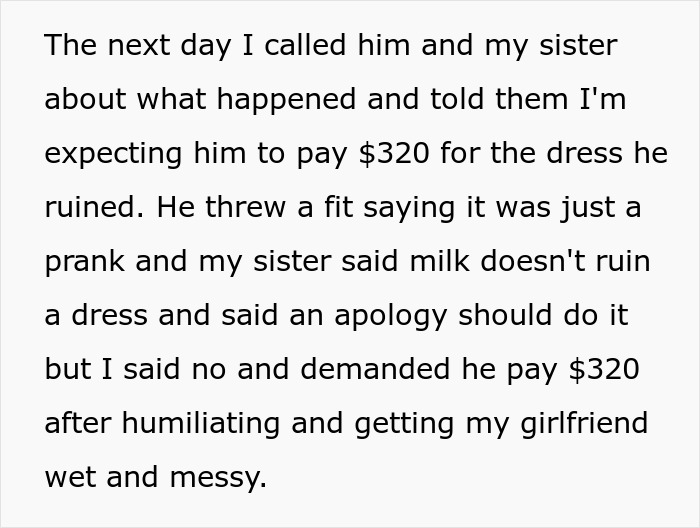
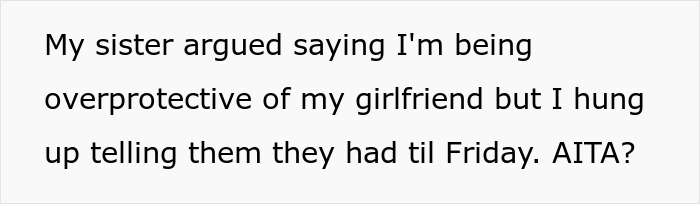
He explained who had paid for the dress and why his girlfriend refused to have it cleaned after the incident
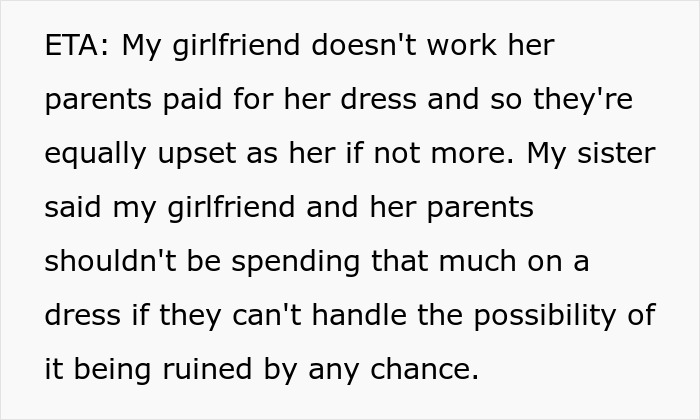
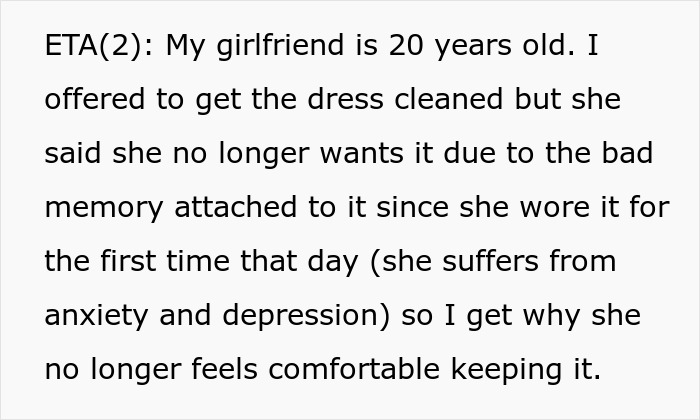
Image credits: NonTueWed3099
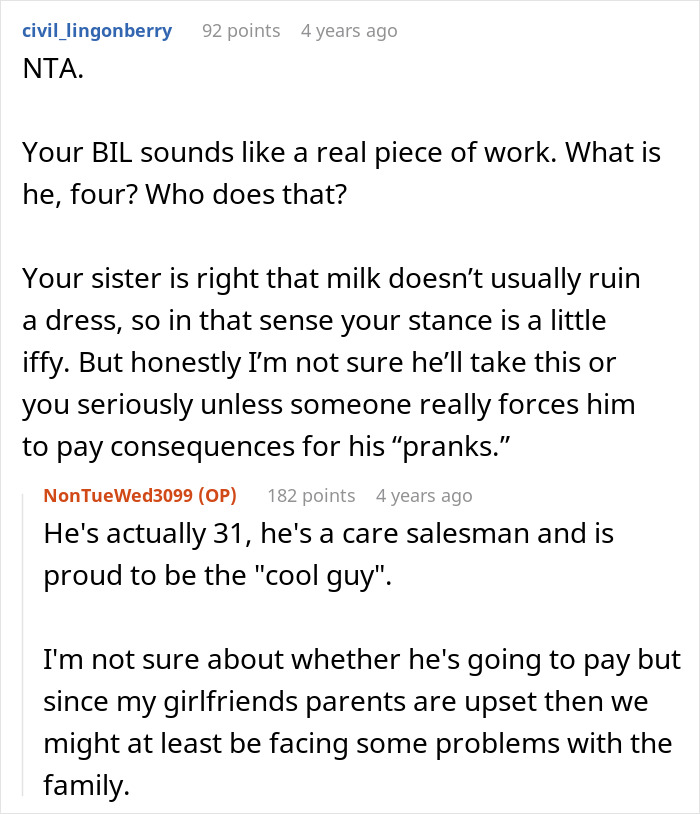
The man added that he couldn’t understand how his sister found such behavior acceptable at a wedding
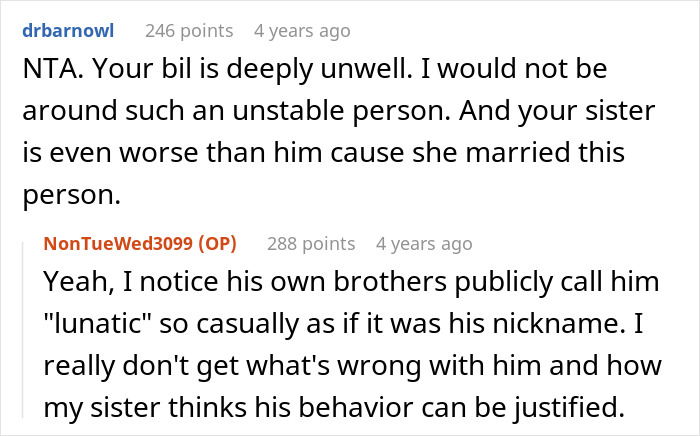
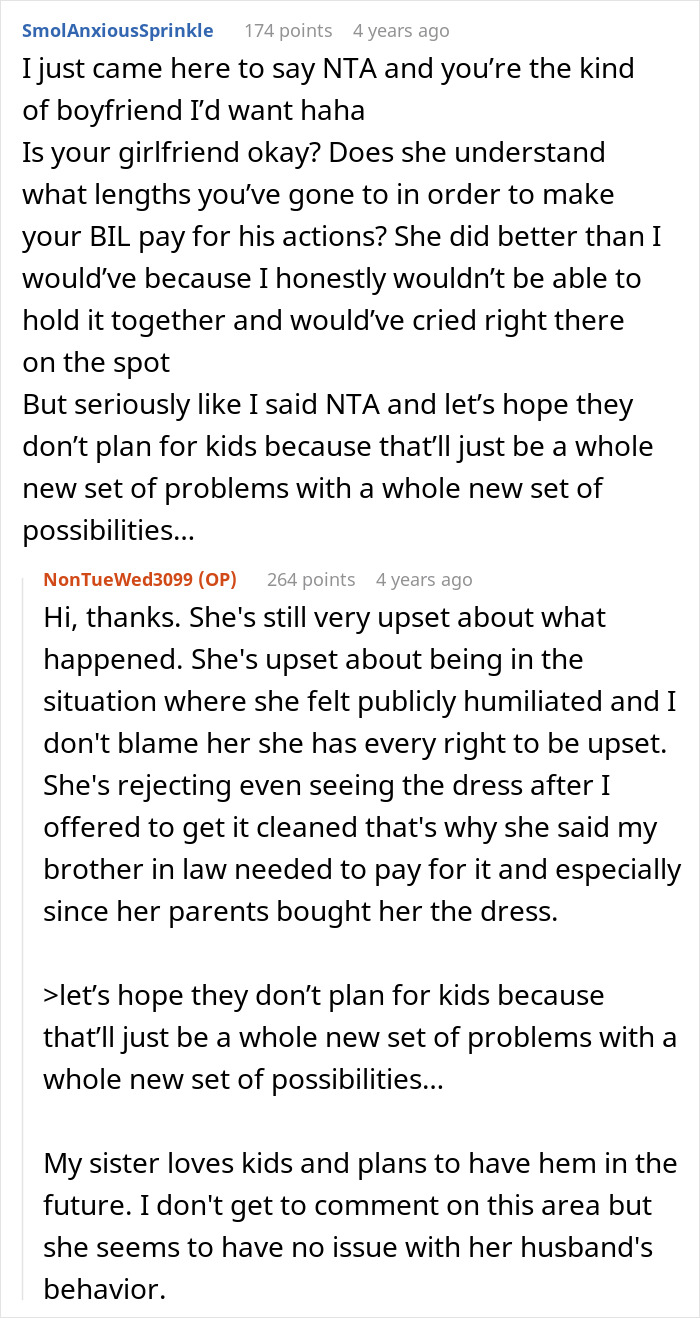
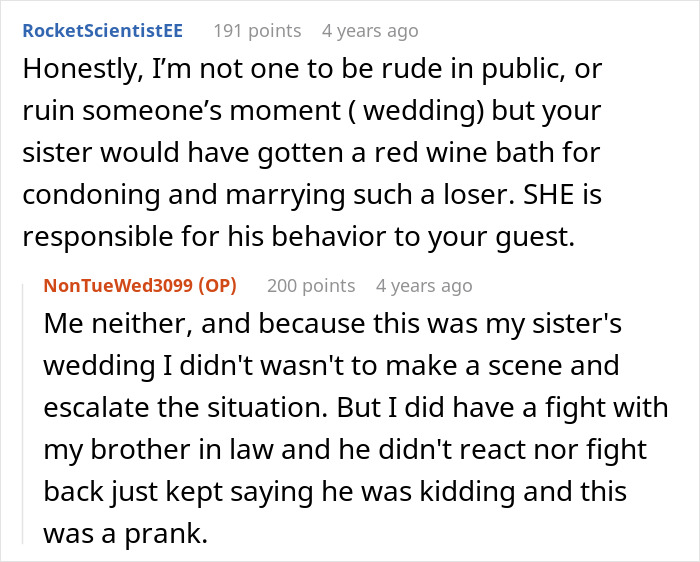
Pranks can sometimes unintentionally trigger past trauma or cause anxiety in the person on the receiving end
In recent years, prank videos have exploded online, racking up millions of views and making us laugh at the absurdity of people’s reactions. From perfectly timed jump scares to elaborate setups, these clips are often staged to perfection. But real life isn’t a controlled set, and pranks that might seem funny on a screen can be cruel in person. What’s hilarious to one person can be deeply upsetting to another, turning what’s meant to be a joke into an uncomfortable or even traumatic experience. The intention may be humor, but the impact isn’t always the same.
One of the biggest issues with pranks is when people don’t fully understand the harm they can cause. Many pranksters brush off the reaction of their target, expecting them to “take it easy” or “just laugh it off.” They forget that a joke can trigger feelings of embarrassment, fear, or frustration. It’s easy to dismiss someone’s hurt feelings when you’re laughing at the situation yourself, but that doesn’t make the impact any less real.
Pranks can also unintentionally trigger past trauma or create anxiety. For someone who has experienced bullying, physical scares, or abuse, even a seemingly harmless prank can spark hypervigilance, making them constantly on edge. Imagine a prank involving sudden loud noises or unexpected physical contact. While intended as funny, the victim’s body may respond with real fear, increased heart rate, and stress, like reliving a past experience. This is why it’s important to consider the mental state and history of the person being pranked, even for a joke that seems innocent.
In some cases, pranks can even be used as a way to gain power or control over someone. A prankster might intentionally make someone feel small, embarrassed, or humiliated, all under the guise of humor. For instance, someone hiding another person’s important item in front of friends can make the victim feel powerless while the prankster gains attention or amusement. When pranks are used to manipulate or dominate, they cross from being playful into being psychologically harmful. The line between funny and controlling can be surprisingly thin.
Experts also point out that there is a fine line between pranking and bullying. When jokes are repeated, targeted, or cause distress, what starts as a playful act can quickly become mistreatment. Even a seemingly small prank, like a coworker tricking you repeatedly or an intimate partner repeatedly joking at your expense, can wear on someone over time. It’s the repetition and intent behind the prank that matters. A single harmless joke might be fine, but consistent targeting can harm confidence, trust, and relationships.
Repeated online pranks aimed at intimate partners or close friends can also negatively affect relationships. Imagine someone constantly being the target of staged “funny” videos at home or on social media; while one prank might elicit a chuckle, consistent pranks can erode trust and increase resentment. Partners may feel belittled or undervalued, questioning whether their feelings are being respected. Over time, what’s meant to be lighthearted humor can become a source of tension, stress, or even conflict in a relationship.
When done thoughtfully and harmlessly, pranks can have benefits, like boosting mood, laughter, and even relieving stress
On the flip side, harmless pranks have their benefits too. According to psychologist Susan Albers, PsyD, writing for the Cleveland Clinic, “A well-executed prank or joke will induce laughter. And research shows that laughing has wonderful benefits for our mental and physical health.” Laughter can reduce stress, improve mood, strengthen social bonds, and even give your immune system a small boost. When a prank is genuinely funny to everyone involved, it creates shared joy and memorable moments—something everyone can enjoy without anyone feeling embarrassed or unsafe.
So, while sneaky, harmless pranks can be a source of fun and laughter, it’s important to know the boundaries. If a prank crosses the line into cruelty, triggers anxiety, or targets someone repeatedly, it stops being funny and starts being harmful. The best pranks are those where everyone can laugh together, not at someone else’s expense. Humor should uplift, not hurt. So, next time you plan a prank, think about the person on the receiving end; it can mean the difference between a story everyone tells with laughter and one no one wants to remember.
In this particular case, it seems the groom clearly went too far. Ruining someone’s dress and then refusing to pay for it crosses the line from playful prank to outright disrespect. The author also shared how his girlfriend felt embarrassed and humiliated in front of everyone, turning what should have been a joyful wedding moment into a stressful one. Pranks are meant to be fun, but actions like this show how easily they can hurt. What are your thoughts on this situation? And more broadly, how do you feel about pranks: fun, harmless jokes, or something that can easily go too far?
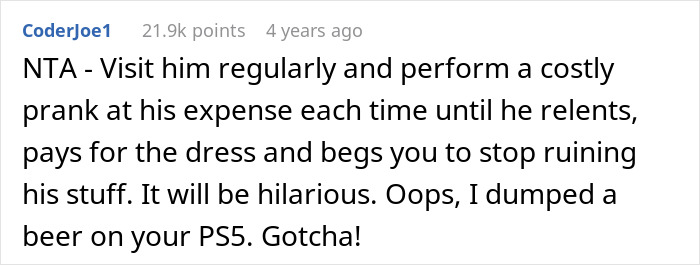
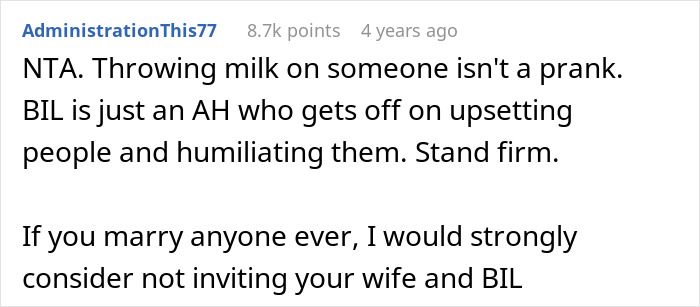
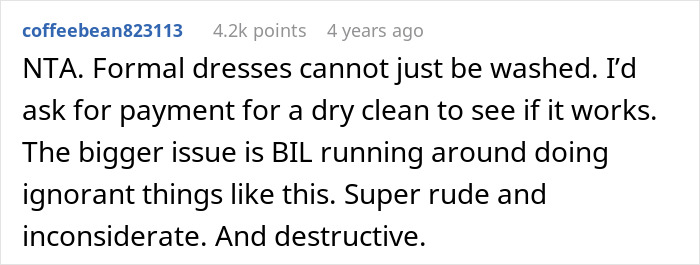
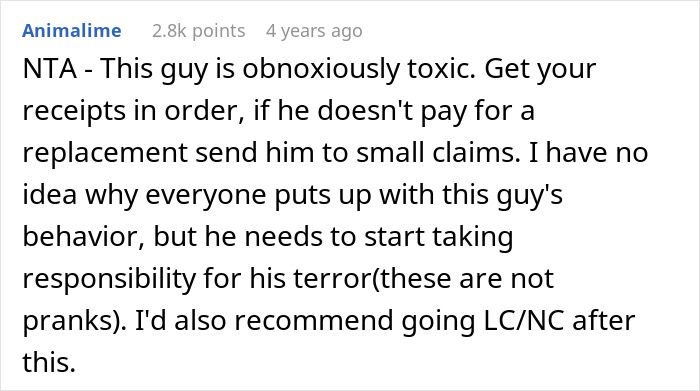
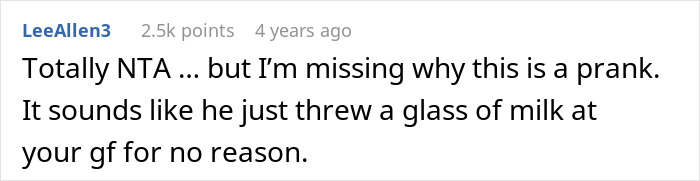
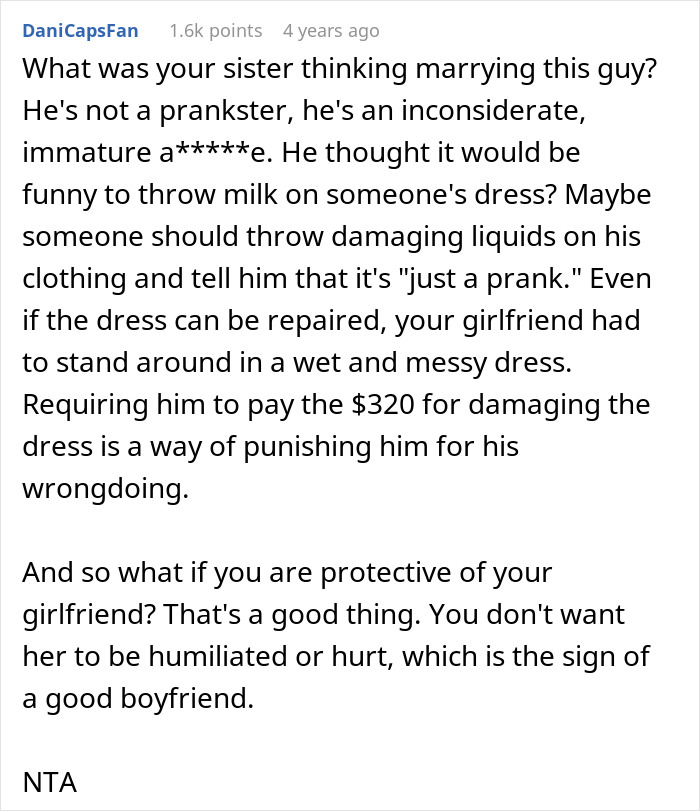
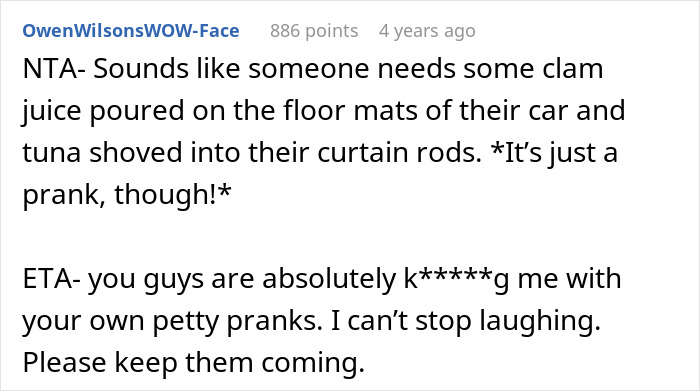
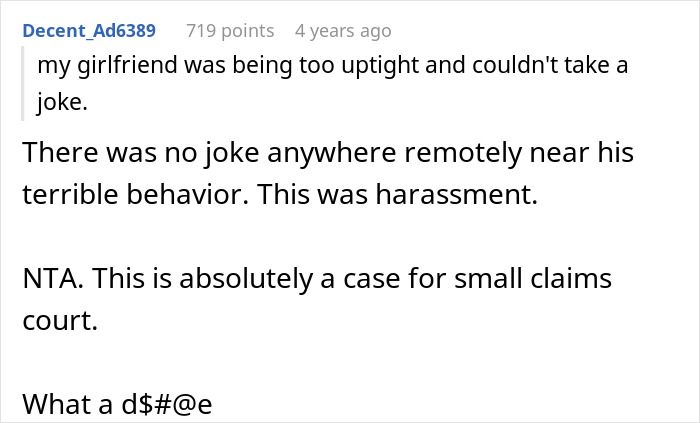
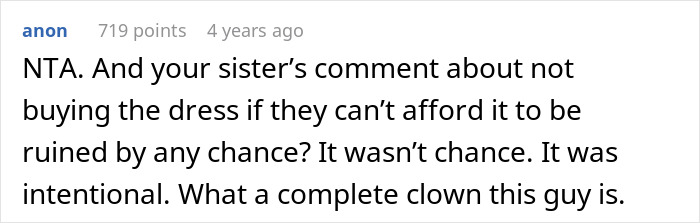
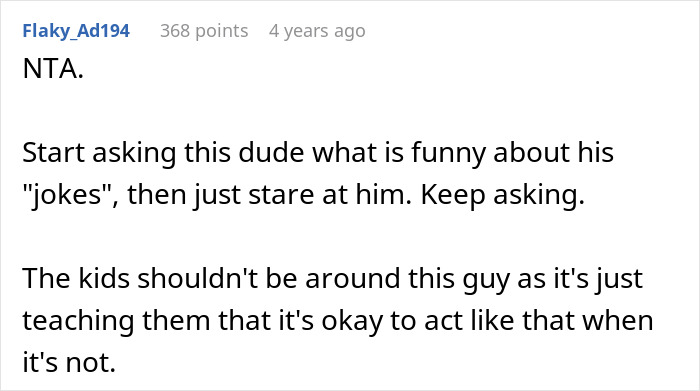
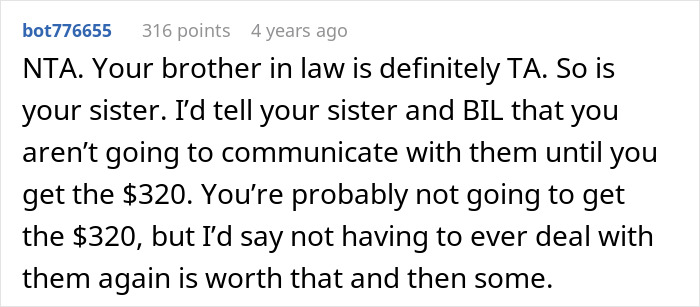
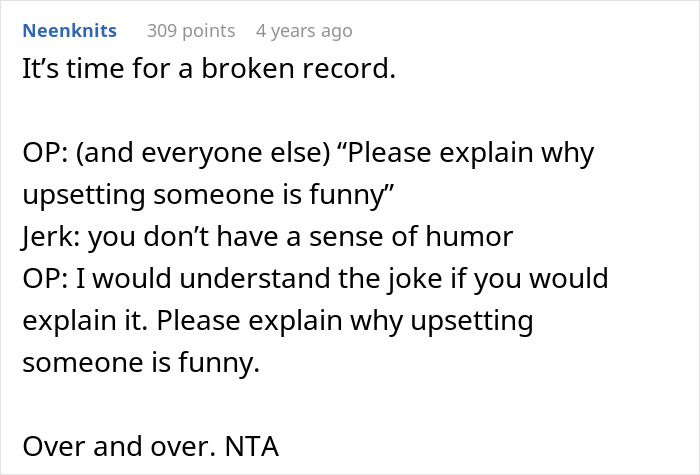
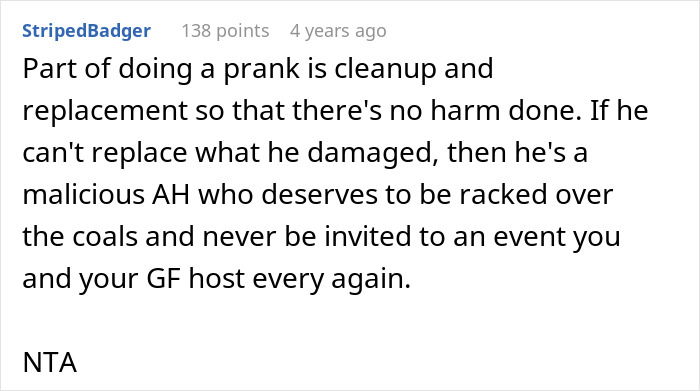
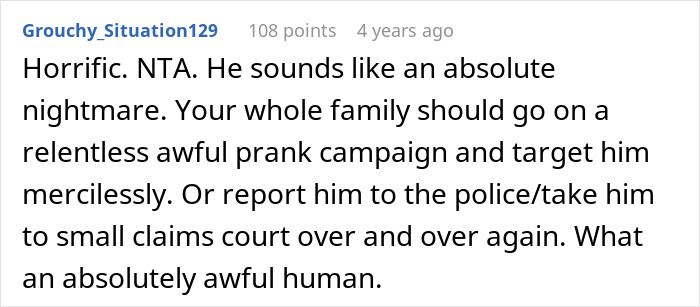
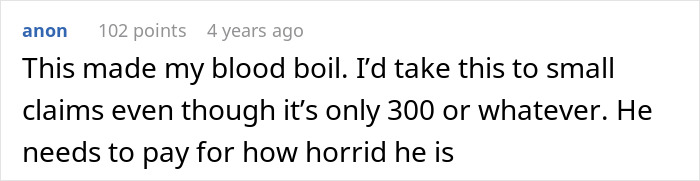
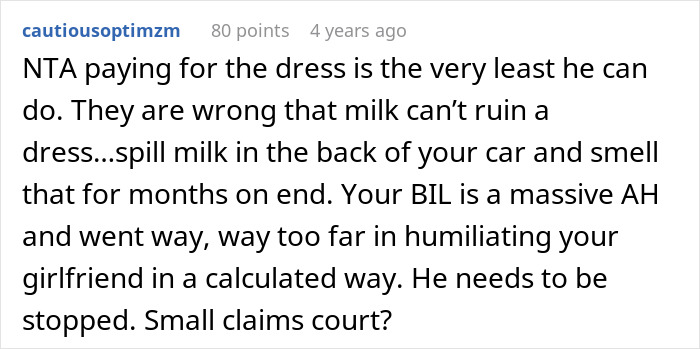
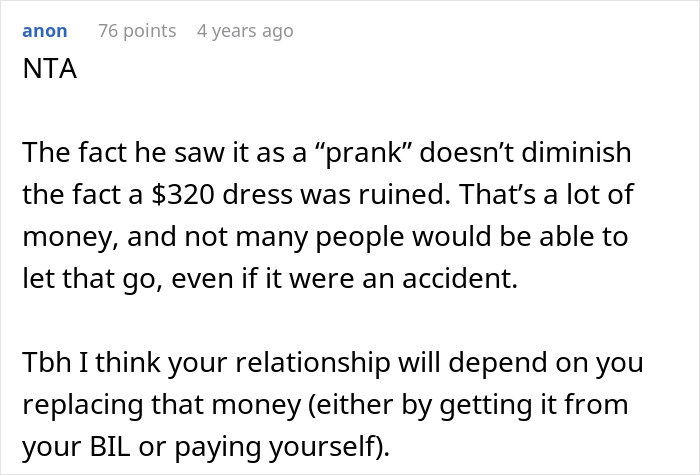
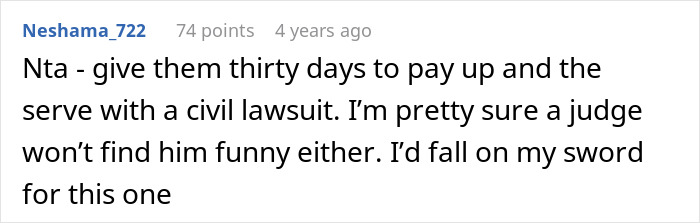
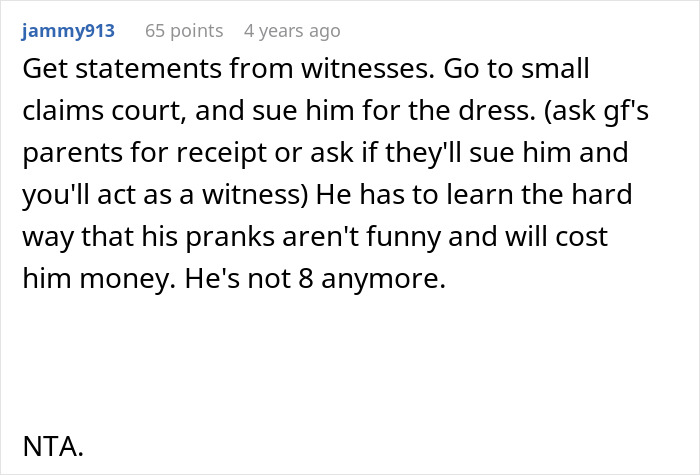
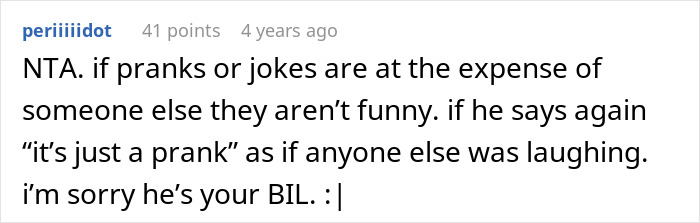
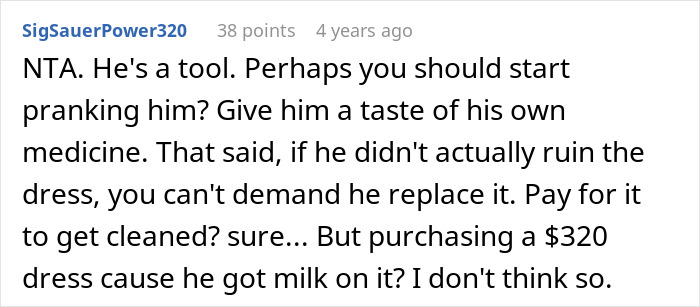
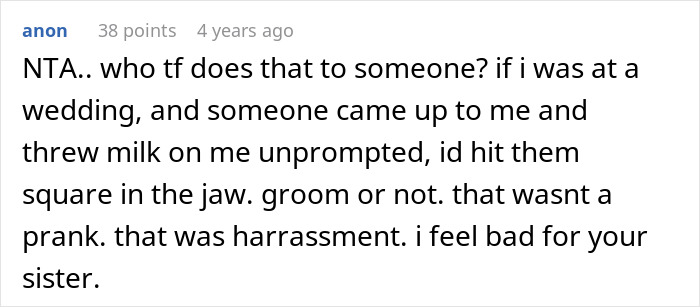
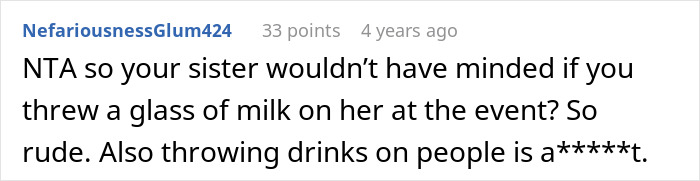
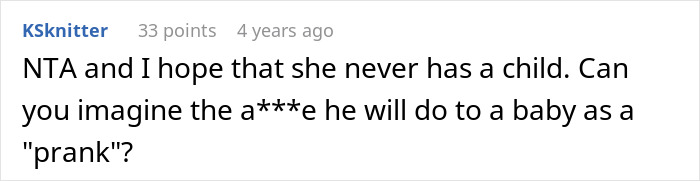
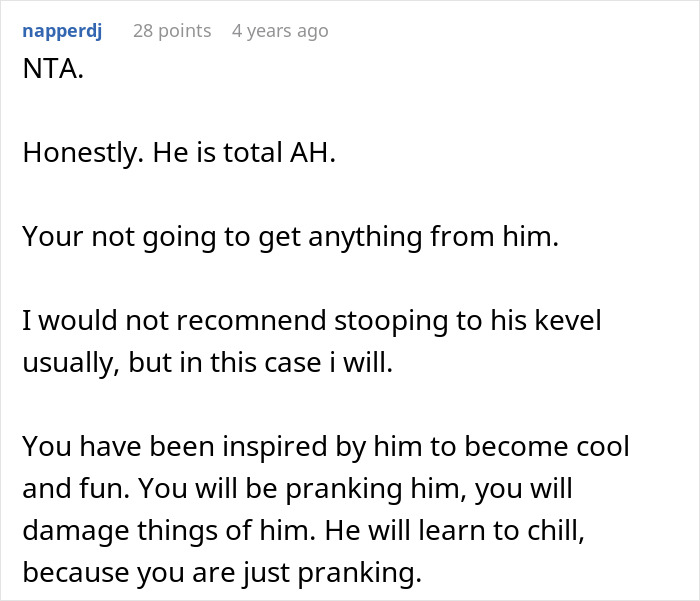
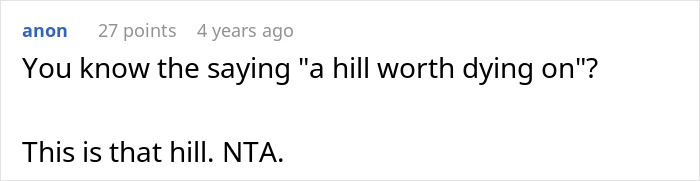
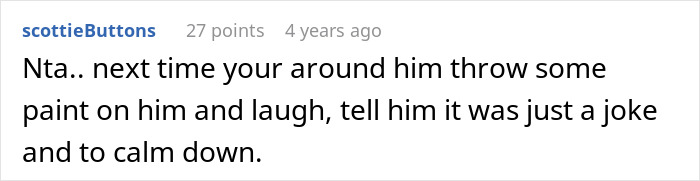
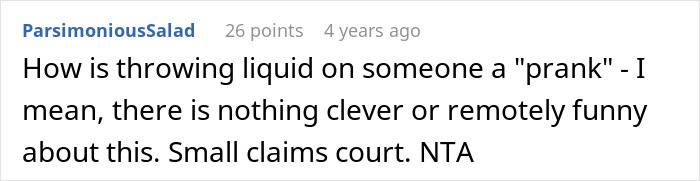
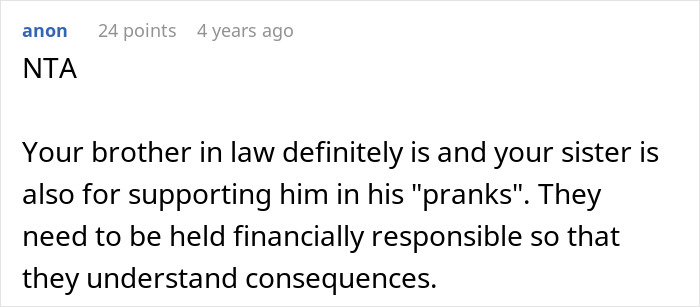
Online commenters agreed that the groom’s prank crossed the line and was far from funny











from Bored Panda https://ift.tt/5EI1qrj
via IFTTT source site : boredpanda
