Close-up Photographer of the Year is a global photography contest that celebrates the hidden beauty of our world through macro, micro, and close-up images.
For its seventh edition, the competition received more than 12,000 submissions from photographers across 63 countries. A panel of 22 experienced photographers, naturalists, and editors dedicated over 20 hours of online deliberation to select the winners and compile the Top 100 photographs.
This year’s selected images span 11 categories and showcase an incredible range of subjects – from frog spawn that resembles a distant galaxy and a ghostly swarm of mayflies descending on a Hungarian town, to an ice-covered tree in Nagano and a dreamlike landscape created by oxidizing a copper plate with everyday household materials.
Scroll down to see the top three winners in each category and discover the breathtaking images that stood out this year.
More info: cupoty.com | Instagram | Facebook | x.com
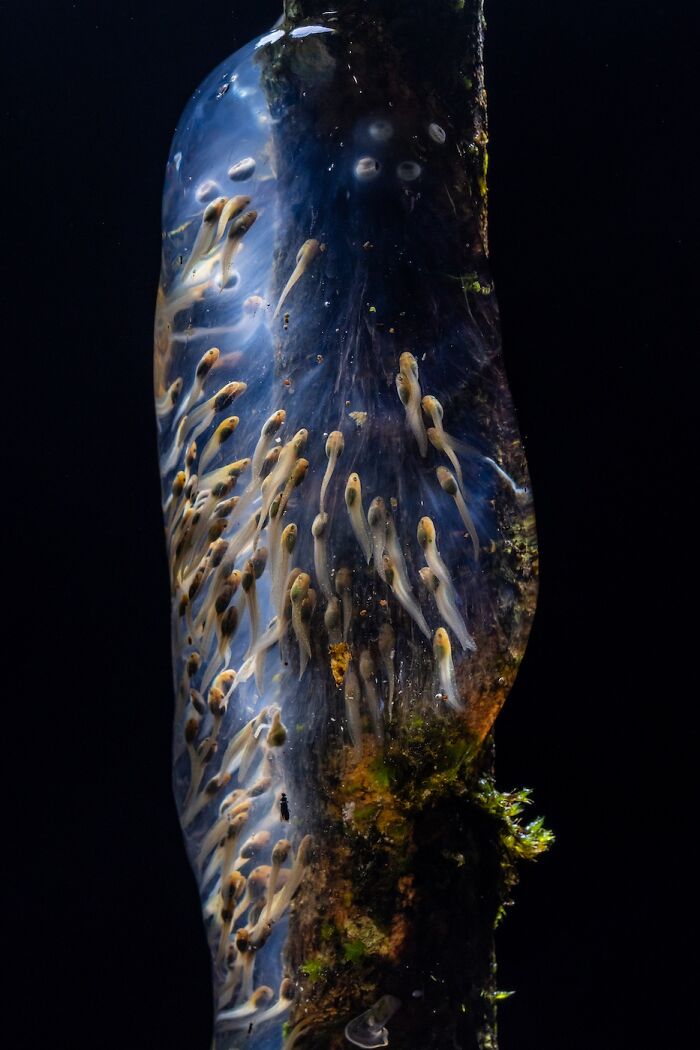
#1 Animals, 1st Place: Amphibian Galaxy By Filippo Carugati
A Malagasy frog (Guibemantis sp.) egg clutch hangs on a small trunk next to a pond in Maromizaha rainforest, Madagascar.
‘Conducting fieldwork during cyclone season gave me the opportunity to witness a wonderful natural spectacle: Malagasy frogs’ mass reproduction. The Maromizaha rainforest, where I spent six months collecting data for my PhD thesis, hosts an outstanding richness of amphibians, with at least 74 endemic species. For many Malagasy frogs, reproduction peaks correspond with winter months, a period characterised by higher temperatures and intense rainfall.
During my nocturnal explorations, I was deeply impressed by the variability in shapes, colours, and sizes of the numerous egg clutches deposited on leaves, branches, and trunks. In this shot, I documented a large egg clutch (20–30cm) hanging on a small trunk. Inside this egg aggregation, several tadpoles were swimming peacefully through the gelatinous substance. Using an external remote-controlled flash, I lit the subject from behind, enhancing the shapes of the converging tadpoles and the colourful mixture within the gelatine, which suggested a cosmic appearance.’
© Photo: cupoty
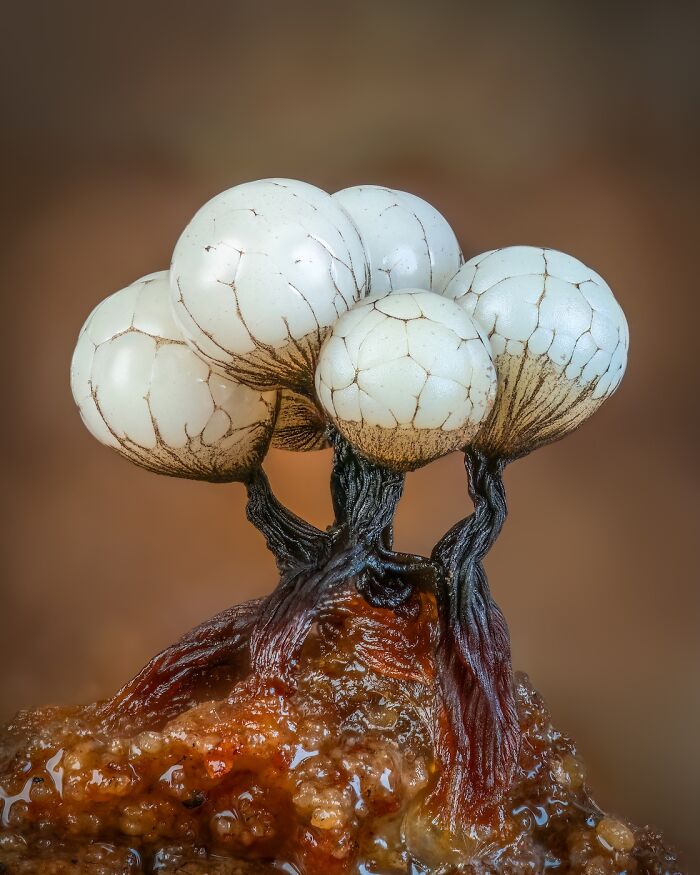
#2 Fungi & Slime Moulds, 2nd Place: Cribraria Cluster By Barry Webb
A cluster of 1.5mm tall, immature Cribraria rufa slime moulds in ancient woodland, South Buckinghamshire, England.
‘I was pleased to find this group of Cribraria rufa slime moulds growing so close together, as they are more usually found singly or spaced apart. A focus bracket of 103 shots was taken to create the image. A tripod was used as it was taken in natural light.’
© Photo: cupoty
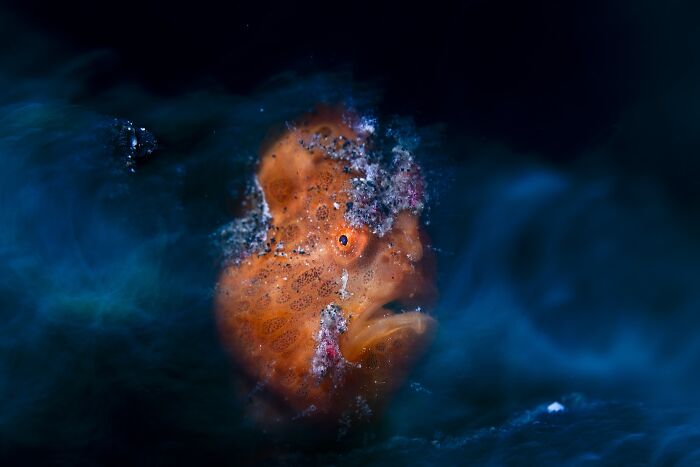
#3 Underwater, 2nd Place: Ethereal Frogfish By Daniel Sly
An orange painted frogfish (Antennarius pictus) on the black volcanic sands of Lembeh Strait, Indonesia.
‘An orange painted frogfish waits motionless on the black volcanic sands of Indonesia’s Lembeh Strait, perfectly disguised as it prepares to ambush unsuspecting prey. This image captures the unusual stillness of these masters of camouflage, predators that rely on patience rather than speed. To highlight the frogfish against the dark seabed, I used a narrow beam of light, combined with a slow shutter speed and intentional rotational movement of the camera. This technique allowed the blue ambient water to bleed into the frame and created the ethereal swirl of the surrounding sand substrate, turning a moment of complete stillness into something otherworldly.’
© Photo: cupoty
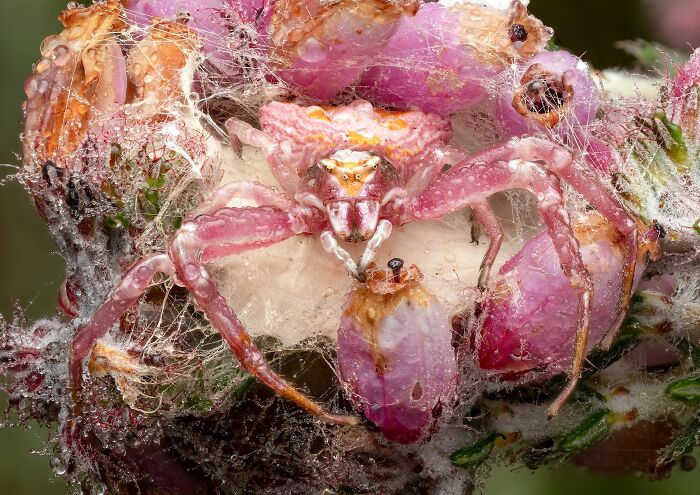
#4 Invertebrate Portrait, 2nd Place: Thomisus Onustus On Guard By Wayne Sayers
A female heather crab spider (Thomisus onustus) guards her recently laid eggs in Dorset, UK
‘I first encountered these colourful spiders last year and was amazed to learn they’re native to the UK. They are a heathland specialist, and living near Dorset heathland gave me the opportunity to search for them again this summer. One behaviour I wanted to capture was a female guarding her egg sac. After many trips to several sites, I found a population just 15 minutes from home. Most females were tucked beneath their egg sacs or hidden amongst heather flowers, making clean shots difficult. This individual stood out because her perch was unusually open. The forecast predicted still conditions, a welcome break from weeks of gusty wind that had made stacking impossible. I set out at 4:30am, hoping the calm would hold. The cool night air had left a light dew on the heather and creatures. When I arrived, I found the spider in clear view atop her egg sac, perfectly positioned. On returning, days later, she was gone along with many others I’d spotted.’
© Photo: cupoty
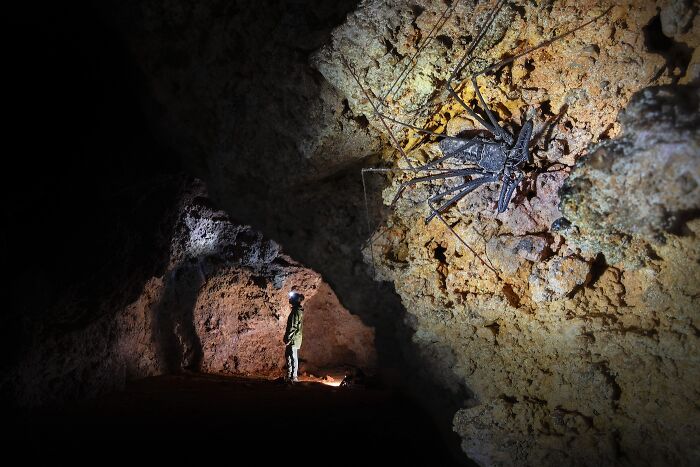
#5 Arachnids, 2nd Place: I Feel I’m Being Watched By Guillaume Correa Pimpao
A whip spider (Amblypygi sp.) observes an explorer from a cave wall in the municipality of Ouanary, French Guiana
‘This photograph was taken inside a remote cave in the Ouanary region of French Guiana, a place that reveals its inhabitants only to those who move quietly and use minimal light. While carefully exploring the cave I encountered several whip spiders, harmless chelicerates that can appear nightmarish. One individual was positioned on a wall overlooking the main chamber, where my partner was admiring the colourful rock formations. The scene inspired me to play with scale and perspective, turning the spider into a looming creature about to seize an unsuspecting human.’
© Photo: cupoty
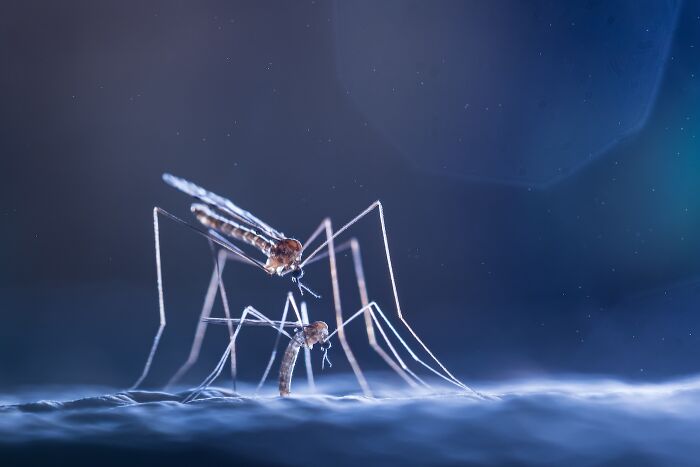
#6 Insects, 2nd Place: Love Under The Stars By Valeria Zvereva
Mating games of mosquitoes (Limoniidae) on a fallen tree in Moscow region, Russia.
‘One day in June, whilst wandering through the forest, I came across a fallen tree whose surface was covered with a white crust of tree fungus. Large mosquitoes were circling above. I think it was a mating game, with some of them sitting on the fungus crust, waiting for a partner. Shining a torch, I noticed that the tree fungus was releasing spores. Perfect for a romantic night out.’
© Photo: cupoty
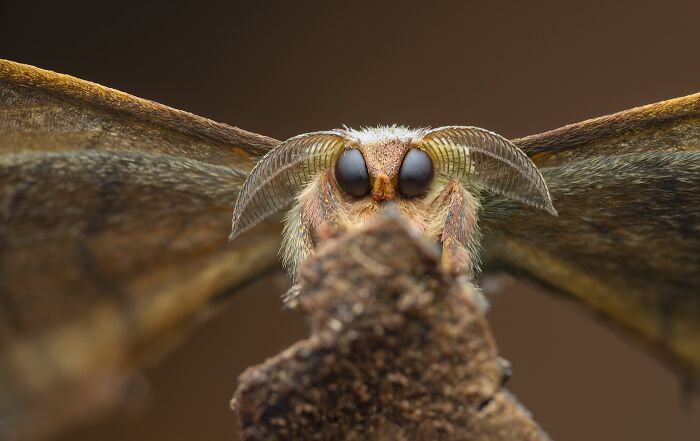
#7 Invertebrate Portrait, 1st Place: Good Boy By Laurent Hesemans
A moth (Bombycidae sp.) in Tinamaste, Costa Rica.
‘A favourite quarry of many macro photographers, it is always a lovely opportunity to spend time with members of the Bombycid family. Incredibly photogenic, the large eyes and antenna positions of these moths, especially the males, always lend their portraits a somewhat melancholy feeling. They are a lesson in beautiful subtlety and a reminder to always give even the simplest arthropods and small creatures a second, closer look.’
© Photo: cupoty
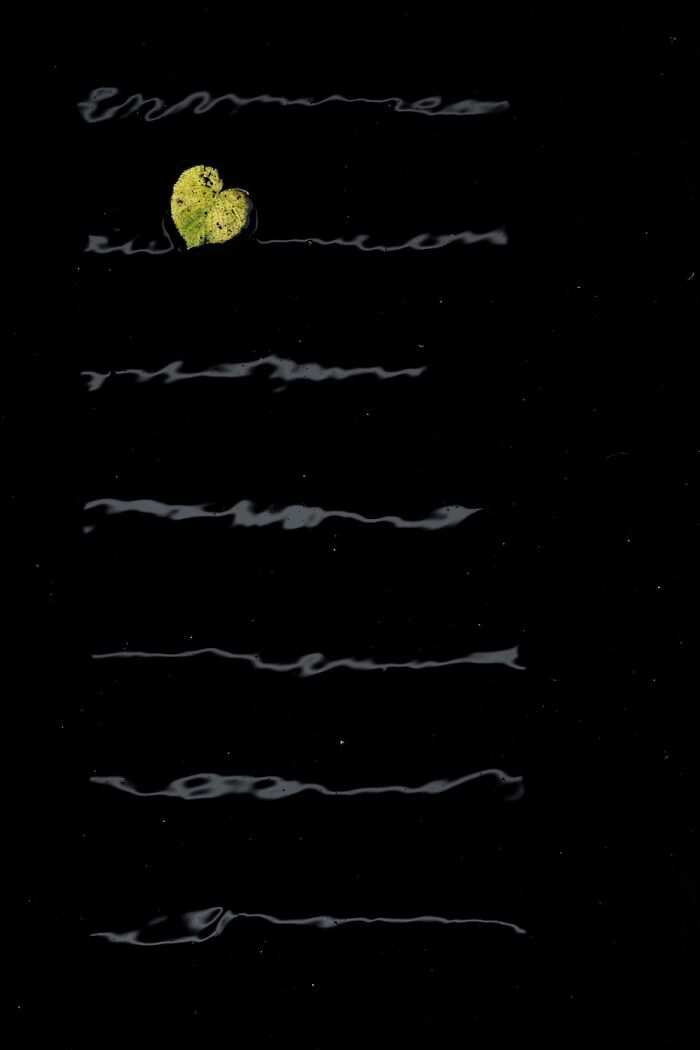
#8 Plants, 2nd Place: Love Poem By Alex Pansier
A single, heart-shaped leaf drifting over rhythmic water reflections in Den Bosch, The Netherlands.
‘The repeating reflections on the water reminded me of handwritten text. As the heart-shaped leaf drifted slowly with the stream, it passed the lines of light like a word moving across a page. I leaned over the water and photographed from above, then rotated the frame 90 degrees in post-production to make the lines read more like written sentences. Shooting at f/11 kept the leaf sharp whilst keeping the background minimal. I just cleaned up the tones and darkened the water to isolate the subject. It felt like nature writing a small poem in that moment.’
© Photo: cupoty
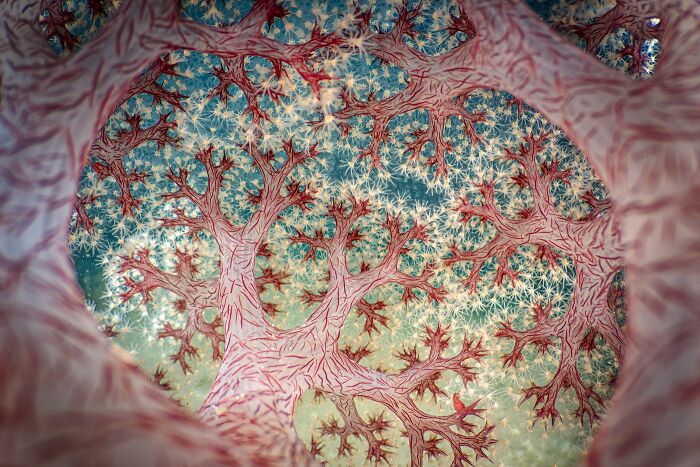
#9 Underwater, 1st Place: Fractal Forest By Ross Gudgeon
The inside of a cauliflower soft coral in Lembeh Strait, Indonesia.
‘Named for its characteristic cauliflower-like appearance, this coral has numerous small, rounded, bump-like polyps that give it a puffy texture. This unique perspective was made possible by the Nauticam EMWL (Extended Macro Wide Lens), an underwater version of the probe or insect eye lens. Due to its long length, small diameter, close focus, and wide field of view, this lens allows for perspectives impossible with conventional lenses. I decided to experiment with the EMWL on the soft coral to capture a different view of a common life form. I carefully threaded the end of the EMWL through the branches of the soft coral so as not to damage them, creating an image looking from the inside out.’
© Photo: cupoty
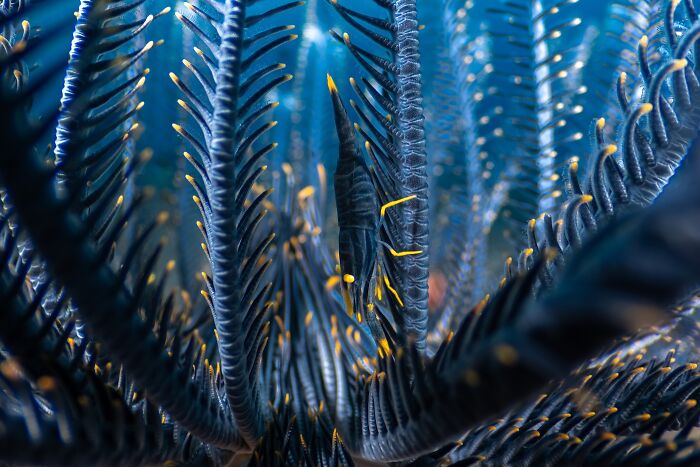
#10 Underwater, 3rd Place: Featherhome By Luis Arpa
A crinoid shrimp (Laomenes amboinensis) photographed in Tulamben, Bali.
‘I’ve always been fascinated by the smallest creatures of the reef, those that most divers overlook. For a long time, I wanted to photograph these tiny critters from their own perspective, to show what their miniature world might look like if you were right there with them. In Tulamben, Bali, whilst exploring feather stars, I came across this crinoid shrimp. Perfectly camouflaged in both colour and pattern, it clung tightly to its host, spending most of its time motionless, relying on the feather star for protection and food drifting in the current. With the help of a ‘bug-eye’ wet lens, I was able to get very close and still keep most of the crinoid in frame. That unusual perspective gave exactly the feeling I was hoping for, a view that pulls you inside the shrimp’s fragile, hidden world, where beauty and survival depend entirely on blending in.’
© Photo: cupoty
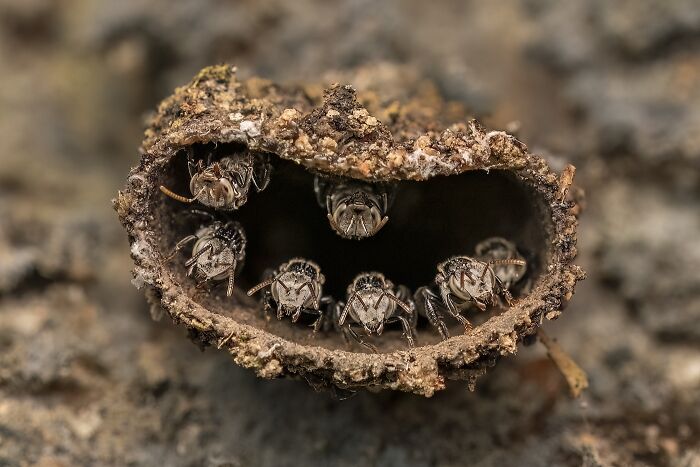
#11 Young, 1st Place: Guardians Of The Hive By Rithved Girish
Stingless bee (likely Tetragonula sp.) nest in Mezhathur, Kerala, India.
‘During my summer holiday in Kerala, India, I encountered a nest of stingless bees, likely from the Tetragonula family. Fascinated by the tiny wonders of nature, I make it a point to explore and learn more about the natural world whenever I visit India. These small yet remarkable bees had carefully built their home using wax, resin, and mud, creating a unique tube-shaped entrance to safeguard their colony. The guard bees at the entrance remained alert, ensuring the safety of their hive from potential threats. No bait or attractants were used whilst capturing this moment, allowing their natural behaviour to remain undisturbed. This image serves as a reminder of the vital role these tiny creatures play in maintaining ecological balance.’
© Photo: cupoty
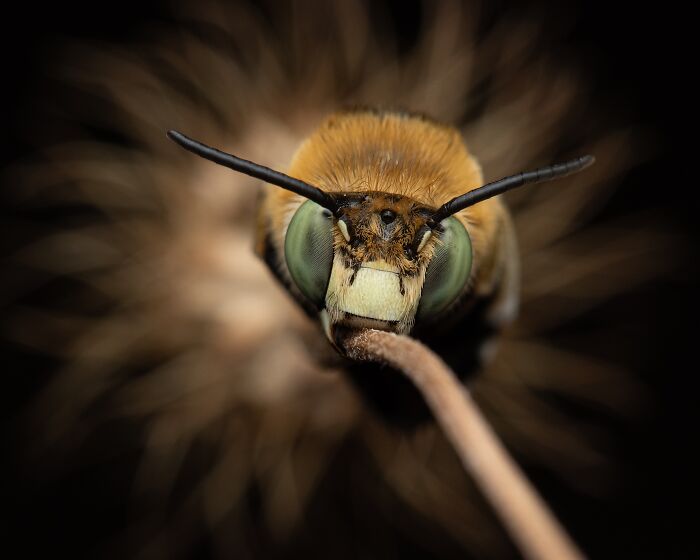
#12 Invertebrate Portrait, 3rd Place: Fake Sun By Giovanni Vicari
A solitary bee (Amegilla sp.) sleeps on a dry stem at night in Fiano Romano, Italy.
‘I’ve observed these solitary bees extensively during their nocturnal roosting and noticed that they often choose dry but sturdy stems ending with a dry inflorescence. I decided to exploit the position of the bee to make this inflorescence appear in the background like a “fake night sun”. With my left hand, I held the stem still (which was not cut) taking care not to wake the bee, whilst with my right I took the photo, trying to focus on the subject’s eyes.’
© Photo: cupoty
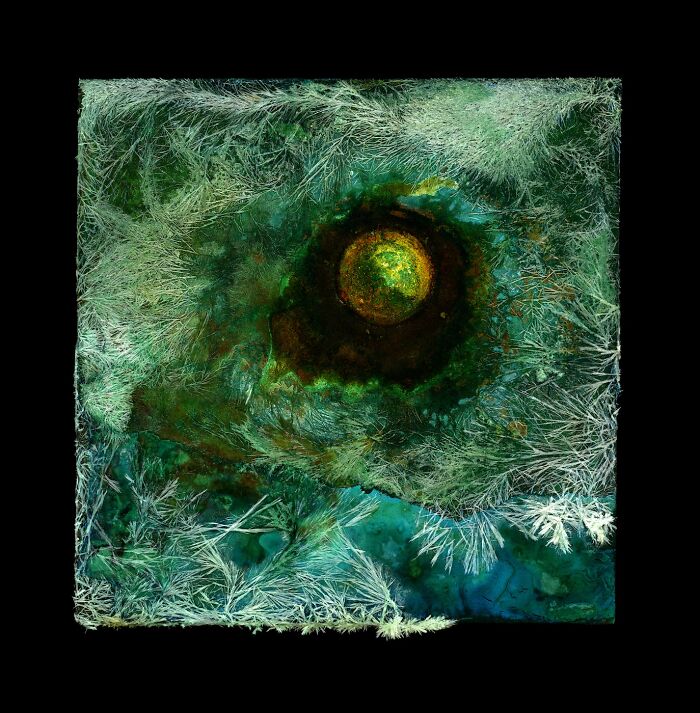
#13 Studio Art, 1st Place: Copper Works No.25 – 2024 By Paul Kenny
A copper plate distressed and oxidised by everyday household materials.
‘Three years ago, at the age of 71 and after 35 years in rural/coastal tranquillity, my wife and I moved back into the centre of a big city. For 50 years my work had been concentrated on creating visionary landscapes, constructed from insignificant scraps from the shoreline. My new environment conjured up memories of my upbringing in the post-Industrial Revolution Lowry-esque landscape of inner-city Salford. Over three years a new body of work has emerged, but the fragments of flotsam and jetsam that formed the source of my medium have been replaced with the chemical fragments of common household materials — bleach, cleaners, gardening products, bathroom products. This image is made on a glass plate and captured with a scanner.’
© Photo: cupoty
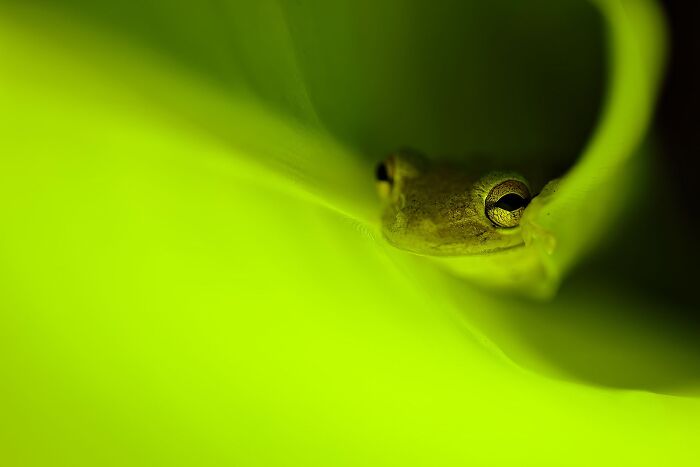
#14 Young, 3rd Place: Emerald Glow By Jameson Hawkins-Kimmel
Cuban tree frog (Osteopilus septentrionalis) in the photographer’s backyard, Florida, USA.
‘During the heat of the day, I uncovered this Cuban tree frog hiding in the leaf of a banana tree in my backyard. The frog was very calm and allowed me to slip a torch under the leaf to create this effect. My 100mm lens ensured that I didn’t need to get too close, so as not to stress out the frog. The result may be one of the most impressive shots of my career so far!’
© Photo: cupoty
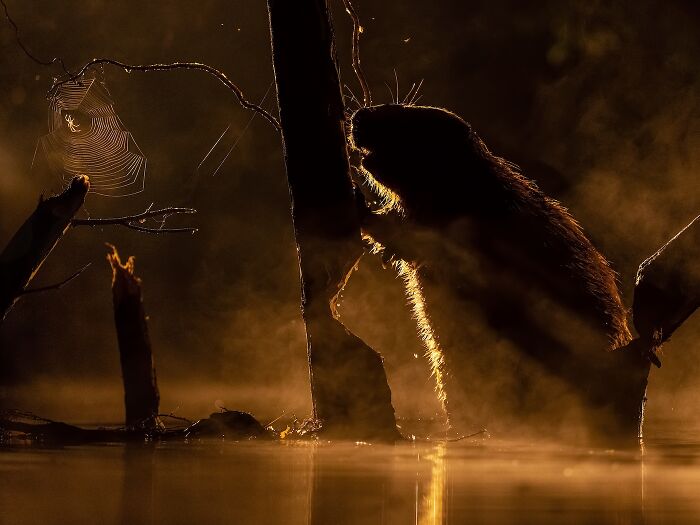
#15 Animals, 3rd Place: Spider Web By Bence Máté
A Eurasian beaver (Castor fiber) approaches a spider’s web in Kiskunság National Park, Hungary.
‘Years ago, I managed to intervene at the last minute to stop the water department from clear-cutting trees along a 2km stretch of canal. Since then, we’ve worked together. I monitor and notify them of any trees obstructing water traffic, while they avoid unnecessary clear-cutting, preserving a thriving habitat.
Beavers returned to this area in 2015, nearly two centuries after they were wiped out across most of Europe. Thanks to conservation efforts, their numbers have surged since the early 2000s, making them one of the few species to successfully reclaim their native range. Their dam-building not only retains water but also creates vital wetlands.’
© Photo: cupoty
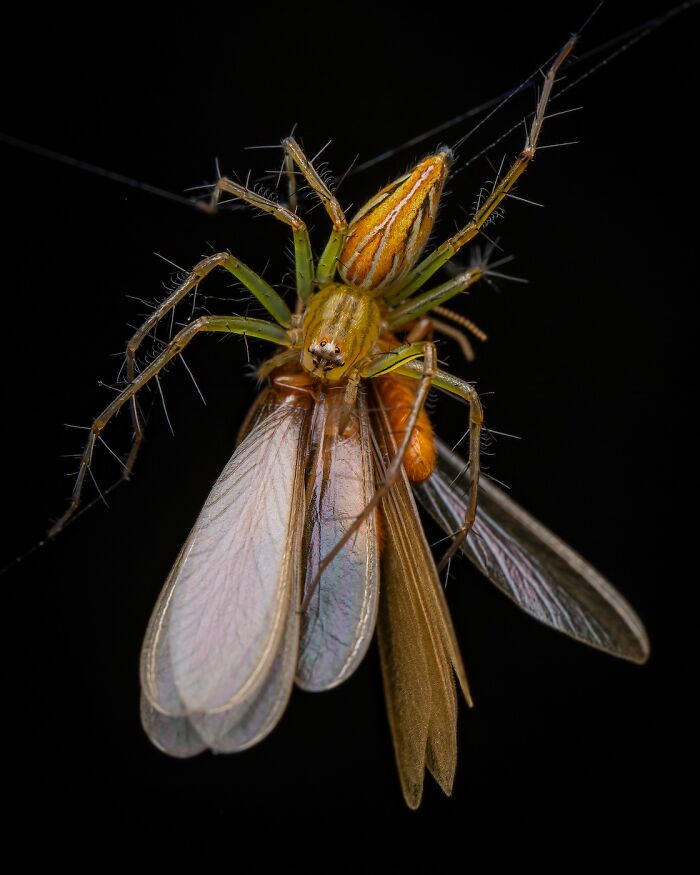
#16 Arachnids, 1st Place: Dinner By Artur Tomaszek
A lynx spider (Oxyopes sp.) feeds on a few termites in Hong Kong.
‘Lynx spiders are ambush predators that actively hunt prey by sight. Though they produce and use silk, they do not build webs to capture prey. I came across this one during a moth survey on a particularly memorable night. It had been a very hot spring with little rain, but that evening it suddenly started raining, prompting thousands of termites to begin their mating dance and swarm in the air. This provided an excellent opportunity for the lynx spider to make its catch of the night. The main difficulty in capturing the picture was the thousands of termites flying in my face, attracted by the camera’s flash. In the end, the spider managed to catch two or three termites at once, creating this striking scene.’
© Photo: cupoty
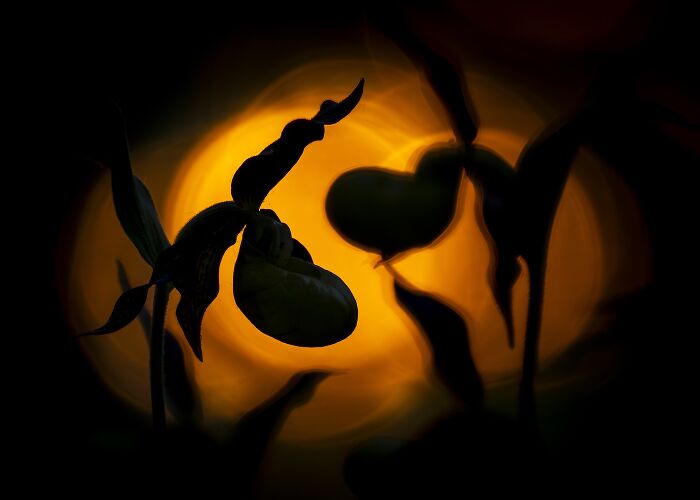
#17 Plants, 3rd Place: In The Embrace Of Shadows By Tibor Litauszki
Two lady’s-slipper orchids (Cypripedium sp.) shining in the sunset in Germany.
‘The image captures a mysterious, almost dreamlike moment, where the dark silhouettes of the lady’s-slipper orchids perform a subtle dance on the edge of light and shadow. Taken with a telephoto lens, the photograph focuses not on details, but on atmosphere. In the background, golden orbs of sunlight filtering through the leaves gently embrace the plants.’
© Photo: cupoty
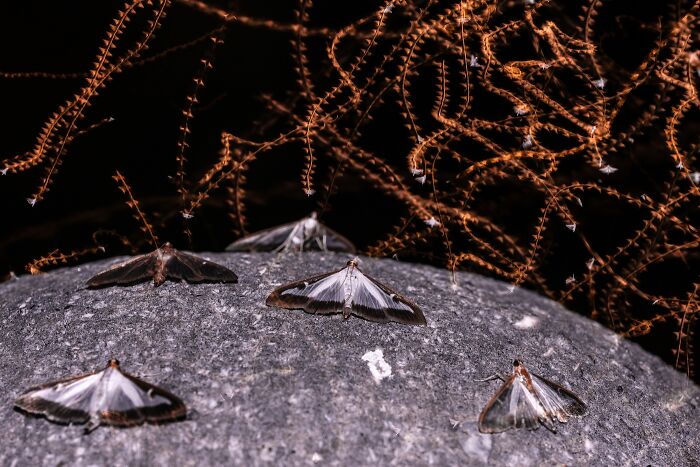
#18 Butterflies, 2nd Place: The Invasion By Pedro Luna
Invasive box tree moths (Cydalima perspectalis) swarm in Ripoll, Spain.
‘The invasive box tree moth is a pest native to Asia that has been destroying large natural populations of box trees in Catalonia for several years. This double-exposure photograph was taken in-camera. The first photograph was taken on a pole in the square, simulating a planet, and the second photograph was taken with a long exposure, capturing the flight of the moths to simulate their arrival on the supposed planet.”
© Photo: cupoty
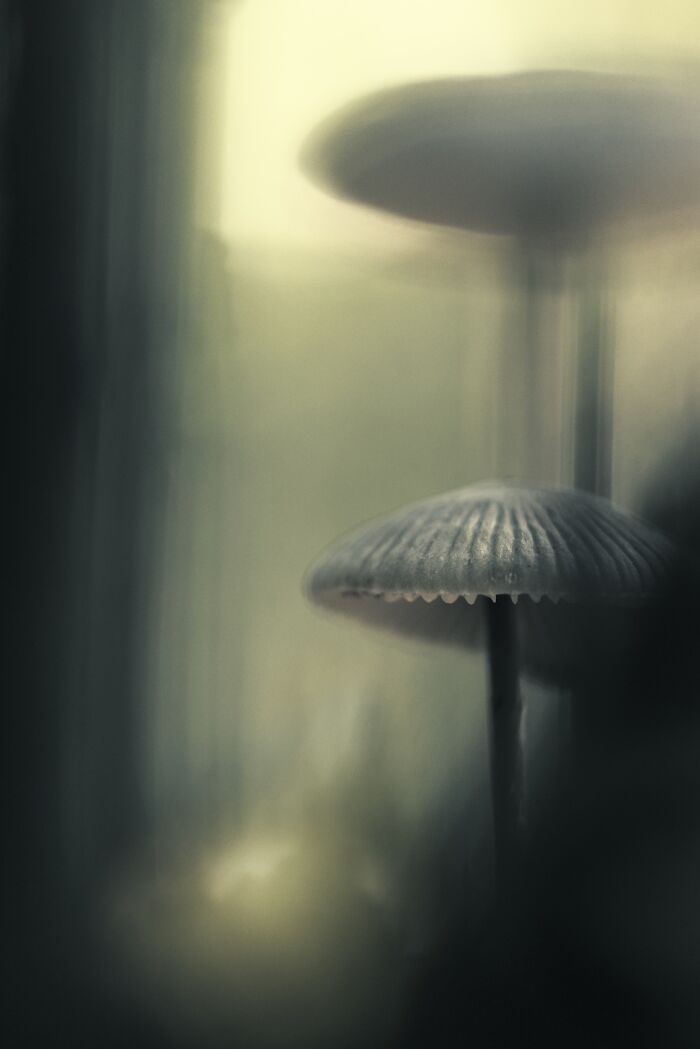
#19 Fungi & Slime Moulds, 3rd Place: Twilight Of The Gods By Cédric Rousseau
A group of fungi (Mycena sp.) growing on the forest floor in Raismes–Saint-Amand forest, northern France.
‘Mushrooms, even the most ordinary ones, are amongst my favourite subjects for close-up photography. I love portraying them in a painterly way, using a very shallow depth of field to gently merge the surrounding vegetation and light to create a particular mood. I’m not entirely sure why the mysterious, almost solemn atmosphere of this image — with these slightly imposing mushrooms reaching towards the sky — brought to mind the monumental music of Richard Wagner, especially Siegfried’s death in Götterdämmerung. Is this what the entrance to Valhalla might look like? Probably not, yet I can’t help feeling that this music would suit the image perfectly.’
© Photo: cupoty
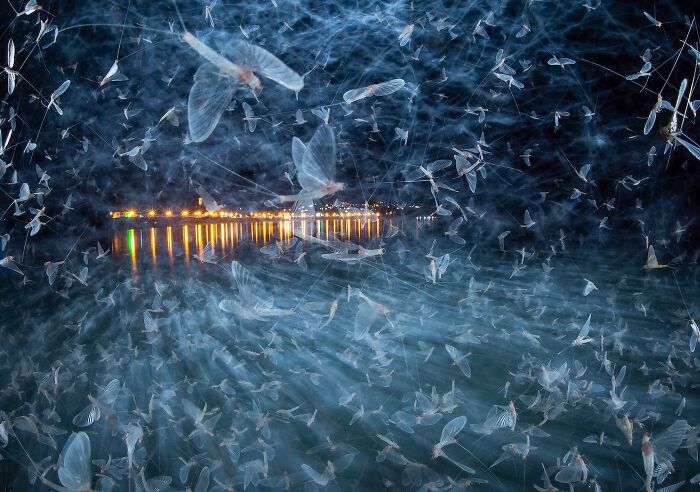
#20 Insects, 1st Place: Blue Army By Imre Potyó
Danube mayflies (Ephoron virgo) swarm in Szentendre, Hungary.
‘After a few decades, the spectacular endangered Danube mayfly has returned to the river Danube, probably due to increasing water quality after disappearing from the rivers of Middle Europe owing to water pollution. The summer of 2024 was memorable for fans of these mayflies, as the season — likely extended by dry, hot days and persistently low water levels — lasted nearly a month. On 25 occasions, we waded deep into the strong currents, surrounded and overwhelmed by the mayflies. A massive swarm numbering in the millions is approaching the illuminated city of Szentendre. The lights lure the mayflies out due to their positive phototaxis. During the late August festival, dense clouds of mayflies engulfed the restaurants, vendors, wine bars, and concerts, becoming an unmissable and alarming spectacle. The mayflies circled around the lights for a long time, unable to break free, and sadly perished on the asphalt. Such an evening can result in ecological damage worth billions, as mayflies writhing and drying on pavements, roads, and ledges perish along with the egg clusters that represent their offspring.’
© Photo: cupoty
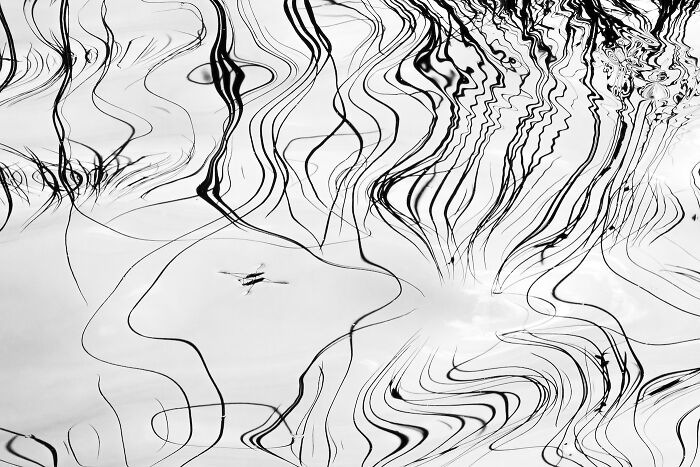
#21 Insects, 3rd Place: Gotcha! By Aleksey Molchanov
Reflections of reeds and a water bug moving through water in Bolshoye Krasnoperskoye Lake, Leningrad Region, Russia.
‘I went to a forest lake to photograph wildlife. As I walked along the shore, I noticed beautiful reflections in the water. I spent a long time watching the play of light and shadow when suddenly I saw water striders moving actively on the surface. Fortunately, I had a camera with a small sensor, which gives a large depth of field required for graphics.’
© Photo: cupoty
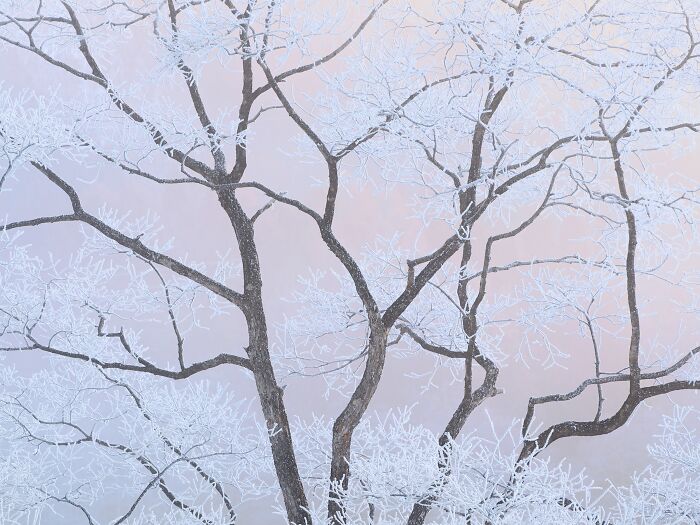
#22 Intimate Landscape, 1st Place: Dreamy State By Sho Hoshino
A tree covered with rime ice in Nagano Prefecture, Japan.
‘I took this photograph when frost-covered trees stood before a mist that turned pink in the morning sunlight. The composition relies on soft, pale tones, anchored by the dark, intricate shape of the tree trunk and its distorted form. I intentionally excluded the base of the tree to highlight the complexity of its trunk. I also wanted to emphasise the special conditions of frost and mist, so I waited for the moment when the background turned pink. Although the scene depicts the freezing cold of winter, the warm colour tones give it a gentle sense of warmth rather than loneliness.’
© Photo: cupoty
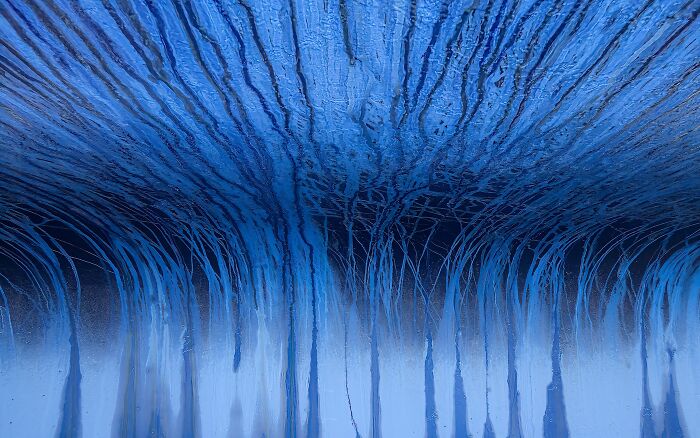
#23 Intimate Landscape, 2nd Place: Yacht Betsy B, Gairloch Harbour By Grant Bulloch
The hull of a yacht in Gairloch, Scotland.
‘The coast is a constant source of inspiration for photography. The ever-changing light, tides, and weather mean you can return to the same places again and again. At the end of the year, smaller yachts are lifted out of the water and overwintered on the harbour walls, giving me access to their barnacle and kelp-encrusted hulls. When the weather doesn’t inspire, I look for patterns and textures in these intimate landscapes. Even the tiniest rust spot or crack provides potential for abstract images. This hull has been treated with anti-foul wash above the blue paint, which has streaked down in the rain. I’d usually use a tripod and focus stack these images, but this is a single handheld shot as it was pouring with rain at the time.’’
© Photo: cupoty
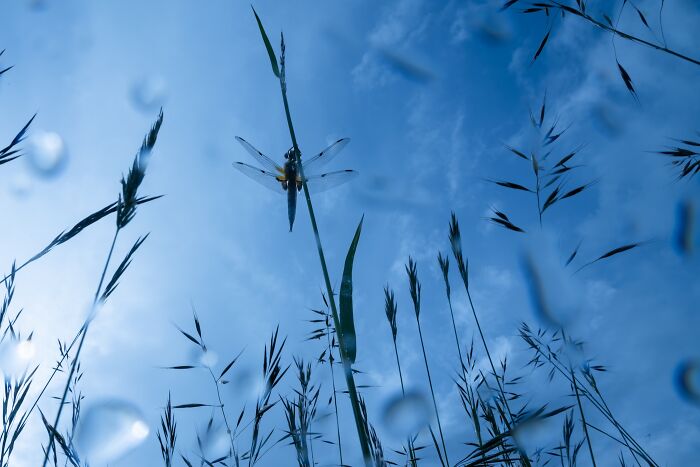
#24 Young, 2nd Place: In The Rain By Gaspard Buriez
Four-spotted chaser (Libellula quadrimaculata) in Bourgoin-Jallieu, France.
‘On a rainy day, I spotted this dragonfly resting in a meadow. I decided to photograph it with a wide-angle lens to create a dramatic atmosphere with the raindrops and clouds.’
© Photo: cupoty
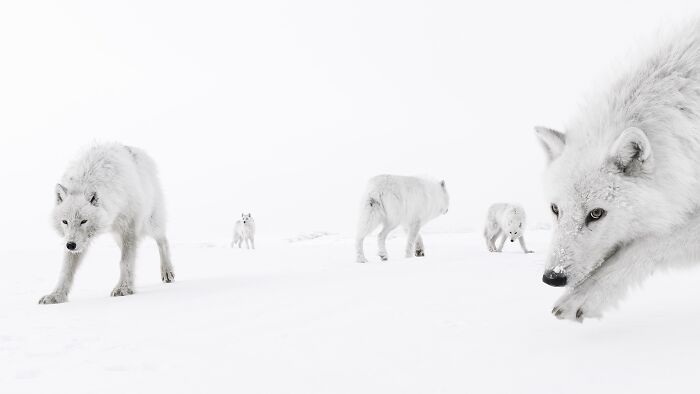
#25 Animals, 2nd Place: Inside The Pack By Amit Eshel
Arctic wolves on the sea ice in a frozen fjord on Ellesmere Island, Canada.
‘Lying on the sea ice of a frozen fjord, I experienced a moment of pure magic when a pack of Arctic wolves approached me out of sheer curiosity. They came so close I could feel their breath, yet I never sensed aggression, only wonder. These wolves, unlike others, have never been hunted or threatened by humans. In the remote wilderness of northern Ellesmere Island, they have no reason to fear us.
I had dreamed of this encounter for years. After a failed expedition in 2022, I returned in 2024, enduring weeks of searching in temperatures below -35°C. On the twelfth day, we finally spotted a lone wolf, which was soon joined by eight others. With my wide-angle lens, I captured their approach, hoping to convey the depth and intimacy of the moment. The wolves’ playful, unafraid nature defies the stereotypes and folklore that often paint them as threats.
This image was unplanned, the wolves entered the frame unexpectedly but I reacted just in time. My goal was to showcase their true nature: curious, gentle, and free from the fear humans have instilled in so many wild animals.’
© Photo: cupoty
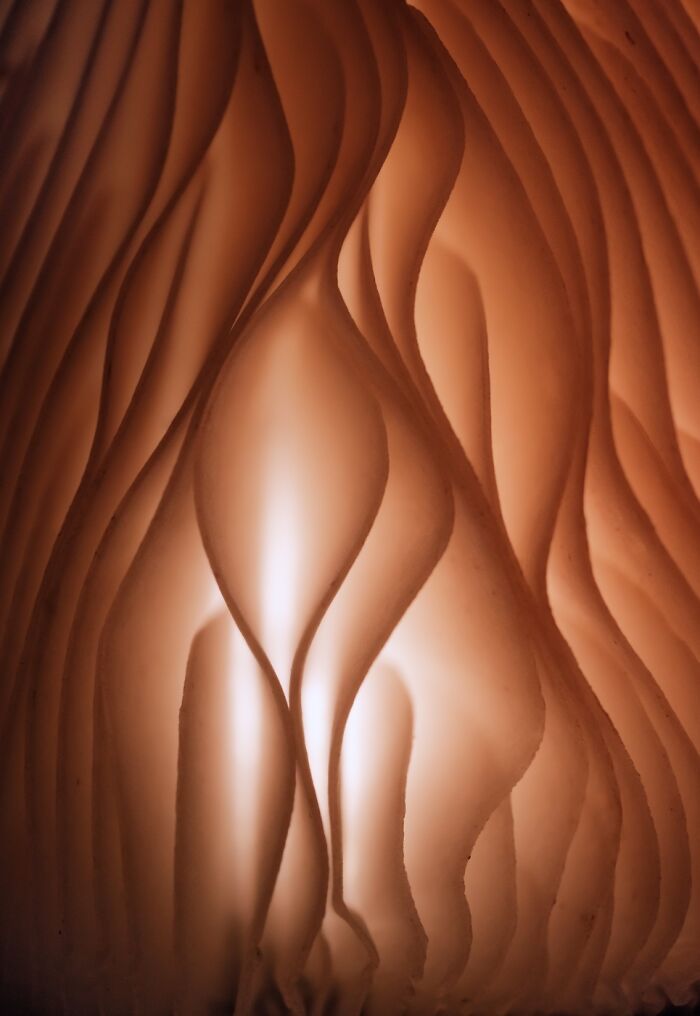
#26 Fungi & Slime Moulds, 1st Place: Fungi & Slime Moulds By Valeria Zvereva
Fragment of the lower part of the cap of a lamellar mushroom in Moscow region, Russia.
‘The lower part of the cap of a lamellar mushroom. After all, there is something of the “nude” style in this.’
© Photo: cupoty
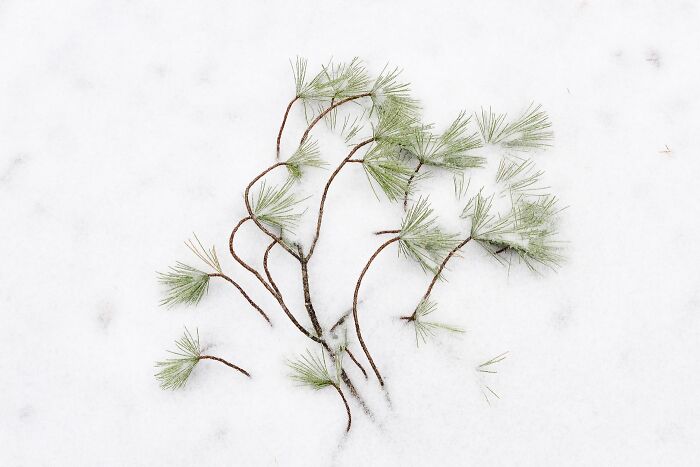
#27 Intimate Landscape, 3rd: Windswept By Mike Weinhold
Fallen pine tree branch in Lowell-Dracut-Tyngsborough State Forest, Lowell, Massachusetts, USA.
‘I like this photo because it conjures the idea of wind without actually being a photograph of anything windy. The morning I made this was still, but it followed a storm that knocked down this pine branch. The branch fell into a shape resembling a windswept tree, perhaps a hardy cypress on a rocky seaside fighting against a coastal gale. I was heading back to the car when I spotted this scene. I’d been out photographing the last snowfall of the season and wasn’t particularly looking for more winter scenes. Even though my eyes weren’t open to it, I was captivated. I removed my camera from the bag, almost begrudgingly, and as I got to work I realised I’d really spotted something. Soon I was lost in the camera.’
© Photo: cupoty
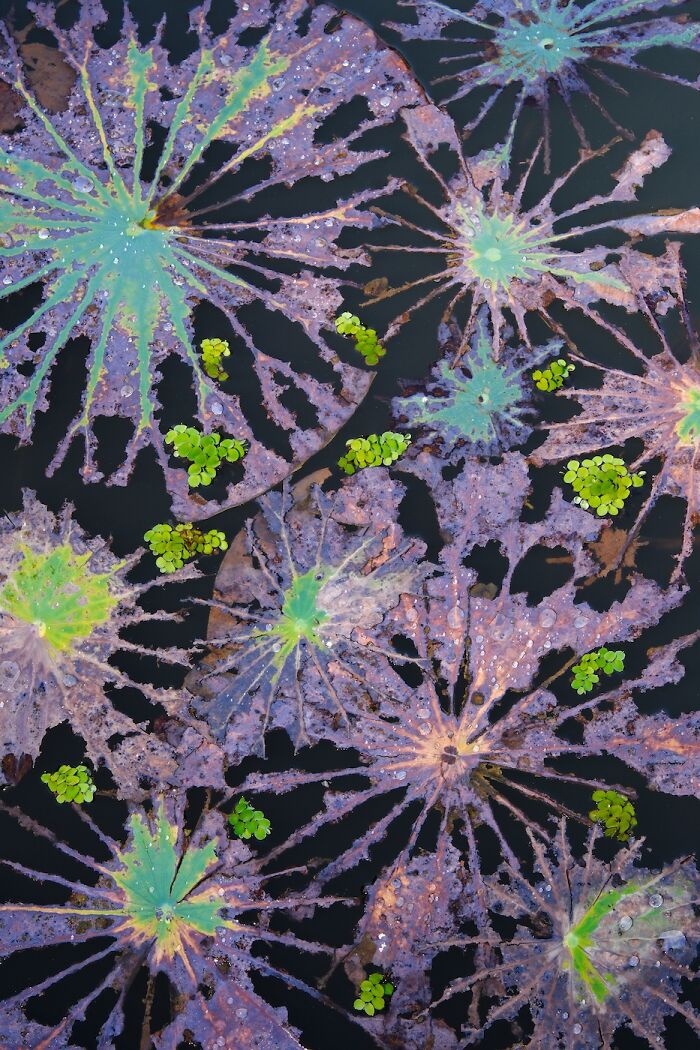
#28 Plants, 1st Place: Rebirth From Destruction By Minghui Yuan
Decaying lotus leaves and floating fern (Salvinia natans) in Xishuangbanna Tropical Botanical Garden, China.
‘In a pond outside the tropical rainforest in Xishuangbanna, I found these decaying lotus leaves floating on the dark water, their skeletal veins creating a delicate lacework of purple and green. Amongst them, bright clusters of floating fern had taken hold. Floating fern thrives only in warm, clean waters, so finding it here amongst these skeletal leaves felt like the rebirth of hope and a symbol of the continuation of life.’
© Photo: cupoty
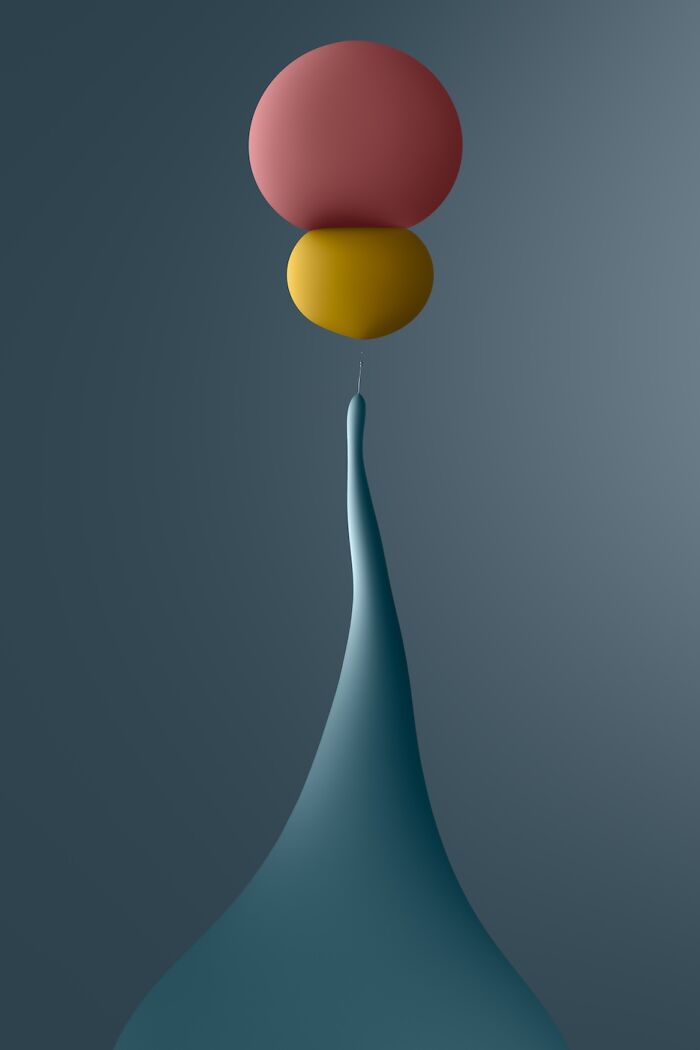
#29 Studio Art, 3rd Place: Extended Tones #4 By Matt Vacca
Liquids sculptures in the photographer’s studio.
‘Extended Tones continues my exploration of beauty in everyday objects and spaces, creating a kind of liquid sculpture. Shapes and structures emerge through improvised movement, forming a rhythm that blurs the line between the familiar and the abstract. Guided by colour theory and surrealist influences, the addition of colour introduces a new visual rhythm and a more layered, evolving narrative.’
© Photo: cupoty
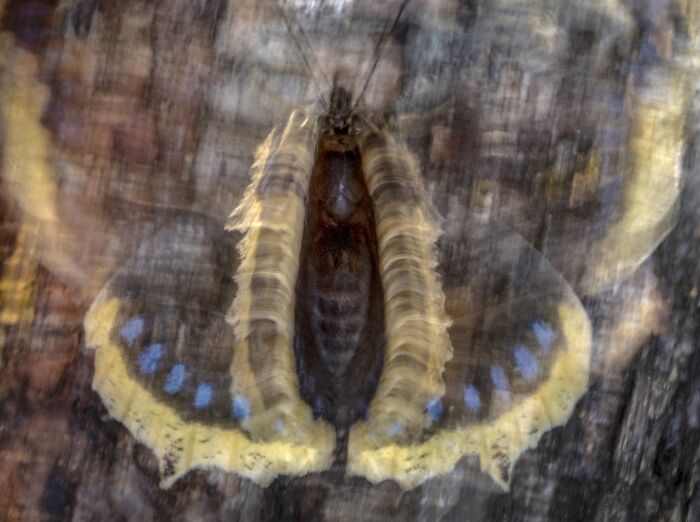
#30 Butterflies, 1st Place: Butterfly Flash By Pål Hermansen
A Camberwell beauty (Nymphalis antiopa) flashes its wings to defend its feeding spot on a birch tree trunk in Follo, Norway.
‘The butterfly was sitting on a birch tree trunk, drawn by the leaking sap caused by an attack of goat moth (Cossus cossus) larvae. Some red admiral butterflies and wasps were also attracted to the sweet sap. When the wasps approached, the Camberwell beauty did not fly off, but instead defended the spot by suddenly flashing its wings several times. The other insects kept their distance, allowing it to spend sufficient time feeding undisturbed.’
© Photo: cupoty
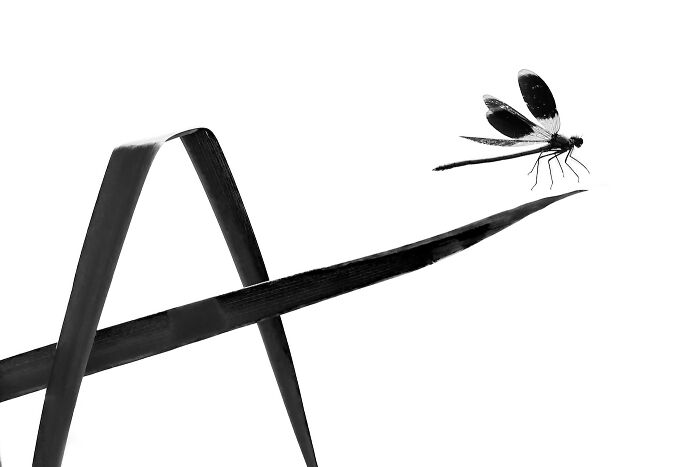
#31 Butterflies, 3rd Place: Dragonfly Alphabet Calligraphy By Dmitrii Melgunov
A beautiful demoiselle damselfly (Calopteryx virgo) takes off from a reed in the surroundings of Gatchina, Russia
‘Beautiful demoiselles are one of my favourite subjects. In this case, I managed to capture a shot of one taking off from a bent reed against the bright sky reflected in water. This angle allowed me to get a minimal, graphic image that I further enhanced by converting to black & white and increasing the contrast. The composition formed by the reeds resembled the letter “A”, as if drawn by the damselfly in the fine calligraphic stroke of its airy flight. To catch the perfect moment of the split-second action, I used the 30fps burst mode on my camera.’
© Photo: cupoty
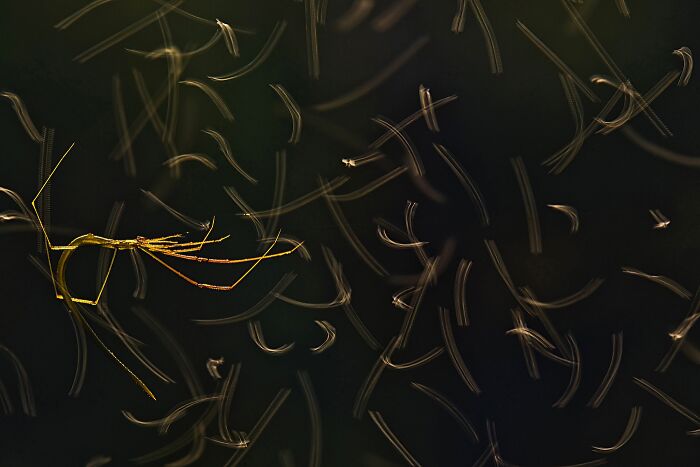
#32 Arachnids, 3rd Place: Gymnast By Anirban Dutta
A twig spider hangs from a web thread surrounded by tiny flies in Cooch Behar, West Bengal, India.
‘This orb-weaver spider hangs motionless from a single thread of its web, perfectly mimicking a twig. By holding its four pairs of legs tightly against its body, it resembles a thin branch or stem, making it almost invisible to predators unless it moves. What first drew my eye, however, was the chaotic swarm of tiny flies creating a sense of energy around the otherwise still subject. The spider’s poised, suspended posture reminded me of a gymnast frozen in mid-air, hence the title.’
© Photo: cupoty
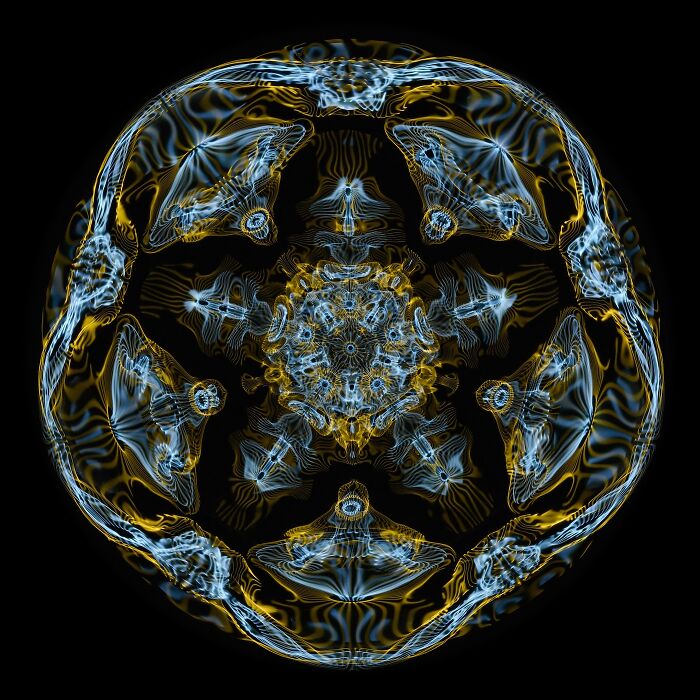
#33 Studio Art, 2nd Place: Cymatic Pattern By Elizabeth Kazda
A cymatic pattern with five-fold symmetry at 19Hz in the photographer’s home studio.
‘The first time I saw a symmetrical cymatic pattern appear on my camera’s LCD screen, it felt as if I had opened a portal into another world. Sound waves travel about four times faster in water than in air, and water’s fluid properties make it especially effective for visualising sound. When a sound source vibrates a dish containing water, the liquid responds by forming visible geometric patterns — cymatic patterns — caused by standing waves and resonance at specific frequencies. To photograph this pattern, I placed a 10cm bowl of water on top of a speaker vibrating at 19Hz and used a ring light with colour gels. Every element must align perfectly: the camera and bowl must be level, the water depth must be just right, the ring light must strike at the correct angle, and the sound frequency must fall precisely within range. Only when all these conditions synchronise does the symmetry appear. Each time it does, I find myself marvelling again — wondering whether I’m observing physics in motion or witnessing a form of magic.’
© Photo: cupoty
from Bored Panda https://ift.tt/q0V1PzC
via IFTTT source site : boredpanda
