Children grow up, leave the nest, and create their own families. However nice it might be to see your kids and grandkids every day, parents should respect that a new family needs space. When it comes to American adults, 18% said they lived in multigenerational households in 2021. Yet, that doesn’t mean everyone is happy with such an arrangement.
This young woman, for example, didn’t want her in-laws to move in with her husband and child. When the father-in-law lost his job, the grandparents planned to move in with the young family to cut costs. While the husband was on the fence about it, the wife was pretty adamant: living with in-laws who have never respected her boundaries would be a nightmare.
A woman faced a dilemma when her in-laws announced they wanted to move in

Image credits: Ambreen (not the actual image)
They didn’t have the best of relationships because of the in-laws’ constant criticism and surprise visits







Image credits: Kindel Media (not the actual image)





Image credits: Pressmaster (not the actual image)

Image credits: Lion-Optimal
Women often find it hard to live with their in-laws, and for some, it even increases the risk of postpartum depression
Some adults may find it easy to cohabitate with their parents. Others, however, can’t imagine a bigger horror. Out of those Americans aged 25 to 39 who do live with a family member, 58% say that it’s convenient most of the time. 23%, however, find it stressful most or all the time.
But living with in-laws is different from living with a family member. The prevalence of living with in-laws also depends a lot on cultural background. One study found that the number of women living with their in-laws varies from 1% to 49% all around the globe. While it’s more prominent in Southern and Central Asia, it happens in other parts of the world as well.
Daughters-in-law usually find it most difficult. When having frequent close contact with their MILs, many women have similar experiences to what the author of the story went through. They report high stress levels, feel undermined in their own homes, and look at the in-laws’ behavior as an invasion of privacy.
In fact, research shows that living with in-laws can increase postpartum depression risk in women. According to one Chinese study, women who live with their parents-in-law have a higher risk of developing postpartum depression. That risk increased even more if the women experienced anxiety during the pregnancy.
The adult sons play an important role in the MIL-DIL relationship, too. One study found that mothers-in-law were more likely to report a good relationship with their daughters-in-law if their sons felt happy and content in the relationship. DILs and MILs also felt closer the more time they spent together, the more shared interests they had, and the more helpful the DIL was.
But if living together is inevitable, there are some things couples can do to make it bearable
Sometimes, living with your in-laws is just inevitable. But there are ways to make it at least bearable. And, in the end, it’s worth it, because research shows that a good relationship with in-laws equals a better relationship with your partner, as well.
Experts note that establishing boundaries is paramount. If an in-law wants to move in, it’s important to let them know what you will and will not tolerate. The person who’s directly related to the in-laws should do the enforcing, according to experts, because then it comes across with more authority in the eyes of the parents.
Both family units should have their personal spaces. Quinelle Hickman, couples therapist and CEO of Counseling to Comfort, tells The Knot that the in-laws need to feel like more than just guests. “We want to make sure that they’re comfortable. Where is their safe space? Where is their sanctuary? How are we going to present the feeling that their new home is going to have?”
In a similar vein, they should also contribute to taking care of the household. However, there’s a fine line between contributing and overstepping. Taking time away from the house and from the in-laws can be beneficial as well. Things like date nights, couple vacations, and even staycations with only the couple and the child are guaranteed to reduce friction and help maintain a better relationship with the in-laws.
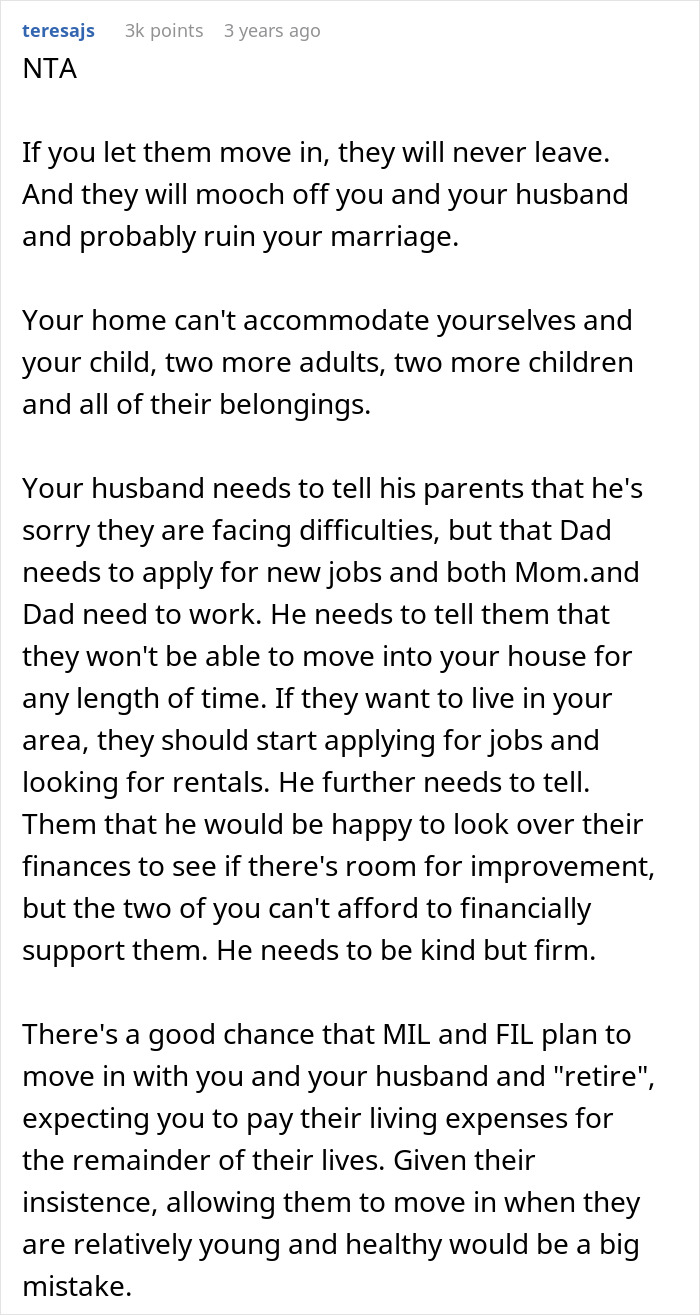
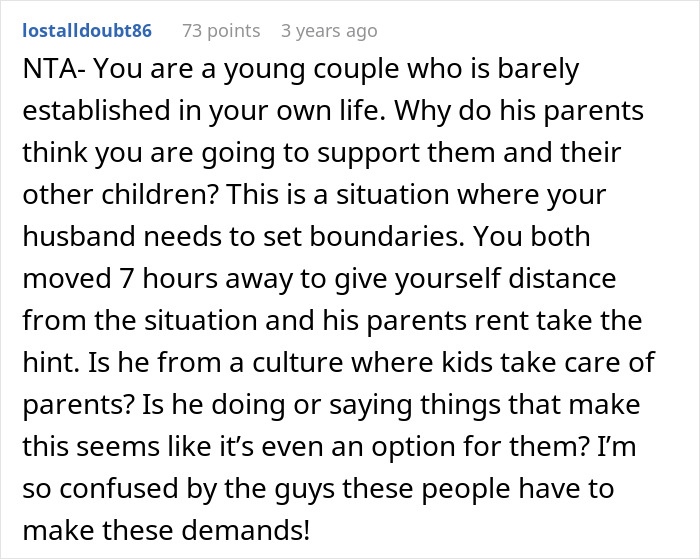
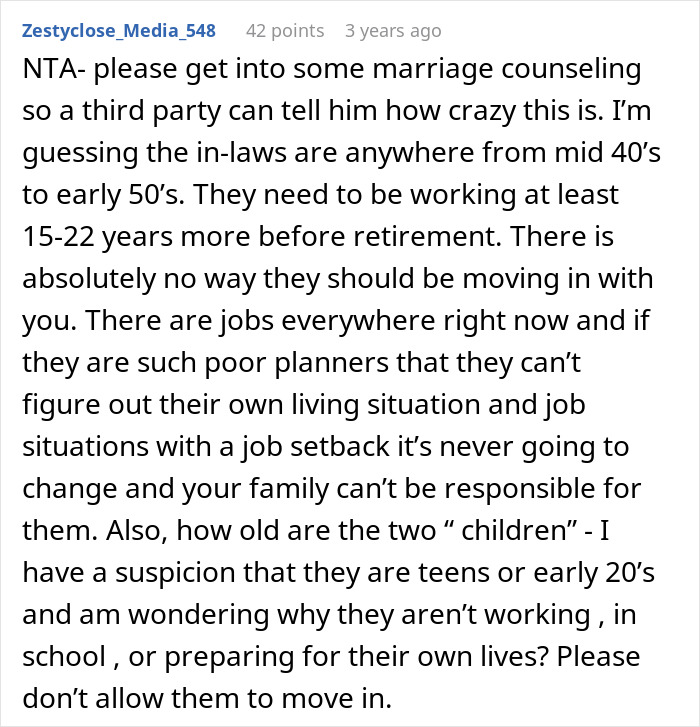
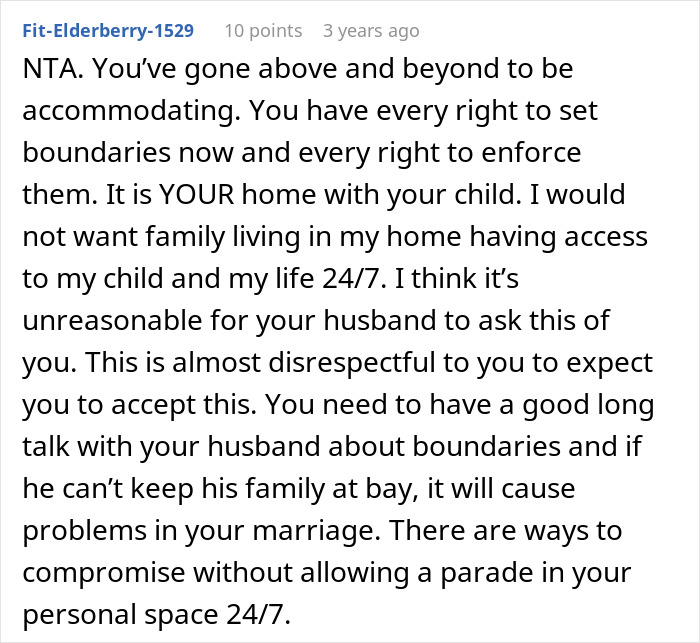
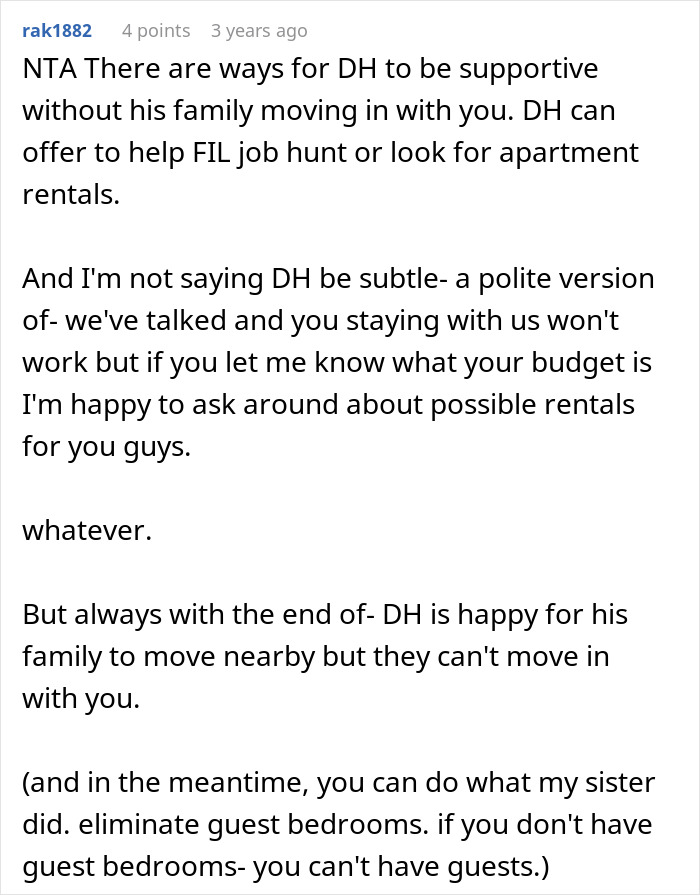
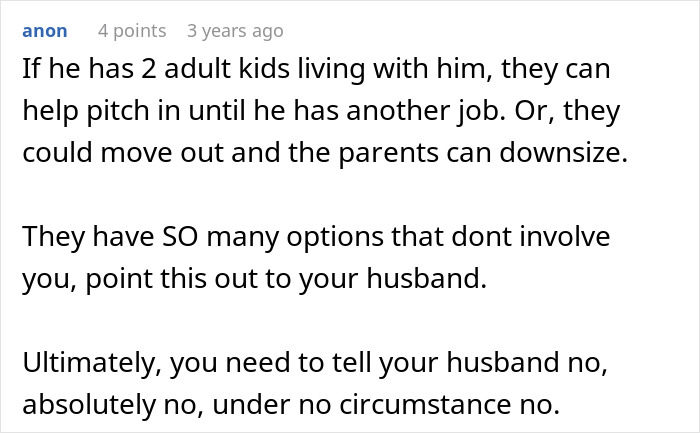
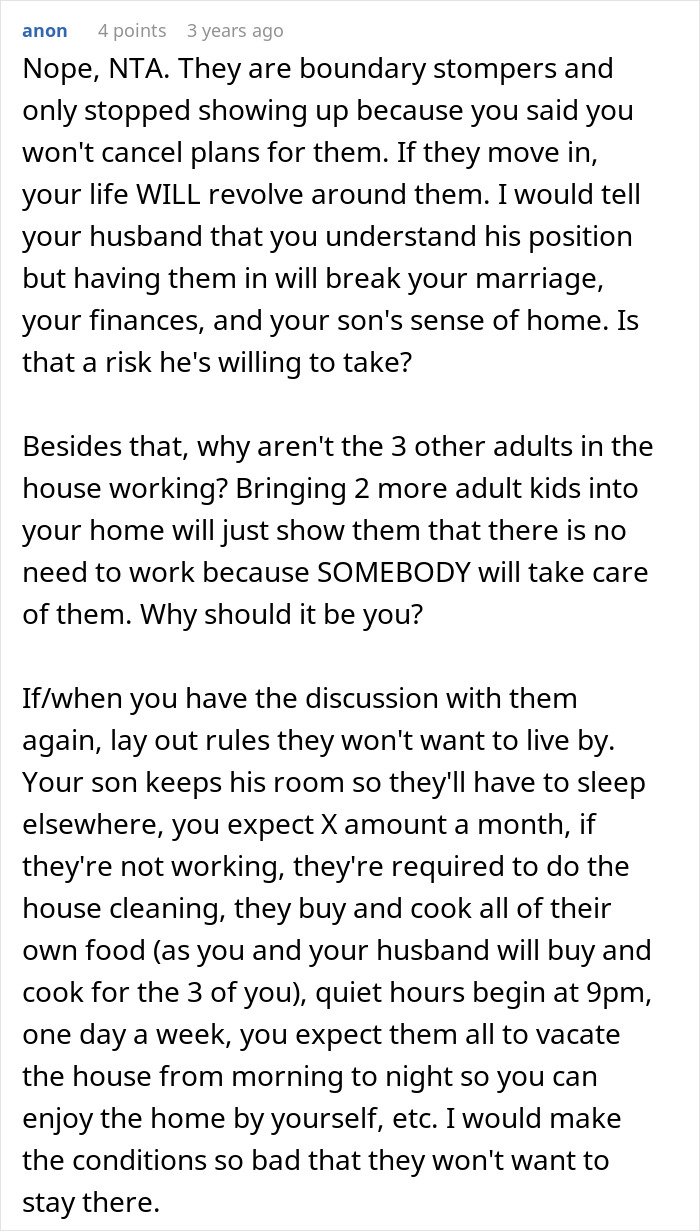
Commenters sided with the woman, saying that if they let the in-laws move in, they will probably never leave



























from Bored Panda https://ift.tt/iElKXpY
via IFTTT source site : boredpanda
