Family holidays can really bring out the worst in people, particularly if one has the displeasure of spending it with their future in-laws. As cliche as it is, there is a reason why the internet is littered with the stories of people who discovered that their partner’s families were entitled, toxic or worse.
A woman wondered what to do with her fiancé, after discovering that his mother, as it turns out, seemed to dislike her. News of their engagement didn’t help, and it all came to a head when she learned that her future MIL lied to her about a family vacation being “adults only.”
This mom-of-two got engaged to her boyfriend, but her future mother-in-law wasn’t happy about it

Image credits: RDNE Stock project (not the actual photo)
And put it on full display during one of their family trips


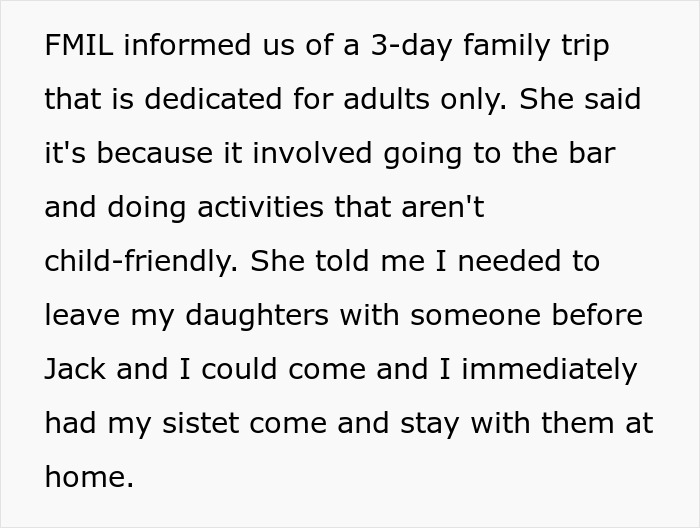


Image credits: garetsworkshop (not the actual photo)



Image credits: thatmomma79
Creating a “blended” family is hard work, but many people are doing it
The Pew Research Institute estimates that over 40 percent of Americans have at least one step-relative in their family.
More specifically, among adults ages 51 and older who are grandparents, nearly 22 percent of grandfathers and 20 percent of grandmothers have at least one step-grandchild, according to 2018 research published in the Journals of Gerontology Series B: Psychological Sciences and Social Sciences.
Patricia Papernow, a Boston-based psychologist and author of Surviving and Thriving in Stepfamily Relationships, is a stepparent, parent, grandmother, and step-grandmother, and takes issue with language that oversimplifies the bonding process.
“People go into this expecting blending,” she said. “I always put it in quotes because it captures the longing but not the reality, often, of the stepfamily.”
She and many other experts highlight that it’s the responsibility of the adults in the family to put the children’s interests first and not make them feel like go-betweens or caught in the middle. Something that Jack’s mom needs to be reminded of.
“Anything that you do that ups the tension between the adults is hard on kids,” Papernow added.
Stepparents are generally advised to begin by trying to be friends with their stepchildren as opposed to immediately taking on a parenting role, and step-grandparents can do the same, allowing their relationships to change and deepen over the years. Papernow calls it “connection, not correction.”
If there’s a big change in the family, like, in this case, a remarriage, it’s a perfect opportunity for the step-grandparent to start bonding with the children. “Very few people ever talk to the kids about this,” Papernow said. “To have someone say out loud, ‘This is a lot of change,’ can be very helpful. And oftentimes the grandparent is in a place to do that.”
Hopefully, this family finds a way to make it work for the sake of the little ones.

Image credits: Jeniffer Araújo (not the actual photo)
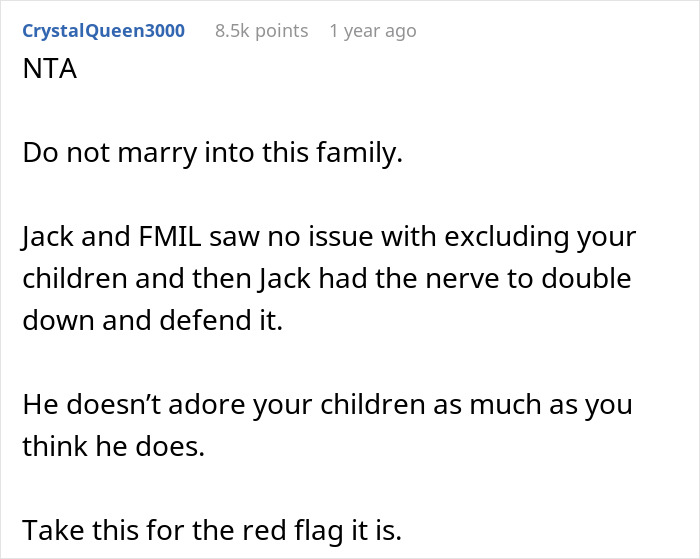
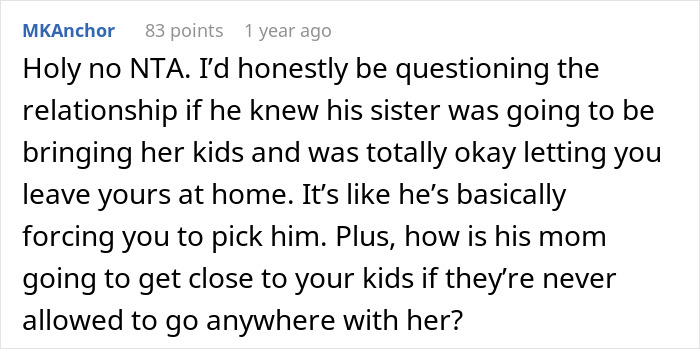
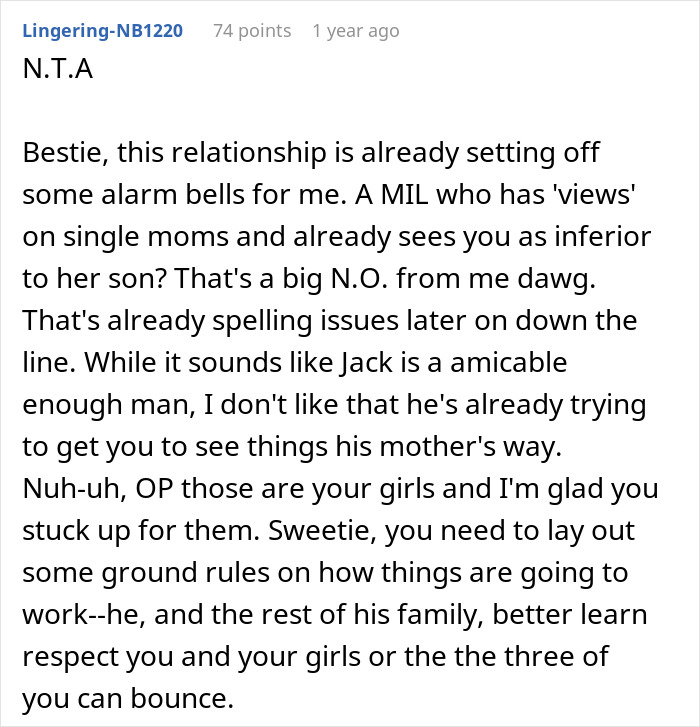
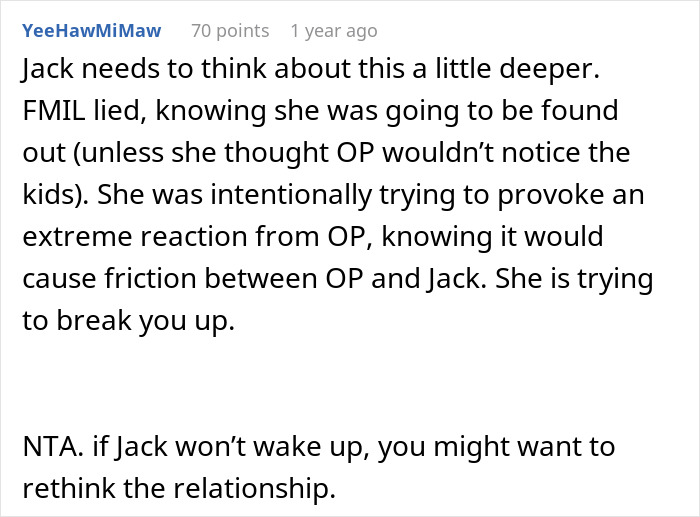
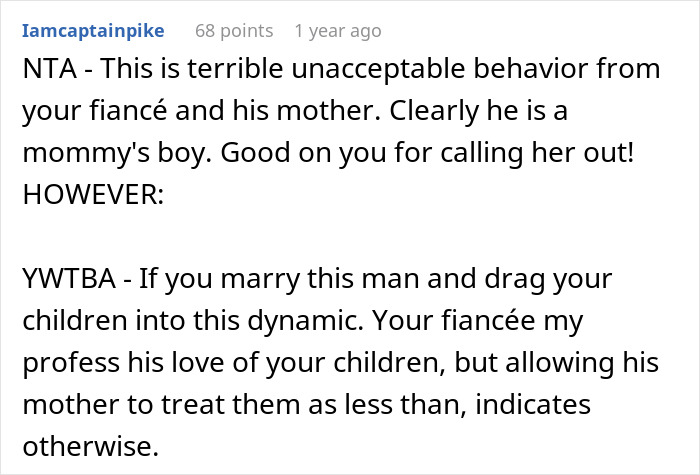
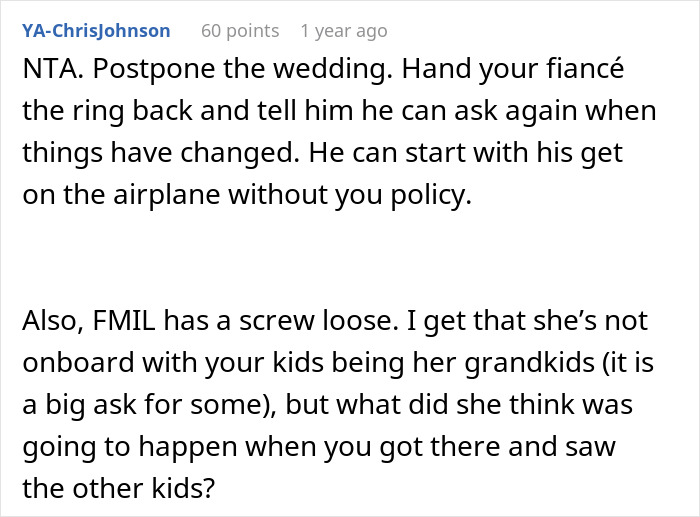
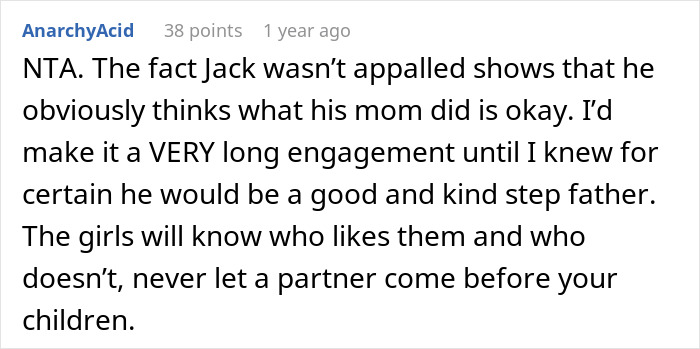
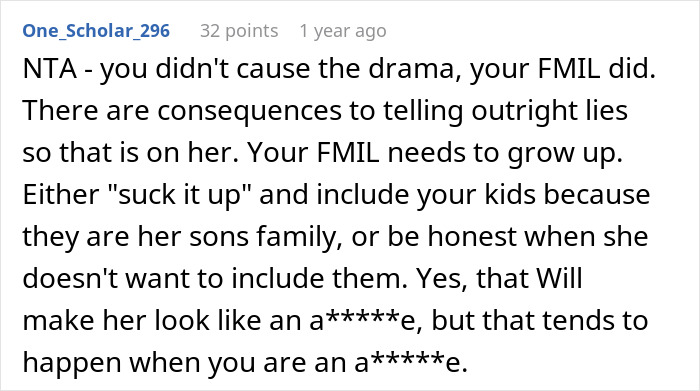
People supported the author of the post, saying that her future mother-in-law’s disapproval was unjustified and insensitive















from Bored Panda https://ift.tt/1ZUCpSL
via IFTTT source site : boredpanda
