We imagine that being famous is the dream: money, attention, and notoriety will bring us happiness, we think. In a 2016 YouGov poll, 53% of Americans admitted they would like to be at least a little bit famous. But there’s a dark side to fame, too.
As actor Jim Carey once said, fame doesn’t bring you happiness: “I think everybody should get rich and famous and do everything they ever dreamed of, so they can see that it’s not the answer.”
Recently, an anonymous celebrity’s confession about being disillusioned with fame was making rounds online. In their post, the famous person shared how tired he is of celebrity life and shone some light on the dark side of fame.
More info: Reddit
An anonymous celebrity shared his story online about the dark side of being famous
Image credits: René Ranisch (not the actual photo)
“Every interaction I have feels so fake,” the famous person confessed
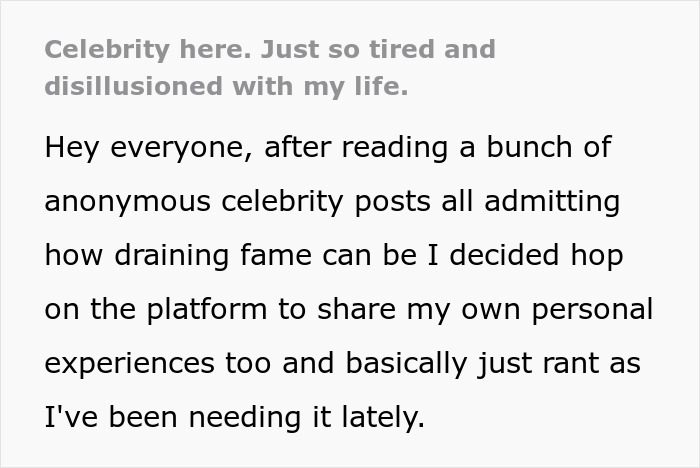
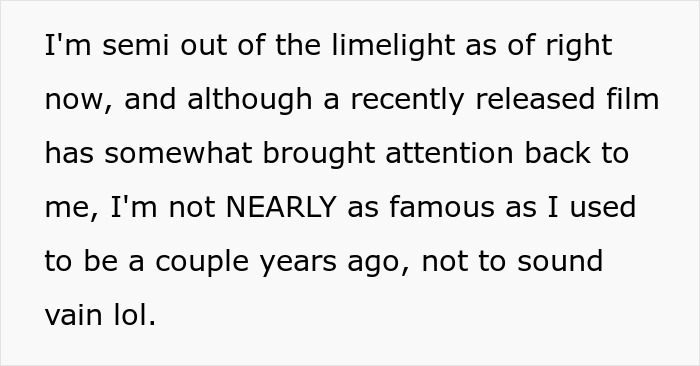
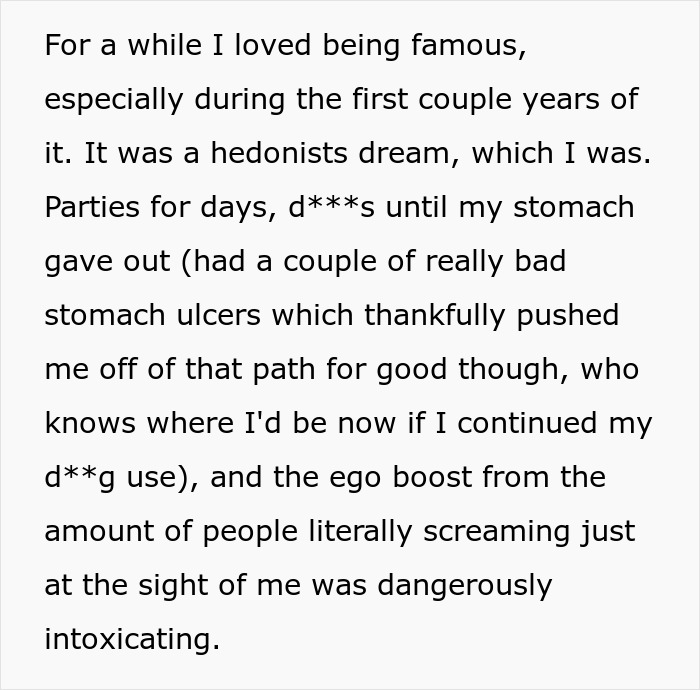
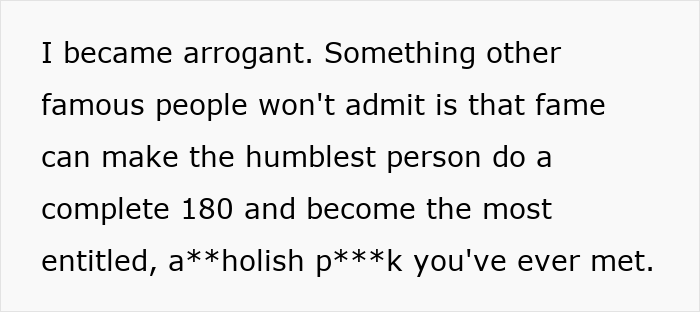
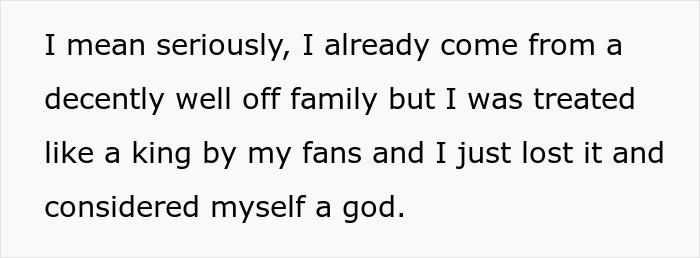
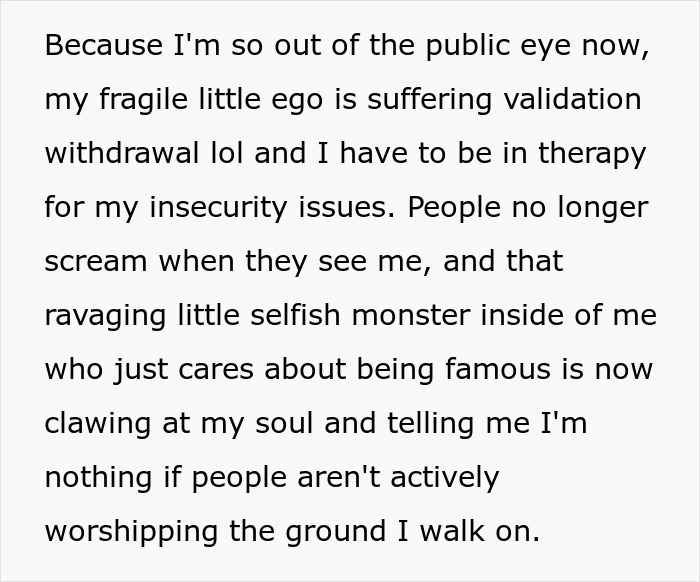
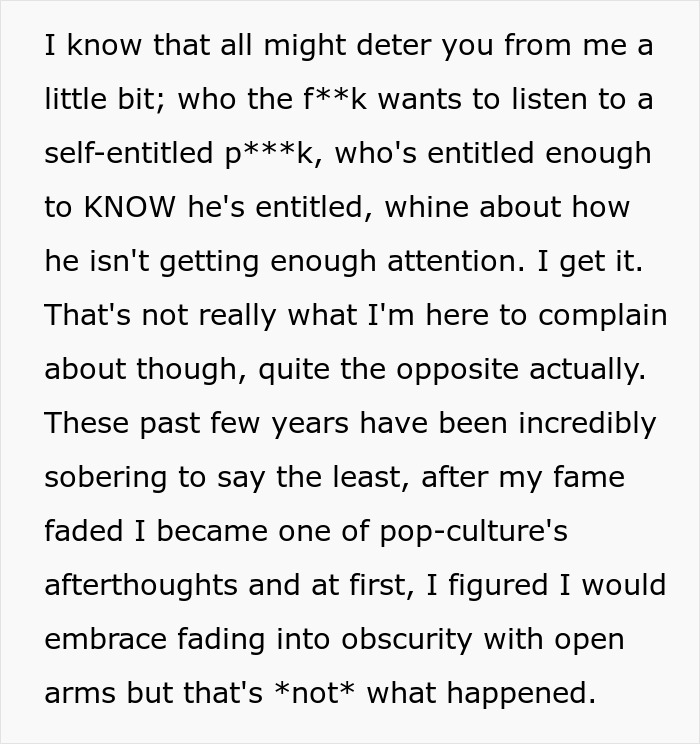
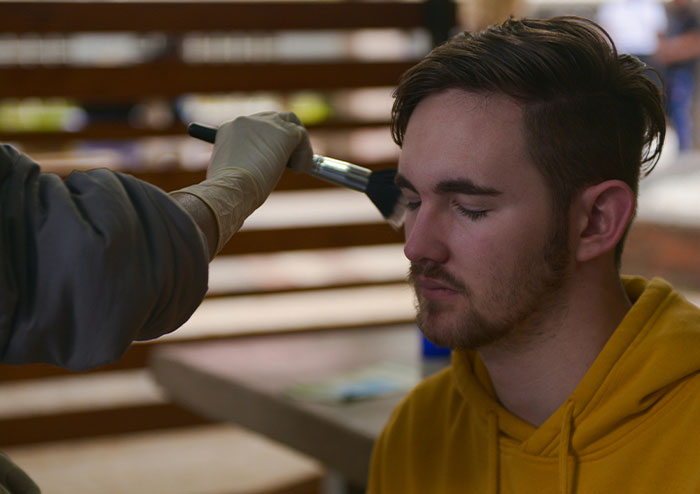
Image credits: Thato Bole (not the actual photo)
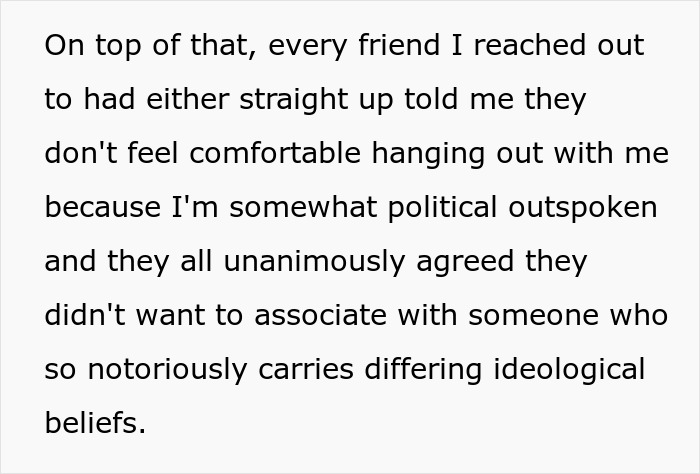
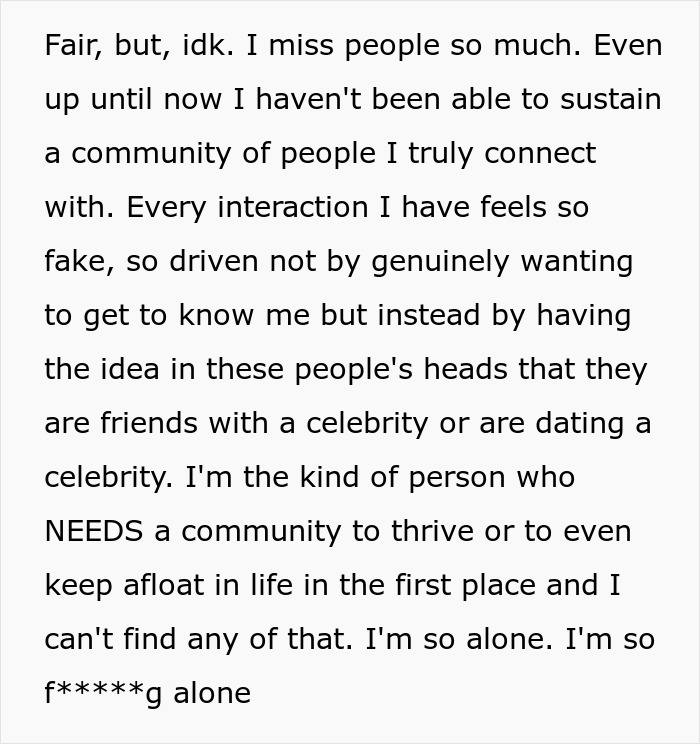
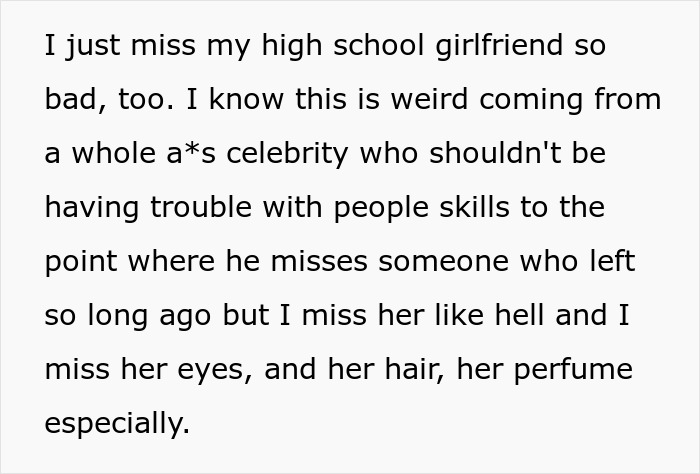
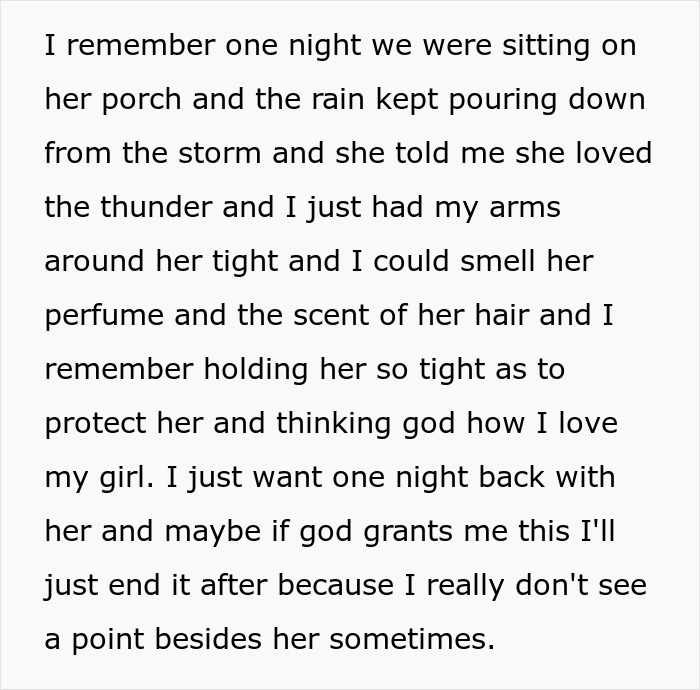
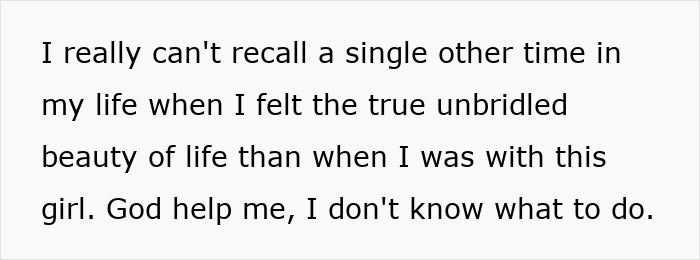

Image credits: Aakash Malik (not the actual photo)
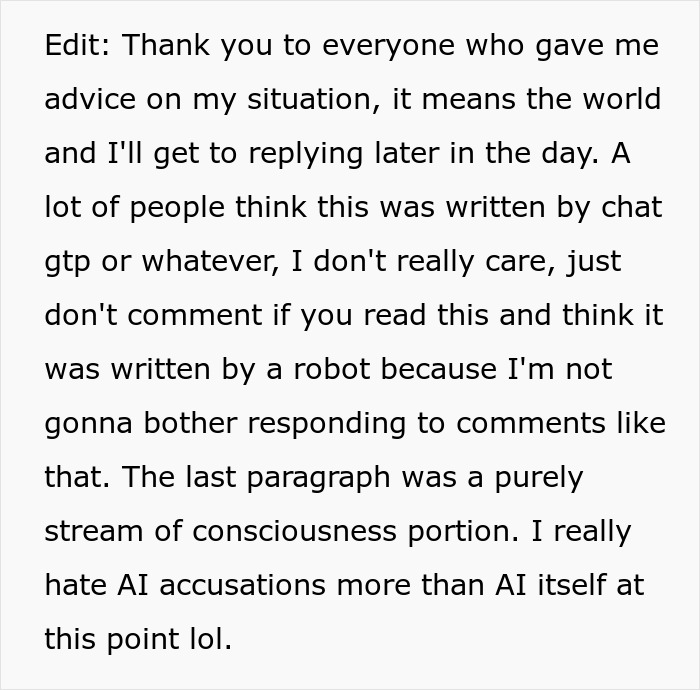
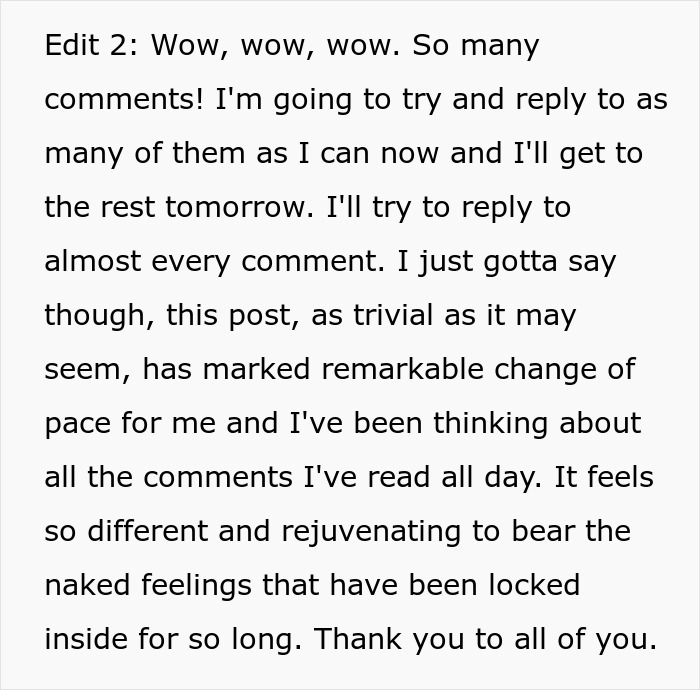
Image source: Visual-Road-3634
Fame feels amazing and addictive at first, but celebrities start dealing with issues with privacy soon

Image credits: Getty Images (not the actual photo)
People who aren’t famous might find it hard to relate to celebrities. We think they must be happy because they’re rich, well-known, and successful. Around one in five adults experience a mental illness in the U.S. in a given year, and being famous doesn’t exclude celebrities from that statistic.
Clinical psychologist Donna Rockwell, who specializes in celebrity mental health, says there are four phases of fame. First, there’s the love/hate phase. When a person first becomes famous, they fall in love with the success and the limelight. However, shortly after, unwanted attention in the form of paparazzi and too-eager fans follows.
That’s when the hate kicks in. Some celebrities find the constant attention creepy and start wishing they never got famous. One of the most high-profile recent examples was when Chappell Roan addressed her fans harassing her in public, saying such behavior is not normal.
With the advent of social media, stalking, and harassment is are bigger issue for celebrities than ever before. Rockwell notes that a lot of celebrities like interacting with their fan bases directly through social media. “[But there are also] people [who] think they have the right to tear another person down just because they’re a celebrity,” she points out.
Rockwell explains that some celebrities get addicted to fame. They start thinking, “I may not like this, but for some reason, I can’t live without it.” The anonymous celebrity who posted his story here had gone through this phase, too. “I would have traded [having privacy] time and time again for another 15 minutes of fame,” he writes in his post.
The narcissistic effects of fame can be countered by dedicating yourself to charitable causes

Image credits: Getty Images (not the actual photo)
Rockwell interviewed 15 famous people for her doctorate on the psychology of fame and celebrity, and one of the participants spoke about how alienating fame can be. “Fame sits on the table between you like a bloated cod; sometimes friends leave, and you have to understand why they leave because you’re special and they’re not.”
However, most celebrities come to terms with the fact that this is their life now. They accept that they either will always be in the limelight or if the days of their fame have passed, that they have to learn to live without the spotlight.
Either way, the fourth and last phase of fame is adaptation. According to Rockwell, you realize that you’re a part of something bigger than yourself. For some celebrities, it’s the arts community; for others, it’s Hollywood. And some might see themselves as just a part of the rich tapestry of humanity.
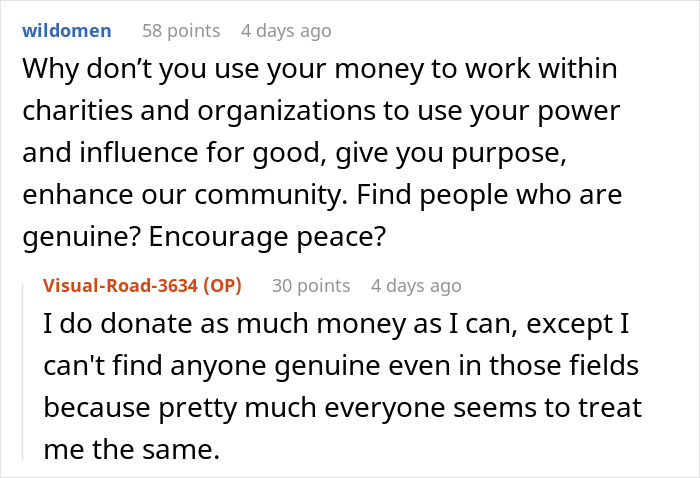
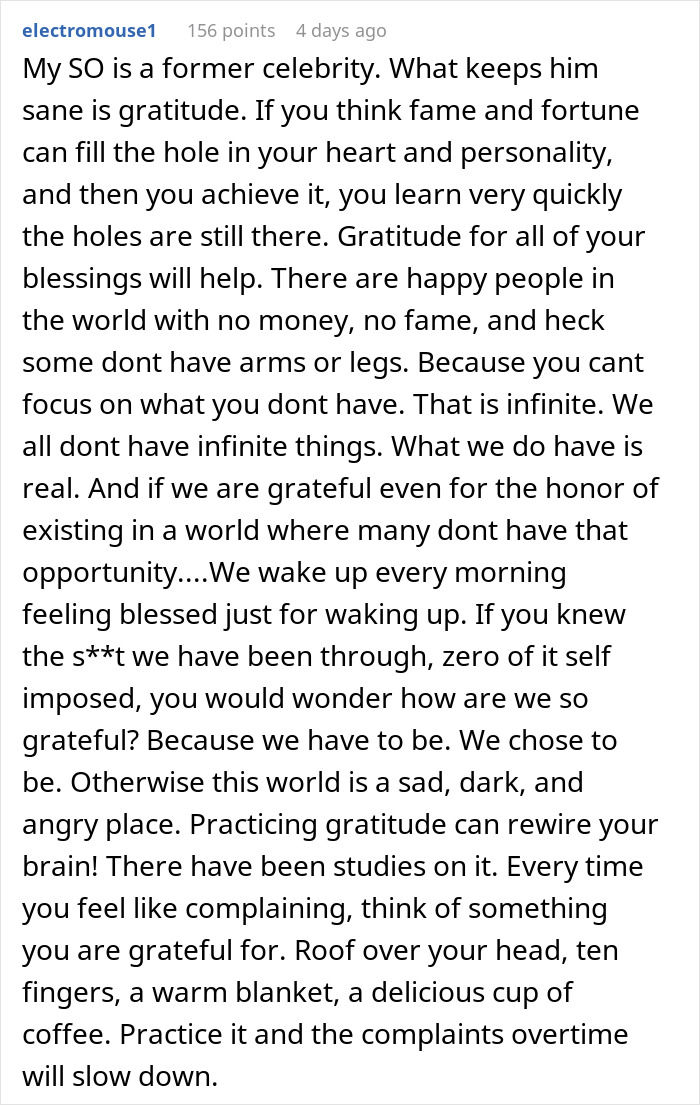
That’s why many celebrities get involved in charity work. This, Rockwell claims, counters fame’s natural tendency towards narcissism. “Through such determined commitment to using life to its fullest, as a show of gratitude for all the riches and rewards, and rooted in humanistic notions of self-responsibility, meaning, values, authenticity, and mindfulness, the celebrity has a fighting chance,” she concludes.
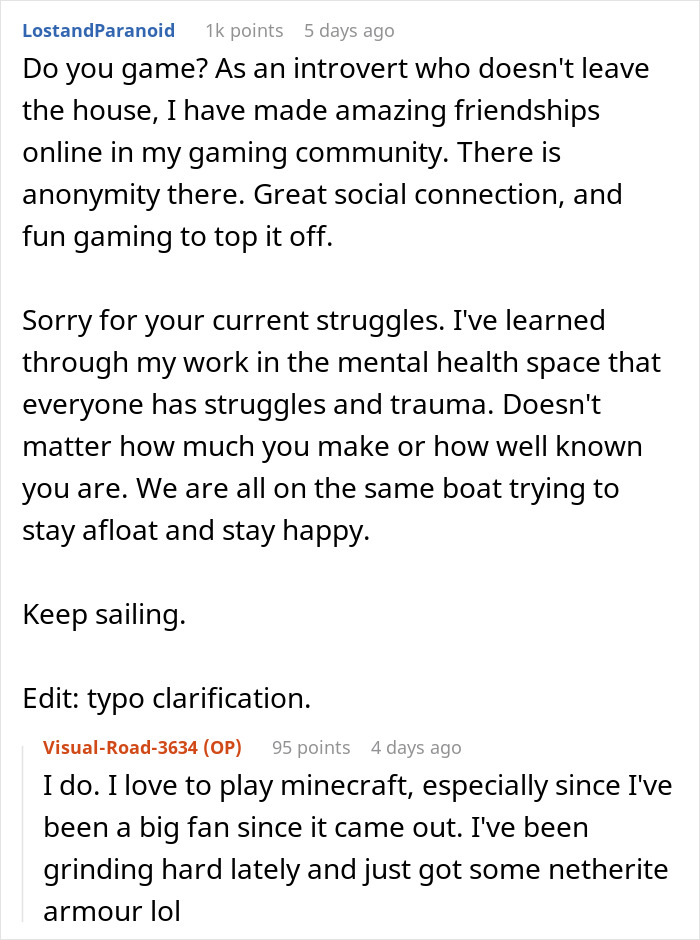
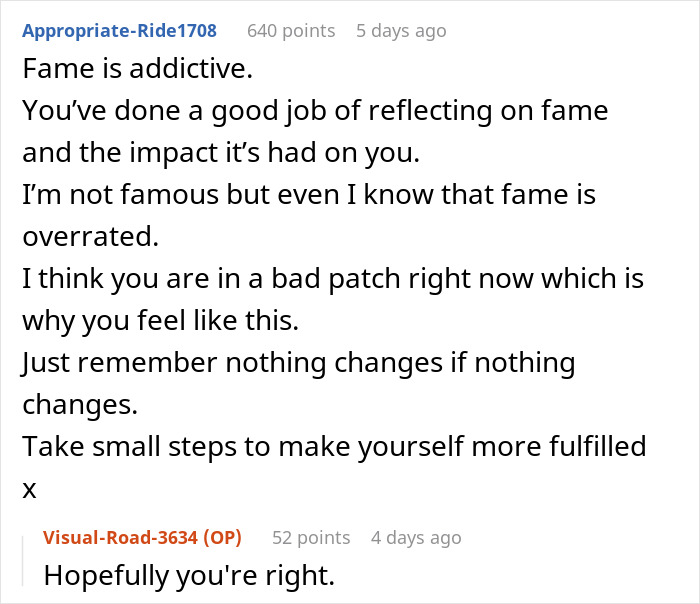
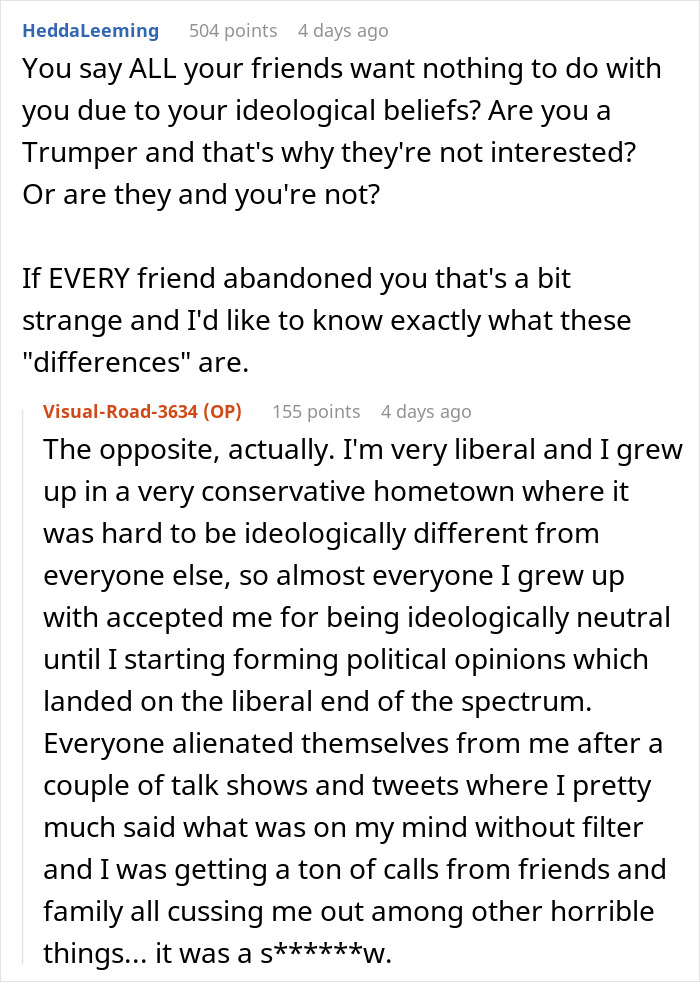
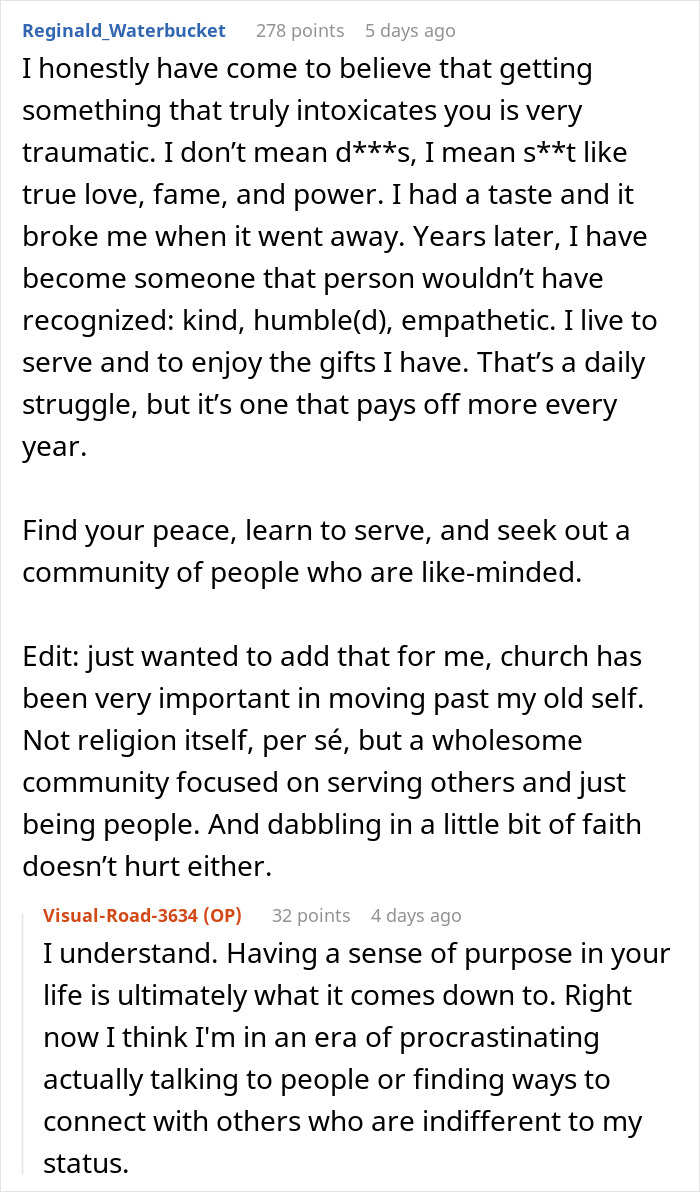
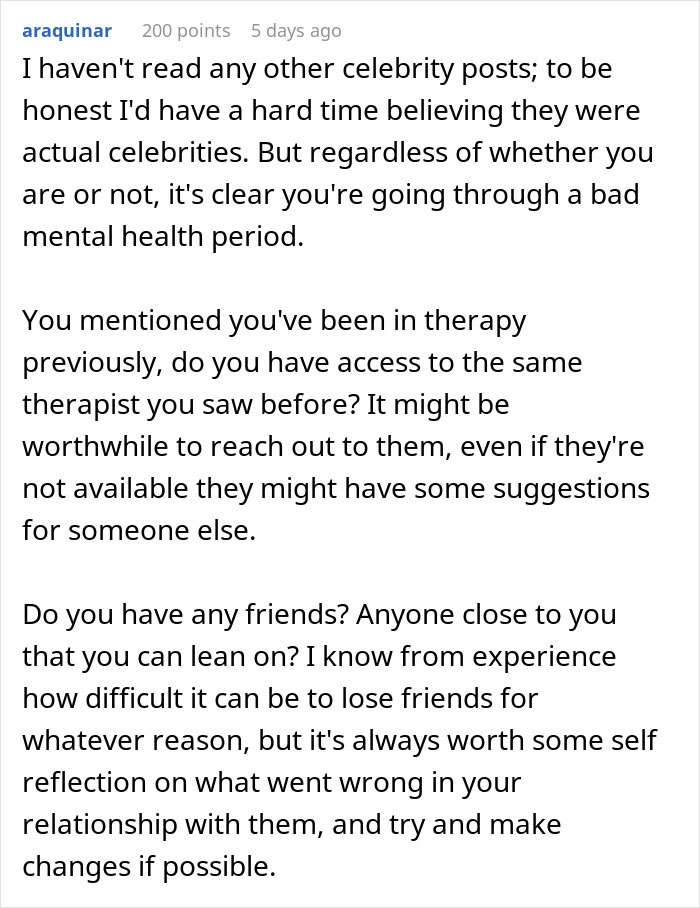
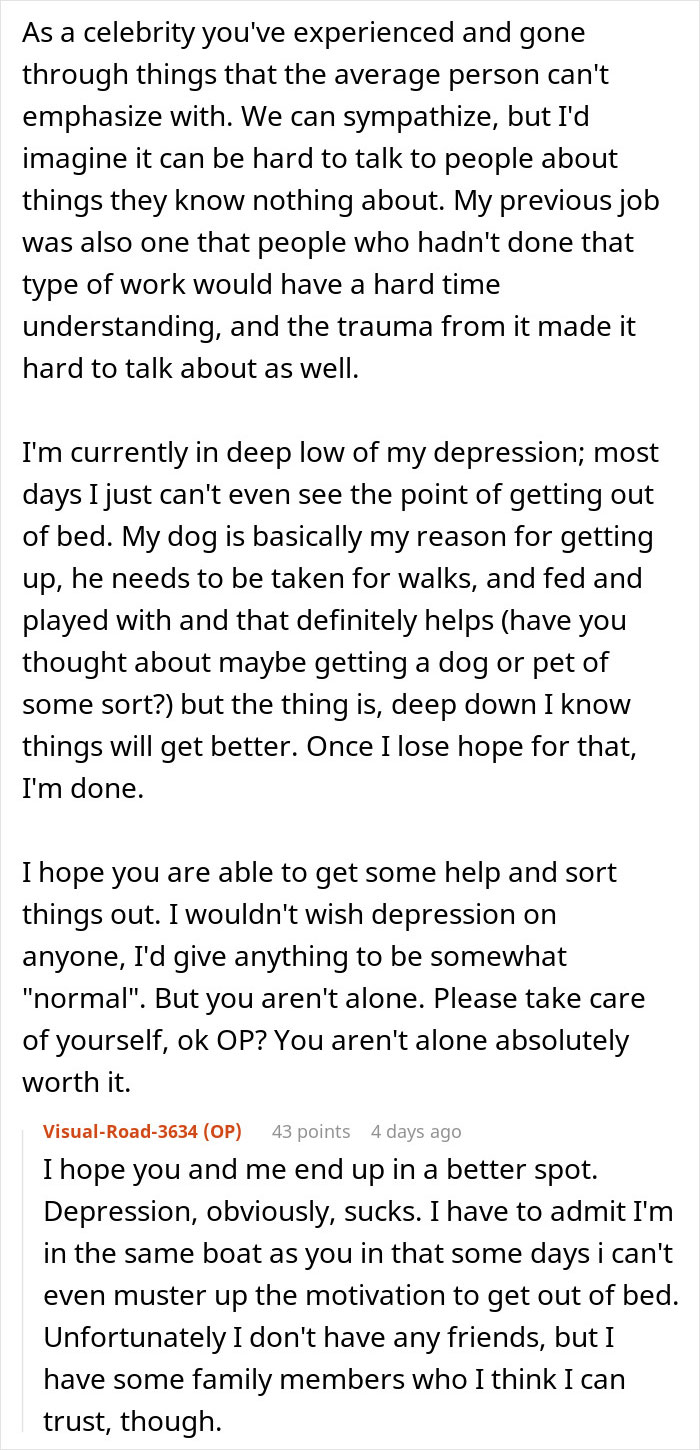
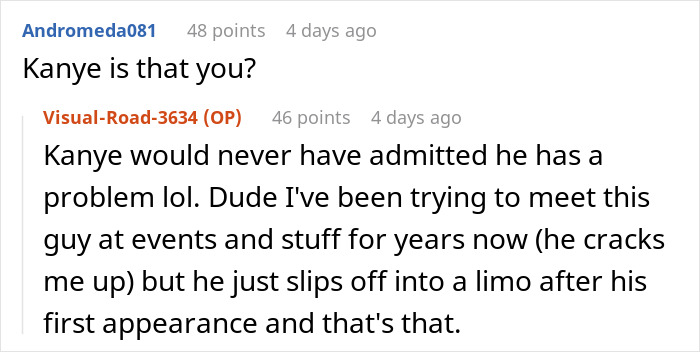
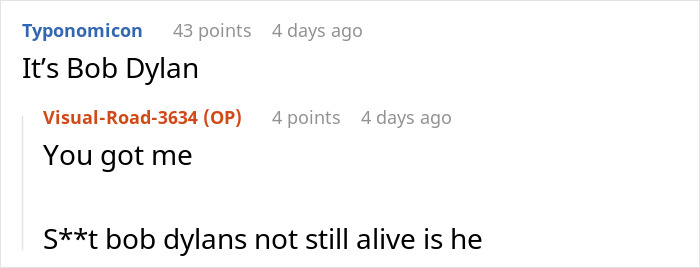
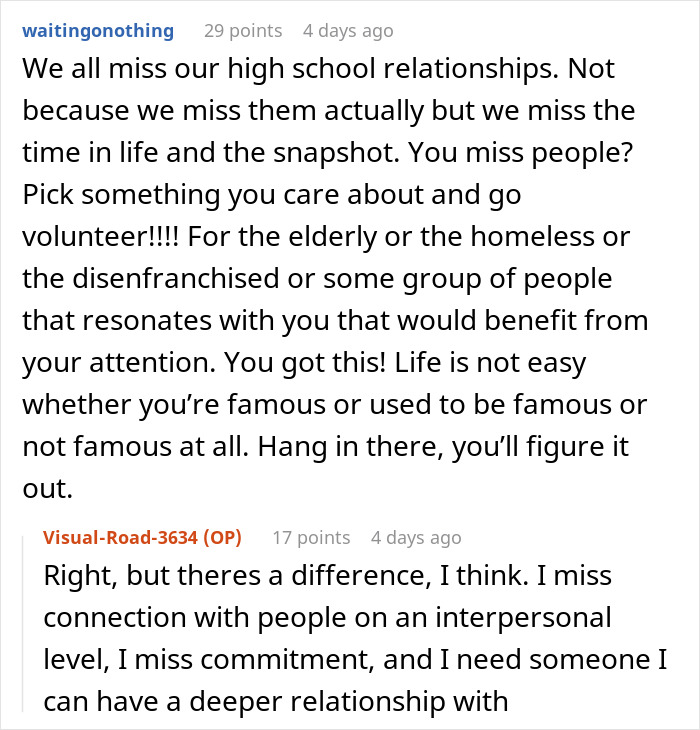
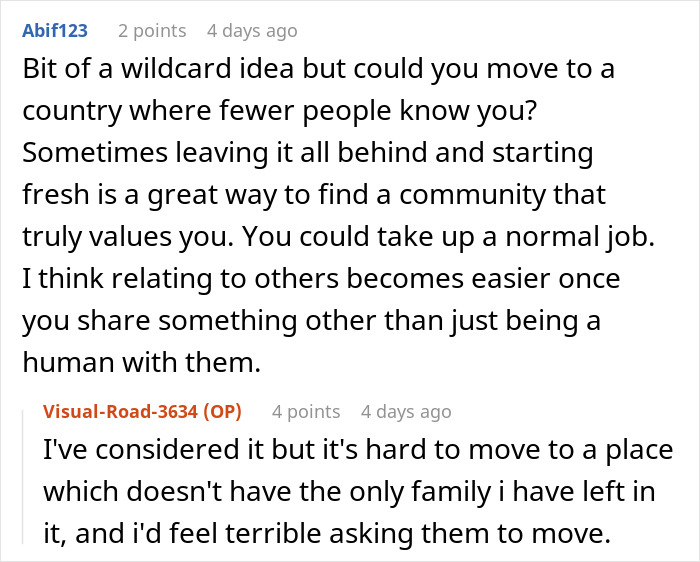
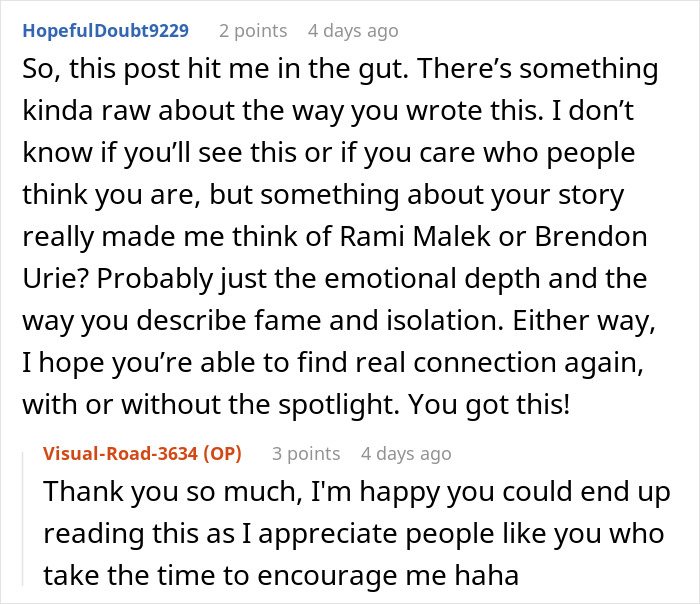
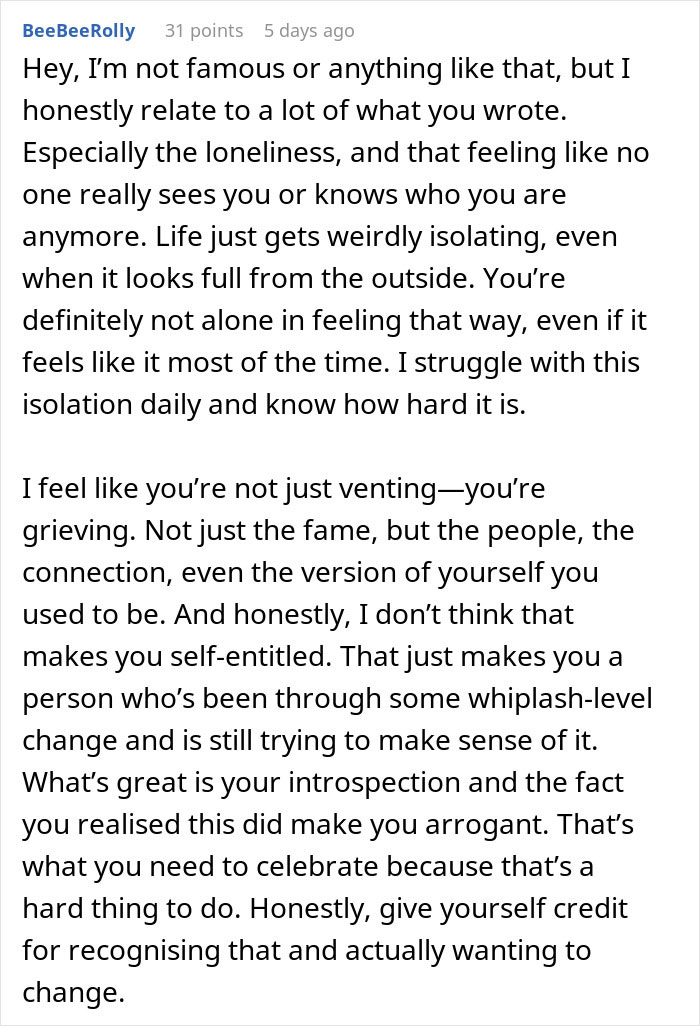
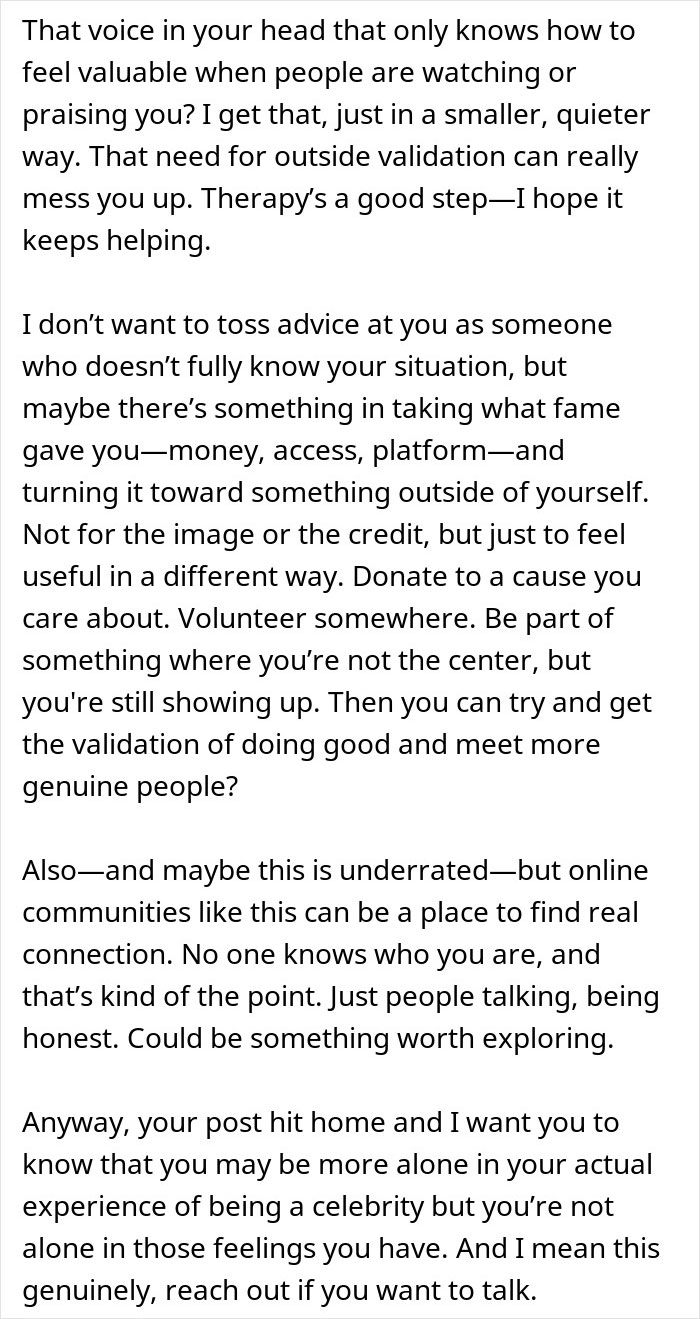
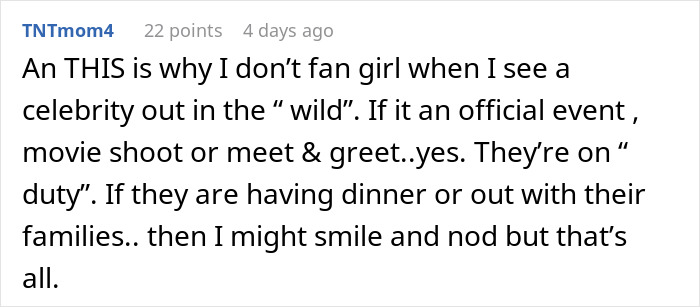
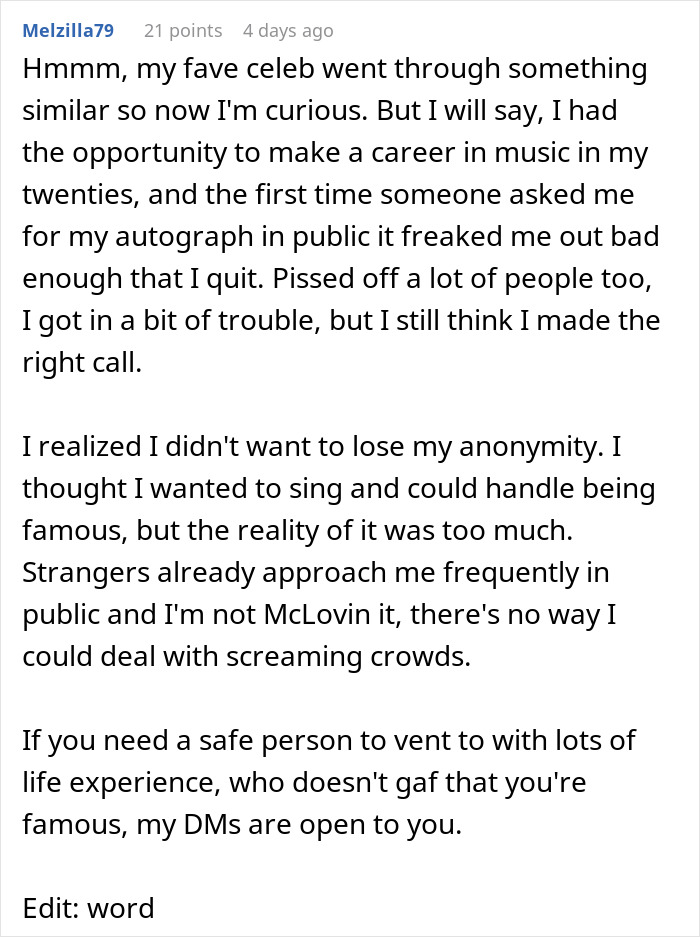
Most people in the comments showed support for the anonymous celeb, others had fun guessing who this might be





from Bored Panda https://ift.tt/ftxVMnS
via IFTTT source site : boredpanda
