Whether we like it or not, much of our adult lives are directly influenced by the way we grew up.
We may have forgotten about it, or suppressed some memories, but if you were neglected as kid, treated poorly, or not given enough support or attention when you really needed it, it likely has some serious consequences on your personality.
From low self-esteem to attachment issues, there are numerous ways the cracks in childhood can haunt someone.
So when someone posed a question on the Ask Reddit community wondering “What’s a sign of childhood trauma?” it immediately resonated with many people. Below we wrapped up the most illuminating and thought-provoking responses.
#1
In some cases, excessive people-pleasing tendencies
Image credits: paul_rudds_drag_race
#2
Hyper independence.
Can’t be let down if you never ask for anything in the first place.
Image credits: caseofgrapes
#3
Unable to forgive themselves for small mistakes.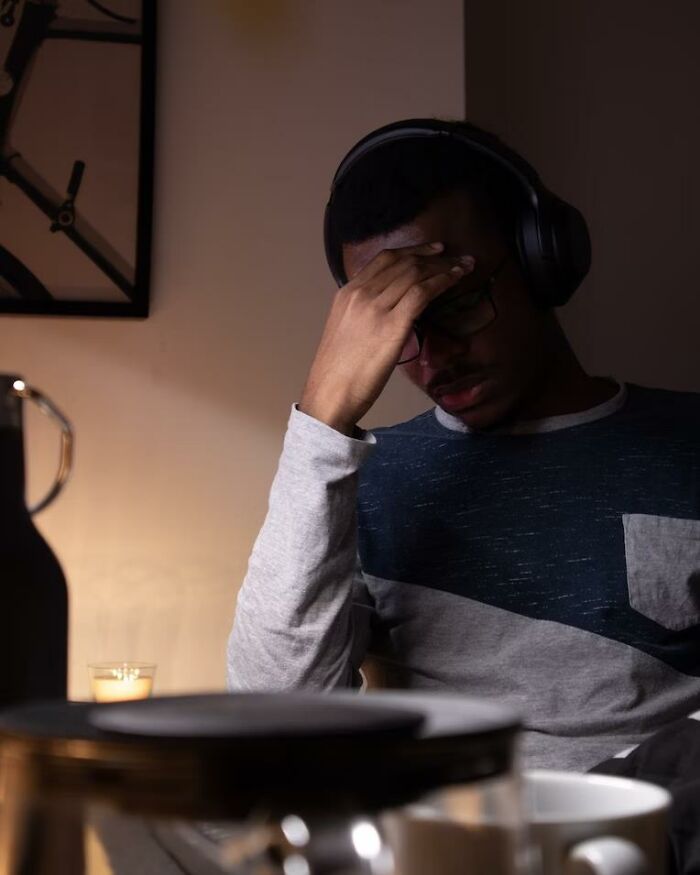
Image credits: PhreedomPhighter
#4
Difficulties trusting, low self-esteem, fears of being judged.
Image credits: ReynaAllman
#5
I am always scared that people are mad at me. Always.
Image credits: goaskalexdotcom
#6
Oversharing when you haven’t known the person long OR the opposite where you don’t open up to anybody. Two extremes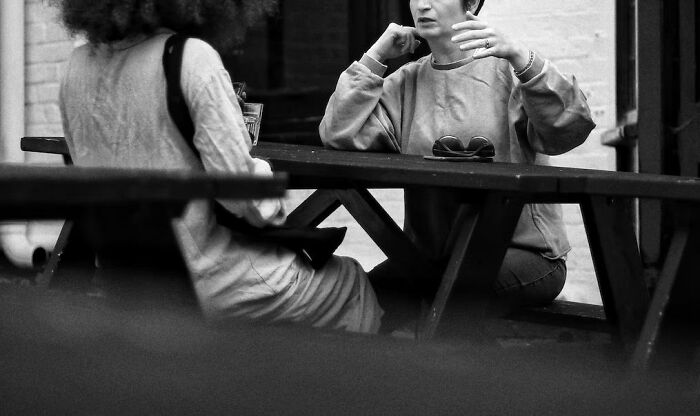
Image credits: agbellamae
#7
Trouble forming relationships
Image credits: CavalloScuro
#8
Scared of conflict to the point you avoid it at all costs, certain that if it happens the other person will hate you/ it will end awfully. You’ve never seen people calmly sit down and discuss their emotions in a loving way, so that world doesn’t exist.
Image credits: blushbell
#9
Perfectionism. This has been a hard lesson for me to learn. I just always thought I was bad at everything or ‘lazy,’ when, in fact, I deal with a crippling level of perfectionism.
Image credits: HedyHarlowe
#10
Extreme self cringe, doubting if what you said was the right thing. Doubting if you acted the right way, or behaved the right way in a social setting. Asking someone several times if you did something correctly. Zoning out because you randomly remembered a traumatic childhood memory, low self esteem, lack of confidence.
Image credits: HistoryTurd
#11
Choosing partners who don’t support, cherish or value you. Choosing jobs and relationships that reflect the lack of empathy and neglect that you grew up with.
Image credits: strawman_11
#12
Being an “empath.” You actually have conditioned yourself to be highly attuned to micro changes that indicate negativity you need to look out for. Also codependency or hyper independence.
Image credits: OkJellyfish6400
#13
Being insecurely attached to friends and romantic partners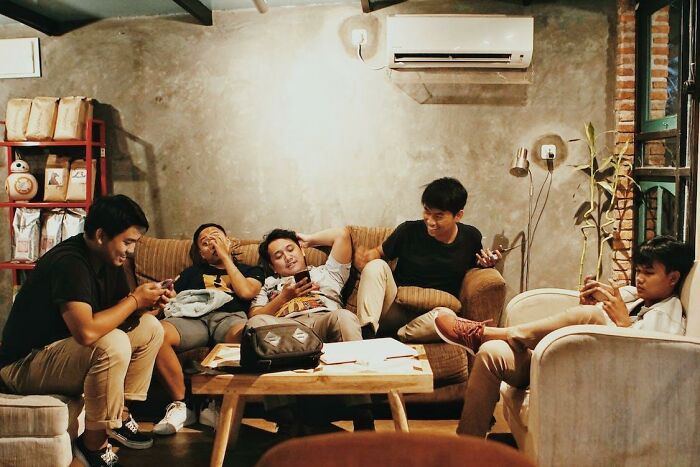
Image credits: Leeser
#14
Having a hard time showing emotion.
Image credits: -LavenderFlower-
#15
Imposter syndrome.
You don’t feel like you deserve anything. Don’t feel like you’re good at things. You feel like someone else has to be better or deserve those things more than you do.
I know that’s not the only reason for it, but when you’re told over and over how useless you are and how you don’t deserve your family or to even exist, that stays with you. And it’s really f*****g hard to convince yourself otherwise. Jobs, relationships, my feeling is kinda always “there has to be someone better.”
It’s also why rejection hits so much harder, because then it’s confirmation of those beliefs. And it’s really f*****g hard not taking it personally all the time.
#16
An adult acting childlike. People think it’s cringe but age regression is a trauma response. You can especially see this is you’ve ever been to a psych ward. People are clinging to blankets and stuffed animals. Childhood was probably the last time they existed without being traumatized.
Image credits: dinosanddais1
#17
Among many of the signs people have posted here, thinking you’re completely responsible for everyone else’s emotions. If someone seems upset, it’s because you think you did something. You constantly try to predict other’s emotions because you grew up in an emotionally unstable living environment. Predicting others emotions was a useful survival tactic at one point, but can add lots of stress later in life and cause you to misinterpret social interactions with other people.
#18
Someone once told me, “your parents shouldn’t be your first bullies” and holy F**K that rocked me.
One sign you can notice in yourself that I didn’t realize until I started therapy: you don’t have physical sensations when feeling. Everything is just like….mental? It’s hard to explain but…happiness is supposed to exist somewhere physically. Not every emotion is supposed to be represented by your permanent vague chest tension. Wild!
Another sign: you rarely, if ever, talk about yourself socially. I ask a s**t ton of questions of people and I am happy to listen to them and hear their problems, but I don’t share much of myself to anyone. It makes it hard for me to deepen relationships because I don’t practice vulnerability. I don’t think people want to hear from me.
Finally, hypervigilance. I know people based on their footsteps. I know where my husband is at any given moment (he’s lovely, he just has to deal with my traumatized a*s) in the house. I don’t think I have ever truly relaxed.
But tbh…..this thread is kind of nice for me, in a weird way. It’s terrible other people experience this, but I don’t feel so alone right now.
#19
Peacekeeping. A kid doesn’t realize their parent (mom in my case) is an emotionally abusive a*****e. All I knew is I didn’t want people to be so mad at each other.
I think my life would have been better if I hadn’t talked them out of divorce.
#20
Completely shutting down when criticized or corrected.
Took me years to get past this.
– Backstory.
My parents are boomers. Dad grew up in a coal mining town in southern Illinois, was a Viet Nam Marine turned missionary in Uganda in the late 70’s. “Interesting times” is his description. Mom grew up in Savannah GA and survived the Civil Rights and integration riots of the deep South. Became a missionary to South America also in the late 70s. Viva la revolution!
So, suffice it to say they’ve lived through some s**t and are orders of magnitude harder f***s than I’ll ever be. They didn’t have the tools we do today to diagnose and cope. So they internalized all of it instead, on top of a ton of old fashioned generational blue collar trauma.
As is tradition, it was passed on to me.
– How I recognized and started treating it.
Bootcamp got the ball rolling. It keeps you at a functional high level of stress, to the point you just have to deal with it. There’s no time to shut down or feel sorry for yourself, you showed up behind schedule and don’t realize you’ve caught up until you get to your first unit and oversleep for the first time on your day off.
I lucked up and my (then) girlfriend spotted it. She stopped letting me retreat to my dark place. I eventually married her. Even then it was years before we realized how broken I was.
I found mentors in different areas of interest, some were authors or had podcasts, the main one was a gunsmith and had a PHd of history who took me in when my parents split. He gave solid advice which I took to heart.
PT. The hardest part is working out and building discipline. Sometimes I have to be at muscle failure before I can think straight.
Research. I’ve been reading up on stress, trauma, PTSD, recovery, historical warrior cultures, meditation… all of it. Been attacking this like an engineer or mechanic instead of a doctor.
Lastly, *most* importantly. I got help from other people. I could NOT do this alone. It was just too much to process.
TL:DR
1. Bootcamp. No time for self recrimination, too much s**t to do.
2. Found a friend willing and able to help
3. Found mentors, in person and in books/podcasts
4. Physical training, it sucks but works
5. Researched the topic across multiple disciplines and cultures. Strangely I never found the RSD diagnosis.
6. I got help. I found people to help me.
Image credits: Ambiguity_Aspect
#21
Hypervigilance.
Image credits: StuEdin
#22
Constantly apologizing for every little thing. Extreme introversion. Little to no outward emotion. Ability to stay calm in emergencies or chaotic situations.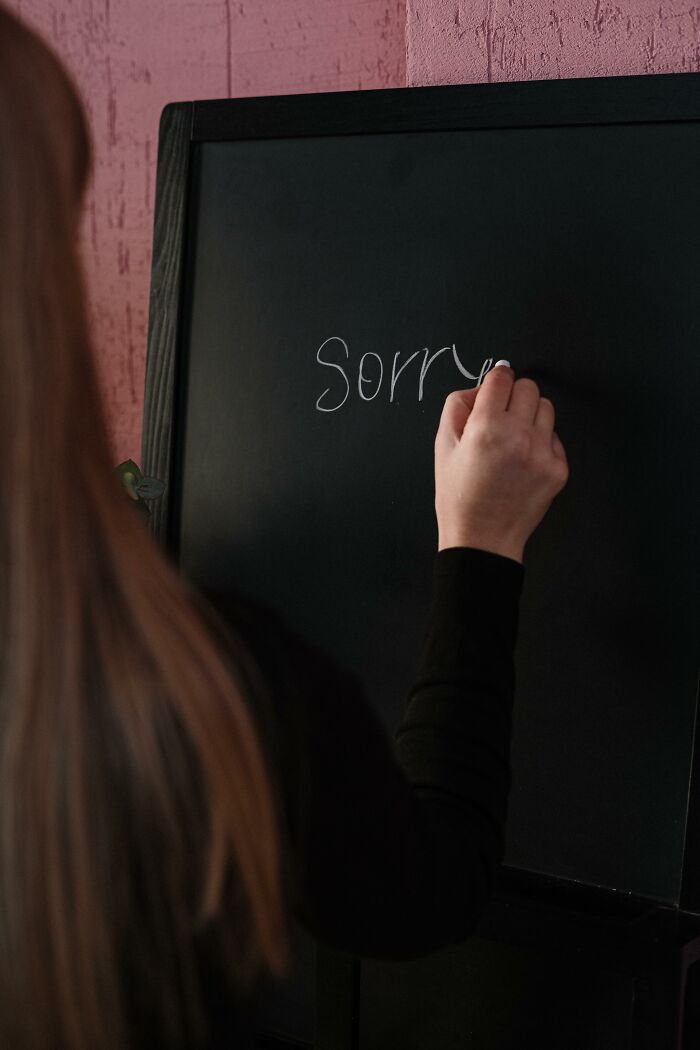
Image credits: Glass_Command_5432
#23
Getting disproportionately frustrated at themselves for small accidents such as spilling things, accidentally breaking something, etc.
What happens is, a lot of these people would be abused as a kid for these things, so as an adult when it happens, their brain overloads their system with fear and anxiety, and frustration can be secondary emotion to that.
So when these things happens, this is basically a conditioned response because your brain associates these accidents with imminent danger.
This is why therapy is so important for people who had s**t childhoods especially during their developing years. I had no idea this was a thing until I went to therapy, but when my therapist explained this to me, it made so much sense. And now when these things happen, I tend to laugh it off.
Image credits: Mirraco323
#24
Constantly feeling like you need approval from other people
#25
Not wanting attention. Not taking photos. No social media. Don’t celebrate birthdays. Dont want any awards. Don’t want any kind words. Just let me exist, lol.
#26
They make no eye contact. I know because even at the age of 45 I will always struggle with this.
#27
Inability to form and keep relationships, having sparse or little to no memory of your childhood, eating disorders, depression, social anxiety, agoraphobia, extreme emotional shifts, attachment issues, consistent exhaustion, strong unexplainable reactions towards social stimuli, separation anxiety, gastrointestinal issues and complications, substance abuse and addiction, intrusive thoughts, self-destructive behavior, etc
#28
Feeling bad just for existing.
Image credits: thatdrunkbetch
#29
Trying to be as quiet and unseen as possible.
Shallow breathing, mumbling, not projecting your voice. Walking on just the pads of your feet/not heel striking. Hanging out in corners, wearing drab clothing.
Being the center of attention is danger zone so you do what you can to not garner attention.
#30
Trauma causes pain. Pain is avoided in many ways; painkillers (alcohol, drugs) the obvious one, but the most deadly are the socially acceptable ones: smoking, coffee, overeating, over working, fighting constantly, constant need for distractions like social media, sex, violence, gambling, investing in risky stuff like crypto…all those also numb the pain but people won’t judge you for them.
Sit down and do nothing for an hour, no distractions, no books, no music, no guided meditation, just absolute silence. The harder that activity is the bigger the trauma that needs to be healed. That’s why prisoners in solitary see it as torture, they are full of wounds. That’s why babies can spend hours like that, they have cero conditioning.
#31
Lack of eye contact. My dad was severely bullied as a child, he was the new kid from out of town who knew no one. Had few friends so was an easy target. teachers turned a blind eye. Went on for some time. Only came to light when he started skipping classes to avoid the bullies.
To this day he still cannot maintain eye contact for more than a couple of seconds; especially if he is meeting people for the first time and would prefer to stay at home than go out.
#32
Feeling like you have to do everything yourself. This can often come from either being taught to “be a man,” or “if you can’t do it yourself, you’ll fail in life.” Those are just a few that stemmed from for me. Constantly feeling like you’re bothering someone by asking for help can f**k you up as a kid, and it can carry to adulthood.
#33
Flinching. Don’t matter why… Even if you’re paying with somebody and they flinch…
#34
Sometimes its people who are overly defensive or confrontational. Or have a tendency to bully. The whole “I’m gonna hurt you before you hurt me” mentality.
#35
dissociating while being yelled at
#36
Being really good at de-escalating situations, and in tune with people’s emotions, for lack of a better way to put it. When you grow up around people who could explode at a moment’s notice over nothing, you become very good at talking them down once they do, or changing the subject/situation to avoid it in the first place. I can practically feel the fight or flight kicking in every time somebody raises their voice near me.
#37
Being able to instantly read a room, and correctly.
When you grow up with labile people, who can flip on a dime and like to hand out truly extreme punishments, best believe that you learn to pick up small signals really quickly. This is a skill that will serve the user well throughout life, but it comes at a high cost. So high.
You also become extremely secretive. When the smallest thing you let slip can become a firestorm of screaming, physical punishment and various groundings trust that you learn EARLY to keep your damn mouth shut.
Parents: “We feel like you never tell us anything about yourself, or your day. Why?”
Why, indeed.
#38
I’m a “rescuer” because my entire family was so dysfunctional I took on the role of solving everyone else’s problems, especially my parents. And I was the youngest child, go figure.
I eventually realized I did this subconsciously because I was trying to model the behavior to all of them like “hey, try doing this for me please!” I’m almost 40 years old and I’m still waiting for someone in my family to help me with any of my problems without me having to ask.
So I finally decided I’m only doing for others what they’ve done for me. This was only two weeks ago but I already feel better. It’s been hard though because I still feel sorry for people despite never really receiving the same from them unfortunately.
#39
“Animals are better than people.”
#40
Finding someone perfect for you and then systematically sabotaging it
#41
Childish activities become almost like treats.
#42
No or few good memories
#43
Constant dark humor or self deprecating humor.
Also the ability to totally pretend cr**py things never happened or pretend someone didn’t do something awful to you.
People might think you’re really funny and forgiving but sometimes they are both just coping mechanisms.
#44
Oversharing and feeling guilty afterwards. Overanalyzing everything you say.
#45
Inability to feel or process some emotions. I, for example, cant feel lonely. Isolation, as a child, was my only time of peace, and now i crave it to an unhealthy degree. Being alone never gets old for me. I never feel the need to be near or with anyone ever. I’ve never dated irl, i’ve never had more that one strong friendship.
Inability to trust that people are genuine. I cant receive a compliment. I believe 100% of them are just lying to me or lining me up to use me for some reason. I CAN be criticized, but it’s meaningless. It doesnt hurt, or change anything. Everything in my entire life has had major negative critical judgment, and it’s like water off a ducks back now.
Lack of desire to compete or accomplish. This can include goal setting. As a child i learned, no matter how much effort i put in to get something i wanted, it wasn’t good enough, or it would be taken away by the poor decisions of parents. They would move. Destroy it. Lose it. Give it away to someone else, or, move me away from it. So, even at 40, there’s nothing i’ll work towards, because nothing feels like it’s real, or worth it, or going to be kept. I’m like the anti-hoarder. Nothing has value to me like it should. Nothing.
Loss of sense of self. Soemtimes you feel disembodied. You feel like an observer in your own life. Third-personing things.
#46
Poor social skills, complex PTSD, ADHD like symptoms.
#47
Delayed emotional maturation. Underlying, unresolved anger issues. Low self worth. Abandonment issues. Overly sexualized behaviors.
#48
Being afraid to ask for things. Remembering footsteps. Not liking spending time with family. Doesn’t like going out because you’d be alone and watching others have fun with each other. Your own family not remembering the last time you laughed or telling you to smile. And constantly saying “I wish she’d smile more” while looking at photos. Being shy or awkward around your own friends in person.
#49
Overexplaining
#50
Always having an escape plan. From the current room, building, or most importantly, current life situation
#51
Not trauma per se~~i~~, but as a father, I got criticized a lot by my wife saying I’m spoiling my son, simplily because I got very little attention from my father when I was a kid. I feel I’m trying to heal this by being my own ideal father
#52
Hard time transitioning into adulthood.
#53
Issues with trust, anxiety, rejection sensitivity
#54
As someone still going through it, if you see someone trying to cover their ears when they hear yelling, or just want to be alone from people, or just cry when they actually get affection and love, those are some signs
#55
Not asking for things because they’ll say no
#56
difficulty trusting/animosity towards authority-
one of my friends in high school was always SO rude to teachers, counselors, security guards, peoples parents, etc. anyone who was in a position of authority. I couldnt understand why because it seemed to me that they just wanted to make sure we didnt ruin our lives doing dumb teenage stuff. it made so much sense when she confided in me that she had been molested by authority figures (her father, uncles, teachers, tutors) as a young child.
#57
For me it was emotional abuse, so rejection anxiety, feeling like everyone’s always mad at you, not being able to read people, fear of failure or letting people down, fear of authority figures (especially female managers), feeling like you’re constantly walking on eggshells, emotional immaturity, and feeling constantly drained while interacting with them.
I never realized that they were abusive until last year. Since then I’ve been working to heal, and I’ve found some positive things that came from it: increased empathy, the ability to rephrase things so the other person can understand, being able to recognize and apologize for toxic behavior (still working on fixing it though), and understanding/enforcing my own boundaries both towards myself and others.
#58
Over-explaining why we want something.
#59
Memories of feeling dread when a certain parent arrived home.
#60
An anxious attachment style
#61
In my experience its reliving it in your head when you get drunk lol
#62
Being a good child who acts very mature for their age and is well-behaved almost all of the time.
Unfortunately, this also involves the parent(s) thinking they raised their child right. In reality, the child is robbed of childhood and has all the emotions and desires bottled up and suppressed.
from Bored Panda https://ift.tt/6qSYAky
via IFTTT source site : boredpanda
